SPP Board OKs 1-time Study for LREs’ Gen Needs

OMAHA, Neb. — As expected, SPP’s Board of Directors has approved a tariff change that creates a one-time study outside the grid operator’s normal planning process over the concerns of independent power producers. 

During its quarterly meeting May 6, the board added its endorsement of a revision request (RR668) already approved by state regulators (the Regional State Committee) and stakeholders (the Markets and Operations Policy Committee and several working groups). The expedited resource adequacy study (ERAS) is designed to help load-responsible entities meet their RA requirements that are under pressure from large loads that have increased demand and SPP’s backlogged generator interconnection queue. (See New ERAS for SPP: Stakeholders Approve RA Studies.) 

“SPP is committed to evolving its processes to better serve our members,” SPP CEO Lanny Nickell said in a statement. “ERAS is one part of that evolution — an innovative solution that will mitigate acute reliability risks without disrupting SPP’s other processes or ongoing [generator-interconnection] queue reforms — and it comes just in time to meet the reliability needs of a quickly changing grid.” 

Transmission-owning members welcomed ERAS’ approval. Environmental groups and IPPs did not, arguing that the study amounts to queue jumping, bypasses open access to the RTO and fails to treat all customers in an equitable manner. 

“It will help those of us responsible for keeping the lights on,” said Oklahoma Municipal Power Authority’s (OMPA) Dave Osburn.

“This is an affront to open access and a major and significant problem for those exploring whether or not to invest in SPP,” the Advanced Power Alliance’s (APA) Steve Gaw said. 

Brett White, senior vice president of regulatory and government affairs for Pine Gate Renewables, agreed ERAS places open access under threat. He said “undue discrimination” is being applied to interconnection customers who have invested in the current process. 

“We as an IPP and our fellow IPPs will be harmed by ERAS, in several ways that are worth mentioning again,” White said. “The lack of coordination between ERAS and the normal [study] process will create unanticipated curtailment and overloads on the system that will harm both groups of projects until additional upgrades are built. This is why we don’t study two clusters in parallel.” 

White cast doubt on SPP’s promise that ERAS will be a one-time proposal, saying the RTO has proposed to use the same process in the RTO Western region on a recurring basis. 

“This does not reflect the supposed ‘emergency’ nature of this proposal and affirms concerns that ERAS is simply the beginning of a process to chip away at principles of open access,” he said. 

The Members Committee’s advisory vote for the board passed 17-5, with one abstention. The APA, Pine Gate, Natural Resources Defense Council, EDP Renewables and Google all opposed the measure. 

SPP said it remains committed to principles of independence, fairness and equity and that its standard processes will continue to ensure interconnection requests are studied fairly and efficiently. It said the proposal is necessary to respond to an “imminent and growing need” by adding more generation before the region’s capacity is drawn down to zero. 

Large loads have increased LREs’ load forecasts significantly, SPP said, potentially leaving them short by 17 GW in 2030. 

“I think of this region as a one-lane road on the edge of a cliff,” board member Steve Wright said. “We’re too close to the edge right now. The need to bring more generation and transmission online is a crucial component to the region.” 

ERAS is available only to generation projects nominated by LREs and that meet clearly defined thresholds related to near-term resource adequacy needs. It also provides a bridge to the longer-term relief expected from the Consolidated Planning Process (CPP), a separate initiative to streamline the complex and time-intensive planning process, SPP said. 

“Ultimately, CPP is the answer to these problems of getting generation online faster,” White said. “ERAS will only delay by further complicating planning studies and taking staff away from the crucial work of getting CPP up and running.” 

MOPC’s approval included an amendment to extend a resource’s commercial operations date to seven years because of supply chain constraints. However, the RSC took up the proposal without considering the extended timeline. 

SPP plans to file the proposal with FERC later in May. Assuming the commission’s approval, staff will notify LREs of the process for submitting ERAS projects as early as August, with interconnect rights being granted as early as April 2026.  

The board also ran into pushback from the MC in approving a tariff change (RR665) that establishes “subregions” for the cost allocation of future byway (between 100 and 300 kV) upgrades. The measure decouples SPP’s Schedule 9 (zonal rates) and Schedule 11 (highway/byway) transmission pricing zones and creates larger Schedule 11 subregions of existing zones. Two-thirds of the cost of byway upgrades would be allocated to the subregion where they are connected, with the remaining 33% allocated to the SPP footprint. (See “Members Pass Last of HITT’s 2019 Recommendations,” SPP MOPC Briefs: April 15-16, 2025.) 

Five members opposed the proposal during the MC’s vote: American Electric Power, Oklahoma Gas & Electric, OMPA, City Utilities of Springfield and Omaha Public Power District. 

“AEP remains concerned whether or not this zonal approach is going to benefit customers,” said AEP’s Stacey Burbure, who is responsible for transmission business development and joint ventures. She pointed to no votes cast by Oklahoma and Texas regulators during the May 5 RSC meeting. 

“We’re concerned this could result in significant litigation,” Burbure said. 

Board members approved several other tariff changes and other measures previously endorsed by the RSC and MOPC: 

    • A provisional load process (RR672) that allows transmission customers to add load to the system when they don’t have enough designated resources to cover their 10-year load forecast (including losses). Under the new methodology, upgrade costs will be assigned directly to the customer, with base-plan funding covering the remaining cost. (See “‘Chicken & Egg’ Issue,” New ERAS for SPP: Stakeholders Approve RA Studies.) 
    • A structured cost-allocation method for assigning a portion of the new Consolidated Planning Process’ upgrade costs based on benefits received to generator interconnection customers. The generalized rate for interconnection development contribution (GRID-C) formulas and associated cost-control approach will determine load-based cost-allocation impacts for energy resource interconnection service versus network resource interconnection service. The RSC recommended the board approve the approach to proportionally allocate incremental long-term congestion rights based on the GI GRID contribution to the overall CPP transmission portfolio cost.
    • An increase to the planning reserve margin for the 2029 seasons (RR664). The summer PRM will go from 16 to 17%, and the 2029/30 winter PRM will go from 36 to 38%. 

Nickell Focuses on Members’ Needs

Nickell, making his first president’s report to the board, said his vision of SPP as the best RTO in the country has evolved since the announcement of his selection as CEO in December 2024. (See SPP Names COO Nickell to Replace Sugg as CEO.) 

“A lot of our members … instilled in my head that it’s not good enough necessarily to be just the best RTO. What SPP needs to be is what’s best for you, our members and our stakeholders,” he said, directing his comments to state regulators and members. “That has become my slightly modified vision. It’s not just to be the best RTO, but it’s to be the best for those who depend on us in this footprint. Getting there will depend on a strong foundation of culture.” 

Nickell said SPP’s stakeholder-driven culture is being challenged by the industry’s rate of change. 
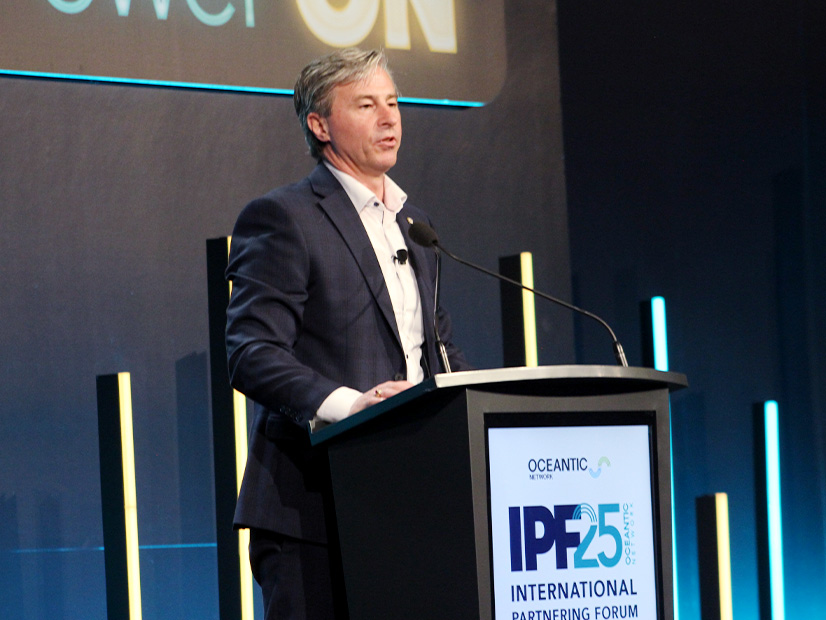
SPP CEO Lanny Nickell delivers his first president’s report. | © RTO Insider 

“We will need to evolve both as a company and as an organization, to move faster than we are accustomed in order to survive and thrive,” he said. “We know that we’ve got a generational challenge. We know that our risks are increasing because it takes a long time to get new assets and new steel in the ground.” 

Nickell called for more visibility in the industry, saying too often the utility business has been happy to stand in the shadows. But that all changed with Winter Storm Uri in 2021, when SPP was forced to shed load for the first time in its history and ERCOT’s grid was minutes away from a complete meltdown, he said. 

“It put us in a much more public position, and now our generational challenge simply compels us to be in front of utility leaders, elected officials, regulators and even consumers,” Nickell said. “We have to do a better job of telling our story in order to make the change that needs to be made and to move our industry forward. We’re going to have to be engaged with CEOs across the industry, with executive leadership of our members, and with government officials. We have to understand their needs, and we hope to be able to explain ours and make sure that we’re moving in the right direction and at the right speed.” 

Nickell closed by mentioning the release of SPP’s virtual annual report and its annual member value statement indicated the RTO’s membership realized $3.9 billion in savings and benefits, up 7.8% from 2023 to 2024. 

Cupparo Issues ‘Executive Order’

Board Chair John Cupparo closed the meeting with one of his self-admitted monologues and called on staff to outline a draft proposal that will help integrate large loads with the “appropriate acknowledgement of risks and costs” and bring it to the August board meeting.  

“This one’s getting heightened national attention. It also has implications on generation and interconnections beyond issues addressed in ERAS,” he said. “This board is willing to push the boundaries on speed and make decisions that may not achieve total consensus in order to meet our mission, to preserve the sustainability of our model and to continue to provide the value consumers in the region have become accustomed to receiving.” 

Cupparo asked that the proposal be drafted with the “requisite stakeholder engagement.” He included states and other national regions in the engagement that will be necessary in “pushing the boundaries.” 

“We believe it’s important, though, that we drive a stake in the ground in terms of moving these initiatives forward, given we’ve got a window to respond. In my mind, the reality is we’re going to need to go faster as we make additional decisions to meet our generational challenge,” he said. 

“Thank you for your executive order, I appreciate that,” Nickell responded. Alluding to his frequent call for “the need for speed,” he pointed out it took 18 months for SPP to approve a competitive project recommended in 2023. 

“That’s not speed, folks. We’ve got to get faster,” he said. 

Limits for Working Group Chairs

By approving the consent agenda, the board accepted the Corporate Governance Committee’s recommendation to limit working group chairs to three consecutive, full two-year terms as part of its “adaptive governance effort.” The committee said term limits were necessary to ensure balanced representation of various sectors and member organizations across the working groups, given the chairs’ active role in determining the groups’ representation. 

The CGC also recommended incumbent Mark Ahlstrom, with NextEra Energy Resources, chair the Future Grid Strategy Advisory Group and Western Area Power Administration’s Brianna Haug chair the Modeling Development Advisory Group. Haug previously served as the group’s vice chair. 

The consent agenda also included MOPC’s endorsement of eight transmission upgrades with estimated in-service dates (ISDs) 90 days past their first-reported ISD, and staff’s recommendation to approve four out-of-cycle evaluations for projects issued out of the 2019, 2021, 2022 and 2024 ITP assessments. 

Staff said the projects are base-plan funding and any cost changes will be reflected regionally. 

Nickell, who chairs the CGC, said the committee has renominated Bronwen Bastone, Ray Hepper and Steve Wright for additional three-year terms as independent directors. It will be Bastone’s third year and the second for Hepper and Wright. SPP’s membership will vote on the nominations during its annual meeting in November. 

Editor’s Choice: Spain Outage; Texas Legislature; and Other Timely Opinion

Editor’s Choice is a curation of timely opinion writing on energy and the electric grid. Here’s some of what we found interesting this week:

The April 28 blackout in Spain is a clear warning that pushing the grid toward 100% inverter-based resources can lead to a grid that is vulnerable to major blackouts, writes energy analyst and author Meredith Angwin.

On her Substack, “The Electric Grandma,” Angwin wrote: “The Iberian grid was depending heavily on solar, and the solar was depending heavily on switches. The switches have a fancy name (inverters), but at the core, they are still switches. Thermal (gas, coal, nuclear) power plants and hydro plants run on a different system: They have huge spinning generators, not inverters. The generators are big; they are spinning; and they want to keep spinning. They have inertia.”

(For more context, see CNBC coverage: “Spain’s Unprecedented Power Outage Sparks a Blackout Blame Game over Green Energy.”)

Angwin likens the Spanish outage to the Odessa incidents in Texas in 2021 and 2022. “During the first one, in May 2021, a surge arrestor tripped at a combined cycle power plant, and the power plant (192 MW) went offline. Quickly following the power plant going offline, 1,100 MW of [inverter-based] wind and solar went offline.”

She continues: “How does the Texas situation compare to the situation in Spain? In Spain, total power was supposed to be about 25,000 MW online. At the time of the blackout in Spain, wind and solar PV (IBRs) provided 72% of the power, and synchronous plants provided 28%.

“In other words, Spain had too many IBRs (switches) and not enough traditional (spinning) generation.”

Texas Heat and Legislative Priorities

Doug Lewin, president of Stoic Energy and host of the Energy Capital podcast, writes frequently about the Texas Legislature’s activities in “The Texas Energy and Power Newsletter” on Substack.

Writing May 12, he says ERCOT is forecasting a peak of over 84 GW, “which would shatter the previous May record of 77 GW and even threaten the all-time demand record. ERCOT expects plenty of extra capacity despite large thermal power plant outages; solar power is expected to deliver well over 20 GW.

“Even at peak, ERCOT expects outages to remain above 16,000 MW. These kinds of spring heat waves are becoming more common, and renewables and storage are a major part of preventing outages.”

However, bills advancing in the Legislature to promote fossil fuels and discourage renewables could make a huge difference, he maintains. “Should various anti-energy bills (SB 715/HB 3356, SB 388, SB 819) become law, these kinds of events would almost certainly create energy emergencies.”

He writes: “The idea among some policymakers and advocates that you can run the whole system on thermal power plants and reduce the risk of outages ignores the reality that there were outages in 2006 and 2011 before renewables were very significant.”

Solar energy naturally peaks during a heat wave when air conditioning is needed most.

“Solar output is expected to be over 21 GW at the time the peak is reached. There is only a small chance of a conservation call, much less an energy emergency, despite the high levels of thermal outages so late in the outage season.

“Grids are systems, and renewables and gas strengthen each other and help us avoid emergencies.”

Large Power Transformers and Tariffs

The Trump administration and China seem to have entered a (temporary, at least) truce in the ongoing trade war over tariffs.

Another Substack writer, Mary Geddry, draws attention to the importance to the grid of large power transformers, and how they are mostly produced overseas. “America’s electric grid may be one weather event or rifle shot away from catastrophe.

“These behemoths, up to 800,000 pounds each, are essential to high-voltage transmission. Only about 20% of the United States’ transformer needs are met domestically.”

She continues: “And if a Carrington-class solar flare or coordinated sabotage event hit the grid, there is no strategic reserve of spares. The result would not be a power outage. It would be a systemic collapse.”

She describes a close call: “In 2013, a few small-caliber bullets fired at a California substation nearly triggered a blackout across the Western U.S. That wasn’t a fluke. It was a warning.

“A single point of failure in the grid, like the destruction of a high-voltage transformer, can ripple outward, tripping automatic shutdowns and overloading parallel systems in a cascading domino effect. Hospitals, data centers, emergency services and water treatment plants can go offline. Traffic grinds to a halt. Supply chains stall. Even brief outages can result in billions in losses.”

If you have opinions you would like to share, follow the Stakeholder Soapbox guidelines.

Puget Sound Energy Inks Agreement to Join Markets+

Puget Sound Energy said May 12 that it is joining Markets+, marking another win for SPP shortly after the Bonneville Power Administration issued its final market policy in favor of the day-ahead market. 

Washington-based and investor-owned utility PSE announced in a news release that it has signed an agreement with SPP’s Markets+, saying the day-ahead market’s governance structure was a key factor in the decision.  

The announcement comes three days after BPA issued its decision May 9 to join SPP’s Markets+ instead of CAISO’s Extended Day-Ahead Market. BPA’s decision was perhaps unsurprising given a draft policy the federal power agency issued in March that emphasized the benefits of Markets+. (See related story, BPA Chooses Markets+ over EDAM.) 

Still, BPA’s announcement in favor of Markets+ represented “a crucial development enabling PSE to fully leverage the benefits of this new market structure, given the interconnected nature of its electric transmission operations with BPA in the Pacific Northwest,” PSE stated. 

“As BPA’s largest transmission customer, this coordination can deliver substantial operational efficiencies and cost benefits for our customers,” Josh Jacobs, PSE’s vice president of clean energy strategy and planning, said in a statement. “This collaborative approach allows us to actively participate in the market’s development while preserving our ability to serve our customers’ specific needs.”    

SPP has officially set Oct. 1, 2027, as the go-live date for Markets+, its centralized, day-ahead offering in the Western Interconnection. Between now and then, much will happen, with Sept. 1, 2025, emerging as a key date. That is the deadline for balancing authorities to join in time to be a part of the market when it goes live. 

Entities like Xcel Energy subsidiary Public Service Company of Colorado, El Paso Electric and Tacoma Power already have committed to joining SPP’s day-ahead market. (See Tacoma Power to Join SPP’s Markets+, 4 Arizona Utilities Commit to Joining Markets+ and PSCo Seeks to Join SPP’s Markets+.) 

When asked if BPA’s decision could influence other entities, Carrie Simpson, SPP vice president of markets, told RTO Insider that BPA’s policy “may support the evaluation process for other entities, which could result in others moving forward with decisions on market choice.” 

PSE, which has been known to lean in favor of SPP’s market option, emphasized opportunities in Markets+ to expand renewable integration within the day-ahead market’s geographical area. 

“Additionally, the program strengthens resource adequacy through regional coordination, allowing for more efficient use of existing resources and improved reliability for customers,” PSE said in the statement. 

PSE also touted Markets+’s “member-driven governance structure,” saying it allows the utility to “appropriately” represent its customers. The governance issue has been a significant focus for potential participants weighing whether to join Markets+ or EDAM. 

BPA, like others in favor of Markets+, has often stated the SPP market’s governance structure is “superior” to that of EDAM, despite ongoing efforts by the West-Wide Governance Pathways Initiative to relax the state of California’s oversight of CAISO’s EDAM and Western Energy Imbalance Market (WEIM) by handing over governance to a proposed independent regional organization. 

“PSE supports the incremental development of greater independence for CAISO and the West. Governance was just one factor among many that PSE considered in its market decision,” Phil Haines, PSE director of energy supply and trading, told RTO Insider. 

PSE said it “looks forward to working with SPP and other regional participants through Phase 2 development and toward market implementation.” 

NRG to Buy 13 GW of Generation Capacity from LS Power

NRG Energy will acquire 13 GW of gas-fired power plants and virtual power plant operator CPower from LS Power.

NRG and LS announced the agreement May 12 and said the cash and stock transaction is valued at about $12 billion, or roughly half of new-build cost for the assets.

NRG said the 18 natural gas facilities would roughly double its generation capacity. They are spread across nine states but are concentrated in areas where most of NRG’s existing load is located.

CPower, meanwhile, is an LS Power subsidiary that offers 6 GW of VPP capacity to more than 2,000 commercial and industrial customers in all of the deregulated U.S. energy markets.

NRG also reported solid first-quarter financials on May 12. Its stock price soared after the announcements, reaching a new all-time high in heavy trading and closing 26.2% higher than the previous close May 9.

In a joint news release, NRG and LS pitched the advantages the deal would offer NRG:

    • New quick-start capacity in the Northeast and Texas, simplifying risk management and lowering costs.
    • An immediate and strong value proposition, even without factoring price increases in tightening markets or large load prospects such as data centers.
    • Better ability to service rapidly growing demand for tailored long-term supply solutions, particularly data centers.
    • Potential for more than 1 GW of uprates, sites for possible development or co-location, and a differentiated commercial and industrial VPP platform.

NRG CEO Larry Coben said in the news release: “We are in the early stages of a power demand supercycle, and we are excited to lead the way with reliable energy solutions that will drive considerable value for NRG and all of our stakeholders.”

The acquisition is expected to close in the first quarter of 2026. It is subject to FERC and New York State Public Service Commission approval as well as federal antitrust review.

The sale would leave LS with about 10 GW of storage and natural gas and renewable generation capacity, as well as about 800 miles of existing transmission assets and 350-plus miles under construction.

LS CEO Paul Segal said the portfolio is uniquely suited for growing demand in the markets it serves and is being placed in capable hands. “LS Power will continue to invest in and develop secure and reliable energy infrastructure across the U.S.,” he said.

NRG reported GAAP net income of $750 million for the first quarter of 2025, or $531 million after adjustments, up from $511 million and $305 million in the same period a year earlier. The adjusted EBITDA set a first-quarter record for the company.

First-quarter 2025 earnings per share were $3.70 (GAAP) or $2.68 (adjusted), compared with $2.36 or $1.46 a year earlier.

NYISO to Include Empire Wind in Q2 STAR Base Case

NYISO is modeling the Empire Wind offshore wind project as in-service despite federal orders to cease construction, staff said in presenting updated assumptions for the second-quarter Short Term Assessment of Reliability (STAR) to the Transmission Planning Advisory Subcommittee meeting May 6.

Alison Stuart, NYISO manager of reliability studies, explained that a scenario would be included in the modeling that would factor Empire Wind as out of service, but it was included in the base case.

Stakeholders questioned why the Empire Wind project was still assumed under the base case rules, citing the Trump administration’s targeting of the project. (See Feds Move to Halt Construction of Empire Wind 1.)

“Can you explain why? It’s clearly on hold,” a stakeholder asked.

“We don’t have any information from the developers regarding a delay of service date,” said Ross Altman, senior manager of reliability planning.

“You might not have anything from the developer, but there’s an executive order signed by the president of the country,” the stakeholder replied.

Altman responded that NYISO is tracking the news regarding Empire Wind closely, but that the project still met their base case inclusion rules.

The first-quarter STAR reaffirmed that New York City needed the Gowanus and Narrows peaker plants to maintain summer reliability into 2027. (See NYISO Reaffirms Need for NYC Peakers in Summer.) Stuart explained that the second-quarter STAR would include the deactivation of three generator units at Gowanus and Narrows, representing 64 MW of nameplate capacity. The deactivations do not include the plants’ other units at Gowanus and Narrows that the ISO designated to remain in service after their scheduled retirement under the state Department of Environmental Conservation’s peaker rule.

Stuart went on to explain that in terms of load forecast assumptions, the ISO was using the 2024 Gold Book’s projections, as the 2025 edition is not coming out in time for the study. In response to stakeholder questions, Altman said that the Gold Book was usually out in time for the third-quarter STAR.

“It just seems like you’re using very old load data, especially for New York City,” responded Chris Casey of the Natural Resources Defense Council. “There were conversations about whether we should be using that forecast in the Q1 STAR, and here we are using it for the Q2.”

The ISO is also still modeling cryptocurrency mining and hydrogen production loads as “flexible” and able to turn off during peak conditions. A stakeholder asked why this was the case, given that several interconnection studies the ISO had presented to TPAS earlier in the meeting were going to be so inflexible. Altman said that those projects were data centers and not cryptomining or hydrogen facilities and that data centers were already modeled as inflexible load.

NYISO staff also presented updates on the biennial Comprehensive Reliability Plan (CRP) in development.

Last year the CRP found a reliability need in New York City by 2033, but the ISO determined this year that the need had been resolved after updating its forecasts. (See NYISO Cancels 2033 Reliability Need for NYC.)

Altman said NYISO is still extremely worried about uncertainties and diminishing reliability margins for the city, particularly in transmission security.

The CRP, Altman said, will focus on identifying and quantifying looming uncertainties on the planning horizon. This would include load growth, system updates, generation project delays, winter risks, and generation retirements and failures.

CEC Approves 3 IRPs, Decreases Battery Storage Project Size

The California Energy Commission (CEC) approved three integrated resource plans or publicly owned utilities as the state prepares the grid to meet peak loads this summer.

The first IRP approval went to Burbank Water and Power (BWP), which has more than 105,000 residents and is expecting electricity demand to increase in coming years due additional commercial development and electric vehicle chargers, the CEC’s report says. BWP’s peak demand is estimated to increase from 277 MW in 2023 to 323 MW in 2030 — or about 2.7% per year, CEC staff said.

From 2025 to 2027, Burbank will fall short of meeting its own capacity requirements, but it has an agreement with the Los Angeles Department of Water and Power allowing it to purchase reserve resources from LADWP. A critical project for the utility is a 3-MW solar plus storage project located at the Burbank Airport, scheduled to turn on in 2027.

The CEC also approved an IRP for Vernon Public Utilities (VPU), which has about 1,900 customers and a peak load of about 189 MW. In 2022, VPU terminated all three of its transmission contracts with Southern California Edison and LADWP, saying these contacts were not economical for its ratepayers, the CEC report says. VPU’s peak load occurs between 10 a.m. and 2 p.m. Monday through Friday, and during these hours CAISO has recorded some of the lowest emission intensity values, including zero, as increasing amounts of solar generation are connected to the system, according to the report.

The final IRP approval went to Redding Electric Utility (REU), which has about 45,000 customers. REU’s forecast peak demand in 2030 is 227 MW — down from 241 MW in 2018 and 253 MW in 2006. Redding utilities connect to California’s transmission grid through two substation facilities owned by the Western Area Power Administration. In August 1995, REU signed a 40-year transmission agreement with WAPA. REU plans to procure 60 MW of energy from a solar project beginning in 2026.

The commission also has amended a $30 million grant with Form Energy, reducing the grant to $25 million, decreasing the project’s energy storage system size from 5 MW to 1.5 MW and increasing match share from $6 million to $25 million.

The project size was adjusted to better align with the charging capacity of the Mendocino substation, a Form Energy spokesperson told RTO Insider. An original study of the project indicated the site could support a discharge capacity of 5 MW and charge capacity of 4 MW, but a secondary study completed in 2024 found the interconnection charging capacity was closer to 1.5 MW on average, the spokesperson said. The project initially was estimated to come online by 2025 but now is expected to come online in 2026, the spokesperson said.

If completed, the project will be the first multiday energy storage project in California. The project grant is funded by the CEC’s Long Duration Energy Storage program, which is for non-lithium technologies with more than eight hours of energy storage.

StakeholderForum: The Unseen Costs of Subsidized Solar

Policymakers and advocates often hail solar energy as the future of electricity generation. Yet behind the glowing headlines and government incentives lies an overlooked economic risk — one that threatens both grid stability and long-term affordability. 

If one were to assess solar power’s true cost, a simple thought experiment proves instructive. Imagine a U.S. region rich in both natural gas and sunlight, where a hypothetical grid relies entirely on newly built generation. Based on 2024 gas prices and capital costs, at a baseline, a 100% gas-fired system would break even at approximately $50 to $55/MWh.  

However, as solar capacity is added, the system’s breakeven cost of generation rises by $3.25 to $3.50/MWh for every 10 percentage points of demand captured by solar. At 50% solar penetration, system generation costs would rise to $65 to $73/MWh. This is before considering the costs of additional large-scale battery storage, system balancing and monitoring, and transmission assets inevitably needed to make solar work well enough to achieve and maintain such a market share. 

Doug Sheridan

Yet the situation on today’s real-world grids is even more precarious. In many cases, new solar farms are being added to systems otherwise dominated by legacy gas-fired power plants. These assets were built under the assumption they would have a fair opportunity to generate returns over their lifespan. Instead, heavily subsidized solar generation — boosted further by both national and state regulatory favoritism — is driving wholesale electricity prices down while pushing older, gas-fired plants to the financial brink. 

For many power producers, this shift has created a brutal economic reality — legacy gas-fired plants being forced into an uneconomical position, unable to justify reinvestment or sustain profitability. This dynamic keeps power prices artificially low in the short term but lays the groundwork for rising costs over time — as dispatchable gas-fired units retire and grids become dangerously reliant on intermittent solar. 

No grid exemplifies this trend more starkly than ERCOT, which supplies power to millions of people across the state. Rapidly growing solar penetration has eroded developer confidence in the profitability of gas-fired projects on the system — as evidenced by the lukewarm enthusiasm for the $5 billion Texas Energy Fund designed to incentivize new gas-fired capacity. (See 2 More Projects Fall out of TEF Loan Program.) Developers continue to refuse its offers, no doubt concerned over the lack of regulatory and economic safeguards against the eroding effects of subsidized renewables. 

Texas is at an inflection point. The systematic erosion of its time-tested dispatchable gas-fired generation threatens grid reliability, while the economic uncertainty deters investors from stepping in to stabilize the system. 

If history is any indication, officials may attempt to downplay the consequences of solar’s effects on the system or blame external factors like rising demand. But in reality, Texas — and states following similar paths — are setting themselves up for long-term risks in both pricing and power security. The risk of higher residential rates and more frequent blackouts cannot be ignored. 

Subsidized solar may look economically attractive today, but its distortive impacts on energy markets tell a different story. Without course correction, states like Texas risk facing an electricity crisis not in spite of solar’s success — but because of it. 

Doug Sheridan is president of EnergyPoint Research in Houston. 

See Stakeholder Soapbox guidelines to learn how to make a submission for publication. 

BPA Chooses Markets+ over EDAM

The Bonneville Power Administration on May 9 issued its long-awaited decision on joining a day-ahead market, confirming its choice of SPP’s Markets+ over CAISO’s Extended Day-Ahead Market, marking a major milestone for Little Rock, Ark.-based SPP’s push to expand into the Western Interconnection.  

BPA’s final record of decision (ROD) will come as little surprise to those who’ve been following market developments in the West. In March, the agency released a draft “policy direction” stating that the SPP market “is the best long-term strategic direction for Bonneville, its customers and the Northwest,” which followed by a year a staff “leaning” expressing similar determination.(See BPA Selects SPP Markets+ in Draft Policy.) 

“Day-ahead market participation, specifically in Markets+, is in the best interest of our customers and the region, as it offers the opportunity to ensure a reliable, abundant and affordable energy supply for consumers in the Northwest,” BPA Administrator John Hairston wrote in a letter announcing release of the decision. 

“BPA’s final policy direction toward participation in Markets+ represents significant effort by BPA staff and stakeholders to evaluate market options that support the region’s ability to share affordable and reliable energy,” said Carrie Simpson, SPP vice president of markets. “SPP thanks BPA for their engagement during Phase 1 of Markets+ development, and we look forward to their continued collaboration as we work together to implement a Western market that improves grid efficiency and values the needs of all participants.” 

The ROD represents a big win for SPP and is likely a key to the viability of Markets+, given that BPA manages the output from 31 hydroelectric dams in the Federal Columbia River Power System with a combined capacity of about 22,440 MW, while also operating more than 15,000 miles of transmission lines — about 75% of the Northwest grid.  

The decision also is likely to influence the decisions of other entities in the region. 

“Puget Sound Energy appreciates BPA making the choice to participate in the Southwest Power Pool’s Markets+ program,” Phil Haines, the utility’s director of energy supply and trading, told RTO Insider. “As BPA’s largest transmission customer, it’s important to us to have a clear view. We expect to make a decision of our own very shortly.” 

The ROD was the culmination of a two-year stakeholder process conducted by BPA, an effort often marked by tensions between supporters of each day-ahead market, with some EDAM backers contending the process appeared to be working to a foregone conclusion. (See Rising Tensions Evident at BPA Day-ahead Markets Workshop.) 

The process even drew the attention of key Northwest political figures, including members of the Pacific Northwest’s U.S. Senate delegation, who largely were critical of the agency’s leaning in favor of the SPP market. (See In Letter to Senators, BPA Tempers Markets+ Leaning.) 

In his letter, Hairston said the federal power agency reached its decision “through thorough policy analysis, extensive input from customers and stakeholders, careful consideration of current market dynamics, and thoughtful attention to the principles that guided our assessment.” 

The ROD seems to anticipate potential complaints about how BPA conducted its day-ahead markets process, saying the agency “has held one of the most open and transparent public processes to evaluate day-ahead market participation.” 

“In comparison, electric utilities that have indicated they will or have taken steps to join EDAM did so largely without public process or transparency. They are now rapidly implementing EDAM despite serious concerns about potential unjust and unreasonable transmission OATT terms and conditions in their BAAs,” BPA wrote. 

As in the “policy direction” issued in March and staff leaning published last year, BPA’s ROD emphasized the importance of Markets+’s independent governance framework. While recognizing the “qualitative” nature of the issue, BPA reiterated its oft-stated opinion that the SPP market’s governance structure is “superior” to that of EDAM, despite ongoing efforts by the West-Wide Governance Pathways Initiative to relax the state of California’s oversight for CAISO’s EDAM and Western Energy Imbalance Market (WEIM). 

“Independent governance does not factor into a strict formula where the risk of negative governance-related outcomes is quantified or weighted against other criteria,” BPA wrote in the ROD. “There is unmeasurable uncertainty regarding what issues will confront day-ahead markets in the future. In addition to past disputes and known current challenges, there will surely be issues that arise that no one has yet fully contemplated, and governance will surely impact market decisions that impact financial outcomes. … Bonneville would be accepting great risk if the process is biased toward certain entities, does not allow issues of concern to be prioritized or is not durable enough to provide fair representation in crisis situations.” 

The ROD also rebuffed requests by EDAM supporters that BPA at least delay its decision until developments play out this year related to California legislative bill that would implement the recommendations by the Pathways Initiative to bring greater independence to the EDAM and WEIM. 

“Bonneville does not find merit in waiting for EDAM to incrementally improve its governance,” BPA wrote. “First, Bonneville has determined that the existing Markets+ governance is superior even to the Pathways Step 2 governance revisions currently proposed for EDAM, which still require legislative approval. Second, the Pathways Step 2 governance does not sufficiently address Bonneville’s concerns regarding independence and EDAM governance independence would continue to be insufficient, even under Pathways Step 2.” 

BPA also pointed to the “strategic benefit” of deciding on a market now, including “better coordination” with other agencies and establishing an “early seat at the table” for participating in Markets+.   

‘Special Problems’

In his letter, Hairston acknowledged the work that remains before BPA can begin participating in Markets+, including the agency’s own “tariff and rate proceedings to determine cost allocations and the terms and conditions for transmission service.” 

BPA — and other Markets+ participants — also can move on to deal with the market’s Phase 2 implementation stage, which begins this summer.  

Participants presumably will need to begin addressing challenges stemming from the non-contiguous nature of the Markets+ footprint, which likely will consist of three isolated pockets concentrated in the Pacific Northwest, Arizona and Colorado, as well as a smaller segment in El Paso Electric’s New Mexico service territory. Chief among those challenges will be the lack of transmission capacity connecting the market’s zones, which will require making energy transfers through the larger EDAM, where possible. 

During an April 9 meeting of CAISO’s Western Energy Markets Regional Issues Forum (RIF) in Portland, Ore., Grid Strategies’ Richard Doying, one of the architects of MISO’s market, said the situation in the West will be unique in that the Eastern Interconnection does not contain any markets where market zones are “in their own isolated zones without physical transmission connected.”  

“And that is, in fact, the case for what we have right now in the Markets+ region. It’s not clear, based on all of the announcements, whether EDAM will be contiguous. We have to see where everyone goes at the end of the day. … But it does introduce special problems,” Doying said. 

The creation of separate day-ahead markets in the West will result in more issues at the seams of the two markets, although BPA and other Markets+ participants have played down the importance of seams in their market decisions.  

During the April 9 RIF meeting, Todd Kochheiser, senior electrical engineer at BPA, noted the agency already manages a non-contiguous balancing authority area that spans six states and is adjacent to 18 other BAAs. He said BPA has more than 75 years of experience managing operations across seams, although he acknowledged day-ahead markets would add a new layer of complexity. 

“While seams present complexities, Bonneville and other utilities have successfully managed seams in the Western Interconnection for decades,” Hairston wrote. “Based on this experience, and as part of our day-ahead market implementation plan, Bonneville will reach out and collaborate with entities to mitigate seams.” 

Reactions

Reactions from across the region were mixed. 

“We respect BPA’s decision to join Markets+ and recognize the valuable contributions from diverse stakeholders across the Pacific Northwest during this evaluation process,” CAISO CEO Elliot Mainzer — BPA’s previous administrator — said in an email. “CAISO continues to focus on the success of the Western Energy Imbalance Market (WEIM) and the Extended Day-Ahead Market (EDAM) to ensure inclusive and efficient energy market solutions. Our commitment to maintaining reliability and delivering economic value to our customers in the West remains unwavering, and we look forward to continued collaboration with all parties involved.”  

“I have repeatedly stressed that BPA should take its time to get this decision right, which will impact Oregonians for decades,” Sen. Jeff Merkley (D-Ore.) said in an email. “Despite concerns from my fellow senators and the governors of Oregon and Washington, BPA has made a rushed decision. BPA still needs to go through a ratemaking process, and I remain laser-focused on prioritizing the needs of Oregon families to have affordable and reliable energy.” 

“It’s disappointing BPA has chosen this route now, when evidence suggests waiting for both day-ahead market options to mature could provide the most benefits to ratepayers,” Sen. Ron Wyden (D-Ore.) said. “I’ll keep pressing BPA to make decisions that prioritize affordable, reliable and clean electricity in the Northwest.”

Leah Rubin Shen, managing director at Advanced Energy United, called BPA’s decision “premature,” contending it could “entrench costly market seams and inefficiencies.” Rubin Shen pointed to the production cost study commissioned by BPA in 2024 that showed Markets+ would deliver the agency fewer economic benefits than EDAM. (See BPA Sticks to Markets+ Leaning Despite Study Showing EDAM Benefits.) 

“The West has the potential to come together and build a broad, unified market for the whole region,” she said. “Unfortunately, this decision takes us away from that vision, cementing a narrower path that could lock us into a fragmented market structure and undermine the immense reliability and cost-savings benefits of sharing resources across the region.”

“BPA’s participation in Markets+ is a win for the Northwest,” said Scott Simms, executive director of the Public Power Council. “This market was designed with BPA’s unique role in mind, and the result reflects a strong, collaborative effort among public power, SPP and other Western entities. We support BPA’s timely decision which comes at the end of a rigorous public process. Making this decision now will allow the agency to pursue participation in a day ahead market that has the confidence of its customers.” 

The Northwest Energy Coalition (NWEC), a strong EDAM supporter in the region, expressed disappointment over BPA’s decision and also pointed to the BPA analysis showing the greater financial benefits stemming from the larger footprint of the CAISO market.  

“Yet BPA has chosen Markets+, a smaller market footprint. When BPA joins Markets+, it will decrease net benefits to customers by $108 million each year. If BPA joins EDAM, it will increase net benefits to customers by $57 million each year,” NWEC wrote. “BPA’s decision to pursue a market with less economic benefits for customers and less direct interconnection with other utilities across the West will reduce the potential for all electricity users in the region to benefit from a unified day-ahead market. This decision is not in the best interest of the region.” 

“We greatly appreciate Bonneville’s continued leadership during this pivotal moment in the evolution of western energy markets,” said Jeff Spires, managing director of power at Powerex. “Bonneville’s choice to participate in Markets+ is the result of an extensive and comprehensive evaluation process in which Bonneville prioritized the foundational governance and market design elements that will provide benefits for Bonneville, its customers, and the broader Northwest region for years to come.” 

“BPA’s decision to join Markets + is a significant milestone in providing confidence for other Northwest utilities to join,” said Laura Trolese of The Energy Authority, chair of the Markets+ Participants Executive Committee. “I expect other announcements to follow.”  

Seattle City Light said it is “deeply disappointed” in the decision. “BPA’s decision to join Markets+ is inconsistent with its responsibility to maximize customer benefits in accordance with sound business principles. BPA’s own record and analysis shows that Markets+ will increase costs for BPA and its customers.” The decision “will negatively impact the utility in two significant ways — as a market participant and as one of BPA’s largest customers. Our ratepayers will bear the burden of this decision as we spend $20 [million to] $40 million more every year on energy. This is especially burdensome with the rising costs to meet growing energy needs.”

“As BPA’s largest individual customer, Snohomish PUD appreciates the administration’s thorough and transparent evaluation of a complex decision with significant regional impact,” said Adam Cornelius, power analyst at the PUD. “We expect that BPA’s participation in a day-ahead market to result in more efficient usage of the Northwest’s hydropower resources and transmission system, driving improved reliability and cost savings. Snohomish values the independent governance and market design of Markets+ and believes it strikes the right balance for our customers and the region.”

“We continue to work collaboratively with other Markets+ members and look forward to providing APS customers more savings opportunities and continued reliable service through a larger market footprint,” said Kent Walter, Arizona Public Service, director of Western market affairs. “Bonneville Power Administration joins a group of diverse utilities and generation providers who benefit from the regional diversity of the northwest and southwest participants. Together, we are developing a market structure that enables market choice for future participants.”

Tom Kleckner contributed to this article. 

Collateral Benefits of OSW Transmission Projects Can be Key

VIRGINIA BEACH, Va. — States looking to upgrade the grid to interconnect wind power off their coasts should look for secondary benefits to lure support, speakers said at Oceantic Network’s 2025 International Partnering Forum on April 28 to May 1.

Reaping multiple benefits from a grid project can help soften the uncertainty that faces many transmission projects, reducing the risk and perhaps opposition, speakers said.

The challenge is “to advance grid improvements that would be beneficial for offshore wind integration and also provide other benefits to reliability,” John Bernecker, director of the Transmission Center of Excellence at the New York State Energy Research and Development Authority, said in the April 29 panel “Strategies for Cross-value Benefits.” Such initiatives can “cost-effectively integrate other resources as well,” he said.

The strategy reflected a view running through several panels at the conference that offshore wind projects could be made more acceptable to a broader community by downplaying the climate benefits and highlighting other positives.

One such example is the planned Propel New York project to improve the grid across parts of Long Island, New York City and Westchester County. Initially designed to connect 3 GW of offshore wind, the final project also improved the city’s connection with upstate New York and Long Island, said Girish Behal, a vice president at New York Power Authority, one of the project developers.

“That’s where the value conversation comes into place,” he said. “Long Island being a constrained area has a high cost of generation, [and] connecting it to the rest of the grid adds resiliency in being able to bring in what I would call ‘off-location’ power.”

Christian Lindeen, commercial lead of offshore wind for consultant DNV, outlined several examples in which the multibenefit strategy has worked in Europe. In the U.K., he said, a study showed how to use submarine cable bootstraps to bypass the onshore grid with HVDC offshore connections. The system bypasses the “constraints that are onshore, alleviating the grid,” he said.

The message, Bernecker said, is that “it’s important that we’re continuing to advance what we can in a mindful way as we navigate the uncertain times.”

Northern Opportunity

The premier of Nova Scotia, Tim Houston, happened to take the stage at IPF a day after the Liberal Party candidate in the Canadian election for prime minister, Mark Carney, was announced as the winner.

Carney is committed to both clean and traditional generation.

“Interesting results,” Houston said. “It’s probably a helpful result for this sector. So I’m excited.”

Nova Scotia Premier Tim Houston | © RTO Insider

Houston was billed to speak about “Cross-Border Energy Collaboration,” but he spent time pitching the benefits of his province for offshore wind, and he urged the assembled developers, vendors and other stakeholders to consider partnering with him.

“We have incredible wind speeds. It blows a lot. We have good, good bottom; we have ports. We have a lot to offer,” he said.

Nova Scotia will solicit bids for 2.5 GW of power in 2025 and will follow that with additional solicitations every two years to meet demand, of which there is a lot, he said.

Canada at present has “zero offshore wind,” the premier said, but he believes that “from Nova Scotia, we could power most of Canada.” He said that he hopes wind power can boost the economy of his province, which is ranked lowest by GDP per capita out of the 50 U.S. states and 10 Canadian provinces.

With OSW halted in the U.S., industry players could ply their trade in Canada, he suggested, adding that his government is committed to the cause.

“I actually think that timing couldn’t be better,” he said. “Because as things settle down in the United States over the next little while, we can be getting to work in Nova Scotia and building up those supply chains and building the infrastructure and creating the energy that is so much in demand.”

Diversity Makes a Good Hub

Developing a wind port hub is considered essential to the supply chain infrastructure. So what makes a good hub? What can be gleaned from the short history of U.S. offshore wind to help inform the development of future hubs?

To answer the questions, a panel focused on hubs in Virginia, Rhode Island, New Orleans and Maryland on April 30.

The hub status of the Port of Providence, which serves the Block Island Wind Farm off Rhode Island, largely grew out of the area geography: It’s located in a key area of offshore wind activity, said John O’Keeffe, vice president of business development at Waterson Terminal Services, which manages the port.

“We are located in a key area of the majority of the offshore wind activity that’s happened in the past 10 years,” he said.

The Virginia hub, which includes the Fairwinds Landing logistics center, emerged from the area’s strong marine tradition, building upon the benefits of the Port of Virginia, the East Coast’s second largest port.

So when the need for an OSW infrastructure emerged, the state could “simply pivot some of our existing facilities, our existing supply chains, our existing workforce,” said Will Fediw, senior vice president of the Virginia Maritime Association. “We weren’t building anything from scratch.”

The New Orleans wind hub is in large part focused on Port Fourchon, which is the base of 99% of offshore oil and gas service operations in the area, said Cameron Poole, energy and innovation associate for Greater New Orleans. Those sectors have helped the hub grow, and wind has in turn provided them with support during industry slowdowns, he said.

In Maryland, the former site of Bethlehem Steel has been transformed into Sparrows Point, a trade and logistics hub, with an offshore wind component that includes a steelmaking and monopile manufacturing operation. Other OSW elements include the Crystal Steel Fabricators facility in Federalsburg and the Hellenic Cables factory under construction in Baltimore, Maryland Del. Lorig Charkoudian said.

Fediw said a key lesson is the importance of embracing a breadth of industry sectors.

It’s “the idea of administration-proofing your hubs by thinking about more of a diversified portfolio,” he said. “So many projects were wanting to be like, [‘We’ll be] all-in on offshore wind where we’re going to build a pure offshore wind terminal.’ And that created a lot of risk.”

Instead, with Fairwinds Landing, it was, “‘We’re going to buy a terminal; we’re going to develop it; and we’re going to have several business lines here,’” he said. “‘We’re going to do some offshore wind; we’re going to do some shipbuilding, ship repair; we’re going to do some project cargo, and really spread that risk across so that they’re making money.’

“That drives investment and gives the market more confidence, because they see that risk has been bought down,” he said, adding that that approach may have helped wind ports and hubs that are now struggling. “Maybe at other ports and hubs, if they had looked at that approach a little bit, it might have helped de-risk and speed up investment by having more multipurpose terminals.”

Paulina O’Connor, executive director of the New Jersey Offshore Wind Alliance, echoed the sentiment after listening to a separate panel on procurement. She said she liked some of the comments she heard, such as “the pivot to working more collaboratively with other states.” Having completed the first phase of its wind port, New Jersey has no wind project under construction and is looking at alternative ways to use the hub.

“It was very competitive in the beginning: Who’s going to get the turbine manufacturer? Who’s going to get the cable manufactured to their state?” she recalled. “I think we’ve grown and gotten smarter, and now we realize that it is better to be collaborative. And I’m really pleased to see that, and hope that New Jersey takes a step forward to implement that and works more collaboratively with New York and Delaware and Maryland, not only in the supply chain, but transmission development as well.”

Vendors Anxious but Holding Faith

Uncertainty pervaded virtually all aspects of the IPF25 conference, and vendors offering their goods and services in the exhibition hall were no exception.

Several said the conference was markedly smaller than last year, with fewer attendees and vendors. But some also held out hope the sector would rebound.

Melissa Wood, TDI-Brooks International | © RTO Insider

Melissa Wood, director of sales and marketing at TDI-Brooks International, which operates a fleet of ships that do analog mapping of the sea floor, said she had not been sure she would come to IPF. She has attended the conference for several years and was so bullish when she signed up for the 2025 conference a year ago that she took two booth spaces.

Then President Donald Trump moved against the industry, and the future looked far less upbeat.

“I’ll be honest, we did say, ‘Should we be here?’” she said. “Our owner was like, ‘I don’t think it’s going to be worth my time.’ I said, ‘We’ve already paid for the booth space.’

“We all kind of had the rug pulled out and have to figure out what to do next,” she said. “So it’s obviously slower than it has been in the past.”

TDI has pivoted and found work in the oil and gas industry, the company’s main business for 29 years, she said. But she expects the wind sector to rebound.

“I think within the next 12 months, we’ll see a change,” Woods said. “Maybe things have reset a little bit. … A lot of these developers have had to lay off folks, but they still have kept their permitting strong and their procurement people strong to be able to still trudge forward with the government to try to see if they can turn things around. I think the people here want clean energy. They’ll educate the current administration, and we’ll see a change.”

Attending his fifth IPF conference, James Gura, of the Moran Shipping Agency, a logistics and compliance company in New Haven, Conn., that is working on offshore wind projects, said he expects the sector to make a comeback.

“This convention, I would say, is a little bit slower than conventions in the past. And I think people are concerned about the stability of the market and offshore wind,” he said. But he added: “There is a need for energy diversification in the United States, and I think this is an option to fulfill those needs. We are cautiously optimistic on the future of the industry.”

NERC Offered to Help with Iberia Outage Investigation, Robb Says

NERC CEO Jim Robb told the ERO’s trustees the organization has offered to assist its European counterparts as they investigate the recent mass blackout in the Iberian peninsula, while warning that it is “way too early” to draw any conclusions about the cause of the issues. 

Robb’s comments at the May 8 meeting of NERC’s Board of Trustees in Washington, D.C., echoed those he made at a joint meeting of FERC and the National Association of Regulatory Utility Commissioners on April 30. (See FERC-NARUC Collaborative Examines Ongoing Issues with Gas-electric Coordination.)  

They were similar to the remarks of Teresa Ribera, European Commission executive vice president for a clean, just and competitive transition, who on May 5 criticized what she called a “trigger-happy attitude” blaming renewable energy for the outages.  

Nearly the entire population of Spain and Portugal, along with parts of France, lost power on the afternoon of April 28, with electricity restored for most of the peninsula only the following day. Spain’s grid operator said the same week that the outages began with two separate generation loss incidents in the country’s southwest, but it has not identified their exact location. 

Robb drew parallels between the Iberia outages and the Northeast blackout of August 2003, which “changed so much about how we approach reliability of the [power grid] here in North America.” He also compared the incident to “some of the things we’ve seen in West Texas, California and Utah,” an apparent reference to previous grid disturbances including the Odessa disturbances of 2021 and 2022 when multiple renewable generation resources tripped offline. (See NERC Repeats IBR Warnings After Second Odessa Event.) 

While Robb advised listeners that “it’s probably best to … let [investigators] do their work,” he named a few areas in which NERC is particularly interested, such as the relative lack of inertial generation on the peninsula and the “frequency loss and voltage control that comes along with that.” He also mentioned the use of natural gas to restart the Iberian grid, which touches on questions that NERC has been studying about the North American grid’s black start capability.  

In addition to offering to help the European Energy Information Sharing and Analysis Centre with its investigation, Robb said the ERO plans to give a full briefing at FERC’s open meeting in June about the Iberian outage and its implications for North American customers. 

FERC Chairman Mark Christie, who also attended the meeting, assured Robb he was looking forward to NERC’s report and urged the ERO to “keep telling the truth.” He also expressed his hope that FERC’s upcoming technical conference on resource adequacy June 4-5, which will feature presentations from Robb as well as CEOs of the RTOs, would be “critically important” and “a seminal moment in American energy policy.” 

Kim Shares Section 321 Analysis

The board meeting featured a presentation from Soo Jin Kim, NERC’s vice president of engineering and standards, on the ERO’s use of its special powers under Section 321 of NERC’s Rules of Procedure to streamline the standards development process. 

NERC’s board has invoked its Section 321 powers twice so far: in August 2024 to move forward with standards on inverter-based resources (IBRs), and in January 2025 for a proposed cold weather standard. In both cases the ERO was facing a FERC-imposed deadline that trustees feared they could not meet through the normal stakeholder process, with standards having failed to garner enough votes in formal ballot periods. 

Kim acknowledged that the Section 321 process had been “very time consuming” and “a strain on resources” for both industry and NERC, even though both uses resulted in standards being submitted to FERC. She said the ERO staff has been working to identify the contributing factors in the development of the cold weather standard that required the board to invoke the special authority. 

So far, NERC has identified several common elements, Kim said. First, many of the comments received during the ballot period were not helpful and in some cases “contradicting … the original FERC order and the directives that were issued,” leaving the standard development team unsure how they could address industry concerns while still satisfying the commission’s mandate.

“Process inefficiencies” also contributed to the ERO’s inability to finish the standard in time, Kim said, naming the difficulty of assembling a standards development team given the limited availability of industry stakeholders as an example. In addition, she said miscommunication between NERC and industry at key moments kept the project from meeting its goals. 

NERC staff members are working on recommendations for both the ERO and industry to address these issues, Kim said. For industry, these include working out ways for interested employees to participate in NERC’s drafting teams, work groups and task forces; improving metrics for measuring the progress of standards development projects; and revising the process and timing for FERC engagement.  

Recommendations for NERC include figuring out how new participants can get involved in the standards process and enhancing the process for holding technical conferences, which formed an important part of the Section 321 cycle for both the IBR and the cold weather standards. 

RDA Updates, IBR Alert Approved

Trustees also approved changes to NERC’s regional delegation agreements at the meeting, ahead of their expiration at the end of the year. The RDAs set out NERC’s relationships with the regional entities, including their authority to engage in compliance monitoring and perform reliability assessments. They now will be filed with FERC, to take effect Jan. 1, 2026. 

In addition, the board approved a Level 3 alert setting out essential actions for registered entities to take regarding IBR performance and modeling. These include enhancing the generator interconnection and planning policies, performing a review of IBRs currently on the system to determine the accuracy of their models, and implementing process to verify the accuracy of models used in the interconnection and planning processes.