Consumer Advocates, Environmentalists Lay out Priorities to PJM

LANDSDOWNE, Va. — PJM’s Public Interest and Environmental Organization User Group voiced mixed views on the RTO’s policy trajectory, praising advances in generation interconnection over the past year while raising concerns about rising costs and transparency.

Speaking at PJM’s Annual Meeting on May 14, representatives of the consumer advocate wing of the group largely focused on how rising capacity and transmission costs are affecting ratepayers and long-term reliability, while raising questions about whether the RTO is overly influenced by large transmission and generation owners.

Environmentalists worried that improvements to the interconnection study process, which could speed renewable development, could be outweighed by decisions to allow more resources into the queue and the effects of PJM’s long-term transmission planning proposal under FERC Order 1920.

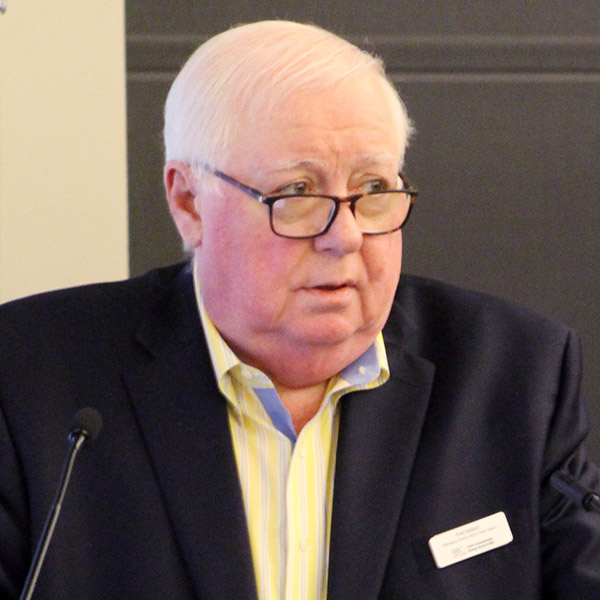
Brian Lipman, director of the New Jersey Division of Rate Counsel, said consumer advocates for the first time are growing concerned about how the PJM capacity market can manage both sides of the objective of delivering reliability at the least cost. While advocates have long focused on impacts to consumers’ rates, reliability has become a growing issue as industry participants discuss the increasing risks of brownouts and rolling blackouts.

Lipman used the concept of a Venn diagram to describe the decreasing overlap between the prices consumers are willing to pay and the revenues generation owners report they need to earn to maintain and develop resources. Legislators, governors and voters trying to understand how PJM decisions will affect rates and should impact policy also are frustrated by the lack of cost-impact analysis around the RTO’s proposals and market outcomes, he said.

“The anger at PJM outside this room is probably at an all-time high … I think you saw that over the last few days,” Lipman said, referring to a May 12 Members Committee (MC) vote to oust two members of the RTO’s Board of Managers who were up for reelection. (See related story, PJM Stakeholders Reaffirm Board Election Results.)

Lipman expressed surprise that PJM didn’t anticipate the outcome, given the amount of dissatisfaction that some stakeholders have expressed to the RTO.

He argued that PJM should conduct more outreach to understand where member states stand and to establish more avenues for them to learn about changes being contemplated by the RTO or its members. Too often, he said, key decisions already have been made when proposals are brought to stakeholders. He pointed to the proposal to shift filing rights over the Regional Transmission Expansion Plan from the RTO membership to the Board of Managers, which was filed at FERC after stakeholders voted in opposition, as well as the settlement with Pennsylvania Gov. Josh Shapiro to set a minimum capacity price and lower the maximum, which was not voted on by the membership.

“PJM must work on its transparency; much of its work is shrouded in secrecy,” Lipman said.

Maryland People’s Counsel David Lapp said PJM has argued that the considerable increase in clearing prices seen in the 2025/26 Base Residual Auction (BRA) was the result of tightening supply and demand, which he said misses the impact of RTO market design decisions that have limited supply.

Lapp noted that, while some of those have been changed for subsequent auctions, such as modeling the output of generation operating on reliability-must-run agreements as capacity, leaving them in place for the 2025/26 auction will cost consumers more than $5 billion. (See Maryland Report Details PJM Cost Increases for Ratepayers.)

Lapp also said that including intermittent and storage resources in the requirement that resources holding capacity interconnection rights (CIRs) must offer into BRAs was another step forward, but an exception remains for demand response resources.

“There’s a lot PJM can do to move those circles together if not overlap; those are the assumptions and parameters that PJM controls,” Lapp said, referring to Lipman’s Venn diagram concept.

Lipman said PJM market design decisions often undermine states’ clean energy policies and efforts to build offshore wind in the footprint. That has created an impression the RTO is more political than previously realized.

PJM CEO Manu Asthana strongly pushed back on that assertion, saying one of his proudest efforts was the use of the State Agreement Approach to facilitate the transmission planning necessary for meeting New Jersey’s offshore wind targets. He noted that other projects are proceeding in Virginia and said the high accreditation offshore wind carries makes it an ideal resource for meeting PJM’s capacity needs.

“It’s not fair to come to us and say, ‘PJM, you’re against offshore wind.’ We did everything we could to get it, and we need it now,” Asthana said. “I can’t be accountable for a supplier in Denmark who walked away.”

Asthana said one of his core goals before stepping down from his role at the end of the year is to rebuild the bridge with consumer advocates, who have an important voice in the stakeholder process. He said consumers ultimately must pay these costs, and he is sensitive to that hardship, so PJM and advocates will have to work together to figure out how to serve consumers at a price they can afford. (See PJM CEO Manu Asthana Announces Year-end Resignation.)

Asthana said each of the major capacity market changes the RTO has filed at FERC since December is expected to reduce clearing prices. While prices in the last auction were very high, he disagreed with the position that they were unreasonably high from an economics perspective. He said several different principles are conflicting with each other around sending price signals that attract needed generation while remaining cost-effective. PJM’s modeling shows more generation is needed, Asthana said, and much of the generation that can be built in the region comes out to about $650 MW/day to build.

Board of Managers member David Mills said he plans to propose adding a standing agenda item to future MC meetings stipulating that attending board members would commit to staying for the full day so they can discuss items of importance with stakeholders, including possible FERC filings the board is contemplating.

Environmental Orgs Promote Streamlining Interconnection, Planning

The explosion of data center load growth has caught PJM on the back foot as it works to transition to a new mode of studying generation interconnection requests that aims to break through its application backlog by the end of 2026, said Claire Lang-Ree, an advocate with the Natural Resources Defense Council’s Sustainable FERC Project. While the new cluster-based approach carries the potential to speed renewable development, she said other decisions PJM has made recently would undermine that progress.

In particular, she faulted the Reliability Resource Initiative (RRI), which added 51 projects to Transition Cycle 2, with the aim of allowing more generation to get built by the end of the decade to address a possible capacity deficiency PJM has identified.

Rather than advancing the development of more fossil fuel generation, which was the big winner in the RRI, PJM should focus on throwing its weight behind existing queue projects while improving queue processing timelines, Lang-Ree said. She cited PJM’s surplus interconnection service and generation replacement processes as two major improvements the RTO has made over the past year.

Lang-Ree said the RRI showed PJM is capable of moving quickly and effectively on priorities it has identified, a capability she thinks should be leveraged to position itself as a partner to states advancing their own energy policies.

Mike Jacobs, of the Union of Concerned Scientists, said one such area for collaboration is meeting the battery and renewable portfolio targets several PJM states have set. PJM has taken steps to improve the process for installing batteries at underutilized points of interconnection and transferring CIRs from deactivating generation to storage on the same site, but the market rules remain murky for combining renewable and storage resources as a hybrid seen as a single unit. He argued PJM should meet with those states to make constructive contributions to their goals and how they can be achieved.

Asthana said he was glad to see 2.3 GW of storage projects selected for expedited interconnection studies through the RRI and added that another 20 or 40 GW of batteries would make resource adequacy planning a lot easier. Studies conducted by The Brattle Group found that battery installations remain very expensive, a factor that has been overcome in other regions by the resources’ ability to arbitrage fluctuations in energy prices caused by higher intermittent penetration — a development that has yet to materialize in PJM.

Earthjustice attorney Nick Lawton said a long-term, regional planning model that complies with FERC’s Order 1920 will reduce risk and conflict for PJM. Enhancing backbone transmission can facilitate new entry, advance state clean energy policies and lower rates for consumers, while the RTO’s continued reliance on building local projects will raise interconnection costs for new generation and add up to higher rates once the multitude of smaller, inefficient projects are added up.

He argued that PJM’s proposal to comply with Order 1920 would continue to rely on supplemental and generation interconnection projects by splitting the benefits it considers when evaluating regional projects into core and additional needs. He said that would miss out on projects that would better prepare the grid for generators deactivating for economic reasons and new resources entering the market to support state renewable portfolio standards. Inserting PJM in the position of determining which state policies would be planned for would also be an inappropriate usurpation of state authority, he said.

Panel Discusses Data Center Load Growth at PJM Annual Meeting

LANSDOWNE, Va. — Experts in the data center field discussed the challenges of meeting accelerating computational load during the PJM Annual Meeting, held in the core of Northern Virginia’s Data Center Alley. 

Panelists were united in their belief that data centers and other large load additions are likely to continue to proliferate in PJM and across the U.S., posing reliability risks and cost assignment challenges. 

PJM Executive Vice President of Market Services and Strategy Stu Bresler, who moderated the May 13 panel, said load not only is expected to increase at an unprecedented pace, but it also would act uncharacteristically compared to traditional consumption by following a novel profile. 

Brian George, Google’s head of global energy market development and policy, said data center load is sure to grow, but there is risk inherent in any predictions about the future. Ensuring that load can be served reliably without costly overbuilding will require a load forecast that weeds out duplicative projects being proposed at multiple locations. 

“I can tell you not all of it is real; if we look a few years out, that forecast is wrong,” he said.  

Dan Thompson, principal research analyst for S&P Global Market Intelligence, gave the example of two developers seeking to build a data center for the same customer at different locations within Georgia Power’s territory. That caused the projected load to appear twice in the utility’s forecast, none of which manifested after the customer backed out of the project. 

Tech Companies Adjust to New Interconnection Reality

George said the tech industry has long benefited from an overbuilt grid and has developed an assumption that power would always be available from utilities. Adjusting to a new reality where new transmission, and possibly generation, must be built before data centers can come online is a hard reality the sector will have to adjust to. 

Google is pivoting to that paradigm shift by putting more skin in the game when negotiating tariffs with electric distribution companies, he said. 

“We are now in a position where we have to go back to our executives and say we are now imposing this cost on the grid,” George said. “We have to come to terms with the fact that energy is not risk free.” 

Thompson said utilities increasingly are passing interconnection costs to data centers, particularly as investors grow more willing to finance large projects. It used to be difficult to find capital to develop projects beyond 24- or 36-MW buildings, but the scale now is growing to the hundreds of megawatts. As that continues, developers will have to grow more accustomed to building to spec and accounting for substation and interconnection needs and costs. 

Data Center Characteristics Pose Reliability Challenges

Mark Lauby, NERC senior vice president and chief engineer, said properly modeling how data centers may act on the grid is critical to ensuring they do not cause the sort of voltage issues that caused 1.5 GW of load to go offline July 10, 2024.  

When the sensitive devices housed in data centers switch off suddenly, they can rock the frequency and voltage of the entire grid. (See NERC Report Highlights Data Center Load Loss Issues.) 

Thompson said data center operators in ERCOT showed they are capable of flexible operations by curtailing their load when the grid operator asked consumers to cut back while ice storms were hitting Texas. Overall, however, he said their demand response potential remains largely academic because operators typically have contractual requirements to their customers to provide a predefined degree of service to their customers, hampering their ability to throttle servers or switch them offline. 

Kevin Hughes, STACK Infrastructure senior vice president of public affairs, said installing backup generation for data centers has long been seen as an avenue for unlocking more flexibility, but regulatory and hard infrastructure constraints limit the feasibility of that approach. 

Data centers also are a capital-intensive business, with land in Data Center Alley running about $4 million/acre and the hardware costing between $500 million and $1 billion, Hughes said, adding that these are not assets operators want to leave idle. 

CAISO Chooses Viridon to Develop Humboldt OSW Transmission Projects

CAISO has selected Viridon as the project owner to develop transmission infrastructure in Humboldt County, Calif., to support future offshore wind power in the region.

Over the next decade, Viridon will develop about 400 miles of new transmission lines for two primary projects: Collinsville and Fern Road. The projects could cost an estimated $4.1 billion.

The Collinsville project includes a new 260-mile high-voltage direct current line that initially will operate at 500 kV alternating current, along with a new substation and transformer in Humboldt. The estimated project cost is $1.9 billion to $2.7 billion, and the project is expected to be online by June 2034, CAISO wrote in its 2023-2024 transmission plan.

The Fern Road project includes a new 140-mile 500-kV line from the New Humboldt substation to the Fern Road substation for an estimated $0.98 billion to $1.4 billion. Since the line’s voltage level is more than 200 kV, Viridon will be responsible for submitting progress reports to WECC, CAISO wrote in its plan. This line also is expected to open by June 2034. Viridon will be required to submit nonconfidential cost-tracking information for CAISO’s approval during the project.

However, there is inherent uncertainty in the future of floating offshore wind off the California coast, CAISO wrote. CAISO therefore will “balance the need to engage promptly on long lead time transmission with the need to remain in step with the numerous other parallel development paths needed to enable offshore wind to develop,” the ISO wrote.

California’s North Coast has “world class” offshore wind power potential, but the location of that power is a long distance from the load centers in the state, the California Energy Commission (CEC) wrote in a 2024 transmission corridor evaluation report. The transmission system will require significant infrastructure investment to move North Coast OSW power to major urban load centers, and “large amounts of transmission upgrades will be needed in the coming decades,” the report says.

The CEC’s report includes possible transmission line paths for both the Collinsville and Fern Road projects. For the Collinsville project, the most favorable route is a southern path, which has two potential barriers: residential development in the City of Eureka and critical habitat for threatened or endangered species.

For the Collinsville project, a coastal overhead path had fewer potential difficulties than a coastal underground path. The overhead path’s primary potential barriers include traversing valuable property in wine country, while the underground path’s primary potential barriers include active fault lines and possible landslides.

CAISO’s 20-Year Transmission Outlook, published in 2022, shows 10 GW of offshore wind development in the state: 4 to 7 GW in the North Coast region and 3 to 6 GW in the Central Coast region.

Viridon currently is developing two transmission projects in the NYISO region, one planned to be online in 2026 and the other in 2033.

SPP ‘Confident’ in Meeting Demand this Summer

SPP says it expects it will have a “high probability” of enough generation to meet demand during peak-use hours this summer, despite predictions of a 40 to 60% chance of higher-than-average temperatures in the RTO’s 14-state footprint. 

The grid operator said there are similar chances that rainfall will be below average in most of its region. However, SPP’s analysis does not consider the use of energy imports or demand response programs or the potential effects of voluntary conservation programs. 

“Pending no unforeseen weather events, we’re confident in being able to reliably serve demand over the summer months,” Bruce Rew, SPP’s senior vice president of operations, said during the RTO’s biannual seasonal preparedness and emergency communications user forum May 19. “We’re ready for this summer and confident in our ability to keep the lights on.” 

Staff said weather models indicate persistent heat in much of SPP’s footprint, with lower temperatures showing up in August.  

Staff said SPP has nearly 68 GW of accredited capacity available, based on data submitted by load-responsible entities. With an expected net peak demand of 56.25 GW, the grid operator will be working with a 20.6% planning reserve margin this summer (June through September). 

SPP’s all-time coincident peak is 56.18 GW, set in 2023. 

In preparing its twice-yearly assessments of the summer and winter seasons, SPP said it collects data from past grid events and applies lessons learned to better prepare for future operational challenges. The analysis includes historical and predicted future electricity use, weather forecasts, variable wind energy availability, drought conditions, and generation and transmission outages.

NERC’s recent summer reliability assessment included the SPP region among those facing an “elevated” risk, defined as the potential for insufficient operating reserves in above-normal conditions. (See NERC Warns Summer Shortfalls Possible in Multiple Regions.) 

SPP spokesperson Derek Wingfield said NERC’s forecast essentially aligns with the grid operator’s. 

“We have a high degree of confidence, but if there are unexpected conditions, it’s always possible we could be looking at energy emergency alerts or load shed,” he said. “We take those things seriously and prepare for it.” 

NYISO Solar Generation Hit Record in April

New York solar generation set an all-time peak record April 17, generating 4,809 MW in the noon hour, NYISO told the Operating Committee on May 15.

Wind generation also nearly beat its all-time peak record of 2,309 MW set last December with 2,211 MW on April 16.

NYISO staff showed off a new format for their monthly operations reports at the meeting. The presentation featured infographics and graphs to show how the New York grid fared over the prior month.

A stakeholder asked whether the ISO would consider adding back the monthly spot market prices and price delta information to the report. Staff said they would consider it.

April proved to be a normal shoulder month this year. Load peaked at 18,836 MW on April 8, with a minimum load of 11,061 MW on April 20.

NYISO Prepared for Summer Demand

In a press release put out May 13, NYISO said 40,937 MW of resources will be available to meet an expected peak demand of 31,471 MW.

“While our summer assessment shows that we’ll be able to operate the grid reliably under forecasted conditions, we remain concerned about a variety of risk factors that could impact the grid,” Aaron Markham, NYISO vice president of operations, said in the release. “We will continue to coordinate with generators, utilities and other stakeholders as we monitor and respond to system conditions as they arise throughout the summer season.”

The reliability margin under baseline conditions is 997 MW. The ISO expects that under an extreme heat wave with an average daily temperature of 95 degrees Fahrenheit lasting three days or longer, it would be deficient 1,082 MW, declining to 2,768 MW with an average of 98 F. NYISO said it can dispatch up to 3,159 MW through emergency operating procedures in these extreme cases.

N.J.’s Power Future Clouded by Data Center Uncertainty

The amount of stress to the electric grid posed by data centers is so uncertain it could hamper New Jersey’s effort to plan and execute new electricity generation and grid upgrades, speakers at a clean energy conference said. 

Preparing for an unknown amount of data center demand means some tough decisions on where to invest, speakers said at the Clean and Sustainable Energy Summit 2025. Some decisions could mean a pragmatic departure from the state’s 100% clean energy commitment. 

“How do you right size the solution when you can’t quantify the problem?” asked panel moderator Marian Abdou, commissioner for the New Jersey Board of Public Utilities (BPU). The event was held May 14 at Montclair State University. 

The state’s draft Energy Master Plan released in March says data centers will increase electricity demand by more than 65% by 2050. PJM predicts the 2023/24 demand of 134,000 MW in the 13 states it serves will grow to 160,000 MW by 2034, a 20% increase, Stu Widom, senior manager of regulatory/legislative affairs for the RTO, said at the conference. (See NJ Releases Electrification-focused Energy Master Plan.) 

New Jersey BPU Commissioner Marian Abdou | © RTO Insider 

Also driving demand is greater electric vehicle use, building electrification and the growth in manufacturing due to reshoring, Widom said. The stress on the grid is further compounded because old, fossil-fueled facilities are closing at a faster rate than replacement sources— mainly clean energy — come online, he said. 

Matching supply with demand will require a dramatic expansion in generation capacity and a major upgrade in the state and regional grid, conference speakers said. 

But the expected future load from data centers is key, Widom said. At present, they account for about 4% of PJM’s load. The RTO forecasts data centers will account for 12% in 2030 and 16% in 2039, he said. 

Overstated or on Target?

“We know the data center surge is real. I think that’s unquestionable,” Abdou said. She asked panelists for insights into how big the demand surge would be. 

Michael Palmer, director of business development at FuelCell Energy, a clean technology and manufacturing company, said that given the high cost of electricity in New Jersey, “we don’t believe the number’s going to be that high. 

“What I hear from a lot of developers, they’re looking for low-cost power, period. So they can locate out in the middle of Nevada, down in the Southeast, where it’s cheap power. Virginia is a hot lead right now. Why? Because, well, it’s a lot of coal-based power down there, to be honest, and it’s cheap power.  

“For New Jersey to attract those businesses, something needs to change.” 

He dismissed the suggestion the state would attract “hyper-scale, huge facilities” requiring 500 MW of power, saying those are uncommon. Instead, the state might see smaller, 300,000-square-foot facilities requiring 35 to 50 MW of power.  

But Steve Goldenberg, chairman of the energy, climate change and public utilities practice at Giordano, Halleran and Ciesla, a New Jersey law firm, said there already are 70 data centers in the state and “the interest in New Jersey is sincere.” 

“They’re aware of all the warts,” he said, but data center developers and entrepreneurs are attracted to the state by the intensity of demand that drew offshore wind companies. 

 “Look where New Jersey is, vis a vis all the load that’s on the East Coast,” he said. “We’re in the mix.” 

Avoiding Redundancy

Verifying to what extent that is true, and how much load New Jersey-based data centers will require, is critical to the state’s decision making, said Paul Youchak, deputy attorney general. 

PSEG, which serves North Jersey, says it’s received interest from data centers totaling 4.5 GW of capacity. Atlantic City Electric, in South Jersey, has reported 3.5 GW of interest, Youchak said. But “some of that may be double counting. Some of that may be speculative,” and the state and region need rigorous evaluation standards to determine actual load, he said. 

“We don’t want to be in a world where we build twice the amount of transmission that we need,” he said. “We don’t want to be in a world where we have built a nuclear power plant” that doesn’t sell much energy and is a burden on ratepayers, he added. 

One solution is for data centers to accept “load flexibility,” he said. Solar and storage projects can be developed relatively quickly to help a data center’s immediate needs. But a nuclear power plant, which can meet much of a data center’s power need, would take much longer to build, potentially coming online years after a data center starts operating. 

Flexibility means in the short term, a data center would “accept curtailable load,” so that when the state faces peak demand, the center would reduce the amount of energy it draws, he said. 

Isolating Data Centers

Some legislators have suggested requiring data centers looking to move into the state to “Bring Your Own Generation.” In a similar vein, Palmer suggested ratepayers could be insulated from the heavy infrastructure investments for data centers by having them operate their own behind-the-meter generator or a microgrid. 

Sen. Andrew Zwicker | © RTO Insider 

“Give them some way of doing that on their own, without having to rely on the grid,” he said.   

But Youchak said that likely wouldn’t help the state much. 

“We live in a regional grid,” he said. It doesn’t mean much “if New Jersey has a Bring Your Own Generation requirement if Maryland, Virginia, Pennsylvania don’t. Their load burden is going to affect how we deal with prices for electricity in the state of New Jersey.” 

Making a keynote speech later, state Sen. Andrew Zwicker (D) rejected the suggestion that perhaps the state should stop pursuing data centers and leave them to other states.  

“It won’t alleviate the problem,” he said. Data centers account for 5% of the state load and are predicted to account for only 10% in the future. “The problem of supply, demand, energy prices going up rapidly is already there.” 

Protecting Ratepayers

PJM and BPU officials say demand outpacing supply already has had an impact. The $270/MW-day price of electricity in the PJM capacity auction in July 2024 was about nine times higher than the previous auction. That helped shape the New Jersey Basic Generation Services auction in February 2025, setting prices that will take effect June 1 with a 20% increase in the electricity bill of the average ratepayer. 

In a panel called “Seeking Positive Ratepayer Outcomes,” Fred DeSanti, executive director of the New Jersey Solar Coalition, warned the audience that the “people of New Jersey have no understanding” of the magnitude of the task the state is facing and that it will cost tens or hundreds of billions of dollars in the long term to fix. 

Fred DeSanti, New Jersey Solar Coalition | © RTO Insider 

“I am not a climate change denier. I am a climate change realist,” he said. “I think we’re in the right path on a lot of this stuff, but we have not had the conversation with the people of New Jersey. We’re going to have to pay.” 

He offered three changes in the state’s approach to clean energy that would help. 

He said the state needs to eliminate the renewable portfolio requirement that 35% of the state’s electricity in 2025 come from Class 1 sources with a renewable energy certificate. Because the state has no wind power, the requirement means the state spends $800 million in buying clean Class 1 energy out of state, he said. That purchase supports out-of-state projects and provides no benefit to improving New Jersey’s infrastructure, he said. 

DeSanti also suggested the state should withdraw from the Regional Greenhouse Gas Initiative (RGGI) because it no longer is effective, and “leakage” from the system means New Jersey pays about $580 million in “tax,” much of which “goes to pay premiums to Pennsylvania coal generation.”  

Under the RGGI system, which includes New Jersey and 10 other states, the coalition sets a steadily declining regional cap on carbon dioxide emissions. Certain plants that exceed the cap must pay for a “RGGI CO2 allowance” for every short ton of CO2 emitted. New Jersey gas plants are more efficient than those in non-RGGI states, such as Pennsylvania. But because Jersey plants are controlled by the RGGI rules, power from non-RGGI states is cheaper and is imported into New Jersey, he said.  

“RGGI worked for us well,” and has made New Jersey plants cleaner, he said, but it has “hit a point of inflection. … It doesn’t work anymore.” 

He also encouraged the state to reevaluate its energy efficiency programs, saying the easy work had been done and the efficiency improvements now were expensive for much less savings. 

Mass. Gov. Healey Introduces Energy Affordability Bill

Massachusetts Gov. Maura Healey (D) has filed a major energy bill that her administration says would save ratepayers $10 billion over the next decade through major changes to clean energy procurement, decarbonization financing, net metering, competitive electricity supply and utility accountability.

High natural gas prices over the past winter have led to increased political pressure on lawmakers to provide short-term rate relief. (See Massachusetts Lawmakers Focusing on Energy Affordability in 2025.) The coldest winter in a decade, combined with increased supply and distribution charges, caused average bills to increase by about 18% compared to the previous winter.

The state also faces long-term cost pressures associated with the clean energy transition and will need major investments in electrification, grid infrastructure and clean energy generation to meet its 2030 climate target. The affordability bill, filed with the House of Representatives on May 13, aims to address these issues through a myriad of changes to state energy policy.

“The legislation takes a comprehensive approach to driving down rising energy costs, making our state more energy independent, sparking innovation in the energy sector, and improving accountability and consumer protection standards,” Healey wrote in a letter to legislators accompanying the bill.

The bill has received positive reactions from multiple influential organizations in the state representing labor, power generation, real estate and environmental interests. However, it remains early in the legislative process, and advocates stressed that there is plenty of work remaining to refine the bill and better understand how it would affect energy costs and clean energy development.

“I like the direction,” said Sen. Mike Barrett (D), co-chair of the Legislature’s Joint Committee on Telecommunications, Utilities and Energy. “The Legislature always wants to learn a whole bunch about the details, but the thrust of the bill is right on. … There are no obvious red flags.”

“I give the administration a lot of credit for looking at this comprehensively,” said Casey Bowers, vice president of government affairs at the Environmental League of Massachusetts.

“We see this as a good start,” said Kat Burnham, senior principal at Advanced Energy United. “We look forward to working with the administration to iron out some potential wrinkles.”

New Renewable Generation

The bill would significantly overhaul the state’s process for procuring clean energy, authorizing the Department of Energy Resources to directly procure resources.

Currently, procurements are conducted through the state’s electric distribution companies, with the DOER negotiating the contracts.

The administration said that allowing the DOER to directly procure energy would eliminate fees charged by the utilities for serving as the contracting agent. It estimated that avoiding these fees could save ratepayers “billions in costs over the coming decades.”

Dan Dolan, president of the New England Power Generators Association, said the group is “closely reviewing the potential significant increase in the commonwealth’s authority regarding electricity resource planning and contracting,” adding that “new and existing power generation will be necessary to meet growing electric demand reliably and at competitive prices.”

With an eye to the development of small modular nuclear reactors, the bill would also repeal a 1982 law requiring a statewide ballot initiative to approve any new nuclear facilities.

On interconnection, the bill would direct EDCs to develop a “flexible interconnection program designed to enable the efficient connection of new customer loads and to maximize the deployment of distributed energy resources, while minimizing associated electric infrastructure costs.” The new processes would allow new load and DERs connecting to the distribution system to agree to face curtailment in certain circumstances, allowing them to reduce interconnection costs and delays.

The administration likely has also proposed lowering the value of net metering credits for new large resources, estimating this would save ratepayers $380 million over 10 years. This proposal could face opposition from solar developers, and some in the industry already have expressed concern this would make some projects non-viable.

The bill also would phase out the state’s Alternative Portfolio Standard (APS), which incentivizes alternative energy resources including combined heat and power plants, biomass generation units and fuel cells. The administration said the APS “costs ratepayers up to $60 million per year and is set to increase.”

Larry Chretien, executive director of the Green Energy Consumers Alliance, said the APS “never really made sense, and really doesn’t now.” He said the state should focus on incentivizing heat pumps and Class I renewables, which include wind, solar, hydropower, geothermal and some biomass resources.

Competitive Electricity Supply

The legislation also would add consumer protection regulations to the residential electric supply market. It includes proposals to ban automatic renewals and cancellation fees, limit changes to rates, prevent suppliers from selling clean energy products that do not qualify for the state’s clean electricity standards, and increase transparency and oversight requirements.

“The language proposed by the administration is good and tough,” said Sen. Barrett, who previously supported a full ban on direct-to-consumer electricity supply vendors.

A potential ban on retail suppliers gained some traction during the previous legislative session, with support from the Attorney General’s Office, the city of Boston, the Healey administration and the Senate, but it ultimately was left out of an omnibus bill passed in late 2024 because of opposition in the House. (See Mass. Clean Energy Permitting, Gas Reform Bill Back on Track.)

Barrett said he does not mind a “legitimate compromise” but emphasized the importance of ensuring the administration’s proposal is not diluted.

Chretien said he still thinks the data justify a ban on residential suppliers but said the provisions in the bill “would minimize harm and abuse” and would push some predatory companies to leave the market.

A 2025 report by the AGO found that residential competitive supply customers experienced $73.7 million in net losses from July 2023 to June 2024, with the greatest losses experienced by lower-income customers.

Chris Ercoli, CEO of the Retail Energy Advancement League, said in a statement that “while this bill is attempting to improve consumer protections, we want to be certain the measures don’t impair cost-saving options or product innovation.”

Rate Reduction Bonds

The bill also would allow gas and electric utilities to issue rate reduction bonds to help pay for some of the initial costs of the energy transition. The administration estimated this could save $5 billion over the next decade.

United’s Burnham said these bonds could be an “important tool to manage some of those upfront costs that can be a bit of a shock for ratepayers.”

Some other stakeholders expressed skepticism about whether the method would provide overall savings.

“You want to make sure that you’re doing cost reduction and not cost deferral,” Barrett said. He added he would be concerned about interest expenses associated with deferring costs and stressed the importance of thoroughly studying how the proposal would affect long-term ratepayer costs.

Accountability

The Healey administration also proposes a series of regulatory changes intended to increase utility accountability.

The bill explicitly would ban utilities from using ratepayer funds for lobbying or advertising. It also would give the Department of Public Utilities authority to audit utility management and require changes based on audit findings.

On the transmission side, the bill would give the state increased authority over asset-condition projects. It would require transmission companies to file with the state’s Energy Facilities Siting Board (EFSB) “any proposed reconductoring, replacement or rebuilding of a transmission facility or group of transmission facilities on an existing transmission corridor that has an estimated cost of at least $25 million.”

After a project submission, the EFSB director could require the company to undergo the full application process for a consolidated transmission and distribution infrastructure facility permit. This decision would be informed by project need, near-term reliability risks and whether alternatives, including advanced transmission technologies, were considered.

PJM MRC Preview: May 21, 2025

Below is a summary of the agenda items scheduled to be brought to a vote at the PJM Markets and Reliability Committee meeting. Each item is listed by agenda number, description and projected time of discussion, followed by a summary of the issue and links to prior coverage in RTO Insider.

RTO Insider will cover the discussions and votes. See next week’s newsletter for a full report.

Consent Agenda (9:05-9:10)

B. Endorse proposed revisions to Manual 1: Control Center and Data Exchange Requirements to reflect NERC Standard EOP-8 and the PJM TO/TOP Matrix. The changes would update the Generation Scheduling Service table with data requests through the Generation Periodic eDART system and the Cold Weather Checklist.

C. Endorse proposed revisions to Manual 3: Transmission Operations drafted through the document’s periodic review.

D. Endorse proposed revisions to Manual 6: Financial Transmission Rights, Manual 11: Energy and Ancillary Services Market Operations, Manual 28: Operating Agreement Accounting and Manual 29: Billing to codify PJM’s market suspension rules as approved by FERC in ER23-1431. (See “First Reads on Manual Revisions,” PJM MRC/MC Briefs: April 23, 2025.)

E. Endorse proposed revisions to Manual 36: System Restoration written through its periodic review.

Endorsements (9:10-10:00)

2. ELCC Data Transparency and CETL (9:10-9:40)

A. PJM’s Dan Bennett and Josh Bruno will present a proposal aiming to make the RTO’s effective load-carrying capability (ELCC) process more transparent by publishing more information about data inputs and assumptions. (See “PJM Presents Proposal to Add Transparency to ELCC,” PJM MRC/MC Briefs: April 23, 2025.)

The committee will consider endorsing the proposed solution and corresponding manual revisions.

Issue Tracking: Capacity Market Enhancements – Data Transparency

B. Tom Hoatson, of Rolling Hills Generating, is set to motion to defer consideration of an issue charge brought by LS Power seeking to align the winter-skewed risk modeling in ELCC with the summer-focused capacity emergency transfer limit (CETL) analysis. (See “LS Power Seeks Issue Charge to Align CETL Calculation with Winter Risk,” PJM PC/TEAC Briefs: Oct. 8, 2024.)

Issue Tracking: Capacity Market Enhancements – CETL

3. Storage Integration (Phase II): Transmission Asset Utilization in Operations (9:40-10:00)

PJM’s Dave Anders will present a problem statement and issue charge that would open a stakeholder process to consider establishing rules for deploying battery storage as a transmission asset (SATA). (See “Stakeholders Resume Discussions on SATA,” PJM OC Briefs: March 6, 2025.)

ERCOT, PUC Refining Future Load Projections

Texas regulators have declined to respond to ERCOT’s request for an exemption from including certain loads without interconnection agreements in its forecasts and have asked the grid operator to fine-tune its methodology for estimating coming demand. 

Public Utility Commission Chair Thomas Gleeson found the ISO’s proposed methodology, which would discount data center loads and those certified by a utility, makes sense “directionally” but could use some refinement (55999). 

“I’ve asked them to kind of think through some other options of ways we can look at refining this number,” Gleeson said during the PUC’s May 15 open meeting. “I’ll be working with ERCOT to hopefully present other ways that we could look at refining this number, other than the methodology presented here.” 

ERCOT staff briefed the commission on the latest changes to its ERCOT-adjusted load forecast after recent projections startled industry observers and lawmakers. CEO Pablo Vegas said in 2024 that demand would peak at 150 MW by 2031. In February, the grid operator released a capacity, demand and reserves (CDR) report that projected demand peaking at 140 GW in 2029. 

The report also said planning reserve margins, currently 18.9% for peak load and 10.5% for net peak load, will drop into negative territory for the 2027/28 winter. (See ERCOT’s Revised CDR Report Met with Doubts.) 

The latest CDR report, released May 16, results in an increase to peak demand of 218 GW by 2031. The grid operator’s current peak is 85.5 GW, set in August 2023. 

Recent state legislation requires ERCOT to include any load in its projections that doesn’t yet have a signed interconnection agreement. The grid operator has aligned its protocols with the rule to define “substantiated load” as being supported by an executed interconnection or other agreement, an independent third-party load forecast deemed credible by ERCOT, or a letter from a transmission and distribution service provider (TDSP) officer attesting to the coming load. 

“The vast majority of load included in the TDSPs’ forecasts are loads that were attested to in a letter from an officer of the TDSP, rather than being supported by an interconnection agreement between the TDSP and the customer,” ERCOT said in a filing with the PUC. 

The ISO proposes a 49.8% reduction in data center loads and a 55.4% cut in officer-letter loads to “achieve alignment with historical realization rates.” 

CenterPoint Audit Released

Certified public accountants Moss Adams shared the results of an audit it conducted of CenterPoint Energy’s management activities associated with the utility’s controversial $800 million lease and operation of mobile generation units that turned out to be only somewhat mobile (58049). 

The Houston-based CPA firm found that CenterPoint followed best practices for competitive bidding and established specifications and requirements to meet business needs. However, it said the utility did not adhere to those practices for consistent completion of vendor risk assessments or adequate consideration of conflict of interest and that it “somewhat” met adequate documentation and record-keeping best practices. 

Moss Adams made several recommendations related to procurement and emergency management, including implementing a more detailed framework for identifying, assessing and managing conflicts of interest, and ensuring that vendor risk assessments are completed for all procurements. 

CenterPoint has responded by detailing how it already has addressed or will respond to each of Moss Adams’ findings and recommendations. The commissioners asked the utility to file updates on its progress and return to an open meeting after the findings are closed out. 

The PUC engaged Moss Adams to perform the audit after customer and lawmaker outrage over CenterPoint’s recovery efforts following Hurricane Beryl in July 2024. The mobile generators were acquired to prepare for hurricane season, but the larger 30-MW units proved too unwieldy to move and sat unused during the weekslong recovery. (See Texas Politicos, Residents Bash CenterPoint.) 

CenterPoint, CPS Energy and ERCOT are working to move the 15 30-MW units to resolve reliability needs in the San Antonio area. (See ERCOT Plans on Mobile Generators in San Antonio.) 

19th TEF Project to DD Review

The commission approved staff’s recommendation to advance another project to due-diligence review as part of the Texas Energy Fund’s In-ERCOT Loan Program (56896). 

The 123-MW project is sponsored by EMPower USA, Emerging America Financiera and Integrated Gas Services de Mexico. Staff said the applicants have given an “indication of a binding equity” and an equity agreement and provided general acceptance to the term sheet. 

The project boosts the TEF portfolio to 19 applications, $5.15 billion in requested loaned funds and 9.59 GW in potential new dispatchable generation. The PUC will release individual nameplate capacity and loan amounts for each project upon loan execution. 

The low-interest loan program, designed to add 10 GW in gas generation, has seen eight projects drop out or be removed in recent months. (See 2 More Projects Fall out of TEF Loan Program.) 

With New Job, Phillips Reflects on FERC Tenure, Transmission Reform

Former FERC Chair Willie Phillips, now a partner with Holland & Knight, says his old agency is in good hands with its current membership.

“My colleagues at the commission, they understand that FERC is an independent agency, and FERC works best when it’s at a full capacity,” Phillips told RTO Insider on May 16. “But I can say that the colleagues that I have there now, they are outstanding professionals. They’re exceptional regulatory leaders, and we have the team at FERC that we need right now to move forward with the important and complex matters that they’re dealing with.”

Phillips left FERC in April, saying that he wanted to move on after nearly three and a half years there and seven years at the D.C. Public Service Commission. He chaired FERC for two of those years and the PSC for his last three. (See Commissioner Willie Phillips Announces his Resignation from FERC.)

He is now at Holland & Knight in its Public Policy & Regulation Group. Coming with him from FERC is his former chief of staff, Ronan Gulstone. Both are now partners at the firm.

“For me, it was time for change,” Phillips said. “It was time for a new set of challenges after spending three years at FERC and really accomplishing one of my top priorities, which was transmission reform.”

He said three orders issued under his chairmanship — FERC Order 1920, on regional transmission planning and cost allocation; Order 2023, on generator interconnection queues; and Order 1977, implementing backstop transmission siting authority — represent the biggest reforms on transmission policy in a generation and can help the country build the transmission system it needs. (See FERC Issues Transmission Rule Without ROFR Changes, Christie’s Vote and FERC Updates Interconnection Queue Process with Order 2023.)

Order 1920 is on appeal at the 4th Circuit Court of Appeals, but Phillips said he believes FERC will ultimately be successful in that case because it builds on Order 1000, which was upheld in the courts. With the amount of load growth and new generation that needs to come online in the coming decade, the regional transmission expansion that he said Order 1920 will enable is needed.

“If we had all of the generation that we need — and we don’t,” Phillips said, “we don’t have a way to connect it to the users, to the stakeholders, to our homes and businesses. It’s like a train without a track. And so, this is something that I believe the industry needs. It’s something that all Americans need, and we can’t move fast enough to get transmission built in this country.”

FERC Chair Mark Christie initially voted against the order but voted in favor of Order 1920-B, as on rehearing the commission made changes to ensure states would have their voices heard on cost allocation.

“He was central in advocating for changes that I believe improved Order No. 1920 and allow for even more participation by the states,” Phillips said. “We can’t do this without the states. We have to have state regulators at the table, and I believe we made the order stronger.”

One of the criticisms Christie and others have had of Order 1920 is that it was aimed at the Biden administration’s goal of expanding renewables to address climate change. Phillips pushed back on that.

“The commission is resource neutral, and that means that we don’t pick and choose winners and losers when it comes to the resources that are connected,” Phillips said. “And I personally had an all-of-the-above approach when I was at FERC, and I firmly believe that we need generation resources of all kinds.”

With the pace of load growth accelerating around the country, both generation and transmission expansion are needed to keep pace with that. That is the main reason Phillips said he believes Order 1920 will be successful over the long term.

The regional transmission plans in Order 1920 are going to take years to see any actual infrastructure development, but Order 2023 is already being implemented around the country now. FERC has processed all of the non-RTO region compliance filings for Order 2023, but it still has a few left to vote out from the organized markets. (See CAISO, PacifiCorp, PSCo All Close on Order 2023 Compliance.)

“We started with 2023 because we believe that it is the most pressing and the lowest-hanging fruit to get more generation and get more transmission built for the grid,” Phillips said.

On average it takes a generation project five years to get through the queue, and Phillips said that is unacceptable. That is just starting to improve, and FERC’s reforms should continue to reduce the wait time, which will be a major improvement as demand growth has returned in a way not seen in decades, he said.

“It’s going to take all hands on deck to make sure that we can provide the energy that our country needs in a reliable and efficient way,” Phillips said.

So far, the load growth has contributed to a tightening supply-demand balance and driven up prices, which has contributed to more criticism of the organized markets that FERC has championed for the last quarter century. The commission has focused on that issue through a joint task force with the National Association of Regulatory Utility Commissioners and technical conferences on ISO/RTO markets, while responding to rule changes in those markets.

“We’ve seen more change in the past decade in our industry than we have in the previous 50 years,” Phillips said. “If everything is changing in the industry, then you also have to take a look at regulation to see what changes need to be made. Industry is moving fast. Innovation is moving fast.”

It makes sense to look under the hood at markets and make sure they are capable of handling that pace of change, he said.

“If you look at this as almost like a 20-year experiment, I think on balance, RTOs and ISOs, they’ve been beneficial when it comes to reliability, building transmission and bringing on new resources,” Phillips said. “Now, is there room for improvement? Absolutely, absolutely. But I joined Chairman Christie at my last open meeting in praising RTOs and in particular the leadership, because they have a very difficult task right now. But it’s my belief that we can make changes that can improve the situation, and I’m supportive of even expanding the RTOs where possible around the country.”