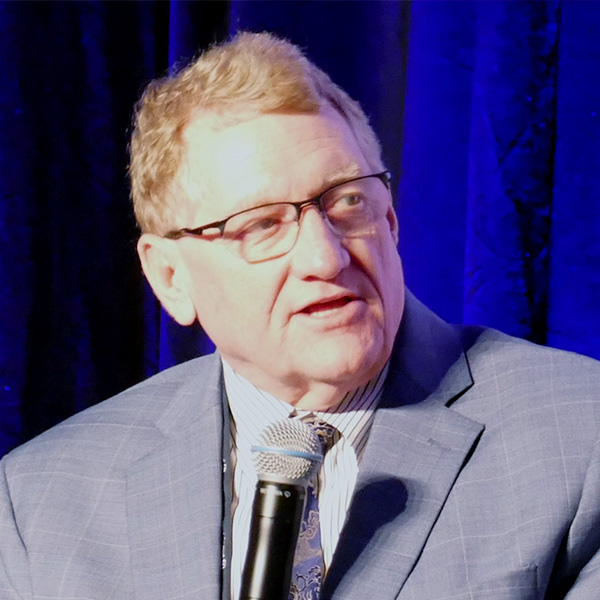
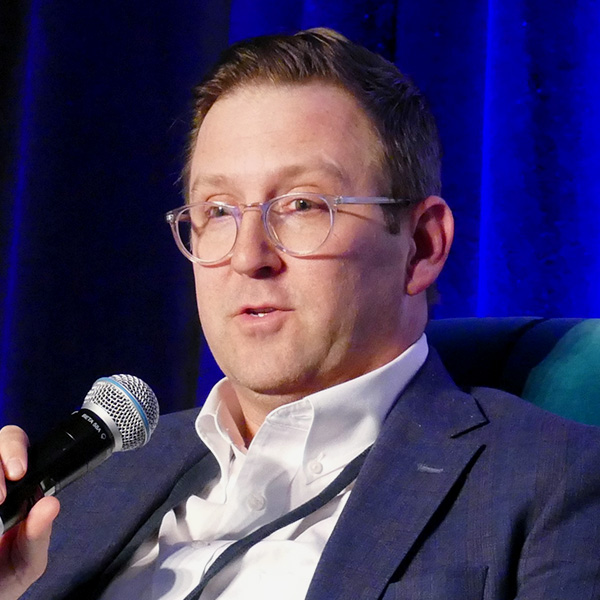
BOULDER, Colo. — Conversations remained cordial despite the ongoing competition between CAISO and SPP in the West as the RTOs’ top executives took the stage at Yes Energy’s annual EMPOWER conference.
RTO Insider’s Robert Mullin moderated a panel in which Elliot Mainzer of CAISO and Lanny Nickell of SPP emphasized the importance of cooperation and friendly competition while making their pitches for their respective Western markets.
CAISO is preparing to launch its Extended Day-Ahead Market (EDAM) in May, while SPP plans to roll out Markets+ — which includes day-ahead and real-time market components — in October 2027.
Over the past few years, the competing markets have fought to sign up participants across the West. CAISO plans to go live with EDAM in May with the participation of PacifiCorp, with Portland General Electric to join in the fall. SPP also has several major commitments, headlined by the Bonneville Power Administration’s decision in May 2025 to join Markets+. (See BPA Chooses Markets+ over EDAM.)
Mainzer clearly was disappointed with BPA’s choice. He was BPA administrator and had worked there for 18 years before moving to CAISO in 2020.
Some studies have shown greater potential cost savings with EDAM than with Markets+. Northwest nonprofits are suing BPA to reverse its decision. (See Nonprofits Ask 9th Circ. to Vacate BPA’s ‘Shocking’ Day-ahead Market Decision.)
Regardless of the choices of individual entities, CAISO and SPP “continue to motivate each other to get better,” Nickell said. “If one of us goes away, the motivation to improve isn’t as great.”
Mainzer and Nickell emphasized those potential cost savings associated with the adoption of day-ahead markets in the West.
Mainzer said the success of the Western Energy Imbalance Market (WEIM), launched by CAISO in 2014, gave participants confidence in the possibilities of regionwide markets.
“Now we’re seeing this second chapter,” he said, with participants realizing “we’re leaving money on the table now in the day-ahead.”
In SPP’s eastern RTO territory, Nickell said the wholesale markets provided about $10 billion in adjusted production cost savings over the past five years.
The launch of organized day-ahead markets in the West will “allow the provision of energy in a much more affordable way because we will have access to resources across a much broader region, and we’ll be able to commit those on a day-ahead basis, which will ensure a much higher degree of reliability,” he added.
The CEOs’ perspectives differed regarding potential issues associated with the seams between the market areas, reflecting ongoing debates about the benefits of the two markets.
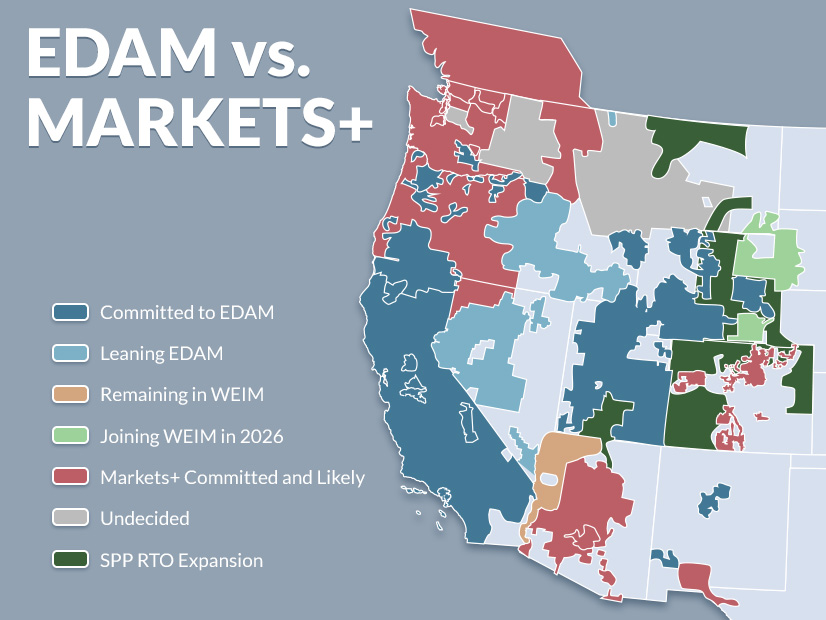
“When you look at that map and look at the Swiss cheese that’s opening up in the West, that’s going to be challenging to deal with,” Mainzer said. While seams agreements can help mitigate issues, seamless market footprints provide the greatest reliability value, he added. (See FERC Report Urges West to Address Looming Market Seams Issues.)
As the lines between markets harden, “I don’t think any seams agreement or combination of seams agreements is going to be able to fully restore the loss of efficiency that we’re going to get from breaking apart [WEIM] and having multiple market operators,” he said. “We’ll work hard to do it, but it is a point of departure.”
Nickell expressed more optimism about the potential for productive seams agreements and said the only way to truly eliminate all seams is through the creation of a regionwide RTO.
“Seams exist all over the West today, and they’re still going to exist … there’s still going to be balancing authorities, there’s still going to be transmission owners and providers operating their own tariffs,” he said. “We’re simply operating markets.”
“Our job is to work together to try to optimize the exchange of energy, not only within the market but across the two markets,” he added. “I think we can optimize those seams in a way that assures that energy is produced, it’s accessed and it’s delivered in a much more reliable way.”
Governance Structures
Trust in SPP’s governance structure has been a key factor for entities deciding to join Markets+, Nickell said. BPA cited governance as a key qualitative factor in its decision to join Markets+.
Nickell emphasized the importance of developing long-term trust with stakeholders, saying trust is “hard to get and it’s easy to lose, and we’ll do everything we have to maintain that trust that our participants have with us.”
“We’ve operated a highly engaged stakeholder process for decades,” he said. “We’re experienced in doing that, and I think a lot of the Western participants and stakeholders saw that and found it attractive.”
Mainzer said participants joining EDAM have been motivated primarily by economic considerations.
“We’ve tried to really build on the platform of physics and economics… and continue evolving the governance,” he said.
In an effort to address concerns about the influence of California policymakers on EDAM, the state passed legislation in the fall enabling the creation of an independent regional organization to govern WEIM and EDAM. (See Newsom Signs Calif. Pathways Bill into Law.)
The Regional Organization for Western Energy (ROWE) is the newly incorporated organization that is to assume governance over the ISO’s energy markets. (See Pathways Asks CAISO to Kickstart ROWE Funding Discussions.)
When he was CEO of BPA, Mainzer said he knew “as well as anybody” the governance concerns about CAISO’s markets.
“The governance structure for [CAISO] for many years was just not a sustainable structure for true multi-state participation,” he said. “That’s why we spent five years working to get that law passed last year.”
“You’ve done great work — I think it’s awesome that you were able to get those governance reforms in place,” Nickell said to Mainzer.
Asked whether the ultimate goal of Markets+ is to expand SPP’s western RTO footprint, Nickell said it’s possible SPP will continue to expand its RTO operations in the West but emphasized that “you can’t force somebody into an RTO — that’s a voluntary construct.”
“It takes time and it takes people getting comfortable with that approach,” he said.
SPP’s western RTO expansion is to take effect April 1 when it incorporates utilities in Arizona, Colorado, Utah and Wyoming.
Mainzer framed the developments in the West as a process of natural evolution that started with the implementation of real-time markets and has moved gradually toward the addition of components that can add value for the region.
“I think both our constituencies have tended to prefer this matchbox slogan of ‘evolution, not revolution,’” he said, adding that the West can benefit from best practices and lessons learned from existing markets across the country.
He emphasized the importance of maintaining local responsibility for resource adequacy planning and generation development as the markets grow.
“You are going to see a ton of change and continued evolution, but we get the chance to do it with steps and features that we think really produce value with less downside,” he said.