SPP has expanded its service territory into the Western Interconnection, making it the first RTO with services spanning two interconnections.
One of the more recent significant structural changes in U.S. energy markets was completed at 12 a.m. CT April 1, when the RTO began offering reliability coordination, a wholesale market and other services on schedule and without a hitch into the West. The cutover followed months of testing, simulation and joint operational coordination with dozens of participating utilities.
“We’re working closely with our utility partners, neighboring systems and others to closely monitor grid conditions,” SPP spokesperson Derek Wingfield said April 2. “So far, all indications suggest that we’ve completed a smooth transition.”
The RTO Expansion (RTOE) was led by nine load-serving utilities. They affirmed their support to proceed with the expansion with a unanimous vote of support in March. (See SPP RTO Expansion Members Affirm April 1 Go-live.)
To submit a commentary on this topic, email forum@rtoinsider.com.
The expansion extends the RTO footprint into seven states, some of which already have legacy SPP members: Arizona, Colorado, Montana, Nebraska, New Mexico, Utah and Wyoming. Arizona, Colorado and Utah increase SPP’s involvement into 17 states; it now serves a 732,000-square-mile region home to 20 million people.
SPP said 25 Western entities are now enjoying the same advantages its legacy members have enjoyed under its Integrated Marketplace since 2014, including improved reliability, lower wholesale energy costs through regional dispatch, stakeholder-driven and independent grid governance, and efficient planning that supports economic growth.
The RTO said that operating as a coordinated system will strengthen real‑time situational awareness across a wider geography and enable the region to maximize diverse generating resources, navigate weather events and other threats to grid integrity, and optimize the use and planning of the region’s transmission network.
Yes Energy says the expansion represents more than a geographic shift: It introduces new pricing nodes, additional trading opportunities and changes to how SPP’s Integrated Marketplace publishes data.
“SPP’s Western expansion is a landmark milestone for our organization, our new members and the broader energy industry,” CEO Lanny Nickell said in a statement. “This is one of many bold steps we’re taking to deliver long-term value to more consumers.”
Some of the new members expressed their appreciation and excitement in statements provided by SPP.
“This is about preparing [us] for the future,” Delta-Montrose Electric Association CEO Jack Johnston said. “The electric grid is becoming more complex, and cooperatives that are connected to larger, coordinated systems are better positioned to adapt.”
Platte River Power Authority CEO Jason Frisbie said participating in a “fully organized” energy market is the most significant element of its Resource Diversification Policy.
“We recognized early on that we could not achieve the noncarbon energy future our owner communities are asking for on our own,” he said. “Joining the SPP RTO provides access to a much broader footprint of renewable resources while helping us maintain the reliability and affordability that our communities and their customers expect.”
La Plata Electric Association CEO Chris Hansen said that after having been involved in bringing an RTO to Colorado for more than 10 years, he found the moment “incredibly meaningful.” He noted that the West has operated as 37 separate grid areas, which he said has driven higher costs, lower reliability and increased emissions.
“A more integrated grid changes that,” he said. “It improves all three and is one of the most impactful steps we can take to reduce pollution and show real leadership.”
The Sierra Club also praised the RTOE, saying it supports organized markets “for their creation of more efficient and cost-effective energy markets that are better able to utilize resources like wind and solar across the grid.”
RTOs “like SPP allow states and regions to share power, increasing electric grid reliability and giving electric providers the opportunity to purchase more affordable wholesale energy on open markets,” it said in an email to RTO Insider.
“We cannot understate how momentous this moment is if utilities and independent power producers are able to take advantage of the opportunity,” policy adviser Jessi Eidbo added. “A larger system footprint means greater resilience, greater access to a diversity of low-cost renewable energy resources and significant opportunities for system efficiencies that can drive down consumer electricity costs.”
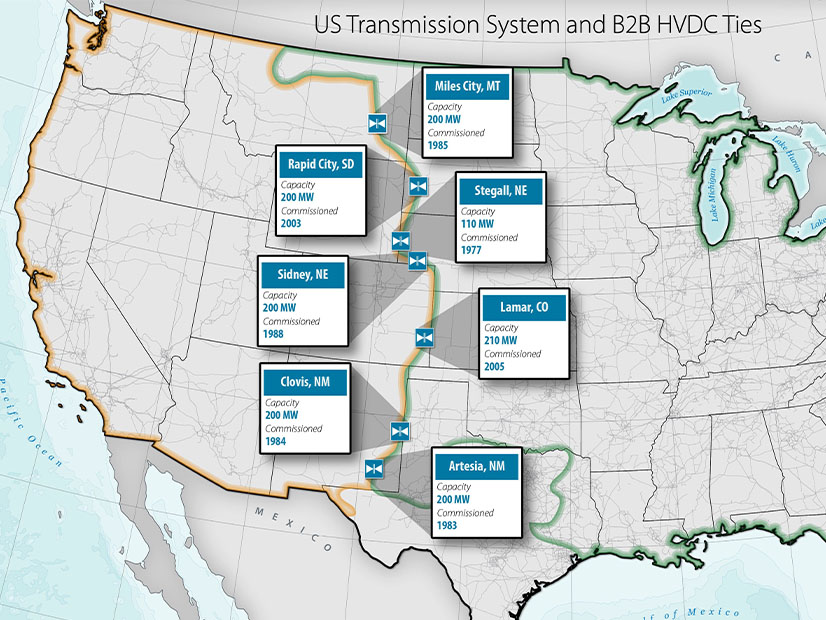
The expanded market will operate as two balancing authority areas: SPP East and SPP West. The regions will be connected by three DC ties (Miles City, Stegall and Sidney) that allow power to flow between BAAs and be optimized by SPP.
The West BAA adds several entities that participate in SPP’s Western Energy Imbalance Service (WEIS). It will provide a day-ahead market, reliability coordination and other RTO services, building upon WEIS’ real-time imbalance service. RTOE will also introduce a new reference bus and a western trading hub, enabling LMPs to form independently while being integrated into the broader SPP market.