NERC Report Discusses Crypto Ride-through in Texas

Continued growth of blockchain and crypto mining operations in the Texas Interconnection could “threaten the reliability of the interconnection” through indirect load loss effects, according to a report recently published by NERC.

The Considering Voltage-Sensitive Crypto Load Reductions report, published Jan. 7, is NERC’s first incident review of 2026. The ERO produced the document to highlight the unique characteristics of crypto mining facilities and how they differ from other emerging large electronic loads such as cloud computing and artificial intelligence data centers.

“As these facilities rely heavily on constant-power electronic supplies, cooling equipment and single-phase devices that respond to normally cleared transmission faults, they experience load drops within milliseconds of a voltage sag,” the report’s authors wrote. “Restoration times vary widely depending on equipment configuration and the level of manual intervention required. Understanding these behaviors is essential for assessing grid impacts, interpreting event data, and developing appropriate ride-through expectations and mitigation strategies.”

Between January 2023 and September 2025, ERCOT has experienced 26 large electronic load ride-through events involving one or more crypto facilities with indirect load loss of at least 100 MW, according to the report. The incidents “primarily occurred in central Texas, far west Texas, the Panhandle and the North Zone,” with impacts ranging from 17 to 95% of pre-disturbance consumption.

NERC staff emphasized that the load loss attributed to crypto facilities is indirect, meaning that it arises “from system or grid effects” rather than line outages. The events “verified that crypto facilities exhibit sensitive ride-through behavior, reducing consumption rapidly in response to voltage dips, particularly when single-phase voltage falls below approximately 0.7 p.u. [per unit].”

This behavior deviates from that suggested by the Information Technology Industry Council, which created the ITIC curve to illustrate the “AC voltage limits that most information technology equipment (ITE) can endure without experiencing unexpected shutdowns or malfunctions,” the authors wrote.

According to the ITIC curve, “voltage sags down to 70% of the root mean square nominal voltage are acceptable if the duration does not exceed 0.5 seconds.” Voltage sags below 70% of the RMS nominal voltage can lead to dropout events, which cause equipment to stop functioning. A dropout that lasts longer than one AC cycle enters a “no damage region” where the ITE shuts down.

But “multiple instances of partial loss of load have been observed” in voltage depressions “close to the boundaries of the … ITIC curve at the [point of interconnection]/utility connection,” NERC staff wrote.

The report cited a lightning strike on 138-kV lines that caused a fault affecting two crypto facilities. The first experienced a multiphase voltage depression that “reduced both A-phase and B-phase voltages below 0.7 p.u. for more than 20 milliseconds [with] the reduction in active power for A-phase and B-phase [accounting] for 80% of the total reduction.” Current levels rose to about 160% of pre-fault levels during the disturbance, with the facility requiring almost two hours to return to normal consumption.

At the second facility, only the A-phase was affected, dipping below 0.7 p.u. for more than 20 milliseconds. The reduction in active power for the A-phase accounted for 70% of total reduction, with current increasing to about 150% of pre-fault magnitude, and “load was fully restored in approximately five minutes.”

The report acknowledged that crypto mining facilities can vary widely in their design and equipment, which can affect their behavior during grid events. These differences include the type of overcurrent protection used, transformer configuration between the facility and the utility connection, and cooling systems whose failure can lead to a complete facility shutdown during normally cleared transmission system faults.

NERC’s report suggested “additional analysis, equipment adjustments and operational improvements [in these areas] may be needed” to improve crypto facilities’ ride-through performance and reliability, while observing that some efforts along these lines are already underway. For example, the authors wrote that ERCOT is considering introducing ride-through requirements for cooling systems.

Additional suggested areas of study include variability in restoration times and interconnection requirements for crypto facilities, especially those that are also transitioning toward AI or cloud workloads. The report suggested that such changes could introduce additional variables to load behavior and ride-through characteristics.

N.Y. Governor Envisions 8-GW Nuclear Fleet

New York’s governor is calling for a “Nuclear Reliability Backbone” of more than 8 GW of the emissions-free baseload power as part of an all-of-the-above energy solution.

The plan was among the more than 200 initiatives Kathy Hochul (D) floated Jan. 13 as part of her State of the State Address, the annual forum in which governors present their agenda and priorities for the coming year and its legislative session.

Hochul in 2025 directed the New York Power Authority (NYPA) to develop at least 1 GW of advanced nuclear capacity. Now she is directing the state Department of Public Service (DPS) to facilitate a cost-effective pathway to an additional 4 GW of new nuclear capacity.

“Go big or go home,” Hochul said.

New York’s existing commercial reactor fleet totals only 3.3 GW.

A confluence of factors faces New York and its policymakers: The state’s power portfolio is aging and shrinking as the demands placed on it are expected to grow. NYISO has identified reliability violations developing as soon as mid-2026. But the long-running effort to develop renewable generation is lagging behind schedule and is only going to get more difficult under President Donald Trump.

By turning to nuclear energy, Hochul is betting that the many public- and private-sector efforts underway to reduce the staggering cost and tortoise pace of recent U.S. nuclear development will be successful. Limiting rate increases for residents of a state with some of the highest utility costs in the nation has been a theme for the governor, and she reiterated it in her address.

New York ratepayers already contribute around a half-billion dollars a year to subsidize Constellation Energy’s four reactors.

To submit a commentary on this topic, email forum@rtoinsider.com.

Along with technical, regulatory, supply chain and fuel supply hurdles, any U.S. nuclear renaissance will need widespread host-community support.

NYPA has begun laying the groundwork for this.

It said Jan. 7 that eight upstate communities expressed interest in becoming host communities.

But many people and organizations remain opposed to new nuclear development because of the costs and hazards associated with it.

“The proposal for 5 GW of new nuclear capacity is a dangerous misdirection for state energy policy,” Food and Water Watch said. “Nuclear power is a foolishly expensive and antiquated approach to meeting the state’s energy demand needs.”

Public Power NY called it a disastrous plan and doubled down on its call for NYPA to set a higher goal for renewable energy development.

The Alliance for Clean Energy New York suggested the effort to expedite nuclear development be applied as well to renewables: “New Yorkers need affordable electrons now, not in the decade-plus it will take until new nuclear could be operational. Renewables paired with storage are the cheapest way to deliver more electricity for New Yorkers today.”

Advanced Energy United said: “We are optimistic about the governor’s plan to move on a suite of advanced energy solutions that are ready to go now that will keep the lights on while protecting consumers.”

Constellation’s Nine Mile Point nuclear plant in central New York is shown. Gov. Kathy Hochul is proposing a 5-GW expansion of the state’s nuclear fleet. | Constellation Energy Group

The newly formed Future Energy Alliance is squarely in favor. Constellation, which is part of the broad industry-labor-business coalition, said: “Constellation is proud to support this work and to advance the next generation of nuclear technology that can deliver long-term energy stability and broad economic benefits for communities across the state.”

Hochul offered several other ideas relevant to the energy sector in the larger book of proposals that accompanied her Jan. 13 address. Most are directly keyed to affordability and transparency for ratepayers or other consumer-focused measures.

But she also is advancing Excelsior Power, a new initiative that will direct utilities to treat grid flexibility as a key resource and expand incentives to encourage their customers to participate in demand flexibility programs. This is expected to reduce the need for costly system upgrades.

Hochul wants to reduce the infamous red tape that frustrates energy and housing developers and, by the state’s own analysis, causes projects to take up to 56% longer to get from concept to groundbreaking than in peer states. New York has made some progress on this, but delays remain. NYPA and the New York State Energy Research and Development Authority will be directed to update their regulations to speed clean energy development.

Hochul is addressing the human aspect of new nuclear technology with NextGen Nuclear New York, a workforce development effort for the people who will build and operate nuclear plants.

She also is directing the DPS to launch Energize NY Development, an initiative to streamline how large load customers connect to the grid. It will speed up interconnection, she said, and it explicitly will require that projects either cover the costs they create or supply their own energy if they create very large demand without also creating very large job creation or other public benefits.

Other proposals would boost protection of the state grid from cyber threats; adjust rules for aid to school districts to encourage on-site renewable energy development; establish a sales tax exemption for EV charging stations; and expand efforts to encourage agrivoltaics.

But energy was almost a side note in Hochul’s speech, which focused on quality of life, human rights and affordability issues and drew varying levels of applause from the heavily Democratic audience.

2026 may witness an even more intricate balancing act than is normal in Albany: Hochul, who won the deep-blue state by a surprisingly narrow margin in 2022, is facing a primary challenge from the left and a general election challenge from the right, plus skirmishes with the Trump administration along the way.

Utility Ratemaking Has Become More Complicated

Utility ratemaking comprises three distinct parts: revenue requirements, cost allocation and rate design. Ratemaking is a regulator’s prime function, as it determines how much revenue that utilities should collect from customers, from which customers and how.

The ratemaking process is complex and interactive, striving to satisfy or appease groups with diverse goals, interests and agendas. It also entails addressing the several objectives underlying ratemaking, each of which has a distinct effect on the public interest.

Most utility regulators subscribe to what regulatory observers call the “balancing act” of regulation. In an ideal world, regulators attempt to balance the interests of the different stakeholders with the overall goal of promoting the general good. This objective complies with the premise behind the public-interest theory of regulation. While ratemaking plays an integral role in achieving the “balancing act,” this action has become increasingly difficult for regulators as they have to cope with new interests.

Examples abound in which a particular rate mechanism advances some regulatory objectives while hindering others. The reality is that all rate mechanisms have mixed effects on the public interest. The premise is that when a rate mechanism impedes some regulatory objective it diminishes the public interest, while improving the public interest when it advances an objective. This speaks to the trade-offs regulators must make when deciding on different rate mechanisms.

Ken Costello

One example is real-time pricing in which the trade-off is between economic efficiency and price stability. A second example is price caps in which the regulator must weigh the benefits of pricing flexibility and increased incentives for productive efficiency against profit variability, which could lead to “excessive” utility profits. These conflicts inevitably require regulators to make value judgments on the overall desirability of a rate mechanism for the general public.

A third example is cost trackers or riders, in which a trade-off exists between timely utility recovery of costs and robust incentives. Trackers and riders allow utilities to recover their costs more quickly and with more certainty, lowering their financial risk; but they also can create incentive problems when: (1) regulators fail to adequately scrutinize those costs, and (2) cost recovery methods differ across different utility functional areas.

A Risk of Drifting Away from Core Objectives

Today, clean energy, low-income and climate advocates add to the interests that regulators must appease. If regulators try to satisfy more interests, driven by politics or for other reasons, one must ask: Do they therefore risk drifting away from their resolve to achieve core objectives, especially advancing the well-being of utility customers? After all, the raison d’etre for public utility regulation is to protect customers from “monopoly” utilities.

What are these other responsibilities that regulators have to take on? The landscape confronting utility regulators requires them to address a wider array of social issues that historically were under the purview of the other branches of government or left to the marketplace.

Their ratemaking duties include consideration of affordability for low-income households, the accommodation and even the subsidization of new technologies that compete with utilities’ core business, decarbonization of utilities’ generation portfolio, and the subsidization of utilities’ customers to use less electricity and switch to other electricity sources (e.g., rooftop solar).

No other private business comes to mind in which society compels private firms to tackle such a wide array of social issues. It is legitimate to ask whether utility regulation has expanded its domain far beyond its original mandate and what is socially optimal.

What Happens When Ratemaking Goes Astray

Faulty ratemaking can lead to adverse outcomes, like undue price discrimination, inequity, poor incentives for innovation, economic inefficiencies like uneconomic bypass, misallocation of business risk between customers and shareholders, and financially stressed utilities.

Concerning uneconomic bypass, faulty ratemaking can lead to customers choosing providers that have lower prices but higher costs. A regulated utility with an unregulated affiliate might have an incentive to subsidize the affiliate by shifting some of the affiliate’s costs to its core customers (e.g., residential customers).

Good ratemaking always has been a big challenge for regulators. It demands both sound analytics and judgment by regulators. Regulators must weigh or prioritize those objectives underlying ratemaking and measure (if possible) the effect of a rate mechanism on each one, as well as on the overall public interest. Assigning weights requires judgment by regulators, while examining the effect demands data and other unbiased information. Although ratemaking is both an art and a science (some compare it to sausage making), it should start with a strong foundation that includes specified objectives and underlying economic principles, like cost causation.

Utility Regulators Know How to Adapt

Developments in the electric industry have required regulators to re-examine their current, longstanding ratemaking practices. Previous experiences show that utility regulators do adapt, although gradually, to a changed economic, technological and political environment by throwing their support to new rate designs and ratemaking mechanisms.

One example is the restructuring of the U.S. electric industry, starting in the 1970s, triggered by the discontent of consumer groups (especially industrial customers) from continuous rising electricity rates along with the problems encountered by utilities in getting the regulators to approve pass-throughs of costs, even those prudently incurred but second-guessed because of unexpected circumstances.

Utilities could not incorporate these costs (to a large extent beyond their control) into their rates fast enough to keep their earnings from falling to a critical level. Regulators eventually allowed fuel adjustment clauses (and, to a lesser extent, future test years) to reduce regulatory lag and avert more serious financial difficulties. Regulators also revisited existing rate structures (e.g., declining block rates) to determine whether they satisfied new objectives, like the advancement of energy efficiency and the reduction of carbon emissions.

As its central duty, utility regulation should make well-informed decisions driven toward the public interest. It should strive for balance and fairness. Good regulation weighs legitimate interests and makes decisions based on facts.  Regulation decisions should not unduly favor any one interest group over the public interest; they should coincide with the law and the evidentiary record. This idea is especially critical today where good ratemaking has become more important, but harder to achieve.

Kenneth W. Costello is a regulatory economist and independent consultant who resides in Santa Fe, N.M. 

To submit a commentary on this topic, email forum@rtoinsider.com.

Judge Rules Blue-state Energy Grant Terminations Unlawful

A federal judge has ruled the U.S. Department of Energy acted illegally when it terminated several energy grants because they were based in Democratic-leaning states.

The ruling stems from the controversial cancelation of $7.56 billion worth of Biden-era grants in October 2025. A month later, the city of St. Paul, Minn., and five organizations challenged the cancellation of nine grants earmarked for them.

Judge Amit Mehta in the U.S. District Court for the District of Columbia ruled Jan. 12 that the grant cancellations violated the guarantee of equal protection of laws under the Fifth Amendment of the U.S. Constitution (25-cv-03899).

All 223 projects that were to receive the 321 grants (except one in Canada) are in states Kamala Harris carried in the 2024 presidential election. Moreover, Mehta noted, the defendants admitted that a primary reason for selecting which DOE grants to cancel was whether the grantee was in a “blue state.”

Similar grants in “red states” that Donald Trump carried in the 2024 election were spared from termination, Mehta wrote, and the defendants conceded those grants were comparable to the terminated grants.

The judge specifically cites Grid Resilience and Innovation Partnership and methane emissions monitoring grants that were awarded to both red and blue states but terminated only in blue states.

To submit a commentary on this topic, email forum@rtoinsider.com.

The defendants asserted partisan politics does not offend the Equal Protection Clause and compared it to the common practice of federal pork barrel spending.

But that analogy falls flat, Mehta wrote, because members of Congress securing money for their districts is wholly different from an agency taking away congressionally appropriated funds that already have been awarded. Further, pork-barrel spending can rationally be related to a legitimate government interest.

The plaintiffs, Mehta wrote, do not dispute that the defendants proffered a legitimate purpose for this: administering grant programs consistent with the agency’s priorities. The question, he said, is whether the classification the defendants drew is rationally related to the purpose.

Mehta then answered the question: “It is not. Without more [evidence], there is no reason to believe that terminating an award to a recipient located in a state whose citizens tend to vote for Democratic candidates — and, particularly, voted against President Trump — furthers the agency’s energy priorities any more than terminating a similar grant of a recipient in a state whose citizens tend to vote for Republican candidates or voted for President Trump.”

Mehta ruled the termination unlawful and vacated the October termination notices to the seven awards at issue in the litigation. He directed the plaintiffs to indicate by Jan. 16 whether they will seek injunctive relief and/or compensation for attorney’s fees.

In response, a DOE spokesperson said Jan. 13: “We disagree with the judge’s decision and stand by our review process, which evaluated these awards individually and determined they did not meet the standards necessary to justify the continued spending of taxpayer dollars. The American people deserve a government that is accountable and responsible in managing taxpayer funds.”

DOE’s Oct. 2 announcement of the grant terminations indicated many of the grants were awarded during the lame-duck phase of Joe Biden’s presidency but did not indicate where the recipient projects were based: California, Colorado, Connecticut, Delaware, Hawaii, Illinois, Maryland, Massachusetts, Minnesota, New Hampshire, New Jersey, New Mexico, New York, Oregon, Vermont and Washington. (See DOE Terminates $7.56B in Energy Grants for Projects in Blue States.)

All are blue states, but in some cases, the impact of the cancellations would stretch into red states.

St. Paul was joined in the Nov. 10 complaint by Elevate Energy, the Environmental Defense Fund (EDF), the Interstate Renewable Energy Council, Plug In America and Southeast Community Organization as plaintiffs.

EDF was party to four awards totaling $535.5 million. The other five were designated to receive small grants ranging from $1.2 million to $6.9 million. Mehta’s ruling pertains to seven grants totaling $27.6 million.

Named as defendants were DOE, Secretary of Energy Chris Wright, the Office of Management and Budget and its director, Russell Vought.

State Briefs

CALIFORNIA

Trump Admin Sues Morgan Hill, Petaluma Over Local Natural Gas Bans

The Trump administration has sued the Bay Area cities of Morgan Hill and Petaluma to block their bans on natural gas infrastructure in new buildings.

The lawsuit claimed the local decarbonization measures deny consumers reliable and affordable energy while undermining “American energy dominance.” By banning the fuel gas piping “in pursuit of electrification,” the government argued, the cities “undermine and conflict with” federal energy policy.

Morgan Hill adopted its natural gas prohibition in late 2019. Petaluma followed suit in May 2021.

More: KQED

ILLINOIS

Peoples Gas Files for $202M Rate Increase

Peoples Gas filed for a $202.3 million rate hike request with the Commerce Commission.

The increase, which the company estimates will add $10 to $11 to monthly gas bills for typical residential customers, comes three years after Peoples Gas received a $303 million rate hike in 2023, the largest in state history. The company said the revenue is required to meet the ICC’s order to retire more than 1,000 miles of old iron pipes by 2035.

The ICC will review the request over the next 11 months.

More: Capitol News Illinois

IOWA

Gov. Reynolds Creates Nuclear Energy Task Force

Gov. Kim Reynolds announced the creation of the Iowa Nuclear Energy Task Force, which will generate a report and advise state leadership on opportunities to embrace nuclear energy in the state.

Reynolds said the task force marks a “strategic step forward” to ensuring Iowa has a “safe, efficient and responsible integration” of nuclear energy. The task force is asked to assess emerging nuclear technologies, engage with industry leaders to help develop the necessary workforce, and engage with manufacturers and other stakeholders to identify potential barriers to entry in the nuclear field.

Presently, Iowa has no operational nuclear energy plants, but NextEra Energy is working to restart the Duane Arnold Energy Center in Linn County.

More: Iowa Capital Dispatch

KENTUCKY

PSC Extends Kentucky Power Use of Coal Plant

The Public Service Commission has approved Kentucky Power’s plan to continue using the Mitchell Generating Station after 2028, concluding the coal-fired plant remains the least costly option available to meet the region’s power needs.

A Certificate of Public Convenience and Necessity allowed the company to maintain its 50% share of the plant.

The approval includes recovery of costs associated with federally required wastewater treatment upgrades at Mitchell, which will raise the average household bill by about $2.33/month.

More: The Mountain Eagle

MARYLAND

Conowingo Dam Appeal Dropped, Allowing $340M Settlement to Go Forward

Maryland’s $340 million settlement with the owner of the Conowingo Dam can now move forward after a group of Eastern Shore counties dropped their challenge of the deal.

The Department of the Environment, which brokered the settlement, had lobbied for the counties to back down because the appeal had the potential to derail or delay funds from dam owner Constellation. The state negotiated to receive the funds in exchange for issuing the hydroelectric dam a water quality certification, which it needs to obtain a 50-year license from FERC.

After state officials promised counties they could have input on the rollout of the environmental projects in the settlement, several counties pulled out in late December. Cecil County, which hosts the dam and has complained about the impacts of sediment build-up, was the final holdout, but dropped out Jan. 2.

More: Maryland Matters

MICHIGAN

PSC Adopts New Rule for Bill Increase Notifications

The Public Service Commission is set to adopt a new rule that will require utilities to notify each customer how much their rate-hike requests would cost if approved, both in a dollar amount and percentage amount.

It’s one of the changes being made by the PSC to increase customer participation in utility issues, including cases that set new rates. DTE Energy and Consumers Energy filed objections to the new rule before it was adopted.

More: Michigan Public Radio

NEW YORK

NYC GHG Emissions Drop to Pandemic Levels

New York City’s latest annual greenhouse gas inventory showed a decrease of about 5% in emissions citywide compared to the previous year and a 25% cut since 2005, when the city began tracking its emissions.

The COVID-19 pandemic spurred the largest drop in emissions since tracking began, with a 9% decline between 2019 and 2020 as people stayed home or left the city entirely. In 2024, transportation emissions were more than 16% higher than in 2020, but emissions from buildings and waste were 5% and 3% lower, respectively. Emissions from natural gas increased 15% compared to 2005 but still were at decade low.

More: The City

OHIO

PUC Approves Settlement to End FirstEnergy HB6 Cases

The Public Utilities Commission will end its House Bill 6-related investigations into FirstEnergy Corp. by approving a settlement agreement filed with the agency in December.

The settlement between FirstEnergy and multiple other groups — including the Office of the Ohio Consumers’ Counsel, the Ohio Manufacturers’ Association Energy Group and the Retail Energy Supply Association — will provide FirstEnergy customers with $249 million in restitution over three billing periods, the commission said. The settlement also designates $20 million to fund low-income programs.

The settlement will not include the previously announced $64.1 million in civil forfeitures.

More: Akron Beacon Journal

PENNSYLVANIA

Supreme Court Dismisses Appeals to Revive RGGI

The Pennsylvania Supreme Court has ended appeals of a lower court’s ruling that the commonwealth’s participation in the Regional Greenhouse Gas Initiative was illegal. 

The court’s order dismissing the cases as moot follows Gov. Josh Shapiro’s agreement to withdraw from the multistate climate compact as part of his deal with Republican state lawmakers to bring the five-month budget stalemate to a close in November.

More: Pennsylvania Capital-Star

TEXAS

Solar Supplies More Power than Coal to Grid in 2025

In 2025 — for the first year ever — solar provided more electricity to Texas’ main grid than coal-fired power plants.

Solar farms contributed 67,800 GW from January to December, according to ERCOT data. In comparison, coal-fired plants supplied 63,000 GW.

More: Houston Chronicle

VIRGINIA

Dominion Gas Plant on Hold While SCC Considers Petition

Dominion Energy’s proposed Chesterfield County natural gas plant is on hold, as the State Corporation Commission reconsiders its final order approving the project.

In a Dec. 15 decision, the SCC issued a brief ruling that it will consider a petition from opponents of the Chesterfield Energy Reliability Center — Appalachian Voices, the NAACP and Mothers Out Front. It will put the project on hold for at least the time being, according to the ruling. The petition raised multiple issues, including health impacts of air pollution, higher costs for customers and the disregarding of “substantial proof that new gas is not required to meet Virginians’ energy needs.”

Meanwhile, on Dec. 19, the Department of Environmental Quality approved an air permit for the project. However, it does not override the SCC’s reconsideration.

More: Virginia Business

Company Briefs

Hallador Energy Appoints Sugg to Board of Directors

Hallador Energy last week announced it has appointed Barbara Sugg to its Board of Directors, effective Jan. 1.

Sugg is the former president and CEO of SPP.

Sugg’s appointment follows the resignation of David Hardie.

More: Hallador Energy

Sunrun, HASI Close $500M Distributed Energy Joint Venture

HA Sustainable Infrastructure Capital and Sunrun last week announced the closing of a joint venture to finance distributed energy assets.

HASI will invest $500 million over an 18-month period into the newly formed entity. The partnership intends to finance 300 MW of solar and energy storage capacity.

More: pv magazine

LG Energy Solution to Sell Ohio Battery Building to Honda

LG Energy Solution last week announced it will sell the building of its Ohio EV battery joint venture plant to its partner, Honda, for $2.9 billion.

According to regulatory filings, LG will dispose of the building and all building-related facilities of the joint venture L-H Battery Company — excluding the land and equipment — to Honda’s U.S. unit. The joint venture will continue to use the facility under a lease agreement, with no changes to production or operational plans.

The transaction is scheduled to be completed Feb. 28.

More: Batteries News

Federal Briefs

U.S. Sees 23 Billion-dollar Disasters in 2025

The U.S. saw 23 billion-dollar weather and climate disasters in 2025, which claimed 276 lives and caused $115 billion in damages, according to analysis from the research group Climate Central.

Only 2023 and 2024 recorded more of these events, and 2025 was the 15th consecutive year with an above-average number. Since 1980, the annual average has been nine events costing $67.6 billion. In that time, the country has tallied 426 billion-dollar disasters, costing more than $3.1 trillion. And 2025 was the ninth most expensive on record.

At $61.2 billion in damages, the Los Angeles fires accounted for more than half of the losses from the 23 events in 2025, according to the analysis.

More: Grist

EPA to Skirt Coal Ash Rules Until 2031

EPA plans to let 11 coal plants dump coal ash into unlined pits until 2031 — a full decade later than allowed under current federal rules.

The latest proposal would let three such plants in Illinois, two in Louisiana, two in Texas and one each in Indiana, Ohio, Utah and Wyoming operate until 2031. These 11 plants already have circumvented the 2021 deadline to close such pits through a 2020 extension offer from the first Trump administration. By filing applications for that extension through 2028, the plants were allowed to keep running even though EPA has yet to rule on the applications. On Jan. 6, EPA held a virtual public hearing on its proposal to give the plants three more years to stop dumping coal ash in unlined pits.

EPA has made a final decision in only one case, denying an extension to the James M. Gavin plant in Ohio in 2022. But any company that filed an application has been able to keep its plant running while the agency considers the case. 

More: Canary Media

Trump Withdraws U.S. from 1992 Climate Treaty

President Donald Trump announced he is withdrawing the United States from the U.N. Framework Convention on Climate Change.

The 1992 UNFCCC serves as the international structure for efforts by 198 countries to slow the rate of climate pollution. It has universal participation. The U.S. was the first industrialized nation to join the treaty following its ratification under former President George H.W. Bush — and it will be the only nation ever to leave it.

Trump also pulled the U.S. out of the Paris Agreement, the landmark 2015 pact that’s underpinned by the UNFCCC. That withdrawal will take effect later in January.

More: POLITICO

PJM OC Briefs: Jan. 8, 2026

Stakeholders Delay Vote on Manual 1 Revisions

PJM’s Operating Committee deferred a vote to endorse revisions to Manual 1: Control Center and Data Exchange Requirements to give more time to review language removing a requirement that actual meter test results should be provided to the RTO. (See “PJM Seeks Quick Fix on Data Communications,” PJM Operating Committee Briefs: Dec. 4, 2025.)

PJM’s Ryan Nice said staff’s thinking in recommending the removal is that meter calibration and test results tend to be conducted by third-party specialists and are better addressed through resources’ interconnection service agreements. Nice said the tests represent a small part of how PJM models and validates resources’ output.

Stakeholders raised concerns that without PJM directly receiving the results of those tests, it would assume the data is accurate unless it is informed of a problem.

The proposed language also reflects NERC reliability standard CIP-012-2 (Cybersecurity – communications between control centers) requiring plans to “mitigate the risks posed by unauthorized disclosure, unauthorized modification and loss of availability of real-time assessment and real-time monitoring data in transit between applicable control centers.”

The revisions would detail the RTO’s PJMnet system for internal communications, require that members submitting distributed network protocol links provide their own data maps and definitions, and clarify that PJM will not consume or process data not needed for its own purposes, which Nice said is intended to underscore that PJM is not a generic data repeater for its members.

Manual Language to Implement AARs Endorsed

PJM presented a first read on revisions to Manual 3: Transmission Operations and Manual 3A: Energy Management System Model Updates Quality Assurance to conform with FERC Order 881, which requires the implementation of ambient-adjusted line ratings (AARs).

The Manual 3 changes include adding short-term emergency ratings to the Thermal Operating Guidelines, maintenance responsibilities for rating set lookup tables, and an option for transmission owners to resort to AARs or seasonal ratings during a dynamic line rating outage. The manual would set PJM’s transmission facilities rating database as the data source for lines with short-term emergency ratings.

The Manual 3A revisions would add two sets of 5-degree bands to the Transmission Facility Ratings Database for day and night, ranging between -55 degrees and 130 degrees F. The database would be available for all eDART users. Conditional rating tables would be added to cover loss of cooling, directional ratings and proxy stability limits.

Annual Recertification

PJM is planning to include member officers in its notifications around the commencement of the annual recertification process owing to an increase in the number of final warning letters and breach notices sent in 2025.

In response to feedback from stakeholders, the RTO did not include officers in the 2025 recertification process, but found many companies were less responsive. PJM determined that the omission of officers contributed to RTO staff having to make additional efforts to reach out to members.

Members are required to update their sector selection, affiliate disclosure, company information and contact managers by April 17. Market participants are also required to disclose their principals.

By the end of April, market participants should submit an officer certification form, risk management policies and audited financials for 2025.

December Operating Metrics

PJM’s Marcus Smith said load forecast performance was strong across the December 2025 holidays, a point of focus in recent years as the intersection between gas procurement cycles and difficult-to-predict holiday loads has led to strained system conditions.

The average hourly forecast error for the month was 1.78% and the average peak forecast error was 1.57%. Peak loads on several days exceeded the RTO’s 3% error benchmark: Dec. 17 was over-forecast by 3.53% due to high temperatures; Dec. 8 was 3.1% under-forecast due to high cloud coverage; cool temperatures on Dec. 14 led to a 3.31% under-forecast; and the Dec. 20 peak was 3.25% higher than expected due to cold and windy weather.

December saw three spin events, three shared system events, one high system voltage action, three cold weather alerts and 26 post-contingency local load relief warnings. Smith said the month was 5 degrees colder than the average of the past three Decembers and recorded the highest December peak load on Dec. 22.

A spin event Dec. 5 was initiated at 7:30 p.m. and lasted 4 minutes and 25 seconds. There were 2,350 MW of generation assigned and 373 MW of demand response, of which 49% and 69% responded, respectively.

Another event was declared the following day at 5:05 a.m. and lasted 7 minutes and 44 seconds. There were 2,350 MW of generation and 218 MW of DR assigned, with 79% and 91% responding.

The third event fell Dec. 28 at 5:07 p.m. and lasted 9 minutes and 46 seconds. There were 2,012 MW of generation assigned and 642 MW of DR, of which 76% and 89% responded.

The RTO faced below-zero temperatures and high snowfall during a winter storm that passed through the region Dec. 12-16. The peak load during the storm was 136,467 MW at 8:20 a.m. Dec. 15.

PJM’s Paul Dajewski said temperatures were lower than forecast during much of the storm and some generators were dispatched but ran into emissions limits preventing them from operating. Staff considered requesting waivers from those limits under the Federal Power Act Section 202(c).

The storm was the first winter event where gas generators were able to signal fuel supply concerns through an indicator on Markets Gateway, which several resources used to update PJM on their status. Four cause codes were added to eDART to increase the granularity of tracking gas-related outages.

Synchronized Reserve Inquiry

The Independent Market Monitor presented the latest results of its ongoing inquiry into the causes of synchronized reserve underperformance, this time looking at a 2,720-MW deployment Nov. 11. While PJM reported an 83% response rate, the Monitor argued PJM should consider reserves that overperform their assignment, which would increase the response rate to 104%. (See “Monitor Presents Synchronized Reserve Performance Inquiry,” PJM Operating Committee Briefs: Dec. 4, 2025.)

Communications have become a smaller driver as PJM has implemented new protocols for sending dispatch instructions to resources; however, parameters and personnel issues have become more pronounced. The single-largest cause of underperformance was parameter issues, followed by hardware issues and software.

BPA Tx Planning Overhaul Prompts Concern for Northwest Clean Energy Compliance

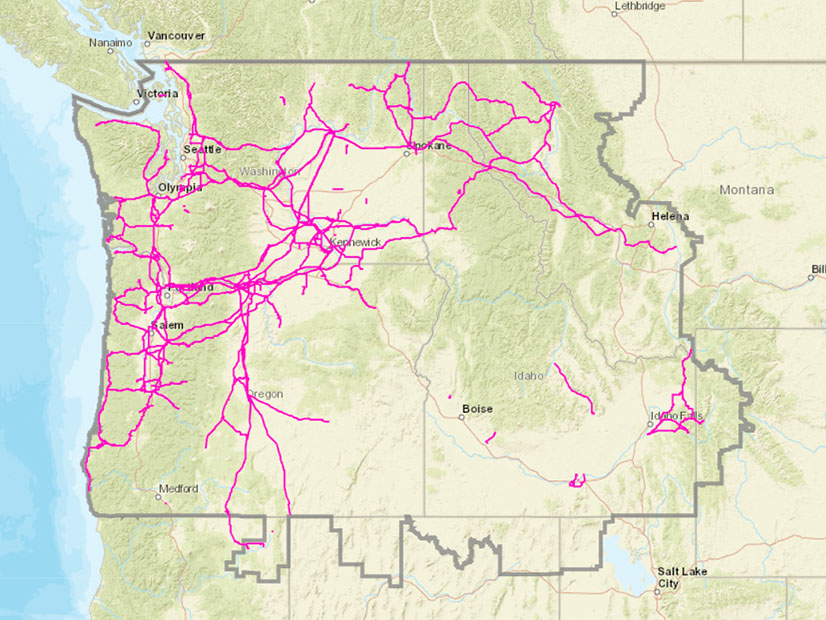
Some of the Bonneville Power Administration’s proposals aimed at improving transmission planning processes risk pushing study timelines to the point where the agency’s customers could run afoul of Washington and Oregon’s clean energy targets, stakeholders say.

BPA paused certain planning processes and launched the Grid Access Transformation (GAT) project in 2025 to consider changes following a surge of transmission service requests (TSRs). The most recent transmission study includes 61 GW of new generation, compared with 5.9 GW in 2021, according to the agency. (See BPA Halts Some Tx Planning Processes Amid Surge of Service Requests.)

BPA’s proposal to tackle the queue involves a two-part approach: a transitional phase to get off the pause and a longer-term “future state” that will include more substantial reforms to BPA’s existing transmission processes, such as shifting toward proactive transmission planning (an approach that seeks to forecast transmission needs and prepare the system ahead of time rather than just reacting to customer requests).

During a Jan. 6 meeting, BPA staff and industry representatives discussed options the agency could pursue during its transitional phase to identify customers eligible for transmission service awards to get off pause while the agency continues to plan for the “future state.”

“Depending on the outcome of queue reform, the queue size will be a determining factor in which type(s) of transition analysis can be completed,” according to BPA’s presentation slides. “Additionally, the same team that does this transition analysis is also working to stand up proactive planning and achieve the future state. Essentially, more time dedicated to transition analysis will delay the future state.”

Some of the transition study options BPA has presented could present challenges for Oregon and Washington-based customers, Henry Tilghman, a consultant whose clients include Renewable Northwest and the Northwest & Intermountain Power Producers Coalition, told RTO Insider. (Tilghman spoke on his own behalf, not that of his clients.)

Washington and Oregon passed aggressive clean energy laws in 2019 and 2021, respectively, requiring electric utilities to meet strict greenhouse gas standards by 2030. (See Washington Agencies Adopt New Rules to Implement CETA and Clean Energy, Equity Goals to Reshape Oregon IRP Process.)

Many of the options presented by BPA would push study timelines for transmission service requests beyond the 2030 deadline, according to Tilghman. He noted that some options would result in transmission service awards before 2030, though those options would require smaller study volumes.

Tilghman’s clients have yet to adopt a preferred option, but he said the timeline to complete the transition study could be one factor they would consider in making their choice.

“There are a lot of ways to look at … what the right solution is here,” Tilghman told BPA at the Jan. 6 meeting. “One of them would be to focus on what gets the most new transmission service, even if that’s interim or conditional firm service, into the hands of customers by those 2030 deadlines. … And certainly one way we could go would be to design a program that would facilitate … filling up the transmission grid that will exist in 2030 with transmission service in customers’ hands.”

Seattle City Light’s Michael Watkins echoed Tilghman’s comments, saying the discussions are “about meeting customer needs for transmission for 2030, 2035 and 2040.” He added that “strict regulatory requirements” are forcing the industry “down certain roads.”

BPA must “answer those needs,” Watkins said. “Because the needs are large enough that if Bonneville does not answer those needs, someone else will. And … none of us may like how that happens — both customers and Bonneville. So, we need to come together and meet those needs somehow.”

Proactive planning is the fastest way to create available transmission to serve needs by 2030 and 2035, Watkins added.

“If we really hit the gas, we can do that,” he said. “But if we spend the next 24 to 36 months still trying to slice the existing pie, we’re not going to get there.”

‘Sweet Spot’

The discussion around Washington and Oregon’s clean energy goals was prompted by comments from Randy Hardy, the agency’s administrator from 1991 to 1997.

During the Jan. 6 meeting, Hardy reiterated claims he made to RTO Insider in June 2025, arguing that the states’ respective laws set off a “gold rush’ among developers, eventually leading to today’s situation. (See Industry Sees Challenges as BPA Considers ‘Radical’ Updates to Tx Planning.)

“That’s the nature of the problem,” Hardy said Jan. 6. “It’s not a Bonneville problem. It’s not a customer problem. Its origins are in the state legislative mandates, which have created essentially an unmeetable situation relative to the 2030 deadline and the 65 GW in the queue, which now Bonneville is left holding the bag and having to solve. And that’s what we’re all trying to do.”

In an email, BPA spokesperson Kevin Wingert said when the agency decided to transition to a new process for its large generator interconnection queue to be able to study the “the unprecedented number of gigawatts being requested (there are 61 GW of generation in the current study), we identified 16 GW of late-stage generation projects that were ready to move forward beyond the queue process into execution.”

“We’ve begun the process of integrating that generation at a rate of roughly 1 to 1.5 GW per year,” Wingert wrote. “We anticipate 7.5 GW being integrated by 2030, with the full 16 GW of late-stage projects being integrated by 2035. That 1 to 1.5 GW integration rate is record setting for BPA and represents a basic sweet spot in terms of capacity from workforce, contracting, manufacturing and supply chain elements. We anticipate maintaining that pace for the foreseeable future.”

Wingert added that BPA is “working on reducing our timeline for project delivery down to a five- to six-year window. This work is incremental in nature, but our current goal for full implementation on this effort is 2030 and includes efforts to increase study efficiencies like potential automation or contracting aspects of the work.”

SPP: Ex-Idaho Commish to Manage Regulatory Policy in West

SPP has hired former Idaho commissioner Kristine Raper as its senior director of state regulatory policy for the West, effective Jan. 20.

Raper will work with state utility regulatory commissioners in the Western Interconnection to advance SPP’s mission as it expands its RTO footprint into the West and also develops its day-ahead Markets+ service offering.

The grid operator said in a Jan. 12 news release that Raper will assist the management team in addressing ongoing state and federal energy issues, initiatives and strategic matters at the state regulatory level.

“Kris brings years of experience providing well-respected leadership on key issues for state regulators and electric industry stakeholders in the West,” SPP General Counsel Paul Suskie said in a statement.

Raper, who will work out of Idaho, first was appointed to the state’s Public Utilities Commission in 2015 and re-appointed in 2021. She left the commission in 2022 to join WECC as vice president of external affairs.

Vijay Satyal, deputy director of clean energy markets and transmission for environmental nonprofit Western Resource Advocates, congratulated Raper for taking on the “uniquely challenging role” and using her “regulatory policy expertise and experience” in coordinating WECC’s West-wide grid reliability.

“As Kris knows well, the West is embarking on an effort for greater West-wide market integration,” Satyal said, name-dropping the West-Wide Governance Pathways Initiative that is setting up an independent organization to oversee CAISO’s Western Energy Imbalance Market and Extended Day-Ahead Market. (See Pathways Takes Key Step Toward Establishing ROWE.)

“WRA looks forward to Kris’ collaboration and SPP support toward grid modernization (reliability and markets integration) in the West,” Satyal added.

Raper has chaired the Western Interconnection Regional Advisory Body, an organization under the Federal Power Act that advises FERC, NERC and WECC on matters related to grid reliability in the West. She also was a member of the WEIM’s Body of State Regulators and served on its Governance Review Committee. (See Joint CAISO-EIM Authority Debated in West.)

She holds a bachelor’s degree in criminal justice from Boise State University and a law degree from the University of Idaho College of Law.