PJM MRC/MC Briefs: March 25, 2026

Markets and Reliability Committee

1st Read on Load Management Penalties

VALLEY FORGE, Pa. — PJM presented the Markets and Reliability Committee with a first read on a proposal to establish penalties for load management and price-responsive demand resources that do not perform during pre-emergency events. (See PJM Stakeholders Endorse Penalties for Pre-emergency Load Management.)

Demand-side resources that do not fully respond to RTO dispatch would be penalized at half the rate assessed during performance assessment intervals, which PJM’s Pete Langbein said recognizes the lower reliability risks associated with pre-emergency deployments. That comes out to about $1,150/MWh based on capacity prices for the 2027/28 delivery year. The penalties would count toward the annual stop loss limit for Capacity Performance penalties.

Revenues would flow into a pot to be split between overperforming curtailment service providers if the demand-side response met or exceeded the reduction PJM requested. If there was a shortfall, a pro-rated share of the revenues would be allocated to load-serving entities.

The revisions to the Reliability Assurance Agreement and tariff are set to be considered for endorsement from the MRC and Members Committee during their April 26 meetings. If approved, PJM expects to file the changes at FERC around April 30, with the aim of having the change effective before the 2028/29 Base Residual Auction opens on June 30.

PJM’s proposal was one of three considered by the Market Implementation Committee on March 11, with Voltus seeking a lower penalty rate with a similar overall formula structure, and the Independent Market Monitor proposing to require demand-side resources curtail according to PJM instructions or forfeit their daily capacity revenues.

Monitor Joe Bowring told the MRC that if stakeholders do not endorse the main motion in April, he may bring his proposal as an alternative.

Members Committee

PJM Selects ‘Expedited’ CIFP Process for Backstop

The Board of Managers has decided to use an “expedited” Critical Issue Fast Path (CIFP) process to gather stakeholder feedback and hold a vote on how PJM should implement a reliability backstop auction to be conducted later in 2026. (See PJM Plans to Release Reliability Backstop Design in April.)

PJM has held seven workshops since the start of the year on the idea of having an auction to procure multiyear commitments, resulting in several proposals and perspectives being presented. Staff plan to release the RTO’s initial backstop auction design April 10.

Senior Director of Stakeholder Affairs Dave Anders said the process would follow the same rules as past CIFPs, but with a truncated schedule to advance the board’s aim of conducting an auction in September. That date was laid out in the statement of principles signed by the White House’s National Energy Dominance Council (NEDC) and all of the state governors in PJM. The statement argued PJM would not need to conduct a CIFP process to design the auction rules, as those discussions had already been initiated in the 2025 CIFP focused on large load growth. (See White House and PJM Governors Call for Backstop Capacity Auction and PJM Stakeholders Reject All CIFP Proposals on Large Loads.)

The process would consist of five meetings where stakeholders and PJM would discuss their proposals, culminating in a meeting with the board at which final packages would be presented and the MC would hold an advisory vote. Two Stage 1 meetings will be held April 16 and 17, followed by a Stage 2 meeting May 4 and a Stage 3 meeting the following day. A FERC filing is targeted for June.

The board considered several stakeholder processes to proceed with the backstop discussions, including an “enhanced 9.2(b)” process, referring to the tariff provision requiring the board to consult with stakeholders before making a unilateral filing. The RTO would informally expand on the tariff rules to hold additional meetings to hear perspectives on its design.

Board of Managers Chair and interim CEO David Mills said he has been in communication with the NEDC regarding the White House’s expectations and noted the statement of principles specifically told PJM another CIFP would not be necessary. He said he believes the board made the best decision for the benefit of its members and the process.

PJM Presents Timeline on Resource Adequacy Processes

PJM presented a timeline on which it expects to administer six stakeholder processes centered on maintaining resource adequacy through a confluence of rising data center growth, sluggish capacity development and generation deactivations.

If FERC approves PJM’s backstop design, the RTO expects to begin implementation in July and conduct the auction by Sept. 30.

The MRC voted the same day to endorse two issue charges to create a Connect and Manage framework to curtail large loads not paired with capacity when there is insufficient capacity or transmission headroom. The Connect and Manage Senior Task Force is expected to run from April through June before handing the work off to the MRC and MC, which is expected to continue the effort through September. Implementation is targeted from November to December. (See PJM Forms Task Force to Explore Large Load Curtailment.)

Improvements to PJM’s forecasting of large load additions already are being developed, with staff internally drafting revisions to Manual 19: Load Forecasting and Analysis, and a third-party consultant is being brought in to develop an independent forecast from April to December. A FERC filing is targeted for early June, with an order anticipated by the end of 2026.

Manual language to effectuate the implementation of the Expedited Interconnection Track is being drafted by PJM staff, with stakeholder endorsement to be sought in June and July. PJM is aiming for a go-live date in August. (See PJM Consults MC on Price Collar Extension, Expedited Interconnection Track.)

The RTO also is continuing to prepare its filings responding to a FERC investigation into how it offers transmission service for co-located configurations between large loads and generation. The final filing is expected in April, and workshops are set to continue through the following month. If PJM’s proposal is approved, implementation could begin in June and would likely extend into 2027. (See PJM Presents 1st Look at Co-located Load Compliance Filings.)

And the RTO plans to publish a paper on its market incentives in May, to be followed by a stakeholder process through November, when a FERC filing is anticipated. A broad examination of how each of PJM’s markets contributes to the incentives required to bring on sufficient capacity to serve rising data center demand was one of several items the board requested at the conclusion of the 2025 CIFP process. (See PJM Board of Managers Selects CIFP Proposal to Address Large Load Growth.)

OPSI Announces New Executive Director

The Organization of PJM States Inc. (OPSI) has selected Ben Sloan, director of legal and regulatory affairs, to serve as its executive director following the retirement of Gregory Carmean, who has led the organization since 2012.

“We are very excited to welcome Ben into the executive director role,” OPSI President Dennis Deters said in a statement. “He brings deep expertise in PJM process and substance and a demonstrated commitment to advancing the public interest. His experience navigating complex proceedings at PJM and before FERC and leading coalitions of diverse state commissions across all 14 PJM jurisdictions makes him exceptionally well suited for this position.”

Sloan told RTO Insider he will take over on April 1 and Carmean will remain with the organization through April 17 to aid in the transition. Along with filling his prior position, one of Sloan’s first priorities will be adding a new staffer dedicated to expanding OPSI’s engagement in the stakeholder process.

PJM Considering Requesting Rehearing on DFAX Order

PJM is working on calculating the amount of transmission costs that must be reallocated following a FERC order requiring the RTO to eliminate the de minimis exception from how it determines transmission rates. (See PJM Eyeing Tight Deadline to Eliminate De Minimis Exception, Rebill Decade of Tx Rates.)

General Counsel Chris O’Hara said PJM is considering requesting a rehearing on the order, the scope of the amount to be refunded and the possibility of interest. The order requires PJM to recalculate transmission rates determined through the solution-based distribution factor (DFAX) methodology going back to June 2015 wherever the de minimis exception was used. The practice removed zones from the cost allocation formula if they were responsible for less than 1% of the flow modeled on a transmission upgrade.

PJM also is weighing a motion for clarification on what it is required to do and asking for an extension of the 90-day deadline in the March 6 order, O’Hara said. The RTO’s preference would be to stagger the recalculation of cost assignments to complete a few years every few months, with the full decade to take over a year.

O’Hara said more information on the scale of the rebilling may be available at the Planning Committee’s meeting April 7.

Solution-based DFAX is used to determine the entirety of the cost for projects less than $5 million and under 500 kV, while for higher cost and voltage projects, the calculation is split evenly between the load-ratio share basis and solution-based DFAX. Different methods are used if a project is needed to resolve stability violations.

In addition to rejecting a settlement on the de minimis exception that carried the support of PJM and several transmission owners, the order established a paper hearing evaluating whether solution-based DFAX should be applied to projects required to resolve short-circuit violations. O’Hara said more cost reallocations could be down the road depending on the outcome of that proceeding.

Board of Managers Discusses Streamlining Stakeholder Process

Mills opened a discussion on how PJM can streamline its decision-making processes as the RTO seeks to navigate data center load growth, tightening reserve margins, affordability, and balancing over- and under-procurement. Issues are coming at PJM faster than stakeholders can respond, and Mills said he does not want to see the board put in positions where it must act unilaterally.

“Are there ways we can streamline the process or communications without compromising the [Consensus Based Issue Resolution] process we desperately needed?” he asked.

He noted there were hours of discussions on a pair of issue charges framing how PJM would proceed on frameworks for curtailing large loads that might compromise resource adequacy or transmission security, adding he’s not sure there’s time for lengthy debates on process.

PJM Manager Matthew Nelson | © RTO Insider 

Each of the four areas the RTO is navigating will require states taking on new responsibilities, and Mills said he intends to be firmer with pushing ownership of items outside of PJM’s authority back to the proper forums.

Manager Matthew Nelson said the board read every proposal in the 2025 CIFP process and came ready with questions about them during the final meeting. The process for the backstop auction, however, is likely to be on a much tighter time frame — meaning there might not be the same opportunity for the board to present stakeholders with feedback. He expressed commitment to showing the membership PJM leadership is engaged and listening to their perspectives.

Several stakeholders said their efforts to draft proposals would be aided by PJM making its thinking or stance clear early when considering rule changes.

Clara Summers, of the Illinois Citizens Utility Board, said the Deactivation Enhancements Senior Task Force has been working since October to develop alternatives to costly reliability-must-run agreements for resources which cannot deactivate due to transmission violations. However, stakeholders’ efforts have been challenged by PJM significantly changing its proposal late into that process. She said stakeholders look to PJM to a sense of what is needed and workable.
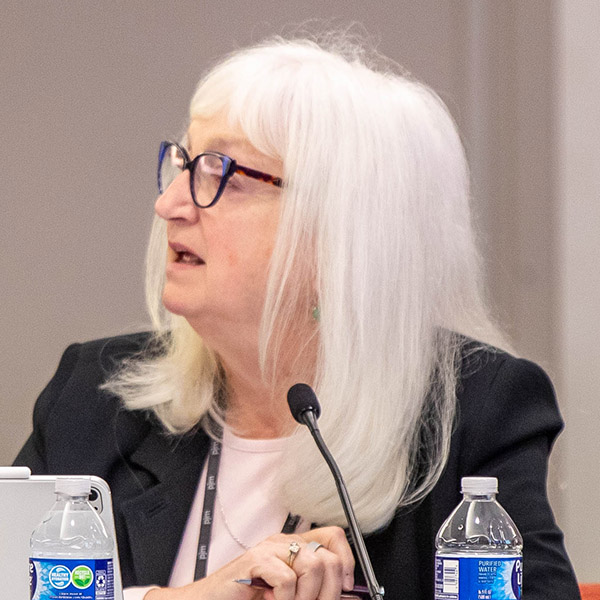
PJM Manager Vickie VanZandt | © RTO Insider

Constellation Energy’s Erik Heinle said when stakeholders are developing proposals, they are expected to have the design matrix filled out for each element under consideration, which can complicate voting on proposals focused on just a few elements. He suggested that voting on design components instead of packages could simplify package formation and understanding stakeholders’ priorities. Nelson and Manager Vickie VanZandt said they liked the concept.

Heinle pointed to the 2025 CIFP process focused on resource adequacy, which yielded a dozen proposals all in agreement that load forecasting should be improved. Despite that agreement, each package sponsor had to articulate their support for ongoing efforts to rework how PJM forecasts large load additions.

EDF North America Director of Transmission Policy Emma Nix Simon questioned whether dividing PJM’s membership into five sectors continues to make sense as the number of members has grown to more than 1,000. She also suggested a larger set of meetings could be recorded to allow stakeholders to engage with meetings they were not able to attend or rewind to better understand a technical subject.

LS Power Senior Vice President of Wholesale Market Policy Marji Philips said PJM can improve on listening to its members when there is broad opposition to changes it is considering. She pointed to efforts to establish a seasonal capacity market during the 2023 CIFP process focused on resource adequacy, a proposal she said the RTO continued to advocate for despite opposition across the member sectors. The number of proposals also has become unmanageable in some processes — both the 2023 and 2025 CIFPs had more than 10 proposals — leading her to suggest limiting the number of proposals by sector. (See PJM Files Capacity Market Revamp with FERC.)

PJM Forms Task Force to Explore Large Load Curtailment

VALLEY FORGE, Pa. — PJM is forming a task force to explore how new data centers can be required to curtail if they interconnect before there is sufficient capacity and transmission capability.

The Markets and Reliability Committee endorsed PJM’s Connect and Manage issue charge, which would identify circumstances under which large loads would be required to curtail because of a lack of generation capability, and an Exelon issue charge addressing interconnections that would cause transmission violations that cannot be resolved before the load’s in-service date.

Both issue charges were approved during the committee’s March 25 meeting and assigned to the newly formed Connect and Manage Senior Task Force (CAMSTF), which is holding its first meeting March 31.

Exelon Vice President Transmission Strategy David Weaver said the transmission side should be addressed in its own process because it would require a focus on the development of software tools needed to model available transmission headroom in each hour. If headroom is available for part of a year, that would provide a starting point for determining when a large load would need to be curtailed.

To submit a commentary on this topic, email forum@rtoinsider.com.

PJM Board of Managers Chair and interim CEO David Mills said a Connect and Manage framework would be a stopgap to mitigate falling reserve margins while other solutions with longer lead times are rolled out. Even with the implementation of programs intended to speed resource development — such as the proposed Expedited Interconnection Track and bring-your-own-generation systems — it will take years for new capacity to begin coming online.

“What we have here is a collision course of time versus shortfall,” he said.

The Connect and Manage issue charge scope begins with education on jurisdictional boundaries and moves on to defining which large loads would be subject; curtailment triggers and where they fit into the emergency procedure stack; how curtailment quantities would be assigned to utilities; and exceptions for large loads that bring their own new generation (BYONG) or enter into other supply arrangements.

The document precludes discussion on the amount procured in the capacity market, PJM’s authority in determining which customers must curtail during load shed and “overall load shed allocation” as being out of scope.

Data Center Coalition Issue Charge Merged with PJM Language

PJM and the Data Center Coalition workshopped the issue charge to incorporate elements of one the coalition and Google were slated to present a first read on later in the meeting that would open a separate conversation on a BYONG framework.

Language was added to the key work activities to “define supply-load linkages for the purposes of Connect and Manage exemption,” and the scope was widened to include evaluation of the system conditions that might trigger curtailment.

GQS New Energy Strategies Principal Pamela Quinlan, representing the DCC, said there seemed to be an oversimplification of how BYONG would be harmonized with Connect and Manage and the reliability backstop procurement also under consideration. There’s a desire to unlock the capital needed to construct resources to serve data centers, but this confusion is putting that investment on ice.

She argued PJM’s issue charge could result in a framework that requires data centers to buy capacity they cannot use, as they would be curtailed before capacity resources are deployed.

PJM’s Chris Pilong said there’s a difference between including load in capacity auctions and how the resulting costs are allocated to customers, which gets into state retail ratemaking.

Quinlan responded that these are wholesale costs that should be addressed at the wholesale level.

Presenting the DCC issue charge, Google’s Brian George said a BYONG framework limited to new generation would be overly limited. The coalition’s issue charge would have expanded the definition to allow large loads to bring, build or buy technology-agnostic resources to cover their consumption.

Constellation Energy’s Erik Heinle argued the issue charge should allow consideration of more than just new generation, which would be discriminatory against existing resources.

“We need to be very careful that we choose options that will survive FERC and accomplish those goals” of maintaining reliability, certainty and new development, he said.

Pennsylvania Bill Would Require Data Center Curtailment

Implementing a system to curtail specific customers likely would require buy-in from the PJM member states, as the RTO has held that it can require electric distribution companies to curtail only by specific megawatt amounts. Allocating that curtailment to a customer class would require coordination between utilities and state regulators.

The Pennsylvania House of Representatives approved a bill that would require new or expanding data centers to take interruptible service from EDCs and curtail during regional supply shortages. The bill also would require data centers to pay for their interconnection costs and source a percentage of their consumption from clean energy sources. The bill cleared the House along party lines March 24 and faces an uphill battle in the Republican-controlled Senate.

The DCC submitted testimony opposing the legislation, arguing data centers provide essential services that first responders rely on and must remain online during emergencies. It advocated for expanding voluntary demand response programs with “clear incentives and compensation.”

“Due to the essential nature of their operations, data centers must maintain uninterrupted operations in order to provide essential connectivity and data flow to their customers and to the many end users who rely on constant, seamless access to data and underlying applications,” the coalition wrote. “Some reliability risks, including sudden utility power outages due to storms, natural disasters and other causes, are inherently outside data center companies’ control. Data centers need to remain operational during emergencies to ensure that access to essential data and services continues uninterrupted for clients, end users and the general population.”

Exelon Issue Charge Focuses on Managing Transmission Violations

The Exelon issue charge seeks to develop tools to allow utilities to offer non-firm service to large loads while transmission upgrades required for them to receive reliable service are being constructed.

Its scope includes identification and curtailment of eligible large loads and a recognition that customer-level curtailments fall within the domain of retail rates.

The document envisions a solution in which PJM and transmission owners would model the amount of curtailment required under specific system conditions so utilities could establish “specific customer contractual curtailment guarantees.”

Options for the temporary transmission service large loads could receive include:

    • Fully matched, in which all the load is served by co-located generation and only ancillary transmission services are provided.
    • Partly matched, in which some energy is provided by onsite generation and withdrawal from the grid is limited to the net studied value.
    • Storage matched, pairing the load with onsite batteries, which can allow operations to continue during curtailment.
    • Connect and Manage, allowing the TO to interrupt the load to mitigate transmission violations.

Responding to questions on how the issue charge is different from FERC’s ongoing investigation into PJM’s rules for co-located load, Pilong said Exelon is seeking to establish broader rules for configurations in which the large load is not necessarily paired with onsite resources. (See PJM Presents 1st Look at Co-located Load Compliance Filings.)

Several stakeholders questioned why the PJM and Exelon issue charges could not be merged. Pilong said both parties spoke extensively about that possibility but determined they are trying to solve separate, though related, issues. He noted PJM does not have a load interconnection queue, and the determination of network upgrades is a TO responsibility.

Exelon Director of RTO Relations Alex Stern said the CAMSTF would first focus on the PJM/DCC issue charge and shift to the transmission-side afterward.

IESO’s Long Lead-Time Procurement Faces Potential Delay

IESO’s Long Lead-Time (LLT) procurement may be delayed beyond its planned April launch because the ISO still is awaiting a directive from the Ontario Ministry of Energy and Mines.

ISO officials announced the potential delay in an engagement session March 26, where they also shared refinements to their buy-local incentives.

The LLT procurement is intended for resources that require longer planning cycles than the four-year lead times in the pending Long-Term 2 (LT2) procurement. IESO plans to seek 600 to 800 MW of capacity from storage resources and up to 1 TWh of energy from hydro resources requiring at least five years of lead time.

“While we were expecting to get our directive to launch the LLT [request for proposals] by the end of this month, we no longer expect that to be the case,” IESO’s Ben Weir said. “Government is continuing to take some time to finalize the [supply chain] policy that’s going to be applicable to this procurement. … There is still hope that the end of April launch timeline does not get impacted by this … but that timeline has been put into question.”

To submit a commentary on this topic, email forum@rtoinsider.com.

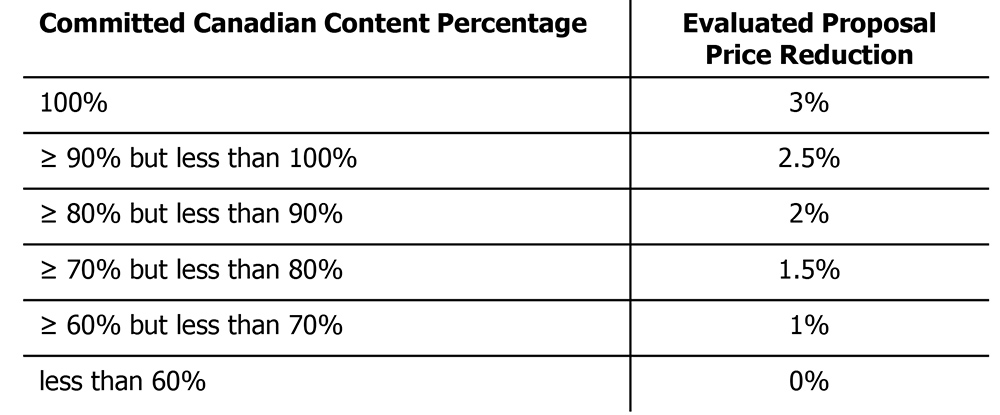
At issue are the government’s rules for incentivizing respondents to use Canadian construction materials and labor. The ISO previously said developers who commit to sourcing 75% of materials and construction services from Canadian suppliers would receive a 2% reduction in their “evaluated” price. (See IESO Expands Hydro Eligibility in Long Lead-Time Procurement.)

But in its March 26 presentation, IESO revised the incentive to a sliding scale, ranging from a 1% price reduction for using 60 to 70% Canadian supplies, to a 3% reduction for a 100% Canadian commitment.

If a supplier cannot prove they met their committed percentage, they will be subject to up to $5 million in liquidated damages, with higher damages for those falling more than 5 percentage points below their commitment.

Michael Killeavy of Power Advisory questioned the rationale behind the damages, asking, “If there’s a shortfall in Canadian content, how is the ISO actually damaged?”

Weir said the ISO wants a disincentive for suppliers who fail to honor their pledge to use a high percentage of Canadian supplies. “They shouldn’t have been awarded [a reduction in their evaluated price],” he said.

Reserve Price

IESO’s Jasdeep Kahlon again defended the ISO’s plan to use Window 1 of the LT2 procurement as the baseline for the LLT reserve price — a confidential price threshold to ensure the ISO doesn’t pay too much.

The price will be adjusted for inflation to account for the later commercial operation dates for long lead-time projects. IESO also will consider the cost of new entry at Year 21 of the 40-year contract term.

Kahlon said some stakeholders are concerned that the resources procured through LT2 are not comparable to those in the LLT procurement.

“While the ISO is taking this into consideration, I do want to clarify that the reserve price is intended to be … a price ceiling and reflect the ISO’s willingness to pay for LLT energy and capacity resources,” he said. “The ISO is not attempting to set a target or a forecasted price.”

Suppliers who promise a high percentage of Canadian labor and supplies will receive a reduction in their “evaluated” price, ranging from 1% for using 60 to 70% Canadian supplies to a 3% reduction for a 100% Canadian commitment. | IESO

In addition to the CONE baseline cost at Year 21, Kahlon said the ISO will consider the value of other attributes, “including supply diversity and system reliability benefits, longer asset lifetimes, the duration and flexibility that these projects bring” in addition to the domestic sourcing considerations that weren’t required for LT2 Window 1.

“I think a lot of the [stakeholder] concern may stem from maybe a lack of confidence that the ISO is going to correctly value these additional attributes,” he said. “So, this is where I’m … strongly encouraging stakeholders to submit any supporting materials, reports, modeling, analysis — whatever stakeholders believe would help the ISO correctly value these attributes.”

Early Delivery Concession

In response to stakeholder concerns, IESO agreed to relax conditions for its consent for a COD earlier than specified in the contract.

Stakeholders expressed concern that IESO’s veto power over an early COD could undermine the ability to finance projects, saying a project that is financially viable with a six-year lead time may not remain viable with a seven-year lead time.

IESO said it will update the LLT contracts to specify that consent for an early COD “shall not unreasonably be withheld.”

Timelines

The ISO also agreed to extend the RFP’s proposal submission deadline to Nov. 26. Some stakeholders had requested a deadline at the end of December.

Patrick Gillette, of consulting firm CRD Energy, said the November deadline “is somewhat problematic, especially for the greenfield sites that the Ministry of Natural Resources is going to be releasing.”

Gillette said the extended deadline will be helpful for “more mature sites,” but “it’s going [to be] very difficult to convince anybody to put any money into a process where you have the risk of the Ministry of Natural Resources needing to confirm the site is going to be put out there; that you’ve got to do a bunch of technical work in the field, and you’re working on something that normally takes a year, and the timelines have been shrunk down to seven eight months,” he said. “The risk you’re running here is that the really good sites that don’t have as much work done on them won’t be submitted.”

Weir said the deadline could be delayed if the procurement is not launched by the end of April, but he added, “You’re not going to get a year.

“We are balancing here a number of different procurements that have different timelines; that … need resources to be in service to meet needs that show up at different times,” he said. “And there is … only so long that we can push back an LLT proposal submission and still get contracts awarded.”

Next Steps

The ISO plans to post updated drafts of the RFPs, contracts and pre-deliverability test intake forms on April 1, and the deliverability testing methodology by mid-April.

It asked for feedback on the latest engagement by April 15 at engagement@ieso.ca.

From Weeks to Minutes: AI’s Potential to Replace Utility Planning and Operational Processes

TORONTO — Generating power flow analyses in minutes that formerly took weeks. Using high-resolution weather data to create probabilistic operational plans. Running a million Monte Carlo scenarios to compare potential grid upgrades.

All that is now possible with artificial intelligence, and it will replace most traditional utility planning and operational processes within a decade, says Josh Wong, CEO of ThinkLabs AI.

With aging infrastructure and increasing congestion, AI is needed to solve problems that are “orders of magnitude more complex” than what the grid faced 20 years ago, Wong told the Ontario Electricity Distributors Association’s ENERCOM 2026 conference March 23.

“For the past decade, we have been looking at just a corner, a small subset of the [grid], and trying to solve it with, I would say, brute force,” Wong said, citing transmission cluster studies that can cost $250,000 each and take six to 10 months to complete. “We always run studies independently, ad hoc, reactively and repeatedly, and it takes months, and it takes a lot of time, resources, and manpower and budget.”

To submit a commentary on this topic, email forum@rtoinsider.com.

Josh Wong, CEO of ThinkLabs AI | © RTO Insider 

When Wong was at Toronto Hydro, the utility studied each distribution feeder once every three years. In contrast, AI can continuously update its analysis of the grid the way Google Maps updates travel directions in response to changing traffic patterns.

“So now we have a real-time … copilot sitting in your control room, analyzing every feeder, every single few seconds to look at issues” and recommend fixes, Wong said. “Should you expand this line? Should you add a battery? Should you switch? Should you put a demand response or flexibility contract?”

Wong’s goal: AI running grid operations on “autopilot” with human override.

Wong said his company is working with MISO on how to introduce AI into the control room. “We are teaching AI agents to actually become training simulators to train generation operators,” he said.

The grid is so complex that the “human loop” will always be needed, Wong acknowledged. “But we are fundamentally up-leveling the job of the planner [and] the operator from really mundane tasks by giving solutions.”

AI ‘Skunkworks’

Wong turned to AI after founding Opus One, which became a leading distributed energy resource management system, during the first generation of smart grid and smart metering. “I realized that the core of the smart grid, or grid intelligence, is the intelligence piece,” he explained. “It’s not the next gadget, the widget, the piece of hardware, meter, battery, etc.”

After selling Opus One to GE — now GE Vernova — Wong became restless to start something new. He began an AI skunkworks within GE, which in 2024 spun out ThinkLabs.

Last year, ThinkLabs teamed with Southern California Edison to build “physics-informed” AI digital twins to address SCE’s load growth, which the utility says will require it to add seven new distribution circuits each year for the next decade.

“They need to process up to 10,000 energization requests each month. Currently … each interconnection and load request takes 30 to 45 days,” he said. “How many … resources and planners do you need to make that happen?”

To help utilities maximize their existing infrastructure, Wong said, AI can enable a shift from worst-case scenario analyses to time series analyses of all 8,760 hours in a year.

Using Microsoft Azure AI Foundry, “we trained sub-transmission AI models. We trained distribution AI models. We had them co-simulate [transmission] and [distribution],” Wong said. “We added all the interconnections. We played it out based on their [interconnection] queue. We found all the thermal violations [and] voltage violations.”

It did not take 30 to 45 days. “We did it for the entire system in two-and-a-quarter minutes,” he said. “So now the joke is: Grab coffee, come back and you can connect.”

NIVIDIA Earth-2

ThinkLabs also is using Nividia’s Earth-2’s weather data to create probabilistic load and solar generation forecasts at a one-kilometer radius. (See As Public Data Shrinks, Private Climate Models will Shape the Grid’s Future.)

The output “doesn’t give you one future, it gives you a probability of futures,” he said. “Now, with the right horsepower and the AI models, we can finally get into probabilistic operational planning” that ensures operators are making the right decisions.

“Now, when I do that switching, when I dispatch that battery, I have confidence whether I’m actually solving the problem or not,” he said. “So, this is what high-performance compute gives you: really going from worst-case analysis and hope for the best — ‘spray and pray,’ overbuild — to really be very surgical in how we analyze the system and be very confident in our actions.”

Capital Planning, Power Restoration

ThinkLabs is feeding AI decades of log data from advanced meters and SCADA systems to allow it to help with root cause analyses.

Wong also sees AI taking a major role in capital budgets, allowing planners to run Monte Carlo simulations of alternative grid upgrades.

“I can run … a million scenarios in 10 minutes,” he said. “So can we go to a regulator and say, … ‘We have studied a million scenarios and … the data shows us that this is the most prudent investment.’”

Wong said AI also can help utilities recover from storm-related outages by matching equipment and crews with tasks and developing key performance indicators affecting estimated time to restoration. “ETRs are a very wild guess these days,” he said.

Moore’s Law — the observation that the number of transistors on an integrated circuit will double every two years with minimal cost increase — applies to grid AI, Wong said. That means that costs will drop and AI insights will be available to small local distribution companies, not just large utilities.

“This is no longer a pipe dream,” he said. “The future is now.”

GOP Lawmakers Introduce Bill to Increase BPA Administrator Salary

Republicans in the U.S. House of Representatives introduced a bill to increase the salary for the head of the Bonneville Power Administration to make the position more competitive and attractive as the agency searches for its next leader.

Reps. Cliff Bentz (R-Ore.), Mike Simpson (R-Idaho) and Mark Amodei (R-Nev.) introduced the Bonneville Power Leadership Recruitment Act (H.R. 8132), which would allow the energy secretary to set the BPA administrator’s salary and make it competitive with other executives in the energy industry, according to a March 27 news release.

The bill comes after outgoing Administrator John Hairston announced his exit from the agency to join the Eugene Water & Electric Board. The Department of Energy posted the job opening March 2 on USAJobs.gov, a government website for federal job opportunities. The annual salary range is between $199,172 and $228,000. (See Hairston to Retire from BPA, Poised to Join EWEB.)

To submit a commentary on this topic, email forum@rtoinsider.com.

With the bill, the lawmakers hope to attract qualified candidates, noting the agency operates nearly 75% of high-voltage transmission in the Northwest and supplies almost four million people with power.

“We citizens of the Northwest cannot afford a BPA administrator who lacks deep experience, proven leadership capability, strategic vision, and an understanding of the incredible value of the BPA to many of us in Oregon, Washington, Idaho, Montana, Nevada, Northern California and even a part of Wyoming,” Bentz said in a statement.

The bill would require the secretary of energy to set the salary at a level comparable to a CEO of consumer-owned utilities in the Western Interconnection.

It also would apply market-based compensation standards to other BPA employees, mandate the use of annual compensation surveys to ensure pay remains competitive, ensure compensation is consistent with BPA’s budget and mission, and emphasize the need for experienced leadership, according to the news release.

Former BPA Administrator Randy Hardy previously criticized the salary and reiterated those concerns in a March 30 interview with RTO Insider. (See BPA Job Posting Spurs Questions About Search for New Administrator.)

“The BPA administrator is probably the most grossly underpaid official in the entire federal government,” Hardy said.

He said the salary should be at least “double” the range in the job posting. Executives of other utilities in the region can make up to $500,000 a year, while the BPA administrator, who has “three or four times the degree of responsibility … is making less than half of that,” according to Hardy.

The deadline to apply for the role recently was extended through March 30, expanding the application window from two to four weeks.

It is no accident, according to Hardy.

“They can’t find anybody who’s willing to take that low salary who’s qualified,” he said. “It’s a huge problem and it needs to be fixed.”

A BPA spokesperson said the agency typically does not comment on legislation.

Georgia Power to Pay $175K in NERC Penalties

Georgia Power will pay $175,000 to SERC Reliability for violating NERC’s reliability standards, according to a settlement between the utility and the regional entity approved by FERC March 27 (NP26-6).

NERC filed the settlement with the commission Feb. 26 in its monthly spreadsheet notice of penalty, along with a separate notice of penalty and SNOP regarding violations of NERC’s Critical Infrastructure Protection standards. Details of those settlements, including the REs and utilities involved, were not made public in accordance with NERC and FERC policies regarding CIP violations as critical energy/electric infrastructure information (NP26-5).

Georgia Power settled with SERC over a violation of PRC-023-6 (Transmission relay loadability). The utility reported the infringement in June 2024, according to the settlement, but it began July 1, 2010.

Requirement R1 of PRC-023-6 sets criteria to “prevent [their] circuit terminals’ phase protective relay settings from limiting transmission system loadability while maintaining reliable protection of the [grid] for all fault conditions.” Transmission owners, generator owners and distribution providers are required to apply one of 13 criteria provided to their transmission line relays.

Georgia Power notified SERC that on Dec. 19, 2023, it discovered two 230-kV line relays at the Wiregrass substation — energized four days earlier — did not meet any of the criteria in the standard. The utility did use one of the criteria, which specified that transmission line relays must not operate at or below 150% of a circuit’s highest seasonal facility rating, but the relays in question were found to be set “in the range of 140-150% … of the highest seasonal rating.”

The contract settings engineer for the project had calculated settings that would comply with both the standard and Georgia Power’s internal requirements, but a quality assurance engineer modified the settings in a way that still would comply with PRC-023-6 but not with the company’s requirements. An oversight engineer reviewed the settings and requested changes that would have ensured compliance with both, but these revisions were not fully implemented, and the relay remained noncompliant with the standard.

Georgia Power brought the Wiregrass substation’s relays back into compliance by Dec. 20, 2023. The utility also performed an extent of condition assessment on all 1,331 relays to which the R1 criteria apply and found four more substations with incorrect settings:

    • North Tifton — An element of the switch-on-fault scheme was set to 136% of the highest seasonal rating instead of 150%. The noncompliance began when PRC-023-1 (the predecessor to PRC-023-6) took effect in July 2010 and ended July 30, 2024, when the element was removed from the SOTF.
    • Bowen — Like North Tifton, an element on the SOTF was set to 111% of the highest seasonal rating instead of 150%. The instance began Oct. 21, 2022, when Georgia Power modified the settings, and ended July 30, 2024, when the utility removed the element from the SOTF.
    • Ohara and Thompson Primary substations — Each substation had a relay on a 500-kV line with phase distance reach set below the highest seasonal rating because of incorrectly implemented load encroachment logic. The Ohara infringement began July 1, 2010, when PRC-023-1 became effective and the Thompson Primary infringement on Nov. 18, 2021. Both ended in September 2024 when Georgia Power changed the relay setting.

SERC identified the cause of the Wiregrass violation as ineffective controls. The RE wrote that Georgia Power “had an unknown limitation in [its] work management tool program” that prevented automated emails that would have informed the PRC-023 coordinator on the project of the settings change. The procedure for issuing settings also did not provide any guidance on when settings changes are needed after settings for active projects already have been transmitted to the field.

For the other four instances, SERC determined the cause to be ineffective training as related to non-standard relays. The RE observed that all the violations “involved situations that are not present in most of the system and therefore represent unfamiliar situations that engineers may not have seen before during their careers.”

SERC wrote that of the relays on Georgia Power’s system to which PRC-023-6 applies, only 52 use the overcurrent elements used at Bowen and North Tifton, and 50 use the relays found in Ohara and Thompson Primary. As a result, SERC suggested “engineers made assumptions” about how to approach these situations that turned out to be incorrect. The RE determined the violation — counting all the instances together — posed a moderate risk to grid reliability, observing that “no harm is known to have occurred” because of the infringement.

To mitigate the violation, Georgia Power implemented corrected settings at all the identified noncompliant substations. The utility also developed new procedures for making settings changes after settings are transmitted. The utility communicated to compliance-related personnel the importance of notifying the compliance department as soon as possible after finding a potential noncompliance. It also conducted training on the unusual situations found in the extent of condition review.

Finally, Georgia Power implemented a new tool to check database line relay settings against the PRC-023-6 R1 criteria. The utility plans to use the tool to check settings prior to field implementation, and for periodic checks after installation.

MISO Details Pricing Issues, Slow Market Solves During Winter Max Gen Emergency

NEW ORLEANS — MISO’s maximum generation emergency event during a harsh winter featured under-forecast demand, issues with pricing software and day-ahead models so bogged down by complexity that they took longer to solve.

The grid operator reviewed the Jan. 23-27 winter storm during its quarterly Board Week meetup. Executive Director of System Operations J.T. Smith said the 2026 winter storm shared characteristics with the February 2021 storm.

Despite calling for maximum generation emergency procedures Jan. 24, MISO hit a 105-GW wintertime peak Jan. 27, on the final day of the storm. It eclipsed MISO’s 103-GW peak demand prediction ahead of the season. (See MISO: Gen Performance Lacking During January Winter Storm.)

Smith said MISO took the step of lodging its control room operators in Carmel, Ind., and Little Rock, Ark., in nearby hotels to make sure they would physically make it to headquarters for their shifts during the emergency.

To submit a commentary on this topic, email forum@rtoinsider.com.

Smith said that before the storm, MISO appeared to have ample reserves. But on the evening of Jan. 23, resources started to encounter performance issues and become inaccessible.

“We had an expectation that offline resources would be available,” Smith said during a March 24 meeting of Markets Committee of the MISO Board of Directors.

Load ultimately turned up about 3 GW higher across the Midwest region than MISO originally forecast for the Jan. 23 evening peak, Smith said.

MISO also said day-ahead offers from its members were lower than its expected need during the emergency.

“MISO under-forecasted the situation, but it also looks like our members under-forecasted the situation,” Smith said.

Smith said outages, offers that didn’t reflect true generation availability and higher load plagued the RTO. Compounding matters, MISO’s inability to publish locational marginal pricing was “not incentivizing the market to respond correctly to the situation,” Smith added.

MISO said its pricing issue “muted market response.” Because of software issues, it was unable to publish ex-post locational marginal prices for about 13 hours on Jan. 24. The Independent Market Monitor said the situation “exacerbated the emergency conditions.”

Carrie Milton, of the IMM staff, said the absence of market signals is “truly a testament” to the role the markets play during extreme weather conditions.

Milton said oil wellhead freeze-offs during the winter storm made it impossible for some MISO gas resources to get “gas at any price.” Natural gas pipeline interconnection Henry Hub traded at an all-time high of $30/MMBtu on Jan. 23.

Milton also said MISO’s emergency pricing seeped outside of the emergency in the Midwest to affect MISO South. She said emergency pricing raised prices to nearly $1,200/MWh in some parts of the South because of MISO’s regional directional transfer limit, which limits price separation between the regions to $700/MWh.

MISO accrued $16 million of day-ahead margin assistance payments to generators in the Midwest on Jan. 24, in addition to another $16 million of day-ahead margin assistance payments to generators in the South, Milton reported.

Southern Renewable Energy Association’s Simon Mahan said MISO’s inability to access the South’s generation highlights a need for it to focus on beefing up transmission links between its Midwest and South regions so the RTO can truly tap into its geographic diversity that proves helpful during system stress.

MISO’s day-ahead market model cleared slowly “for a number of days that week,” Smith continued.

MISO CEO John Bear said multiple grid operators experienced sluggish day-ahead modeling during the storm.

MISO was forced to make about 3 GW of emergency purchases from PJM on the morning of Jan. 24 and again in the evening. Smith said surplus generation in MISO South was trapped behind the Midwest-South constraint, requiring generators to stand down and driving up uplift payments.

The Monitor said just 67% of the 7.7 GW of load-modifying resources that cleared MISO’s capacity market in the Midwest for the winter season were available during the emergency event.

Milton said the IMM recommends MISO schedule load-modifying resources with longer lead times when it can tell that demand curtailments likely will be needed.

Milton said the RTO’s congestion was valued at more than $925 million during the winter, in part because of the winter storm, higher gas prices and renewable resources worsening transmission constraints.

MISO Director Robert Lurie asked if energy storage resources would have helped MISO ride out the storm more smoothly.

Smith said during extreme winter conditions, MISO often finds itself “work[ing] around” 30-minute lead gas units that encounter fuel issues.

“We live within the world of the fleet that’s given to us. There might be some opportunities there,” Smith said of battery storage.

But IMM David Patton said storage benefits would fade within a few hours in an extended cold spell.

“They can help a little bit, but they quickly lose their ability to help the system,” Patton said.

Smith said MISO’s machine-learning risk predictor was able to foresee 34% of the RTO’s 29 high-risk days over winter, better than its performance over the fall, when it failed to call any of the six high-risk days. (See MISO Usage, Outages Up in Fall 2025.)

“Better than zero, but still not great,” Smith said.

MISO also set separate peak renewable energy records for wind at 27 GW on Jan. 13 and solar at 16.5 GW on Feb. 27.

DOE Extends 202(c) Order for Craig Plant Days Before it Joins SPP RTO West

U.S. Secretary of Energy Chris Wright issued a second emergency order under Section 202(c) of the Federal Power Act to keep Unit 1 at the Craig coal plant in Colorado running for another three months until June 28.

The first order keeping the coal plant operating was issued Dec. 30 and is being challenged in court. (See Petitions Filed to Overturn DOE’s Craig Coal Plant Extension.)

“The last administration’s energy subtraction policies threatened America’s energy security and positioned our nation to likely experience significantly more blackouts in the coming years — thankfully, President Trump won’t let that happen,” Wright said in a statement March 30. “The Trump administration will continue taking action to ensure we don’t lose critical generation sources. Americans deserve access to affordable, reliable and secure energy to power their homes all the time, regardless of whether the wind is blowing or the sun is shining.”

Craig Unit 1 is operated by Tri-State Generation and Transmission Association and co-owned by it, PacifiCorp, Platt River Power Authority, Salt River Project and Xcel’s Public Service Company of Colorado.

Tri-State and the Western Area Power Administration Rocky Mountain Region are joining SPP as part of its RTO West expansion effective April 1, so the order directs the grid operator to use economic dispatch for the plant and to minimize ratepayer costs.

The 446.4-MW Craig Unit 1 started operations in 1980 and was poised to cease operations in December. DOE released a resource adequacy report last year arguing power plant retirements should stop considering rising demand and the agency noted that 17 GW of coal generation stayed open in 2025.

The Craig extension came a week after DOE extended emergency orders for CenterPoint and MISO to keep the F.B. Culley Generating Station open and for NIPSCO and MISO to keep the Schahfer Generating Station running. Both plants are located Indiana.

The coal plants were slated to retire in December and now are being kept open another 90 days. DOE reported that both ran during a major cold snap from Jan. 23 to Feb. 1. The Indiana plants’ 202(c) orders also are being challenged in court. (See Groups Contest Indiana Coal Plants’ Emergency Extensions at D.C. Circuit.)

In other cases, such as the legal challenge to the Campbell power plant 202(c) orders, appeals have been filed for every order. But the court has held them in abeyance and moved forward with the appeal of the first order issued for a plant.

DOE issued its first 202(c) order to block a planned retirement at the Campbell plant in Michigan in May 2025 and that case is the farthest along, with the department filing its first brief recently. Final briefs are due this April, and oral arguments are scheduled for May 15. (See DOE Defends Use of Emergency Orders in Court Filing.)

Texas PUC to Survey Large Loads’ Water Use

Texas regulators are launching a survey of water use by data centers and crypto miners to address concerns about whether the state is prepared for the potential demand from the large loads’ needs to cool servers and generate electricity.

The survey will be open April 2 through May 28. Public Utility Commission staff have worked with the state Water Development Board (WDB) and industry associations to develop and distribute the survey.

“The whole overall objective here for the data centers … that are either continuing to operate today or are thinking about coming to Texas, is to make sure that everybody has the water that they need,” Commissioner Kathleen Jackson said during the March 26 open meeting. “This is useful information that will help in the planning process and the future build out of additional water infrastructure.”

The Texas Legislature directed the Public Utility Commission to conduct the survey by adding a rider in the 2026/27 state budget. It instructs the commission to focus on industries whose energy demands have an “inverse relationship with their water usage.”

To submit a commentary on this topic, email forum@rtoinsider.com.

PUC staff will share the survey’s results with WDB and the Texas Commission on Environmental Quality for their own planning and demand purposes. Staff also must deliver a report to the legislature by the end of 2026.

State Rep. Armando Walle (D), who wrote the rider, said the survey is a “critical early step” in the state’s approach to water needs.

“We must find ways to meet the existing data gaps in our state and regional water planning process to ensure local governments — and these businesses themselves — can make informed decisions based on what resources are available, and will be available going into the future,” he said in a statement.

The Houston Advanced Research Center (HARC) said the state is home to 464 data centers and that it expected their water use to continue to rise, according to a report released in January. The center estimated that Texas uses 8 billion gallons of water each year, based on data center energy forecasts. HARC said an additional 70 sites are under development.

ESRs Separated from DRRS Development

The commission accepted staff’s recommendation to separate energy storage resources from ERCOT’s development of Dispatchable Reliability Reserve Service (DRRS) through a protocol change (NPRR1309), avoiding delays in implementing the product’s core functionality (55797).

Chair Thomas Gleeson said that while he believes ESRs should be able to access DRRS revenues, batteries’ “unique issues” would best be handled in a separate protocol change. He said ERCOT staff have told him decisions made in the second change could be rolled into DRRS’ first run.

“Because we can do it on the same timeline, it’s not going to delay DRRS, and battery inclusion in DRRS will not be delayed,” Gleeson said. “I’m comfortable with the recommendation that we separate this out.”

A 2023 law requires ERCOT to develop DRRS as an ancillary service and establish minimum requirements for the product:

    • reducing the amount of reliability unit commitment by the amount of DRRS procured; and
    • eligible resources capable of running for at least four hours and being dispatchable not more than two hours after being deployed.

NPRR1309 meets all statutory criteria and improves an earlier version by allowing online resources to participate in DRRS. The product will be awarded in real time and co-optimize (RTC) its procurement with that of energy and other ancillary services under RTC. The change has been granted urgent status and is due before the board for its June meeting.

The PUC also adopted a rule change for net-metering arrangements between a large load customer and an existing generation resource. The new rule establishes the criteria for ERCOT’s study of the arrangements and sets the procedural steps for completion within 120 days (58479).

The commission will have 60 days to deny or approve a net metering arrangement once ERCOT files its study results and recommendation to the agency.

ROWE Close to Finalizing Board Selection Process

The West-Wide Governance Pathways Initiative’s Launch Committee is finalizing role specifications for the initial board members of the Regional Organization for Western Energy (ROWE) as it prepares to evaluate candidates.

Lyceum Leadership Consulting, the search firm in charge of vetting candidates for ROWE’s board, has interviewed stakeholders to gather input on the role specifications for the initial five board positions that will be seated in 2026, Kathleen Staks, Launch Committee co-chair and ROWE interim president, said during a Pathways meeting March 27.

After the Pathways Initiative’s nine sectors provide input on the role specifications and search strategy in April, “we will kick off our board member search,” Staks said.

“This is the point at which we will be taking nominations, and the search firm will be starting their evaluation of various candidates and working through the nominating committee to evaluate those candidates and narrow it down to a slate of five,” Staks added.

Jim Shetler, general manager of the Balancing Authority of Northern California, provided an update on ROWE funding.

Shetler anticipates ROWE will raise roughly $1.1 million through stakeholder contributions and grants, “which should get us through mid- to third quarter of this year,” he said.

Shetler noted that CAISO has begun a stakeholder process to examine whether to approve an $8.5 million financing plan to fund ROWE’s start-up costs. He said ROWE and CAISO are discussing with “various banks” about what a loan structure might look like and are narrowing down alternatives. (See ‘Widespread Support’ for CAISO’s $8.5M ROWE Funding Plan.)

Meanwhile, the Pathways group working on developing ROWE’s Office of Public Participation has met with its counterpart at FERC to discuss best practices, Staks noted.

She added that the same work group has begun focusing on tribal engagement.

“We are doing some outreach and some work to figure out how the ROWE can get set up with a meaningful way for engaging with tribes and the various interests that they have as well,” Staks said.

The next Pathways meeting is scheduled for April 24.