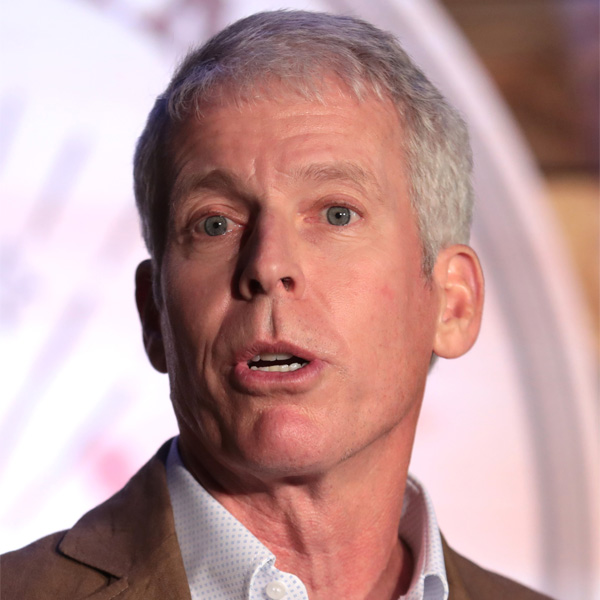
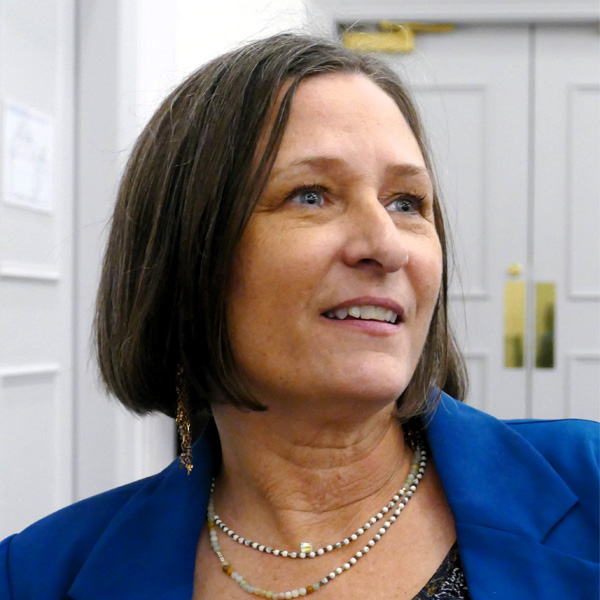
PJM has announced that Paul McGlynn, vice president of planning, will retire in 2025 and his role will be filled by Jason Connell, executive director of transmission and resource adequacy planning.
McGlynn is set to continue serving with PJM through March 31, 2025, with Connell taking over as planning vice president on Jan. 1, 2025, to allow for a transitionary period. Connell has held several positions in PJM’s system planning department over his 12 years with the RTO, which came after a career at PECO doing transmission and substation engineering.
“This is an incredibly dynamic time to be planning for the evolution of this industry,” Connell said in a PJM announcement. “I am excited to support and continue PJM’s important work to design and manage the grid of the future while preserving reliability.”
Aftab Khan, executive vice president for operations, planning and security, said Connell “brings strong planning experience and leadership capabilities to ensure a smooth transition and to manage the evolving needs of the PJM grid.” He also thanked McGlynn for 17 years of contributions to PJM’s operations and planning departments.
McGlynn was named vice president of planning in November 2023 following the retirement of Ken Seiler. He then was managing PJM’s real-time dispatch operations and assisted in developing near-term reliability studies, load forecasting, and the coordination of generation and transmission outages. He previously served as PJM’s senior director of system planning, which saw him administering the Regional Transmission Expansion Plan (RTEP) process. (See Retirements and New Faces on PJM Executive Team.)
“It has been my privilege to have worked in this industry,” McGlynn said. “I am proud to have been part of such an outstanding team doing extremely important work for the energy industry, and I know PJM will continue to forge ahead with efficiency, innovation and technologically sound solutions to fulfill our critical mission of reliability.”
In an antitrust lawsuit filed in federal court Nov. 12, Avangrid accused NextEra Energy of conducting an “exclusionary and anticompetitive scheme” to stop a major transmission project connecting New England to Quebec, costing customers millions of dollars in elevated electric rates and delaying the region’s clean energy transition (3:24-cv-30141).
“NextEra has committed anticompetitive, unfair and deceptive business practices to foreclose competition for the supply of wholesale electricity on the ISO New England marketplaces,” Avangrid told the U.S. District Court for Massachusetts. “NextEra has reaped hundreds of millions of dollars from these illegal practices.”
The 1,200-MW New England Clean Energy Connect (NECEC) project was selected by Massachusetts in 2018 in a clean energy solicitation but faced a series of regulatory, legal and political obstacles delaying its development. Construction on the project resumed in 2023 after a two-year pause. (See Avangrid Details Progress on NECEC Tx Line.)
While Avangrid initially expected the project to come online in December 2022, its “most optimistic estimated in-service date” now is January 2026, the company wrote.
The delay comes with a hefty price tag to ratepayers; in October, Massachusetts’ electric utilities submitted a settlement agreement that would result in a $521 million cost increase in 2017 dollars, equal to about $670 million today (DPU 24-160).
Carbon emissions in the state also likely increased from the delay; utilities have estimated NECEC would reduce carbon emissions by about 1.93 million metric tons annually, equivalent to nearly 3% of the state’s emissions in 2021.
In its suit, Avangrid estimated damages of at least $350 million and demanded a jury trial. The company seeks an award of three times the damages, as well as interest, legal costs and an injunction “barring NextEra from continuing to undertake its anticompetitive scheme.”
Avangrid describes NextEra’s opposition to the project as a “a three-pronged scheme to delay or stop NECEC,” comprising “objectively baseless attacks” on its permitting applications, covert political funding to stop the project and a refusal to upgrade a circuit breaker at its Seabrook nuclear plant to accommodate the line.
“Through this premeditated and interwoven scheme, NextEra has and is continuing to exclude from the New England grid the clean and low-cost electricity NECEC would bring,” Avangrid wrote. “NextEra’s scheme has harmed competition, damaged Avangrid and consumers and held Massachusetts’ clean energy transition hostage.”
Along with the Seabrook plant, NextEra owns two oil generators in Maine, a gas plant in Massachusetts and several smaller clean energy resources throughout the region. Avangrid argued that NextEra’s incumbent generators have made “inflated profits” from the higher energy prices caused by NECEC’s delay.
Avangrid wrote that NextEra worked to slow NECEC’s permitting approval through “at least 10 serial sham petitions, which no reasonable litigant could realistically expect to succeed on the merits.”
Along with regulatory challenges, NextEra also helped fund two ballot referendum efforts in Maine to stop the project. The first referendum was deemed unconstitutional by the Maine Supreme Judicial Court, which also invalidated a second successful ballot question opposing the line.
NextEra spent about $20 million to fund the second ballot question. In 2023, two opposition groups associated with NextEra-funded efforts to stop the project were fined a cumulative $210,000 for campaign finance violations, including a $150,000 contribution to the Maine Democratic Party made in the name of a pop-up company called Alpine Initiatives.
According to the Energy and Policy Institute, a utility watchdog nonprofit, NextEra has also funded a group working to oppose offshore wind in Maine.
Avangrid also alleges NextEra’s efforts to avoid installing a circuit breaker at its Seabrook plant are part of the company’s overall opposition strategy.
NextEra then appealed the ruling to the D.C. Circuit Court of Appeals, arguing FERC does not have jurisdiction to require the company to upgrade the circuit breaker. The D.C. Circuit affirmed FERC’s ruling in October. (See DC Circuit Affirms FERC Ruling on Seabrook Circuit Breaker Dispute.)
Avangrid argued NextEra “purposefully allowed the Seabrook breaker to creep up to almost 100% capacity so that any substantial new power source seeking to join the New England grid would be blocked unless NextEra agreed to cooperate.”
“NextEra knew the Seabrook breaker was at near-capacity for a decade, and that operating under such conditions created enormous risks associated with a potential fault, should the breaker be over-dutied,” Avangrid wrote, emphasizing that NextEra risked “human life and a nuclear plant disaster.”
Avangrid also alleged top NextEra executives “demanded an improper quid pro quo,” offering to drop its opposition to the line if Avangrid would purchase power from the Seabrook plant at “substantially above-market rates.”
“NextEra’s naked quid pro quo offer was simply a ploy to force Avangrid to pay NextEra the money it would lose when NECEC would enter the market,” Avangrid wrote.
All of these actions amount to violations of the Sherman Antitrust Act of 1890, the Massachusetts Antitrust Act and the Massachusetts Unfair Trade Practice Act, Avangrid alleged.
“Both on its own and in conspiracy with others, NextEra engaged in a multifaceted, scorched-earth scheme to delay and even try to block NECEC altogether. NextEra’s actions have delayed Avangrid from offering clean, lower cost electricity through ISO New England’s wholesale electricity marketplaces. …
“This conduct included overt acts that constitute monopolization, attempted monopolization, civil conspiracy, intentional interference with contract, sham petitioning, dark-money deception, and false and misleading statements.”
NextEra did not respond to repeated requests for comment in time for publication. The Massachusetts Attorney General’s Office also did not respond.
New York is dipping another toe in the water on nuclear power, trying to determine market interest in developing advanced generation technologies in the state.
The New York State Energy Research and Development Authority issued a request for information Nov. 15.
The move comes two months after NYSERDA issued a draft blueprint for consideration of advanced nuclear technologies at a summit convened to discuss the state’s future energy economy. All forms of clean energy were on the agenda, but nuclear had a more prominent role in the discussion. (See NY Takes a Closer Look at Advanced Nuclear.)
Nuclear historically has been very expensive and controversial, but it is increasingly attractive to a growing number of policymakers, as next-generation technology is touted as safer, faster and cheaper to build.
So far it is none of those things, but the potential is exciting, given the imperative to generate more electricity with less emissions.
New York officials have maintained a neutral tone on the prospect of expanding its presence in the Democratic-controlled state, but they, too, appear interested. The state has fallen behind on the ambitious decarbonization schedule lawmakers set, as utility-scale wind and solar projects see delays, cancellations and soaring prices.
Even if New York exceeded its goals for solar and wind, nuclear and its near-100% capacity factor could provide an important backstop for intermittent renewables.
There has been bipartisan federal support for developing next-generation nuclear technology, and New York is laying groundwork to make decisions once it is commercially viable.
In a Nov. 15 news release, NYSERDA President Doreen Harris explained the reasons, again without specifically endorsing more nuclear generation within state borders: “As local, national and international companies pursue nuclear energy for their on-site energy needs and the federal government signals interest in investing in this resource, we recognize that now is the time to position New York to fully engage this new sector that can drive significant economic development.”
Two days earlier, during a fireside chat with former U.S. Secretary of State Hillary Clinton, N.Y. Gov. Kathy Hochul (D) also did not explicitly call for more atoms to be split in the Empire State.
But she did say New York would lose a competitive edge with other states if it didn’t allow large commercial/industrial loads to use plug-and-play small modular reactors, once the technology is developed and approved.
Nuclear is something people have not been talking about for a long time, Hochul said, but New York needs to take another look at it.
New York state has four operational commercial reactors. In 2023 they provided 22% of the state’s electricity and 45% of its zero-emission electricity. Three of the reactors rank among the oldest operational units in the nation, first licensed 50 to 55 years ago.
NYSERDA’s request for information seeks to identify entities pursuing or interested in pursuing a role in the development of next-generation nuclear energy in New York.
It will, Harris said, let NYSERDA develop partnerships and initiatives for complementary resources, and keep the state in the forefront of emerging energy technologies.
NYSERDA hopes to hear not only from prospective developers but supply chain companies, potential host communities and entities in the workforce development, finance and research and development sectors.
Meanwhile, NYSERDA is finalizing its draft nuclear blueprint. The State Energy Planning Board is readying the latest update of the State Energy Plan, which provides broad direction on program and policy development in the public and private sectors.
And the Department of Public Service continues the work begun in June 2015 on implementing a Large-Scale Renewable Energy Program and a Clean Energy Standard (case 15-E-0302).
Environmental advocates won a round in their long-running court battle over the conversion of a New York peaker plant into a cryptocurrency mining operation.
A county-level court on Nov. 14 ordered the state Public Service Commission to reconsider the decision that allowed the conversion to go through.
The PSC opted not to block the sale because it posed no potential harm to captive utility ratepayers and no potential exercise of market power.
FERC authorized the transaction because it found no impact on horizontal or vertical competition, no adverse impact on rates, no impairment of regulation and no cross-subsidization.
The Sierra Club and the Clean Air Coalition of Western New York challenged the PSC’s ruling on the grounds that it was inconsistent with the state’s Climate Leadership and Community Protection Act of 2019, which mandated policies to reduce the use of fossil fuel and minimize its impacts. (See Green Groups Seek to Block NY Power Plant Sale to Crypto Miner.)
The challenge initially was rejected in court and by the PSC, and the sale was finalized in early 2023.
Operation of the crypto facility has generated noise and air quality complaints in the neighborhood and prompted North Tonawanda to enact a two-year moratorium on new or expanded data centers and cryptocurrency mining operations.
Digihost, in its quarterly earnings report Nov. 15, called the North Tonawanda facility its flagship power plant. It said it had completed maintenance work and soon would bring the plant back to full operation.
The Nov. 14 ruling by Justice Richard Platkin in Albany County Supreme Court reopens the case before the PSC.
The PSC had no comment Nov. 15, saying only that it would review the latest ruling.
Earthjustice, which represented the environmental groups, celebrated the ruling.
Earthjustice said in a news release that the PSC erred in its review of the proposal, and said this allowed a gas peaker plant that had been operating 10 to 74 days a year to ramp up to 24/7/365 operation. This boosted carbon dioxide emissions as much as 3,500%, it said, and increased output of other harmful pollutants.
“This is not only a victory for the North Tonawanda community, but also a significant win for New York’s climate law,” said Dror Ladin, senior attorney at Earthjustice. “Today’s ruling confirms that every state agency and official must fully consider and uphold the CLCPA in all its decisions, safeguarding both our climate and the well-being of the public.”
The ruling was not a clean sweep for the environmental advocates.
Justice Platkin rejected their contention that the PSC failed to consider the impact on several nearby disadvantaged communities, as it is required to do under the CLCPA. The state had not finalized its designation of disadvantaged communities at the time, he ruled, and therefore the PSC could not have considered such impacts.
And he rejected the complainants’ request for declaratory judgment.
But the PSC had argued that allowing the sale to go forward was not an “affirmative approval” and therefore not subject to CLCPA requirements, and this was incorrect, Platkin wrote.
So he annulled the PSC rulings and remanded the matter for further proceedings.
If the PSC determines the sale will interfere with the state’s greenhouse gas emissions limits, it must identify alternatives or mitigation measures to be required near the plant, Platkin wrote.
An earlier appeal in the same case determined that substantial completion of a project may render a case moot, he wrote, but the CLCPA allows for substantial relief short of completely unwinding a transaction.
President-elect Donald Trump is laying the ground for a major, fossil-fuel-friendly U-turn in U.S. energy policy with his nominations of North Dakota Gov. Doug Burgum (R) as secretary of the interior and Chris Wright, a fracking company CEO, as secretary of energy.
In a Nov. 15 statement, Trump also announced that Burgum will chair “the newly formed and very important National Energy Council, which will consist of all departments and agencies involved in the permitting, production, generation, distribution, regulation [and] transportation of all forms of American energy.”
The council will focus on “cutting red tape, enhancing private-sector investments across all sectors of the economy and [promoting] innovation over longstanding, but totally unnecessary, regulation.”
While pledging to expand all forms of energy production, the statement reiterates Trump’s intention to “drill, baby, drill” to increase U.S. production and consumption of fossil fuels with the goal of increasing baseload power and reducing energy costs.
Trump first teased Burgum’s nomination during a speech at the America First Policy Institute Gala at Mar-a-Lago on Nov. 14. “I won’t tell you his name,” he said. “It might be something like Burgum. He’s going to head the Department of Interior, and he’s going to be fantastic.”
The announcement of Wright’s nomination came Nov. 16. A self-described “tech nerd turned entrepreneur,” he is the CEO of Liberty Energy, a Denver-based company that, according to the company’s website, offers efficient, lower-emission fracking equipment.
Wright also promotes the ongoing use of fossil fuels — which he calls “hydrocarbons” — as critical to progress in human living conditions. In a video, posted to his company’s website in April, Wright argued that opposition to fossil fuels is limited to industrialized countries, but “global demand for oil, natural gas and coal are all at record levels and rising. No energy transition has yet begun.
“Modern alternatives like solar and wind work in one sector, the electricity sector, and they don’t even have prospects to replace most of the uses of hydrocarbons, making energy more expensive.”
Burgum would replace Interior Secretary Deb Haaland, the first Native American to hold the position, and Wright would replace Energy Secretary Jennifer Granholm, the second woman to lead the department.
Under Granholm, the Department of Energy has become a major driver of the commercialization and scaling of a range of clean energy technologies. The department received about $35 billion from the Inflation Reduction Act of 2022 and has been distributing the funds to a range of clean energy programs — as well as to states, cities and companies through loans — over the past two years, intended to decarbonize the U.S. to meet President Joe Biden’s policy of reducing emissions by half by 2050.
Trump is expected to issue a halt on further distribution of unspent IRA funds as soon as he is in office and to lift the current pause on new LNG export facilities.
Burgum
“Serving as interior secretary is an opportunity to redefine and improve upon the federal government’s relationship with tribal nations, landowners, mineral developers, outdoor enthusiasts and others, with a focus on maximizing the responsible use of our natural resources with environmental stewardship for the benefit of the American people,” Burgum said in a statement. He said the new council “will foster an unprecedented level of coordination among federal agencies to advance American energy.”
Speaking to reporters in North Dakota on Nov. 12, Burgum said the second Trump administration is “thinking about significant, substantial change. They are thinking about changing the direction of how the federal government works.”
Born and raised in North Dakota, Burgum, 68, started out as a computer entrepreneur, growing a local company, Great Plains Software, from an accounting software startup to a publicly traded firm with 2,200 employees across the state. The company was acquired by Microsoft in 2001.
Before winning his first election as governor in 2016, Burgum worked for Microsoft for several years and then started a real estate development company and a venture capital firm.
Re-elected in 2020, Burgum had supported an all-of-the-above approach to energy, prioritizing innovation over regulation. North Dakota is the third-largest producer of crude oil in the U.S.
At the same time, the Energy Information Administration reports that wind is the second-largest source of electricity in the state, providing about 40% of its power, versus the 55% provided by coal.
As a state that produces more energy than it consumes, North Dakota is also seen as a potential new hub for data center development. The state has only seven data centers, but those facilities have driven the highest percentage of power demand increase in the U.S. — 37% — according to EIA figures. Six new data centers are under development in the state.
In 2021, hours before Granholm landed for a state visit, Burgum issued a challenge for North Dakota to become carbon-neutral by 2030, primarily through carbon capture and sequestration. A press release from the governor’s office at that time noted that North Dakota has “252 billion tons of underground storage capacity — enough to store 4,400 years’ worth of the state’s carbon output or 50 years’ worth of the nation’s energy-related carbon output.”
“We can reach carbon neutrality in the state of North Dakota by 2030 without a single mandate, without any additional regulation. We can get there just through the innovation and the different geology that we have,” Burgum said at the time. “We are excited to hear how the federal government is going to join the states, join the private sector, in investing in the technology to help us get to where we need [to be].”
Burgum could have run for a third term as governor, but this year, he said he would not. He briefly ran for president in 2023 but dropped out of the race before the Iowa caucuses and threw his support to Trump. According to multiple media reports, Burgum helped organize a now-infamous campaign dinner for Trump and oil and gas executives, during which Trump asked for $1 billion in donations from the group.
Burgum also has a close relationship with Harold G. Hamm, the founder and CEO of Continental Resources, one of the nation’s largest independent oil producers, who also helped organize the dinner.
Wright
Wright also is close to Hamm, who recently told Hart Energy, an oil and gas industry publication, that Wright was his top choice to lead DOE.
In a statement announcing Wright’s nomination, Trump called him a “leading technologist and entrepreneur in energy.”
“He has worked in nuclear, solar, geothermal, and oil and gas,” Trump said. “Most significantly, Chris was one of the pioneers who helped launch the American shale revolution that fueled American energy independence and transformed the global energy markets and geopolitics.”
Liberty Energy CEO Chris Wright | Gage Skidmore, CC BY-SA 3.0, via Wikimedia Commons
Wright has no prior government experience. His online profiles are focused on his education and career as a fracking pioneer. He has an undergraduate degree in mechanical engineering from the Massachusetts Institute of Technology and “did graduate work” at MIT and the University of California, Berkeley, according to his company profile.
Pinnacle Technologies, which he started in 1992, was an early mover in fracking. He served as CEO of the company until 2006 and founded Liberty, originally Liberty Resources, in 2010.
He also describes himself as a “passionate father, grandfather, skier, cyclist, climber and outdoor enthusiast,” and he was a major donor to Trump’s campaign, providing at least $228,390, according to ABC News.
Wright has used social media to promote his beliefs that climate change is not a major threat and fossil fuels are critical to human life and progress. In a 2023 video, he claimed there is no “climate crisis. … The only thing resembling a crisis with respect to climate change is the regressive, opportunity-squelching policies justified in the name of climate change.”
In the April 2024 video, he backtracked slightly, saying that “climate change is a global challenge. I’ve worked in it for 20 years, but it’s far from the world’s greatest threat to human life.
“Zero energy poverty by 2050 is a superior goal to net-zero emissions 2050 … for two reasons. No. 1, it’s achievable, and No. 2, progress [toward] that goal makes the world a better place. I can’t say either one is true for net zero 2050.”
Wright also links fossil fuels to general goals to improve life in developing countries. In January, he launched the Bettering Human Lives Foundation, which promotes the use of propane cooking appliances to replace the use of wood, charcoal and dung for cooking in many developing countries. Wright has pledged $1 million per year to fund the effort.
Reactions
The double nomination for Burgum quickly had multiple media outlets dubbing him Trump’s “energy czar,” while Wright was characterized as a Trump campaign donor and loud opponent of efforts to combat climate change.
Reactions to both nominations were, predictably, divided.
Sen. John Barrasso (R-Wyo.), who will be the Senate majority whip in the new Congress, praised both.
Burgum “knows what it takes to unleash American energy,” Barrasso said. “He recognizes how important our federal lands are for energy and mineral production, grazing and recreation. As North Dakota’s governor, he’s shown he can balance environmental stewardship with record energy development.”
Wright, he said, is “an energy innovator who laid the foundation for America’s fracking boom. … Our country is desperate for an [energy] secretary who understands how important American energy is to our economy and our national security.”
Manish Bapna, CEO of the Natural Resources Defense Council, linked Burgum to Trump’s “plan to open more public lands and ocean waters to the dangers of oil and gas drilling. That’s the wrong direction for the country. Now he’s tapped someone with close ties to the oil and gas industry to spearhead the scheme.”
Ben Jealous, executive director of the Sierra Club, blasted Wright as “utterly unqualified for the job” and declared that “the Sierra Club is ready to do all we can to stop him and his pro-polluter agenda.
“Chris Wright is a climate denier who has profited off of polluting our communities and endangering our health and future,” Jealous said in a statement.
If confirmed, Wright will “be hell-bent on abusing his power to prolong the use of deadly fossil fuels and give his corporate polluter executive friends a rubber stamp for the unfettered buildout of LNG exports,” Jealous said. “Clean air and clean water are not a priority for these people, and their reckless ideas and policies will only further harm the American people.”
Texas regulators on Nov. 14 approved the state’s first utility resiliency plan, a $3 billion proposal from Oncor to bulk up its distribution system over the next four years to better withstand and more quickly recover from extreme weather and other events (56545).
The Oncor System Resiliency Plan includes measures to mitigate wildfire risk, strengthen its overhead and underground distribution systems, protect against lightning strikes, expand vegetation management programs, implement physical security at critical facilities and strengthen the digital capability of its system against cybersecurity threats.
Oncor in August reached an unopposed settlement with Public Utility Commission staff, the Office of the Public Utility Counsel, the Alliance of Oncor Cities, the Steering Committee of Cities Served by Oncor, Texas Industrial Energy Consumers and Walmart over the plan.
Brian Lloyd, Oncor vice president of regulatory policy, said the utility worked with the intervenors to expand its vegetation management program in a “proactive, more efficient, cheaper manner” before storms hit, rather than cleaning up the damage and booking the costs after.
“We do believe this plan ultimately will mean we avoid costs,” he told the PUC commissioners during their open meeting. “The post-storm vegetation management is the most expensive vegetation management you can do, so by moving that ahead and doing it proactively, using our new technology to really tackle where that vegetation is grown the fastest, we do believe, over time, it’s going to have a significant impact.”
“Obviously, a lot of work went into this. Staff, all the intervenors, but definitely Oncor as well,” PUC Chair Thomas Gleeson said. “Going first is never easy. Thank you for working to get us a plan that we could ultimately support and that got broad-based support.”
“These investments have been methodically selected to have the greatest impact in proactively addressing potential outage causes,” Oncor CEO Allen Nye said in a statement. “And even more important to the people we serve, it will also substantially reduce outage minutes.”
Under House Bill 2555 passed by the 2023 Texas Legislature, electric utilities must file resiliency plans with the PUC. They must include measures that help prevent, withstand, mitigate or more promptly recover from resiliency events (e.g., extreme weather, wildfires and cybersecurity or physical security threats).
The commission also is reviewing plans filed by AEP Texas, Texas-New Mexico Power and Entergy Texas.
CenterPoint Audit
The PUC agreed to conduct a “management audit” of CenterPoint Energy over its post-storm recovery performance this year, meeting a request from Texas Lt. Gov. Dan Patrick, a Houston resident, during a rare public hearing in the city in October. (See Texas Politicos, Residents Bash CenterPoint.)
The commissioners directed staff to prepare a request for proposals for a third party to conduct the audit and deliver its findings in April. Gleeson said that will allow the commission to hand over findings and any recommendations to state lawmakers before they adjourn their biennial session in May.
“I think there are a few things we can look at, [like] CenterPoint’s policies and procedures when procuring goods from a third party,” Gleeson said, an apparent reference to the utility’s $800 million lease of portable generators that it was unable to use in restoring power following July’s Hurricane Beryl.
“I think it’s hard for us not to do something here,” Commissioner Jimmy Glotfelty said. “This is [Patrick’s] backyard, and he has been a part of this recovery from this hurricane since the very beginning. I think that we owe it to him to find some more answers, and this is an appropriate way to do so.”
The audit is separate from the PUC’s investigation into CenterPoint’s and other Houston-area utilities’ performance during Beryl and a May derecho that took out a major 345-kV transmission line. A report is due to Gov. Greg Abbott and the legislature by Dec. 1.
The commission also was prepared to rule on CenterPoint’s request to withdraw a $60 million rate case filed earlier this year, but the utility notified the PUC on Nov. 8 that it was withdrawing its request. CenterPoint said it instead would continue settlement negotiations with cities and consumer representatives that it had earlier claimed would distract it from its efforts to improve resilience and regain public confidence (56211).
The consumer groups have argued that CenterPoint overcharged customers by more than $100 million during the 2023 test case. The utility said withdrawing the rate case would have allowed it to use 2024 as its test year.
“We obviously heard from folks in Houston; we heard from the lieutenant governor and multiple members of the Senate on this,” Gleeson said. “I’m glad that they withdrew their appeal, and I look forward to this rate case.”
After nearly two years of debates, negotiations, and last-minute stalling by Republicans in the state House of Representatives, the Massachusetts Legislature has sent a wide-ranging climate bill to the desk of Gov. Maura Healey, who has indicated she will sign the legislation.
The bill features major changes to the state’s permitting procedures for clean energy infrastructure and would make significant reforms to gas utility regulation, making it easier for the utilities to retire portions of the gas distribution network (S.2967). (See Mass. Clean Energy Permitting, Gas Reform Bill Back on Track.)
It also includes notable provisions supporting electric vehicle charging infrastructure, authorizing a major procurement of battery storage resources, increasing the allowable length of offshore wind contracts, and boosting advanced transmission technologies and advanced metering infrastructure.
The House and Senate failed to reach an agreement before the end of formal sessions in the summer to reconcile separate climate bills passed through each chamber, but legislators continued work into the fall and announced a compromise in October. (See Mass. Lawmakers Fail to Pass Permitting, Gas Utility Reform.)
After the compromise bill passed the Senate by a vote of 38 to 2, Republicans in the House demanded a roll call vote, delaying its passage by three weeks. The House ultimately approved the bill with a vote of 128 to 17.
Climate and clean energy advocates in the state generally applauded the bill’s approval.
Kat Burnham of Advanced Energy United called the legislation “a crucial step forward,” adding that the permitting provisions “will eliminate the inefficient and duplicative processes that currently bog down clean energy projects.”
Jess Nahigian of the Sierra Club Massachusetts Chapter commended the legislature for the gas reforms, saying the “reasonable restrictions on expanding our polluting methane gas system … will protect ratepayers, reduce our reliance on fossil fuels and create healthier communities.”
Kyle Murray of the Acadia Center said the bill is a “major win for the Commonwealth, for ratepayers, public health, climate resiliency and for our clean energy future,” adding that the gas reforms “will provide the Department of Public Utilities with the needed tools to save ratepayers money on imprudent investments, stranded assets and leaky pipes.”
CARMEL, Ind. — Stakeholders still are requesting that MISO develop a smaller, congestion-relieving transmission study after this year’s near-term congestion study focused solely on how best to sequence transmission outages needed for construction of recently approved long-range transmission projects.
Earlier this year, MISO pivoted its inaugural informational near-term congestion study under the 2024 Transmission Expansion Plan (MTEP 24) to evaluate the impacts of planned outages that will be necessary to build the first round of long-range transmission plan (LRTP) projects.
Stakeholders originally asked that MISO develop a process for smaller, congestion-relieving transmission projects like the Targeted Market Efficiency Project (TMEP) study it has with PJM. MISO, however, announced it would focus on the outages necessary for construction of the first, $10 billion LRTP.
MISO expects the bulk of outages to span from 2026 to 2028 and said it will be a complex task to schedule combinations of outages to minimize congestion costs. It estimates the system will experience about 220 outages related to LRTP construction, with half of those occurring in 2027. That’s in addition to the usual number of forced and planned transmission outages. MISO said it used random planned and forced outages to simulate system conditions.
At a Nov. 13 Planning Advisory Committee meeting, MISO confirmed that the outages will likely drive up adjusted production costs. In a worst-case scenario, construction delays and added curtailments could tack on $57.97 million to production costs.
Iowa’s ongoing court battle over who can build LRTP lines also could drag down the benefit, depending on how long the delay lasts. An Iowa district court last year froze permitting processes on Iowa’s portion of five of MISO’s LRTP projects after it found the state’s right-of-first-refusal law — which gave incumbent utilities first dibs on building MISO transmission projects — unconstitutional. That decision is pending appeal before the Iowa Supreme Court. (See MISO Asks Court for Injunction Reversal on Iowa LRTP Projects.)
MISO said it will issue recommended adjustments to outage arrangements and operating guide suggestions to transmission owners as a result of the study. The RTO also said it looked for stubborn congestion issues that persist no matter how outages are sequenced.
MISO engineer Bobby Klene said MISO now has an outage sequencing process that will be repeatable for construction in future LRTP portfolios. The RTO also is soliciting possible grid-enhancing technology solution ideas from stakeholders that could ease congestion during the outages.
Those stakeholders hoping for transmission upgrades resulting from MISO’s first near-term congestion study will have to wait. MISO said it will not recommend projects under this year’s study or under an upcoming one.
Klene said MISO will focus on building a near-term model over 2025 and embark on the next near-term congestion study in 2026. Again, that study will focus on construction outages, this time for the second, $21.8 billion LRTP portfolio.
Klene said MISO’s PROMOD modeling system simply isn’t built for conducting near-term congestion studies. However, he said PROMOD modeling can be adjusted to be more valuable for near-term congestion decisions.
Director of Expansion Planning Jeanna Furnish said stakeholders likely won’t hear much about congestion relief over 2025 while MISO planners complete an internal review of its model building and process to examine near-term congestion.
Clean Grid Alliance’s Rhonda Peters said some stakeholders still want MISO to take a shot at conducting a TMEP-style study within its own borders.
Peters said stakeholders were envisioning smaller, congestion-relieving projects that could be built within three to five years and cost less than $8 million.
“It would be important and valuable and useful to get back to the original intent of the study,” Peters said at an Oct. 30 Planning Subcommittee meeting.
“I’m not sure we’ve developed a meaningful process,” WPPI Energy’s Steve Leovy said, as he seconded Peters’ ask.
Leovy said he would like MISO to revisit the study’s focus with stakeholder discussions. He said the study’s structure as it stands today didn’t look like it could ever produce project recommendations.
Mississippi Public Service Commission consultant Bill Booth asked if future near-term congestion studies would always be tied to LRTP and never get the chance to stand on its own as TMEP-style study.
“Hopefully, at some point, LRTP will come to a screeching halt because it’s expensive,” Booth said.
MISO’s Victoria Jones said while this year’s study scope was limited to preventing congestion caused by LRTP construction, that’s not what the study always has to resemble.
“We can have discussions in the future about other types of near-term congestion studies,” Jones said.
The Planning Subcommittee ultimately voted down MISO’s proposal to remove creating a near-term congestion study from its active to-do list.
MISO’s Planning Advisory Committee overruled the Planning Subcommittee to give the issue inactive status; however, the committee added the caveat that MISO and stakeholders would revisit the issue around 2026.
Leovy said he would work with stakeholders to relaunch the possibility of small, congestion-relieving projects once MISO has a better handle on anticipating near-term congestion.
Below is a summary of the agenda items scheduled to be brought to a vote at the PJM Markets and Reliability Committee and Members Committee meetings Nov. 21. Each item is listed by agenda number, description and projected time of discussion, followed by a summary of the issue and links to prior coverage in RTO Insider.
RTO Insider will cover the discussions and votes. See next week’s newsletter for a full report.
Markets and Reliability Committee
Consent Agenda (9:05-9:10)
D. Endorse proposed revisions to Manual 3: Transmission Operations drafted through the document’s periodic review. The changes aim to align the manual with existing practices on facility ratings, clarify the process for revising on-time transmission outages, and update several links and notes.
E. Endorse proposed revisions to Manual 10: Prescheduling Operations proposed through its periodic review. The language would clarify how inverter-based resources should report the amount of output that is offline during an outage into eDART and stipulate that forced outages must be completed before work can begin on planned outages.
F. Endorse proposed revisions to Manual 28: Operating Agreement Accounting to conform with a FERC order on lost opportunity costs (LOC) for intermittent resources (ER23-2484). The existing LOC credit calculation for wind generators would be extended to solar, hybrid and storage resources as well. (See “Stakeholders Endorse Expansion of Lost Opportunity Cost Credits for Renewables,” PJM MIC Briefs: Nov. 8, 2024.)
G. Approve a proposal to sunset the Clean Attribute Procurement Senior Task Force (CAPSTF). PJM proposed sunsetting the group, stating that it has completed its work and discussions of creating a market to trade clean energy attributes has shifted to discussions between states. (See “PJM Revives Proposal to Sunset Clean Attribute Procurement STF,” PJM MRC Briefs: Oct. 30, 2024.)
H. Endorse revisions to the tariff, Reliability Assurance Agreement (RAA), and Operating Agreement (OA) proposed by the Governing Document Enhancement & Clarification Subcommittee (GDECS) in October. The changes include removing sunset and obsolete terms and references, correcting drafting errors and clarifying instructions.
Endorsements (9:10-10:15)
1. Hybrids Phase 3 (9:10-9:30)
PJM’s Maria Belenky will present the third phase of PJM’s rules for hybrid resources, which focuses on non-inverter generators paired with storage. Participation in the energy and ancillary service markets for such hybrids would be akin to the RTO’s Energy Storage Resource Participation Model, while capacity accreditation would center on the battery. The package also includes several clarifications and revisions to the rules for all hybrid resource classifications, such as how the storage component can shift between open- and closed-loop status. (See “Third Phase of Market Rules for Hybrid Resources Endorsed,” PJM MIC Briefs: Oct. 9, 2024.)
The committee will be asked to endorse the proposed solution and corresponding tariff and OA revisions.
2. Enhancing Capacity Interconnection Rights (CIR) Transfer Efficiency (9:30-10:15)
A. PJM’s Ed Franks will review the main motion to establish an expedited process for transferring capacity interconnection rights (CIRs) from a deactivating generator to a new resource. The proposal would establish a nine-month parallel process that studies the grid impacts of the new resource based on the latest Phase 2 or 3 models being used to evaluate projects in the overall interconnection queue. Replacement resources with minor network upgrades would be permitted to proceed, but those with extensive cost allocations would be placed into the general queue. (See PJM Stakeholders Endorse Coalition Proposal on CIR Transfers.)
B. Consumer Advocates of the PJM States (CAPS) Executive Director Greg Poulos is set to move an alternative proposal on behalf of the Delaware Division of the Public Advocate, which would ask the MRC to consider a design from the Independent Market Monitor where PJM would administer a competitive process for awarding CIRs to projects that would mitigate any transmission violations associated with a resource deactivation.
The committee will be asked to endorse one of the proposed solutions and corresponding tariff revisions.
B. Endorse proposed tariff and OA revisions to eliminate the High/Low and Marginal Cost Proxy interface pricing options due to disuse. PJM stated that the last time the marginal-cost proxy was used was in July 2019, when Duke Energy Process terminated its dynamic interface. Nodal aggregate pricing now is used for interface pricing, with the belief that it creates more accurate price signals. (See “PJM Proposes Elimination of Two Interface Pricing Models,” PJM MRC Briefs: Sept. 25, 2024.)
PORTLAND, Ore. — As potential participants in SPP’s Markets+ day-ahead offering gear up for the second phase of the day-ahead market offering, Bonneville Power Administration has emerged as the proverbial 800-pound gorilla.
With its 15,000 miles of transmission lines — about 70% of the region’s facilities — and 22 GW of low-cost hydroelectric power that it sells to its customer base of publicly owned utilities, BPA is seen by some as obstinately pursuing Markets+ membership rather than joining others in CAISO’s competing Extended Day-ahead Market (EDAM).
But BPA says that is not the case.
The federal agency says following through on its $25 million funding commitment to Markets+’ development, despite several studies that claim EDAM offers more benefits, is simply a matter of preserving a choice between the two markets. That and listening to the wishes of its “preference” customers, the utility districts, municipalities and cooperatives that buy BPA’s power.
“Our preference customers have been very clear. They want us to continue funding because what we have always said is, at the end of this process, we want to have two markets, two options to decide on,” BPA’s Rachel Dibble, vice president of wholesale markets, told RTO Insider Nov. 12. “Bonneville’s portion of [Phase 2 funding] is what we need to pay to keep that as a viable option.”
Dibble said BPA still is negotiating a funding agreement with SPP. She said there have not yet been any commitments, but the agency’s intent is to “get an agreement that works for us and to fund.”
SPP has set a Dec. 16 deadline to finalize funding arrangements.
“It has to be an agreement that everyone is comfortable with,” Dibble said. “SPP has always been very good to work with and flexible, because they just want everyone to have a say and to be able to get their concerns addressed.”
The majority of preference customers recently made clear where they stand with a letter to the U.S. Department of Energy, under which BPA is one of four regional federal power marketing administrations. The signatories said the letter was designed to remind the DOE and the region’s congressional delegation to respect BPA’s independent decision-making as it considers market options.
“Enabling BPA to act without external pressures will ensure its continued alignment with its statutory responsibilities and enduring mission to serve the Northwest,” the utilities said in the letter. (See Public Utilities Urge DOE to Respect BPA’s Day-ahead Decision Process.)
“We’ve had very strong support from our preference customers. They really prefer Markets+,” Dibble said. “The governance is by far the most common reason that we hear from them, that they really want to make sure that we’re in a market where [BPA’s] discretion is protected and it’s an independent governance model. We just have to be careful about not letting that erode or violate our statutes.”
BPA has long pointed to SPP’s independent governance model — which includes building consensus among stakeholders before making decisions — as the primary reason for choosing Markets+ over EDAM. It has stuck with staff’s recommendation to make a qualitative decision and go with a governance framework independent from California state influence instead of basing it on various western market studies.
“Having the independent governance is something that’s a protection for us,” Dibble said. “What we’re just really trying to do is honor what our obligation is, and that’s to have a transparent, thorough, thoughtful, deeply analytical process … it’s the right thing to do.”
Among preference customers, Seattle City Light has stood out as an opponent of BPA’s leaning in favor of Markets+. In a Nov. 14 letter to BPA Administrator John Hairston, City Light CEO Dawn Lindell contended that BPA’s “disregard” for the E3 study results was “alarming” and criticized the agency for continuing to fund Markets+ while not contributing financially to the West-Wide Governance Pathways Initiative’s effort to bring more independent governance to CAISO’s markets. (See related story, Markets+ Leaning ‘Alarming,’ Seattle City Light Tells BPA.)
BPA plans to issue a draft decision in early March and open it up for public comments. A final decision will be made in May.
Dibble was just one of a half-dozen or so BPA staffers who attended the Nov. 12 Markets+ Participant Executive Committee about a mile from the agency’s headquarters building in Portland. She cast nearly 20 votes as the group easily approved the latest batch of protocol language, leaving only a few remaining sections that likely will be up for approval during MPEC’s January meeting in Tempe, Ariz.
Most of the language was brought forward by the Markets+ Design Working Group, which sought approval on everything from energy and flexibility products to “those things that go kerplunk,” according to the group’s vice chair, Xcel Energy’s Nick Detmer.
Detmer, who stepped in following the sudden recent departure of BPA’s Russ Mantifel, promised MPEC members the MDWG was “coming here with 240 minutes worth of exciting stuff, a lot of math, a lot of settlements, how we can handle things, how departments can interact, how we generate.” (See BPA Markets+ Support Intact Despite Exec’s Resignation, Agency Says.)
“Is [kerplunk] a defined term?” asked the Western Power Trading Forum’s Scott Miller, drawing laughter. Detmer explained that “kerplunk” refers to occasions where the market’s functions fail to solve.
“There’s instances where it’s delayed and that does happen occasionally, but in terms of kerplunk, that’s not a problem,” SPP’s Carrie Dixon said.
The MPEC tabled a discussion on a meeting-attendance policy until it gathers again in Arizona. It also delayed until August 2025 consideration of engaging an external adviser, offering insight on market design separate from SPP’s Market Monitoring Unit, over the scope of its work and compensation.
After Phase 1 market participants voiced conceptual support for an external adviser last year, a Markets+ legal subgroup suggested bringing on the advisory-only role in the second quarter of 2026. The contract would encompass the market’s targeted go-live date of May 2027 and would be paid by either load under the tariff or directly funded by MPEC participants.
However, compensation that could reach $2.5 million proved a sticking point as MPEC debated whether to pay the adviser by the issue studied or on a retainer.
“That seems like a lot to pay for an expert without having issues to look at. It seems to lack some prudence,” said MPEC Chair Laura Trolese, with The Energy Authority.
“It’s hard for me to have perspective on this,” the Public Generating Pool’s Mary Wiencke said. “Paying $2.5 million to do nothing? Yeah, I’d like to have that job.”
SPP’s Carrie Simpson said staff would take the committee’s input and provide more information by August, including a refinement of costs.
In other actions, MPEC members approved Tacoma Power’s Thad Levar and BPA’s Sara Eaton to fill public power vacancies on the MDWG and Michiko Sell, with Grant County (Wash.) PUD, to an open public power seat on the Markets+ Transmission Working Group.
As the meeting ended, Dibble appeared to be even more comfortable with SPP’s approach to Markets+.
“This is the first time we’ve been in the full SPP process,” Dibble said after the meeting ended. “I think all of us throughout the West are kind of learning it and trying to figure out how the meetings go. It’s something that definitely takes a lot of investment and you take responsibility for what’s actually being written. And that’s one of the features of independent governance that we know that we just need to invest a lot more time in.”