Western Utilities Set Sights on RTO After DAM Choice

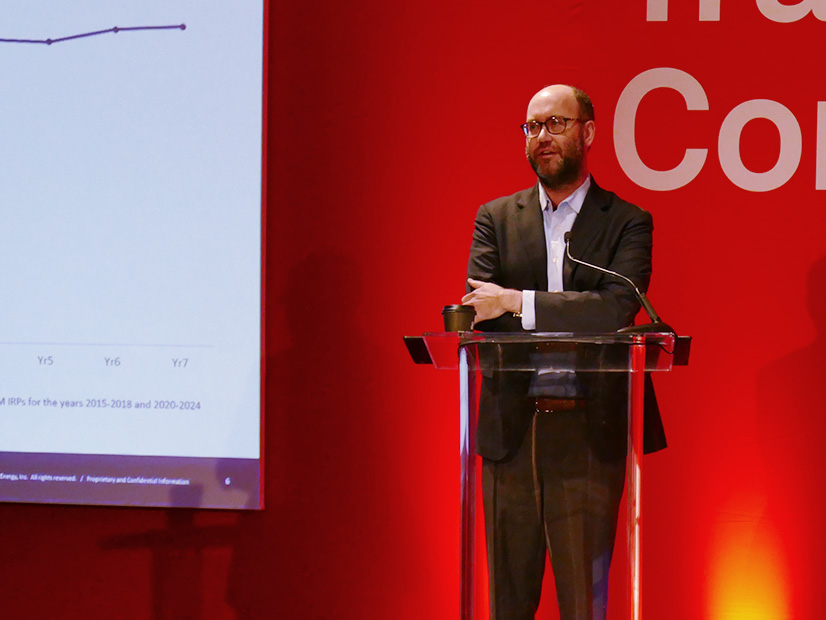
Four Western utility executives participating in a webinar hosted by the Energy Bar Association presented their reasoning for why they ultimately chose either SPP’s Markets+ or CAISO’s Extended-Day-Ahead Market (EDAM), with some eyeing the creation of a full regional transmission organization in the future.

Representatives from Portland General Electric, Bonneville Power Administration, Public Service Company of New Mexico and Salt River Project participated in the Aug. 28 webinar about the development of wholesale markets in the West.

PGE and PNM have committed to joining EDAM, which is scheduled to go live in spring 2026, and are integrating processes with the day-ahead market alternative.

The utilities’ choices boiled down to, among other things, customer affordability and reliability.

Pam Sporborg, director of transmission and market strategy at PGE, pointed to production cost models showing EDAM would provide greater economic benefits than Markets+. The CAISO markets’ contiguous footprint also “offers us good resource diversity, helping to balance many different geographic regions.”

PNM joined for similar reasons, noting the utility delivers significant wind and solar power to California. (See PNM Signs Agreement to Join CAISO’s EDAM.)

“Being in a separate market from that would create huge operational challenges,” said Kelsey Martinez, director of regional markets and transmission strategy at PNM.

Although PNM’s decision to join EDAM means there will be market seams with SRP, Arizona Public Service and El Paso Electric, seams with California would be too costly, Martinez said. However, “we do want to ultimately have the option to be on a path to an RTO.”

“I think it needs to definitely remain optional,” she added. “Given our resource diversity with California and our wind shape and the future of our system, we see the benefits of having California footprints in an RTO eventually, and realizing more and more incremental benefits that way. So, we do think that’s an important option for us in the future.”

Sporborg, meanwhile, said the West likely will see an “incremental advancement” that captures the benefits of an RTO in a way unique to the region.

Sporborg is co-chair of the West-Wide Governance Pathways Initiative Launch Committee. The Launch Committee, consisting of members from several Western states, was formed with the task of establishing an independent RO to oversee CAISO’s WEIM and EDAM.

The Pathways model can help capture the “benefits that we see in the RTO environment, but in a uniquely Western way that is developed ground up from the stakeholders and really targets the specific benefit that we’re looking for within the overall market construct in a way that we can hopefully avoid some of the pitfalls and stagnation that we see in some of the Eastern markets,” Sporborg said.

‘Primary Platform’

Meanwhile, BPA and SRP chose to join Markets+ based on a few other benefits, the utilities’ representatives said during the webinar.

Specifically, resource adequacy requirements, an independent governance model and the greenhouse gas accounting mechanism were some of the factors that led BPA to join Markets+ in May following a lengthy public process, said Nita Zimmerman, acting vice president of bulk marketing at the agency. (See BPA Chooses Markets+ over EDAM.)

“We expect day-ahead markets to be the primary platform for wholesale electricity transitions in the West, especially with some states requiring utilities to transition to RTOs,” Zimmerman said. “And based on our experience as a later entrant to the Western [Energy Imbalance Market], BPA believes that early [day-ahead market] adoption … will better meet customer and stakeholder objectives, because the first years of a market greatly influence development and maturation of the market design.”

For SRP, an important aspect was “having a pathway to an RTO,” said Josh Robertson, director of energy market strategy at SRP.

“That’s really the next logical step here,” Robertson said. “I think we are adding some complexity by doing a day-ahead market and not an RTO, and we’re potentially leaving some things on a table. There are issues with moving to an RTO, surely, but we want to make sure that there’s a pathway to doing that.”

Markets+ has a viable path to a full-fledged RTO, given its independent board and governance structure, Robertson said.

“We did not see that path very viable with the CAISO market,” he added.

NYISO Puts Storage as Transmission on Pause

ALBANY — At a recent Budget and Priorities Working Group meeting, NYISO presented its final recommendations for 2026, which will define where the ISO puts its market design resources. The storage-as-transmission project, while on the budget, faces an uncertain future.  

While the project will be on the budget for 2026, NYISO does not consider the project to be “continuing.” This designation means a project was approved in a prior year and has progressed to a late stage of project development and is picked up automatically in the following prioritization cycle.  

“We’re going to add storage as transmission to be included into the budget,” said Kevin Pytel, director of product and project management for NYISO, at the Aug. 25 BPWG. “This does create resource constraints for us, adding this in. We do not have all the resources necessary to complete this project.” 

That means the ISO does not think it has the money and staffing hours to complete the project as budgeted but also does not want to abandon it. That leaves storage as transmission in the unusual position of waiting for other projects to meet milestones early and under budget so resources can be shifted to it.  

The storage as transmission project would allow energy storage systems to act as regulated transmission, making them eligible for cost-of-service rate recovery and to be considered as transmission solutions in ISO planning processes. Assets developed under the “storage as transmission” designation would not be dispatched by the wholesale market beyond what would be necessary for them to remain ready to inject or withdraw from the grid.  

The ISO’s initial proposal limited storage as transmission to 200 MW systemwide with 20 MW per substation. (See NYISO Outlines Storage as Transmission Proposal.) 

Pytel said that due to resource constraints, storage as transmission would not receive a continuing status even though it has hit a development milestone of “functional requirement specifications” that ordinarily would grant it that status. In the NYISO project development cycle, some project development milestones like “development complete” automatically continue into the next year. Pytel said if other projects come in under budget, then storage as transmission would receive extra money and work hours.  

“But when we come back and talk about project prioritization in April or May of next year, we will not have a strong handle on whether or not we’re really marching toward the deliverable,” Pytel said. “I can confidently say that when we come back … we would not consider this as continuing.” 

Pytel added it’s unlikely NYISO staff would be able to work on storage as transmission by Q1 of 2026. 

“I am extremely concerned about what I am hearing,” said Kevin Lang, a lawyer representing the City of New York. “You have a project, but it’s not clear what work you’re actually going to do on it or when you might be doing the work.” 

Lang said this is troubling because the ISO hadn’t really committed to work on the project and it wasn’t clear whether or when resources would open up to make it possible. 

“The NYISO is acting as a barrier to technology and that is wholly inconsistent with your mission and its wholly inconsistent with open markets,” Lang said. He asked that the ISO provide a list of the other projects ahead of storage as transmission so market participants could weigh in on whether the projects at the front of the line were prioritized appropriately.  

Pytel said those other projects were discussed in the last BPWG when the ISO had presented stakeholder scoring. Storage as transmission received modest scores in the stakeholder survey. Twenty-five stakeholders supported the project, with most of them in the public power/environmental sector and end-use consumer. Some generators and transmission owners also supported the project. It came in 12th out of 28 projects by weighted score.  

Tony Abate, representing the New York Power Authority, said he saw things differently. He credited the ISO for its flexibility and for being generally progressive on including new resources. He didn’t think the ISO was putting up a barrier to an imminent storage application that would benefit ratepayers. 

Chris Hall, representing the New York State Energy Research and Development Authority, thanked Pytel for not dropping the project completely and leaving some way for it to be finished. He said that while the current proposal was limiting, it could serve as a platform to leverage future use cases.  

Other Business

The ISO presented an update on how its budget forecasts from 2024 compared to actual spending for 2025. So far, the ISO generally is on target with a $3.8 million over-collection. NYISO forecasts that the over-collection will continue through the end of 2025, totaling $7.2 million. Additionally, NYSIO collected $1.4 million more than expected due to interconnection study deposit cash balances.  

At the same time, NYISO predicts an under-spend of about $4.6 million due to lower-than-expected professional fees and higher-than-expected “miscellaneous revenues.”  

Patrick Kelly, NYISO’s controller and assistant treasurer, said that was in large part due to savings seen in consulting. Some of the savings is due to the cancellation of the Public Power Transmission Need project, which would have served offshore wind. (See NYISO Cancels Offshore Transmission Studies.) Kelly anticipates $1.4 million in labor savings due to the PPTN cancellation.  

Kelly said that as of June, NYISO anticipates an excess of $11 million between over-collections and under-spends. 

TVA, ENTRA1 to Collaborate on up to 6 GW of Nuclear Build

The Tennessee Valley Authority is taking another step to boost next-generation nuclear technology, collaborating to site up to 6 GW of generation within its seven-state footprint.

TVA announced the “landmark” deal with ENTRA1 Energy on Sept. 2, calling it the largest ever of its kind. The two plan to develop new nuclear plants using the small modular reactor NuScale Power expects to deploy by 2030.

ENTRA1 holds the commercialization rights to NuScale’s products and services. It presents itself as a one-stop shop for development, financing and management of NuScale’s SMRs, with multiple options for development, management and operation.

The new agreement calls for ENTRA1 to develop and own the power plants and sell the output to TVA under future power purchase agreements. They called it an important step to promote advanced nuclear technology in the U.S.

Accelerating nuclear deployment has been a stated priority for President Donald Trump; TVA’s rate of progress on nuclear development has been a target of Republican criticism.

TVA said in a news release that it “stands at the forefront of America’s advancements in nuclear energy — and its bold partnerships and national leadership continue to power the nation’s nuclear renaissance.”

CEO Don Moul said: “TVA is leading the nation in pursuing new nuclear technologies, and no utility in the U.S. is working harder or faster than TVA.”

Trump began removing members of TVA’s board after it appointed Moul the new CEO. The president reportedly demanded that the remaining members remove Moul, but they refused. (See TVA Board Promotes Nuclear Veteran from COO to CEO and Trump Nominates Four to TVA Board of Directors.)

TVA in its news release said the ENTRA1 deal “aligns with the administration’s energy dominance agenda and focus on America’s energy security. The partners are identifying opportunities to work with other federal agencies and explore potential sites with new nuclear generation and joint gas-fired capabilities.”

Other recent nuclear updates by the nation’s largest public power supplier include:

On Aug. 18, TVA and Kairos Power announced the first-ever PPA by a U.S. utility for electricity from an advanced GEN IV reactor. (See Kairos Power, TVA Announce Nuclear PPA.)

On May 20, TVA announced it was the first U.S. utility to submit a construction permit application for GE Vernova Hitachi Nuclear Energy’s BWRX-300 SMR. (See TVA First U.S. Utility to Request SMR Construction Permit.)

And on April 23, TVA said it and a coalition of industry and state leaders had reapplied for funding under the U.S. Department of Energy’s $800 million Generation III+ Small Modular Reactor Program.

NuScale, meanwhile, is part of the crowded U.S. SMR field. It was the first and so far only company to receive Nuclear Regulatory Commission approval for its reactor module design, then obtained a second NRC approval in May on an uprated design that boosts output from 50 MW to 77 MW.

That has not translated into many announced deals, however.

A groundbreaking project planned in Idaho was canceled in November 2023 when subscriptions for the power it would produce proved too difficult to secure. (See Pioneering NuScale Small Modular Reactor Project Canceled.)

NuScale’s stock closed 7.5% higher in trading Sept. 2.

Stakeholder Forum: Clearing Power Sector Roadblocks with Permitting Reform and Policy Certainty

By Todd Snitchler

“Help me help you.” The famous line from the movie Jerry Maguire captures the dynamic facing competitive power markets today.  

RTOs have made meaningful progress in clearing interconnection backlogs. PJM alone has processed more than 140 GW of projects since 2023, with 46 GW already holding signed interconnection service agreements. Across MISO, ERCOT, CAISO and other regions, reforms are moving projects through the queue faster and giving developers greater clarity. 

So, what’s standing in the way?  

Though progress on legislative action has stalled, permitting reform remains a vital step forward — one where policymakers can make a meaningful difference. As Congress reconvenes this September, this critical issue is back on the table. 

That said, while significant, permitting is just one element of a broader landscape of uncertainty that all participants in the power sector must work to resolve. 

Progress in Interconnection, But Projects Still Stalled

Todd Snitchler | EPSA

Competitive markets have long delivered reliability, efficiency and innovation at lower cost than monopoly procurement. By requiring independent power producers to bear investment risk — rather than captive ratepayers — they drive efficiency and discipline, while shielding consumers from the costs of stranded or uneconomic assets. 

That structure is working. RTOs/ISOs have improved their interconnection processes, and developers continue to pursue projects across technologies even as auction schedules change and regulatory proceedings inject uncertainty. 

Yet interconnection progress alone does not guarantee timely deployment. The challenge now is converting cleared projects into operating megawatts amid heightened uncertainty — a task that demands policy clarity, durable rules and practical coordination beyond the control of market operators alone. 

“Developers stand ready with billions in private capital — but uncertainty stalls projects.” 

A Key Hurdle: Permitting and Siting

Projects that clear the interconnection queue remain delayed by regulatory hurdles across markets (PJM and MISO, in particular): 

    • Federal, state and local permitting delays that stretch timelines for years.
    • Local opposition and litigation that block projects even after contracts are signed. 
    • Policy interventions that prematurely retire resources before replacements are online.   

These barriers block development of resources that already have been cleared by RTOs. PJM’s Reliability Resource Initiative identified 9,300 MW of near-term projects that could be online by 2030, but many hinge on permitting timelines beyond the grid operator’s control. Similar stories are playing out in MISO, CAISO and ERCOT. Markets cannot build around these hurdles. 

Importantly, streamlining these processes does not mean lowering environmental standards. A more efficient, predictable and transparent review can strengthen outcomes — creating clear timelines, improving interagency coordination and delivering legally durable decisions. Predictable processes are essential to keep investment flowing into renewables, storage and dispatchable resources alike. 

“Permitting reform is not about shortcuts — it’s about certainty.” 

Financing, Supply Chains and Policy Uncertainty Add Layers of Risk

With that said, permitting is one major barrier, but not the only one. Developers also must navigate: 

    • Financing uncertainty: Competitive suppliers invest without guaranteed cost recovery; shifting rules and political interventions raise risk premiums and complicate financing. 
    • Supply chain delays: Global shortages and trade policies affect delivery of transformers, turbines, panels and other critical equipment, driving up costs and timelines. 
    • Load forecasting questions: Rapid growth from data centers, electrification and manufacturing challenges traditional forecasting, making it harder to underwrite long-lived investments. 
    • Tariff and trade policy volatility: Changing tariffs or exemptions can materially alter project economics late in the process. 

These hurdles affect resource developers and business models of all kinds, whether they be utilities or independent power producers, or located in vertically integrated and restructured regions alike. 

Policymakers cannot control every factor. But they can reduce risk where it matters most — by providing certainty in permitting and market rules, improving coordination among agencies and reinforcing confidence in competitive markets so private capital can move. 

The Wrong Focus: Political Attacks on Markets

Even as interconnection reforms advance, some governors and utility boards are focusing on the wrong target. Investigations aimed at second‑guessing auction outcomes, calls for price caps or efforts to tilt the field back toward monopoly procurement may be politically tempting in the short term, but they don’t solve the deployment challenge — and they risk making it worse. 

Price caps, in particular, distort the very signals that attract investment. When policymakers override market outcomes, the message to investors is that politics trumps market discipline. The predictable result is reduced investment, weaker reliability and higher long‑term costs. The better approach is to fix the obstacles to building — not to mute the signals that bring private capital to the table. 

“Markets deliver innovation and efficiency. Politics delivers uncertainty.” 

The Risk of Backsliding

Frustration with delays has prompted some to argue for a return to the vertically integrated utility model. That would be a mistake. While monopoly procurement can appear to offer certainty, history shows it often produces inefficiency, cost overruns and stranded risks borne by consumers. Competitive markets discipline investment, reward performance and foster innovation across technologies. The alternative is not better outcomes — it is higher costs and slower progress. 

EPSA’s Balanced Approach to Reform

EPSA supports permitting reform that modernizes NEPA and related statutes to make reviews efficient, predictable and fair — striking “an appropriate balance between environmental protection and building essential infrastructure.” That balance includes: 

    • Definitive timelines for reviews and litigation: Endless procedural delays increase costs and weaken reliability. 
    • Better coordination across agencies: Projects should not be subject to duplicative or conflicting requirements.
    • Certainty for investors: In competitive markets, developers take on significant risk without guaranteed cost recovery. Clear, durable rules are essential to attract investment. 
    • Inclusive benefits: All resource types — renewables, storage and dispatchable generation — face permitting barriers. 

Reform should apply fairly across technologies to ensure a balanced and reliable grid.   

EPSA’s position makes clear: Permitting reform is not about shortcuts. It is about building a transparent, efficient and accountable system that both protects the environment and enables timely development of critical energy infrastructure. 

“The alternative to competitive markets isn’t better outcomes — it’s higher costs and stranded assets.” 

The Path Forward: Certainty, Not Shortcuts

The interconnection backlog is easing, but deployment still lags because multiple external hurdles converge at once. Policymakers can’t solve every problem — nor should they try — but they can reduce uncertainty where only they can: by ensuring clear, consistent, enforceable permitting processes; resisting political interventions that distort market signals; and supporting coordination that aligns siting, environmental review and reliability needs. 

Do that, and private capital will do the rest. Competitive markets have proven they deliver innovation, efficiency and reliability when the rules are clear. Now they need partners to help clear the path. As Jerry Maguire put it: “Help me help you.” 

Todd Snitchler is president and CEO of the Electric Power Supply Association, which represents competitive power suppliers who own and operate around 200 GW of capacity from electricity resources of all types in markets throughout the U.S. 

Neb., Miss. Utilities to Pay $186K in Penalties

Utilities in the territories of the Midwest Reliability Organization and SERC Reliability will pay a total of $186,000 in penalties to the regional entities for violations of NERC’s reliability standards under two settlements approved by FERC.

NERC filed the settlements on July 31, along with an additional settlement for infringement of the ERO’s critical infrastructure protection (CIP) standards whose details were not made public in accordance with NERC and FERC’s policy on CIP violations. The commission said in an Aug. 29 filing that it would not further review the settlements, leaving the penalties intact.

MRO’s settlement involves the Grande Prairie Wind Farm (GPW), a 400-MW facility in Holt County, Neb., owned by Berkshire Hathaway Energy subsidiary BHE Renewables (NP25-14). Power generated at the wind farm is sold to Omaha Public Power District under a long-term power purchase agreement.

According to the settlement agreement, GPW notified MRO in a quarterly report on July 17, 2023, that it was in violation of FAC-003-4 (Transmission vegetation management) in its capacity as a generator owner. The utility had experienced a C-phase to ground fault on a 345-kV generation tie-line between the wind farm and a facility owned by another entity. The fault caused the main generator supply breaker at GPW, as well as two breakers at the other entity’s facility, to trip open, which cleared the fault on the tie-line.

GPW investigated the cause and discovered “a tree that demonstrated damage from contacting the overhead C-phase line.” The utility cut back the tree and other plants nearby, visually inspected the rest of the line, and returned it to service.

MRO attributed the violation to a lack of adequate controls to prevent encroachments into the minimum vegetation clearance distance of the tie-line that could cause a sustained outage, as required by requirement R2.4 of FAC-003-4. The RE assessed the risk as moderate because, while the vegetation encroachment caused a sustained outage and exposed the 345-kV transmission system to a fault, the facility is not a networked transmission facility or black start resource, so a trip “would not have a significant impact on the” electric grid.

After removing the tree and other encroaching plants, GPW’s additional mitigation actions include increasing the frequency of vegetation inspection at the wind farm to at least twice a year, with the 15-foot MVCD to be documented with photographs. The GO also updated its FAC-003 program to reflect the new inspection schedule and conducted training on the standard.

Mississippi Power Discovers Rating Mishap

In the other settlement approved by FERC, Southern Co. subsidiary Mississippi Power agreed to pay $86,000 to SERC (NP25-15). The penalty stemmed from violations of FAC-008-5 (Facility ratings) and its predecessor FAC-009-1 (Establish and communicate facility ratings) reported to the RE on June 3, 2022.

According to NERC’s monthly spreadsheet notice of penalty, where the settlement was filed, Mississippi Power discovered a discrepancy on Jan. 4, 2022, between its records of equipment installed at a 230-kV substation and those found in the field. The utility was examining the facility in response to a data request from SERC in advance of an on-site audit.

Mississippi Power’s drawings and database for the substation indicated the 230-kV line should be equipped with bundled aluminum conductor steel-reinforced (ACSR) cable jumpers rated at 2,808 amps, with the most limiting element (MLE) being the ACSR conductor, rated at 1,512 amps. However, the field verification found that one set of jumpers actually was single all-aluminum conductor (AAC) jumpers rated at 1,496 amps. This meant that the AAC jumpers should have been identified as the MLE, and therefore the facility rating was incorrect.

After discovering this issue and derating the facility, Mississippi Power conducted walkdowns of all 108 transmission substations, 106 of which were completed by March 31. During this time, Southern began a system-wide initiative to implement a common transmission facility ratings database across all operating companies. This involved a quality assurance review by each company of the data for the new database.

Because of the walkdowns and QA assessment, Mississippi Power found 15 total instances where incorrect element ratings resulted in an incorrect MLE, leading to incorrect facility ratings at eight different 115-kV and 230-kV stations. The misratings required derates of up to 44%. None of the stations were found to have operated above the correct ratings.

The utility also discovered 239 instances of incorrect element ratings on 115-kV, 230-kV and 500-kV facilities that did not impact the MLE or facility rating. Mississippi Power has committed to finishing the remaining walkdowns by Dec. 31.

SERC said the cause of the infringement was “inadequate change management controls and legacy equipment identification controls.” The violation began on June 18, 2007, when FAC-009-1 became enforceable, and should end Dec. 31, when the utility has completed the walkdowns and updated all incorrect equipment and facility ratings.

Results Elusive in N.Y. Build-Ready Renewables Program

A state with plenty of brownfields and lots of ambition for clean energy is having trouble bringing the two together.

New York’s Build-Ready program was launched in October 2020 to develop a roster of turn-key plans that would place renewable generation on sites such as landfills, abandoned industrial sites and dormant electric-generating facilities.

More than four years of effort by state personnel at a cost of $15.5 million identified 480 potential sites for such projects through June 30. But for assorted reasons, all 480 were found to be unworkable.

The one success so far was the auction of a 12-MW solar project on a tailings pile at a defunct iron mine, and even that had to be scaled back from 20 MW to avoid the need for expensive grid upgrades. (See NY Sells First Build-Ready Site for Renewables.)

Requests for proposals are out for three more solar projects totaling 15 MW — two on a former municipal landfill and one adjacent to the infamous Love Canal toxic waste cleanup site.

The New York State Energy Research and Development Authority offered the details about Build-Ready in an annual progress report submitted to the Public Service Commission on Aug. 28.

NYSERDA told NetZero Insider that Build-Ready is an inherently challenging prospect — preparing what may be a blighted location for a clean energy system that private developers would not build on their own due to cost and risk.

“The fact that the Build-Ready program screened 480 sites shows the due diligence needed to find the right site for a successful project,” a spokesperson said.

NYSERDA said, however, that its upcoming five-year report will provide a more complete overview of the program and offer recommendations for moving it forward. That report is due Oct. 1.

Build-Ready began as part of the Accelerated Renewable Energy Growth and Community Benefit Act of April 2020.

In October 2020, it became one of the many initiatives launched from the wide-ranging proceeding the PSC initiated in 2015 to implement a large-scale renewable program and a clean energy standard (Case 15-E-0302).

Build-Ready calls for NYSERDA to look for potentially suitable sites; assess their suitability; secure rights to the site; evaluate environmental needs and interconnection options for a renewable generation project; design a project; seek necessary permits; and then offer the package to the private sector in a competitive sale, bundled with a long-term contract for renewable energy certificates.

Each of these steps can take months or years on their own — the final package is about as close to “build-ready” as one could hope for.

But the process has reached completion exactly once so far, at the defunct iron mine in a remote wilderness area; $56.3 million of the $71.8 million allocated to Build-Ready remains unspent.

The 480 rejections break down to:

    • 166 for insufficient buildable land area;
    • 91 for lack of landowner cooperation;
    • 64 because interconnection options were not viable;
    • 51 due to agriculture activity, which since 2024 has been ranked as a higher priority than Build-Ready;
    • 46 because of commercial development potential, also a higher priority;
    • 40 to avoid competition with a potential private-sector renewable developer; and
    • 22 due to wetlands or other significant environmental constraints on site.

NYSERDA’s report goes into detail on several of the sites that reached advanced stages of review — four landfills, an airport and a huge post-industrial scar sprawling from the city of Utica into a neighboring town.

One by one, they all got crossed off the list.

The Utica site stands out as a lost chance to repurpose a site with a tortured history.

Thousands once worked there, cranking out guns and later computer parts in one of the massive brick-and-concrete industrial complexes that once dotted upstate New York. The factory died, was reborn as a retail outlet complex, lost its luster, was converted to a mixed-use office and commercial facility, died again, was partly demolished and partly left to rot, was gutted in a massive fire, stood as a skeleton for two years, then finally was demolished in 2022 by the EPA, which removed nearly 30,000 tons of debris, asbestos and drums of hazardous substances.

Build-Ready would have placed batteries on the concrete foundations left on site, and there would be few residents in the surrounding industrial zone to be worried about them.

But during its assessment, NYSERDA determined that the amount of site preparation and electrical upgrades that would be needed for a 20-MW standalone BESS — including a three-breaker ring bus — would be so expensive as to make the project unviable.

There is no mention in the report of another factor that may make future projects unviable: President Donald Trump and his Republican allies in Congress.

Power Play: Political Intermittency is Now the Biggest Threat to the Grid

When a government’s word is no longer its bond, investors get nervous, and investors in clean energy generation plants in the United States are very nervous indeed. For good reason: The administration is threatening wind and solar generation projects with tactics ranging from revoking permits to trimming tax credits to reneging on grants.  

Capriciousness is the Market’s Kryptonite

Project developers are, by nature and necessity, risk averse. There’s no reward if a project gets derailed by a desert tortoise after years of planning, permitting and perfecting the capital stack to fund its construction. But how can the industry do due diligence when a political wild card can be dealt at the last minute? 

A recent example, where the Bureau of Ocean Energy Management halted the Revolution Wind offshore project for belated and questionable “national security concerns,” is the wildest wild card yet. After all, if this can happen to an 80% complete project that underwent more than a decade of studies and hearings to obtain permission, no project seems safe.  

political grid

Dej Knuckey

As Nancy Sopko, vice president of external affairs for a U.S. Wind project off the coast of Delaware, another project under threat, said, the permits the administration is threatening to revoke for that project were “secured after a multi-year and rigorous public review process” and were legally sound. But a drawn-out legal battle, even if the project team prevails, is just another cost that will make a project difficult to pencil out. 

The market is becoming increasingly cautious about investing in clean energy generation and is re-evaluating projects already in the planning stage. Already, the pipeline of generation projects is pre-emptively narrowing as investors and developers seek safer shores. 

Putting aside the why of the political agenda, it’s essential to ask how this will impact electricity supply in a time of rising demand. The grid may face capacity and reliability challenges if clean energy generation projects are shelved, whether voluntarily or otherwise.  

AI, Data and the Demand Crystal Ball

In a steady state, cancellation or delay of major projects would be problematic, but unlikely to lead to shortages. However, in the past two years, the rise of AI and the related proliferation of data centers have sent energy analysts scrambling to rework demand projections. 

In early 2023, consulting firm ICF International projected a 1.3% annual growth rate through 2030. Two years later, it more than doubled the projected growth rate to 3.2%. And thanks to the joy of compounding, those small annual increases result in 25% growth in U.S. electricity demand by 2030 and 78% by 2050, compared to 2023 levels.  

Peak load growth projections also have been revised upward; however, with data centers’ “always-on” load profile, the result is a more feasible 14% by 2030 and 54% by 2050. While data centers providing cloud computing and AI account for most of the growth in demand, it also is coming from a rise in manufacturing, cryptocurrency mining and building electrification. 

One trend that may offset some of the increase in demand is the administration’s shift away from electrifying transportation, which still may grow, but at a lower rate than previously predicted. Other actions seem performative: For example, the move to eliminate or privatize the Energy Star program is not going to lead white goods manufacturers to flood the market with less efficient appliances. 

Reliability on the Rails

To ensure a reliable supply during peak demand, utilities and grid operators strive for a reserve margin of at least 15%. While today there’s a larger reserve margin, ICF warns, “mapping demand growth estimates against generating capacity online today, including the impact of firm builds and retirements, shows that much of the U.S. will experience below-target reserve margins as soon as 2030.” 

political grid

U.S. regional electricity demand growth and peak demand growth (2025-2035) | ICF

These analysts, however, use the phrase “firm builds and retirements,” but planning is being done now in an environment where many “firm builds” have been demoted to “likely build unless the technologies being targeted by the administration.”

If there’s continued proactive withdrawal by developers, the reliability risk may grow. It will vary by region, but in New England, the offshore wind farm that now is in suspended animation was critical to manage winter power costs, Jon Lamson reported this week. In other regions, the peak summer load is a bigger worry, as longer and hotter heat waves drive up the cooling load. 

The question of whether this changed environment will be able to supply enough electricity with acceptable reliability isn’t really about the newsworthy disruptions to offshore wind and the ability for other renewables to survive without tax credits; it’s about the ripple effect. Will the pipeline of planned clean energy projects dry up further, and what will fill the void? 

Project Finance is Self-deporting

There are echoes of the administration’s immigration policies in the project development world: Make the development environment untenable and the developers will halt their projects without the Interior Department ever issuing a stop-work order. Until those behind a project are sure that their hard-won approvals will be honored, preemptive withdrawal is an increasingly prudent option.   

Given the choice between investing time and money in a project that the political rug could be pulled out from under it before it’s ever commissioned or putting the project on ice today, some renewables developers and investors are choosing the latter. 

BloombergNEF reports “the U.S. saw the greatest drop in new renewable energy investment in 1H 2025, with committed spending down $20.5 billion (36%) from the second half of 2024.” Some of the drop is attributable to the artificial bump caused by the rush to start projects before the end of 2024 to lock in tax credits. Still, worsening policy conditions also contributed to it. 

The capital is, in essence, self-deporting, and the E.U. is the beneficiary, with an uptick in the number of low-carbon generation projects in its development pipeline. The EU-27 saw a 63% rise in investment in the first half of 2025 compared to the last half of 2024. 

“These numbers support the idea that companies are reallocating capital out of the U.S. and into Europe — particularly in offshore wind, where several developers refocused to North Sea sites over U.S. projects,” BloombergNEF said. 

One Foot on the Gas, the Other on the Brakes

It’s not all bad news for capacity: Fossil fuel generation, primarily gas, is benefiting from the administration’s focus. Global Energy Monitor’s tracker shows almost 100 GW of capacity in preconstruction, up from 15 GW a year earlier. The focus on fossil fuel-powered generation puts the United States at odds with its OECD counterparts. Close to 40% of pre-construction projects in the U.S. now are fossil, compared with less than 6% in the balance of the OECD countries. 

A rush to build new fossil capacity won’t add to capacity or reliability if the projects can’t come online rapidly, and these newly planned plants are just beginning to navigate the yearslong interconnection queues. It’s no wonder that data center giants want to skip the grid altogether by building dedicated capacity and energy storage. 

Even those projects, however, face a literal pipeline problem unless there is an existing gas supply they can tap into. And if their pipeline crosses state borders, FERC gets involved. “Currently, depending on size and jurisdiction, a pipeline project could take anywhere from eight months to five years,” Norton Rose Fulbright said. “The federal government has been working on natural gas pipeline permitting reform that would allow pipeline projects to be built more expeditiously.”  

Similarly, some fossil plants that were scheduled to close are receiving a stay of execution, such as the emergency order from the U.S. Department of Energy to keep two units of the Eddystone Generating Station in Pennsylvania in operation. (See related story: Eddystone Ordered to Remain Operational for PJM 90 More Days.) The surge in fossil projects may offset some of the decline in renewables. However, even if you assume hydro and geothermal are left alone, there’s still a significant portion of planned new generation capacity at risk.  

Of the 57 GW of power capacity under construction in North America in August, 23 GW is solar, and 17 GW is wind, according to Global Energy Monitor, meaning more than two-thirds of all power capacity under construction may be at risk. And of the 253 GW in pre-construction? Even after the sharp uptick in fossil plants in pre-construction, utility-scale solar and wind account for 114 GW, or 45%, of capacity in pre-construction. 

The critical question is how much of that pre-construction and construction is one revoked permit away from being halted. Some developers — or the project financiers that enable them to exist — aren’t waiting around to find out.  

What Do We Want? Clarity! When Do We Want It? Now!

The sooner clear and consistent policies are communicated, the faster the markets can start to rebuild trust. If the administration’s goal is to prevent all offshore wind projects and allow onshore wind and solar projects to flourish and grow as long as they can pencil out without tax credits, say so.  

Investors already fear the worst, and moving to more stable markets but knowing how profound these market shocks will be and how long they will last will enable everyone — developers, investors, utilities, grid operators and regulators—to get back to working out how to build the capacity and reliability electric consumers will need in the coming decades. 

Power Play Columnist Dej Knuckey is a climate and energy writer with decades of industry experience. 

CPUC OKs Large Increase to PG&E Energization Cost Cap

The California Public Utilities Commission approved a plan to increase Pacific Gas and Electric’s cost cap for customer energization projects in 2025 and 2026 by more than $1.5 billion, despite acknowledging the utility did not provide data to support its forecast growth in energization applications during those years. 

The increased cap amounts are mountainous: PG&E can seek to recover costs for up to about $1.1 billion in 2025 and $1.7 billion in 2026 for certain customer energization projects, according to the decision. In a 2024 decision, the CPUC approved cost caps of about $619 million in 2025 and $669 million in 2026 for these types of projects. 

Increasing the cost caps will allow PG&E to “complete additional energization work in 2025 if it is able to accelerate its energization activity or in 2026 if activities are delayed,” the CPUC said in the approved decision. 

“We all know that load growth today is looking very different than just a few years ago,” CPUC President Alice Reynolds said during the Aug. 28 voting meeting. “Utilities are receiving more energization requests that require substantial electricity capacity. These requests are coming from industries central to California’s electrification goals — EV charging infrastructure, high-tech campuses.” 

The scale and speed of these projects is “leading to the need for significant upgrades and on timelines the utilities have not historically had to meet, leading to delays and backlogs,” Reynolds said. 

Commissioner Darcie Houck voted “no” on the proposal, questioning whether the decision gives “sufficient consideration to affordability concerns,” specifically because it omits estimated bill impacts. 

“This is a difficult case and requires balancing of critically important issues,” Houck said. “When considering just and reasonable rates, we as economic regulators must balance many factors, including affordability.” 

“The proposed decision states that it cannot estimate the proposed bill impact due to not being able to calculate potential [electricity] sales,” Houck said. “However, this … has not been a barrier for the commission in past decisions authorizing funds for projects and programs that result in increased sales including in our general rate case process.” 

“There are real dollars that real customers will be paying once the work is performed,” Houck added. “In other words, there will be real bill impacts to customers. … I do not make my determination here lightly.” 

Energization project costs include connecting new customers to the distribution grid, upgrading capacity for existing customer sites and building additional capacity for forecast load, the CPUC said in the 2024 decision. The CPUC is required to accelerate energization processes for investor-owned utility customers per Assembly Bill 50 and Senate Bill 410. 

External Labor Versus Internal Labor

PG&E needs to increase energization cost caps in part because it plans to hire external contractors for 45% of projects in 2025 and 2026, according to the decision. In 2024, PG&E projected 22% of work would be performed by external contract laborers.  

The utility estimates the cost for external contractors to perform energization project work will be about $137,000 per unit in 2025, compared with $67,000 per unit for internal labor, the decision says. 

“There is not adequate time for PG&E to hire and train an internal workforce … to complete all of the energization projects in its backlog in 2025 and 2026,” the CPUC said in its decision. 

Another factor behind the cost cap increase: PG&E says it needs to spend about $74 million to increase customer outreach and improve customer notifications for its energization process over 2025/26. 

According to the decision, PG&E projected an 8% increase in energization applications in the coming years. However, the utility did not provide data that supported its forecast growth in energization applications over 2025/26, the decision says. Comparatively, from 2021 to 2024, PG&E’s data showed a 1% increase in energization project applications, the decision says. 

The average time for large electric utilities to complete energization projects should be 182 days, according to the decision.

While PG&E said the increased cost cap would translate into a 1.8% rate increase for an average residential customer, the CPUC countered that the “evidence does not support” this projected amount. The Utility Reform Network (TURN) estimates proposed cost cap increases would cost $72.50/year for a residential customer that uses 500 kWh/month. 

Energization project costs will be tracked in PG&E’s Electric Capacity New Business Interim Memorandum Account (ECNBIMA). PG&E can seek recovery of costs in this interim memorandum account only if the costs exceed what the utility was authorized to recover in its 2023 General Rate Case, the decision says. The CPUC will review PG&E’s costs tracked and recovered in its ECNBIMA in the utility’s 2027 GRC. 

Energy Efficiency Goals Set

At the voting meeting, the commission also approved energy efficiency and energy savings goals for 2026-2037 for California’s large IOUs. Energy savings goals are tracked in a metric called Total System Benefit (TSB), which includes the lifecycle energy, capacity and greenhouse gas benefits of an efficiency or fuel substitution measure.  

The 2028-2031 TSB goal is about $1 billion for PG&E, $646 million for Southern California Edison and $300 million for San Diego Gas & Electric. 

“Today’s decision reflects changes in efficiency opportunities and market conditions, including growth in fuel substitution, such as switching from natural gas to electric appliances, a decline in traditional efficiency measures in industrial and agricultural sectors, and a more rigorous cost-effectiveness threshold,” the CPUC said in a press release. 

Pathways Initiative Unveils RO Proposed Name, Bylaws

The West-Wide Governance Pathways Initiative is preparing to file the incorporation documents for the independent “regional organization” (RO) that will govern CAISO’s energy markets, while funding challenges remain. 

The committee plans to file the incorporation documents for the RO in early 2026 under the proposed name Regional Organization for Western Energy (ROWE). The RO will be incorporated as a Delaware non-stock corporation and will qualify as a public benefit corporation, Evie Kahl, chief policy officer at California Community Choice Association and Pathways Launch Committee member, said during a committee meeting Aug. 29. 

Kahl also presented the draft bylaws, which detail the policies that will guide the RO and future committees such as advisory, public policy and audit and finance committees. 

The Launch Committee, consisting of members from several Western states, was formed with the task of establishing an independent RO to oversee CAISO’s Western Energy Imbalance Market (WEIM) and Extended Day-Ahead Market (EDAM) in an effort to expand energy markets. (See Pathways Initiative Approves ‘Step 2’ Plan, Wins $1M in Federal Funding.) 

The draft bylaws specify that the “independent governance shall be provided to and for entities and persons operating within the markets, consumers and affected stakeholders while acting in the public interest, and after consideration of consumer interests and the policies of all participating states.” 

The bylaws also go into the public interest functions of the RO. For example, the RO will establish a public policy committee to engage with states, local authorities, federal power marketing administrations and advocacy organizations about potential impacts of policy initiatives. 

Additionally, state authority “has been something that’s been important all along,” Kahl said. 

“We’re developing a regional organization, so we need to make sure that we don’t trample the rights of the states in the process,” Kahl added. 

Specifically, the draft bylaws state, “the board shall consistently acknowledge and, where practicable, develop tariff changes, rules or business practices that respect and accommodate participating states’ achievement of state or local policy objectives, including procurement, resource adequacy, environment, reliability and other consumer interests.” 

“The board likewise shall minimize any adverse impacts of revisions to its tariff, rules, and business practices on participating states’ policy objectives,” according to the draft bylaws. 

Meanwhile, the committee has enough money in the bank to cover expenses through the end of 2025, according to Jim Shetler, general manager of the Balancing Authority of Northern California and co-chair of the committee’s Priority Administrative Work Group. 

The initiative needs roughly $2 million for 2026 and about $4.8 million for 2027. 

“To date, we have basically gone through pledges and donations to try to fund this effort,” Shetler said. “We acknowledge that $7 million is going to be tough to do that way, but we’re going to at least start there.” 

The work group has issued an updated pledge form and a draft funding agreement to solicit additional funding, Shetler explained. The work group also is considering debt financing as an option, Shetler said. 

The group, which has estimated a $7.1 million budget for all three of its phases, hit a financing snare early in 2025 when the Trump administration paused nearly $1 million in funding as part of a larger spending freeze on projects previously promised support by the Biden administration. (See Pathways Initiative Seeks $7.1M to Fund RO.) 

“Bottom line is, pledge form should be ready here in the next month, and we will be coming out and soliciting funding,” Shetler said. “We’re setting this up where people could fund over time. We’re not necessarily asking for a full commitment Day 1. But we do need to get some funding in place starting in January of next year in order to support the 2026 budget.” 

MISO Seeking Realistic Gen Buildout for Tx Planning Futures

MISO said its set of 20-year transmission planning futures must be further fine-tuned after the Trump administration’s repeal of tax credits for renewable generation.  

The grid operator said introducing the constraints of the One Big Beautiful Bill Act into its capacity expansion modeling returned a build rate that cannot be achieved.  

MISO announced it would take a few months to rework the capacity assumptions in its four 20-year transmission planning futures after passage of the sweeping law in July. (See MISO Revising Transmission Futures After Repeal of Tax Credits.)  

But Director of Economic and Policy Planning Christina Drake said MISO’s modeling using the confines of the law is building too much capacity too fast before the full phaseout of renewable tax credits. Drake said models included an infeasible amount of generation in the first five years.  

MISO’s modeling contemplates a 20-year expansion period and builds according to economic conditions and incentives. 

“We need to have a reasonable band for what can be built in the near term,” Drake told stakeholders at an Aug. 29 workshop to discuss the futures.  

MISO now is looking for “practical limitations to near-term build-out,” Drake said. She said MISO is assessing its queue delays and sluggish supply chains alongside the rollback of incentives for renewable energy to figure out what developers realistically can build. Drake said MISO’s historical build rate with recent supply crunches factored in results of only 9 GW built per year.  

MISO plans to hold more workshops Sept. 24, Oct. 29, Nov. 18 and Dec. 17. MISO added the last two dates after it realized it would need to modify its capacity expansion estimates.  

Drake said MISO did a “hard pivot” in its futures after the passage of the bill.  

The four futures will be used when MISO resumes its long-range transmission planning in 2026.