INDIANAPOLIS — The tone of Infocast’s 2025 Midcontinent Energy Summit was noticeably apprehensive compared with last year, owing to political and regulatory uncertainty, load growth ambiguity, fluctuating tariffs and a pending complaint against MISO’s long-range transmission plan.
MISO Senior Vice President Todd Hillman opened the Aug. 19-20 event in Indianapolis by recognizing the unpredictability wrought by ever-changing tariffs, growing data center demand, a rollback of environmental rules and even the surprise move of a Republican president appointing a Democrat to lead FERC.
“We’re not sure what ‘new normal’ is. We’re trying to figure that out,” Hillman said, speaking for MISO’s staff.
Hillman said MISO is trying to “get out of the way” in the rush to bring new data centers online. He noted the footprint could experience load growth of 60% in the next 10-15 years. Currently, almost half the transmission project requests the RTO receives are marked for expedited study treatment and are often meant to serve growing load, he said.
“They’re coming, and they’re coming fast and furious,” Hillman said. “The dog has truly caught the bus.”
Hillman briefly acknowledged the U.S. Department of Energy’s order that Consumers Energy delay shutdown of its J.H. Campbell coal plant, saying only that the agency was trying to “help” MISO by mandating the coal plant stay online. (See DOE Extension of Michigan Coal Plant Cost $29M in 1st Month and DOE Orders Mich. Coal Plant to Remain Available Another 90 Days.)
“We’ll see how that plays out,” he said, offering no other comment.
Hillman said he wouldn’t guess at upcoming actions from the White House.
“Unless we have a cocktail break in the morning, I’m not going to go there,” Hillman joked.
He similarly refused to take a stab at potential next moves from Congress.
“Again, not enough beer in the bar,” he joked.
However, after being asked by the audience, Hillman said President Donald Trump’s One Big Beautiful Bill Act is likely to impact the 171 GW of generation interconnection requests MISO fielded in 2022. The record-breaking surge of applicants was almost exclusively composed of renewable energy and battery storage projects.
“I don’t know yet, but anecdotally, I think it will be significant,” Hillman said of the impact.
Hillman also promised MISO “will get better” and create more viable market participation rules for energy storage.
The RTO’s generator interconnection queue totals about 300 GW. Another 59 GW of projects have approvals to interconnect but are experiencing construction delays.
DOE Intervention and Load Growth
Brad Pope, director of legal and regulatory affairs at the Organization of MISO States, said the DOE’s involvement in fossil fuel plant retirements is “certainly a new element we’re grappling with.”
Pope pointed out that J.H. Campbell’s retirement was comprehensively examined before it was announced. He added that the $29 million bill the plant accumulated over its first 38 days of extended operations makes customer affordability a challenge.
“This isn’t just something that’s a local impact,” Pope said. He noted FERC’s decision that the cost of keeping the plant online be spread across all MISO Midwest participants means other states have no control over incurring costs.
However, Pope said “there’s a whole host” of new technologies, including HVDC lines and grid-enhancing technologies, and new procedures — including MISO’s expedited queue lane — that state regulators are also fitting into the RTO’s tapestry.
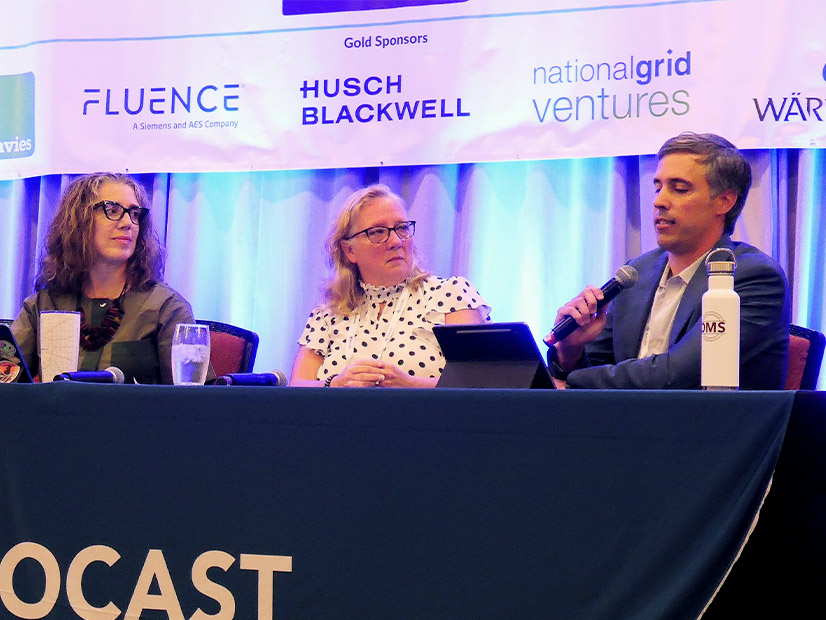
Illinois Commerce Commissioner Stacey Paradis said Illinois is concerned about how OBBBA could affect the goals of the state’s Climate and Equitable Jobs Act (CEJA). She said that so far, Illinois is lagging in reaching its 40% renewable target by 2030, and the state may open a new long-term procurement plan to secure more solar. Paradis added that the federal pullback of incentives for clean energy should make the next few years “interesting.”
Paradis noted that DOE hasn’t yet moved to keep plants on in Illinois and derail CEJA’s mandate that coal and gas generating units achieve zero emissions or close by the end of 2045 at the latest.
Paradis said non-disclosure agreements from data center developers are a stumbling block to efficient planning for regulators, utilities and RTOs. She said it’s a safe bet that if a data center is engaging Illinois about accommodating its load, chances are it’s also holding conversations with Wisconsin, Indiana, Michigan or even Missouri.
In some cases, non-refundable deposits of a few million dollars aren’t enough to deter developers from simultaneously courting multiple locations for a single project, she said.
“For some of them, that’s not even pennies on the dollar,” Paradis said. “We don’t want to overbuild. We don’t want to burden our customers with billions. We need to figure out what’s real.”
Indiana Utility Regulatory Commissioner Sarah Freeman said load growth projections have come into sharper focus compared with 18-24 months ago.
“They’re still not on a level to which I would risk the pocketbooks of my ratepayers, my fellow Hoosiers,” Freeman said. “The speed at which everything is moving does increase the risk of stranded assets.”
“Utility commissioners are risk managers,” Pope said, adding that the “truth is somewhere in the middle” for recent load forecasts.
‘Chaos’
Other panelists said OBBBA has introduced unprecedented uncertainty in the developer space.
“It’s chaos right now,” EDF Renewables Senior Director of Transmission Policy Temujin Roach said of today’s political climate. “We need to know what the hurdles are going to be. … You’re going to have to step back from the [federal government] and the executive branch as much as you can and work with the states.”

Roach advised renewable developers to employ that tactic for the three-year remainder of the current presidential administration, or however long it lasts.
He said generation developers are in a new environment where they must be more circumspect when submitting projects for interconnection study.
“We have to have quality and confidence in our projects. You can’t do the ‘spray and pray’ process we did for a while,” Roach said. “Are we still going to lose some projects? Sure.”
Roach said MISO’s 59 GW of incomplete generation is often “thrown in developers’ faces.” He acknowledged that developers weren’t as disciplined a few years ago and said interconnection procedures were likely too lenient to discourage speculation.
Roach noted also that the industry must do all it possibly can to increase use of energy storage, demand response and grid-enhancing technologies. He said grid planners cannot continue with no end in sight to prescribe billions of dollars of lines. At some point, he said, consumers will be unable to shoulder the costs.
“We’re going to have to explain how we’re being efficient with billions and billions of dollars,” he said.
Developers Back MISO Long-range Tx
However, Roach said the energy industry throughout the Midwest is relying on MISO’s $22 billion second package of long-range transmission lines to manage load growth and accommodate future generation plans. He said there comes a point where stakeholders should consider the transmission portfolio finished and move forward, referring to the recent five-state complaint at FERC. (See Five Republican States File FERC Complaint to Undercut $22B MISO Long-range Tx Plan.)
“It just turns into a death spiral of restudies. If we keep looking backwards and keep restudying, we’ll never move forward. Hopefully, FERC sees it that way,” Roach said. He added that stakeholders can always advocate for changes on the next MISO planning exercise.
“Yes, transmission is useful. I have no other comment. Ask me again in a year,” Robert Frank, a utility financial analyst at the North Dakota Public Service Commission, said dryly.
The North Dakota commission spearheaded the complaint against MISO’s second long-term portfolio.
Multiple developers said MISO’s long-range transmission planning makes the footprint more attractive for project development.
Anthony Doering, a senior director of interconnection and transmission at independent power developer MN8, said generation developers are working their hardest to bring the most viable projects forward. But developers are reliant on MISO, regulators and transmission companies to get the long-range transmission built on time, he said.
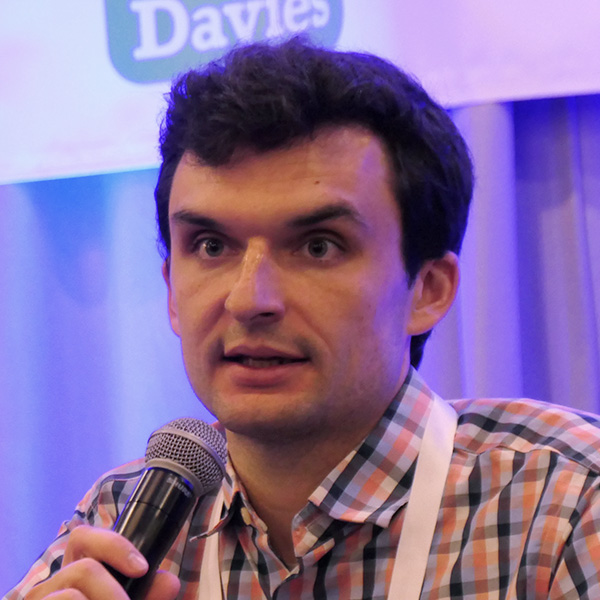
David Ticknor, senior interconnection engineer at RES Group, said MISO’s second long-range transmission portfolio is poised to support load additions, fleet change and reliability. He said it’s difficult to quantify reliability benefits of transmission, but MISO did a commendable job in its benefits analysis.
“I think it’s one of the coolest transmission buildouts we’ve seen in a long time,” Ticknor said.
However, Ticknor said his company is keeping a “keen eye” on the recently filed complaint from the five states against the portfolio.
“The cost allocation point is what it always comes down to,” he said, adding that MISO did a good job of planning despite not being able to solve all issues on the grid with a single transmission package.
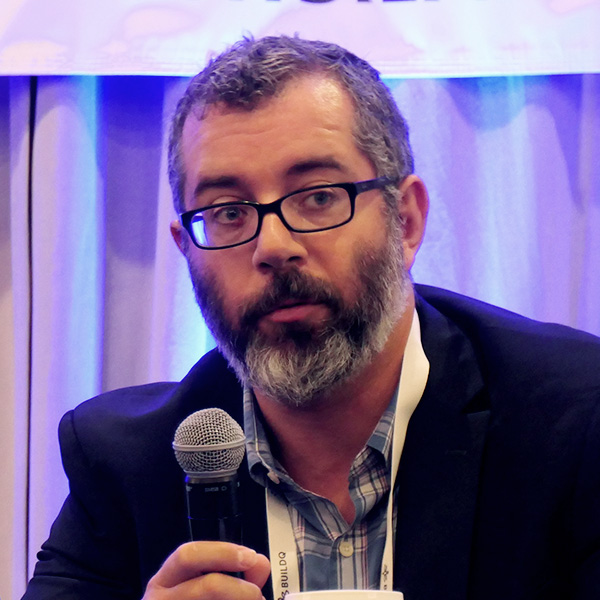
Doering advised RTOs not to “cost-allocate the generators for your backbone transmission projects.” He said it’s difficult to get companies to sign on to power purchase agreements when potential generation projects are expected to entirely cover the cost of large transmission, with costs not commensurate with use.
“The need [for transmission] is already established. We don’t need to punish generators. We need to allocate the marginal impact of their use of the facility,” Doering said.
Ruchi Singh, vice president of interconnection and transmission at Brookfield’s Urban Grid, said if MISO planned transmission to increase capacity along the Midwest-South transfer constraint, it would open several possibilities to generation developers.
Swift Current Energy senior vice president Jim Marett said MISO is the easiest RTO to interconnect into today. He said although it’s slow and expensive, the MISO queue doesn’t experience the “sudden stops” that occur in other RTOs.
Development Becomes Trickier
“Development hasn’t been easy in the past year or so,” conceded Erik Ejups, director of power marketing at EDF Renewables. He said it’s become easy for a “small opposition group” to have an outsized impact on a solar project’s chances.
Foss and Co.’s Dawn Lima said OBBBA has set off a growing perceived risk from investors, who now request grandfathered projects whose construction started in 2024 and will be complete around 2026 or 2027.
Marett said there are enough renewable projects in the beginning stages or that will kick off physical construction before Sept. 2 (a federal deadline for wind and solar projects that plan to use the 5% safe harbor rule for claiming tax credits) to keep developers busy for the next few years and act as a de facto grace period for absent incentives. But he said growing capex costs will likely eat into developers’ margins. Fortunately, Marett said, data centers seem to have an appetite for new generation, even if it’s more expensive.
“What we’ve noticed is that an upgrade cost that would have gotten a project thrown out of the pipeline in 2017, we’re now ecstatic about. It’s a little bit more of a high-stakes poker game,” he said.
Conductor Solar CEO Marc Palmer said solar, storage and distributed energy resources “particularly got a gut punch” with the federal phaseout of incentives.
Palmer predicted that the remainder of 2025 and 2026 will contain strong construction trends, with a dip over 2027, followed by a recovery as costs of the assets naturally drop.
“We expect that to start bouncing back in time without any additional policy changes,” Palmer said. “We think the next 10 years are going to [see a] transition to value-driven growth, which is going to lead to a healthier market overall.”
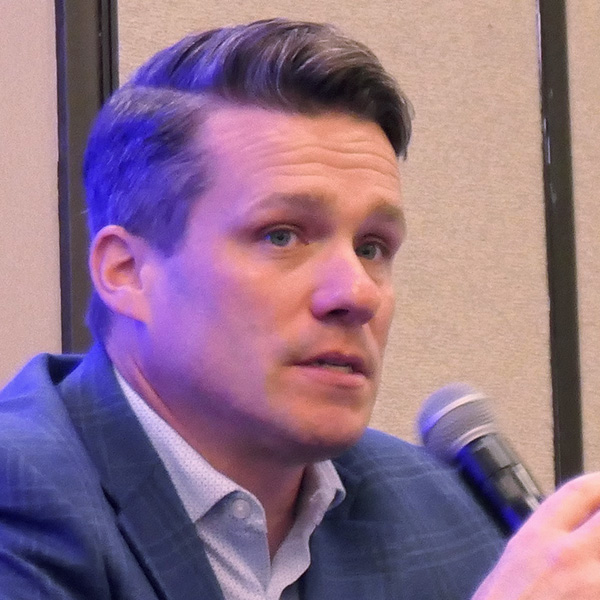
Nick Panko, vice president of tax compliance firm CFO Services, said he expects the “emotional response” to the bill to wane.
“Every four years, you’re used to the swing,” agreed Brad Tyson, a vice president at Santander. Tyson said recent IRS guidance that laid out the transition in tax credits was a “small win” for renewable developers. He said some developers who braced for a tight, two-year shift breathed a sigh of relief when they found there would be a pathway to four-year safe harbor provisions. (See IRS Guidance on Wind and Solar Credits Not as Bad as Feared.)
Under OBBBA, wind and solar projects can qualify for the phased-out clean energy production tax credit and clean energy investment tax credit if they are placed in service by the end of 2027 or begin construction before July 4, 2026.
Panko said by the 2027 deadline, the U.S. will then gear up for another tax policy shift under a new presidential administration.
Cons Before Pros
John Davies, CEO of the eponymous public persuasion firm Davies, said this moment embodies the Chinese curse — not a proverb, he stressed — “May you live in interesting times.” He said for many, it’s challenging and for some, it’s a crisis.
“We look at this time as an opportunity for good companies, good players to make advances,” Davies said.
Davies said renewable projects, which often enjoy massive public support, fail because companies neglect to engage properly with the public. Davies said it may seem counterintuitive, but project developers should acknowledge the cons of a project before publicizing the pros to build credibility.
“If you can acknowledge, then contrast, you’re going to win every time,” he said.
Davies said currently, wind developers have the biggest perception problem, with more negative online articles available than positive.
“They have given up the web,” Davies said.
Davies said the people who have a “not in my backyard” attitude are either rational, irrational, or fearful of unknowns of the infrastructure or potentially being disrespected.
“They decide to be crazy because that’s what their political party tells them to do,” Davies said of the irrational types. He advised companies to listen to communities, perform outreach and cultivate relationships.
Davies advised against developers creating a social media page for projects, saying it’s a surefire way to create a hot spot for protesters. He joked that Mark Zuckerberg’s office contains a graveyard of renewable energy projects.
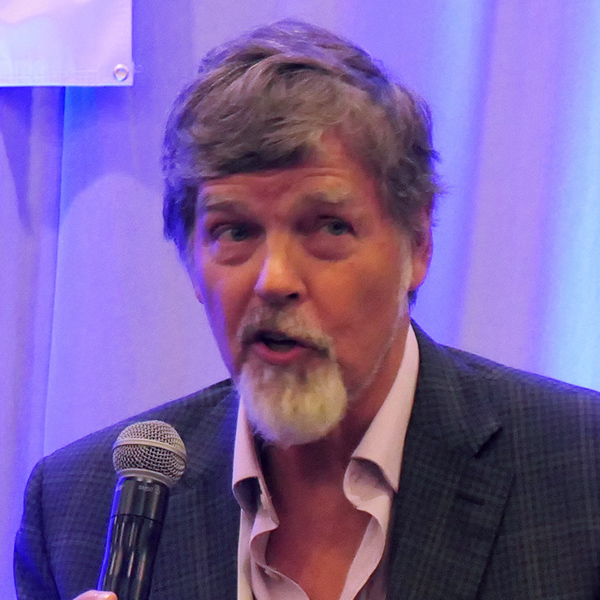
Brian Ross, vice president of renewable energy at Great Plains Institute, said every community should consider itself a “host” community for clean energy. He said the clear delineation that once existed between host communities and strictly consumer areas is evaporating. Every community contains the potential for solar energy, he said.
Ross said GPI is conducting campaigns where the nonprofit approaches municipalities to “soften the ground” and ask residents what they want from inevitable renewable projects versus what they dislike about them.
“Once you get them talking about what they want, the objections start to diminish,” Ross said. He said community members begin to associate projects with funding for local programs rather than usurping farmland.
Ross said developers might have to contend with lingering mistrust because developers previously publicized a project in a community, then vanished without explanation when upgrade costs jumped too high. He said those kinds of gaps are common in a “capitalistic landscape.”
Ross also said GPI as a rule doesn’t mention that a particular project will help alleviate climate change unless the community already has established climate goals. He said many communities view the “clean energy economy as thrust upon them.”
Hillman said, at the end of the day, the industry’s end goal is reliability. He said industry players need to have “elevated debates” in an era of “I’m right, you’re wrong.”
“Use phrases like, ‘Tell me more;’ ‘What’s your perspective?’ Or ‘While I don’t quite see it that way, I can understand where you’re coming from,’” Hillman urged.