Western state utility commissioners should encourage “standardization and harmonization” to effectively integrate inverter-based resources throughout the region, according to a guide developed by the Western Interconnection Regional Advisory Body and Elevate Energy Consulting.
The guide, a “technical resource” intended to assist commissioners, is a follow-up to a report on IBRs commissioned by WIRAB in 2024. Elevate Energy and WIRAB hosted a webinar to discuss the document and its findings Dec. 2.
The report notes that over the next decade, approximately 85% of new generation in the West is expected to be IBRs. If not integrated correctly, this can lead to vulnerabilities in modeling, coordination and operational performance, according to the report.
To correctly integrate IBRs, the industry must focus on “standardization and harmonization,” Ryan Quint, CEO of Elevate Energy, said during the webinar. “In particular, adopting the latest and greatest standards.”
“FERC and NERC have said, ‘We strongly … encourage folks to adopt [IEEE 2800-2022], but we are not mandating it,’ meaning there are no requirements for [the] significant … amount of decisions that need to be made about how we want to configure, control and operate IBRs,” Quint said. “So, unless those requirements are specified, there are potential gaps that exist.”
Encouraging standard adoption of IBRs is especially tricky in the West because many entities are involved in the process, Quint noted.
Other regions may have one ISO or RTO where all the decisions are made with “one central entity responsible for administering that process and following those rules that have been created or imposing those rules,” Quint said.
“In the West, we’ve got dozens and dozens and dozens of planning coordinators, transmission planners, that all have varying sizes, areas of expertise, challenges of their own,” Quint said. “Regional coordination, bringing these entities together in a unified way, is really an important concept, particularly in the West. And that becomes very applicable with the adoption of new standards, the improvement of requirements, the checks and balances that happen during the interconnection process, etc.”
Standardization brings reliability benefits to not only transmission providers, but also developers and contractors, who will have a clearer understanding of the rules, Quint said.
To achieve harmonization, the industry needs a stakeholder-engaged assessment, which would include regional training, support for smaller entities and utility flexibility.
The need to streamline integration of IBRs also applies to large load interconnections, Quint noted.
The technical resource states that commissions “can set expectations, require transparency and ensure utilities are prepared to integrate IBRs without compromising affordability, reliability or resilience.”
The resource suggests seven key focus areas for IBR oversight:
enhanced and harmonized interconnection requirements,
IBR modeling, data quality and study processes,
using modern IBR capabilities,
commissioning practices and post-commissioning monitoring,
utility operational readiness,
coordination and sharing across jurisdictions, and
maximizing capabilities of legacy IBR devices.
Arizona Corporation Commissioner Lea Márquez Peterson, WIRAB’s chair, said the goal of the resource is to “equip regulators with clear, practical oversight tools and the kinds of questions that surface potential issues early, drive meaningful conversations with utilities and ultimately support better outcomes for the Western Interconnection as a whole.”
“NERC and FERC are strengthening standards, but regulatory oversight varies, and some responsibilities fall on our shoulders as commissioners,” Márquez Peterson said. “WIRAB’s role is to help bridge the space between complex technical issues and the regulatory decisions that shape reliability. This resource is one way we can support that mission.”
The NYISO Market Monitoring Unit cannot verify the need for out-of-market actions on the part of transmission owners for reliability, it told the Installed Capacity Working Group on Dec. 1.
This is because the tariff does not specifically grant the MMU the power to obtain the data necessary to verify such actions, said Pallas LeeVanSchaick, vice president at Potomac Economics, the MMU.
The MMU is unable to verify whether all day-ahead reliability units and supplemental resource evaluation calls are scheduled because of actual reliability needs. These out-of-market actions actually became less frequent in New York City because of new 138-kV transmission, but 23% of them could not be verified.
LeeVanSchaick said that while the NYISO tariff gives the MMU broad access to data from “market parties” and “sellers,” TOs do not specifically qualify as either. This means the MMU is dependent on the data that TOs give to NYISO, which are frequently not detailed enough to verify reliability calls. He noted, however, that NYISO has begun to receive more detailed information on out-of-market commitments “in recent months.”
Multiple stakeholders expressed concern that the Monitor had “their hands tied” trying to get data from TOs. A TO representative said they had a unique responsibility for local reliability and that this had to be taken into consideration should any new regulations be developed.
Stakeholders and the MMU seemed open to discussing the issue further at upcoming meetings, which may create calls for tariff changes to address information gaps.
State of the Market
All-in prices ranged from $62/MWh in the North Country to $100/MWh in New York City, up 36 to 50% from last year. LeeVanSchaick said that this was primarily driven by natural gas price increases of 42 to 66%.
Additionally, NYISO became a net exporter of energy to Quebec for the first time in summer, averaging 480 MW. Canada’s exports to the ISO fell 1.4 GW year-over-year. July’s heat waves led load to peak at 30.6 GW, 6% higher than last year’s.
Congestion revenues rose 35% year-over-year, caused by transmission outages in Western New York and New York City. Long Island lines accounted for the largest share of congestion statewide, particularly on high-load days in July.
Over the summer, the Monitor identified an average of 2.2 GW of forced outages on high-load days, far higher than the anticipated 1.6 GW of market outages. During the most extreme heat waves, additional capacity was unavailable in real time because of the inability of generators to ramp, ambient heat and ambient humidity. In total these three factors removed 600 MW of capacity statewide. LeeVanSchaick said this “overstated significantly” the available capacity on the market.
Other Business
The ICAP Working Group also reviewed tariff revisions for the Improved Duct-Firing Modeling project and the NYISO/Hydro Quebec interconnection agreement.
It also discussed revisions to the aggregation manual for municipal electric utilities. NYISO staff said they believe a new section of the manual will need to be added to support the participation of distributed energy resources within municipal utility territories.
In New York City, 7.6 GW of capacity elected as firm, representing 82% of capacity covered by the firm fuel option. On Long Island, 89% of capacity elected firm, totaling 4.6 GW. In the Capital District, which is the only area upstate modeled as being fuel constrained, 80% of eligible capacity totaling 2.8 GW elected firm.
A new CAISO paper lays out a series of challenges around how to improve participation of demand response and distributed energy resources in the ISO’s day-ahead and real-time markets.
The paper, published Nov. 26, compiled information from CAISO Demand and Distributed Energy Market Integration (DDEMI) Working Group meetings held in 2025.
CAISO is committed to enabling “the reliable, efficient and seamless utilization of demand response into ISO operations and markets,” the ISO said in the paper.
Under the ISO’s current rules, distributed energy resource aggregations and resources that can reduce their load are able to participate in the day-ahead and real-time markets for energy and ancillary services.
The DDEMI Working Group developed “problem statements” for the ISO to consider as it begins work in early 2026 to expand DER and DR access to its markets. The group identified six topics for the ISO to address:
expanding performance evaluation methodologies,
enhancing demand flexibility market options,
expanding or developing reliability-based DR participation options,
expanding or developing economic-based DR participation models,
optimizing market options for direct or indirect participation of DERs and
expanding demand-side bidding options
However, in Nov. 6 comments on the DDEMI initiative, CAISO’s Department of Market Monitoring said the ISO has not clarified the costs and benefits of the working group’s priority areas and should provide an assessment.
“Without any such assessment, it appears to DMM these enhancements should have a lower priority than numerous other policy efforts currently underway, such as the Extended Day-Ahead Market congestion rent allocation refinements, congestion revenue rights reforms, storage bid cost recovery and default energy bids and uncertainty products,” DMM said.
DMM also asked CAISO to develop a new resource model that would allow DR resources to show as demand-side resources, rather than supply-side resources.
“Treating demand response as a real-time demand-side resource improves market efficiency by adding slope to the demand curve, which enhances reliability and reduces system costs by avoiding uneconomic load scheduling,” DMM said.
However, if demand response is modeled as load, coordination with CAISO’s capacity planning framework will be required, DMM said. Demand modeled as load would affect long-term load forecasts and the qualifying capacity of resources.
In the paper, CAISO staff said there currently is no pathway for DER aggregations to qualify for resource adequacy. This issue involves the California Public Utilities Commission, which would need to develop a qualifying capacity approach for DER aggregation RA, the paper says.
For the Reliability Demand Response Resources (RDRR) area, the working group found that reliability demand response programs do not include a resource’s startup costs during economic dispatch. The group also found that the RDRR dispatch limit is 100 MW, even if the resource’s capacity is more than 100 MW.
DMM asked CAISO to accurately represent RDRR characteristics, such as startup costs, in the market to help preserve access to these reliability resources.
As for next steps in the initiative, CAISO is collecting stakeholder feedback about how the ISO should prioritize future DDEMI policy development in the short term (between 2026 and 2027), mid term (2028-2030) and long term (beyond 2030).
FERC has approved an SPP tariff revision designed to accelerate the addition of new generation by quickly adding shovel-ready incremental capacity — up to 20% of the facility’s “maximum injection capability” — at existing generating sites.
The commission said in its Nov. 28 order that SPP’s temporary priority process “makes efficient use of the existing transmission system” by queuing eligible generator interconnection requests higher than existing study clusters that haven’t started. It said the proposed accelerated time frame, not subject to waiting for open seasons or processing as part of a cluster or from needs driven by other requests, ensures customers can interconnect in a “reliable, efficient, transparent and timely manner” (ER25-3570).
The priority process meets FERC’s “independent entity variation standard” and its Orders 2003 and 2023-A. The process was accepted Nov. 28, became effective Dec. 1 and will be in place until March 1, 2026. That’s when SPP’s Consolidated Planning Process, assuming FERC approves it, is to take effect. The CPP, an integrated, three-year transmission planning cycle blended with generator interconnection studies, is planned to produce its first assessment in 2028. (See SPP Celebrates Novel Consolidated Planning Process.)
But the commission rejected two other tariff revisions by SPP: its proposals to expand eligibility for the priority process to generators retired for less than five years (ER26-153) and to modify the queue’s priority for interconnection and priority requests (ER26-156).
FERC ruled the priority request process enables SPP to meet “projected near-term resource adequacy needs more quickly” than would its existing study cluster process. It agreed with the RTO’s contention that the commission has “recognized the benefits of improved queue efficiency.”
“The priority process will improve the efficient interconnection of new generating facility capacity by allowing incremental additions to existing generating facilities to come online in an expedited manner without impacting existing interconnection customers,” FERC said, quoting its own statements.
The grid operator told the commission its current GI process “may be unable to meet the near-term resource adequacy needs” of its load-responsible entities that are “subject to a set of heightened eligibility and financial-readiness requirements.”
FERC in August approved separate planning reserve margins for the 2026 summer and winter seasons that LREs must meet; those that fall short could incur deficiency payments. The approval set a 36% PRM for the winter season and a 16% margin for the summer. (See FERC Approves SPP’s Separate Winter, Summer PRMs.)
The commission found the priority process is “narrowly tailored” to address the RTO’s near-term resource adequacy or reliability needs because it applies only to existing facilities — and just once — and because the eligibility and financial commitment requirements “prevent speculative interconnection requests,” reducing the potential for time-consuming restudies.
Priority project owners must cover all costs of the priority system impact studies and all necessary substation network and system network upgrades.
FERC said the heightened eligibility and financial readiness criteria limit an interconnection customer’s ability to qualify for the one-time study. “These limits allow only ready projects that do not impact existing interconnection customers” to use the priority process, it said.
In rejecting SPP’s two related tariff revision proposals, the commission said the grid operator lacked details for allowing retired generators to take advantage of the priority process. It pointed to lack of clarity over whether the project could be 120% of the size of the retired generator or 20% of its size.
New ESR Load Assessment
FERC also accepted SPP’s tariff revisions that outline the study requirements for load assessments of electric storage resources (ESRs) subject to the RTO’s generator-interconnection procedures, effective Oct. 7, 2025 (ER25-3105).
The commission found that because SPP’s revisions incorporated FERC’s pro forma LGIP language from Orders 2023 and 2023-A, they were deemed just and reasonable and not unduly discriminatory or preferential. It said the deviations from the commission’s pro forma LGIP and LGIA accomplished the purposes of Orders 845 and 2023.
FERC said SPP’s proposal to define a new term in its tariff — ESR-LA, for ESR load assessment — to evaluate the effects of an ESR withdrawing energy from the transmission system, in accordance with NERC Reliability Standards, will help facilitate the reliable interconnection of new ESRs.
“SPP’s proposed revisions specify that SPP will study an electric storage resource only under off-peak conditions and then assess whether any charging limitations must be imposed on that resource,” the commissioners wrote. “Studying the resources under off-peak conditions is based on the resource’s expected real-time charging behavior, and any charging limitations will be based on the available capacity of the transmission system.”
The RTO’s proposal will apply to those interconnection requests submitted in the 2024 study cluster window.
Cross-sector coordination will be vital to protecting the electric grid and other critical infrastructure operators from rapidly expanding cyber and physical security threats, Matt Duncan of the Electricity Information Sharing and Analysis Center said on a panel with colleagues from other industries.
“It is increasingly [clear] that we can’t just do this [alone] as critical infrastructure; we need government, [and] we need supply chain vendors, because we all share the same attack surface,” Duncan, E-ISAC’s vice president of security operations and intelligence, said during a Dec. 2 Talk with Texas RE webinar.
“And even though the [E-ISAC] is just one of many ISACs, we know that electric power is essential to every infrastructure sector [and] every part of the economy, so we take our responsibility very seriously, not only to work with utilities but [with] cross-sector partners as well,” he said.
Duncan’s fellow panelists included John Bryk, manager of intelligence and risk analysis at the Downstream Natural Gas ISAC; Angela Haun, executive director of the Oil and Natural Energy ISAC (previously the Oil and Natural Gas ISAC); and Chuck Egli, director of security and resilience operations at the Water ISAC.
The talk came just a few weeks after GridEx VIII, the latest iteration of the biennial security exercise that drew more than 15,000 participants from over 370 organizations. (See GridEx Participants Report No Disruption from Shutdown.)
Several panelists pointed to GridEx as an example of the potential benefit from establishing cross-sector ties; Egli mentioned that the Water ISAC has even organized its own version of the exercise, H20Ex, along with H20SecCon, a conference on water infrastructure security inspired by the E-ISAC’s annual GridSecCon event.
“We’ve looked to the E-ISAC, in particular, as an example for how to bring those similar offerings to the sector and bring in more value,” Egli said. “A lot of it was, I think, thanks to being … very much involved … in the planning of those events, that we were able to then make them happen for our sector as well.”
Asked by Joseph Younger, the head of Texas RE’s Compliance Monitoring and Enforcement Program, how utilities can “get this right” regarding cross-sector coordination, Duncan said “one of the ways to get it right is to get it wrong, and the best place to get it wrong is in an exercise.” He said GridEx and similar exercises are a good way to find the weak points within either an organization or its dependencies, before they cause a real-world emergency.
Bryk said interdependency with other sectors “is probably one of the biggest [issues] we deal with” in the DNG-ISAC. He likened the problem to “the butterfly effect,” because a relatively minor problem in one sector can cause “a hurricane in the next sector.”
“Electricity helps us get gas out of the ground and move it, and gas helps [generate] electricity … so it can get to people. Water has to provide the cooling for things … There’s just no end to it,” he said.
The National Council of ISACs is a resource to help sort out such confusion, Bryk said, adding that “everything we do depends on the next ISAC in the line.” The NCI aims to help by creating playbooks of common practices and responses so that in a crisis, “we don’t have to go through that process of reinventing the wheel every time.”
Haun said the role of an ISAC is not “hands on keyboards [or] being on site,” but in collecting information during an emergency and making sure utilities have the data they need to address the issue.
“It’s not enough to say the sky is falling. It’s important that we talk about what they can do to protect their companies, their people, their assets, the critical infrastructure [and] ultimately the country,” Haun said. “So I’m just very passionate about having those relationships in advance and knowing who to talk to and being good partners, and that’s where the trust is developed, in my experience.”
The U.S. Department of Energy has awarded $800 million to the Tennessee Valley Authority and Holtec Government Services to support construction of what may be the country’s first advanced small modular reactors.
DOE said Dec. 2 that the cost-shared funding is part of President Donald Trump’s energy dominance agenda, which includes a nuclear renaissance.
Both funding awards are $400 million and center on Gen III+ light-water SMRs.
TVA plans to place a GE Vernova Hitachi BWRX-300 at its Clinch River site in Tennessee and accelerate the deployment of other such units in cooperation with Indiana Michigan Power and Elementl Power. (See TVA First U.S. Utility to Request SMR Construction Permit.)
Holtec, which is shaping itself as a one-stop shop for SMR development — technology developer and vendor, supply chain vendor, and plant constructor — plans to deploy two of its SMRs beside the formerly retired Palisades Nuclear Generating Station, which it is preparing to restart.
The two awards constitute the bulk of the $900 million solicitation DOE issued in March to help early movers in the SMR sector reduce risks. The remaining $100 million will be awarded later this year, DOE said.
“Advanced light-water SMRs will give our nation the reliable, round-the-clock power we need to fuel the president’s manufacturing boom, support data centers and AI growth, and reinforce a stronger, more secure electric grid,” Energy Secretary Chris Wright said. “These awards ensure we can deploy these reactors as soon as possible.”
Holtec said the first-mover award would catalyze the first-of-a-kind deployment of its proprietary SMR-300, which it calls Pioneer 1 and 2. This supports its effort to build a repeatable, standardized, fleet-scale model, which was a core requirement of the DOE funding offer.
“We are energized by DOE’s confidence in our SMR-300 reactor, which we view as validation of our 14-year quest to develop a walk-away-safe and cost-competitive nuclear reactor,” Holtec International CEO Kris Singh said.
Similarly, TVA said the Clinch River project would serve as a national model for how to deploy SMRs safely, efficiently and affordably.
“With DOE’s support and the strength of our partners, we’re accelerating the deployment of next-generation nuclear — reducing financial risk to consumers and strengthening U.S. energy security,” CEO Don Moul said. “This is how we deliver reliable, affordable energy and real opportunity for American families.”
GE Vernova Hitachi Nuclear Energy is part of the coalition TVA put together to apply for the DOE funding. GE Vernova CEO Scott Strazik said in a news release: “The BWRX-300 is the only commercial SMR technology being built right now in the Western world, and this grant will accelerate its deployment in the U.S.”
Earlier in 2025, Ontario Power Generation broke ground on a BWRX-300 facility that eventually is expected to house four SMRs.
Electricity sector participants urged Congress to back cyber security programs as the House Committee on Energy and Commerce’s Subcommittee on Energy heard testimony on the efforts of nation-states and other actors to hack the bulk power system.
The Electricity Information Sharing and Analysis Center (E-ISAC) is the industry’s clearinghouse for information on cyber and physical threats that works with government and other sectors to reduce security risks, NERC Senior Vice President and E-ISAC CEO Michael Ball said at the Dec. 2 hearing.
“The threat landscape is complex,” Ball said. “It includes continuously evolving threats from sophisticated and very capable adversaries; among the most advanced are nation-states … which are very well-funded.”
Ball said “numerous public reports underscore how these adversaries focus on the electric sector” and cited China, Russia, Iran and North Korea as being “monitored closely.”
Chinese cyber threats have dominated risks to North America recently, as Russia and Iran are more focused on conflicts in their regions, Ball said in his written testimony. He said Salt Typhoon and other hacking groups to which attacks have been attributed are believed to be operated by China’s Ministry of State Security. Ball’s written testimony lists cyber attacks against other sectors, but that is no comfort for E-ISAC, he noted.
“The technologies targeted by Salt Typhoon are prolific across critical infrastructure sectors, including the electric sector, which makes repurposing tactics, techniques and procedures learned targeting one sector easier when targeting the next,” Ball said.
The rise in electricity demand most often linked to data center growth also offers new risks as Salt Typhoon targets those facilities. A NERC report from early 2025 highlights the risks sudden outages of large loads can pose to the grid, Ball said. (See Data Centers’ Reliability Impacts Examined at FERC Meeting.)
Just the fact that load growth is cutting into reserve margins increases the risk of any kind of event on the grid, including cyber and physical attacks, said Kenergy CEO Tim Lindahl, who was testifying on behalf of the National Rural Electric Cooperative Association.
“One of the concerns we have as we run the grid closer and closer to the edge is it becomes more and more critical to not have interruptions. Before, we could have a small event, and it wouldn’t have an impact on the reliability of the grid,” he said. “But as we push the grid to the limit with new load — data center load, or any kind of load — it just puts a microscope on any hiccup in the system that could happen.”
Any kind of event becomes riskier as the system is more tightly balanced, but Kenergy — a Kentucky co-op — is dealing with that by investing in new fiber-optic communication systems so it can better monitor its distribution system and help thwart attacks, Lindahl said.
‘Embracing Modernization’
The long-run solution to cybersecurity will include modernizing infrastructure control systems as much as possible because keeping them entirely separate from the internet has proved infeasible, said Harry Krejsa, director of the Carnegie Mellon Institute for Strategy and Technology.
“Digitization has swept our world so thoroughly that even national security networks that are believed to be air-gapped often are found to have accidental and unknown internet connections during regular security sweeps and efforts to ensure their ongoing defensibility from adversaries abroad,” Krejsa said. “The only way around this challenge will be through embracing modernization from top to bottom.”
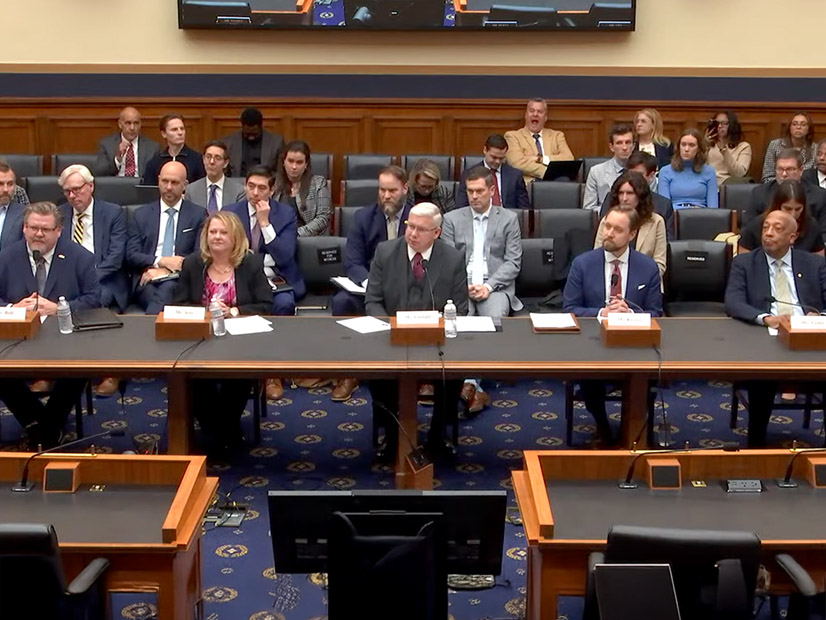
E-ISAC CEO Michael Ball, Xcel Energy Vice President Sharla Artz, Kenergy CEO Tim Lindahl, Carnegie Mellon University’s Harry Kresja and Idaho National Laboratory’s Zach Tudor at the hearing Dec. 2. | House Committee on Energy and Commerce
The economic changes driving up electricity demand are already advancing that work, added Krejsa, who worked in the Office of the National Cyber Director under the Biden administration.
“The energy technologies powering this transition, from onsite generation and battery storage to smart inverters and virtual power plants, were designed from the ground up with software at their core enabling modern cyber security features and the ability to update and evolve in response to emerging threats,” Krejsa said. “They are also enabling a smarter, more distributed grid architecture, one that is more defensible, resilient and even self-healing, capable of quarantining disruptions and preventing cascading blackouts.”
That transition includes using components from China, which dominates manufacturing in general and “electrotech” specifically. Krejsa recommended a reshoring effort there, but noted also some of the most sensitive national security programs use Chinese components.
“I think it’s instructive to take a look at the case of the F-35, which does not have zero Chinese-made components,” Kresja said. “The defense industrial base, instead, makes a risk-informed prioritization decision about where the cut line is for components.”
Congress could help the power industry and advanced manufacturing parse which components are too sensitive to risk backdoors for Chinese (or other) hackers and which can be reliably sourced from anywhere, he added.
Actionable Intelligence Needed
Information-sharing is vital when it comes to emerging threats, and the Energy Threat Analysis Center (ETAC), set up in 2023 as a pilot program, has helped improve dissemination of information to utilities whose systems are under threat, Xcel Energy Vice President Sharla Artz said.
“The private sector must be supported by the government to address national security risks. An essential component of that support is the timely sharing of actionable intelligence about our adversaries, tactics and their motivations,” she added. “Armed with this intelligence, private-sector experts can proactively architect security into their systems, hunt for adversarial activity and mitigate the risks from these threats.”
ETAC already has shared important information with the sector on Salt Typhoon attacks, and Artz said Congress should authorize it to become permanent so the partnership can grow and evolve to address new threats.
“Explicit recognition of this program allows industry partners and DOE to shape the joint effort to address the evolving risk landscape and to incorporate needed partners in the work effort,” Artz said in written testimony.
E-ISAC’s Ball suggested authorizing ETAC to help further its mission, and he asked Congress to fund smaller utilities’ cyber defense and to reauthorize the Cybersecurity Information Sharing Act of 2015. The act is meant to facilitate information sharing and was temporarily extended to Jan. 30, 2026.
“Industry sources report that the law has enhanced response capabilities to cyber incidents and meaningfully advanced information sharing and cyber defense,” Ball said in written testimony. “As a private entity, expiration of the law has no immediate negative consequences on E-ISAC operations. However, the law does encourage information sharing with ISACs and other sharing relationships. Reauthorization would support the broader information sharing ecosystem and preserve a highly valued framework for the private sector.”
Ontario has approved a $26.8 billion CAD plan to overhaul four aging nuclear reactors that supply approximately 11% of the province’s electricity needs.
Ontario Power Generation said the refurbishment of Units 5 to 8 at the Pickering Nuclear Generating Station will extend their operation by up to 38 years.
The Ontario government announced the approval Nov. 26, saying the project would protect the province’s workforce and long-term energy security while building a more resilient, self-reliant economy in the face of U.S. tariffs.
The OPG facility on the outskirts of Toronto is one of the largest and oldest nuclear power stations in the world. Units 1-4 began operation from 1971 to 1973 and have been removed from service. Units 5-8 began operation from 1983-1986 and are licensed to operate through the end of 2026.
Units 5-8 are rated at 2.1 GW. Minister of Energy and Mines Stephen Lecce said the project would boost their output to as much as 2.2 GW.
The Pickering refurbishment was greenlit as OPG nears completion of a similar project at its Darlington Nuclear Generating Station, 17 miles east of Pickering, that is expected to cost $12.8 billion.
The Pickering project is larger and more complex, including the replacement of all 48 steam generators and the addition of a 1,500-meter deep-water intake structure, neither of which was needed for Darlington.
OPG said more than 7,000 lessons learned through the Darlington overhaul will help shape the Pickering project. The work is expected to begin in early 2027, after final licensing approval by the Canadian Nuclear Safety Commission, and continue through the mid-2030s.
Approval of the Pickering overhaul was not unexpected, but the plan is not universally supported.
Environmental Defence said Ontario’s government had locked the province into a high-cost, high-risk energy strategy that would steer away from wind and solar generation.
Lecce alluded to the opposition in his Nov. 26 announcement: “After the previous government’s attempt to shut down the facility, this refurbishment signals that we are doubling down on Canadian technology, Canadian workers and the Canadian supply chain to protect our economy from global instability.”
Nuclear is the leading form of transmission-connected capacity in the IESO grid as of September: 12.18 GW, or 32% of total nameplate capacity. In 2024, Ontario’s nuclear reactors generated 80 TWh of electricity, or 51% of all power sent to the grid.
The province expects nuclear to remain a central part of its energy portfolio in the future. This was emphasized in “Energy for Generations,” Ontario’s first-ever integrated energy plan, the front cover of which features a sweeping view of the Darlington station. (See Ontario Integrated Energy Plan Boosts Gas, Nukes.)
OPG is building what is expected to be the first small modular reactor in North America beside Darlington at an expected cost of $7.7 billion. (See Ontario Greenlights OPG to Build Small Modular Reactor.) Planned construction of three subsequent SMRs on the same site is expected to bring the total project cost to $20.9 billion.
I have been thinking a lot lately about how we do or don’t plan for technological transitions, like the current clean energy transition now underway in the United States and worldwide.
In his closing remarks at the United Nations’ climate conference known as COP30, Brazilian diplomat and conference president André Corrêa do Lago acknowledged the meeting’s failure, once again, to keep even a mention of a phaseout of fossil fuels in the final statement from the event. He pledged instead to begin work on a roadmap for a “just, orderly and equitable” transition away from fossil fuels and pointed to plans for an international conference focused entirely on such a phaseout, planned for April 28-29, 2026, in Colombia.
That such a conference is being planned is historic in and of itself, though how successful it will be remains an open question, given the ongoing influence of fossil fuel industry lobbyists at climate conferences. More than 1,600 fossil fuel lobbyists took part in COP30 in Belem, Brazil ─ one in every 25 attendees ─ according to a report from the nonprofit Kick Big Polluters Out.
But lobbyists are more a symptom than a cause. The real problem lies in the idea that we can in some just, orderly and equitable way plan for a transition away from fossil fuels. Technological transitions are by their very nature unplanned, disorderly and inevitably unjust.
One need look no further than the lightning speed with which artificial intelligence has become the dominant digital technology worldwide, permeating almost every aspect of our economic, social and political lives and throwing the U.S. electric power industry into a chaotic panic.
And, as in all technological transitions, winners, losers and collateral damage are inevitable.
K Kaufmann
The narrative from the Trump administration, some regulators and utility industry leaders is that to win the global race for AI leadership, we must keep existing coal and natural gas plants online and build even more to power the hyperscale data centers now springing up across the across the country.
Climate action is the big loser here. Rising greenhouse gas emissions and the increasingly catastrophic extreme weather events and other environmental upheavals they cause have been downgraded, in the words of Energy Secretary Chris Wright, to mere side effects of our digital society.
The collateral damage: developing nations and remote, rural communities ─ including those in the United States ─ that are most exposed and vulnerable to extreme weather.
Which is not to say we should not plan but rather refocus on things that can be planned for, things we can control.
Biden’s Implementation Blues
Lack of planning was a core problem in the Biden administration’s seeming inability to implement ─ at speed and scale ─ the clean energy programs authorized by the Infrastructure Investment and Jobs Act and the Inflation Reduction Act.
“Three years after the first of those laws passed, only a handful of federally funded projects had broken ground,” says a recent report from three former staffers at Biden’s Department of Energy ─ Ramsey Fahs, Alan Propp and Louise White. “This meant the political theory animating the administration’s approach ─ that the economic development generated by clean energy projects and industries would create a durable bipartisan coalition ─ was never truly tested.”
It also meant that President Donald Trump was able to quickly roll back programs and claw back funding, leading to a massive private sector retreat from previously announced multimillion-dollar projects.
“Years of work were undone in just a few months,” the report says, with at least 32 projects totaling $22 billion in investments canceled in the first six months of 2025.
Based on interviews with more than 80 DOE staffers, the report’s list of implementation blockers includes an absence of “clean, sector-specific deployment targets” and a reliance on “obligation metrics” ─ that is, money that was officially awarded but not actually spent ─ which resulted in a “false sense of progress.”
Other challenges included tangled decision-making processes and an overly cautious approach to risk management, resulting in long and complicated application and award processes.
Funded with $5 billion from the IIJA, the National Electric Vehicle Infrastructure program is a case in point. NEVI was aimed at installing DC fast EV chargers along major highways in every state, and when it was rolled out in February of 2022, the administration hoped to have the first chargers in operation by the end of the year. Hobbled by a range of federal, state and local requirements, the first NEVI station was opened in Ohio in December 2023.
Following Trump’s unsuccessful efforts to roll back NEVI, the most recent count has about 133 federally funded stations open in 16 states. Revised guidelines from Secretary of Transportation Sean Duffy have removed or minimized certain NEVI requirements, like ensuring that NEVI chargers benefit low-income communities.
What Fahs, Propp and White propose is that Democrats take a page from the Heritage Foundation’s Project 2025, the massive manifesto setting out plans for a second Trump administration, published in April 2023, and immediately start planning clean energy policies and programs, and recruiting staff for a future Democratic administration.
“Any attempt by the federal government to play an important role in advancing industrial and clean energy development across the United States will require a great deal more thoughtfulness and detail than even Project 2025 achieved,” the report says.
Essential parts of such a plan ─ let’s not call it Project 2029 ─ should include setting goals for “specific sectoral outcomes,” with strategies “designed to be actionable in a single term.” An administrative culture that promotes speed, decision-making and accountability for meeting goals and timelines will also be critical, as will more streamlined and flexible contracting practices, the report says.
For example, Build America, Buy America policies that require “lawyers to certify every bolt” of a project is domestically produced should be replaced with an approach that focuses on “a few high-impact sectors and provide[s] waivers or exemptions for low-value components and equipment with no domestic supply chain yet.”
The report also calls for more public-private partnerships, such as Trump’s recent deal with rare-earths supplier MP Materials, which “combined an equity stake, loans, warrants and a 10-year price floor and offtake agreement … [showing] how a sufficiently motivated executive branch can comprehensively derisk deployment in a key sector.”
(Certainly, under former Energy Secretary Jennifer Granholm, DOE pursued similar derisking partnerships, if not as blatantly commercial or raising concerns about conflicts of interest as Trump’s deals.)
The Need to be Feared
The other side of this conversation centers on how states and the clean energy industry itself are or aren’t planning for the dramatic swings in federal energy policy they now face ─ specifically the loss of federal tax credits, grants and other incentives and Trump’s ongoing war against renewables.
At the recent Solar Focus conference in Arlington, Va., sponsored by the Chesapeake Solar and Storage Association, known as CHESSA, Jigar Shah, former director of DOE’s Loan Programs Office, also called for a major cultural shift in the clean energy industry.
Too many businesses “are planning for the days that look like last year, and I think it’s important for us to recognize that those days are gone, and they’re never coming back, like even after the Trump administration leaves office,” he said.
Now leading a clean tech consulting firm, Multiplier, Shah delivered a typically provocative call to action. “Why do we have rules in place that make it impossible for us to integrate with electric utilities? … It’s not enough to be liked; you really need to be feared,” he said. “When people don’t deliver for us, they should lose their seats. …
“One of the biggest challenges that we have in this moment is that … there’s still a feeling that our industry doesn’t work unless it’s mandated, that people have to use us,” he said. Rather, with new Democratic governors in New Jersey and Virginia, the industry should be coming at them with clear, outcome-focused plans, for example, to build utility-scale batteries in key locations to improve system reliability, while reducing consumer electric bills by 20%.
“If we only achieve 80% of that stuff two years later, no one’s going to vilify us for that,” he said.
Speaking on the same panel, Sachu Constantine, executive director of the advocacy group Vote Solar, laid out what has become the industry’s standard argument for renewables as a vital solution to the growth in demand for electric power, driven by data centers, electrification and industrialization.
“We are the lowest-cost, fastest, market-scalable energy source out there,” he said.
But Constantine also said states should be seen as a testing ground for the new policies and regulatory structures needed to set goals and ensure outcomes that respond to that growth. “We shouldn’t be afraid of that. This is a chance, a generational chance, to create the regulatory scheme we want. We should look to the states and what they’re trying and what’s successful as a blueprint for what the future looks like,” he said.
Integrating and assigning value to solar, storage and other distributed resources as assets for capacity markets should be a top priority, he said.
Nicole Steele, another former DOE and EPA staffer, is now director of climate policy at Amalgamated Bank, a commercial bank that devotes 40% of its lending to climate solutions.
Like Shah and Constantine, she is similarly focused on outcomes, often at the local level, in a post-subsidy world where projects must be able to access market-rate capital. At EPA, she worked on the Greenhouse Gas Reduction Fund, which was intended, in part, to help fund state-level green banks.
With that funding still frozen by EPA, “there’s a whole shift coming together that really is looking at revenue bonds [for] supporting green banks,” Steele said. “We’re throwing our weight behind some of that work to really make sure that green banks are not only structurally playing a role ─ to not just be a lender, but to be the lender that can seed private sector capital and drive down the cost of that capital or make that capital more accessible.”
Why 1,600 Lobbyists?
So, is a just, orderly and equitable transition away from fossil fuels possible? I would never say never, but based on the analysis and insights of those who worked so hard for it during the Biden administration, what may be more likely and effective is a strategically planned and outcome-focused transition toward clean energy.
In other words, we need a plan with targets we can achieve within four years and then ensure we have the financial and administrative infrastructure to do just that.
Wright’s recent DOE reorganization ─ killing the Office of Clean Energy Demonstrations, the Office of Energy Efficiency and Renewable Energy and the Grid Deployment Office ─ continues his efforts to wipe any mention of renewable energy from the national consciousness. The National Renewable Energy Laboratory has been renamed the National Laboratory of the Rockies.
But even Wright must know, in his heart of hearts, that solar, wind, storage and other clean technologies are the future. In the first half of 2025, renewables accounted for 91% of new power on the U.S. grid. During the same time period, new solar and wind (403 TWh) more than covered new electric power demand around the world (369 TWh), according to U.K. industry analyst Ember.
The International Energy Agency expects renewable capacity worldwide will double, to 4,600 GW, by 2030 ─ still short of the international pledge at COP28 to triple renewable power over 2022 levels by 2030, but impressive.
The transition increasingly is being driven by the combined forces of economics and technology; clean technologies are frequently just better, more efficient and affordable.
Rising electric bills were a critical issue in off-year election wins for Democratic governors-elect Abigail Spanberger in Virginia and Mikie Sherrill in New Jersey ─ one that could drive more Democratic victories in the 2026 midterms. Both residential and commercial solar and storage provide one of the quickest ways to cut bills, with very small-scale, plug-in (and largely unregulated) “balcony” solar and storage systems gaining in popularity.
With more renewables on the grid, Americans may see that we don’t need new fossil-fueled generation and can retire existing plants, without threatening reliability or affordability.
The fossil fuel industry will bring all its power, money and influence to slow the transition ─ as it has, at least temporarily, in the U.S. But perhaps why the industry needed those 1,600 lobbyists at COP30 was fear and a dawning recognition that it will eventually become irrelevant.
Livewire columnist K Kaufmann has been writing about clean energy for 20 years. She now writes the E/lectrify newsletter.
MISO announced it will study 6 GW of mostly natural gas-fired generation projects in the second group of entrants under its interconnection queue fast track.
The grid operator accepted 15 proposals totaling 6.1 GW of new installed capacity Dec. 1. Natural gas additions account for almost 4.3 GW of the projects. In-service dates range from Dec. 1, 2027, to Aug. 6, 2028.
The largest gas plants MISO marked for study this time are Invenergy’s proposed 1.2-GW gas plant for Wisconsin Electric’s customers; Entergy Texas’ 820-MW Legend gas plant in Jefferson County, Texas, to serve industrial customers; and Entergy Mississippi’s pair of proposed 768- and 763-MW gas plants to accommodate load growth and data centers.
MISO agreed to study battery storage proposals from Ameren Missouri, Entergy Louisiana and DTE Electric that range from 208 MW to 350 MW. The second cycle study list includes solar and wind projects in Minnesota, Michigan and North Dakota.
“Cycle 2 builds on the momentum of Cycle 1 and reflects the continued demand for timely, reliable interconnection solutions. These projects are essential to meeting near-term reliability needs and ensuring new resource additions are online to meet load growth,” MISO Senior Vice President Aubrey Johnson said in a press release.
Johnson said MISO views the fast lane as “one of several tools we’re using to meet the evolving needs of our members and the communities they serve.” He added that MISO remains intent on cutting down the wait times in its regular generator interconnection queue through the annual megawatt cap and automated software.
Environmental groups have disputed MISO’s and SPP’s queue fast tracks at the D.C. Circuit Court of Appeals, arguing the processes are unfair and allow primarily fossil fuel generation to leapfrog lengthy queue lines while ratepayers fund grid upgrades necessary to host them. (See Enviros Challenge MISO, SPP Queue Express Lanes.)
MISO reported that so far, utilities and developers have submitted 51 projects totaling almost 30 GW for consideration in the expedited queue. The RTO accepts applications for the queue fast lane continually. It plans to leave its application window open until it has studied 68 interconnection requests or May 10, 2027, the application deadline for the final cycle.
MISO has committed to studying a maximum of 68 projects before it retires the temporary express lane process no later than Aug. 31, 2027. Of the 68 spots, 10 are reserved for submissions from independent power producers, with an additional eight set aside for entities serving MISO’s retail choice load in downstate Illinois and a percentage of Michigan.
The RTO said three of the first set of 10 fast-tracked projects have struck generator interconnection agreements, with the other seven poised to execute their agreements before the end of 2025.
MISO will announce another fast lane study cycle in early March 2026.