Australian Company Eyes Wash. Coal Mine as Green Hydrogen Site

An Australian “global green energy company” is exploring the potential of converting a disused coal mine in Washington state into a facility for producing green hydrogen.

Fortescue Future Industries (FFI), a company with a mission to produce zero-carbon hydrogen on a large scale, said Friday that it would study the feasibility of using the mine for its green hydrogen project after entering into a binding exclusivity agreement with the community-owned Industrial Park at TransAlta (IPAT), located in Centralia, Wash.

The project site is adjacent to TransAlta’s coal-fired Centralia plant, which is scheduled to fully close in 2025. The first of two units at the plant was retired in 2020. Previously fueled by coal from the local mine, the plant now relies on Powder River Basin coal delivered by train.

In a statement posted on its website, FFI said the green hydrogen production facility “would enable the decarbonization of hard-to-abate sectors of the North American economy and support the development of a Pacific Northwest green hydrogen hub, potentially creating hundreds of new local jobs.”

The company said it intends for the proposed facility to employ the existing workforce from the coal plant, “facilitating a transition into the emerging green energy economy.”

“FFI’s goal is to turn North America into a leading global green energy heartland and create thousands of green jobs now and more in the future,” FFI founder and Chairman Andrew Forrest said in the statement. “Repurposing existing fossil fuel infrastructure to create green hydrogen to power the world is part of the solution to saving the planet.”

Forrest was formerly CEO of Fortescue Metals, a mining subsidiary of FFI.

FFI said it has been working with the Lewis County Energy Innovation Coalition and Lewis Economic Alliance to perform due diligence related to the project.

Under the 2011 agreement between TransAlta and the state of Washington to close the Centralia plant, TransAlta agreed to invest $55 million in the state, including $20 million for economic and community development and $5 million to support the training of workers displaced by the closure.

“With the closing of the coal mine and the scheduled retirement of the Centralia coal-fired power plant, IPAT was formed to redevelop the site and attract investment that will support well paid, long-term employment opportunities in the region. FFI’s potential project represents the opportunity to do just that,” said Richard DeBolt, executive director of the Lewis Economic Alliance.

‘Low-carbon Leadership’

FFI’s proposed project would fit into a wider public strategy to help Washington land federal money to become one of the nation’s hydrogen hubs. Friday’s press release noted that the company will collaborate with other stakeholders in the Pacific Northwest to apply for a grant from the U.S. Department of Energy’s $8 billion hydrogen hub program, which is being funded by appropriations from the Infrastructure Investment and Jobs Act (IIJA) passed last year by Congress.

Washington lawmakers in March passed a bill to create a new Office of Renewable fuels to support the development of green hydrogen and other alternative fuels, a move partly intended to boost the state’s prospects for landing one of the four to eight national hydrogen hubs to be funded by the IIJA. (See Green Hydrogen Bill Passes Wash. Legislature.)

In February, Washington Gov. Jay Inslee circulated a letter to state agencies, utilities and private companies saying the state had a good shot at hosting one of the hubs because of the relatively low carbon intensity of its electricity system. Zero-carbon electricity is a necessary component of powering the electrolyzers needed to produce what is considered “green” hydrogen from water.

Echoing the governor’s sentiments, FFI North America CEO Paul Browning said: “The electric power grid of the Pacific Northwest is one of the lowest-carbon power grids in the world and can be used to produce green hydrogen, and could extend the region’s low-carbon leadership to hard-to-electrify sectors like long-haul trucking, ports, aviation and heavy industry.”

Other collaborators on FFI’s project include Puget Sound Energy, innovation and investment accelerator Washington Maritime Blue, and Lewis County bus operator Twin Transit, which plans to build a hydrogen refueling station for its buses in Chehalis. (See Hydrogen Stations Could Soon Dot Wash. Landscape.)

While many Washington utilities and private companies are exploring production or use of hydrogen, Douglas County Public Utility District, in the central part of the state, has made the greatest strides, having already begun construction of a $25 million production facility expected to be completed in late 2022 or early 2023. The PUD will use electricity generated by its 840-MW Wells Dam, located on the Columbia River, to produce hydrogen from river water.

Global Campaign

According to its website, FFI seeks to produce 15 million tons of green hydrogen worldwide by 2030. The company in the last year has entered various partnerships across the globe in order to hit that target.

In October 2021, FFI and Plug Power announced a 50-50 joint venture to build a 2-GW factory in Queensland, Australia, to produce large-scale proton exchange membrane (PEM) electrolyzers, “with the ability to expand into fuel cell systems and other hydrogen-related refueling and storage infrastructure in the future.”

In November, the company said it was seeking to invest $8 billion in a project in Argentina’s Río Negro province that would produce 35,000 tons of green hydrogen by 2024, increasing to 2.2 million tons by 2030.

And in March, FFI and European energy giant E.ON said they were looking to partner on an effort to deliver up to 5 million tons of green hydrogen to Europe per year, seemingly from supplies produced in Australia.

“Green energy will reduce fossil fuel consumption dramatically in Germany and quickly help substitute Russian energy supply, while creating a massive new employment intensive industry in Australia. This is a cohesive and urgently needed part of the green industrial revolution underway here in Europe,” Forrest said in a press release announcing the partnership.
Maine Community Program Preps New Round of Emissions, Resilience Grants

Maine’s Community Resilience Partnership (CRP) will open a new grant round next month to help communities reduce carbon emissions, develop clean energy and build climate resilience.

The funding is “the heart” of the Maine Climate Council’s work, Hannah Pingree, director of the Governor’s Office of Policy Innovation and the Future (GOPIF), said during the council’s quarterly meeting Thursday.

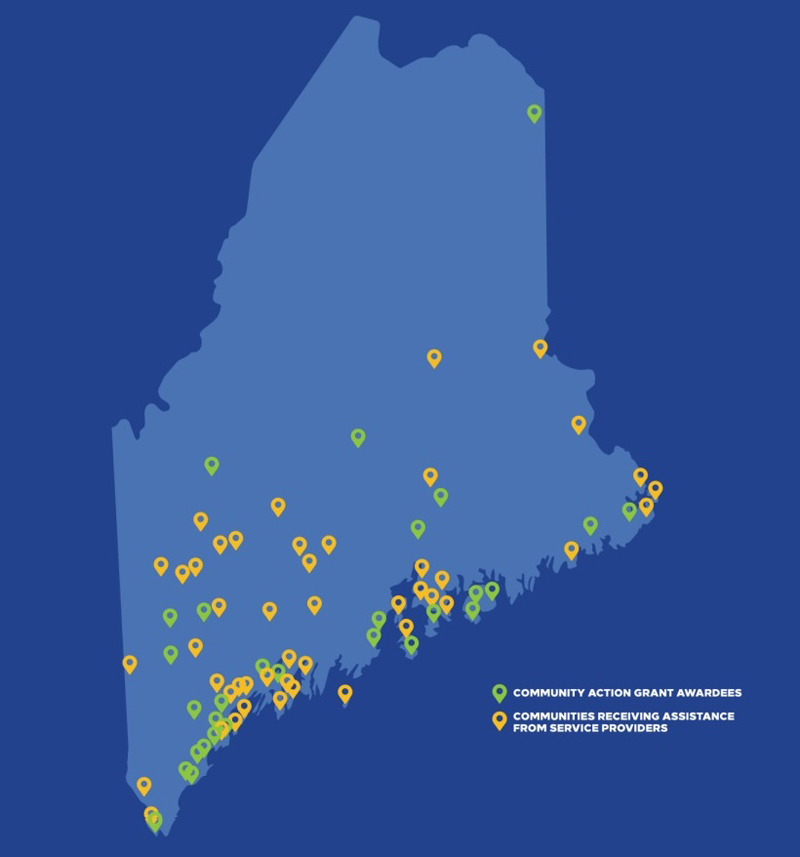
Maine Climate Grants Map (Maine Community Resilience Partnership) Content.jpgA map demonstrating the geographic diversity of climate-related community grants awarded by Maine’s Community Resilience Partnership in April | Maine Community Resilience Partnership

“The actions that communities can take [with the funding] are almost all the actions of the state’s climate action plan, so we’re asking communities to consider anything that they would prioritize as the most important thing to them, and the state is finding ways to help,” she said.

Maine Gov. Janet Mills launched the CRP in December with an initial $4.75 million in grants that are being administered through three award rounds.

Funding for the program is part of the state’s general fund, and additional grants will likely become available beyond the first three rounds, Brian Ambrette, senior climate resilience coordinator at the GOPIF, said during the meeting. Ambrette expects that the CRP will initiate the third round by next spring.

Community grants are available for greenhouse gas emissions-reducing projects related to electric vehicle infrastructure, clean heating and cooling for buildings, clean energy codes, renewable energy permitting and ordinances, green power purchases, renewable energy facility deployment, and emissions tracking.

On April 22, the partnership awarded $2.5 million in grants that support communities directly through project funding and indirectly through service provider and regional coordinator funding. Awardees received $500,000 for projects that will help reduce GHG emissions.

The projects include:

      • electrifying the transportation network in Bangor;
      • installing public EV chargers in Bar Harbor, Mount Desert, Tremont and Carrabassett Valley;
      • purchasing an electric school bus in Bridgton;
      • purchasing a solar array in Limestone;
      • tracking GHG emissions in Orono and Windham; and
      • installing heat pumps in certain town buildings in Waterford.

Additional awards from the first round will help 12 service providers work with 46 communities to enroll in the CRP and apply for grants in the next rounds, Ambrette said.

“We’re looking forward to communities building some best practices and having some lessons learned that they can share once their grants are concluded,” he said.

To help educate communities about options for reducing emissions and building resilience, the Climate Council will host its first conference on June 17 in Augusta.

Representatives of communities that are already taking climate action will share “practical tips and insights” with attendees for initiating climate-related projects and making investments that reduce building and transportation emissions, said Sarah Curran, deputy director of climate planning and community partnerships at the GOPIF.

The council will release additional registration, speaker and program details this week.

Response to Russian Invasion Undermining Budget Reconciliation Effort, Former Murkowski Aide Says

WASHINGTON — Efforts by Sen. Joe Manchin (D-W.Va.) and Sen. Lisa Murkowski (R-Alaska) to craft an energy bill in response to Russia’s invasion of Ukraine is threatening Democratic hopes for a party-line budget reconciliation bill with tax breaks for renewables and storage, a former Murkowski aide told the Energy Bar Association annual meeting last week.

Manchin, chair of the Senate Energy and Natural Resources Committee, began work on the bipartisan bill last month after rejecting the Biden administration’s proposed $2 trillion Build Back Better budget reconciliation package in December. (See Manchin Says ‘No’ on Build Back Better.)

Kellie Donnelly, executive vice president and general counsel for government affairs and communications firm Lot Sixteen and former chief counsel for the committee, said the two senators and other members of Congress have met several times.

Manchin “is very interested in crafting a new bill on energy and climate, and he wants to model this on [the Infrastructure Investment and Jobs Act]. So he wants this to be a bipartisan bill that goes through regular order … not using the budget reconciliation process,” she said in remarks at the EBA general session May 10.

“There’s been some paper that has been shared at those meetings but no outline that has officially come out yet about what the bill would look like. I imagine a bill would have increased domestic [oil and gas] production, probably increased production of critical minerals,” she said, adding that it could be a vehicle for transmission-related policies that couldn’t get carried in a budget reconciliation bill.

“But really, this kind of detour on energy and climate is taking the focus — really the oxygen — out of the effort on the budget reconciliation bill,” Donnelly said. “And it’s hard to see what Sen. Manchin is doing right now getting traction. [Manchin’s] committee does not have tax writing authority, so none of the taxes could really carry on this new bill, unless there was agreement from the Finance Committee and leadership. … But it’s my understanding that [the] Democratic leadership still wants to proceed with budget reconciliation.”

A budget reconciliation package would have to be completed by the end of September.

“If reconciliation fails … the end-of-the-year play is really going to be a tax extenders package. This will be a post-election, lame duck Congress,” she continued. “There’s going to be a lot of industry pressure on the [Biden] administration and on Congress to move the tax extenders package. And really, what I think it’ll come down to is the scope and duration of that package. You know, how long is it going to be? We’ve seen a lot of these end of year tax extenders, but only one to two years. You’re not going to get the 10-year budget window that they have in reconciliation. You’re not going to get the transition to a technology-neutral clean energy tax credit.”

Glick Renomination

Donnelly also discussed the risk that FERC’s rulemakings on transmission planning, cost allocation and interconnection policies could falter if Glick is not renominated soon for a second term. Although his term expires June 30, he could continue serving until the end of the year absent a replacement.

“Over the years, we’ve seen the loss of a working quorum, and we’ve seen tie votes at the commission literally tie up commission actions,” she said. “It’s a little nerve wracking … because, of course, for rulemakings, tie votes fail. I hope that we will see a Glick renomination soon, because without it, the administration [has] really risked their transmission agenda.”

OMS Drafting Letter over MISO Resource Adequacy Concerns

The Organization of MISO States is preparing a letter to MISO leadership to stress resource adequacy work following the Midwestern capacity shortage revealed in last month’s capacity auction.

State regulators discussed the draft letter — not yet public — at an OMS Board of Directors meeting Thursday.

As described by OMS leadership, the letter will emphasize an urgency for continued work and collaboration on resource adequacy within in the footprint, the role MISO plays ahead of its capacity auctions and the need to work together. It will also express concerns with the “surprising nature of the auction results,” according to OMS Executive Director Marcus Hawkins.

MISO’s 2022/23 Planning Resource Auction (PRA) failed to secure enough capacity in its Midwestern zones, which cleared at the cost of entry for new generation. Now, MISO Midwest faces the possibility of rolling outages in the 2022/23 planning year, which begins June 1. (See MISO’s 2022/23 Capacity Auction Lays Bare Shortfalls in Midwest.) Though members approached the auction with more capacity year-over-year, MISO said the resource additions were mostly intermittent and generally less available than retiring thermal generators.

OMS President and Indiana Utility Regulatory Commissioner Sarah Freeman said the organization has notified MISO CEO John Bear that it is composing the letter. It’s not clear if the letter will contain any specific requests to the RTO.

“The PRA honestly showed us a lot of things,” Freeman said.

North Dakota Public Service Commissioner Julie Fedorchak said OMS must approach any recommendations following the capacity deficit “delicately” because resource planning is the states’ arena. But she said she worries at times that states are too protective of that arena.

“We can’t protect our customers from being curtailed when we’re part of a regional grid. … The reality is we’re beholden to everyone else,” Fedorchak told her fellow regulators. She said MISO should ensure its price signals are efficient, its supply data are correct and that it manages “markets that effectively reward resources when they’re there when we need them.”

“We are very concerned. How do we protect our customers in Iowa? Iowa is a net exporter of power, but that doesn’t protect us,” Iowa Utilities Board Commissioner Richard Lozier agreed.

OMS plans to refine wording of the letter in upcoming nonpublic spring meetings. Later this month, OMS will release its annual resource adequacy survey results in conjunction with MISO.

Summer Concern, Winterization Talk

In spite of looming summer concerns, OMS members also heard an update on MISO’s preparations for new NERC winterization standards at the meeting.

Bobbi Welch, MISO principal adviser of standards and assurance, said the first round of standards set to go into effect April 2023 involve preparedness, operations training and better communications coordination. (See FERC Approves Cold Weather Standards.)

A second round of standards in response to the February 2021 winter storm will likely involve asset investments, including insulation and heaters, Welch said. (See FERC, NERC Release Final Texas Storm Report.)

Of the 28 recommendations FERC and NERC most recently proposed — 37, counting the multipart recommendations — MISO has found 13 that directly apply to its operations. A few of these are being addressed as part of NERC’s development of more standards.

MISO has also already addressed a few of the recommendations, including improving near-term load forecasting, incorporating intermittent resource output in load forecasting and more quickly reporting generation and transmission derates and outages during emergencies. These were in response to the January 2018 Southern cold snap, which prompted the new standards.

Welch said MISO now has two meteorologists on staff to better forecast weather conditions.

On some fronts, there’s more work to do, including more accurately predicting reserve margins, performing bi-directional seasonal transfer studies and determining how generators should be compensated for winterization investments, among other items.

MISO must also work on guidelines for critical natural gas facility loads in the footprint. Welch pointed out that the footprint contains 36 pipelines and several different state jurisdictions, making standardized pipeline notifications and a prioritized method of gas circuit shutdowns more of a challenge than in single-state ISOs.

Welch said that in some instances, grid operators rationing electricity supply in cold-weather events have inadvertently cut off electricity to circuits fueling critical natural gas facility loads including power plants, thus worsening blackouts. She said industry efforts are underway to identify the locations of critical natural gas infrastructure facilities so that these circuits remain energized when there is a need to shed load.

She also said MISO has recently begun studying its emerging and atypical east-to-west flow patterns, as well as its neighbors’ flow patterns, during recent cold-weather events.

MISO will give progress reports on its road to compliance with the cold-weather standards at upcoming Reliability Subcommittee meetings, Welch said.

“It’s a very tight development timeline,” she told state regulators.

Tesla Ineligibility to Shake up Calif. Clean Vehicle Rebate Program

A price increase for certain Tesla models has made the cars ineligible for California’s clean vehicle rebate incentives, a change that could slash short-term demand for the incentive by nearly 60%, according to data presented last week.

Tesla hiked the MSRP for its Model 3 and Model Y on March 15, and Tesla vehicles are no longer eligible for the rebate, according to the Clean Vehicle Rebate Project (CVRP) website.

The program sets a cap of $45,000 on the manufacturer’s suggested retail price (MSRP) for electric cars. The MSRP cap for SUVs, trucks and vans is $60,000. The Tesla price increase in March brought the price of the least expensive Model 3 to $46,990, according to news reports.

The rebates are available for new battery electric vehicles, fuel cell vehicles and plug-in hybrids, and range from $1,000 to $7,000, based on the buyer’s income and vehicle type.

The California Air Resources Board (CARB) held a work group meeting on May 11 to discuss CVRP.

The Tesla ineligibility is projected to decrease CVRP applications for battery-electric vehicles by about 70%, and by about 59% for the program overall, Francis Alvarez, a research analyst at the Center for Sustainable Energy, said during the workshop.

“The 83% to 88% of funds going to Tesla vehicles will become available over time, likely reducing program use initially and then normalizing again as other products fill the gap,” Alvarez said in his presentation.

CVRP Changes

The Tesla ineligibility was one of several changes to the CVRP program that were discussed during last week’s workshop.

The CARB board in November approved $515 million in funding for CVRP, intended to last for three years. At the same time, the agency is planning to ramp down the program as ZEV adoption increases, while shifting the focus to lower-income car buyers.

A first set of changes was implemented in February, when statewide ZEV sales topped 1 million.

The annual income cap for car buyers dropped to $135,000 for single tax filers, down from $150,000 previously. The new MSRP cap of $45,000 is a decrease from $60,000.

Another round of changes is proposed for when ZEV sales hit 1.25 million, a milestone expected in February 2023. The income cap would drop further, plug-in hybrids would lose eligibility and the rebate amount could be reduced.

CARB is still gathering feedback on the proposed changes and watching ZEV sales trends, and the agency could decide not to implement the second phase.

Other potential changes to the program include giving rebate recipients a prepaid card to use for EV charging, in a yet-to-be-determined amount. Another possibility is to expand car-buyer prequalification so that low-income buyers could use the incentive at the point of purchase.

“In making changes to the program, we also want to make sure that we leave some funding on the table for future model releases,” said Raquel Leon in CARB’s Innovative Light-Duty Strategies Section.

Rebate Perspectives

Some workshop attendees supported holding off on CVRP changes proposed for February 2023.

“Continued programmatic changes to this program as well as other rebate programs create confusion among dealers as well as consumers,” said Anthony Bento, director of legal and regulatory affairs at the California New Car Dealers Association. “I think we need to be very cautious on making further changes.”

Eileen Tutt, executive director of the California Electric Transportation Coalition, said it’s clear that CVRP is about to become undersubscribed. Not only should the second phase of changes be dropped, she said, but the income cap should be returned to the pre-February levels.

Tutt said she knows people who were interested in buying an EV but went with a conventional vehicle after losing CVRP eligibility because of the income cap decrease.

“As we move into a 100% ZEV requirement and we really need every single person … to pick an electric vehicle, now is not the time to make it ineligible to a very large group of people,” Tutt said.

CARB staff said a second work group meeting may be scheduled in coming weeks. The agency expects to release a draft funding proposal for clean transportation incentives in mid-July.

The funding plan, which would include proposed changes to CVRP, would then go to the CARB board for approval in November.

US and Canada Working to Deepen Energy Collaboration

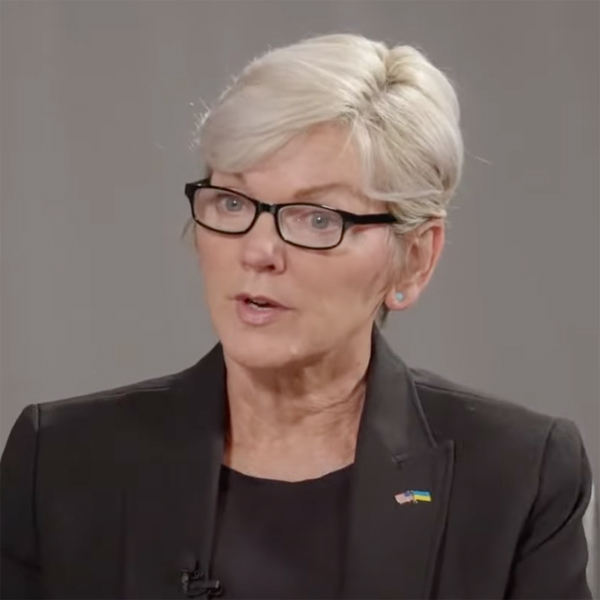
Jennifer Granholm (CSIS) FI.jpgU.S. Secretary of Energy Jennifer Granholm | CSIS

U.S. Secretary of Energy Jennifer Granholm on Thursday decried efforts by some Maine residents to stop a state-approved New England Clean Energy Connect (NECEC) power transmission corridor that would link Hydro Quebec to New England.

“Hydro Quebec wants to make sure that they are able to deliver … hydropower, and a state votes against it, and that state is a critical state to be able to make that connection to the Northeast. It’s extremely frustrating because it’s left in the hands of local interests,” Granholm said without mentioning the state by name.

“We should take local interests into account, but sometimes those local interests are funded by bigger interests that don’t have necessarily the big goal of getting to 100% clean electricity,” she added in a reference to utility funding of a successful grassroots referendum drive to block the construction of an already-approved transmission line through Maine delivering Canadian hydro power to Massachusetts.

Granholm’s remarks came during an energy policy discussion with Canadian Minister of Natural Resources Jonathan Wilkinson and sponsored by the D.C.-based Center for Strategic and International Studies.

The comments also came just two days after the Maine Supreme Court heard arguments in the appeal of a lower court decision to vacate a 1-mile lease of public land for the project, halting construction of the entire corridor. (See Maine Supreme Court Hears Entangling Arguments in NECEC Appeals.)

The fight over the transmission corridor is an early warning of battles to come as the Biden administration backs utility efforts to build new transmission carrying renewable power to demand centers — key to its goal to sharply reduce power plant carbon emissions by moving to wind, solar and other renewable generating technologies.

“The barriers have always been on deployment of electricity. It’s always about the grid. And it’s always about the local NIMBY permitting challenges,” Granholm added.

She said the administration does have a new tool, a provision in the bipartisan Infrastructure Investment and Jobs Act that “allows the DOE to take a position of offtake so that those builders of transmission lines can feel some comfort that they are not going to be left holding the bag.” (See DOE Seeks Input on Tx Loan, ‘Anchor Tenant’ Programs.)

“Then we get paid back as they fill up the rest of the line,” she explained in a reference to other off takers of power flowing through a new transmission line.

“It’s a revolving fund,” she explained of the $2.5 billion allocated in the legislation to help jump start new transmission projects. “It’s a new mechanism that we’ve never used before … to ensure that we can actually get transmission [projects] going.”

“The opportunity is just so powerful to have a North American powerhouse … of an alignment on clean energy deployment and technology development,” Granholm said.

“I raised that because I think that all of our desire for peace in the world, so much of that can rest upon our movement to clean energy.

“If we are successful in converting our energy to clean, [we] can create energy security, not just for our individual countries, but around the world. We will not be under the thumb of petro-dictators. It could be a great peace plan, and that I think is a great aspiration.”

Wilkinson, in Washington to discuss energy security and climate change, said the two issues are “ultimately linked.”

“You often hear in Canada, and I assume it’s probably the case in the United States, the two polar kinds of views on this, which are: energy security has come to the fore [because] it’s so important [and] we should forget about climate change.

“On the other hand, you have voices who say climate change is an existential threat. It’s so important that you should essentially forget about energy security, at least as it relates to helping our friends and in Europe.

“There is a way for us to think about these things as being complementary, that we can work towards addressing the short-term energy security issues that have come out of Russia, that are arising from shifts in geopolitics generally,” he said.

PJM Monitor: LMP Rose to Near Record in Q1

Energy prices in PJM increased by 75.5% in the first quarter of 2022 from a year ago, the Independent Market Monitor reported Thursday, driven primarily by higher fuel costs.

In its Q1 State of the Market Report for PJM, the Monitor said the real-time load-weighted average LMP increased from $30.84/MWh to $54.13/MWh. This is the highest first-quarter price since the polar vortex in the first quarter of 2014, the Monitor said, and the third highest increase in first-quarter LMP since the start of PJM markets in 1999. The second highest price occurred in 2003, when winter load increased and natural gas prices doubled to above $8/dekatherm that year.

Of the $23.29/MWh increase, 49% was directly from higher fuel and emission costs, especially higher natural gas prices. Both coal and natural gas prices were higher in the first quarter of 2022 compared to 2021, with prices doubling in the eastern part of the RTO.

Real-time hourly average loads in the first quarter increased by 2.4% from 2021, going from 89,887 MWh to 92,007 MWh. The total price of wholesale power increased from $53.30/MWh in the first quarter of 2021 to $80.28/MWh in 2022, an increase of 50.6%. Generation from coal units decreased 3.1% in the first quarter, while generation from natural gas units increased 6.9% compared to the first three months of 2021.

Monitor Joe Bowring said that despite the increased energy prices, PJM’s wholesale electric energy market produced competitive results in the first quarter.

“The steadily increasing role of gas-fired generation and the declining role of coal highlight the importance of ensuring that PJM has real-time, detailed and complete information on the gas supply arrangements of all generators and that PJM consider rules requiring capacity resources to have firm fuel supplies,” the Monitor said in its report. “It is also essential that FERC consider and address the implications of the inconsistencies between the gas pipeline business model and the power producer business model and the issue of market power in the gas markets under extreme weather conditions.”

Theoretical net revenues from the energy market increased for all unit types in the first quarter, the Monitor said, with theoretical energy net revenues increasing by 145% for a new combustion turbine, 94% for a new combined cycle, 54% for a new coal unit and 75% for a new nuclear plant.

Total energy uplift charges decreased by $5.9 million, or 17.2%, in the first quarter, going from $34.3 million in 2021 to $28.4 million.

Total congestion prices increased by $389.2 million, or 321.5%, going from $121.1 million in 2021 to $510.3 million in 2022. The Monitor said only 31.9% of total congestion paid by customers for the first 10 months of the 2021/2022 planning period was returned to customers through the auction revenue rights and self-scheduled financial transmission right revenues offset.

“Congestion belongs to customers and should be returned to customers,” the Monitor said. “The goal of the FTR market design should be to ensure that customers have the rights to 100% of the congestion that customers pay.”

NERC Board of Trustees/MRC Briefs: May 11-12, 2022

Positive COVID-19 Test Prompts Return to Virtual Sessions

Multiple attendees at NERC’s Board of Trustees and Member Representatives Committee meetings this week praised the organization’s staff after a last-minute pivot from what would have been the groups’ first in-person gathering in more than two years into yet another virtual session.

The meetings — along with those of NERC’s Finance and Audit Committee, Technology and Security Committee, and Corporate Governance and Human Resources Committee — were to have been held on Wednesday and Thursday in Arlington, Va. (See “Face-to-face Meetings to Return in May,” NERC Board of Trustees/MRC Briefs: Feb. 10, 2022.) However, after an attendee tested positive for COVID-19 at the conference site Tuesday morning, NERC announced that all events would be held virtually, following up with webconference links the same day.

Speaking at the MRC meeting on Wednesday, Board Chair Ken DeFontes acknowledged that the events of the past two days were another reminder of the ongoing pandemic. He said NERC still intends to hold the August and November meetings in Vancouver, Canada, and New Orleans, respectively, though with appropriate precautions in place.

“There’s no question that we’re not done with COVID yet, and we saw the evidence of that this week,” DeFontes said. “So we are thinking about how we can shape that meeting to encourage people to come, but at the same time be prepared in the event that we have to do another virtual setup, maybe even try to look at some hybrid options.”

Standards Actions

The board voted to approve the new reliability standards FAC-001-4 (Facility interconnection requirements) and FAC-002-4 (Facility interconnection studies), bringing to an end the work of Project 2020-05.

The project began nearly two years ago with the aim of modifying FAC-001-3 and FAC-002-3. The former standard requires transmission owners and generator owners to “document and make facility interconnection requirements available,” while the latter requires GOs to “study the impact of interconnecting new or changed facilities on the bulk electric system.”

At issue with the standards was the term “materially modified,” which both FAC-001-3 and FAC-002-3 implied should be used to determine what facility changes should be studied and which should not. However, neither standard said who would determine what counts as a material modification. The existing language also created confusion with FERC’s open access transmission tariff implementation, because in FERC-jurisdictional areas, “material modification” means the impact of a new generation project on other generators in the interconnection queue.

To address these issues, the revised standards replace the phrase “materially modified” with “qualified change” throughout. In addition, a new requirement in FAC-002-4 specifies that the planning coordinator will define what constitutes a qualified change and will make the definition publicly available.

After the board accepted the new standards, Howard Gugel, NERC’s vice president of engineering and standards, delivered an update on Project 2021-07, which NERC began last year in response to the joint FERC-NERC report on the winter storms that knocked thousands of megawatts of capacity offline in Texas and the Midwest. (See NERC Standards Committee Agrees to New Cold Weather Project.)

According to Gugel, the standard drafting team (SDT) has completed an initial draft of the new standards and plans to submit it to the Standards Committee at its meeting next week for initial formal comment and ballot period. The SDT is further requesting that the comment period be reduced to 30 days from the standard 45, in hopes of finishing the standard and submitting it to FERC for approval as soon as possible.

Summer Assessment Highlights Risks in Texas, West

Large parts of North America face “elevated or high risk of energy shortfalls during peak summer conditions,” according to NERC’s upcoming Summer Reliability Assessment, due to be released next week. NERC staff previewed the assessment, along with the 2022 Long-term Reliability Assessment, during Thursday’s board meeting.

As Mark Olson, NERC’s manager of reliability assessments, explained, droughts and heat events are a major concern across the Western Interconnection and Texas.

In WECC’s footprint, these risks take the form of depleted water resources for hydroelectric generators, as well as “another active wildfire season,” Olson said. Extreme heat in Texas raises the potential for demand-related shortfalls, while thermal generators may face challenges in SPP because of lowered river water levels.

MISO faces potential shortages because of a 2.3% reduction in generation capacity since last year. Olson said extreme temperatures, high generation outages or low wind conditions could lead to outages even at normal peak demand. The assessment rates the region as the highest risk in North America.

New Québec Agreement Approved

The board also approved revisions and amendments to the agreement between NERC, the Northeast Power Coordinating Council and Québec’s Régie de l’énergie.

The existing agreement, originally approved in 2014, spells out how NERC’s Compliance Monitoring and Enforcement Program (CMEP) activities will be carried out in the Canadian province, along with establishing a Québec-specific CMEP (QCMEP). NERC, NPCC and the Régie agreed to modify the document in 2020.

The new agreement includes the following changes:

    • NPCC, NERC and the Régie may update the QCMEP without seeking approval from Québec’s government.
    • Duplicative terms have been removed, along with specific processes that are already addressed in the QCMEP.
    • Another regional entity may take over NPCC’s responsibilities if it dissolves or otherwise cannot perform them.
    • Billing of simultaneous interpretation as needed for audits is permitted.
    • A mediation and arbitration clause was added.

NERC also said the agreement contains unspecified “other administrative changes.” With the board’s approval, all that is left for the document to take effect is the acceptance of Québec’s authorities.

NYPSC Tracks Clean Energy Progress, Questions Process

The New York Public Service Commission on Thursday established a new proceeding to track state efforts to meet the environmental goals of the Climate Leadership and Community Protection Act (CLCPA), but some commissioners pressed for a more thorough cost/benefit analysis and better defined cost allocation (22-M-0149).

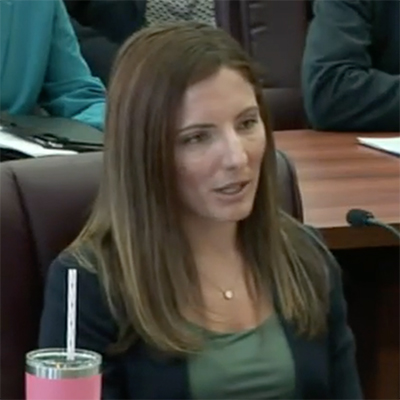
Jessica Waldorf (NYDPS) Content.jpgJessica F. Waldorf, NYDPS | NYDPS

“When taking our existing renewable energy generation and combining it with the projects that are awarded, existing and contracted, 63% of the state’s generation will come from renewable sources, well on the way to achieving 70% renewable energy by 2030,” said Department of Public Service Chief of Staff Jessica F. Waldorf.

With the requirements of implementing the CLCPA falling to the PSC and the DPS, the May 12 order does not conflict with the work of the Climate Action Council (CAC) or with the work taking place in the natural gas planning proceeding or any other related proceeding. It does not include any new funding decisions, nor does it ask the commission to make any new decisions on policy issues, Waldorf said.

The PSC on Thursday also announced new planning procedures for natural gas utilities to comply with the state’s greenhouse gas emission reduction goals, as well as new rules that set forth the process for initiating, operating and lifting a natural gas moratorium (20-G-0131).

The CAC is holding public hearings on its draft scoping plan through June 10, including emissions scenarios for natural gas, and will finalize the plan by year-end for submission to the state’s elected officials. (See NY Climate Council Ramps Up Natural Gas, Alt Fuels Planning.)

Flexible Policy

“I am concerned that in some ways the draft scoping plan does seem to try to narrow some of [the issues] in a way that may not leave enough flexibility for what is under our jurisdiction, or tries too much to direct things that may more appropriately need to be carefully analyzed under our jurisdiction by the technical experts over at DPS,” said Commissioner Diane X. Burman, who abstained on the vote.

Diane X Burman (NYDPS) Content.jpgNYPSC Commissioner Diane X. Burman | NYDPS

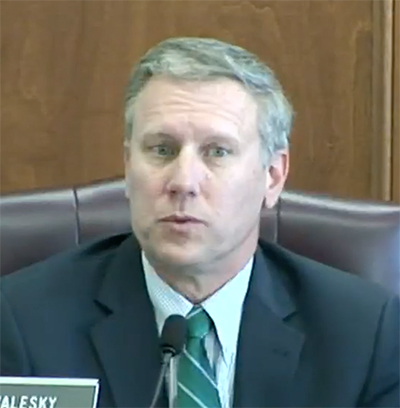
Commissioner David Valesky seconded Burman, saying the order “should be flexible enough to both react to whatever that final Climate Action Council scoping plan will be later this year, but also firm enough so that it continues to maintain the priorities of this commission, which as we all know has nothing to do with the Climate Action Council, with the exception of the chair holding dual role roles both here and on the council, so I think that that could be a delicate balance.”

The DPS is starting a process now with the utilities on decarbonizing the natural gas system and evaluating “what that means on a practical basis and also what the cost impacts and technical feasibility of actually achieving that look like,” Waldorf said. “So there is a reference to the draft scoping plan in the gas section of the draft order, but it was intentionally put in there to call attention to the fact that we’re not looking to conflict with any actions at the state level. We recognize them and to the extent that firm recommendations come out of that process, can get incorporated into future plans and we’ll incorporate that into ours as well.”

Commissioner Tracey A. Edwards said that while the CAC’s Climate Justice Working Group has three members from New York City, three from the rural communities, and three from urban communities in upstate New York, it does not include suburban communities and does not include anyone from Long Island.

“I’m particularly interested in what their responsibilities are and then taking a look at all of the different working groups, as the other one that piqued my interest was the Just Transition Working Group,” Edwards said.

Upstate Concerns

The CLCPA-tracking order locks in the volumetric load-share ratio for paying for renewables and associated transmission projects, which is neither fair nor adequate as policy, said Commissioner John B. Howard.

David Valesky (NYDPS) Content.jpgNYPSC Commissioner David Valesky | NYDPS

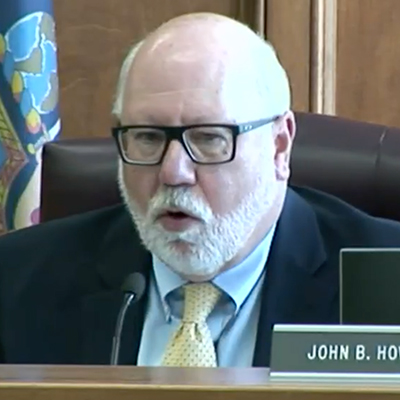
“I understand it’s an easy accounting mechanism, but I don’t think it really gets to the point,” Howard said, proposing instead that DPS staff do “an actual accounting of what things cost people” and what these new costs will mean to the broader economic competitiveness in each region of the diverse state.

Howard reiterated his oft-expressed concern that residents upstate, where more than 90% of the grid is zero-emissions, are being asked to pay a disproportionate share of the cost of greening the fossil fuel-fired generation fleet downstate. (See Stakeholders Question CLCPA Pace and Costs for New York.)

“Our entire state’s economy is shaky in its foundations, but I believe the upstate economy is shakier,” Howard said. “The legislature, either through its silence or total lack of action, has given this commission nearly the exclusive responsibility to reach into New Yorkers’ pockets to pay for the CLCPA mandates.”

John B Howard (NYDPS) Content.jpgNYPSC Commissioner John B. Howard | NYDPS

The PSC needs clarity “to cut through this fog … created by a totally unworkable program from the 22-member Climate Action Council and the subsequent subcommittees. It is almost a Rube Goldberg way to make public policy,” Howard said.

Howard supported the tracking order but joined Burman in voting “no” on a consent agenda item to implement transmission planning pursuant to the Accelerated Renewable Energy Growth and Community Benefit Act (20-E-0197); and in voting against a pair of consent agenda items related to the public policy transmission planning needs of NYISO for 2018 and 2020 (18-E-0623; 20-E-0497).

“If the legislature does not want to pay for [CLCPA], I hope my colleagues on this commission understand that responsibility falls to us exclusively to the tune of hundreds of billions of dollars and it is an awesome responsibility that we got through statute and by default,” Howard said.

Maine Supreme Court Hears Entangling Arguments in NECEC Appeals

The Maine Supreme Court heard oral arguments Tuesday in two uniquely entwined appeals related to the New England Clean Energy Connect (NECEC) transmission project.

A court determination on the retroactive application of a Maine voter referendum on transmission development passed in November could affect the outcome of an appeal of a lower court decision to vacate a 1-mile lease of public land for the project. The validity of that lease could, in turn, determine the outcome of the constitutionality of applying the law established by the referendum to the NECEC project.

Maine law prohibits public land — including state parks or land set aside for conservation — from being “reduced” or its uses “substantially altered” unless the Legislature approves the changes with a two-thirds majority vote. A group of state legislators, the Natural Resources Council of Maine and a group of residents challenged the Maine Bureau of Parks and Lands’ (BPL) grant of a public land lease to NECEC’s developer, Avangrid (NYSE:AGR) subsidiary Central Maine Power (CMP), because it did not seek the Legislature’s approval.

The Superior Court agreed, vacating the lease. The court also found that the agency did not provide notice to the Legislature or the public of the lease contracts.

Meanwhile, voters in November approved a referendum that would categorize any transmission construction after September 2014 as a substantial alteration under the law, thus requiring the Legislature’s approval.

CMP and its development partner, NECEC Transmission — as well as BPL — appealed the Superior Court’s decision. Arguing on behalf of BPL Director Andy Cutko on Tuesday, Maine Assistant Attorney General Lauren Parker said that the statute on park lands does not apply to BPL’s leasing authority over lands it manages for “specified beneficial purposes, including electric power transmission.”

At the time BPL executed the lease with CMP, she said, Cutko had the authority to issue 25-year leases for transmission, contrary to the lower court’s ruling.

CMP attorney Nolan Reichl, a partner in Pierce Atwood’s Litigation Practice Group, argued separately that the statute on park lands calls a BPL determination on land use into question.

“If there is no substantially altered use of the land, there is no two-thirds vote requirement,” he said. The BPL, he added, has no obligation to make any case-by-case determinations on usage.

The legislature, he said, has “never required BPL to run any particular administration process in that respect,” with thousands of executed leases all “consistently reported” to the legislature.

It’s not clear that BPL made a use determination, Chief Justice Valerie Stanfill said, adding that the court could, therefore, remand the case to BPL to do so.

Referendum Appeal

The developers had also challenged the constitutionality of the voter referendum because of its retroactivity and that it deprived them of their “vested right” to build the project. The Superior Court disagreed, upholding the change to the law.

James Kilbreth, an attorney at Drummond Woodsum representing the group that challenged the lease, on Tuesday argued before the Supreme Court that the referendum invalidates the lease and therefore makes all questions in the appeal of its vacatur irrelevant. The appeal of the referendum, which relies on the validity of the lease, would therefore also be irrelevant, he said.

The referendum “moots all the questions” in the lease appeal, he said. State law, he added, also clearly establishes that when laws change during an appeal, as is the case with the referendum, the court must apply the new law in that case.

Kilbreth argued that the lease appeal must be decided before the referendum appeal. To bring the referendum appeal, he said, the developers need a valid lease because they claim that the lease is the basis for their vested right.

John Aromando, a partner at Pierce Atwood and attorney for NECEC Transmission and Avangrid, said that the existence of the lease appeal does not invalidate the lease in and of itself. A valid lease, he argued, ensures that the referendum cannot take away their vested right.

With the validity of the lease under appeal, the outcomes of both cases are uniquely connected.

In defending the referendum, the state argued that the concept of a vested right is not straightforward.

The vested right “as Avangrid conceives it, does not allow for any consideration of the governmental interests at stake in legislation,” Maine Assistant Attorney General Jonathan Bolton said.

In the developers’ view, Bolton said, government and public interests are “irrelevant” if construction of a project has started. “The modern view is that due process by its very nature requires consideration of both private rights and public or government interest,” he said.

NECEC agreed last fall to discontinue construction activity for the project pending outcome of the appeals.

“Delaying the construction of the project by 12 months will make it impossible for the company to complete the project by the contracted deadline in mid-2024,” Thorn Dickenson, president and CEO of NECEC Transmission, said in a September affidavit to the Supreme Court. The delay, he added, could cost as much as $83 million.

In closing the hearing, Chief Justice Stanfill said there is a “great deal” of interest in the referendum appeal and, by extension, the lease appeal.

“I don’t think this courtroom has been this full since I’ve been here,” she said, adding that the court will try to issue a written decision as soon as possible.