WECC Workshop Assesses Western Risks

WECC continued its focus on reliability threats to the Western grid last week with a workshop on risk priorities and the first meeting of its new Reliability Risk Committee (RRC).

In the online Risk Priorities Workshop, stakeholders were split into a dozen small groups that each discussed four broad categories of reliability and security dangers for the bulk power system in the Western Interconnection. Two categories focused on the grid’s transition to renewable resources and its potential to undermine resource adequacy and transmission. Another dealt with security threats, and the fourth addressed extreme weather events.

“Our goal today is to narrow this universe of risks down to a preliminary list of, let’s say, around a dozen,” Victoria Ravenscroft, WECC’s senior policy and external affairs manager, told attendees Feb. 15. “To do this, we put the risks down into four categories to allow for manageable conversations. Each breakout group will discuss one of these risks, and everyone in this webinar today will discuss all four of these risks.”

Participants later prioritized what they believed to be the major threats in each category by voting on a mobile app. WECC compiled the top five results from all categories, generating a ranking with three top contenders: cyberattacks; human performance and skilled workforce; and extreme heat and drought.

Conversations in the breakout groups included talk of cyberattacks, including May’s Colonial Pipeline ransomware attack, and the perils of inexpensive drones to grid infrastructure.

The hazards of heat waves, like the one that caused rolling blackouts in California in August 2020, and deep freezes, like the one that nearly collapsed ERCOT’s grid last winter, featured prominently.

Workforce shortages caused by the retirement of skilled employees was another top conversation topic.

The workforce concerns were a new addition to the top-risks list, surprising some participants.

“I really appreciate the ‘crowdsource/wisdom of the crowds’ approach to collecting input, because I’ve been doing kind of remote regulatory support for long enough that human performance wouldn’t have been on my radar screen,” Brian Theaker, vice president of Western regulatory and market affairs at Middle River Power, said during a meeting of the Member Advisory Committee (MAC) held the next day. “But clearly, it’s an issue for a lot of … utility folks.”

Another MAC member, Grace Anderson, an adviser with the California Energy Commission, said, “I was surprised it rated that high on this list, but it did come up repeatedly in the sessions for my group.”

Anderson said her group lamented the loss of system knowledge that comes with retirements but also voiced concerns about the practice of younger employees departing utilities for more lucrative jobs in consulting.

“The attitudes and experience of the younger workers they do bring on are just from a different generation and a different set of experiences so that the twain doesn’t necessarily meet the way it has in the past,” she said.

WECC will use the rankings in the development of its biennial Reliability Risk Priorities report that identifies the Western Interconnection’s top hazards and guides WECC workplans.

The ERO’s first report in 2020 focused on resource adequacy, a changing resource mix, “extreme natural events” and the impacts to the grid of distributed energy resources and behind-the-meter storage. (See WECC Board Adopts Reliability Risk List.)

As for that report, this year’s workshop list will go to a WECC Board of Directors workshop in April and be subject to a board vote in June. WECC technical committees will then develop three-year workplans around the risk priorities, to be shared with stakeholders at the regional entity’s annual meeting in September.

Workshop participants praised WECC’s online orchestration of the workshop and expressed optimism about how its findings will contribute to future industry discussions on reliability in the Western Interconnection.

Speaking at the inaugural meeting of the RRC just after the workshop, Anderson offered a “shout out” to WECC staff for hitting a “grand slam” with the event.

“It was implemented, I think, flawlessly, because there was an enormous amount of work done behind the scenes in advance — a very difficult, complex set of arrangements,” Anderson said. She said the success was an “auspicious sign” for the launch of the newly formed RRC, which will take up many of the subjects unearthed at the event.

“You could clearly see how much effort went into it because it was seamless; so, yeah, major kudos to WECC and their staff,” MAC Chair Brenda Ambrosi, market policy and operations manager at BC Hydro, said at Wednesday’s MAC meeting.

Question of ‘Engagement’ on the RRC

It’s not often that a power industry meeting invokes the thinking of a storied president or a member of the Supreme Court in one sitting, but the launch of the RRC was just such an occasion.

The product of a yearlong — and at times contentious — effort to recast WECC’s stakeholder committee structure to closely align with its risk-oriented mission, the RRC is not so much a new body as it is a melding of the longstanding Operating (OC) and Market Implementation (MIC) committees. (See WECC Board Approves Stakeholder Committee Shakeup.)

And with that blending comes redefined roles. According to its charter, the RRC is tasked with identifying and addressing “known and emerging risks to the reliability and security of the Western Interconnection.” Its responsibilities will include:

  • evaluating “the reliability and security risks associated with relevant commercial, operational and other industry practices”;
  • working with WECC staff and the Reliability Assessment Committee “to develop and maintain an ongoing, prioritized list of known and emerging reliability and security risks facing the Western Interconnection; and
  • initiating actions “to address priority risks through the appropriate expertise and mechanism.”

RRC Chair Jon Aust, vice president of operations at the Western Area Power Administration, said the Stakeholder Engagement Task Force (SETF) that birthed the committee identified “the merger between commercial and reliability operations, and how those interplay with one another.” The group recognized a need to bring the two disciplines together into a shared forum.

“And that’s really at the core of why the MIC and the OC really have become the RRC,” Aust said.

RRC member Chifong Thomas, a transmission planning engineer with GridBright, said she was happy the RRC would include participants from both planning and operations.

“From participating in [WECC’s] Path Task Force, I understand that we have a different language; we’re separated by different language,” Thomas said. “So, the more we interact with each other, the better off we will be for the reliability of the system.”

Aust said he envisions a “dynamic” membership for the RRC, which should include real subject matter experts and people with the authority to make decisions on behalf of their organizations. He then posed the question of what other RRC members think should constitute true “stakeholder engagement” on the committee.

“It’s important that the organization send the right member, and it needs to be somebody who’s interested in what WECC’s doing and somebody that’s knowledgeable about WECC and NERC missions, goals and responsibilities,” said Ken Silver, vice president of storage operations and reliability at 8minutenergy Renewables.

Silver advised companies against sending staff to just “fill a chair” on the committee and instead select those equipped to share knowledge about relevant reliability matters.

“The sharing of ideas is paramount to engagement, and grid reliability is a concern for all of us, because we sink or swim together when it comes to reliability. And WECC and committees play a key role in our collective wellbeing,” Silver said.

“I always like to paraphrase President [John F.] Kennedy: Ask not what WECC can do for you; ask what you can do for WECC.”

Bryce Freeman, administrator of the Wyoming Office of Consumer Advocate, was demur about his ability to answer such “philosophical questions,” but he channeled the late Supreme Court Justice Potter Stewart in his attempt to do so.

“What does stakeholder engagement look like? I don’t know. Kind of like pornography. I recognize it when I see it, right?”

Freeman would instead “turn that question on its head” and ask how the committee could make its work engaging for the people volunteering their time join to it.

“WECC has always been good at not only identifying risks, but being able to see over the horizon to identify risks, and I think that is what is going to be critically important in the next five to 10 years as the resource mix changes, as there becomes multiple voices and multiple purposes about transmission.”

The RRC is expected to meet again in June.
KEPCo, Xcel Rehearing Requests on Z2 Fail

FERC on Thursday rejected a pair of separate rehearing requests by SPP members related to the RTO’s assignment of network upgrade charges under Attachment Z2 of its tariff.

The commission affirmed its original decisions involving Kansas Electric Power Cooperative (KEPCo) and Xcel Energy (NASDAQ:XEL) operating company subsidiary Southwestern Public Service (SPS) that SPP’s assignment of network upgrade costs did not violate the utility’s service agreements or the RTO’s tariff (EL17-21, EL18-9).

Attachment Z2 promised transmission upgrade sponsors would receive credits from any upgrade users whose service could not be provided “but for” the upgrade. But section I.7.1 of SPP’s tariff also required the RTO to invoice the charges monthly and to make any adjustments within one year. Because of software problems, it took SPP eight years to implement the attachment, during which the RTO did not invoice for the upgrade charges.

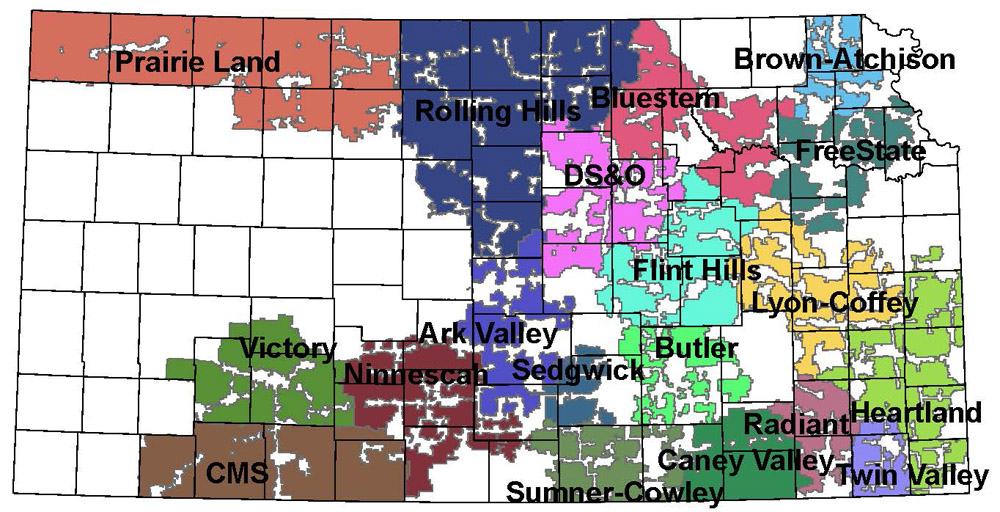
KEPCo had argued that SPP inappropriately assigned $6.2 million in upgrade costs in violation of four separate network integration transmission service agreements (NITSAs), with which FERC in November 2017 disagreed.

In its rehearing request, KEPCo maintained that SPP violated the filed-rate doctrine by assigning to the cooperative credit payment obligations (CPOs) for upgrades not listed in the NITSAs, saying FERC’s holding to the contrary is “based exclusively on the finding that KEPCo had sufficient notice of possible Z2 credit payment obligations.”

The cooperative also alleged the commission’s order did not address the NITSAs’ structure and its argument that SPP may not retroactively assess costs not specified in the NITSAs. It disputed the determination that it was on notice of possible Z2 responsibility and contends that the commission “does not explain why such notice — neither of which is contained in the [NITSAs] or tariff — is sufficient to make KEPCo liable” for CPOs not otherwise specified in the NITSAs.

KEPCo Coops (KEPCo) Content.jpgKEPCO’s Kansas member cooperatives | KEPCo

FERC disagreed, saying that in 2017, SPP did not have a tariff requirement specifying Z2 upgrades must be listed in NITSAs. It noted that the attachment is the governing tariff provision and “sets forth an expectation that sponsors will receive reimbursement from subsequent users that derive beneficial use of those upgrades.”

Referring to the 2017 order, the commission said the NITSAs are part of and “subject to the terms of the tariff, which bound KEPCo to the obligations imposed under Attachment Z2.” FERC said the filed rate included Attachment Z2, through which KEPCo was on notice of the possibility of CPOs that occur within the tariff’s billing requirements.

The commission had granted SPP a retroactive waiver of its tariff in 2016 so that it could invoice transmission service customers for Z2 credit payment obligations for 2008-2016 (ER16-1341). But it reversed course in 2019, saying its original decision was prohibited by the filed-rate doctrine and the rule against retroactive ratemaking. (See FERC Reverses Waiver on SPP’s Z2 Obligations.)

The D.C. Circuit Court of Appeals upheld FERC’s reversal of the retroactive waiver in August. (See DC Circuit Upholds FERC Ruling on SPP Z2 Saga.)

While saying KEPCO no longer has any CPOs during the historical period, FERC found that Attachment Z2, the filed rate, did provide notice of prospective CPOs that did not require waiver of the tariff’s billing requirements.

“The fact that these charges were not specified in the NITSAs does not relieve KEPCo of its obligation under the tariff to reimburse sponsors for the costs of network upgrades from which KEPCo derives beneficial use,” the commission wrote. “Accordingly, we continue to find that there has been no violation of the filed-rate doctrine for charges assessed after the historical period.”

Xcel alleged that SPP’s Attachment Z2 implementation violated the tariff and filed-rate doctrine because the grid operator failed to appropriately apply the “but for” test set forth in the tariff. It said the attachment “unambiguously” provides for CPOs to subsequent service requests that “could not be provided but for” the creditable upgrade.

In denying Xcel’s rehearing request of a 2018 order, FERC continued to find that SPP did not violate the tariff or the filed-rate doctrine in assigning CPOs to SPS. It also rejected Xcel’s contention that SPP’s assignment of CPOs was not sufficiently transparent and was unjust and unreasonable. The commission said Xcel did not identify any particular payment obligation or what type of support it asserts is lacking. It noted that FERC said in its 2018 order that SPP market participants had various channels by which to examine costs, including one-on-one sessions, and noted that Xcel could and should have taken advantage of those channels.

AEP Rehearing Request Rejected

FERC also granted American Electric Power’s (NASDAQ:AEP) clarification of a 2018 order accepting SPP’s filing of an unexecuted NITSA while affirming its previous decision (ER18-1702).

SPP made the filing after AEP declined to execute the revised service agreement because of nonconforming terms and conditions in the RTO’s tariff. AEP asked for a rehearing of the proceeding, alleging that the commission erred in failing to consider specific concerns regarding the applicability of completed aggregate facilities study (AFS) agreements, which the company said reflect an agreement that it need not pay for directly assigned network upgrade costs.

AEP asserted the charges included in the unexecuted NITSA were “plainly inconsistent” with its completed AFS agreement that outlined the terms under which a customer would agree to take transmission service. The company argued those terms “included a clear indication that AEP desired to make no payment for” directly assigned network upgrade costs.

It said that unless the AFS agreements’ terms are binding on SPP, they serve as “a vehicle for SPP to falsely induce customers into taking service under certain terms and conditions and later changes those terms and conditions without any recourse or protection to the customer.”

The commission granted AEP’s clarification request that it will consider the completed AFS agreements’ applicability in the ongoing proceeding to determine how SPP can unwind and resettle CPOs (16-1341).

But it also continued to find that that the issue is whether SPP “has appropriately included certain information in the service agreements pursuant to its tariff” and not administering its Attachment Z2 process during a prior period. The commission said the D.C. Circuit’s decision to uphold FERC’s reversal of the retroactive waiver granted to SPP rendered AEP’s protest moot.

FERC: PJM Right to Block Gen Stability Limit Payments

FERC on Thursday ruled that PJM is within its rights to refuse lost-opportunity cost payments to generators that must rein in output to avoid damage to themselves and keep the system stable.

The commission accepted PJM’s clarifying changes to its tariff effective June 1 over protests from PJM Power Providers Group. The edits specify that the RTO doesn’t need to compensate generators for temporary restrictions on output to prevent loss of synchronization and further system strain during transmission outages (ER21-1802).

PJM said some generators’ expectation of lost-opportunity cost payments for maintaining stability limits is a “mistaken interpretation.”

The RTO’s tariff makes lost-opportunity cost payments when a generator’s output is “reduced or suspended … at the request of the Office of the Interconnection due to a transmission constraint or other reliability issue.” PJM conceded that the “other reliability issue” language is vague and could be misconstrued by generation operators to expect payment for honoring system stability limits.

The grid operator filed the revisions in late April with its Independent Market Monitor’s support. The RTO said paying lost-opportunity costs for “output limitations associated with stability limits is unnecessary because generators are already incentivized to operate within those limits.”

PJM explained that if generators don’t abide by generator stability limits, they risk damage to their own equipment. It said lost-opportunity costs are intended to motivate generators to forgo market revenues and voluntarily follow dispatch instructions when the transmission system is at risk.

The IMM agreed that “violating the stability limit is not rational behavior for the generator” and contended that generators have no lost opportunity to recoup.

The PJM Power Providers Group argued that the RTO’s edits “confiscate compensation owed to the generator for providing the reliability service of mitigating stability limits, while continuing to pay other generators for reducing output to provide reliability services” to protect the bulk electric system. The group said PJM’s distinction was discriminatory and preferential and said the grid operator offered “no compelling reason for the unique treatment of generators following PJM reliability directives to honor a stability limit.”

FERC said that generators “do not experience a lost opportunity when PJM directs them to back down due to a stability limit on the transmission system.”

“We agree with PJM that generators are already sufficiently incentivized to operate within stability limits in order to avoid any potential physical harm to their resource, and therefore … payments are unnecessary,” the commission said. “Violating a stability limit to achieve higher energy market revenues, at the risk of damaging the generating equipment, is neither rational nor economic behavior.”

FERC agreed with PJM that its status as a NERC reliability coordinator obligate it to “prevent or mitigate damage to generating facilities” by establishing and enforcing stability limits. It added that the RTO is justified in treating different types of system limitations differently.

ISO-NE Asks Court for an Out as Killingly Uncertainty Balloons

ISO-NE on Friday asked the D.C. Circuit Court of Appeals to undo its stay order, which is keeping the Killingly Energy Center’s capacity supply obligation alive and holding up the results of the Forward Capacity Auction held earlier this month.

Warning of increasing damage to New England’s capacity market and its participants, ISO-NE argued that because Killingly developer NTE Energy has now defaulted on its financial assurance, the stay ordering the RTO to wait on a rehearing resolution from FERC is moot because the under-development gas plant will lose its CSO regardless of the outcome.

“The harm to the market and market participants of the delayed auction results grows with each day it continues, and the delay soon will disrupt activities necessary to the timely and orderly conduct of next year’s auction. The ISO therefore respectfully submits that action by the court on this motion by Feb. 25, 2022, is justified and necessary,” ISO-NE wrote in a filing to the court.

The grid operator has said that at the current pace, it may not be able to deliver results of the auction until mid-March, and that next year’s auction may also have to be delayed by a month. (See related story, Killingly Uncertainty Could Delay Capacity Auction Results Another Month.)

NTE was using a letter of credit for its required financial assurance with ISO-NE that will expire at the end of this month, and therefore was considered to have zero value 30 days prior (Jan. 31), according to the RTO’s rules. The company failed to extend the letter of credit or provide another form of financial assurance to resolve its default and is now no longer in compliance with the financial assurance rules.

“Termination of Killingly’s capacity supply obligations by operation of the tariff moots the court’s stay order. With or without the stay order, Killingly’s capacity supply obligations are terminated. Therefore, the ISO requests that the court dissolve its stay order because the stay no longer serves any purpose,” ISO-NE said.

MISO, PJM Weigh ’22 Interregional Plan

MISO and PJM are assessing the need for an interregional study and transmission plan later this year, staffs told stakeholders during Thursday’s Interregional Planning Stakeholder Advisory Committee (IPSAC) teleconference.

MISO engineer Ben Stearney said the RTOs are reviewing data and will announce within 45 days whether they see a need for an interregional study.

The grid operators late last year compiled and exchanged data on historical market-to-market congestion, regional issues, and newly approved projects near the seam. They said they will review their most highly congested transmission elements and possible mitigations and might pursue a “full or limited” targeted market efficiency project (TMEP) study this year.

Staff said they’re also considering conducting a more specific analysis into the planning impacts of Illinois’ Climate and Equitable Jobs Act, which targets 100% clean energy in the state by 2050.

For the past two years, MISO and PJM have decided against both the more involved coordinated system plan and a TMEP study, which produces smaller, congestion-relieving seams projects.

Days before the latest MISO-PJM IPSAC meeting, MISO and SPP announced they would conduct a TMEP-style study this year on some of their more heavily used flowgates. (See MISO, SPP Take on 2nd Interregional Planning Effort.)

MISO isn’t obligated to conduct an interregional study once every two years on its PJM seam, as it does with SPP. However, MISO and PJM have approved three small TMEP portfolios since 2017 and one larger interregional market efficiency project in northwest Indiana in 2020.

MISO’s and PJM’s TMEPs must cost less than $20 million, completely cover installed capital costs within four years of service, and be in service by the third summer peak from its approval. The projects are assessed using a shorter time horizon than interregional market efficiency projects.

PJM MRC/MC Preview: Feb. 24, 2022

Below is a summary of the consent agendas scheduled to be brought to a vote at the PJM Markets and Reliability Committee and Members Committee meetings Thursday. Besides the consent agendas, the committees will not vote on any items at the meetings. The MRC will, however, hear first readings of seven different proposals, potentially teeing up as many votes at next month’s meeting.

Markets and Reliability Committee

Consent Agenda (9:15-9:20)

B. Stakeholders will be asked to endorse proposed conforming revisions to Manual 27: Open Access Transmission Tariff Accounting as a result of PJM’s recent formula rate filing with FERC (ER22-26). (See FERC Sets Hearing on Industrials’ Challenge to PJM Administrative Rates.)

C. Members will be asked to endorse proposed revisions to Manual 40: Training and Certification Requirements resulting from its periodic review. The changes were endorsed by the Operating Committee on Feb. 10. (See “Manual 40 Endorsed,” PJM Operating Committee Briefs: Feb. 10, 2022.)

Members Committee

Consent Agenda (11:25-11:30)

C. The committee will be asked to endorse proposed revisions to the Operating Agreement and Manual 15: Cost Development Guidelines addressing clarifications to fuel-cost policy standards and Schedule 2 penalty revisions. Members unanimously endorsed the joint PJM/Independent Market Monitor proposal at the Jan. 26 MRC meeting. (See “Fuel-cost Policy Standard Clarifications Endorsed,” PJM MRC/MC Briefs: Jan. 26, 2022.)

Builders Oppose Labor Provision in Washington Solar Canopy Bill

The labor practices component of a Washington solar power bill has drawn opposition from construction interests in the state.

On Thursday, the Washington Senate’s Ways and Means committee heard testimony on a bill to grant tax breaks to solar canopies built over large parking lots in urban areas. Senate Bill 5714 was introduced by Sen. Reuven Carlyle, (D), chairman of the Environment, Energy and Technology Committee, who got the idea for the legislation from the global climate summit held in Glasgow, Scotland last fall.

Carlyle described a scenario in which a typical Walmart parking lot covers five acres and a canopy of solar panels could be built over one acre of it, locating solar farms within towns and cities.

His bill would provide tax breaks to those efforts if the builder approaches the Washington Department of Revenue in advance and meets certain criteria. The breaks would consist of repayments of sales and use taxes accumulated during construction.  Construction would have to be completed in two years to receive all requested tax breaks.

Under the bill, a qualifying project must be at least 50,000 square feet and have a nameplate capacity of 1 MW. The solar canopy installer would receive a 50% refund or deferral of its taxes if it is an organization owned by women, minorities, or veterans, or an entity with a history of complying with federal and state wage and hour laws, apprenticeship utilization and using preferred entry workers living in the project construction area.

Refunds or deferrals of 75% would go to one of those organizations if workers on a project were compensated at prevailing wages determined by collective bargaining agreements.

A 100% refund would go to a contractor operating under a community workforce agreement or a project labor agreement (PLA), which is a special collective bargaining agreement tailored to a specific project that supersedes existing bargaining agreements.  A typical PLA requires that workers are hired through union halls, and that nonunion workers are paid union wages for the length of the project. Also, the contractor must follow union rules on work conditions, pensions and disputes.

The PLA requirement for a 100% tax exemption prompted opposition from two contractor organizations — Associated Builders and Contractors of Washington and Associated General Contractors of Washington, who asked that the provision be removed from the legislation.

“The PLA language is totally unnecessary,” said Jerry VanderWood, chief lobbyist for the Associated General Contractors.

The two contractor associations were the only ones that testified about the bill Thursday.

At a Jan. 13 hearing before the Senate energy committee, several groups supported the use of parking lots as solar canopy sites at locations in or next to cities, saying the structures would help protect habitat and green spaces that would normally host solar farms. The canopies would also prove shade in the summer and shelter in the winter, according to testimony.

At the same hearing, Todd Myers, director of the conservative Washington Policy Center, testified that solar power is not cost-efficient, and that rainy and heavily urban Western Washington would be a poor location for solar resources.

FERC Opens Inquiry on Dynamic Line Ratings

FERC opened a Notice of Inquiry Thursday to build an evidentiary record on the use of dynamic line ratings (DLRs), an initiative it signaled in its Dec. 16 order calling for the end of static transmission line ratings.

The December order required transmission providers to employ ambient-adjusted ratings (AARs) for short-term transmission requests for all lines that are impacted by air temperature (RM20-16, Order 881). But the commission did not mandate the use of DLRs, saying more evidence was needed concerning DLRs’ costs and benefits. (See FERC Orders End to Static Tx Line Ratings.)

Thursday’s NOI solicits comments on potential criteria for DLR requirements, the benefits, costs and challenges of implementing DLRs, and timeframes for implementation. It also asks whether the lack of DLR requirements makes wholesale rates unjust and unreasonable (AD22-5). In the December order, the commission said the use of only seasonal and static ratings was unjust and unreasonable because it resulted in the underutilization of available transmission capacity.

Initial comments are due 60 days after publication in the Federal Register, with replies due 30 days later.

AARs vs. DLRs

While AARs are based on forecasted ambient air temperatures and the presence or absence of solar heating, DLRs also consider wind, cloud cover, solar heating intensity, precipitation and line conditions such as tension or sag.

The December order required transmission providers to use AARs as the basis for evaluating transmission service requests ending within 10 days. It also required providers to electronically update transmission line ratings at least hourly to allow for use of DLRs by transmission owners that voluntarily adopt them.

The order acknowledged that DLRs can benefit customers when the limiting element of a congested transmission facility is the conductor and conditions besides ambient air temperature impact the line’s capacity. It also noted that in addition to often allowing greater power flows, DLRs can also detect situations where power flows should be reduced to maintain safety and reliability.

Costs

But the commission said it could not consider mandating DLRs without more information on their costs and challenges, such as the costs of sensors and cybersecurity.

In the Order 881 proceeding, some, including SPP’s Market Monitoring Unit and industrial customers, endorsed DLRs. But, FERC noted, “many commenters, including nearly all transmission owners that filed comments about DLRs, either opposed a requirement to implement DLRs on all transmission lines or opposed a DLR requirement in any form.”

FERC cited Bonneville Power Administration’s estimate that DLR implementation would cost more than $1 million per transmission line in monitoring equipment, software and hardware, and MISO Transmission Owners’ estimate of $100,000 to $200,000 per transmission line, or $1.5 billion for the entire RTO. SPP said DLR could require an energy management system (EMS) upgrade at a cost of up to $1 million.

Among the NOI’s 29 questions were queries on:

  • whether FERC should require DLR implementation on all or only certain transmission lines, and what criteria (e.g., congestion, curtailment levels, voltage levels, infrastructure, and/or geography/terrain) it should use to decide;
  • whether FERC should regularly reevaluate lines to ensure its criteria still apply;
  • whether there are differences between RTOs/ISOs and non-RTO/ISO transmission providers that the commission should consider;
  • how DLR requirements should be considered in regional transmission planning and interconnection processes;
  • what transparency measures the commission should require (e.g., informational reports that show which transmission lines meet criteria for DLR implementation);
  • the potential impacts to reliability if the digital devices that monitor or communicate line conditions are hacked in a cyber event;
  • whether FERC should order NERC to evaluate how a DLR requirement could introduce risks to the operation of the bulk electric system and whether any standards require modification to address risks;
  • whether FERC should require the use of sensors or just more up-to-date weather forecasts than required in Order 881;
  • how often transmission providers should be required to calculate transmission line ratings and for what services (e.g., hourly point-to-point; daily point-to-point; weekly point-to-point, etc.);
  • whether the commission should limit the number or proportion of transmission elements on which a transmission provider must implement DLRs at any one time; and
  • the appropriate time frame for identifying which lines are subject to DLRs, designing a DLR system, and integration and testing of the system.

NERC: Grid Transformation Continues to Accelerate

The ERO Enterprise recommitted itself to adapting to meet its growing challenges in 2021, including the ongoing COVID-19 pandemic, climate change and cybersecurity, NERC said in its annual report released Wednesday.

NERC CEO Jim Robb wrote in the report that the previous two years have “brought significant clarity” to the cyber and climate risks, with both vividly on display in 2021. The year was bookended by the discovery of major electronic supply chain security breaches, with the SolarWinds Orion compromise coming to light in December 2020 and the Apache Log4j vulnerability identified a year later; meanwhile, the massive outages in Texas caused by February’s severe winter storms illustrated the danger facing the current electric grid under rapidly shifting climate patterns.

“We are at a historic moment,” Robb said. “Our model was developed during a time when risks were well known and the grid was evolving at a measured pace. We are now in a time where significant risks are emerging; they are new and unfamiliar; and the grid is transforming at a significant pace.”

Transformation was a major theme of the report, both as it relates to the grid’s transition to new energy sources and digital control, and concerning the organization of the ERO Enterprise itself. For the latter NERC noted the launch of its “NERC 2.0 – Invented Future” initiative in 2021, the name of which “recognizes that … NERC employees have the opportunity to innovate and create the future they want to have for themselves every day.”

The initiative comprises a new flexible work model that gives employees more freedom to work remotely — inspired in part by the experience of the COVID-19 pandemic — as well as new training that encourages employees to take on leadership roles. NERC also created the post of vice president of people and culture to oversee the initiative; the first and current holder of the role is Bryan Preston, who joined the organization in September. (See “Trustees Re-elected; Leadership Shuffle at MRC, Board Committees,” NERC Board of Trustees/MRC Briefs: Feb. 10, 2022.)

For the grid transformation, the report observed that “the past year has seen the manifestation” of multiple risks relating to “the transition to a cleaner energy future,” meaning the replacement of conventional generation resources with renewables like wind and solar, along with the growth of distributed energy resources.

First is extreme weather: Much of the report is dedicated to NERC’s actions over the past year to prevent another near-breakdown of the grid like what nearly happened in Texas. (See ERCOT: Grid was ‘Seconds and Minutes’ from Total Collapse.) Those efforts include accelerating approval of the cold weather standard that was under development before the storm; initiating work on a new standard inspired by the recommendations from FERC and NERC’s joint inquiry on the storm; and NERC’s outreach to industry to encourage preparedness ahead of the current winter season.

The other major risk that the report points out is cybersecurity, particularly the supply chain risks highlighted by the SolarWinds and Log4j compromises, but also the potential weaknesses in the nation’s pipeline infrastructure exposed by the Colonial Pipeline ransomware attack in May. (See Colonial CEO Welcomes Federal Cyber Assistance.)

NERC observed that the industry has grown more reliant on remote work because of the pandemic, creating “an increased remote cybersecurity attack surface” that, coupled with known weaknesses in widely used software, gives potential attackers myriad opportunities to infiltrate critical systems. The organization called for itself and the industry to “maintain a continued focus on improving defenses by increased sharing with” the Electricity Information Sharing and Analysis Center.

NERC Board of Trustees Chair Ken DeFontes warned that “significant policy and technical forces” are driving change in the grid, and that “these changes are occurring at a rapid pace.” He said that the board’s three top priorities for 2021 — weatherization, energy reliability assurance and cybersecurity — will likely remain at the top of the organization’s mind “for some time.”

“The more complex the system becomes, the greater the risk to reliability, resilience and security. At the same time, the future offers exciting new opportunities and transitions for an industry that is amazingly adaptive to change,” DeFontes said. “I look forward to working with all of our stakeholders and policymakers as we rededicate and reorient ourselves to meeting these challenges.”

Advocates Seek Pathway for Biofuels in New Connecticut Energy Strategy

Representatives of the biofuels industry asked Connecticut regulators Thursday to acknowledge liquid fuels in the state’s 2022 energy plan as a near-term option for reducing greenhouse gas emissions.

“Bioheat should be an established carbon-reducing pathway in the Comprehensive Energy Strategy (CES),” said Stephen Dodge, director of state regulatory affairs for Clean Fuels Alliance America (CFAA).

Electrification cannot “realistically” be the only path to emission reductions, when heating fuel blended with biodiesel can reduce GHGs “immediately,” he said during a Connecticut Department of Energy and Environmental Protection (DEEP) CES scoping meeting.

In its 2018 energy strategy update, DEEP credited biodiesel with improving air quality and reducing GHG emissions and called for further assessment of biodiesel market maturity. Displacing fossil fuels with biodiesel, the CES said, would require tracking feedstock sources, manufacturing, and amount sold and consumed.

DEEP accepted public comments at the scoping meeting as part of its proceeding to update the CES.

Dodge pointed to New York, Rhode Island and Massachusetts as examples of states with an established biodiesel pathway for reducing emissions. Massachusetts regulators recently ruled that electric ratepayer-funded subsidies for liquid fuel-fired home heating should remain in place, he said, after the alliance “successfully argued that bioheat fuel is a legitimate pathway to immediately begin reducing CO2 emissions.”

A study by Trinity Consultants, commissioned by CFAA, found that using 100% biodiesel as a heating oil replacement can reduce carcinogenic diesel particulate matter emissions by 86%.

At a 50% blend, biodiesel would have lower CO2 emissions than power coming from the transmission grid, said Chris Herb, president of the Connecticut Energy Marketers Association.

“Conversions to cold climate heat pumps … will only increase CO2 emissions” compared to biodiesel used for heating, he said.

Herb called for the 2022 CES update to “leverage” a law enacted last year that requires the blending of advanced biofuel with fuel oil starting at 5% in July and increasing to 50% by 2035. That law requires DEEP to consider in the CES how biofuel blends may contribute on a lifecycle basis to meeting the state’s GHG emission reduction targets and how a thermal portfolio standard could contribute to further reductions.

“Hundreds of thousands of homes in our state need little to no modifications … to start using a fuel that is cleaner and has the ability to displace fossil fuels today,” he said.

Advancing bioheat through the CES, he said, would relieve the current pressure to bring enough clean energy onto the electric system to accommodate the state’s efforts toward heat pump and electric vehicle adoption.

The Acadia Center, however, cautioned regulators against using alternative fuels in buildings.

“Numerous studies … have determined that there’s no cost-effective role for alternative fuels, such as renewable natural gas, biodiesel and green hydrogen, in buildings,” said Ben Butterworth, Acadia’s senior manager of climate and energy analysis.

Alternative fuels, he said, are “limited” and “expensive” and should be reserved for decarbonizing hard to electrify sectors, such as heavy industry, shipping and aviation.

Heather Deese, director of policy and regulatory affairs for Dandelion Energy, made the case for geothermal heat pumps, calling them a low-cost option for heating and cooling that significantly reduces GHG emissions.

“In order to provide for an equitable transition of the building stock, the CES should leverage the low ongoing operating costs of geothermal heat pumps,” Deese said, adding that the technology reduces household emissions by up to 80%.

Deese said the CES should set “ambitious” goals for transitioning to a clean energy economy and articulate “specific goals” for building electrification.

DEEP is accepting comments on the scope of the CES through March 3 and expects to publish the final strategy scope by April. The agency will offer additional stakeholder engagement opportunities throughout this year, and it anticipates publishing the final CES by the start of the 2023 legislative session, said Vicki Hackett, DEEP’s deputy commissioner for energy.