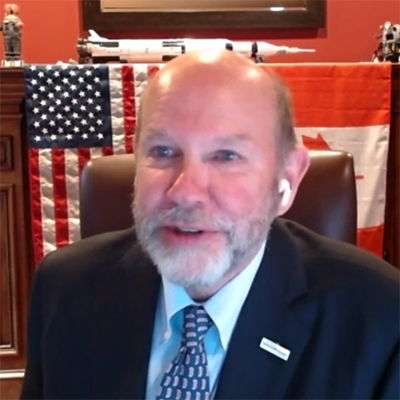
The World Economic Forum, in collaboration with consultancy Accenture and the Electric Power Research Institute (EPRI), on Wednesday launched a new initiative to transition so-called “industrial clusters” toward net-zero emissions.
Industrial clusters are geographic regions with co-located industrial customers. Such regions account for approximately 15 to 20% of global CO2 emissions, according to EPRI.
“We believe these clusters are one of the most impactful areas when it comes to achieving our net-zero emissions,” said Louise Anderson, electricity industry manager at World Economic Forum.
Companies that are co-located can take advantage of synergies in order to accelerate their progress toward net zero, she said. The initiative advances the work being done to accelerate the deployment of hydrogen and other low-carbon technologies, including those for electrification and efficiency, Anderson said.
The initiative has already recruited two clusters in the U.K. and one each in Australia and Spain, with a collective CO2 emissions reduction profile of approximately 30 million tons. It aims to have 100 industrial clusters signed up by 2024, but hopefully it can do a lot more than that, said Melissa Stark, global renewables and energy transition lead at Accenture. “One hundred clusters could be 800 million tons; that’s like Germany” alone, she said.
Twenty years ago industry managers were told that decarbonizing the power industry was very difficult; that renewables were just a small part of the effort; and that decarbonizing heavy industry was nearly impossible, said Agustin Delgado, chief innovation and sustainability officer for Iberdrola, representing the participating cluster in the Basque region of Spain.
“We want to prove with these industrial clusters that it can be done,” Delgado said. “We can start today delivering low-heat industrial processes, electrification of some of the processes and using new materials like green steel.”
Such environmental targets by industry bring good business value, sustainable impact and create new jobs, Anderson said, citing U.K. hopes to secure 1.5 million jobs by developing four net-zero industrial clusters, which through avoided emissions can also bring the country 3 billion to 4 billion pounds of potential savings per year by 2050.
MISO stakeholders remain apprehensive about the RTO’s plan to hold four seasonal capacity auctions with separate reserve margins before the 2023-24 planning year, less than a month before it gets FERC scrutiny.
Nearly all their concerns can be traced to a seasonal capacity accreditation based on a generating unit’s past performance during tight conditions.
During a Resource Adequacy Subcommittee call Wednesday, Entergy’s Wyatt Ellertson said the accreditation design seems poised to raise several of MISO’s local resource zones to the cost of new entry (CONE), which currently stands around $257/MW-day. He asked the grid operator to give members more time to prepare for the changes.
“What I haven’t heard you say is this proposal doesn’t reflect reality,” MISO Director of Resource Adequacy Coordination Zakaria Joundi responded. He said staff is not trying to avoid or achieve CONE pricing in its capacity auction.
In September, MISO leaders gave stakeholders an extra 60 days to digest the proposal. Several stakeholders have said they’re incredulous that a seasonal paradigm will improve system reliability. (See MISO Extends Seasonal Auction Discussions.)
Staff has said a FERC filing will be made no later than Dec. 1.
Kevin Vannoy, MISO’s director of market design, said awarding a greater accredited capacity value to generators that consistently show up when they’re needed the most should boost reliability.
“Over time, that will incentivize resources to be available during the time of tightest needs, so that in turn incentivizes reliability,” he said.
Independent Market Monitor (IMM) Michael Chiasson said it’s only appropriate for a local resource zone stocked with slow, inflexible resources to receive lower accreditations and force the zone to procure additional resources.
Stakeholders asked whether MISO has a plan to alter its accreditation if its resource adequacy outlook improves and it is again flush with reserves. Some said staff was pessimistic to assume that the RTO would always have tight operating conditions as a basis for capacity accreditation.
“We may have to add provisions if we never have less than a 25% reserve margin,” Vannoy said. However, he said even three years without a single maximum generation event isn’t a guarantee that MISO won’t experience tight operating conditions during an upcoming year.
“That’s a high-class problem to have,” MISO’s Scott Wright said.
Coalition of Midwest Power Producers representative Travis Stewart said the RTO’s sustained increase in maximum generation events and emergency actions in “mild system conditions” means that utilities might need to update integrated resource plans and prioritize some generation projects.
“There’s indication of a big issue even if the Planning Resource Auction is printing low prices,” Stewart said.
He pointed out that MISO’s Monitor has long maintained that the capacity auction doesn’t reflect the true marginal value of capacity.
Staff has warned that threat of a maximum generation emergency exists on any given day due to increased use of intermittent resources and an aging baseload fleet that’s more prone to outages. In spite of system load around 70 GW and mild weather, MISO entered conservative operations and a maximum generation alert Oct. 4 in its Midwest region because of planned and unplanned generation outages.
Bill Booth, consultant to the Mississippi Public Service Commission, asked whether MISO is furnishing specific accreditation numbers for individual generators.
Joundi said staff has reached out to members about certain generators’ value. He cautioned that MISO doesn’t have the resources to produce outputs for a large load-serving entity’s entire fleet.
The grid operator will also impose a 31-day limit on planned generation outages in any season before capacity resources must procure replacement capacity. The IMM will also consider requests from generators to be excluded from auction participation, even if it will be uneconomic for units to offer into the auctions.
Ellertson asked MISO to provide the numbers of generators not participating in the auctions due to the 31-day outage threshold.
Minimum Capacity Requirement Exits Filing
MISO will file separately with FERC a minimum capacity requirement request in which members must demonstrate that at least 50% of capacity needed to meet their peak load is secured ahead of the voluntary capacity auction.
MISO had originally intended to include the rule in its seasonal capacity filing.
“We’ve been receiving a lot of feedback from stakeholders indicating that we need to separate [a capacity demonstration] from seasonal accreditation,” MISO counsel Michael Kessler told stakeholders during an October Resource Adequacy Subcommittee meeting. “We’ve had a lot of internal discussions regarding our best chances for success at FERC.”
The Organization of MISO States said it supported removing a minimum capacity obligation from MISO’s first filing.
Members Ask for 3 Filings
Some MISO members don’t think the filing split goes far enough. DTE Energy asked staff to further divide the plan into three separate filings for the seasonal auctions, minimum capacity requirement, and the availability-based accreditation. DTE also asked that the RTO hold off on the accreditation component until it more fully addresses stakeholder concerns.
The utility maintains that the auction and accreditation design hasn’t been fleshed out with stakeholders and continues to evolve late in the process.
Members Consumers Energy, Entergy, Madison Gas and Electric, Michigan Public Power Agency, Southern Minnesota Public Power Agency and WPPI Energy joined DTE in the ask.
“Now that it’s been split once, it’s doable to split it again,” DTE’s Eric Bidlingmaier said. “Doing so will allow stakeholders to better support or oppose any component of the filing and allow each aspect of the proposal to be evaluated on its own merits.”
Bidlingmaier said MISO is attempting to “fundamentally re-engineer nearly every aspect of its resource adequacy construct in a way that no other U.S. RTO has ever undertaken.”
Some stakeholders said a three-way split of the filing would provide greater assurance that MISO could implement parts of the plan, instead of having a comprehensive design rejected by FERC.
Customized Energy Solutions’ Ted Kuhn said he didn’t view the members’ ask as “obstructionist,” but rather as a plea for staff to propose a better accreditation design.
Wright said he didn’t see the request as obstructionist either, but he said MISO views the seasonal auction and accreditation as going hand-in-hand. He noted that the RTO has already granted a delay request by stakeholders and will move ahead with the filing at the end of the month.
During OMS’s annual meeting Oct. 28, North Dakota Commissioner Julie Fedorchak said she was at odds with her state’s utilities for her support of “starting to hold resources accountable” for their availability.
“I personally am comfortable with this,” Indiana Utility Regulatory Commissioner Sarah Freeman said, adding it was imperative that MISO values a resource’s contribution accordingly.
Eversource Energy on Wednesday warned that customers will likely see a spike in their electricity and gas bills this winter compared to last year’s, as natural gas prices surge nationwide.
During a call with investors Wednesday to discuss its third-quarter earnings, Eversource CFO Philip Lembo said that starting in January ratepayers in Connecticut and Massachusetts will likely see a 2- to 3-cent/kWh rate increase on their bills, which translates to an additional $20 to $25/month on a typical bill. Gas customers can expect an increase of about $30. New Hampshire rates remain in effect until February.
Energy prices hit 10-year lows in 2020 amid the COVID-19 pandemic. Because of wintertime natural gas constraints in New England, ratepayers usually see up to a 2-cent/kWh increase in January that often reverses by the summer, but gas prices have risen significantly since the beginning of the year, driven by an increase in global demand during the ongoing economic recovery and a significant drop in U.S. gas supply. Between Oct. 20 and 27, natural gas spot prices rose from $4.79/MMBtu to $5.86/MMBtu, according to the most recent weekly report from the U.S. Energy Information Administration. At the Algonquin Citygate, which serves Boston-area consumers, the price went up from $4.52/MMBtu to $5.65/MMBtu.
Isaias Settlement
The earnings results came on the heels of last week’s announcement of an approved settlement over penalties and return on equity reductions levied on the utility for its handling of Tropical Storm Isaias in August 2020. The settlement will provide $65 million in bill credits and $10 million for low-income assistance programs.
“Settling critical regulatory and legal disputes was a necessity to reset our relationship with key Connecticut stakeholders,” Eversource CEO Joe Nolan said. “We all want the state to move ahead on addressing critical energy and climate issues, and the outstanding disputes have the potential to delay some of this important work.”
Before the settlement, Eversource would have been set to lose more than $150 million based on the penalties and ROE cuts thanks to the Take Back Our Grid Act, which directed the Public Utilities Regulatory Authority to develop and implement performance-based regulations including financial penalties and ROE reductions.
In a rare dissent, PURA Chair Marissa Gillett said that “more devastating storms” like Isaias “will come to pass,” and tools such as an ROE reduction “would more acutely encourage Eversource’s executives to properly prepare for and respond to such storms.” Gillett also said she was “apprehensive of a future where we still do not have a court-backed interpretation of PURA’s regulatory authority in holding utilities accountable following a storm event.”
State Rep. David Arconti (D), co-chair of the General Assembly’s Energy and Technology Committee, told RTO Insider that Eversource “may want to move forward, but I’m not necessarily there yet.”
Arconti said the Lamont administration, like previous administrations, had a predisposition to settle, but “there are some cases where I think it’s worth it to go to the mat.”
“I do think the settlement is just more par for the course and kind of perpetuates some of the norms on how we’ve gotten to where with certain things,” Arconti said.
When the average person looks at the settlement, they will not understand why specific rates are frozen and other areas are increasing on their bills, he said. “It doesn’t help us do our job when the people see stuff like that.”
Earnings
Eversource reported earnings of $283.2 million ($0.82/share), down from $346.3 million ($1.01/share) for the same period in 2020. The company’s transmission segment earned $139.4 million in the quarter, nearly $14 million more than last year’s. Eversource attributed the increase to higher level of investment in its infrastructure.
Duke Energy CEO Lynn Good spent most of Thursday’s third-quarter earnings call talking about the progress the utility has made on its climate goals and clean energy transformation, such as cutting emissions more than 40%, accelerating the closure of coal plants and launching a new sustainable financing initiative for “green and social projects.”
Duke will finance a range of clean energy projects — non-hydro renewables, energy efficiency and storage — via bonds, loans or commercial paper, according to a report on the initiative released Tuesday. Nuclear projects will not be eligible, and the utility has pledged to provide transparency with a website that will track the money it allocates to projects and their environmental impacts.
Spokesperson Meredith Archie said Duke has financed $2.3 billion in projects with green bonds since 2018, but the utility has not committed to any specific spending targets for the new initiative. Rather, the initiative will be part of Duke’s capital expenditures, which, Good said, are expected to grow from $59 billion for 2021-2025 to $65 billion to $75 billion by 2029.
“As we look ahead, our pace of change will accelerate as we work toward our carbon reduction goals and the broader clean energy transformation across all of our jurisdictions,” Good said.
According to information in the Q3 slide deck for the call, the utility sees 50% of its capital spending going to transmission and distribution investments in resiliency and a “green-enabled” grid and another 20% to renewable projects.
The passage of House Bill 951 in North Carolina in October has upped the ante for Duke, which had originally committed to cutting its carbon emissions 50% by 2030, on the way to achieving net zero by 2050. A bipartisan compromise, the new law mandates a cut of 70% over 2005 levels by 2030, while keeping the 2050 goal for net-zero. (See NC Compromise Energy Bill Passes Senate, Heads Back to House.)
The law gives the North Carolina Utilities Commission (NCUC) the primary responsibility for developing a carbon reduction plan, to be reviewed every two years, with utility and stakeholder input. But Good clearly sees Duke as having a major role in shaping the plan, which she said will be “approved” by the commission and will draw on “the conversations that have been ongoing over the last several years.
“We anticipate the active involvement of South Carolina in this process as they have been over the decades in developing and retiring assets that serve both states,” Good said.
The law also gave Duke a major win with its authorization of performance-based regulation and multiyear rate plans. Under the law, Duke will have to hit certain performance targets, to be set by the NCUC, but will be able to file a three-year rate plan under which, once approved, the utility will be able raise rates up to 4% in each of the subsequent two years without submitting an annual rate case, as it does now.
CFO Steve Young cited the multiyear rate plan as one of several growth drivers for Duke, and he said 2022 would be a “key year” for the rule making needed to implement HB 951 and the carbon reduction plan.
Young reported third-quarter unadjusted earnings of about $1.37 billion ($1.79/share), up from $1.27 billion ($1.74/share) a year earlier. Adjusted earnings per share were $1.88, a penny over the adjusted earnings of $1.87 per share a year ago.
Another growth driver in the quarter was a bounce-back in electricity demand, especially in the commercial and industrial sectors as the economy recovers from the COVID-19 pandemic and people return to offices, Young said. Residential retail sales took a small 0.2% dip, but overall electricity sales were up 3.4% for the quarter, he said.
Shift Away from Coal
Other green initiatives highlighted by Good included a “low-income collaborative to propose new low-income programs to further help our customers.” Archie said the initiative would bring in consumer advocates and other stakeholders to look at rate design, energy efficiency programs and other measures to cut bills for low-income customers.
Good also talked about Duke’s accelerated coal retirements, as laid out in the utility’s revised integrated resource plans for Duke Energy Carolinas and Duke Energy Progress, submitted to the South Carolina Public Service Commission in August. The commission earlier this year rejected Duke’s original plan, which kept more than 3,000 MW of coal-fired generation online through 2038; the revised plan would retire all coal by 2035.
In North Carolina, the utility has retirements planned for three units totaling 677 MW at its Allen Steam Station, one already offline and the other two by the end of the year, Archie said. Another 280-MW of coal fired-generation in Indiana has also come offline this year, she said.
Good expects the revised plans for South Carolina to be approved by the end of the year; the utility’s IRPs are still pending before the NCUC. She also noted that Duke Indiana will be submitting its IRP by a Nov. 30 filing deadline. While she said the IRP “will continue to advance efforts to shift away from coal,” she did not provide further details. Information on the utility’s website sets 2048 as the retirement date for Duke’s final coal plant in Indiana.
Responding to an analyst question, Good also aligned Duke’s clean energy transition with the clean energy provisions in the bipartisan infrastructure plan and the budget reconciliation bill still in negotiation in Congress.
The utility is seeing “conversation” around the clean energy transition across its service territories in the Carolinas, Indiana and Florida, she said. “You see increasing opportunities for renewable investment, for storage investment, energy efficiency, demand response investment … some of our states also have a keen interest in getting a base amount of electric vehicle infrastructure in place.”
Although not mentioned during the call, Duke and Honeywell recently announced that the utility will be testing a new, long-duration flow battery technology developed by the tech company to provide flexibility and backup power for renewables.
After nearly two years of holding meetings online amid the COVID-19 pandemic, NERC Board Chair Ken DeFontes finally confirmed that the organization’s Board of Trustees and Member Representatives Committee (MRC) will return to in-person gatherings at their next session in February 2022.
Speaking at Thursday’s virtual open meeting of the MRC, DeFontes previewed the preliminary plans for next year’s meeting schedule. As NERC’s management has hinted on previous occasions, February’s meetings will be held in a hybrid format, with the board and MRC gathering in person and all other attendees joining virtually. While the February meeting had been planned for New Orleans, DeFontes said this session will take place at NERC headquarters in Atlanta to ensure a big enough meeting space and appropriate equipment for the online stream.
While the schedule for the remainder of the year has not been finalized yet, DeFontes said the board is planning for the May and August meetings to be in-person gatherings in D.C. and Vancouver, Canada, without an online component. The location and format of the November meeting are yet to be determined, but it will likely be another hybrid gathering.
“I think in the long run, [we’re] probably going to end up with two full, in-person meetings and two hybrid-type meetings” per year, DeFontes said. “We’ll see how that goes. I’m very optimistic that we’ll be able to do this, and I think everybody I speak to is really starving for the opportunity to get back together and continue to have the informal conversations and see people in person.”
Frustration at Cold Weather Delay
The decision of NERC’s Standards Committee last month to delay approving for industry comment a standard authorization request (SAR) developed in response to February’s winter storm drew sharp words from several attendees at Thursday’s board meeting.
NERC CEO Jim Robb | NERC
“I was really disappointed that the … committee didn’t take action in October,” NERC CEO Jim Robb said. “When I informed the FERC chairman of the Standards Committee’s inaction, the only way I could describe his reaction was one of befuddlement and disbelief.”
The SAR was drafted after FERC and NERC released their preliminary report on February’s storms, which listed nine key recommendations for avoiding another near complete collapse like the one experienced by ERCOT, in September. (See FERC, NERC Share Findings on February Winter Storm.)
Committee members were reluctant to authorize the new SAR without seeing the final report. (See NERC Standards Committee Delays Action on Cold Weather SAR.) However, Robb reminded the committee on Thursday that they were only being asked to send the SAR for comment, not to approve moving forward with standard development.
“This was just a step to … get the process started, so we can begin to work on a very complicated matter of significant importance,” Robb said. “We can’t use the process or, worse, fear of compliance to delay dealing with issues.”
DeFontes too expressed “disappointment” in the committee’s inaction, calling the “social and economic costs” of the February storms “significant” and emphasizing that the threat of cold weather toward the electric grid continues to grow.
“The board understands the desire to approach these issues in a deliberate and measured manner. The joint inquiry team recommendations call for some dramatic adjustments in how the industry approaches winter preparation,” DeFontes said. “In our opinion, these adjustments are not only dramatic, but also vitally and urgently necessary. The way we do that is by taking on these issues directly and expeditiously.”
Standards Committee Chair Amy Casuscelli, of Xcel Energy, assured the board that “the committee understands the urgency and wants to be responsive … as expeditiously as possible.” She promised prompt action once the final report is released, which is expected some time this month.
Jones, Flandermeyer Picked to Head MRC
MRC members unanimously elected Vice Chair Roy Jones, CEO of ElectriCities, to succeed Paul Choudhury of BC Hydro as chair for 2022. Evergy’s Jennifer Flandermeyer will take over from Jones as vice chair. Their terms begin in February.
Nominations for a special election to fill Flandermeyer’s role as representative of sector 1 (investor-owned utilities) will begin Nov. 5 and conclude Dec. 3, with the election to be held Dec. 13-22. Choudhury reminded members that regular elections for representatives whose terms expire in February will take place from Dec. 8 to 17; nominations for those elections opened Sept. 8 and will end on Monday.
Trustees and Members Honor Gallagher
Both the board and the MRC passed a resolution honoring Bill Gallagher, formerly of the Vermont Public Power Supply Authority, who died Oct. 15 in Florida. At the time of his death, Gallagher had served on the MRC since its inception in 2007, including stints as its vice chair on 2010 and chair in 2011.
In addition to his service at NERC, Gallagher’s resume included time as chairman of the American Public Power Association (APPA) and general manager of Vermont Electric Cooperative. According to Gallagher’s obituary, he spent the last several years serving as a consultant for the Transmission Access Policy Study Group.
“I know if we were [together] in person, we’d be using almost all of our coffee breaks and in-between time to talk about Bill and the memories he’s had for each of us,” Choudhury said. “I only knew Bill for a few years, but for many of you, Bill has been a big part of your own participation here at NERC. … Bill was always there and ready with some really good questions for us. So let’s honor his legacy by being Bill today and asking great questions.”
NERC has nixed its goal of relocating its Atlanta office in 2022 after failing to negotiate a lease at the planned new location, CFO Andy Sharp said Wednesday.
Speaking at the November open meeting of NERC’s Finance and Audit Committee, Sharp said the organization was “not able to reach a mutual agreement” with the prospective landlord. NERC’s Board of Trustees gave permission in September for management to sign the lease for the new office and to amend its 2022 Business Plan and Budget to cover moving costs. (See NERC Board Approves Atlanta Office Move.)
NERC had planned to exercise the early termination clause in the lease for its current office in the Atlanta Financial Center, allowing the organization to leave the space by October 2022. Last month NERC received FERC’s approval to spend up to $2 million from its Operating Contingency Reserve to pay the fee for exercising the clause (RR20-6). (See FERC Approves Funding for NERC Office Move.) With the move canceled, NERC will stay at the Atlanta Financial Center until its lease ends in October 2025.
The new office location — which NERC’s management has not publicly revealed, citing the ongoing negotiations — would have charged significantly lower rent and offered several attractive amenities such as free employee parking and convenience to transportation and accommodation options for out-of-town visitors. In addition, its geographic footprint would have been about 40% smaller than NERC’s existing office, aligning with management’s desire to provide employees more flexible remote work options after the COVID-19 pandemic showed that staff could still execute their responsibilities while working from home.
Sharp acknowledged in Wednesday’s meeting that the collapse of negotiations means that the new lease and its promised benefits will not happen. However, he said that unspecified “incentives” that the organization negotiated with its current landlord will “help reduce our facility costs over the last several years of the lease.”
Those lower costs are not reflected in NERC’s 2022 Business Plan and Budget, which FERC approved on Tuesday. (See related story, FERC Approves ERO 2022 Budgets.) That document is based on the existing rent schedule for the Atlanta office. Sharp said any differences will be reconciled through NERC’s quarterly variance reports to the commission.
“We’ll take advantage of this time over the next couple of years to learn from the implementation of the new flexible workforce model and our collaborate-focused space in the Washington, D.C. office,” Sharp said. “And then we’ll evaluate what improvements would make sense in Atlanta and continue to design the best possible experience for our employees and stakeholders, with a focus on cost-effectiveness.”
New Jersey fishermen vigorously opposed the Atlantic Shores offshore wind farm at a recent set of federal Bureau of Ocean Energy Management (BOEM) hearings, with one fish supplier saying the project would render a key clam harvesting area unfishable.
Daniel LaVecchia, president of Lamonica Fine Foods, which produces clam and other seafood products, told the second BOEM hearing on Oct. 21 that the proposal to build up to 200 wind turbines one mile apart would prevent clam fishermen from working the area. Because the project is sited in two of the most important clam harvesting areas in the East Coast, its development presents a major “threat to our continued existence,” LaVecchia told the hearing.
“Our income from those two key clamming areas is well documented,” LaVecchia said. “Our financial losses will be highly significant if we cannot continue our clamming fishery in those areas.”
Workers process seafood at LaMonica Fine Foods. | LaMonica Fine Foods
LaVecchia was one of several fishing industry representatives at the hearings who expressed concerns about the Atlantic Shores project, while most speakers — among them environmentalists, elected officials and union representatives — voiced strong support. Many cited the urgent need to cut carbon emissions to address the increasingly extreme storms and floods that have pummeled the state in recent years.
The project, a joint venture between EDF Renewables North America (PA:EDF) and Shell New Energies US (AMS:RDSA), would create 1,510 MW of electricity that would power 700,000 homes. Two other offshore wind projects approved by the BPU for the New Jersey coast — the 1,100-MW Ocean Wind 1 project and the 1,148 MW Ocean Wind 2 — are in development by Denmark-based Ørsted.
Warming Fish Habitats
Not all fishermen oppose the Atlantic Shores project. Two charter boat captains that take day tripping fishermen out into the ocean welcomed the project’s advance, saying the need to combat climate change is imperative, and the wind farm could actually improve the available fishing area.
“I myself am looking forward to this project,” Captain Brian Williams, who runs Badfish Fishing Charters of Ocean City, N.J., told the first BOEM hearing. “It’ll create a lot of good fish habitat and hopefully some good fishing.”
Captain Paul Eidman, operator of Reel Therapy Fly and Light Tackle Fishing Charters, said fishermen are already seeing fish move north because of the warming of the ocean.
“There isn’t a fisherman out there, either commercial or recreational, that doesn’t see the effects of climate change on the water every single day,” he said. “These offshore wind turbine structures are likely to become fishing hotspots due to the artificial reef effect.”
But a representative of industrial scale fish companies that rely on pulling a large volume of fish from the sea echoed LaVecchia’s concern. David Wallace, who spoke at all three hearings and represents several food processors along the East Coast who also own fishing boats, said the design of Atlantic Shores leaves too little space for the vessels to navigate.
The combination of the weight of the fishing nets — clam dredges, for example, can be five to seven tons when empty — and the combination of the waves, wind and tides passing through rows of turbines can create unpredictable currents that will make it exceedingly difficult to fish among the turbines, he said.
“It is like trying to tow an anchor, and so it severely limits your ability to navigate,” he said. “It is easy to imagine that a ship could lose control in a tight place and be swept into these turbines.”
Wallace said he has urged developers and government agencies to space turbines two miles apart, to no avail.
Climate Change Urgency
Offshore wind farms would generate 23% of the state’s energy under Gov. Phil Murphy’s effort to reach 100% clean energy by 2050. Along with the three offshore wind projects approved to date, the state plans to hold three more solicitations over the next five years and approve a total of 7,500 MW by 2035.
Asked about the claim that turbines one mile apart could be dangerous for fishermen, Atlantic Shores responded that it wants to “co-exist successfully” with the fishing sector, adding that “working closely with our neighbors in the community is central to our mission.
“Nothing threatens the fishing industry more than the impacts of climate change,” the company said in a statement to NetZero Insider when asked about the concerns of fishermen. “And offshore wind is an important way to mitigate those impacts while preserving our oceans.”
“Atlantic Shores will not block any fishing in its lease area,” the company said, adding that it will continue the “two-way dialogue with the fishing community, particularly the surf clam and recreational fishing communities.”
The company also noted that it is working with Rutgers University and Stockton University to “better understand ocean conditions, species composition, and habit distribution to minimize any impact.”
In February, a report by five Rutgers researchers who reviewed three decades of research on northern European offshore wind installations concluded that offshore wind farms could have an impact on the annual cycle of ocean water temperatures that are critical to the region’s fish and shellfish habitat,
The researchers studied research on the impact of the farms on tidal currents, temperatures and sediments. In particular, they looked at the impact on the “cold pool,” the layer of colder water close to the sea floor that is important to the survival of species such as scallops and surf clams, in part because it drives the production of nutrients.
An update of the paper, released in July, came to no firm conclusion, saying there remains a “great deal of uncertainty” over the issue. “Changes in stratification could have important consequences in cold pool setup and degradation, processes fundamental to high fishery productivity of the region,” the report said. Travis Miles, one of the researchers, said that because New Jersey’s oceanography is different than Europe’s, the impact of the turbines may not be known for certain until they are operating and can be studied.
Differing Environmental Concerns
Doug O’Malley, Director of Environment New Jersey, told the first BOEM hearing on Oct. 19 that New Jersey is uniquely vulnerable to the ravages of nature because of climate change. The offshore wind projects are key to the state’s effort to reducing carbon emissions and mitigating the worst effects of global warming.
“The Jersey Shore is sinking more than others at other coastal communities. We’ve seen the sea level rise at the shore that is massively higher” than elsewhere, he said. He cited a 2018 study by the Union of Concerned Scientists that found that 250,000 New Jersey homes worth more than $100 billion dollars were at risk from tidal flooding, the second highest number of homes in jeopardy of any state in the nation.
Yet even some environmentalists worry about the impact of the turbines on the fish and their habitat. Kari Martin, advocacy campaign manager for Clean Ocean Action, a coalition of conservation, environmental, fishing and water recreation interests, urged BOEM to extend the comment period for Atlantic Shores because of its scale and potential impact.
“We are concerned about the noise and the navigational risks, and the potential impacts and collisions, accidents and spills that can result and harm our marine ecosystem,” he said.
Nancy Solomon, director of Long Island Traditions, a New York-based nonprofit that advocates for the preservation of traditional culture, called for a study on “impacts to offshore fishermen, local bayman and shellfish beds in New Jersey.” She said the windfarm developers should “establish a mitigation fund for the impacted fishermen bayman and people in these coastal communities who have shared family traditions that date back well over 100 years.”
But Agnes Marsala, a member of Empower New Jersey, said turbines offer the opportunity to bring “good jobs and an abundance of energy to the northeast.”
“I realize the fishing industry might be impacted,” she said. “But the single biggest revenue loss to fishermen is climate change. All the fishery management plans in the world mean nothing, if global warming forces species out of Atlantic waters.”
A federal judge on Monday put on hold the hotly contested Cardinal-Hickory Creek transmission project slated to cut through southwestern Wisconsin after he determined that environmental destruction is likely to occur.
U.S. District Judge William Conley, with the Western District of Wisconsin, said right-of-way deforestation along portions of the route will destroy the Driftless Area’s federally protected wetlands and issued a preliminary injunction (21-cv-096-wmc).
Project developers American Transmission Co. (ATC), ITC Midwest and Dairyland Power Cooperative had planned to begin clear-cutting the Wisconsin portion of the nearly $500-million, 101-mile 345-kV line from Dubuque County, Iowa, to Dane County, Wisconsin.
Conservation groups Wisconsin Wildlife Federation, Driftless Area Land Conservancy (DALC), National Wildlife Refuge Association, and Defenders of Wildlife argued in May that the developers and the U.S. Army Corps of Engineers had ignored adverse environmental impacts. They argued that the line’s environmental impact statement, prepared by the U.S. Department of Agriculture’s Rural Utilities Service, did not comply with the National Environmental Policy Act (NEPA) and that its right-of-way permitting violated the National Wildlife Refuge System Improvement Act.
The groups also said the Corps ran afoul of NEPA, the Endangered Species Act and the Clean Water Act by issuing permits for line construction despite known environmental harms. They said the Corps failed to meaningfully address project alternatives.
Conley agreed that irreversible environmental damage was likely to occur if the deforestation went ahead as scheduled on wooded wetland areas.
“While defendants assure the court that best construction practices and mitigation will be used, that does not change the fact that some harm will come to the environment,” he wrote. “Specifically, even the first stage of construction will involve ground clearing, which in and of itself causes harms that are acknowledged in the environmental impact statement, which the Corps signed.”
Conley said that the potential damage in this case “relates to the destruction of ecosystems, wetlands, and habitats, and simply awarding damages cannot repair fragile ecosystems that are harmed.” He added that “money cannot reverse soil erosion or reintegrate fragmented habitats.”
He said the Corp’s Utility Regional General Permit contains “no evidence of even cursory analysis of the cumulative impact” if the line is built near federal waters.
Conley acknowledged that developers have been clearcutting a 15-mile stretch of the route in northeastern Iowa since April.
But he said ATC, ITC and Dairyland should not have acted as if the line were an inevitability and taken for granted that they would sail through a permitting process. Conley said the developers don’t yet have permission to clear or build in the Upper Mississippi River National Fish and Wildlife Refuge, where the line’s Iowa and Wisconsin portions meet, and he said the refuge’s protected status likely represents the conservation groups’ best defense against some line construction.
Conley said developers could have paused their timeline rather than give the groups the minimum 30-day notice of their intent to begin work. He said the “limited” monetary damages of a preliminary injunction “are unlikely to outweigh the permanent damage threatened.”
ATC, ITC and Dairyland estimated that a 30-day injunction would lead to $3.1 million in damages and a 60-day injunction would cause them $12.72 million in damages.
Environmental Law and Policy Center attorney Howard Learner, representing the conservation groups, said the injunction halts developers from damaging more than 100 wetlands along the line’s path.
He said he was encouraged by Conley’s opinion that the Upper Mississippi River Wildlife Refuge is probably an inappropriate backdrop for 20-story transmission towers.
“That will require the federal government agencies to robustly explore and objectively evaluate better, less expensive and less environmentally damaging alternatives. That should have been done before, and, if the District Court’s final decision is aligned with the preliminary injunction opinion, then it will be required soon,” he said in a statement. “The court’s preliminary injunction decision is well-grounded in both law and common sense. It is in the public interest and can better protect both the environment and ratepayers.”
Learner said ATC and ITC “should hit the pause button” while the court readies a final opinion over the next 30 to 60 days.
In a joint statement, ATC, ITC and Dairyland said while they were “disappointed” with the injunction, it affects fewer than 16 acres of the 87-mile Wisconsin route. The trio said they “voluntarily agreed to avoid construction in these wetlands until Nov. 29 as a showing of good faith and cooperation to the court and other parties,” but they also said they would continue project construction on the land unaffected by the injunction.
They said they remain convinced the project stands on its merits and said more than 17 GW of renewable generation is dependent on its construction.
“The Cardinal-Hickory Creek project is needed more today than when initially approved by the Public Service Commission of Wisconsin in 2019,” the developers said. “The utilities are committed to completing this project, which will reduce energy costs, improve electric grid reliability, relieve congestion on the transmission system, support decarbonization goals and help support the interconnection of renewable generation in the Upper Midwest.”
The Cardinal-Hickory Creek project is the last of MISO’s 2011 multi-value projects in line for a ribbon-cutting ceremony. ATC, ITC and Dairyland have been trying since 2012 to build the line; DALC and the Wisconsin Wildlife Federation have been fighting in court for years against the line. (See Environmental Groups Divided on Cardinal-Hickory Creek Line.)
The project suffered a separate setback earlier this year when developers ATC and ITC uncovered evidence of encrypted messages between their employees and former Wisconsin Commissioner Mike Huebsch. (See Former Wis. Commissioner’s Texts Imperil Cardinal-Hickory Creek Line.) The incident forced the companies to redo the project’s certificate of public convenience and necessity.
The name of the Climate Pledge Arena might seem weirdly political and “woke.”
However, it fits right in with liberal, green Seattle as a giant $1.15 billion sports and concert coliseum and one of the largest — if not the largest — (nearly) net-zero buildings in the U.S.
Seattle-based Amazon became a sponsor of the facility and picked the name, which locals rattle off without a hint of finding it odd.
Opening on Oct. 19 with a Foo Fighters concert, the structure is so anti-greenhouse gas that the carbon footprints of visiting hockey teams flying in and out of Seattle will be factored into its mission of generating zero emissions.
“It’s an important statement,” Rob Johnson, vice president of sustainability and transportation for the arena and its main occupant, the new Seattle Kraken National Hockey League team, told NetZero Insider.
That’s because its owners and developers — the Seattle Center, Oak View Group (OVG) and the Kraken — take global warming seriously and want to show that a huge structure can be carbon-neutral, he said. Based in Los Angeles, six-year-old OVG is a sports and entertainment building corporation founded by live music promoters Tim Leiweke and Irving Azoff.
Seattle’s Climate Pledge Arena will house the NHL’s Kraken and WNBA’s Storm, as well as host live entertainment performances. | Climate Pledge Arena/Michael Dyrland
The 74-acre Seattle Center was the site of the 1962 World’s Fair and is home to the iconic Space Needle. That World’s Fair featured the opening of the Washington State Pavilion, which then went through several name changes until it became Key Arena from 1995 to 2018. OVG then renovated the building, now renamed Climate Pledge Arena.
Only the steel roof of Key Arena, dating back to 1962, remains because it was declared a Seattle landmark in 2017. The renovated 740,000-square-foot arena extends 58 feet — four floors — beneath the ground’s surface. That’s 15 feet deeper than Key Arena.
The refurbished arena can seat 17,100 people for a hockey game and 18,100 for a basketball game. In addition to the Kraken, the arena is the home to the WNBA Seattle Storm, and the city hopes to replace the NBA SuperSonics, which left for Oklahoma City in 2008. The building can also handle a concert crowd of up to 17,200.
But what puts this colossal arena on the road to becoming a zero-carbon emitter?
First, Climate Pledge Arena has a goal of being powered only by renewable energy sources, Johnson said.
The arena’s new atrium holds 500 solar panels that are expected to provide 3-5% percent of its electricity. Seattle City Light provides the rest of the power, with the arena backing the utility’s development of enough solar and wind sources to eventually allow all its power to be derived from renewable resources. Until that happens, the arena will buy renewable energy credits from various utilities.
The arena has been catching Seattle’s steady rains and collecting the water in a 15,000-gallon tank to create and maintain the ice for the hockey games.
The arena’s zero-emissions ambition includes Johnson’s efforts to track the carbon footprints of the vendors supplying food, drink and other supplies, seeking business partners with little or no net-carbon emissions when they send items to the coliseum. And Johnson will do the same tracking of airplane emissions for Kraken (and Storm) opponents when they fly in and out of Seattle for games at Climate Pledge Arena. He is trying to come up with measures to offset the carbon from those airplane trips.
Johnson hopes Climate Pledge Arena will be certified as a zero-emissions building by late 2022, meaning 100% of its carbon emissions will be offset by physical measures or renewable energy credits. The certifying organization will be the Seattle-based International Living Future Institute, which has said the arena will likely be the first sports coliseum to offset all its GHGs. A third party annually will audit the arena’s net carbon footprint to ensure the coliseum can maintain that certification.
Climate technology startups are raising more money and raising it faster than at any time over the past decade, according to Emily Reichert, CEO of startup incubator Greentown Labs.
“It is a pretty darn good place to be,” Reichert said. “For the first time in my experience, money is just flowing into this field in a way that is unexpected.”
Alicia Barton, Greentown board member and CEO of FirstLight Power, spoke with Reichert about her work with climate tech startups during the New England Women in Energy and the Environment’s annual meeting and Fall Fête event on Wednesday.
“The tide has turned, and it’s amazing,” Reichert said.
The startup community has many job opportunities right now, as the small teams that start new companies are building up their workforce experience.
Startups have a reputation for low job security, but Reichert says that’s not the current reality.
“There are so many roles that are out there in these startups, and they are better funded than I have ever seen,” she said.
The value to startups of the Biden administration’s stance on climate change cannot be underestimated, Reichert said.
“It affects talent, capital and all of the things that startups are going to need in order to be successful or even get started,” she said.
Federal funding for climate-related issues also is helping.
“There are opportunities for innovation funding from the very earliest stages for companies all the way up to the loan program at [the U.S. Department of Energy] … that can help the scale and commercialization happen that is needed for early-stage technology to have a climate impact,” Reichert said.
While funding may be flowing, it’s still not a level playing field.
“Raising funds is challenging for everyone, but it’s particularly challenging for women,” she said.
While the investment community is not diverse, Reichert believes it has changed somewhat in the last few years, as firms feel the pressure to bring a variety of voices to decision making.
Despite that challenge, she said, female entrepreneurs can be successful by building a solid support network.
Reichert has been with Greentown since its origins in a basement in Boston, and she has watched it grow to support 450 startups. It has a 100,000-square-foot campus in Sommerville, Mass., and it recently opened a smaller campus in Houston.
The organization started out with environmentally focused entrepreneurs and has since made climate its “North Star,” Reichert said.
“We’re laser focused on supporting startups that are working on decarbonizing our economy across sectors, whether it be electricity, buildings, transportation, agriculture or manufacturing,” she said. “Our process for bringing them in the door looks at the greenhouse gas emissions or the resiliency benefits that the technology provides.”
Since its launch 10 years ago, Greentown’s startups have raised $1.5 billion in capital, and they have an 88% success rate, Reichert said. The Houston campus, she said, already has 40 startups.
The decision to expand Greentown to Houston was not an obvious one, Reichert said.
“We’ve been trying to solve climate change from the coast for years and years, and we still aren’t there,” she said. “If you can transition the folks in Houston and involve people in the solution to the problem of climate change … that means you have people marching with you instead of against you.”
Business leaders in Houston are recognizing that climate tech is a valuable strategy for success in the future.
Civic and business leaders in Houston “are saying that they know they need to be part of the energy transition … because the fact of the matter is that the oil and gas industry is not going to be driving Houston’s economy for more than the next 10, maybe 20, years,” Reichert said.

 Eversource Energy on Wednesday warned that customers will likely see a spike in their electricity and gas bills this winter compared to last year’s, as natural gas prices surge nationwide.