MISO Draws on Storage Model for DER Aggregations

MISO said last week it will pivot to its existing electric storage resource participation model in allowing distributed resource aggregations into its markets under FERC Order 2222.

The announcement scraps MISO’s original plan to use a modified version of dispatchable intermittent resource participation model for DER aggregations. (See MISO Assembling Order 2222 Compliance Plan.)

“We’re creating an entirely new model that largely leverages our [electric storage resource] model,” Market Design Adviser Michaela Flagg said during a Tuesday Distributed Energy Resources Task Force teleconference.

Under the new plan, all aggregations will be responsible for self-committing in the markets, instead of just those 1 MW in size or smaller. MISO will recommend that aggregators perform DER forecasting and reflect it in offers. The RTO also said it won’t dictate state-of-charge parameters, leaving those to aggregators.

The new DER aggregation model will use all eight of the operating modes in MISO’s electric storage model, with commitment statuses including:

  • injecting,
  • emergency injecting,
  • withdrawing,
  • emergency withdrawing,
  • continuous, or the ability to move between injecting and withdrawing,
  • available,
  • not participating or  
  • outage.

MISO expects the injecting, withdrawing and continuous modes will be most popular with aggregations.

The grid operator will likely require aggregators enrolling DERs to choose between demand response, distributed storage or distributed generation. Some stakeholders said having DERs declare just one registration type ignores DER’s other uses. One stakeholder likened it to a “choose-your-own adventure” book that disadvantages participating aggregators.

MISO’s response is that aggregators will be responsible for understanding DERs’ capabilities in their aggregations and should tailor the offers accordingly.

Kristin Swanson, the RTO’s DER program director, said it’s up to aggregation management to choose whether a DER will generate, inject or conserve energy. She said the market cannot currently choose between two separate bids from the same resource and the RTO’s real-time modeling cannot accommodate two resource types from a single resource.

“That’s not something we’re capable of doing right now,” Swenson said.

MISO won’t finalize a registration process until February.

Staff still plans to limit DER aggregations to a single pricing node they say will keep pricing simple and ensure that aggregations don’t aggravate transmission constraints.

Swenson has said Order 2222’s instruction that MISO cross the “distribution barrier is going to be a new experience.” She also called the 100-kW minimum size threshold “pretty tiny.”

“MISO’s not the only party that has to be ready in order for this to work,” she said during a Sept. 30 Reliability Subcommittee meeting.

Some stakeholders have asked MISO to keep cybersecurity at top of mind when designing communication modes with distribution operators.

Swenson has said she expects MISO’s first tariff filing, should FERC accept it, will require adjustments over time.

“We know we’re not going to have a perfect, comprehensive tariff filing in April, and we’ll never have to touch it again. We’re very aware that this is an emerging class of grid services,” she said.

Swenson also said MISO will maintain a “parking lot” list of DER ideas beyond Order 2222 compliance that it can’t currently accommodate because of current system limitations.

MISO, SPP: Economics Secondary in Joint IC Planning

MISO and SPP said on Friday that a weak economic showing isn’t necessarily a dealbreaker in building transmission projects to accommodate generation from the RTOs’ overflowing interconnection queues.

Staffs told stakeholders Friday that their joint targeted interconnection queue (JTIQ) project has identified 11 projects in the upper Midwest that relieve most MISO-SPP constraints, but with a 0.33:1 combined benefit-to-cost ratio. The projects, tested with five other combinations of effective projects, are valued at $2.445 billion.

The grid operators also continue to consider a $424 million package that incorporates a long-distance, 345-kV line from Big Stone, S.D., to Alexandria, Minn.; a 345-kV line on the northeast side of Kansas City; and a transmission facility on the west side of Minneapolis. The multi-pronged project shows a combined 2.08:1 B/C ratio, but SPP experiences a negative 0.06:1 economic benefit ratio because of downstream impacts on other transmission lines.

If a project shows a negative B/C ratio to one RTO, it won’t automatically quash its chances of being approved, staff said.

MISO and SPP’s second round of evaluations tested 28 RTO-originated and stakeholder-submitted transmission solutions using their respective reliability and economic models. Eight solutions failed to relieve any transmission constraints, staff said.

The RTOs identified several projects crisscrossing South Dakota, Minnesota and Missouri during a first round of research under their joint targeted interconnection queue study. (See MISO, SPP Name Projects to Help Queue Troubles.)

Kelsey Allen, SPP’s lead engineer of transmission planning, said the JTIQ work began primarily as a reliability study, and the RTOs don’t intend to switch up projects now to chase higher adjusted production cost (APC) benefits.

The RTOs said they will have a final study report ready in December. Multiple stakeholders asked for an additional call to discuss project evaluation and selection before staff issues the final report.

MISO and SPP might use each footprint’s APC metric to determine cost allocation, increased transfer capability and real-time congestion reductions. The two could also assign some project costs to individual interconnecting generators based on avoided network upgrades.

SPP senior engineer Neil Robertson said the RTOs continue to collaborate on a final cost-allocation approach. He said it’s not easy to boil projects down to benefit dollars, so staffs may develop a rubric to divide costs that uses a scoring system for benefits like APC savings and new megawatts from the interconnection queues.

“I think anyone would want to see a simple benefit sheet in dollars,” he said. “You’re taking very different perspectives and traditional planning calculations and trying to compare them to one another. It’s apples to oranges.”

Texas Senators Call for New RRC Weatherization Rules

Saying the Texas Railroad Commission’s (RRC) proposed weatherization rules for natural gas facilities don’t align with the state legislature’s intent, a Senate committee has sent a letter to the agency urging it to revise its rulemaking.

“It has become abundantly clear that failure to properly identify and weatherize critical natural gas infrastructure contributed to widespread power outages across the state,” the letter says. “The commission’s proposed rules contemplate designating all natural gas infrastructure assets as critical without regard to whether these assets directly support critical generation.”

During a Sept. 28 hearing before the Senate Business and Commerce Committee involving the RRC, which regulates the state’s oil and natural gas industries, the senators learned that under the commission’s proposed weatherization requirement, facilities can avoid the rule by not declaring themselves as critical infrastructure and paying a $150 opt-out fee. A Federal Reserve Bank of Dallas report said it can cost between $20,000 and $50,000 to weatherize new and existing wellheads. (See “State Senate Grills Gas Regulator,” Texas PUC Finances Market Debt over Lt. Gov.’s Objections.)

The letter, signed by all nine members of the committee, said rather than designate all facilities as critical, the RRC should start with gas-fired units and work backward through the supply chain to prioritize those elements “most directly essential to electric generation.”

“We sent this letter to the RRC to provide guidance as they proceed in their rulemaking process,” committee Chair Charles Schwertner (R) tweeted. “I will continue to hold these agencies accountable.”

Separately, Rep. Jon Rosenthal (D) filed a bill last week to close the loophole. “It is vital that we fix this oversight, so that Texans may finally have a reliable power grid,” Rosenthal tweeted.

The RRC on Thursday requested the state’s natural gas operators to “take all necessary action” to prepare for winter weather, according to the Houston Chronicle.

New Tx Study Calls for Holistic Planning Across Regions

A new study on regional and interregional transmission planning pinpoints inefficiencies that hinder the integration of new renewable resources and recommends solutions to save the industry time and money and keep customer rates down.

The Brattle Group and Grid Strategies released their report Thursday ahead of this Tuesday’s deadline for submitting comments on FERC’s Advance Notice of Proposed Rulemaking (ANOPR) (RM21-17). The commission is looking at potential changes to improve electric regional transmission planning, cost allocation and generator interconnection processes.

The report finds systemic under-planning and under-investment in transmission. It recommends “incorporating realistic projections of the anticipated generation mix, public policy mandates, load levels and load profiles over the lifespan of the transmission investment,” rather than planning piecemeal on a case-by-case basis.

Transmission costs may grow as a percentage of total electricity costs but are still small relative to generation and present a more cost-effective solution that reduces systemwide costs and mitigates electricity rate increases, the report said.

“I think it’s hard to even say that we’re doing transmission planning, except for limited instances … like in the New York public policy work … and MISO MVPs [Multi-Value Projects],” Grid Strategies CEO Rob Gramlich told RTO Insider. “But just to comply with NERC regulations each year and make some upgrades here and there … is hard to call planning.”

Questions for the Future

The commission in its ANOPR gave several examples of questions it wants to address, starting with whether the existing regional planning processes appropriately consider the transmission needs of anticipated future generation, and whether reliability, economic considerations and public policy requirements are inappropriately siloed from one another.

“The geographic scope of regional and interregional RTO planning processes tends to be narrowly focused in its consideration of the transmission-related benefits’ geographic scope, typically quantifying only a subset of transmission-related economic and public policy benefits,” the planning report said.

FERC also posed the question of how to appropriately identify and allocate the costs of new transmission infrastructure in a manner that satisfies the commission’s cost-causation principle: that costs are allocated to beneficiaries in a manner that is at least roughly commensurate with estimated benefits.

Planners now consider only benefits that accrue to their own region without considering the broader set of interregional benefits, the report said.

“Projects near the regional boundaries, such as an upgrade to a shared flowgate, can address the needs of neighboring regions and need to be considered if the goal is to determine the infrastructure that most lowers cost,” the report said.

Without considering interregional needs, quantified benefits will be understated, and even “regional” projects near RTO seams could fail to meet applicable benefit-cost thresholds for regional market-efficiency and public policy needs simply because the planning process ignores the benefits that accrue on the other side of the seam, the report said.

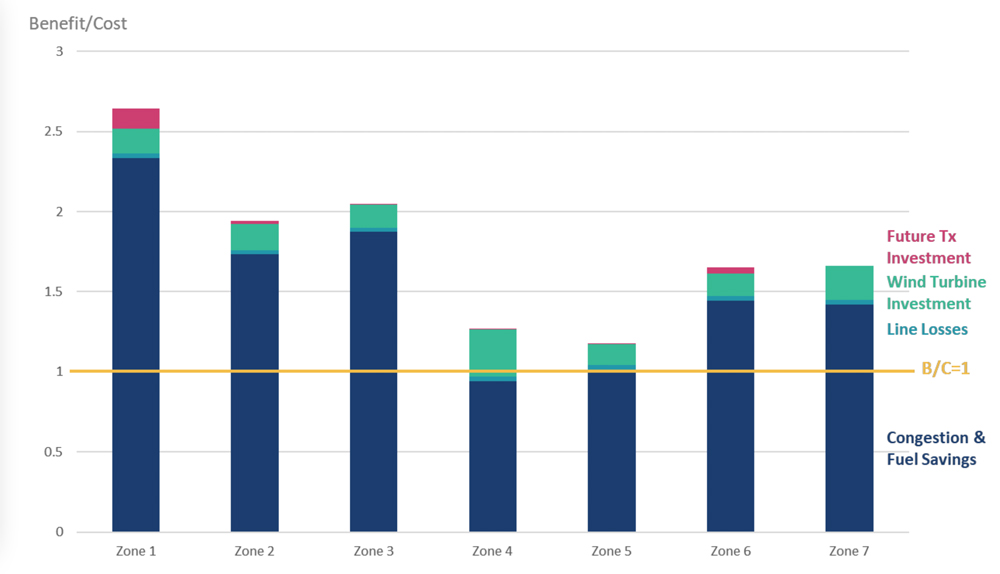
A key driver of MISO’s MVP cost allocation process was state representatives requesting the RTO to evaluate cost-effective transmission solutions that could meet the region’s combined state-level renewable portfolio standards.

MISO-MVP-benefits-by-zone-(The-Brattle-Group)-Content.jpgMISO’s $6.6 billion worth of MVP projects approved in 2011 are now estimated to provide economic net benefits of $7.3 billion to $39 billion over the next 20 to 40 years. | The Brattle Group

“A high-level outlook of how states wish to pursue meeting their goals, or a more detailed set of scenarios, would greatly improve the ability of RTOs to plan their future system without having to develop a specific portfolio of resources to do so,” the report said. (See Tensions Boil over MISO South Attitudes on Long-range Transmission Planning.)

“The findings reinforce that there are many ways FERC can improve the current planning processes, particularly by ensuring that well known and previously tested transmission benefits are fully quantified,” said Barbara Tyran, director of the American Council on Renewable Energy’s Macro Grid Initiative, which supported the planning study.

New public policies and regulatory guidance is needed to implement improved planning processes that can achieve more efficient results, the report said.

FERC also asked whether and how to better coordinate between regional and local transmission planning processes to identify more efficient or cost-effective solutions; and whether it is necessary, and how, to more clearly identify the lines of regulatory authority and oversight between states and federal authorities.

Grid operators and planners need to be part of the policymaking process to ensure efficient and reliable integration of renewables, the Eastern Interconnection Planning Collaborative said in a white paper Wednesday. (See related story, Grid Operators Seek Policy Role, Reliability ‘Safety Valve’.)

Oregon Group Contemplates RTO for a ‘Decarbonized World’

A Western RTO would likely take shape for reasons much different from those that motivated the creation of organized markets in other parts of the U.S.

That view was widely shared among members of Oregon’s RTO Advisory Committee last Wednesday, when it met for a second time to hammer out the contents of a study on the benefits and risks of RTO membership, due to the legislature by the end of the year.

During the committee’s first meeting in September, Adam Schultz, the Oregon Department of Energy’s Electricity and Markets Policy Group lead, promised that the second gathering would address a key question: What problem is the state attempting to solve by joining an RTO?

The answers for other organized markets usually centered on the anticipated cost savings to utilities — and their ratepayers — from the centralized dispatch of generation and regional transmission planning.

But the views expressed Wednesday pointed to a different factor driving the need for a Western RTO: namely, its potential role in decarbonization.

‘Feeling of Desperation’

What’s changed?

“I’d say it’s the conversation around our state’s mandates on procuring more clean energy, but also around the impacts and effects of climate change is having on our system,” said Nicole Hughes, executive director of advocacy group Renewable Northwest.

“Ten years ago, we weren’t seeing the radical climate [and] weather impacts; we weren’t dealing with the wildfire situation that we are today,” Hughes said. “So I think for some people involved in this conversation, there’s a feeling of desperation that if we aren’t doing everything that we could possibly do, to continue to live the lifestyles that we are hoping to live, then we’re not doing enough.”

For Renewable Northwest members, an RTO would be “one of the solutions” to decarbonizing the electricity sector, Hughes said.

Speaking from the virtual audience, Michael Jung, vice president of government affairs at generation and transmission cooperative PNGC Power, said his group’s members are committed to achieving carbon neutrality by 2033. Jung said PNGC’s membership of publicly owned utilities has in the past relied on the vast and “cheap” hydroelectric system managed by the Bonneville Power Administration to serve their customers “and never really had to think very hard about what to do to shape the future.”

But BPA’s “preference” customers confront a future in which the Federal Columbia River Power System will no longer be able to fully meet their needs. “The easy way out is no longer going to be an option,” Jung said.

“In the context of our carbon commitment, we really do believe that a Northwest RTO is going to be an essential ingredient towards giving us options that go beyond just the BPA preference power portfolio, and giving us a market that we can turn to to meet our needs, particularly in clean power, as well as facilitating the delivery across the transmission network, which may or may not be BPA[-operated],” he said.

Sarah Edmonds, director of transmission services at Portland General Electric, said an RTO is “unique” in offering the “integrated solution” needed to facilitate “deep decarbonization and clean energy integration” through better utilization of “resource solutions that don’t look like our traditional set of generation resources” on the grid.

“And when I say ‘integrated,’ I’m emphasizing the fact that the RTO brings all of the inputs and outputs from the market optimization part of the RTO, the transmission planning and the resource adequacy piece — potentially. And because those pieces are under one roof, they’re able to leverage each other, and the data that’s produced from these different functions and mechanisms can be integrated to provide that solution where all the pieces are coming together,” Edmonds said.

Mary Wiencke, vice president of market, regulation and transmission policy at PacifiCorp, cautioned that an RTO by itself will not reduce carbon emissions.

“I think the idea is to operate the system more effectively and enable that decarbonization to happen more efficiently, more cost effectively,” she said.

But Wiencke said any RTO dispatch model would need to consider state policies, such as California’s carbon pricing, a policy soon to be adopted by Washington state as well. “Those state policies will need to be reflected in the market rules in some fashion,” she said.

“I think one thing for you all to consider is that all seven RTOs/ISOs that have been formed were formed in a carbon environment. This is an opportunity for the region to consider what an RTO would look like in a decarbonized world,” said Ravi Aggarwal, a BPA manager and ex officio member of the RTO Advisory Committee.

‘Art of the Possible’

During the committee’s first meeting in September, it was Aggarwal who posed the idea that the Pacific Northwest consider an “incremental” approach to developing an RTO. (See Oregon RTO Committee Ponders Paths to Regionalization.) On Wednesday, he clarified that he wasn’t advocating for foregoing the pursuit of an RTO with the looser arrangements that exist in the region today.

But Aggarwal pointed out that the Northwest is unique in that it contains BPA, a non-FERC jurisdictional entity that controls about 70% of the region’s transmission and faces possible statutory limitations related to how it can participate in an RTO.

“If you look at the history, it took us about four years just to form a regional planning organization — Northern Grid — and that’s just one functionality of many that an RTO serves,” Aggarwal said, recounting other incremental developments such as the expansion of the Western Energy Imbalance Market (WEIM) (which BPA will joint next year) and the creation of the Western Resource Adequacy Program by the Northwest Power Pool. (See RA Program Will Require Restructuring of NWPP.)

“All those are incremental steps that move us probably closer to an RTO construct. It doesn’t take us directly to an RTO, but it builds a pathway to maybe eventually get to an RTO,” whether within an area like the NWPP footprint or West-wide, he said.

Spencer Gray, executive director of the Northwest & Intermountain Power Producers Coalition, said his organization has supported the incremental steps the region has taken so far but thinks those efforts might be reaching the limits of their effectiveness.

“I think we’re going to get up to the edge of not being able to do much more, to evolve our grid to deal with emerging issues like the commitment of Washington and Oregon to 100% clean grids. We’re not to that edge yet; I think perhaps the [WEIM] day-ahead market possibly will be the edge of that functionality that can be bolted on to our existing grid without a more fundamental shift, which an RTO represents,” Gray said.

Wiencke said the need to decarbonize might outpace the timeline for creating an RTO.

“The conversation, I think, is really about urgency, and really about accelerating the decarbonization process, and I think there’s a lot of things that are needed to achieve that, including potentially an RTO,” Wiencke said. “However, I think there’s real tension there, because an RTO is going to take a long time to put together and to put in place, and I don’t know how to advise on sort of accelerating the development of an RTO.”

Oregon Public Utility Commissioner Letha Tawney pointed to other “constraints” beyond BPA’s jurisdictional status that have consigned the Northwest’s electricity sector to a policy of incrementalism — both rooted in California.

The first is CAISO’s state-run governance model, which Tawney believes California lawmakers would be willing to amend.

More intransigent though is the state’s resource adequacy model — overseen by the California Energy Commission rather than CAISO — which Tawney thinks the legislature is less likely to change.

“To incorporate [California] in the [RTO] dispatch, to take advantage of all the solar that they want to send out on a daily basis, and all of the investment they’re making in batteries, we will face a real challenge if we try to bring both the RA construct and a market construct together,” Tawney said. A governance change for RA program “isn’t even on the table right now.”

“There isn’t that sort of perfect RTO that we’re comparing to; we’re comparing to the art of the possible, given the existing landscape we’re operating in,” she said.

DOE, NREL Launch Energy Cybersecurity Accelerator

Seeking to “encourage the rapid development of cybersecurity technologies,” the Department of Energy and the National Renewable Energy Lab (NREL) on Wednesday announced a program to accelerate the creation of cybersecurity solutions for the North American power grid.

The Clean Energy Cybersecurity Accelerator is sponsored by DOE’s Office of Cybersecurity, Energy Security and Emergency Response (CESER) and Office of Energy Efficiency and Renewable Energy (EERE), which will both contribute experts to serve as a federal advisory board within the program. A steering committee will include representatives from industry to provide “strategic direction and cost-sharing.” Xcel Energy (NASDAQ:XEL) and Berkshire Hathaway Energy are among the first members of the committee.

According to a statement from NREL, the effort is aimed at addressing vulnerabilities in the existing bulk power system, as well as new weaknesses expected to develop as the grid moves away from traditional generation resources toward renewables, distributed energy and storage solutions.

“A disruptive approach to rapidly infuse cybersecurity innovation into renewable energy systems, without delaying time-to-market, is needed to outpace the speed of emerging threats to our evolving energy infrastructure,” NREL said.

The accelerator will work on a yearly cycle, with the advisory board and steering committee setting a priority topic for each term. A new cohort of security-focused startups working on early-stage technologies will be recruited each year to go through a three- to 12-month incubation period.

Technologies developed during each cycle will be evaluated with NREL’s Advanced Research on Integrated Energy Systems (ARIES) platform. ARIES is a simulated grid environment with a three-layer model — representing electrical, control and telecommunications systems — in which utilities can test various threat scenarios. Along with cybersecurity, the platform has also been used to test the impact of energy storage and hybrid energy systems, new system architectures and advanced energy infrastructures.

“The transition to a clean energy economy will require groundbreaking cyber solutions to strengthen America’s grid security, protect our energy infrastructure and address the increasing threat of extreme weather events across the country,” Deputy Energy Secretary David Turk said in a separate press release. “We are grasping the opportunity to build a grid that can dispatch historic amounts of renewable energy across the country while addressing grid vulnerabilities and positioning America for a clean energy future.”

The launch of the new accelerator comes amid a time of growing awareness and concern in the utility sector around the safety of the grid’s electronic components. High-profile cyberattacks like the Colonial Pipeline ransomware attack in May have already led to new cybersecurity requirements on the nation’s pipeline network. (See TSA Issues New Pipeline Cybersecurity Requirements.)

Following the Colonial attack, President Biden in July announced an initiative to strengthen cyber defenses in industrial control systems at “priority critical infrastructure” systems. (See Biden Launches ICS Cybersecurity Initiative.) The president has warned in the past that “a real shooting war with a major power” is a significant possibility in the event of a major cyberattack against the U.S.

‘Last-mile’ Deliveries Drive Demand for NJ Truck Incentives

The New Jersey Economic Development Agency (EDA) is adding $9.25 million to a pilot program that provides incentives of up to $100,000 toward the purchase of medium- and heavy-duty (MHD) electric vehicles after eager applicants exhausted the program’s initial $15 million fund in a matter of months.

The EDA is also expanding the program, known as New Jersey Zero Emission Incentive Program (NJ ZIP), which started with a focus on encouraging electric truck adoption in Camden in South Jersey and Newark in North Jersey. The program will now be open to New Brunswick and 33 surrounding communities in Central Jersey.

The expansion offers a glimpse into the market dynamics unfolding as New Jersey, like other states, seeks to persuade drivers — in this case, truck drivers — to get behind the wheel of an electric vehicle. The EDA said it had received 38 applications for a total of 148 vehicles in the first phase of the program, which began accepting applications on April. 6.

So far, the agency has approved 17 projects totaling 66 vehicles, purchased with vouchers worth $6.76 million; the remaining applications are pending, the agency said. The first vehicles purchased under the program are expected to hit New Jersey streets in December, the EDA said.

Most of the trucks receiving the incentives are for deliveries, according to the EDA, with a slight majority of applicants going for larger trucks, around the Class 5 or 6 size, which are considered medium-duty, commercial vehicles. The reason: not as many smaller, pickup trucks — Class 2b — are available, and purchasers of larger trucks can get a bigger incentive, the agency said.

Two manufacturers that are supplying vehicles to the buyers said the main market driver behind the applicants’ shift to electric trucks is their intended use for deliveries from a transportation or distribution hub to the final destination, often the customer’s residence, if it is an e-commerce delivery.

“What we’ve seen in Jersey is a huge demand for mid-mile, last-mile delivery solutions,” said Ryne Shetterly, vice president of sales and marketing for GreenPower Motor Company. The California-based electric truck maker is supplying nine vehicles for four NJ ZIP customers, who together will receive incentives totaling $890,000.

“Most of the business that we’ve written out there has been for the cargo vehicles, box trucks, things of that nature,” Shetterly said.

Persuading Truck Buyers to Try EVs

The NJ ZIP vouchers start at $25,000 for a Class 2b truck and then go up to $100,000 for a Class 6 truck. In the first phase of the program, those incentives were used to fund the purchase of zero-emission trucks within 10 miles of Newark and Camden. Incentive bonuses are also available. For example, a small business that scraps a gas-powered vehicle and replaces it with an electric truck can get $2,000 more per vehicle. For women-, minority- and veteran-owned business, bonus incentives are an additional $4,000 per vehicle.

The program is funded with money from New Jersey’s participation in the Regional Greenhouse Gas Initiative (RGGI). To be eligible for the incentives, an electric truck must be registered in New Jersey for three years, and 75% of the miles covered annually must be within the state, according to program rules.

In the first phase, the vehicles had to either have a home base in or around Newark or Camden or travel 50% of their vehicle miles in the area around the two cities. Both areas are considered environmental justice communities due to severe emissions from truck traffic around both cities. In the second phase, eligibility will be extended to New Brunswick and the Central Jersey region.

The incentives are designed to persuade potential truck buyers to go electric by covering the added cost of an electric vehicle over a traditional gas or diesel vehicle, said Victoria Carey, senior project officer, clean energy for EDA.

Similar EV voucher programs had proven successful at putting drivers in electric trucks in California and New York; it was no surprise that applicants exhausted the funds in New Jersey’s program in five month, she said.

“I think that there’s a lot of hunger for this type of” program, she said.  “We worked really hard to make sure that we would have a positive uptake.”

The Newark area, the state’s largest city, which is also located next to the Port of New York and New Jersey, accounted for almost twice as many applications as Camden, Carey said. No decision has been made on whether to make the program permanent; the pilot’s goal is to provide the agency with enough information to make that determination, she said.

Among the recipients of the first wave of incentive awards are Marcelli Formaggi, a Clifton importer of Italian foods, which bought one truck; and Juan Kelmy Productions, a Union City photography and video production company that bought two trucks. Bergen County also received incentives totaling $850,000 to buy 10 senior citizen shuttles.

Peerless Beverage Co., a Union, N.J., beer distributor bought two Class 5 trucks, a 2021 Hino M5 model, made by Sea Electric, another California-based electric vehicle manufacturer, said Benjamin Nussbaum, the company’s regional sales manager for New Jersey.

The NJ ZIP incentive of $170,000 for both trucks paid just over half the $165,000 cost of each vehicle, he said. The company will fit the trucks with sliding doors used for beer distribution and expects each one to do around 120 miles a day, well below the 175-mile range of the vehicle, Nussbaum said.

“They are going to be doing short-haul deliveries in the Jersey City and greater Newark area, delivering beer to bars,” he said.

Shetterly called the New Jersey program “the most comprehensive, lucrative program for users who are looking to be early adopters” of electric trucks.

“We have more inbound calls coming in from New Jersey right now than everywhere else in the country,” he said.

Stop, Start – Short Range Trips

The program is one of several that offer incentives to help the state reach its goal of reducing greenhouse gas emissions 80% below 2006 levels by 2050.  Tackling transportation emissions will be critical since they constitute 42% of GHG emissions statewide. The state’s master plan, released in 2019, assumes that 75% of medium-duty trucks and 50% of heavy-duty trucks will be electric by 2050.

Truckers in New Jersey, like those around the nation, cite the lack of MHD charging sites as a key obstacle to greater use of electric trucks. Other barriers include the short range of existing electric trucks — larger trucks can do only up to around 250 miles — and the high cost of the vehicles.

Tony Fairweather, CEO and founder of Sea Electric, said the range issue is less important for the trucks the company is selling in New Jersey. Six companies will be receiving a total of 32 trucks from Sea Electric, resulting in incentives totaling just under $3.4 million.

“It’s all last-mile delivery, so the typical application is [a driver] doing somewhere between 70 and 130 miles on a daily basis — start, stop, around town; 12-hour operation. Return to a depot at night and plug into a Level 2 charger to charge back to 100% overnight, and then to do it over again.”

Shetterly said that GreenPower is focusing its marketing efforts in urban areas, such as New York City and Jersey City, where the range issue is largely irrelevant. In those areas, a truck can work eight to 10 hours a day and still only go 50 miles, he said.

“In our vehicles, that would use about a third of the battery pack,” he said. Some customers top up a vehicle through  “opportunity charges,” stopping for 10 to 15 minutes to use a DC fast charger, he said.

In the long term, electric truck users could expect to see a 60% to 70% reduction in operating costs, mainly due to cheaper fuel, Shetterly said.

“Whether it’s regenerative braking, transmission services, or lack thereof, no oil changes, almost zero motor maintenance — that’s where you’re going to get that 60 to 70%,” he said. “For a small business owner, this is going to be a godsend.”

NYPSC: Utilities Ready for Winter; Electric and Gas Prices Increasing

New York regulators on Thursday heard that the state’s utilities are confident they will have sufficient electric and natural gas capacity to power customers through this coming winter, though customer bills will likely increase 13 to 20% from last winter (21-M-0243).

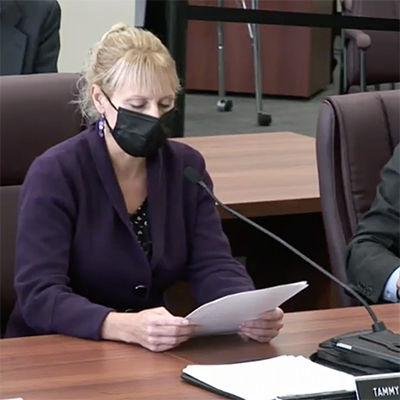
Tammy-Mitchell-(NYDPS)-Content.jpgTammy Mitchell, NYDPS | NYDPS

 “These increased supply prices are not unique to New York state, but are in fact being experienced nationally and globally as the economy begins to recover and demand for natural gas increases after a pandemic-low level,” Tammy Mitchell — director of the Department of Public Service’s Office of Electric, Gas and Water — told the Public Service Commission.

U.S. natural gas prices have more than doubled since this time last year and are at a level not seen since 2014, she said. In Europe and Asia, wholesale prices are more than five times what they were a year ago.

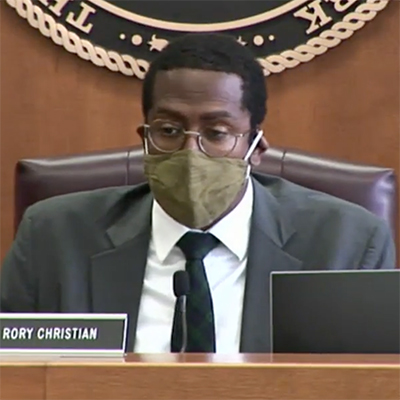
Rory-Christian-(NYDPS)-Content.jpgNYPSC Chair Rory Christian | NYDPS

 “With many New Yorkers already suffering from arrears, falling behind and being in the unfortunate position of having to choose between paying for heat or feeding their families, I want to … encourage New Yorkers in need to take advantage of several federal, utility and community-based programs available throughout the state that provide support,” newly appointed PSC Chair Rory Christian said.

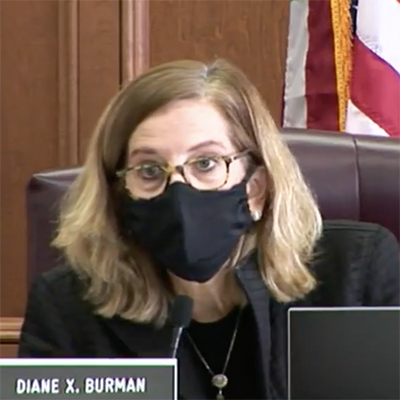
The price issues seem to be downplayed, Commissioner Diane Burman said. She said she was concerned that there’s going to be “a major sticker shock” if the current price trends hold.

Burman also pointed to natural gas storage and pipeline constraints and referred to the gas hook-up moratoriums of recent years: “What does it mean in terms of interruptible customers remaining on oil? What does that mean in terms of possible lost economic development opportunities if people come and they need access to gas and they can’t get it?” (See Online Protesters Reject NY Gas Supply Plans.)

Diane-X-Burman-(NYDPS)-Content.jpgNYPSC Commissioner Diane X. Burman | NYDPS

 With the advent of efforts to reduce greenhouse gas emissions in New York, the role of energy efficiency, demand response and electrification of heating will grow in importance, and staff will continue to brief the PSC on the transition of the natural gas industry, Mitchell said.

“There also is an interdependency between the electric and gas systems, as well as a high correlation between electricity supply prices and natural gas prices, since gas generators are typically the marginal units,” Mitchell said. “This interdependency was highlighted during the 2013-2014 polar vortex that resulted in all-time high winter peak demand on the electric system at the same time that cold weather impacted the operation of some generating facilities.”

Grid Prepared for Winter

DPS staff concluded that the grid is prepared to reliably meet the state’s upcoming winter electric demands, staffer Richard Quimby said.

NYISO expects to have 35,744 MW in net capacity resources available during the winter to serve forecasted peak load of 24,025 MW, including operating reserves, Quimby said. A winter protocol is in place to facilitate communication between state agencies and NYISO in circumstances where fuel supply for generation facilities may be at risk.

As part of the DPS’ winter assessment, staff reached out to major generation facilities owners in southeast New York who own about 12,000 MW of dual-fuel generation capability, he said.

“We found that these owners are continuing to implement lessons learned from past winter experiences, including having increased pre-winter on-site fuel reserves, having firm contracts with fuel oil suppliers, conducting more aggressive replenishment plans, and having more proactive pre-winter maintenance and facility preparations,” Quimby said.

DPS staff also met with NYISO and discussed its procedures and protocols for the winter period.

In recent years NYISO has instituted various changes to help ensure electrical reliability during periods of tight natural gas supply, including closely monitoring generator fuel levels and replenishment. In addition, NYISO has improved communications with interstate pipelines, local gas distribution companies and neighboring RTOs during periods of tight electric operating conditions, Quimby said.

Hurricane Ida Update

Kevin-Wisely-(NYDPS)-Content.jpgKevin Wisely, NYDPS | NYDPSKevin Wisely, director of the Office of Resilience and Emergency Preparedness, gave the PSC an update on lessons learned from Hurricane Ida, which affected approximately 90,000 electric customers and caused a peak of 52,000 outages in New York during the early morning hours of Sept. 2. (See Experts Call for Tx Reinforcements, Microgrids in Gulf System After Ida.)

“The intense and severe nature of the rainfall caused numerous flooding issues throughout Westchester County and in the New York City area,” Wisely said.

Westchester’s flooding also caused issues with telecommunications equipment. “Verizon was able to quickly reroute incoming local 911 calls to predesignated backup sites so that no calls were lost,” he said. “Overall, the utilities responded, repaired and restored customers as quickly and safely as possible.”

Utilities must consider additional resilience improvements to system design, including such projects as substation location considerations for areas prone to flooding beyond that of just the coastal, river and creek impacts incurred during storms such as Superstorm Sandy and tropical storms Lee and Irene, Wisely said.

“Storm events such as Ida highlight the fact that municipal stormwater drainage systems and infrastructure must be enhanced also to handle larger volumes of rainfall over shorter periods of time,” he said. “With those types of storms in mind, utilities must continually reassess infrastructure vulnerabilities across the entirety of their service territories, determine appropriate resiliency projects to mitigate potential weather risks and make their infrastructure more adaptable to weather extremes.”

California PUC Opens Investigation of Utility Safety

The California Public Utilities Commission launched a proceeding Thursday to evaluate and improve the safety cultures of electric and gas utilities, with the aim of preventing the state’s utility infrastructure from causing disasters like those of the last 11 years.

The new order instituting rulemaking (OIR) is significantly broader than prior safety culture investigations because it covers all gas and electric utilities under CPUC jurisdiction. Previous efforts focused on Pacific Gas and Electric after the San Bruno pipeline explosion of 2010 and Southern California Gas following the massive leak at its Aliso Canyon natural gas storage facility in 2015.

At least a half-dozen catastrophic wildfires blamed on electrical equipment since 2015 have made the safety practices at PG&E, Southern California Edison and other utilities a paramount concern. The November 2018 Camp Fire, for instance, killed 84 people and leveled the town of Paradise. State fire investigators determined the cause was PG&E’s failure to replace a century-old “C” hook on one of its transmission lines.

PG&E is now under investigation for starting this year’s Dixie Fire, the second largest wildland blaze in state history. The California Department of Forestry and Fire Protection seized PG&E equipment hit by a falling fir tree, and the federal judge overseeing PG&E’s probation in the San Bruno case has questioned the utility’s safety practices regarding shutting down power lines that show signs of trouble. (See PG&E Denies New Manslaughter Charges.)

“Safety culture is an organization’s values, principles, beliefs and norms shared by individuals within the organization, manifested through their planning behaviors and actions,” CPUC President Marybel Batjer said before Thursday’s unanimous vote. “It shows how members of an organization work toward safe operations on a daily basis and how that translates into safety outcomes.”

The new OIR is intended to fulfill recent legislative directives, the CPUC said.

Senate Bill 901 and Assembly Bill 1054 were passed in 2018 and 2019 to help investor-owned utilities cover billions of dollars in wildfire costs under California’s strict liability rules while also requiring the utilities to submit to wildfire prevention and safety culture evaluations by the CPUC. (See Calif. Lawmakers Rush to Pass Utility Wildfire Aid and California Wildfire Bill Goes to Governor.)

“Safety culture assessments of electrical corporations are required as part of [AB 1054 and SB 901],” the proposed decision on the OIR said. “AB 1054 directs the commission’s Wildfire Safety Division, now the Office of Energy Infrastructure Safety (OEIS), to conduct annual safety culture assessments of each electrical corporation, the first of which will be published in fall 2021. The AB 1054 assessments are specific to wildfire safety efforts and include a workforce survey, organizational self-assessment, supporting documentation, and interviews.”

“SB 901 directs the commission to establish a safety culture assessment for each electrical corporation, conducted by an independent third-party evaluator,” it said. “SB 901 requires that the commission set a schedule for each assessment, including updates to the assessment, at least every five years, and prohibit the electrical corporations from seeking reimbursement for the costs of the safety culture assessments from ratepayers.”

The CPUC will use the new proceeding to implement the bills, especially SB 901, Batjer said.

“This OIR will help us fulfill [our] mission by requiring utilities to proactively prioritize safety to better serve the public,” she said.

The proposed decision includes a preliminary scope of safety culture audits, but details remain to be worked out with stakeholder input. Parties have 45 days from Thursday to submit their written comments.

Conn. DEEP Releases Final Version of Integrated Resource Plan

Connecticut can follow multiple pathways to achieve a carbon-free electric supply by 2040, according to the final version of the state’s integrated resource plan, the biennial look at future electric needs and the strategy to meet them.

Officials from the Department of Energy and Environmental Protection (DEEP) held a virtual press conference Thursday to discuss the latest IRP, Connecticut’s first assessment of pathways to a zero-carbon electric sector, as directed by Gov. Ned Lamont through a 2019 executive order.

Among the key findings was that storage and demand management will play a vital role “in ensuring reliability of the grid and minimizing wasted generation.” DEEP Commissioner Katie Dykes said companies are working hard to enhance long-duration storage technology, and she applauded the U.S. Department of Energy’s “Long Duration Storage Energy Earthshot” that establishes a target to reduce the cost of grid-scale energy storage by 90% for systems that deliver 10 or more hours of output within the decade.

“That’s all good news for people who care about achieving both reliability and a decarbonized grid,” Dykes said.

DEEP is also seeking stakeholder and market input on storage procurement. The Connecticut General Assembly this spring passed legislation that targets 1 GW of energy storage deployment by the end of 2030 and gives DEEP procurement authority. The department can also issue requests for proposals for transmission and distribution grid-connected energy storage, which would factor toward deployment targets. (See Connecticut General Assembly Passes Energy Storage Bill.)

“We’re eager to hear from market participants or stakeholders about how such a storage procurement should be conducted in order to enhance the opportunities for long-duration storage,” Dykes said.

“Timely” enhancements to energy and ancillary services markets would also allow storage resources “to compete and be valued in the wholesale markets,” Dykes added.

Increased investment in long-duration storage also yields environmental justice benefits, Dykes said. Use of batteries would allow Connecticut to transition away from fossil fuel units that are used to maintain reliability but also comprise the “heaviest contributors” of emissions in environmental justice communities.

“We’re especially motivated with this storage procurement, as well as the focus on other types of investments around demand response and transmission,” Dykes said. “That can help to ensure we can scale up the investment of resources that can maintain reliability with the least emissions possible, [which is] critical for us to achieve our decarbonization goals and our commitments to advancing environmental justice.”

Continued Push for ISO-NE

The IRP continues Connecticut’s call for changes in market design and transmission planning by ISO-NE. Dykes said the RTO has made progress on the New England states’ concerns around transmission planning. It has also worked to eliminate the minimum offer price rule (MOPR) with input from NEPOOL stakeholders.

“We believe that wholesale market reforms are greatly needed much beyond just eliminating the MOPR,” Dykes said. “We need to ensure that the wholesale markets that we’re relying upon have reforms to energy and ancillary services markets that will help to ensure that carbon-free resources that are needed to maintain reliability are being procured as much as possible and valued in the wholesale markets that Connecticut chose to rely on more than two decades ago. We believe that’s really where the focus needs to be on if we’re going to find some compatibility between our state public policies and the design of wholesale markets.” 

While governance is not explicitly spelled out in the IRP, “at first blush,” Dykes said, “incremental changes” by ISO-NE signal that the RTO wants to engage more with the states. Those changes include annual open Board of Directors meetings focused on wholesale electricity markets and system planning, a process potentially linked to the biennial Regional System Plan public forum.

Dykes said governance concerns also relate to ensuring broader accessibility to and transparency in ISO-NE’s processes for “all stakeholders and affected ratepayers in the region.”

“These incremental steps reflect the progress New England states have made in elevating the need for governance reforms, as a critical issue in our region,” Dykes said. “I’m convinced that we will not succeed in achieving better transmission planning and investment, or market designs that are more compatible with state public policies and consumer needs, unless we make transformative changes to the governance structures and transparency of ISO-NE.”