PJM Requests Rehearing of MSOC Change

PJM on Monday requested a rehearing and clarification of FERC’s order to replace its market seller offer cap (MSOC), arguing that the commission’s decision to side with the RTO’s Independent Market Monitor may lead to over-mitigation of the market (EL19-47).

FERC on Sept. 2 approved the Monitor’s unit-specific avoidable-cost rate (ACR) proposal and required PJM to revise its tariff. That followed FERC’s order in March requiring PJM to revise the MSOC to prevent sellers from exercising market power in the capacity market, having been convinced by the Monitor’s arguments. (See FERC Backs PJM IMM on Market Power Claim.)

In its request, PJM said it “remains concerned” that the unit-specific review of all resources “may prove to be a significant overreach” to address concerns raised by the commission.

“The harm of over-mitigation under a unit-specific ACR approach is real and will inhibit the ability of capacity market sellers to base their offers on their respective cost estimates and assumptions about what is likely to occur three years in the future,” PJM said. “This is because each capacity market seller’s evaluation of risk relating to actual costs and revenues varies for various resources … and it is not appropriate for PJM or the Market Monitor to substitute their assessment of the risks for the capacity market seller’s demonstrable assessment of the risks.”

Because unit-specific reviews involve applying criteria that can “engender significant debate” and “charges of subjectivity” in the application of its components, PJM said disputes will “likely arise” under the revised MSOC because of disagreements over “sufficient support for the valuation of various risks in the unit-specific net ACR calculation.”

“In fact, all of the unit-specific offer caps requested to date for the upcoming BRA [Base Residual Auction] have already been rejected by the Market Monitor,” PJM said. “Thus, contrary to the commission’s finding, the concerns that the Market Monitor will not entertain alternative expectations of risk is not speculative. These disputes will ultimately prove disruptive to the [capacity] auction process given that they will likely end up at the commission — with limited time for resolution before the auction window opens.”

It noted that FERC had acknowledged in its order that replacing the existing MSOC with a unit-specific net ACR “will likely create more work for the Market Monitor and sellers by requiring the individual review of a higher number of capacity offers.” The commission had relied on the Monitor’s position “that its staff would be capable of any additional review resulting from its own offer cap proposal” to determine the new approach would not prove to be excessively burdensome.

But FERC failed to note that the RTO is ultimately responsible for making final determinations on all requested unit-specific ACRs, PJM argued, and it never indicated the reviews could be completed within the 25-day period allotted under the tariff to review the requests. The RTO said the larger volume of unit-specific requests expected under a net ACR approach would make reviews even more difficult. PJM “repeatedly expressed concerns of the administrative burdens” that would result from setting the MSOC at a capacity resource’s net ACR, it said.

The RTO also said the commission may have “inadvertently included default gross ACR values for demand resources and energy efficiency resources” in the tariff changes it ordered, which would make those resources subject to the MSOC and in conflict with an exemption elsewhere in the tariff.

“The current ACR calculation is not designed with demand resources or energy efficiency resources in mind,” PJM said. “Specifically, since avoidable costs are the costs that a demand resource or energy efficiency resource would not inquire absent the load curtailment or shift, the relevant input would be the cost for such load curtailment or shift. However, such costs are difficult to calculate since the cost of curtailment varies by industry, time and individual customer needs.”

Last month, PJM requested a delay of the BRA for the 2023/24 delivery year by almost two months, citing the commission’s Sept. 2 order. The RTO said the auction delay was necessary to give capacity market sellers and the Monitor a “realistic opportunity” to appeal the RTO’s final decisions on unit-specific offer cap requests resulting from the MSOC rules change. (See PJM Proposing 2-Month Capacity Auction Delay.)

Additional Rehearing Requests

Several other stakeholders also requested rehearing on Monday.

Exelon (NASDAQ:EXC) and Public Service Enterprise Group (NYSE:PEG) said in a joint filing that FERC’s order “employed a machete, slashing off the default MSOC” instead of using a “scalpel to fix the discrete problem” of recalibrating the number of expected performance hours.

“In selecting this remedy, the commission never found the broader Capacity Performance framework, including the opportunity cost-based default MSOC, to be unjust and unreasonable,” the companies said.

Vistra (NYSE:VST) said the commission’s order “contains at least three fatal market design flaws”: it was “based on the erroneous assumption that the marginal offer must be reviewed in all circumstances”; it “adopts technology-specific default offer caps that assume resources face zero risk associated with their PJM capacity supply obligations”; and it “unduly limits the costs a resource owner can include in a resource’s offer.”

“Each of those flaws, standing alone, renders the commission’s replacement rate unjust and unreasonable,” Vistra said.

A joint filing by Calpine, LS Power, Talen Energy, the Electric Power Supply Association and the PJM Power Providers Group said a rehearing is required because the commission “failed to properly consider the alternatives” and instead “adopted an MSOC that fails to properly reflect the risks and costs imposed on suppliers and is at odds with PJM’s Capacity Performance structure.”
Crops, Wildlife Suffering Under Wash. Drought

Global warming has led to decreased crop yields and increased disease in some wildlife in Washington, state lawmakers heard last week.

Washington agriculture and wildlife experts briefed the Joint Legislative Committee on Water Supply During Drought on Sept. 29 on the ripple effects from a nearly statewide drought that Gov. Jay Inslee blames on climate change. The joint committee only meets during years in which a drought is declared by the state government.

The committee has been receiving briefings as it ponders how to prepare for potential future droughts, which legislators worry could happen as soon as 2022. “This year caught us by surprise. … We didn’t have funding for our agencies … We need to prepare for the next drought, and there will be one, I’m afraid,” said committee chair Sen. Judy Warnick (R).

This year’s March-August temperatures were the third warmest in Washington history — 2.1 degrees Fahrenheit above average, said Karin Bumbaco, an assistant state climatologist. This period was also the second driest on record at 7.15 inches of rain. Fifteen of Washington’s 39 counties posted their driest conditions ever. An unusually hot spell in June was extra damaging, she said.

Increased heat led to higher temperatures in the state’s streams and rivers, which speed up the metabolisms in fish, leading to their consuming more calories, said Megan Kernan, water policy section manager for the Washington Department of Fish and Wildlife. The increased water temperatures also decrease oxygen levels in streams.

The warmer temperatures increase the chances of the region’s fish being struck with the sometimes-fatal Ichthyophthirius multifiliis — also known as “Ich” or “white spot” disease.

“We see a lot more sick fish when the water temperatures get warmer, “Kernan said.

She also noted that drying wetlands have led to more cases of sometimes-fatal epizootic hemorrhagic disease and bluetongue affecting deer. Spread by biting insects, bluetongue causes a deer’s tongue to swell, while also causing ulcers, sores, painful hooves, lameness and reproductive problems. Epizootic hemorrhagic disease causes extensive hemorrhages. 

Jaclyn Hancock, a hydrogeologist with the Washington Department of Agriculture, said 2021’s predictions for the state’s dryland wheat harvest will be the lowest since 1997. The state is predicting a harvest of 93.26 million bushels compared to an average of 152.2 million bushels for the five previous years. “We’re concerned about 2022,” she said. 

Other projections are:

  • Harvested peas are predicted at 1,200 pounds per acre this year, compared with 3,000 pounds per acre in 2020. 
  • The lentil harvest should yield 920 pounds per acre, compared with 1,300 pounds per acre last year.
  • Harvested garbanzo beans are predicted to be 680 pounds per acre this year, compared to 1,780 pounds per acre in 2020. 

She noted water and forage for livestock had to be trucked into the region. “That’s very expensive,” Hancock said. 

The Roza Irrigation District snakes along the Yakima River’s shoreline in Central Washington, which is home to numerous vineyards and many other crops. Scott Revell, executive director of the Roza district, observed that the extra heat is expect to reduce 2021’s wine grape and juice grape yields by 20-40%.  Hop yields are also down. The sizes of harvested apples have also shrunk, Revell said.

Quarter of Energy Sector Vulnerable to Ransomware, Report Says

One in four major U.S. energy companies — including 17% of the largest electric utilities — are “highly susceptible to a ransomware attack,” according to a report issued this week by cybersecurity firm Black Kite.

The 2021 Ransomware Risk Pulse: Energy Sector report presents the results of Black Kite’s survey of the 150 largest energy companies by market cap in the U.S.; included in the report are 29 electric utilities and 58 and 63 companies in the oil and gas industries, respectively. Black Kite assigned a rating to each company based on its proprietary ransomware susceptibility index (RSI), a number between 0 and 1 broadly determining how susceptible the company and its third parties are to an attack.

RSI ratings are based on a combination of publicly available information and data gathered on the dark web. Factors that can damage a company’s score include leaked credentials, use of older software versions with unpatched vulnerabilities, open remote desktop protocol ports and misconfigured email systems.

Ransomware-specific assessments are relatively new for Black Kite, which started offering the service earlier this year in response to concerns from clients about their own vulnerability to ransomware, and that of their vendors and suppliers even more so. Bob Maley, Black Kite’s chief security officer, told ERO Insider that ratings systems that give overall cybersecurity grades may not take into account vulnerabilities to specific risks.

“Grades are a good overall view of cyber hygiene, but they don’t always indicate where the highest risk is,” Maley said. “And what we’ve discovered through this process is that … some companies that have very good cyber hygiene [but] are highly susceptible to ransomware.”

Major Vulnerabilities Evident Across Sector

Black Kite found that 25% of all the companies surveyed had an RSI of 0.6 or more, which the company considers critical. An RSI of 0.4 to 0.59 is considered average, and a low RSI is 0.39 or below.

The electricity industry fared relatively well compared to the natural gas and oil industries, with 17% of surveyed electric utilities returning a critical RSI compared to 28% of oil companies and 25% of natural gas companies. Companies with a low RSI did not make up the majority of any industry, though oil came closest with about 24 of 58 companies, compared to 11 of 29 electric utilities and 16 of 63 gas companies.

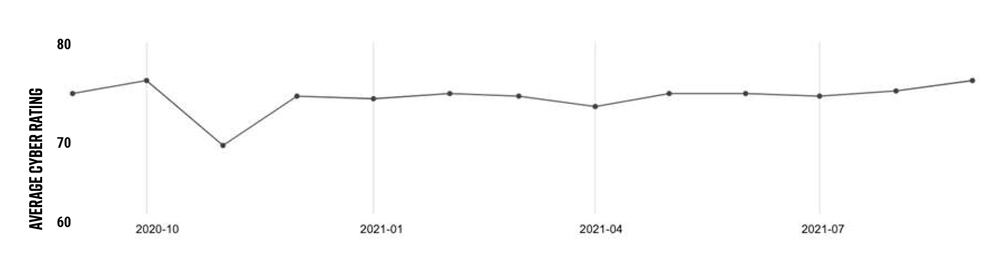
Average overall cybersecurity rating of U.S. energy sector companies, September 2020 to September 2021 | Black Kite

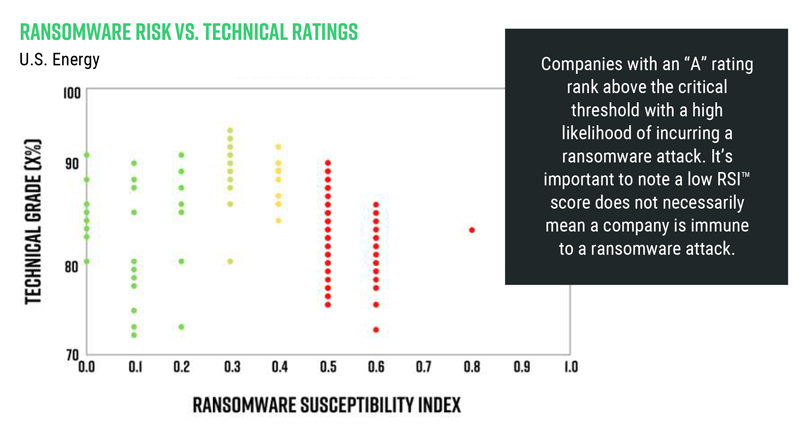
The RSI ratings stand out in contrast with the “relatively decent cyber posture” of the energy industry, with Black Kite’s overall average cyber hygiene rating of companies mostly hovering around 75% for the last 12 months. Many of the companies with high RSIs demonstrated technical grades of 80% or above, while some of the companies with the lowest RSIs also had the lowest technical grades, apparently confirming Black Kite’s assertion that ransomware vulnerability is not necessarily correlated with overall cyber proficiency.

Examining specific vulnerabilities provides a better indication of the sector’s areas for improvement. Credential access is a particular concern: Black Kite found at least one leaked credential within the last 90 days from 77% of U.S. energy companies, an especially sensitive area given that the ransomware attack on Colonial Pipeline this May — which led the company to shut down its entire network — originated with a leaked password for the company’s virtual private network.

Ransomware risk of U.S. energy companies vs. overall cybersecurity ratings | Black Kite

Email security is also an area of high vulnerability; despite the fact that email is the “most common channel leveraged during ransomware deployment,” Black Kite found that 74% of U.S. energy companies still have not properly configured their email services to prevent email spoofing. This means that attackers can easily pose as employees’ coworkers or managers to trick them into exposing sensitive information they would not normally provide to outsiders.

U.S. regulators responded to the Colonial hack and other recent ransomware attacks with heightened cybersecurity requirements, which Maley acknowledged could help improve the sector’s baseline for cyber hygiene. (See TSA Issues New Pipeline Cybersecurity Requirements.) But he warned that given the fluid nature of the cyber threat landscape and the inevitable delays in implementation of new standards, attempts to regulate the sector into safety are ultimately a losing proposition.

“From a high level view, [those things] make a lot of sense. But when I take off the regulatory glasses and put on the bad actor glasses, [they] don’t concern me at all,” Maley said. “The way bad actors work is, they will try something, and as long as it’s working … they will continue to do it. They’ll continue to profit off that. But when it stops — they’re very smart, [and] they’ll find other avenues.

“I think it’s more about how do leaders of companies get that mentality of … ‘how are the bad actors going to get into us today?’” he continued. “Not what checklists they’ve done or which auditor certification they’ve acquired. … And it is a daily basis because it can change very quickly.”

Western Utilities to Explore Market Options

A loose coalition of the West’s largest utilities said Tuesday that they are discussing ways to work together on “new market services” such as transmission expansion and day-ahead energy sales, while leaving open the possibility of forming or joining a Western RTO.

The Western Markets Exploratory Group (WMEG) began holding early-stage talks this summer, the utilities said in a joint statement. It includes Xcel Energy-Colorado, Arizona Public Service, PacifiCorp, NV Energy, Idaho Power, Salt River Project and six other utilities in the Pacific Northwest, Rocky Mountain states and Desert Southwest.

“We are excited to join with the other companies to explore creating new ways of sharing resources to better serve our customers with affordable and reliable power,” Alice Jackson, president of Xcel Energy-Colorado, said in the statement. “We believe that a Western energy market is key to transforming the electricity system throughout the West, integrating more renewables onto the system, while reducing costs and maintaining reliability.”

The discussions are geared toward “long-term solutions to improve market efficiencies in the West,” the statement said. “That includes incorporating lessons learned from existing regional markets as well as other efforts across the West.”

Many of the exploratory group’s members participate in CAISO’s Western Energy Imbalance Market (WEIM) or plan to join the interstate real-time trading market in the next two years.

Xcel’s Public Service Company of Colorado (PSCo), Platte River Power Authority and Black Hills Energy, all members of the working group, had planned to join the WEIM but paused those plans in June to explore other options. (See Xcel Delays Joining EIM to Examine Options.)

The move followed a decision by Colorado Springs Utilities (CSU) to exit a joint-dispatch agreement with the three other Colorado utilities to join the WEIM. CSU instead opted to join SPP’s Western Energy Imbalance Service (WEIS), with the intention of becoming a full RTO member.

The exploratory group said its efforts, expected to continue for several years, won’t affect the energy imbalance markets anytime soon.

“WMEG’s discussions will not impact participation in or evaluation of those markets in the short-term, as the group is focused on long-term market solutions,” Tuesday’s statement said.

Asked if the effort could lead to an RTO, Xcel spokeswoman Julie Borgen said, “the Western Markets Exploratory Group agrees on some core principles, including that any market or potential RTO that it would join or establish must outweigh the costs, and provide more value than the existing [SPP and CAISO energy imbalance models].”

“It’s essential that the companies involved are able to meet their state and local carbon reduction targets, while also maintaining reliable, affordable service for customers,” Borgen said.

A Western RTO?

Reaction to the WMEG announcement focused on the need for a Western RTO rather than piecemeal approaches.

“The West needs and deserves an RTO,” Vijay Satyal, Western Resource Advocates’ regional energy markets manager, told RTO Insider. Satyal said he hoped the coming together of private and public utilities from across the West would lead toward that goal. However, “if this announcement is a rushed measure to show something is happening and doesn’t reflect public interest goals, that can create a bigger concern for everybody,” he said.

The West’s market is split between CAISO and the rest of the West, leading to market inefficiencies and a lack of coordination, he said.

The WMEG shows utilities are “aligning to agree to come to the table for a long-term market solution, but that’s not enough,” Satyal said. “What we need is a market in the West that is a full RTO, one that is automated, transparent and has a fair governance structure that promotes clean energy and a decarbonized grid of the future.”

In addition, he said, an RTO would “create a centralized situational awareness of the larger grid that can ultimately enhance grid reliability.”

Advanced Energy Economy Managing Director Amisha Rai said in a statement Tuesday that “it’s good to see the utilities publicly acknowledge the benefits of regional markets and collaboration, but as described, this announcement by utilities falls short of the urgency of the moment.”

“The stakes are too high for slow and small steps,” Rai said. “An RTO is needed to achieve truly reliable, affordable and expanded clean energy in the region. Utilities and state leaders should not delay any longer in moving away from the status quo toward real, meaningful change.”

Momentum for a Western RTO had been building this year. While two-thirds of the nation’s electricity load participates in organized wholesale markets, the West remains a collection of 38 balancing authorities with limited cooperation.

p.p1 {margin: 0.0px 0.0px 0.0px 0.0px; font: 11.0px ‘Helvetica Neue’; color: #000000}

The development of a single RTO covering the entire U.S. portion of the Western Interconnection could save the region $2 billion a year in energy costs by 2030, according to findings from a state-led study funded by the U.S. Department of Energy. (See Study Shows RTO Could Save West $2B Yearly by 2030.)

The study also found that a full Western RTO would be more effective at reducing renewable resource curtailments and CO2 emissions than under other configurations in which the region is broken up into two separate markets.

Citing potential benefits, Colorado and Nevada passed bills in June requiring transmission owners to join an RTO by 2030.

And FERC Chairman Richard Glick called for a Western RTO along with a growing number of policymakers, public interest groups and industry leaders. (See Glick Says West Should ‘Finish the Job’ on RTO.)

Glick said at a FERC technical conference in June that “the time is right for the states, the region’s utilities and other key stakeholders to go ahead and finish the job” and form an organized market in the West.

Prior efforts to form a CAISO-led RTO failed because California politicians refused to cede authority over CAISO, a state public benefit corporation, and because other Western states were leery of joining a California-controlled RTO.

SPP and CAISO Comment

SPP has been pitching its benefits as the would-be leader of a Western RTO. Members of its WEIS have signaled interest in joining an SPP-led RTO, CEO Barbara Sugg told WECC’s Board of Directors in June. SPP’s proposed Western RTO would provide a day-ahead market and regional transmission planning, she said. (See SPP CEO Pitches WECC on Western Benefits.)

SPP signed an agreement in August to operate Northwest Power Pool’s resource adequacy (RA) program in the Western Interconnection, working with NWPP and its RA participants to help develop, implement and operate the program. (See SPP to Operate NWPP’s Resource Adequacy Program.)

Responding to a request for comment on the WMEG, SPP said it “believes there is vast potential for continued market development in the West. We launched the Western Energy Imbalance Service market in the West this year, and we’ve been responding to interest from additional Western entities about their specific needs in a market offering.”

“We look forward to the possibility of expanding our Western market and having further discussions with these entities and others about how SPP can assist utilities in achieving clean energy goals while providing reliable, affordable energy to customers,” the RTO said.

CAISO is renewing its effort to expand the WEIM from a real-time to a day-ahead market with a stakeholder meeting scheduled for Oct. 13. It had put the plans on hold last year amid heat waves and blackouts. (See Heat Waves, Blackouts Slow Western EIM Expansion.)

CAISO CEO Elliot Mainzer said that “with the continued expansion of the Western EIM and our planned Extended Day-Ahead Market Forum on Oct. 13, we are heartened to see the growing interest in regional market development represented by the Western Markets Exploratory Group (WMEG).”

“At the ISO, we will continue to advance pragmatic, actionable market enhancements that optimize transmission and resource diversity across the widest geographical footprint possible and enable our many partners to continue to evolve together toward a fully integrated Western electricity market,” Mainzer said.

Tom Kleckner contributed to this story.

FERC Approves $2.2 Million Penalty for PG&E

Pacific Gas and Electric (NYSE:PCG) will have to pay $2.2 million to WECC for violations of NERC reliability standards, along with other mitigating activities, according to a settlement approved by FERC last week (NP21-26).

NERC submitted the settlement to FERC in a Notice of Penalty (NOP) in August, along with a spreadsheet NOP detailing settlements that WECC reached with Farmington Electric Utility System, the U.S. Bureau of Reclamation and Southern California Edison (SCE) (NYSE:EIX) (NP21-28).

The settlement with Farmington carries a $49,000 penalty, while SCE settled for an $85,000 penalty. WECC did not assess a monetary penalty for the violation by the Bureau of Reclamation, citing a D.C. Circuit Court of Appeals ruling that FERC and NERC cannot impose such penalties against federal governmental entities.

In addition, NERC disclosed that it had also submitted a settlement to FERC involving one or more violations of the Critical Infrastructure Protection (CIP) standards (NP21-27), though it did not publicly reveal details of the violations in accordance with an agreement with the commission last year. (See FERC, NERC to End CIP Violation Disclosures.) FERC on Thursday indicated that it would not review the settlements, including the CIP violations, letting the penalties stand.

More than a Decade of Facility Misratings

PG&E’s penalty stems from violations of five standards:

      • FAC-009-1 — Establish and communicate facility ratings (This standard was in effect when the violations began; the effective standard now is FAC-008-5 — Facility ratings.)
      • FAC-501-WECC-1 — Transmission maintenance (since replaced by FAC-501-WECC-2)
      • PRC-005-6 — Protection system, automatic reclosing, and sudden pressure relaying maintenance
      • PRC-005-1a — Transmission and generation protection system maintenance and testing (replaced by PRC-005-1.1b)
      • PRC-004-5(i) — Protection system misoperation identification and concern (now PRC-004-6)

WECC discovered the FAC-009-1 violations during a compliance audit in 2018, but the issues were determined to have begun at least 11 years earlier. The regional entity found that the utility’s facility ratings for more than 1,000 generation and transmission facilities across its entire footprint were missing the current carrying series elements, making it impossible for PG&E to determine the most limiting element for each facility. As a result, the calculation of system operating limits for each facility were inaccurate.

The shortcomings already existed in 2007 when the standard took effect and were never corrected in the years before WECC’s compliance audit. The RE identified the root cause of the violation as “poorly defined management and guidance regarding how to maintain a comprehensive facility ratings program,” with a contributing cause being the lack of a process for maintaining the facility ratings database.

WECC determined that the risk posed by PG&E’s violation was “serious and substantial,” with the potential for equipment damage or failure, unplanned or cascading outages, and other serious issues across the utility’s 18,000 miles of transmission lines and 8,000 MW of generation facilities. Mitigation was ongoing at the time of WECC’s filing; steps to be completed by March 2022 include:

      • updating WECC on a quarterly basis regarding facilities status;
      • performing a document review, identifying gaps and generating a report for all facilities;
      • updating facility ratings guidance documents; and
      • developing and implementing an asset register for electric transmission.

Inspections Skipped for Years

The violation of FAC-501-WECC-1 concerns requirement R3, which requires transmission owners to “implement and follow their” transmission maintenance and inspection plan (TMIP). PG&E reported to WECC on Dec. 5, 2018, that it was in potential noncompliance with the requirement after discovering that 10 towers on two parallel 500-kV transmission lines had not been visually inspected as the TMIP required in 2014, 2017 and 2018.

WECC found that the utility had exhibited “less than adequate process design” for carrying out the TMIP, noting that while a supervisor had noted that the towers were not inspected in 2014 or 2017 because of various factors such as agriculture work in the vicinity, the same person had failed to ensure that the inspections were carried out later when these were no longer an issue.

According to PG&E, all 10 affected towers had been inspected by the time of its report, which WECC later verified. The RE determined that the violation posed a “serious and substantial risk” to the bulk power system, though acknowledged that the towers “showed no signs of degradation” and did not contribute to any incidents or fires while the violation was occurring.

PG&E’s mitigation measures were completed by March 3, 2020. Actions taken by the utility include rearranging its inspection schedule to account for the issues that previously interfered with the inspections and modifying its processes to better account for situations where inspections cannot be performed as scheduled.

Wrong Battery Baseline Used

The PRC-005-6 violations were also self-reported: PG&E notified WECC in January 2018 and April 2019 that it was potentially in noncompliance with requirement R3 of the standard, which mandates that utilities “that [utilize] time-based maintenance program(s) shall maintain [their] protection system, automatic reclosing and sudden pressure relaying components … in accordance with the minimum maintenance activities and maximum maintenance intervals” prescribed in the standard. WECC determined that the self-reports stemmed from the same issue and consolidated them in the settlement.

The first report originated during an internal compliance review on Oct. 20, 2017, when PG&E determined that it did not use the correct values in a battery resistance test conducted the previous year. If it had used the correct values, the battery bank would have failed the test. When it discovered the mistake, the utility reviewed its testing for the previous year and found that it had used the wrong baseline to verify 58 battery banks across its footprint.

In the second case, PG&E found that it had not completed maintenance and testing activities for four electromechanical relays at one substation since December 2012. The tests were required every six years, and while a test had been scheduled for January 2018, it was not completed because of “storms and operational concerns.” As a result, the utility had been in violation of the standard since December 2018.

The violation began on Jan. 15, 2016, when PG&E failed to verify the battery banks using the correct baseline, and ended on Jan. 24, 2019, when the utility completed the corrected tests on all affected batteries. PG&E completed testing the substation relays in the intervening time as well.

Additional mitigation activities by the utility included conducting spot checks of battery records across its footprint and revising the battery maintenance program “to clarify roles and responsibilities for all battery testing and review activities.” It also “added system protection and testing personnel to the quarterly transmission outage planning meetings” in order to prevent future mix-ups with maintenance and testing activities.

Software Migration Delays Relay Testing

PG&E’s violation of PRC-005-1a relates to requirement R2, which states that utilities must “provide documentation of [their] protection system maintenance and testing program and the implementation of that program to its regional reliability program on request (within 30 calendar days).”

PG&E reported on May 6, 2020, that it had not maintained and tested five protection system relays at two substations within defined intervals. The issue arose from an error when the utility was transferring its relay settings to a new database in 2017; PG&E discovered in 2019 that the settings for the five relays were never entered into the new database. As a result, testing on these relays had been overlooked since 2012.

At the time of WECC’s filing, the violation was still ongoing because PG&E was performing an extent-of-condition evaluation to determine if any other relays had not been migrated appropriately. Remediation activities completed at the time included performing additional field validations of physical assets and generating a job aid “outlining the requirements for reviewing and approving test reports”; additional work to be completed included maintaining and testing the affected relays and continuing to “provide period progress [updates] on extent of condition evaluation.”

Oversight in Misoperation Process

Finally, the infringement of PRC-004-5(i) — specifically requirement R5, mandating development of corrective action plans (CAPs) for misoperations of protection system components — was reported by PG&E on May 22, 2020.

The utility notified WECC that on April 12, 2019, a transformer bank at a substation tripped out-of-section because a protection system misoperation, resulting in an interruption to another transformer in the same substation. PG&E submitted a report to its CAP program documenting corrective actions and developed a CAP for the misoperation within 120 calendar days, as required by the standard.

In addition, the utility determined that the CAP “was not applicable to its other protection systems” after reviewing all of its misoperations since 1999. However, this determination was not done until April 16, 2020, more than a year after the misoperation; the standard requires that such a conclusion be reached no more than 60 days after the event, putting PG&E in violation for the intervening time.

WECC determined that the violation posed a moderate risk, but it noted that the utility had committed similar infringements on six other occasions by failing to evaluate a CAP’s applicability to other protection systems than those involved in the initial misoperations. The RE observed that “such failure could have resulted in additional misoperations” leading to more serious issues like the loss of a transformer.

PG&E’s mitigation plan included providing refresher training to protection system personnel regarding PRC-004 requirements and performing an extent of condition review to find any other potential issues. The utility reported on March 4 that it had completed its mitigation plan; at the time of filing WECC was reviewing PG&E’s certification.

Hydrogen: ‘Holy Grail’ or Rabbit Hole?

The gulf between the promise of hydrogen and the technology to make enough of it to help safely decarbonize power grids, industry and transportation in just a few decades is a challenge just now coming into public focus.

The outline of the potential dilemma emerged quickly during the Sept. 30 Future of Green Hydrogen webinar organized by the Environmental Business Council of New England

The virtual conference featured a policy and economic analyst, a hydrogen safety expert and a university researcher focusing on hydrogen as a potential pipeline fuel.

Speakers represented companies already investing in hydrogen technologies, including Toyota, (NYSE: TM), National Grid (NYSE: NGG) and Plug Power (NASDAQ: PLUG), who described their efforts to harness hydrogen’s potential.

Paul Hibbard, principal at the Analysis Group, said green hydrogen has the potential to be “the Holy Grail of civilization,” as nations urgently work to reduce carbon emissions to net zero by 2050.

“It’s not going to be easy,” Hibbard stressed. “The transition timelines that we’re talking about are completely inconceivable relative to the pace of change that we’re used to in the sector. And the technological solutions for decarbonization are not readily apparent.”

“Why are we focusing on hydrogen? In my view, being completely honest — and it’s not the sort of thing you want to say in public — it’s because it looks like a fossil fuel. When you think of all the potential decarbonization solutions that are being discussed, a lot of them don’t really look like the world we currently live in. Hydrogen absolutely does.”

Hibbard said a lot of the decarbonization will be based on electrifying automobiles and trucking, switching to heat pumps for heating and cooling in new construction, and moving toward a “potential trade-out of existing heating technologies” in existing homes and buildings.

“When you look at what the states are proposing and what’s in the pipeline from a decarbonization perspective in the electric sector … [you see] rapid increases in the demand for electricity on the one hand and changing the shape of electricity demand on the other as the sector acts as something of a sponge for greenhouse gases and transportation and building sectors,” he said.

In other words, that decarbonization scenario relies heavily on the electric grid, and one based primarily on renewable generation.  And that’s the problem.

“That will significantly change the demand profile, and within 10 years the New York-New England region will become a winter peaking system, meaning power demand will peak when solar generation is out of the picture.” Offshore wind and imported Canadian hydropower and storage would be crucial in this scenario, he added.

The harder question to answer, Hillard said, will be whether the regional grid could meet the growing demand “without some form of thermal generation to back it up,” such as gas turbines burning hydrogen or fuel cells generating power by combining hydrogen with oxygen in ambient air.

Safety First

Then there is the question of learning how to handle hydrogen safely.

Nick Barilo, executive director of the Center for Hydrogen Safety at the American Institute of Chemical Engineers, said hydrogen as a general use fuel poses significant problems.

Citing accidents over the decades, including the Challenger space shuttle explosion in 1986, Barilo said the industry has developed strong safety protocols but that the public has no experience with hydrogen and plenty of misconceptions.

“Some of the things that we have run into so far are apathy, fear and the general misconception that it’s just like any other flammable gas,” he said.

But hydrogen has no color, is flammable at a wider range of temperatures and lower concentrations than methane and propane, and burns with a pale blue flame that is hard to detect, said Barilo.

Another problem that many may be unaware of, he said, is that the industry does not yet have a good “odorant” to add to hydrogen as it did to natural gas decades ago.

“The key for safety … [is] that it’s like any other flammable gas. You need to identify and eliminate those hazards and find mitigation measures,” Barilo said. “System integrity is critical. It’s a small molecule so that becomes even more important. Proper ventilation is a key to safety. And then managing discharges, detecting, and isolating leaks and not the least of which is training personnel. … There are a lot of things to think about.”

Devinder Mahajan, director of Stony Brook University’s Institute of Gas Innovation and Technology, said “there is a pretty solid foundation to move to hydrogen power … using methane in the mix.”

Mixing green hydrogen with methane, presumably to feed gas turbines, “basically addresses the intermittency of power generation from renewables,” he said.

The major challenge will be developing the technologies to lower the cost of producing hydrogen through electrolysis and then moving the gas to where it is needed.

Using the nation’s existing gas lines is one of the keys to an economical transition away from methane to hydrogen, said Mahajan.

“Do we just abandon this $1 trillion infrastructure that is already in place by not using any gas or can we repurpose this infrastructure for hydrogen?  I think that is the question, and I think there is a fairly simple no-brainer answer. Why would you abandon a $1 trillion infrastructure that the public paid for, and just say let’s go on to something else that we don’t know anything about?”

As for hydrogen’s destructive impact on existing natural gas lines, Mahajan said federal labs and his institute have been working on detection technologies to enable utilities and pipeline companies to develop an early enough warning of such leaks to make a “business decision” about using an existing line.

No Silver Bullet

One company with some experience moving hydrogen is National Grid, which sees hydrogen as a “zero-carbon energy carrier” rather than a fuel.

“The decarbonization train is leaving the station, and hydrogen is definitely one of the engines,” said Christopher Cavanagh, and engineer with National Grid.

“We have a high degree of confidence that hydrogen can be safely blended with natural gas today. There may be changes, and we’re trying to figure out what exactly those are now. And we are not the only ones proposing this.

“Our experience with hydrogen has been pretty substantial. We produced hydrogen as part of our synthetic natural gas production during the energy crunch in the ’70s and ’80s,” said Cavanagh.

The most important question, he said, is how green hydrogen will be sourced.  “We’re going to produce hydrogen onsite in a distributed manner, from either onsite renewables or from purchased renewable power.

“New York state is supporting that, but it’s also supporting new centralized hydrogen production facilities,” he added.

Plug Power, a N.Y.-based fuel cell company that also builds hydrolysis equipment to make hydrogen, announced in February that it would build a plant in western New York to produced 45 metric tons of liquefied green hydrogen a day.

Swarna Arza, vice president and operations general manager at Plug Power, said her company’s vision for the future is one “where we create the energy, we store the energy, and then when we have a downtime, we can use that same energy … and create the electricity that can substitute for any intermittent energy sources like wind.” She said Plug Power’s hydrolysis technology under development produces significantly more hydrogen than standard hydrolysis equipment.

Plug Power is working with Toyota on a hydrogen project in California, Arza said.

Refueling a hydrogen fuel cell car takes 5 minutes. | Toyota

Toyota, unlike major U.S. automakers, is already producing and selling fuel cell cars. In the U.S., Toyota’s Mirai fuel cell model is available in California, where 52 hydrogen refueling stations have been built.  Refueling time is five minutes.

Jacquelyn Birdsall, a senior engineering manager with Toyota’s fuel cell integration group, said the company’s goal is to reduce the CO2 emissions of its fleet 90% by 2050 compared to 2010 levels and that fuel cells vehicles are part of the strategy to accomplish that.

“Toyota believes in what we call a portfolio of solutions. I think that you’ve heard this from other members [today] as well. There’s not really one silver bullet; there’s not one great solution. It takes a combination of all [technologies].

“For us, that means hybrid, plug in hybrid, battery electric and fuel cell electric, she said.

Toyota’s progress at moving from gasoline to electric vehicles might be seen as an example of the road ahead for the massive electrification goals of industrial nations around the world. It will be expensive and take time.

Birdsall pointed to the Prius hybrid as a starting point. Introduced in 1997, Prius sales were initially slow, taking 10 years for the first one million sales. Today, Toyota sells 1.5 million hybrids annually around the globe.

“We sell more electrified vehicles than the rest of the auto industry combined,” she said. Toyota and Kenworth built 10 heavy-duty fuel cell trucks for use in California ports. | Toyota

Sales of Toyota’s Mirai, first introduced in 2014 and updated this year, have been slow. And the company more recently built 10 fuel cell electric Class 8 heavy-duty semi-trucks with Kenworth, each equipped with a 560-horsepower electric motor, Birdsall said. The trucks can haul 80,000 pounds and have a 300-mile range between fill-ups. They are in operation around the ports in Los Angeles.

“We use about 10 times the amount of hydrogen in a truck that we do in a light-duty vehicle. So that increase in the fuel demand is driving down the cost of the hydrogen,” Birdsall said.

“However, in order to get the cost of the trucks themselves down, we need the volume of the fuel cell stacks, which comes from the light-duty market. So, we need to sell the light-duty vehicles as well to build more hydrogen … fuel cell stacks to drive down the cost of the technology itself.”

California Can Get By Without More Gas, Energy Commission Says

The California Energy Commission adopted a midterm reliability analysis Thursday that determined the state can meet its 2023-2026 capacity needs without adding more gas generation but warned that extreme weather and the state’s dependence on battery storage could prove problematic.

“The analysis concludes that, given the assumptions, it appears that sufficient capacity has been ordered for midterm reliability from 2023 through 2026,” Liz Gill, advisor to CEC Vice Chair Siva Gunda, told commissioners. “However, additional retirements [of aging natural gas plants] would increase the likelihood of system reliability challenges.”

The analysis did not “capture the frequency and dispersion of extreme climate events” or the higher demand from electrification of the transportation and building sectors, Gill said. The CEC is working to include those factors in future analyses, she said.

The second conclusion of the analysis was that “a portfolio of zero-emitting resources can provide the equivalent system reliability compared to fossil fuel resources,” but lithium-ion battery performance must be monitored as storage plays a larger role, she said.

The vote on the midterm reliability analysis followed two CEC workshops on Aug. 30 that examined the role of natural gas in the energy mix through 2026 as the state’s last nuclear plant retires, older gas plants close, and the grid relies more heavily on renewables and storage. (See CEC Looks at Gas for Midterm Reliability.)

The CEC’s demand forecasts inform procurement decisions by the California Public Utilities Commission.

In June, the CPUC ordered utilities to procure an additional 11.5 GW of capacity by mid-decade but intentionally left open the question of whether more gas generation is needed. (See CPUC Orders Additional 11.5 GW but No Gas.)

A proposed decision by a CPUC administrative law judge said the state needed up to 1,500 MW in additional gas capacity, but CPUC commissioners rejected that component amid a public outcry. (See CPUC Proposes Adding 11.5 GW of New Resources.)

“The revised [proposed decision] that we’re voting on today removes the requirement to procure any fossil resources, and instead our staff will work with the Energy Commission staff to conduct additional analysis over the next few months about the need for fossil resources for reliability purposes,” CPUC Commissioner Clifford Rechtschaffen said at the time. “The results of this analysis from our staff and the Energy Commission will help inform our next procurement decision, which we will debate about later this year.”

Thursday’s analysis found the CPUC’s 11.5 GW no-gas procurement order was sufficient to ensure reliability through 2026. Under the order, the state is expected to add 10 GW of four-hour battery storage, 8.3 GW of solar capacity, 2.5 GW of wind, 1.2 GW of geothermal power and 1 GW of long-duration storage.

Concerns have been raised that the international supply chain for battery production might not support the projected growth, Gill said. The analysis applied a one-year delay to 20% of new battery resources and found that it did not undermine reliability, she said.

Battery Performance

The analysis also raised the issue of battery performance, including charging and outages.

Battery outage rates need more analysis as the technology is deployed, Gill said.

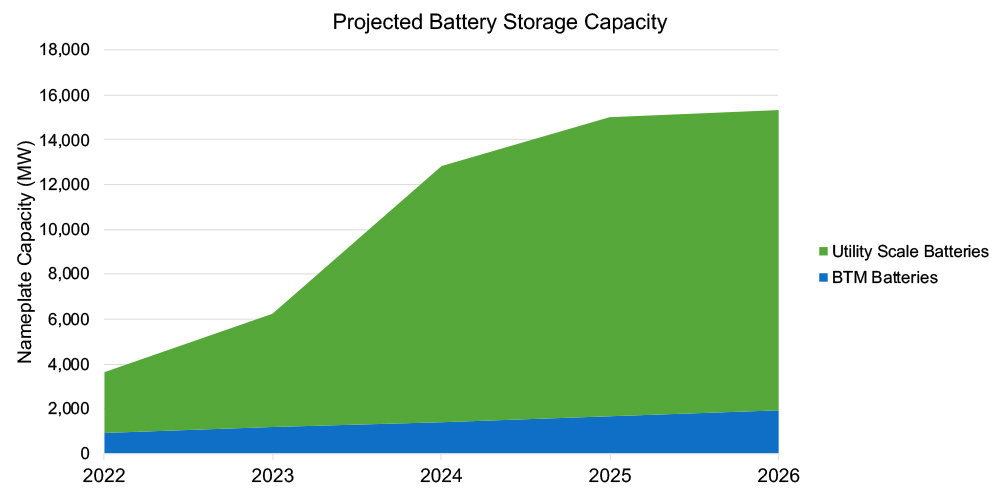
A Sept. 4 outage at Vistra Energy’s Moss Landing Energy Storage Facility, the world’s largest battery array at 400 MW, pointed to one potential flaw in lithium-ion batteries: overheating. Initially the incident was blamed on high heat and fire, but Vistra said in a Sept. 30 statement that it has so far found no evidence of batteries exceeding acceptable temperature limits when its sprinklers went off, damaging a small percentage of units.

The CEC projects a 12,000 MW increase in battery storage from 2022 to 2026. | California Energy Commission

Limitations on imports, solar and hydropower could affect charging conditions, Gill said.

The analysis looked at scenarios in which imports were limited by up to 5,600 MW, hydropower was limited to average minimum generation during non-peak hours, and solar was reduced by 15% to 45% to reflect cloudy or smoky conditions.

The CEC analysts found there was sufficient capacity on the grid until both imports and hydropower were constrained and solar output dropped by 45%.

“Given the extreme nature of this scenario, staff has determined that it does not appear energy sufficiency will be a limiting factor to system reliability in the next five years,” Gill said.

Slow Progress of NJ Community Solar Pilot Draws Fire

Solar developers are increasingly concerned that the New Jersey Board of Public Utilities (BPU) has yet to announce the winning applicants of the state’s second community solar pilot program, eight months after the submission deadline. But the BPU says it is simply coping with the “massive undertaking” of reviewing more than 400 complex applications.

Solar developers and representatives of the Coalition for Community Solar Access (CCSA) and Solar Energy Industries Association (SEIA), two national advocacy groups, told a public hearing on Sept. 28 that the BPU’s failure to announce the winners is putting submitted projects in jeopardy.

Developers that lined up rooftops and signed contracts to apply for the program are struggling to keep their partners on board, with little information from the BPU to calm partner concerns, the industry representatives said. That’s compounded by the fact that BPU has said nothing about whether the second phase will be succeeded by a third pilot phase, a new permanent community solar program, or something else, the representatives said.

The BPU announced in May that it had received 410 applications totaling 800.5 MW by the Feb. 5 deadline —  more than five times the 150 MW that the agency expects to allocate in the second phase.

The number of applications in the second phase is about 60% more than the 252 applications received in the first phase of the program, in which 45 applications were approved for a total of 78 MW. (See Billing Key to NJ Community Solar Growth.) The BPU announced the winners of the first phase in December, about three months after the submission deadline.

BPU spokesperson Peter Peretzman said the program remains on track despite the difficulty of handling the surge in applications.

“There is no delay in the program,” he said. “But rather the review process has taken a significant amount of time and resources due to the number, size and complexity” of the applications, he said.

“We understand the issues the industry brought up and appreciate the urgency. We will provide more information as soon as it’s available,” he said. “We appreciate the strong interest we have received from those who applied, and we expect the board to consider project approvals this fall.”

Expiring ‘Roof Rights’

Speaking at the BPU meeting, Leslie Elder, CCSA’s mid-Atlantic director, encouraged the BPU to announce the awards “as soon as possible” and said there is an “urgent need to bring clarity, predictability and focus to the community solar program.”

The delay has already resulted in some property owners, who had agreed to participate, informing the developer that “their roof rights have expired and that they’re going to be moving on,” she said.

“All contracts have strict timelines that have to be met between the developers and the landowners,” she said. “The uncertainty in awards and what’s next in the community solar program is making it extremely difficult for us to meet those needs.”

Elder said that the organization understands that “the community solar pilot program has experienced both programmatic and administrative delays, which tends to happen [with] a new initiative, let alone when there’s a global pandemic happening.” But she said, “there are growing concerns about the announcement of pilot year two awards.”

Kaitlin Hollinger, a policy manager of Boston-based developer BlueWave, echoed the need for clarity and encouraged the board to address the “urgent concerns within the community.”

Annika Colston, founder of AC Power, a New York City-based solar developer, suggested the BPU provide a timeline on how the program will proceed.

“A great deal of work is completed prior to submission of applications, including partnerships with various stakeholders, such as township governing bodies, local planning boards, community and workforce development partners, property owners, and ratepayers,” she said. “A great deal of goodwill is shared, and commitments are made in an effort to submit the strongest application possible.”

She said the lack of certainty “has reduced the credibility of the program” among her company’s partners.

‘Certainty’ on the Way

The industry’s frustration emerged at the latest of a series of quarterly meetings set up by the BPU— with no set agenda — that are designed to give members of the public and business community a chance to air their views on BPU issues and activities.

Board President Joseph L. Fiordaliso acknowledged the industry’s need for a predictable future and told those at the meeting that “certainty is coming down the line.”

“We are very, very conscious of the industry’s anxiousness regarding certain aspects” of the pilot, he said. With more than 400 applications, it “takes time to evaluate each one individually, diligently and prudently,” he said.

Fiordaliso said he couldn’t say when the awards would be announced but added that the BPU staff is “working extremely hard,” including on improving the “transparency” of the process.

Scott Elias, senior manager of state affairs for SEIA’s Mid-Atlantic region, said the uncertainty is already making it difficult for developers to plan.

“There’s ongoing questions and concerns amongst the industry as to whether a permanent program will be up and running in time to avoid the need for a third year of the pilot,” he said.

Joe Henri, vice president of policy for developer Dimension Renewable Energy, encouraged the board to avoid “putting your staff in a position where they become a bottleneck in a program.”

He said that “month after month” his stakeholders ask what is happening with the project, and “we have to keep telling them that it’s going to be a little bit longer.”

Fear of Interconnection Delays

Fred DeSanti, executive director of the New Jersey Solar Energy Coalition, which represents 27 companies involved in solar development, said the industry is also concerned about utilities’ ability to respond to increasing demand for solar. He urged the BPU to provide more flexibility to account for back-ups in the interconnection process.

With 15,000 projects totaling 1.2 GW ready to be built, DeSanti said he feared that the electric distribution companies (EDC) don’t have the staff to connect them all before the project permits expire.

“We are becoming very concerned that a significant mismatch of resources is beginning to take shape,” DeSanti said. He speculated that only a third of the projects in the state’s Transition Incentive Program will begin commercial operation unless EDC interconnection resources are dramatically increased.

The state stipulates that solar projects have 12 months from BPU approval to get connected to the grid.

He suggested that the BPU take steps to match the volume of projects waiting with the EDCs’ capability to handle them and automatically grant extensions if projects are delayed for reasons out of the developers’ control.

“This would add a great deal of stability and order to the process of providing EDCs with an appropriate planning tool and help relieve anxiety on the part of investors and developers to continue to fund project construction,” DeSanti said.

Francis G. Tedesco, a spokesperson for Atlantic City Electric, said the company continues to invest in and adopt “new grid modeling tools and grid automation technologies as they become available, which allow us to optimize the system and make us better able to accommodate increasing amounts of solar.” That’s enabled the company to increase interconnections, he said.

“However, even with more sophisticated technologies and tools, physical upgrades to increase the capacity of the local energy grid will be required to accommodate the significant growth of solar we expect to see in the coming years,” he added. The company is working with the BPU and other stakeholders to “identify the most efficient and fair path forward to expand capacity on the local energy grid to create new opportunities for solar.”

RGGI Centers Environmental Justice in 3rd Program Review

Environmental justice is taking center stage in the latest Regional Greenhouse Gas Initiative (RGGI) program review now underway.

“[Participating RGGI] states recognize there are challenges related to environmental justice and equity and challenges faced by overburdened and underserved communities, and we commit to listening and better understanding how those issues can be addressed,” Valerie Gray, program administrator at the Delaware Department of Natural Resources, said on Tuesday.

Justice and equity considerations were among the topics that RGGI sought input on during a public engagement session for the program’s third review since its launch in 2009.

During the session, Phelps Turner, a senior attorney at Conservation Law Foundation Maine, called on RGGI to allocate at least 70% of program investments to overburdened communities and to conduct equity-specific analyses.

“The program should conduct equity analyses to show prior investments and demographics of beneficiaries of RGGI investments and to show what power plants have emissions increasing or decreasing and the demographics of impacted residents and workers,” Turner said.

While RGGI has delivered many benefits, such as clean air and energy savings, “the program falls short when it comes to ensuring that those benefits are equitably delivered,” Jordan Stutt, carbon programs director at Acadia Center, said during the session.

Some participating states, he said, have “laudable” equity measures in place already, but the program should ensure that environmental justice policies are required for all its jurisdictions.

“In the same way that the model rule requires certain critical program elements to be implemented consistently across the region to ensure effective program operation, baseline measures to ensure equitable outcomes must also be required at the regional level,” he said.

The public input session will help RGGI develop an update to its model rule, which is the base of the legislation and regulations that each of the 11 program states developed to authorize their participation. RGGI states include Connecticut, Delaware, Maine, Maryland, Massachusetts, New Jersey, New Hampshire, New York, Rhode Island, Virginia and Vermont.

Pennsylvania and North Carolina are both in the process of becoming participating states.

Pennsylvania could begin participating sometime in 2022, according to Brian Woods, an environmental analyst with the Vermont Department of Environmental Conservation. North Carolina is farther behind Pennsylvania in the process to adopt RGGI regulations, so the state likely would not begin participating any sooner than 2023, Woods said.

Emissions Cap

RGGI completed its first program review in 2013 and its second in 2017, according to Lois New, a representative of the New York State Department of Environmental Conservation.

After the first review, she said, the states reduced the program’s regional emissions cap from 165 million tons in 2013 to 91 million tons in 2014 to better align with current emissions. Following the second review, the states committed to a continued emissions cap decline of 30% from 2020 to 2030. The cap bounced back up after New Jersey reentered the program and Virginia started participating at the beginning of this year.

The current emissions cap is now at 119.8 million tons, and that decreases by 3.7 million tons per year through 2030. Three RGGI auctions this year have resulted in $574 million in revenues for participating states, and the last auction of the year is scheduled for Dec. 1.

RGGI sought input during the public comment session on the trajectory of the cap before and after 2030.

Rapidly changing climate policies and scientific data on climate change point to a need to design the trajectory of the cap to reach zero emissions by 2035, Turner said.

Chris Phelps, state director of Environment Connecticut, agreed that the update should include a commitment to the cap declining to zero, but he did not support a specific target date.

That commitment, he said, would ensure that the emissions cap aligns with the ambitious climate mandates many states in the region have put into law.

Review Timeline

RGGI states are working now to develop assumptions for an integrated planning model that will inform a base case for the program review, according to Rupa Deshmukh, senior research scientist at the New Jersey Department of Environmental Protection. A public meeting in December will allow stakeholders to provide input on those model assumptions, she said during the session.

The base case, she added, will reflect the current RGGI cap and relevant state policies that are underway and will be available for public review next spring. Modeling for an additional policy case will analyze potential RGGI policy changes.

“These results will have projected allowance prices, emissions and other impacts related to the electricity sector and the RGGI carbon market,” Deshmukh said.

Separate economic modeling will begin next summer to examine the effects of RGGI implementation, with projections on employment and other economic growth indicators.

Together, all the modeling will help RGGI states consider potential changes to the program’s model rule, which they will release in draft form next fall. After considering the draft updated model rule with public input in December 2022, Deshmukh said, the states will conclude the program review and begin individual rulemaking processes to align their regulations with the update.

CGEP Talks Repurposing Infrastructure for Low-carbon Energy

The world needs to transform tens of trillions of dollars in energy infrastructure by midcentury to decarbonize the global economy and move away from fossil fuels, and a good portion of the existing assets can be repurposed to carry or accommodate low-carbon energy.

“How do we reconcile any new capital investments in energy infrastructure that need to be aligned with net-zero [emissions] with the reality that today’s energy system is very far from that, as energy shortages across Europe and Asia are reminding us acutely?” Jason Bordoff, director of Columbia University’s Center on Global Energy Policy, asked during a webinar the center hosted Monday.

Even if all the necessary solar panels and wind turbines were installed tomorrow, it would still not be enough to achieve net zero because there are very significant parts of the economy that cannot be easily or affordably electrified with current or even short-term future technology, said Maarten Wetselaar, director for integrated gas, renewables and energy solutions at Royal Dutch Shell.

“Think about the production of steel and cement or petrochemicals where you need a molecule to start with, but also to be transported by planes and ships and heavy trucks,” Wetselaar said. “Certainly advanced biofuels and hydrogen will be playing a crucial role in those sectors in the future, but they’re not sufficiently available yet. It will take time to scale up their production to become a meaningful part of the energy mix.”

Clockwise from top left: Jason Bordoff, CGEP; Maarten Wetselaar, Royal Dutch Shell; Melanie Kenderdine, Energy Futures Initiative; Maria Elena Drew, T. Rowe Price; and Demetrios Papathanasiou, World Bank | CGEP

Bordoff asked him to respond to the skepticism — which he suspected some viewers had — that there’s some degree of “greenwashing going on when we hear people in the energy sector” talk about needing to keep investing in pipelines and to take time in transitioning away from fossil fuels.

If society in the coming decade puts all the money available to be invested into creating clean energy, there’s likely to be a deficit of energy required for consumption, Wetselaar said.

“We need to thread the needle of producing just enough of today’s energy so the world can continue to turn,” Wetselaar said. “You can’t stop investing in oil and gas, because it will decline 5% per year, and the world is not ready with alternatives because the size of the global energy system is just so large it will take more time than that.”

Natural gas is going to be a very important transition fuel, said Maria Elena Drew, director of research at T. Rowe Price. “If we think about a just transition, it’s pretty critical that we have natural gas; otherwise it’s going to be tough to keep the lights on; it’s going to be tough for politicians to stay in office and to put policies in place for the energy transition.”

Costly Coal

The developing world accounts for about 93% of the capital invested in coal-fired power generation, which risks being stranded. So, to eliminate all the emissions from today’s roughly 2,100 GW of coal units by 2040 requires closing one plant a day, said Demetrios Papathanasiou, director of the World Bank’s Energy and Extractives Global Practice.

“Of course, China and India are among the major countries where these figures are very important,” Papathanasiou said. The value of these stranded assets in terms of GDP ranges between 2 and 10% of GDP, “very high numbers” amid a global pandemic, he said.

“There’s still about $15 trillion in assets and bonds that are earning a negative return. … Even my home country Greece, which is notorious for its difficulties on the macro side, [managed] a few months back for short-term debt to get a negative interest rate,” Papathanasiou said. “That shows that we live in a very special time; we have enormous financial needs, and there are significant unprecedented events that are taking place in financial markets.”

For coal plants in India and China, the land that surrounds a plant has very significant value, Papathanasiou said. “There is even significant value in the scrap metal if you decide to take everything down and sell it off as scrap.”

An unidentified participant asked whether an aggressive carbon price would enable needed changes to infrastructure.

“One of the challenges we’ve seen as investors, and one of the easiest things for regulators to do, is to drive more sustainable finance,” Drew said. “Seeing more action from regulators would help because, if you think we’re moving to a net-zero world, we as investors are going to anticipate that in our investments, but if the regulation isn’t coming, we’re going to end up being wrong.”

The electrification of everything and its contribution to deep decarbonization depends on how you’re generating your electricity, said Melanie Kenderdine of Energy Futures Initiative. In the Pacific region of the U.S., the Energy Information Administration now considers hydropower as a non-dispatchable energy resource because of drought. “Electrification is a good policy if you’re not then running your home heating on coal,” she said.