NY Seals Goal for Zero-emission Passenger Vehicle Sales

New York Gov. Kathy Hochul signed a bill Wednesday that sets a goal for the state to have all new passenger car and truck sales be zero-emission vehicles (ZEV) by 2035.

The bill (A.4302/S.2758) also sets goals for all medium-duty- and heavy-duty (M-HD) vehicle sales to be zero-emission technologies by 2045, where feasible, and to achieve zero-emissions from off-road vehicles and equipment by 2035, where feasible.

Hochul said in a statement that the goals are a “critical milestone” in New York’s effort to decarbonize the transportation sector, which accounts for 36% of the state’s greenhouse gas emissions.

The new law directs state regulators to propose regulations that step up the number of vehicle sales in each category to reach the goals. In addition, state agencies must begin a coordinated effort to build a ZEV market development strategy by 2023, with updates every three years.

By July 2023, state agencies also must develop a near-term plan to improve freight and transit options.

“Gov. Hochul just issued the expiration date for vehicles with tailpipes,” Peter Iwanowicz, executive director of Environmental Advocates NY, said in a statement. “Because the pollution from them causes people to get sick, can lead to early deaths and is the biggest source of the pollution driving the climate crisis, the end date cannot come fast enough.”

His group is now asking climate advocates in the state to urge Hochul to “continue the momentum on climate” by signing the Electric Vehicle Charging Infrastructure bill (A.3876/S.3929). The bill would direct the state’s utilities to develop beneficial rate structures to facilitate faster EV charging. The State Legislature passed it in April along with the ZEV bill.

California Regulations

In announcing the new ZEV goals, Hochul also said that she directed the Department of Environmental Conservation (DEC) to issue its proposed rulemaking to adopt California’s Advanced Clean Truck (ACT) regulations.

The DEC presented its plan for the proposed rulemaking to stakeholders in February, saying that the move would build on the state’s commitment with 14 other states to lower M-HD vehicle emissions. It would set ZEV standards and reporting requirements for M-HD trucks under New York’s existing low-emission vehicle program. (See NY Considers Rulemaking for Medium to Heavy ZEVs.)

The regulations include a provision that aligns with the new state goal for all M-HD vehicles to be ZEV by 2045.

“Trucks are dirtier than passenger vehicles and are responsible for an excessive amount of air pollution — relative to their population — that causes asthma and premature deaths in New York’s communities,” Mary Barber, director of regulatory and legislative affairs at the Environmental Defense Fund, said in a statement. “The [ACT] rule is a key element to scaling up the zero-emission truck market with available and affordable vehicles to reduce harmful transportation emissions.”

If finalized, the regulations would begin with model year 2025.

The DEC will hold a public hearing on the proposed rule on Nov. 8 and is accepting public comments on it through Nov. 17.

WECC Board Approves Stakeholder Committee Shakeup

WECC’s Board of Directors last week approved a proposal to reorganize the regional entity’s stakeholder group structure, marking the conclusion of a year-long effort that provoked resistance from members who feared the changes could diminish their say in the organization’s decision-making.

WECC management initiated the shakeup last October to better align the work of WECC’s technical standing committees with the organization’s new focus on ensuring resource adequacy in the Western Interconnection. (See Plan Would Consolidate, Cull WECC Stakeholder Groups.)

And while the final plan fell short of earning undivided support among stakeholders, it did in the end gain assent from two important corners — WECC’s Member Advisory Committee (MAC) and the Western Interstate Regional Advisory Body (WIRAB).

Speaking at Thursday’s quarterly WECC board meeting, MAC Chair Brenda Ambrosi, market policy and operations manager at BC Hydro, said the MAC had been “deeply engaged” in the effort. She  expressed appreciation for the “numerous” updates WECC leaders provided her committee on the various iterations of the proposal. (See WECC Overhauls, Expands Stakeholder Committee Plan.)

“Overall, the MAC members ultimately supported the proposal, although not unanimously, but we did recommend positive action be taken in anticipation that the technical committee proposal will be approved today by the board,” Ambrosi said.

“I’d like to acknowledge and congratulate WECC staff and the [Stakeholder Engagement Task Force], who have made great efforts over the past year to bring this issue over the finish line, where I was glad to see this proposal before the board for approval and moving on to the implementation phase,” WIRAB Chair and Idaho Public Utilities Commissioner Kristine Raper said.

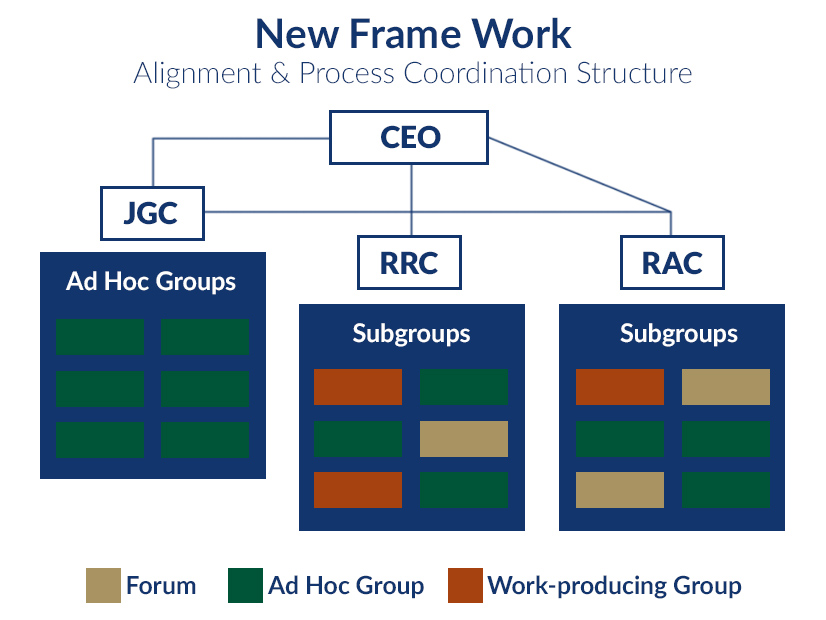
The plan approved Thursday consolidates two of WECC’s three standing technical committees — the Market Interface (MIC) and Operating (OC) committees — into a newly formed Reliability Risk Committee (RRC). The RRC “will be responsible for analyzing situations or events, mitigating known risks, and identifying potential future risks to the system, as well as performing emergent work” assigned by WECC’s CEO or Joint Guidance Committee (JGC), according to WECC.WECC’s stakeholder committee reorganization creates a new Reliability Risk Committee, beefs up the Joint Guidance Committee and leaves the Reliability Assessment Committee intact. | WECC 

“This will be done the same way the OC and MIC do today — examining issues, analyzing system performance, reviewing and approving work products for industry use, creating guidelines — and by any other means suitable for identifying, analyzing, and sharing information about risks to the BPS. However, the RRC creates more opportunity for market and operational perspectives to be considered jointly in the analysis of risk,” WECC said.

A co-chair structure is designed ensure that both market and operating perspectives are represented on the RRC. A steering group consisting of the RRC’s co-chairs and the chairs of its subgroups will guide the committee and develop its work plans.

The proposal leaves intact WECC’s other standing technical committee, the Reliability Assessment Committee (RAC), which will continue its regional reliability assessment work while also taking on resource adequacy assessments as requested by WECC management, the board, or other bodies. WECC leaders had previously determined that the committee’s focus already aligned with WECC’s organizational aims.

New and Improved JGC

Earlier versions of the plan had proposed to disband the JGC and replace it with a more authoritative Committee Review Body (CRB), but the final iteration left the JGC intact while endowing it with broader powers and responsibilities. (See Stakeholders Balk at WECC Oversight Plan.)

Whereas the JGC is currently charged with discussing the work plans of standing committees and seeking opportunities for collaboration among committees and work groups, the newly empowered JGC will:

      • review work plans for alignment with WECC’s strategic objectives and risk priorities, while also ensuring those plans contain adequate detail — rather than just “monitoring.”
      • perform gap analyses of the work plans to identify reliability risk priorities not being addressed.
      •  assign work to “existing or new groups” to address any identified gaps.

The JGC will also have enhanced oversight over the long-term direction of the technical committees, including:

      • performing “rolling reviews” of each committee every three years, as well as reviewing committee and work group charters and recommending changes for board approval.
      • preventing “scope creep” among committee work groups.
      • reviewing any concerns related to a work group and parent committee and advising WECC’s management and board “as appropriate.”

The JGC will also be responsible for developing the criteria for creating new subgroups (except for those established by WECC management), ratifying new work groups created by technical committees and identify which subgroups should be retired.

“The single most important provision in this proposal is the streamlining of technical committee governance under the direction and oversight of the Joint Guidance Committee,” Raper said. “Shifting these governance and administrative responsibilities to the JGC will allow subject matter experts to continue to focus on producing timely and meaningful work products. We all know that change is hard, but a strong JGC with good leadership can help streamline this transition.”

‘Steep Hill to Climb’

Before Thursday’s board vote, WECC General Counsel Steve Goodwill said, “What I believe is really important for us to focus on today is sort of what comes next, following the board’s approval of the proposal.”

Those tasks include identifying JGC members, revising the JCG and RAC charters as needed, drafting the RRC charter, identifying impacts on any in-process work products, and kicking off the process of recategorizing work groups based on committee classification.

Goodwill put out the call for volunteers for the role of RRC co-chair from the markets discipline (The operations co-chair position has already been filled.).

“If you want to lead the RRC and its subgroups to do exceptional work on behalf of WECC, please contact us and let us know that you’d like to be considered for appointment as the RSC co-chair, or if you know someone who would be a great co-chair role, please urge them to contact us,” he said.

Goodwill also cautioned that the organizational changes provide just the framework for WECC’s transformation into a reliability-oriented organization.

“The real transformation must come from how WECC actively engages with stakeholders, how we harness the energy, enthusiasm, commitment and knowledge and expertise of literally hundreds of technical SMEs, policymakers, regulators and executives across the Western Interconnection to make the work of WECC our work,” he said.

“I was going to say it’s time to put the rubber to the road, but I think I think we’ve been putting a lot of rubber to the road already to get to this point,” WECC board Chair Ian McKay said after the vote to approve. “But from here on, the implementation is going to be a steep hill to climb, and certainly we need all the support we can [get] from members and stakeholders.”

WECC is targeting Feb. 1, 2022 for completion of the committee changes and hoping to hold the first RRC and RAC meetings that month.

New York Adopts Groundbreaking Transmission Investment Rules

New York regulators on Thursday established a new category of transmission and distribution investments — those made to help achieve the state’s environmental goals — and directed investor-owned utilities to revise their proposed benefit-cost analyses and to resubmit them within 90 days (20-E-0197).

Citing the urgency of climate challenge and the statutory mandates of the Climate Leadership and Community Protection Act (CLCPA), the Public Service Commission’s order said that if other changes to proposed investment criteria are warranted in light of changes to the benefit-cost analysis, the utilities are required to file those as well.

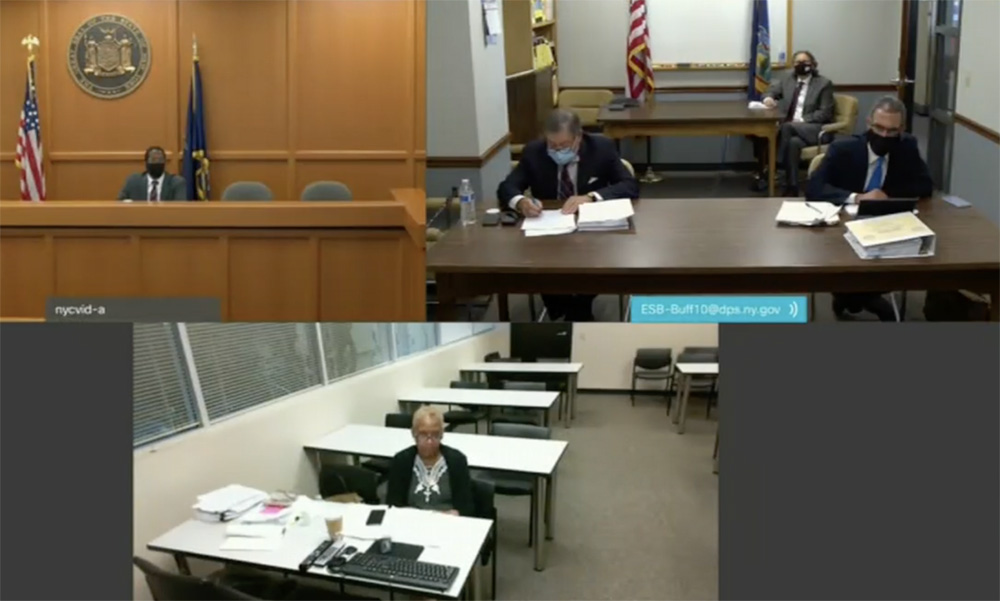
NYPSC Commissioners participating remotely, clockwise from top left, were Rory Christian; James Alesi and John Maggiore; and Tracey A. Edwards. | NYDPS

The CLCPA requires that 70% of electricity generation come from renewable resources by 2030 and that generation be 100% carbon-free by 2040.

“Today does usher in a new era of transmission planning in New York state,” said PSC Chair John B. Howard. “Traditional planning by utilities was to serve their native load, specifically, based on a fossil and nuclear-based system. This paradigm will redesign the system to meet renewable goals statewide and will require an unprecedented level of cooperation between transmission owners.”

Phase 1 projects are traditional utility investments that address system reliability or resilience issues, while phase 2 projects are investments made primarily for the purpose of achieving CLCPA. The new order on local transmission and distribution planning processes and phase 2 project proposals requires the utilities to work with stakeholders, Department of Public Service (DPS) staff and NYISO to develop and then file a transmission planning process that meets the standards for transparency, consistency of models and coordination established in the order.

“While the order recognizes that this will be a significant effort, it is essential to the implementation of the act and a filing is required within 90 days,” Elizabeth Grisaru, deputy director of the DPS Office of Electric Gas and Water, said during the PSC’s regular monthly meeting.

The utilities outlined their methodology in a November 2020 report, which the state considered in a study released by the New York State Energy Research and Development Authority (NYSERDA) and DPS in January. (See NY Looks to Improve Tx Headroom Assessments.)

The order noted that mechanisms for cost recovery and cost allocation for this new type of investment do not yet exist and approved the utilities’ proposal to charge the costs of phase-2 projects across ratepayers under a volumetric load ratio share allocation.

Funding and Utilities Forum

The PSC also found that a FERC-approved participant funding agreement among the utilities could establish an equitable system for sharing the costs of these projects. However, additional study is needed on how to implement such an agreement.  A further filing on this topic is required within 120 days after consultation with staff, Grisaru said.

The commission rejected the utilities’ proposal to bring their potential phase-2 investments into the commission’s ongoing rate cases; rather, the commission will establish a specific forum for coordinated review of those projects and their costs from a whole state perspective and on a repeatable cycle.

While the order did not approve any phase-2 projects, it recognized that there are certain areas of the state where renewable generation already is bottled and where additional generation projects are either in development or anticipated, Grisaru said.

The order directs the relevant utility companies to address these areas of concern with detailed phase-2 proposals, including options based on their assessment of these areas’ development potential.  The proposals are due within 180 days.

Lastly, the order adopts staff’s recent proposal for revising the way the utilities calculate headroom on the grid — that is the system’s ability or capacity to integrate renewable generation in order to support the CLCPA’s goals. The order directs the utilities to provide updated headroom data to DPS staff, NYISO and potential bidders no later than Feb. 1, 2022.

During the PSC meeting, Commissioner Diane Burman sought clarification on next steps, including the timeline for the forum for coordinated review of the phase-2 investments.

“Jan. 1, 2023, per the statute for the Accelerated Renewable Energy Growth Act, is supposed to be the kickoff for the commission’s first review of this transmission and distribution planning program, so we thought that provided a good touchstone and also provided enough time for the utilities to engage in the revamped planning process that we are contemplating and to produce an effective and well-coordinated portfolio of potential projects,” Grisaru said.

In creating a new public policy planning process, the commission identified FERC as the entity that might may be able to assist in terms of rate recovery, and broke the proceeding up into two parts, local distribution and bulk power system issues outside of offshore wind, to make it more manageable, Burman said.

Burman also sought clarification on the status of that process.

“Again referring to the results of the power grid study, we the staff recommended that the commission pay very close attention to the cycle of bulk system studies so as to stay ahead of the bulk system needs that we expect to emerge, particularly as we get into 2030, so we are right now continuing to rely on those processes,” Grisaru said. “We expect to take up that question and expect to bring back to this commission some further recommendations relating to the power grid study in a subsequent order.”

The commission also approved the second construction phase of the 86-mile, $484 million Smart Path project by New York Power Authority in St. Lawrence County, and approved the 12-mile, approximately $100 million Rock Tavern to Sugarloaf transmission project in Orange County by New York Transco.

The latter project is being built in connection with a larger transmission line upgrade known as the New York Energy Solution, which is designed to provide additional transmission capacity to move power from upstate to downstate and is to be operational by December 2023. (See NYPSC OKs Rebuilding Upstate Tx Lines.)

TVA Sued Over Contributions to Trade Groups

A conservation group has sued the Tennessee Valley Authority over its contributions to trade associations and industry groups.

The Center for Biological Diversity (CBD), arguing those contributions are a misuse of ratepayer funds, said it’s inappropriate for TVA to make payments worth millions to Edison Electric Institute, the Energy and Wildlife Action Coalition and other groups. The CBD characterized the two as “anti-environmental advocacy groups” and said TVA is violating First Amendment rights by forcing customers to fund the organizations when they only serve the utility’s interest. It said ratepayer’s unwitting contributions amount to political speech.

The lawsuit was filed Thursday in the Eastern District of Tennessee. The Southern Alliance for Clean Energy (SACE), Alabama Center for Sustainable Energy, Appalachian Voices, Solar United Neighbors, and Sowing Justice joined CBD in the filing.

The groups said EEI and the Energy and Wildlife Action Coalition “litigate and lobby to delay the critical transition to clean energy, hamper efforts to combat the climate emergency and deny protections to imperiled wildlife.” Since 2015, TVA has paid annual dues of about $500,000 to EEI, which CBD said lobbies against decarbonization.

The conservation group also said TVA invoices reveal that dues to Utility Water Act Group, Utility Solid Waste Activities Group and the now-defunct Utility Air Regulatory Group (UARG) were partially billed for “influencing legislation.” The utility-backed groups fund law firms that lobby against environmental legislation, though not explicitly on TVA’s behalf.

TVA has paid about $7.3 million since 2001 to the UARG, which was dissolved in 2019. It also currently pays more than $100,000 annually for membership in the Utility Solid Waste Activities Group and has paid about $200,000 for services in 2018 to the Utility Water Act Group, which opposes Clean Water Act protections.

During a 2019 congressional probe of UARG by the House Energy and Commerce Committee, TVA CEO Jeff Lyash was asked to explain TVA’s involvement with the group. He said UARG membership helped the agency “understand, plan for, and comply with highly technical and complex regulations” associated with the Clean Air Act.

But CBD said the disbanded group’s sole function was to “undermine regulations designed to protect human health and the environment.” It said TVA’s membership violated its own environmental stewardship mandate.

CBD took exception to unspecified amounts paid to the Nuclear Energy Institute. TVA has not publicly released how much it contributes to NEI.

The lawsuit also seeks to compel TVA to respond to CBD’s early 2020 petition outlining the same spending concerns. CBD said TVA has not addressed the petition beyond insisting its payments are appropriate.

“As the nation’s largest public power provider and a federal agency, the Tennessee Valley Authority needs to demonstrate leadership by halting the financing of groups propping up the fossil fuel economy,” Howard Crystal, legal director of CBD’s Energy Justice program, said in a release. “Instead, it funds these groups to do its dirty work while it moves forward with building new fossil gas plants. TVA can and must do better.”

The agency is facing mounting pressure to commit to a quicker decarbonization timeline than its current 2050 goal. (See Green Groups Pressure TVA on Open Meetings, Decarbonization.)

“TVA is unique in the power industry in that environmental stewardship and economic development are codified in the agency’s founding mission,” Maggie Shober, SACE’ s director of utility reform, said. “It is imperative that the largest public power utility operate with accountability and transparency, stop funding anti-environment and anti-green jobs work, and invest in clean energy that will support the health of the Valley and the people who depend on it.”

TVA spokesperson Ashton Davies said the organization had not been officially served with the lawsuit as of Friday.

“As a federal agency, TVA is prohibited from participating in lobbying activities, and the TVA Board has directed that any dues, membership fees, or financial contributions paid to external organizations not be used for purposes inconsistent with TVA’s statutory mission or legal obligations,” Davies said in a statement to RTO Insider. “Like other major utilities, TVA’s membership in a diverse array of external organizations allows TVA access to specialized expertise and analysis that directly benefits all of our customers at a cost significantly lower than if TVA were to undertake such work alone.”

CBD has a separate petition in front of FERC seeking to amend the commission’s Uniform System of Accounts so that utilities’ payments to trade and advocacy groups aren’t recoverable from ratepayers. It says the change would compel utilities to “either demonstrate how funding these groups is in the public interest or provide this funding from shareholders rather than ratepayers.”

Overheard at the USEA Advanced Energy Technology Forum

The future of the U.S. energy system is integrated, which had multiple meanings and raised complicated questions for a range of speakers at the United States Energy Association’s Advanced Energy Technology Forum on Thursday.

At Brookhaven National Laboratory in New York, the focus is on integrating thousands of megawatts of solar, offshore wind and energy storage onto the state’s electric system, said James Misewich, the lab’s associate director.

“What is the right energy storage technology? I don’t think lithium-ion is actually going to be that scalable solution we’re going to need,” Misewich said during an opening panel discussing the new technologies being developed at his and other national laboratories.

“We’re looking at other technologies — aqueous electrolyte storage capabilities, for example, that reduce fire hazards, and using more Earth-abundant materials, like zinc and manganese … There’s a nexus of energy storage challenges and grid challenges that need to be addressed together. We want to answer this question with modeling before we try to answer it on the real electric grid,” he said.

The half-day virtual forum provided a condensed, at-times provocative overview of the emerging technologies and policies that will be critical to rapid decarbonization of the U.S. grid, and the opportunities and challenges they pose for diverse stakeholders and regulators.

At FERC, Commissioner Allison Clements is looking at another critical nexus — in the Western states — on the need for integrated power systems that can “improve reliability, decrease cost for customers and ensure resilience in the face of disasters and extreme weather events.

“I’m spending a lot of time listening to people in the West, trying to understand what a more coordinated, more integrated market looks like for them,” Clements said during the forum’s second panel on infrastructure challenges at the federal and state level.

FERC has “a lot of expertise to bring to the table under the Federal Power Act,” she said. “We have concurrent jurisdiction with the states around a lot of these issues; so, things will not work in this rapidly changing environment if we’re not kind of walking together with the states on this path towards increased coordination.”

Unaffordable Resilience

Paul Kjellander, president of the National Association of Regulatory Utility Commissioners (NARUC), pointed to a new FERC joint task force on transmission that will provide federal and state regulators a forum to tackle cost and benefit allocation issues that can hamstring projects. NARUC recently nominated 10 state utility commissioners to the task force, which will have its first meeting at NARUC’s annual meeting in November, Kjellander said.

But he also echoed many in the power industry on the challenges of siting and approving transmission projects, and the problems for utilities when projects get stalled. The key differentiator between transmission projects that get built and those that don’t is whether they run through federal land subject to the intensive permitting process required under the National Environmental Protection Act (NEPA), he said.

The NEPA process can take years, he said, and by the time such projects get sited, utilities may have to “find other options to serve the load. You can’t wait; you have to serve that load … and that makes that transmission line obsolete before you even break ground.”

Speaking on the challenges of system resiliency and hardening in the face of extreme weather events and wildfires, Kjellander said the pain point for utilities and regulators is often cost. Utilities could certainly build systems that could power up quickly after a storm, but the cost of such a system could make electricity unaffordable, he said. The unprecedented nature of recent storms and fires also makes adequate system hardening extremely difficult, he said.

With complex issues coming at regulators left and right, NARUC is now “laser-focused” on regulator education, Kjellander said.

“People aren’t aware of the harsh reality of being a regulator. The average tenure of a state commissioner is four years, and in many states, they don’t get elected because of everything they know about the utility sector, they get elected because they’re more popular than the person they ran against. … We’ve got to look at that — the need to educate regulators — to create the platform for them to get up to speed sooner, so they can be sharper and stronger in their role.”

Decarbonized, Distributed, Digitized

Mark Lauby, senior vice president and chief engineer at NERC, also spoke about the challenges to grid safety and reliability in the face of unprecedented extreme weather events that are widespread, of long duration and not going away.

“We need to understand what the implications are and plan, design and operationally plan what I’m going to be doing the season ahead to deliver the energy and such reliability services,” Lauby said. “And then also on a rolling, three-week basis, where am I going to get my energy from? These are the challenges being faced more and more.”

As the energy system becomes increasingly decarbonized, distributed and digitized, he said, current resource adequacy measures may already not be sufficient.

“We have multiple states where actually the worst time may not necessarily be on peak, but maybe when you are doing maintenance on units and you have a sudden cold spell, and now all of sudden, all your energy gets sopped up,” Lauby said. “What does that mean and how do we plan for that?”

Looking at the winter power outages in Texas, Lauby said, “This is the first time I’m aware, where load became a critical element to the reliable operation of our system. That is to say that we didn’t serve that load; that load then could not serve us. So that interdependency is something we have to start recognizing and modeling.

“One of the questions will be where are the balancing resources really coming from?” he said. Utilities and grid operators will have to manage “the uncertainty of various mixes that we have as we translate this policy and economic [realities] into a resource mix, which is perhaps more sensitive to weather and certainly has a built-in uncertainty to fuel,” he said.

Natural gas support will be needed until other technologies, like storage, hydrogen and small, modular nuclear reactors are available at commercial scale, he said. “Kind of like, in case of emergency, break this glass and move in.”

What Net Zero Means

For Marianne Walck, deputy lab director at the Idaho National Laboratory, an integrated system means developing applications for advanced, small and even transportable nuclear reactors to produce power and heat for industrial processes, clean hydrogen production and water desalinization. The lab is building its own microreactor — the Microreactor Applications Research Validation and EvaLuation (MARVEL) project — which Walck said could be online by 2023, with two microreactor test beds also being planned.

The goal for nuclear and low-carbon technologies such as carbon capture is to scale and bring down costs by expanding their uses beyond electricity production, said Jennifer Wilcox, the DOE’s principal deputy assistant secretary for fossil energy and carbon management.

The department’s work on carbon capture has been mostly focused on coal, she said, but “we’re leveraging that expertise” to examine capturing natural gas in the power sector while also looking at industrial sectors as well, specifically cement and steel.

“When you look at coupling these kinds of industries to carbon capture and reliable storage, you can provide low-carbon supply chains to help others meet their emissions reductions in terms of net-zero goals,” Wilcox said.

Carbon capture goes to the heart of “what net zero means,” she said, referring to the “committed emissions” that are already in the atmosphere or will be as a result of ongoing fossil fuel use.

“For every carbon dioxide molecule we put into the atmosphere, we have to be able to pull it back out, and that’s net zero. That’s the simple math,” she said. “We have to deep-decarbonize in every sector and every chance we can … because if we don’t do it, and we let those emissions go into the atmosphere, we’re going have to pull them back out.”

But scaling carbon capture technologies — such as the Orca direct-air capture plant opened on Wednesday in Iceland — should not be seen as a license to continue “burning fossil fuels 24-7,” Wilcox said.

“Things like direct air capture should really be used very strategically in order to offset emissions that are hard to avoid, like the aviation sector as a whole and agriculture. One of the things we’re trying to do in our office also is decoupling carbon dioxide removal from fossil [fuels] so that they’re not conflated.”

NJ Breaks Ground On Offshore Wind Hub

New Jersey officials broke ground on the New Jersey Wind Port project Thursday, predicting the manufacturing, assembly and marshalling hub in South Jersey would serve not only the state’s offshore wind projects but also others on the East Coast.

Gov. Phil Murphy (D) marked the start of construction on the port at the project site on the Delaware River in Lower Alloways Creek with a press conference that included U.S. Labor Secretary Martin Walsh, state and local elected officials, and union leaders. At the end of the conference, the United Building Trades Council of Southern New Jersey AFL-CIO signed a project labor agreement with AECOM-Tishman, the project construction manager, stating that union labor would be used for the project.

The wind port, and the effort to create a hub that will serve the regional wind industry supply chain, are key parts of Murphy’s goal to create a state offshore wind sector that will generate 23% of the state’s energy by 2050. The state aims to create wind projects totaling 7,500 MW by 2035.

The New Jersey Board of Public Utilities (BPU) has so far awarded three wind projects in two solicitations since 2019: the 1,100-MW Ocean Wind 1 and 1,148-MW Ocean Wind 2, both developed by Ørsted, and 1,510-MW Atlantic Shores, a joint venture between EDF Renewables North America and Shell New Energies US. The BPU is planning to hold three more solicitations over the next five years. (See: NJ Awards Two Offshore Wind Projects.)

“This location will provide essential staging, assembly and manufacturing activities related to offshore wind projects not just in New Jersey, but up and down the East Coast,” Murphy said. “For far too long, we’ve been fed a line that we could either create jobs or improve our environment and fight climate change, but not both. Today, I think we can finally put that old way of thinking to bed for good.”

He and other speakers said the state had seen proof of the need to act rapidly against climate change in the damage wreaked by Hurricane Ida last week, which dumped eight inches of rainfall in a single day, causing massive flooding that killed more than two dozen people.

Jobs and Investment

State officials say the New Jersey Wind Port will create up to 1,500 manufacturing, assembly, and operations jobs, as well as hundreds of union construction jobs. The port is expected to include a nacelle assembly facility built by General Electric (NYSE:GE) and another to be built with manufacturer MHI Vistas. German manufacturer EEW Group is building a monopile factory in the nearby Port of Paulsboro. (See New Jersey Shoots for Key East Coast Wind Role.)

The state picked the wind port site in June 2020 after a 22-month assessment process. The current state budget includes $200 million for the project, and the BPU has awarded it $13 million. The state budget, in partnership with the New Jersey Department of Transportation, will provide another $44 million for dredging. (See: NJ EDA Approves Lease and Funding for Offshore Wind Hub.)

The port’s website says the facility will “support up to $500 million in new economic activity within the state and region each year.” The port’s assets will include “purpose built marshalling space,” heavy-lift wharfs and open access to the Atlantic Ocean that is unimpeded by bridges, a key issue because wind turbines that can be hundreds of feet tall are transported upright to their destination. The port offers “short steaming distances” to more than 50% of U.S. offshore wind lease areas, the website says.

Murphy told the conference that the wind port would “establish New Jersey as both the epicenter of the nation’s offshore wind industry and the head of the offshore wind supply chain.”

State Senate President Stephen M. Sweeney, in whose district the port will be built and who fought to make it happen, said the state’s initiative will give New Jersey the edge in what could be a tough battle among states to grab a slice of the fast-growing wind industry.

“If you read around the country up and down the coast, every state’s racing for manufacturing,” he said. “But guess what? We’re here first. We got here first.”

East Coast Wind Competitors  

Other states also are staking claims to the OSW supply chain.

The Port of Virginia announced a week ago that it has agreed to lease 72 acres of its Portsmouth Marine Terminal to Dominion Energy (NYSE: D) to serve as a staging and preassembly area for the 2.6-GW Coastal Virginia Offshore Wind project. And US Wind Inc. has outlined plans to develop 90 acres of waterfront in Baltimore County into an “offshore wind deployment hub,” including a factory for monopiles.   

New York, with wind projects totaling 4.4 GW already procured, is developing wind support facilities at five locations, including a tower-manufacturing plant in the Port of Albany and a turbine-staging facility and operations and maintenance hub at South Brooklyn Marine Terminal.

Walsh called the New Jersey port project “transformative” and echoed the sense offered by state officials that the state’s project carried importance beyond the state boundaries. Walsh said it reflected President Biden’s effort to harness infrastructure development to boost economy opportunity and “create a pathway into the middle class,” creating opportunities for minority and women workers and business owners.

The New Jersey Economic Development Authority is working with AECOM-Tishman to ensure at least 25% of subcontractors for the port construction are small businesses and at least 15% are women-, minority- or veteran- owned, according to Murphy’s press release.

“This project is the beginning of an opportunity for us to really show a way forward,” Walsh said. “New Jersey is showing a way forward by this project right here, showing us how to do it in the country. Other states can follow suit.”

FERC Investigating Avangrid-NextEra Dispute over NECEC Interconnection

FERC on Tuesday ordered Avangrid (NYSE:AGR) and NextEra Energy (NYSE:NEE) to submit additional briefs in their ongoing dispute over the New England Clean Energy Connect (NECEC) transmission line project, which would bring 1,200 MW of Canadian hydropower through Maine to Massachusetts (EL21-6, EL21-94).

The commission also opened a proceeding to determine if specific provisions of ISO-NE’s tariff are unjust and unreasonable in relation to the RTO’s classification of a circuit breaker at NextEra’s Seabrook Nuclear Station in New Hampshire.

Avangrid alleges that NextEra “is attempting to block, delay or add unreasonable costs to the interconnection” of the NECEC project and argues that the ISO-NE tariff requires Seabrook to accommodate the project’s interconnection and “act in good faith” by upgrading a circuit breaker. Avangrid contends that NextEra has made it clear that it will not replace the breaker unless ordered to do so by FERC.

NextEra argues that Avangrid assumes that the Seabrook breaker is a transmission facility when in fact it is part of the generating facility. The breaker does not transmit energy and therefore not under the ISO-NE tariff provisions cited by Avangrid, which apply to network upgrades, NextEra says.

ISO-NE did not formally intervene in the proceeding but submitted a letter to the commission urging “expeditious” action to resolve the matter. FERC, in turn, wants the RTO to submit briefs on whether Seabrook’s breaker is correctly identified as a part of a generating facility.

Danly Dissents

Republican Commissioner James Danly dissented, saying that while his fellow commissioners cite the development of transmission projects as a priority, they have allowed this matter “to languish for nearly a year and have yet to issue an order on the merits.”

Danly said such a delay is “unacceptable.”

“Instead, the commission has waited four more months until today, 11 months after NextEra Seabrook filed its petition, to issue this order,” Danly wrote. “And even now, the commission is not ruling on either NextEra Seabrook’s petition or Avangrid’s complaint.”

Danly said the additional briefings to address whether NextEra Seabrook is obligated to complete the upgrade at its own expense under the terms of its interconnection agreement with ISO-NE, which was not previously raised, is not justified.

“The commission invites briefing on matters that it should be able to resolve wholly on the basis of the agreements between the parties, the ISO-NE tariff and commission precedent,” Danly said. The additional briefings have “all but guaranteed that the generation breaker upgrades will be delayed for at least a year and a half.”

CAISO Seeks DOE Emergency Reliability Order

CAISO applied to the U.S. Department of Energy this week for an emergency order meant to boost natural gas generation for grid reliability while potentially exceeding limits on harmful pollutants.

The request covers six generators including aging power plants and new mobile units at existing facilities that the ISO is hoping to connect by Sept. 17, providing a total of 200 MW of additional supply.

“The CAISO respectfully requests that [Secretary of Energy Jennifer Granholm] issue the requested emergency order by Sept. 10, 2021, or a soon as possible thereafter, authorizing specific electric generating resources located within California to test and operate at their maximum generation output levels when directed to do so by the CAISO, notwithstanding air quality or other permit limitations,” CAISO COO Mark Rothleder wrote to Granholm.

CAISO’s cited reasons include high temperatures in the West, wildfires that threaten the bulk power system, and “drought conditions [that] are greatly affecting the availability of hydroelectric power.”

“Given these circumstances, state officials have identified a need to secure additional generating capacity to meet expected electricity demand and reserve requirements,” Rothleder wrote.

“Despite efforts undertaken by load serving entities and the CAISO to secure additional generating capacity, the CAISO continues to forecast potential supply deficiencies,” he said. “For September, the CAISO continues to forecast a significant supply deficiency to meet planning reserve requirements during evening hours.

“Granting this request for an emergency order and authorizing the operation of additional generating capacity identified in this request when conditions merit is critical to the CAISO maintaining reliability and meeting its load obligations,” he wrote.

Use Only in a Level 2 Emergency

Two of the covered resources — Greenleaf Unit 1 in Sutter County and Roseville Energy Park in Placer County — are working with the state to deploy new generating capacity by mid-September, a crucial time in California when temperatures can rise while hydroelectric generation dwindles. The 30-MW mobile units are part of the California Department of Water Resources’ efforts to add generating capacity.

“These covered resources will not have completed federal environmental permitting requirements by this date and will not operate unless they are subject to a DOE emergency order,” CAISO said.

The mobile units “are not equipped with best available control technology to control emissions and have not completed permitting processes to obtain their operating permit under Title V of the Clean Air Act,” the ISO said.

Four older units that could be covered by a DOE order are the Midway Sunset Cogeneration Facility Unit in Kern County, the Alamitos Energy Center in Long Beach, the Huntington Beach Energy Project in Orange County, and the Walnut Creek Energy Park in the city of Industry, near Los Angeles.

CAISO “understands that the electric generating units identified in this request have derated their facilities based on conditions set forth in their permits regarding nitrogen oxide emissions, heat output as well as fuel throughput,” the request said. “Accordingly, the CAISO anticipates that the emergency order it is requesting may result in exceedance of National Ambient Air Quality Standards under the Clean Air Act.”

The ISO said it intends to dispatch the units “at levels that exceed their permitted values” as on-call resources in its day-ahead timeframe if it issues a grid alert and will direct the units to operate only if it enters a Level 2 Energy Emergency Alert — “i.e. after the CAISO has initiated the dispatch of reliability demand response resources.”

“In this case, these resources would operate outside of permitted levels only as needed to help mitigate the risks of a system emergency and avoid the need for the CAISO to curtail native load,” Rothleder wrote. “In addition, the CAISO requests authority to dispatch the covered resources during transmission emergencies to reduce or eliminate the need to curtail native load to protect against the next contingency on the electric system.”

The Alamitos and Huntington Beach plants are two of the four once-through cooling plants that the state decided to keep open for reliability despite their harm to sea life. (See OTC Plants to Remain Open, Calif. Water Board Rules.)

Other Efforts

In April, FERC conditionally approved the Midway Sunset plant as the state’s first systemwide reliability-must-run resource. The 248-MW plant, built in an oil field in the 1980s, was scheduled to retire this year. (See CAISO’s 1st System RMR Agreement Set for Hearing.)

CAISO, the California Energy Commission and the California Public Utilities Commission have been working to obey Gov. Gavin Newsom’s July 30 emergency proclamation by connecting resources that can meet projected energy shortfalls this year and next. (Calif. Governor Proclaims Emergency as Blackouts Loom.)

In June, the CPUC ordered load-serving entities to deploy 11.5 GW of new resources to come online from 2023 to 2026, and, in July, CAISO took the rare step of using its capacity procurement mechanism to procure additional generating capacity. (CAISO Issues Urgent Call for More Summer Capacity.)

The Energy Commission voted to issue emergency gas permits in August and on Wednesday approved procedures for expediting battery connections to the grid by next year. (See CEC to Issue Emergency Gas Generation Permits and Calif. to Expedite Battery Licenses.)

Illinois House Passes Energy Transition Act

The Democrat-dominated Illinois House of Representatives approved Gov. J.B. Pritzker’s massive Energy Transition Act late Thursday evening over the objections of Republican members by a vote of 83-33, sending the bill back to the Senate for expected concurrence on Monday.

The bill included a slew of changes made by the Senate a week earlier and during ongoing negotiations in the days and even the hours immediately before the vote.

The massive landmark bill, in the making for three years and intended to address global climate change, aims to make Illinois power generation 50% renewable by 2045 and 100% renewable by 2050. Renewable energy currently comprises just 7% of the power sold in Illinois.

The legislation would also require the closing of all gas and coal burning power plants by 2045 while funneling nearly $700 million to Exelon over the next five years to keep three of the company’s six Illinois nuclear plants operating.

Exelon has said it will close one of the two reactors at its Byron nuclear plant Monday unless the state approves the bailout. The reactor was running at 77% Friday morning, according to the U.S. Nuclear Regulatory Commission, coasting down to a shutdown for refueling.

The legislation would also funnel millions of dollars into a special fund to help homeowners finance rooftop solar. That fund was depleted earlier in the year, and the home solar business slowed down significantly.

The House Executive Committee held a hearing Thursday afternoon in which downstate Republican members sharply criticized the bill’s intent to force municipal coal plants to close or capture and sequester CO2 emissions.

The full House convened late afternoon, only to recess at the request of Republican members who said they needed to caucus to review the changes in the legislation. The changes amounted to more than five pages and included:

    • requirements that the 1,600-MW Prairie State and City Water, Light & Power’s 200-MW Dallman coal-fired plants achieve carbon-emission reductions of 45% by 2035. If the two facilities can capture and sequester 100% their carbon emissions by 2045, they would be able to continue to operate. On Thursday morning, the language in the amended bill would have funneled up to $200 million to Prairie State to finance emission reductions, but that had been stripped out by late afternoon. Prairie State, which opened in 2012, is owned by municipal power companies in six states. Dallman is owned by and serves the city of Springfield.
    • a provision allowing the Illinois Environmental Protection Agency to use existing funds to create a $4,000 rebate for consumers who buy an electric vehicle.
    • an expanded and detailed ethics section that requires each utility to create the position of a chief ethics and compliance officer who would be required to submit annual reports to the Illinois Commerce Commission

Republican representatives mounted a strong opposition to the legislation during a prolonged debate Thursday night. They dismissed global climate change, often used by the Democrats as a reason to approve the legislation. They argued that when the coal plants are shut down, MISO will be short of power and the state will just import coal power from surrounding states. And they blasted the “clean energy job creation” aspects of the legislation, countering that the state’s community colleges already offer such programs.

The legislation has been estimated to cost residential ratepayers $3.51/month, but opponents argued that the delivery side of the bill would also increase. Public assistance to renewable energy alone would cost $18 billion over 18 years.

Rep. Brad Halbrook, a downstate Republican, demanded to know whether the state would assist the electric co-ops and municipal power companies that would be stuck with $4 billion in debt when Prairie State is forced to close prematurely. Halbrook also castigated Democrats for the concept underlying the far-reaching energy bill.

“This is California-style energy policy. We just saw reports in the last couple of weeks that the California energy group ordered five gas plants to come online to make up for a loss in production,” he said, an apparent reference to CAISO’s request to the U.S. Department of Energy for an emergency declaration. (See related story, CAISO Seeks DOE Emergency Reliability Order.) “This is horrible policy that will drive jobs out of this state; it will import less clean energy; it will drive up costs; it will reduce reliability; rolling brownouts and blackouts will become the norm.

“If this is a great idea, we need to let the free market decide. Ladies and gentlemen, I ask you, what is the perfect temperature that we are trying to attain by this process? This is one more thing that makes Illinois a politically uninhabitable state.”

The nuclear bailout also rankled many of the Republican members, some of whom recalled that Exelon subsidiary Commonwealth Edison had agreed to pay $200 million fine in connection with a federal corruption probe.

Earlier in the day, two critically important groups, a coalition of unions that have organized under the umbrella Climate Jobs Illinois and Illinois Clean Jobs Coalition, announced their support for the bill as it was then written. The Illinois Manufacturers Association testified against the bill, arguing that closing baseload coal plants would drive manufacturing out of the state.

Following the vote, the Path to 100 Coalition, representing the solar industry and local solar companies, praised the passage of the bill as a job creator in the battle for equity and an effort to deal with climate change.

“Illinois is now on the path to 40% renewable energy by 2030 and 50% renewables by 2050. If the Senate approves this legislation immediately, we will have taken critical action to address the climate crisis while keeping equity at the forefront, protecting consumers and creating tens of thousands of good jobs,” said Nakhia Crossley, Central Region director for the Solar Energy Industries Association.

House Speaker Emanuel Christopher Welch on Friday applauded the passage of the legislation as “monumental and life-changing for the future generations of Illinois.”

Illinois Energy Transition Act Still Being Debated

The Illinois House of Representatives was debating a slew of changes Thursday evening made by the Senate a week earlier to the Energy Transition Act.

The massive landmark bill, in the making for three years, aims to make Illinois power generation 50% renewable by 2045 and 100% by 2050. Renewable energy currently comprises just 7% of the power sold in Illinois.

It would also require the closing of all gas and coal burning power plants by 2045 while funneling nearly $700 million to Exelon (NASDAQ:EXC) over the next five years to keep two of the company’s six Illinois nuclear plants operating.

Exelon has said it will close one of the two reactors at its Byron nuclear plant on Sept. 13 unless the state approves the bailout. The reactor was running at 80% Thursday morning, according to the U.S. Nuclear Regulatory Commission, coasting down to a shutdown for refueling.

The legislation would also funnel millions of dollars into a special fund to help homeowners finance rooftop solar. That fund was depleted earlier in the year, and the home solar business slowed down significantly.

The House Executive Committee held a hearing Thursday afternoon in which downstate Republican members sharply criticized the bill’s intent to force municipal coal plants to close or sequester emissions.

The full House convened late afternoon, only to recess at the request of Republican members who said they needed to caucus to review the changes in the legislation. The changes amounted to more than five pages and included:

    • requirements that the 1,600-MW Prairie State and City Water, Light & Power’s 2,000-MW Dallman, which serves Springfield, coal-fired plants achieve carbon-emission reductions of 45% by 2035. If the two facilities can capture and sequester 100% their carbon emissions by 2045, they would be able to continue to operate. On Thursday morning, the language in the amended bill would have funneled up to $200 million to Prairie State to finance emission reductions, but that had been stripped out by late afternoon.
    • a provision allowing the Illinois Environmental Protection Agency to use existing funds to create a $4,000 rebate for consumers who by an electric vehicle.
    • an expanded and detailed ethics section that requires each utility to create the position of a chief ethics and compliance officer who would be required to submit annual reports to the Illinois Commerce Commission

Republican representatives mounted a strong opposition to the legislation during a prolonged debate Thursday night. They dismissed global climate change, often used by the Democrats as a reason to approve the legislation. They argued that when the coal is shut down, MISO will be short of power and the state will import coal power from surrounding states. And they blasted the “clean energy job creation,” aspects of the legislation, countering that the state’s community colleges already offer such programs.

The legislation has been estimated to cost residential ratepayers $3.51/month, but opponents argued that the delivery side of the bill would also increase.

The nuclear bailout also rankled many of the Republican members, some of whom recalled that Exelon subsidiary Commonwealth Edison had agreed to pay $200 million fine in connection with a federal corruption probe.

Earlier in the day, two critically important groups, a coalition of unions that have organized under the umbrella Climate Jobs Illinois and Illinois Clean Jobs Coalition, announced their support for the bill as it was then written.

Gov. J.B. Pritzker also said he would sign the bill if lawmakers could pass it.