Experts Call for Tx Reinforcements, Microgrids in Gulf System After Ida

Experts say the electric grid along the Gulf of Mexico needs sturdier construction, new technology and microgrids to avoid lengthy outages from increasingly common severe weather events.

Last week’s mass outages in Louisiana following Hurricane Ida inspired a replay of the outrage following February’s winter storms that plunged millions of Texans into darkness for days. Even in the earliest stages of the disaster, leaders in New Orleans — where the entire city lost power after the storm cut all eight transmission corridors — had begun to question why Entergy (NYSE:ETR) seemed so unprepared for the disaster. (See Entergy Investigations Certain to Follow Hurricane Ida Restoration.)
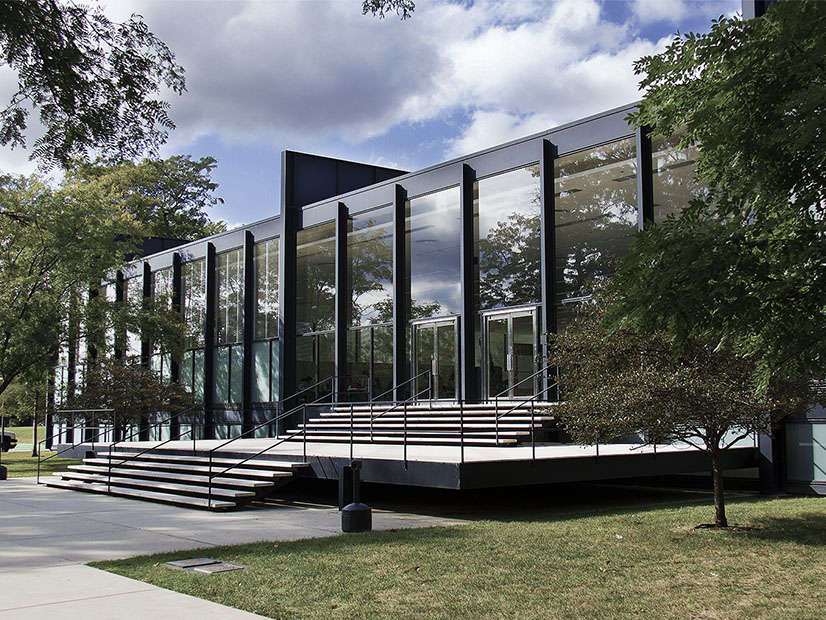
SR-Crown-Hall-(Arturo-Duarte-Jr-CC-BY-SA-3-0-Wikimedia)-Alt-FI.jpg
S.R. Crown Hall at the Illinois Institute of Technology’s Chicago campus, which has been operating as an independent microg since 2008 | Arturo Duarte Jr., CC BY-SA 3.0, via Wikimedia Commons

For Mohammad Shahidehpour, director of the Illinois Institute of Technology’s (IIT) Center for Electricity Innovation, the latest disaster is another in a growing list of wakeup calls unheeded by regulators and policy makers. In an op-ed published in The Hill Aug. 31, he said February’s crisis “wasn’t just a failure of infrastructure, it was a failure of infrastructure planning.”

“We worried about Texas, but now that it’s over I don’t think [policy makers] look back to say, ‘How are we going to prevent the next one?’” Shahidehpour told ERO Insider. “Same thing here — what’s happening in Louisiana is not the first time we have witnessed an extreme weather event in that region, and [I am skeptical] whether the local decision makers will do some substantial strengthening to make sure that [the next one] does not damage the system the way this one did.”

Microgrids to Mitigate Disaster

Shahidehpour said utility planners, regulators and political leaders should engage in a rethink of the North American electric grid.

He said microgrids, each handling a fraction of load, could lessen dependence on long, vulnerable transmission lines and make the grid less exposed to breakdown if generators go offline in a storm. Local microgrid controllers, operating independently, can pick up slack when one generator fails, in a scenario that Shahidehpour likened to a formation of planes.

“In a fleet of aircraft, each pilot can decide [what to do] in case of emergency … the head pilot sitting in the first aircraft is not going to be controlling [them] all,” Shahidehpour said. “We need to do the same thing for our grid [and] come up with individual pilots to decide what’s important in case of an emergency … and what they need to do to save their craft. … Right now, that’s not the case: they’ve got 20 aircraft and often one pilot for the entire fleet.”

Shahidehpour acknowledged that it would be difficult for a microgrid fleet to handle New Orleans’ peak 1.2-GW load — though he said the existing grid may also be unsuited to keep pace with the ongoing electrification of society.

“We need to teach people that electricity doesn’t have to be consumed all at once,” Shahidehpour said. “If you’re in a high-rise, and there are, let’s say, 100 apartments, they all do not have to charge their phones or run their dishwashers at the same time. Yes, they all want to get it done by the morning, but you can set up a system where one is done at 2:00, one is done at 3:00, and one is done at 2:30 — all done [by] the time the customers want and [dispersing] the load to the extent that you don’t have to make the existing utility system bigger and bigger.”

Volunteer group the Footprint Project last week brought mobile solar units to shelters in rural southern Louisiana to supplant gas generators. The group hopes the sight of solar panels powering recovery efforts will inspire communities to build back greener and closer.

Beefier Tx Facilities 

Hurricane Ida laid bare a need for utilities to be more realistic about the lifespans of their existing transmission in a changing climate, others argue.

Portland, Ore.-based energy consultant Robert McCullough said it’s no longer sensible for utilities along the Gulf coast to assume a 30-year lifespan for transmission facilities “given the high probability that the next Category 4 hurricanes will destroy even more equipment built to the previous engineering standard.” He said today’s equipment has been built to outdated safety standards and Entergy “overstates” the lifetime of its transmission and distribution equipment.

McCullough noted that four hurricanes have struck the Gulf coast in the past year. He estimated that Ida destroyed 8.2% of Entergy New Orleans’ almost $20 billion transmission and distribution assets.

Hurricane Ida destroyed more than 30,000 poles in Entergy territory, compared to Katrina’s about 17,000, according to the utility. Combined with the 2020 destruction from hurricanes Laura (more than 14,000 poles) and Zeta (about 2,000 poles), 2020 and 2021 contain the most dramatic spike in grid devastation from hurricanes.

Entergy Louisiana is seeking permission from the Louisiana Public Service Commission to recover nearly $1.6 billion from ratepayers for Hurricane Laura, $215 million for Hurricane Delta and $177 million for Hurricane Zeta. The storms’ succession was so rapid that Entergy combined the three requests for recovery along with Winter Storm Uri-related costs.

“Many utilities wait until older equipment is destroyed rather than preemptively replacing equipment. There are understandable regulatory reasons for doing so: it is easier to recover the cost of storm damage than it is to argue for early retirement of existing assets,” McCullough said in a memo to clients.  “Colloquially, it is often better to ask forgiveness than to seek permission, but this does not produce optimal results for either the utility or its customers,”

McCullough said utilities should “break the cycle of seeking after-the-fact regulatory approval for storm damage” and “adopt depreciation schedules that reflect a more accurate estimate of the life of transmission and distribution equipment subjected to extreme storm weather.”

He said a practice of replacement before failure will save “tremendous social cost.”

“Hurricane Ida demonstrates once again that the cost of a prolonged outage eventually will dwarf the actual replacement expense of poles and conductors,” he said. 

Entergy said its new transmission projects are constructed to withstand winds up to 150 mph. But the utility has repeatedly declined to specify the age of the eight New Orleans lines that failed during the storm. On Sept. 3, it detonated cables from the collapsed and rusted transmission tower in Harahan, La., to clear the Mississippi River. 

Construction firm Burns and McDonnell has been forced to halt upgrade work twice on Entergy’s 16-mile, 230-kV Waterford-to-Vacherie line because of Hurricane Laura and Hurricane Ida. The line will carry power from the nearby Waterford 3 nuclear unit, which was offline for several days following the hurricane. 

Entergy spokesman Neal Kirby said the company had no immediate response to the McCullough report.

“With regard to grid planning and hardening practices, Entergy’s infrastructure hardening and resiliency investments help protect the electrical system from destructive weather and are developed to provide the best value to customers. Since the beginning of 2016, Entergy has completed $12.6 billion in transmission and distribution construction and other investments and will continue to make significant investments to continually repair and enhance the company’s infrastructure,” Kirby said. “We have spent approximately $1 billion systemwide in recent years upgrading plants and substations to new hardening standards following hurricanes. While ensuring the resilience of our infrastructure has always been a primary focus, we recognize that we must accelerate our efforts in light of increasingly frequent and severe weather events. We will continue to refine our understanding of where the specific risks attributable to climate change are expected to become more severe in the years and decades ahead and focus our hardening efforts accordingly.”

Tech Assists

Adrienne Mouton-Henderson, deputy director of policy innovation for the Renewable Energy Buyer’s Alliance, said resilience also would benefit from grid enhancing technologies (GETs), such as advanced power flow control, dynamic line ratings and topology optimization.

“GETs can increase grid flexibility and reliability, especially during extreme weather events, such as the wildfires in California, and Hurricane Ida,” she said at a press briefing Wednesday in advance of a FERC technical conference Friday on using shared savings to encourage utilities to deploy such technology.

Hudson Gilmer, CEO of LineVision, which sells overhead line monitoring technologies, said GETs are no replacement for hardening of assets, such as moving from steel poles to concrete and improving wind tolerance. Florida Power & Light reported that its recovery from Hurricane Irma in 2017 was four times faster than it was following Hurricane Wilma in 2005, thanks to $3 billion in grid-hardening investments. (See Power Restored for 97% of Customers in Irma’s Wake.)

But Gilmer said GETs “individually and collectively result in a much more resilient grid.

“They can allow grid operators to route around outages much more flexibly and quickly. They can increase capacity on existing lines, and they can actually redirect flow,” he said during the briefing, sponsored by the WATT Coalition. “[That] is absolutely part of the solution to increasing resiliency and also monitoring to understand the condition and detect anomalies that might be able to be addressed before severe weather rolls in.”


Analysts: US to be Hydrogen Powerhouse Within a Decade

Hydrogen, long used as an industrial gas, will be key in global efforts to decarbonize fuels, say a trio of engineers with the John Wood Group, a global engineering and consulting company headquartered in Scotland.

The warning from the U.N.’s Intergovernmental Panel on Climate Change that global carbon dioxide emissions must be significantly reduced as quickly as possible has added urgency to the task. And the bipartisan infrastructure legislation allocating up to $10 billion on hydrogen projects has significantly increased interest in hydrogen across a spectrum of U.S. companies trying to become more sustainable.

Brittney-Drake-(Reuters)-Content.jpg
Brittney Drake, John Wood Group | Reuters

“This new urgency to cut emissions drastically … adds quite a bit of pressure on the public and private sectors to act now, and regardless of geography. Hydrogen has a key role to play in the journey to decarbonize,” Brittney Drake, a Wood business development director based in Houston, said during a Sept. 2 webinar organized by Reuters.

William Zobel, executive director of the California Hydrogen Business Council, moderated the webinar, which was attended by 1,200 people.

Brian McCarthy, vice president for technology and products at Wood in New York City, said at this point, industry is waiting to see what Congress does. Noting that there is bipartisan support for hydrogen development, he predicted there will be “real, concrete actions and policies for hydrogen uptake in the United States.”

“But what has not yet been done is to engage with industry [and] with other stakeholders throughout the economy to build out that plan” and develop a consensus about what hydrogen’s role will be, he said.

Because the nation has strong natural resources to support hydrogen production both through methane reforming and hydrolysis using electricity produced from renewables, McCarthy predicted both technologies will be federally funded.

He added that methane reforming will probably include carbon capture, the technologies for which will improve over time, reducing the hydrogen production’s carbon footprint.

McCarthy predicted that by 2040, the U.S. will be a global leader in hydrogen production and use.

Netherlands-based Josh Carmichael, vice president of hydrogen at Wood, said the issue at this point is reaching an agreement about how exactly the substance should be used.

“I think the biggest issue for hydrogen is defining what it is, because it means so many different things to different people, as a molecule. And I think that’s the journey that needs to go on [in order] to really start to define what it is as a fuel, as an electricity provider or otherwise,” he said.

Carmichael added that hydrogen will become a commodity as production technologies improve and it is integrated with other fuels. He also mentioned research into using ammonia (NH3) to store and ship hydrogen. U.S. Department of Energy research has shown, however, that even a trace of ammonia in hydrogen can ruin a polymer fuel cell, which is the fuel cell of choice for vehicles.

Both Drake and McCarthy referenced discussions to convert shale gas into hydrogen and carbon dioxide and then inject the CO2 into the ground near the region where the natural gas was extracted, provided the geology is favorable.

William-Zobel-(Reuters)-Content.jpg
William Zobel, California Hydrogen Business Council | Reuters

Zobel posed a question about the usefulness of calling hydrogen green, blue or gray, as a way to describe how environmentally friendly it actually is; that is, how much carbon is released in its production and use and where that carbon goes.

“There’s another way to categorize hydrogen that’s used in some markets called a carbon intensity standard that ranks these hydrogen production pathways based on their relative carbon intensity versus other fuels in that same marketplace,” he said.

Carmichael said the color distinction can get in the way of the development of a hydrogen infrastructure.

“I think it distorts a lot of the conversation. It gives different sides of the fence ammunition to criticize other parties while we’re actually trying to just get along together and build out the hydrogen network that’s required,” he said. “We talk about colors because obviously that’s what’s been discussed in the market, but going forward … even at net zero, there are still emissions but there are less, and in the end it’s net.”

Getting to a “net carbon situation” with hydrogen production will require proof of its origin, which would be used to determine its taxation level.

“That certification and concomitant tax will determine the final price of the hydrogen. I have faith that the market will actually come to its senses and figure it out,” Carmichael said.

Whether hydrogen will be used to fuel combustion turbines or as a motor fuel for vehicles will also be market driven and in part determined by the robustness of the nation’s electric distribution and transmission grids. Those will have to be significantly strengthened to accommodate battery electric cars using power generated at distant locations.

“It’s actually very difficult to look at hydrogen alone … in a silo without looking at the rest of the U.S. energy system,” McCarthy said. “The complexity of policies is extraordinarily challenging, but it is heartening to see that some of these policy actions are being taken.”

WATT Coalition Previews GETs Proposal Before FERC Workshop

Advocates of grid-enhancing technologies (GET) said Wednesday that regulators should adopt a “shared savings” model to persuade utilities to adopt low-cost investments that could free up crucial transmission capacity.

The first step is to distinguish shared savings from the way that costs are recovered in the industry, which is return on equity (ROE) and the standard approach to incentives that FERC has used.

Rob-Gramlich-(WATT-Coalition)-Content.jpg
Grid Strategies President Rob Gramlich | WATT Coalition

Rob Gramlich, executive director of the Working for Advanced Transmission Technologies (WATT) Coalition, told a press briefing that traditional return on equity ratemaking won’t work for GETs.

“Return on equity is of course based on how much capital is invested, and if we’re talking about very low cost very low capital deployments, then it doesn’t matter how high the ROE incentive is, it’s not going to make a difference,” Gramlich said. “It’s just not the right metric.”

The WATT Coalition called the briefing to build support for its proposed model, which will be the subject of discussion at a FERC workshop on shared-savings incentives Friday (RM20-10, AD19-19).

The coalition is made up of technology providers who support greater deployment of grid technologies such as dynamic line ratings, power flow control and topology optimization. The coalition includes Ampacimon, Lindsey Systems, LineVision. NewGrid, Smart Wires and WindSim Power.

The group has been refining its position in response to FERC’s March 2020 Notice of Proposed Rulemaking on Electric Transmission Incentives Policy under Section 219 of the Federal Power Act. (See FERC Proposes Increased Tx Incentives.)

Jay-Caspary-(WATT-Coalition)-Content.jpg
Jay Caspary, Grid Strategies | WATT Coalition

The technologies can improve reliability and reduce congestion costs, Grid Strategies Vice President Jay Caspary said.

“We estimate that the deployment of grid-enhancing technologies across the U.S. would save about $2 billion in customer costs by being able to take advantage of more efficient, cleaner energy that currently is bottled up and constrained on the power system,” Caspary said.

The proposal recommends benefits be calculated through production cost modeling and that projects have a minimum benefit-cost ratio of 4:1. For projects under $2.5 million, transmission owners would receive 25% of savings, with total incentive capped at $10 million. Larger projects would be subject to a competitive process and awarded based on the highest net customer benefit, considering both benefit-cost ratios and consumer’s share of savings. Any qualified market participant could propose a project, and after three years, if the ratio remains greater than 4:1, the owner can reapply to extend the agreement for an additional three years.

Aligning Incentives

Daniel-Hall-(WATT-Coalition)-Content.jpg
Daniel Hall, ACP | WATT Coalition

The WATT proposal would align incentives for GETs investments with the public interest pursuant to the directive in the Federal Power Act, said Daniel Hall, central region director for electricity and transmission at the American Clean Power Association.

“It would incent utilities to invest in technology that benefits consumers by allowing their shareholders to share in those cost savings,” said Hall, former chairman of the Missouri Public Service Commission. “This is a classic win-win-win — a win for consumers, a win for utility shareholders, and a win for the environment.”

Tyler-Stoff-(WATT-Coalition)-Content.jpg
Tyler Stoff, ACORE | WATT Coalition

GETs are an important way to help expand line capacity at comparatively low cost compared to new transmission lines, and the cost savings multiply because GETs help bring low-cost renewables onto the grid, said Tyler Stoff, director of regulatory affairs at the American Council on Renewable Energy (ACORE).

The current market design “can’t adequately motivate GET deployment because profit is directly proportional to capital invested, which for these technologies can be very small,” Stoff said. “ACORE supports a specific, well-defined incentive focused on low-cost projects that provide quantifiable congestion reduction benefits, and I think we see that in the proposal laid out here today.”

Adrienne-Mouton-Henderson-(WATT-Coalition)-Content.jpg
Adrienne Mouton-Henderson, REBA | WATT Coalition

The Renewable Energy Buyers Alliance also supports GETs, Director of Policy Innovation Adrienne Mouton-Henderson said.

“As highlighted by this proposal, GETs can increase grid flexibility and reliability, especially during extreme weather events such as the wildfires of California and Hurricane Ida that has ravaged my home state of Louisiana and the Northeast,” Mouton-Henderson said. “The time to act is now.”

Melissa-Alfano-(WATT-Coalition)-Content.jpg
Melissa Alfano, SEIA | WATT Coalition

“In the Eastern [Interconnection] there’s need for increased transmission capacity. But rather than build new lines, transmission owners are shifting costs to interconnection customers for new network upgrades,” said Melissa Alfano, manager of regulatory affairs at the Solar Energy Industries Association.

“The results are these large, drawn-out fights at FERC over the cost of those upgrades … but these fights are all based on the underlying assumption that the transmission system is fixed in capacity and topology, which is an outdated idea,” Alfano said.

NERC RSTC Briefs: Sept. 8-9, 2021

Extended Format Gives Members Breathing Room

NERC’s Reliability and Security Technical Committee (RSTC) wrapped up a two-day meeting on Thursday, its first after implementing a new schedule intended to make the group more productive.

In his opening remarks, Chair Greg Ford, of Georgia System Operations, explained that the lengthened meeting was a response to complaints that “the RSTC agendas have been very full and may have prevented a more robust discussion of the agenda items.” For instance, in last September’s meeting, discussion on some items went on so long that the committee needed an additional meeting in October to finish the agenda. (See NERC RSTC Briefs: Oct. 14, 2020.)

The committee’s new format stretches the total meeting time from six hours to 10, spread over two five-hour sessions. Lunch and break times are also kept to a minimum. Under this approach the committee managed to finish its business an hour before the scheduled time and even to insert an additional action item that was not on the original agenda.

Ford also discussed the possibility of returning to in-person meetings next year. So far the committee has held only one gathering in person, meeting briefly in Atlanta in March 2020 to discuss how to take over the business of the now defunct Planning, Operating and Critical Infrastructure Protection committees. (See RSTC Tackles Organization Issues in First Meeting.) All of its subsequent meetings — as with NERC’s other committees and standard drafting teams (SDTs) — have been held virtually because of the ongoing COVID-19 pandemic.

While the RSTC’s last meeting of 2021, scheduled for Dec. 14-15, will also be held online, committee leaders are hoping to gather in person at the next meeting, planned for March 8-9. The September 2022 gathering should also take place in person in Atlanta; the meetings in June and December 2022 will likely remain virtual, in hopes of “easing back into this process … rather than just coming back full speed” with the regular schedule, Ford said.

Subcommittee Member, DER Guideline Approved

The two-day meeting was mostly occupied by informational briefings, but members approved several action items as well, such as the addition of the Bonneville Power Administration’s Edison Elizeh to the committee’s Nominating Subcommittee. Elizeh was chosen through an open nomination process after Southern Co.’s Todd Lucas resigned from the subcommittee earlier this year, having been appointed to the RSTC’s Executive Committee.

Committee members also voted to post a new reliability guideline for distributed energy resource forecasting for a 45-day industry comment period. The guideline was submitted by the System Planning Impacts for Distribute Energy Resources (SPIDER) Working Group and includes recommendations to help transmission planners and planning coordinators establish consistent methods for gathering data and developing projections to ensure their forecasts are accurate and useful.

The motion to post the guideline for comment passed with no objections. However, several members, including SaskPower’s Wayne Guttormson and the Florida Municipal Power Agency’s Carl Turner, expressed concern that it didn’t go far enough to define useful metrics for registered entities to use.

In response, SPIDER’s Kun Zhu, of MISO, acknowledged that the group may have focused too much on “transmission planning for [the] longer term” rather than “day-to-day operations,” but he said it would “have a chance to address” those concerns after the comment period.

Field Test Item Added

Finally, members approved an action item — not included in the agenda but inserted at the request of Utility Services’ Brian Evans-Mongeon — relating to the “field trial” proposed by the SDT for Project 2016-02 (Modifications to CIP standards).

The intent of the field trial is to “obtain technical data” from transmission operators and owners to help the SDT with its revisions to the proposed standard CIP-002-6 (BES cyber system categorization). NERC’s Board of Trustees approved the standard in 2020 but decided at its February meeting to withdraw it to re-evaluate its impact on cybersecurity preparedness. (See “Standards Actions,” NERC Board of Trustees/MRC Briefs: Feb. 4, 2021.)

The SDT proposed that the RSTC provide comments on its field trial design by the end of September. In addition, the team asked that the RSTC allow its Executive Committee to “act to resolve any changes to the field trial design from comments received,” rather than waiting for the next full RSTC meeting in December. SDT members said streamlining the process for approving changes will allow them to gain approval from the Standards Committee more quickly.

RSTC members approved both requests, with an additional note that the committee does have the option to review and vote on any proposed changes in full outside of its regular meeting dates.

Biden to Nominate Phillips to FERC

The White House on Thursday announced that President Biden intends to nominate D.C. Public Service Commission Chair Willie Phillips to FERC.

Phillips, a Democrat, would fill the seat previously held by Republican Neil Chatterjee, who departed Aug. 30 after his term ended June 30. Phillips’ term would end June 30, 2026. His confirmation would give FERC a Democratic majority for the first time in Biden’s presidency and until at least 2025 — presuming Chair Richard Glick or Commissioner Allison Clements do not resign before the end of their terms.

“As the Biden administration works to tackle the climate crisis, advance environmental justice and create a clean electricity grid by 2035, FERC will maintain an important role regulating the transmission of carbon-free energy across the country,” the White House said. “As chairman of the Public Service Commission of the District of Columbia, Willie was a thoughtful and innovative leader in modernizing the energy grid, implementing the district’s aggressive clean energy and climate goals, and in protecting the district’s customers.”

Phillips has served on the D.C. PSC since 2014 and was re-nominated and appointed chair in 2018 by Mayor Muriel Bowser. He is also president of the Mid-Atlantic Conference of Regulatory Utility Commissioners. (See Overheard at MACRUC 2021: Pandemic Hardships.)

Prior to becoming a commissioner, he worked at D.C.-based law firm Van Ness Feldman before joining NERC for nearly five years, eventually becoming an assistant general counsel. A native of Alabama, he earned his undergraduate degree from the University of Montevallo and served as deputy press secretary for Sen. Jeff Sessions (R-Ala.) from 2000 to 2002.

Likely a Matter of ‘When,’ not ‘If’

ClearView Energy Partners said Biden’s choice of Phillips was pragmatic and that he is unlikely to face any major opposition in the Senate. It noted that his experience at NERC would likely help him with Republicans, who generally place grid reliability at the forefront of FERC’s responsibilities. His service under Sessions could also help him earn bipartisan points, the analysts said.

“The nomination of Phillips may be a move to recognize that the commission is an independent economic regulator, not an environmental regulator,” ClearView said. “That said, we do expect Phillips to support FERC facilitating the federal policies under development elsewhere in the administration (such as at the Environmental Protection Agency and the Council on Environmental Quality) to facilitate the Biden agenda for an energy transition.”

“I look forward to meeting with Willie Phillips and having him appear before the Senate Energy and Natural Resources Committee,” Sen. Joe Manchin (D-W.Va.), chair of the committee, said in a statement. “Just as I do with each of the nominees that come before the committee, I will carefully examine his record and qualifications to serve in this important role overseeing our federal energy policy.”

Still, ClearView noted that the Senate has a lot on its plate, and that it did not expect Phillips to be seated earlier than November. Along with legislation implementing budget reconciliation, the Senate will likely be focused on yet another battle over the debt ceiling. Treasury Secretary Janet Yellen on Wednesday warned Congress that the U.S. could default on its debt as soon as next month if the ceiling isn’t raised.

Reaction

The choice of a local regulator, particularly one from the PJM footprint, may also be intended to diffuse tension between FERC and the states over controversial matters such as the RTO’s minimum offer price rule.

Willie-Phillips-Neil-Chatterjee-(Neil-Chatterjee-via-Twitter)-Content.jpg
Phillips with former FERC Commissioner Neil Chatterjee at the MACRUC conference | Neil Chatterjee via Twitter

The National Association of Regulatory Utility Commissioners was particularly enthusiastic about the choice, noting that it believes all FERC commissioners should have state regulatory experience. “We wholeheartedly support the nomination of Chairman Phillips to serve as a FERC member. He possesses extensive knowledge of the critical issues facing regulators today,” Executive Director Greg White said. “There is no doubt that he will apply this balanced, thoughtful approach to his new role as a FERC commissioner.”

The news was met with mostly positive reaction from around the industry. The American Council on Renewable Energy, Advanced Energy Economy, the Solar Energy Industries Association and the Electric Power Supply Association, among many other groups, all released statements congratulating Phillips and urging the Senate to quickly confirm him.

Glick and Chatterjee also congratulated Phillips, with Chatterjee tweeting that “it would be an honor to have him succeed me.”

Environmental organizations, however, were tepid, at best. A coalition of nearly 500 of them had written to Biden and Senate leaders last month encouraging them to appoint “an environmental and energy justice champion” to fill Chatterjee’s seat.

“We’re deeply concerned about whether the new commissioner will be too closely tied to the energy utilities that have put profit above people,” said Jean Su, energy justice director and senior attorney for the Center for Biological Diversity, one of the lead signatories to the letter. “We hope the Senate will ask the tough questions of Mr. Phillips about his commitment to ending FERC’s disastrous status quo so we can finally prioritize environmental and energy justice in our energy policies.”

Maine Readies 3-Port OSW Strategy for Fall Release

Maine officials are planning to release the findings of the state’s study of offshore wind port opportunities this fall, according to Matt Burns, director of ports and marine transportation at the state Department of Transportation (DOT).

The study, which Gov. Janet Mills announced in March 2020, includes a phase 1 review of the Port of Searsport and a phase 2 review of statewide port facilities, Burns said at the University of Maine’s American Floating Offshore Wind Technical Summit on Thursday.

“We have a longstanding, three-port strategy that we’re hoping will play a role in offshore wind development in the state,” he said.

The target ports, located in Portland, Searsport and Eastport, are spread out strategically along the state’s coastline. But the review is looking at other locations as well.

When the reviews are done, state officials will have a better idea of what type of offshore wind facilities Searsport can handle and what roles other sites could fill, such as maintenance and operations, crew transfer and warehousing.

“We hope to emerge with an offshore wind port strategy that is refined with input from the Maine Offshore Wind Roadmap Advisory Committee as well,” Burns said. (See Roadmap Initiative Set to Hone Maine’s OSW Goal.)

Early Findings

In reviewing the facilities at Searsport, Burns said, DOT determined that the port likely would need a longer wharf to accommodate loading and unloading of cargo. It also could need a concrete bulkhead to accommodate wheeled cargo, more upload acreage with heavy-duty loading capacity and possible dredging to allow safe passage of cargo ships.

DOT is also looking at Mason Station, an abandoned power plant in Wiscasset, Maine. The site, Burns said, is close to Searsport, and has existing infrastructure that could be built out.

It also checks other boxes, such as deep-water access and significant open acreage, he said.

South Portland also has several locations with existing infrastructure that has a large amount of acreage available, and there are existing port facilities in the area that could pivot to offshore wind-related activities, according to Burns.

The property under consideration in Eastport, he said, is “significantly larger” and has “a lot of strengths” in terms of offshore wind support.

Everything under consideration for the state’s port study is “conceptual” right now, Burns said, adding that DOT is in the planning phase so it can develop a strategy “the right way.”

“Stakeholder engagement is critical,” he said. “We want to be prepared to have our plan and be able to grow with this industry as it emerges in the state.”

West Coast Port Progress

The Port of Humboldt Bay in Northern California is preparing to become what its executive director, Larry Oetker, says will be “California’s new offshore wind port.”

The deep-water port is only 21 miles from the U.S. Bureau of Ocean Energy Management’s Humboldt wind energy area, and its central location on the West Coast makes it accessible for the proposed Morro Bay wind area between San Francisco and Los Angeles. It also offers many benefits for offshore wind development, including hundreds of acres of vacant industrial land, Oetker said during the summit.

In its master plan for offshore wind facility expansion, Humboldt Bay is considering a “clustered” approach, he said.

“We heard the industry loud and clear, and they said that in order to drive down costs, it would be best if [manufacturing and component staging, assembly and transportation] could be done all in one port, or at least as much as possible,” he said.

In July, California appropriated $20 million for offshore wind activities, including $11 million to help jumpstart work at Humboldt Bay. The port also has applied for a $56 million infrastructure development grant to begin phase 1 of its 168-acre master plan.

In October, Oetker said, the port plans to begin the environmental review and permitting for the plan. Construction could begin in the 2024-2025 time frame, he added, noting that any plans for construction are contingent on the port’s project permitting and the timing of BOEM’s leasing activities for the Humboldt and Morro Bay call areas.

“Our goal is to get ahead of the curve and to provide certainty for the port, but there’s kind of a chicken-and-the-egg situation on the West Coast,” he said. “The developers don’t want to develop until they actually have leases from BOEM, and then the ports can’t develop unless they have a tenant.”

Once the port has a tenant in place, he added, it will fine-tune its plans to match up with the tenant’s offshore wind project development strategy.

“We want to have a seamless transition from conceptual plan to actual project implementation that meets the needs of the industry … but the longer BOEM delays, then the longer our time period will be on the port development side.”

Oetker expects BOEM will lease both the Humboldt and Morro Bay wind areas in mid-2022.

Scientists, First Nations Say Hydropower is Not Clean Energy

The New England Clean Energy Connect (NECEC), a proposed $1.2 billion joint transmission project between Hydro-Québec and Avangrid has been advertised by its developers as a way to bring clean and responsible energy to the U.S. under a 20-year deal.

The 1,200 MW transmission line would funnel hydropower power from Canada to the U.S. Northeast. But scientific evidence has shown that emissions from hydroelectric dams are greater than emissions from wind power, natural gas and in some cases, coal facilities.

Politicians too often make “vacuous statements about a particular energy source being clean, but that is not the case,” Gary Wockner, executive director and co-founder of Save The World’s Rivers, told NetZero Insider. Hydroelectric power plants can be as bad as natural gas, according to a 2016 study published in Bioscience. Another study published in Environmental Science and Technology found that in some cases, hydroelectric power plants are worse for the climate than coal. [Editor’s Note: An earlier version of this story incorrectly stated that the Bioscience study had compared hydropower emissions to coal.]

Massachusetts Gov. Charlie Baker has thrown his support behind NECEC as a means of reaching the state’s GHG emission reduction targets, and the Maine Public Utilities Commission, Maine Department of Environmental Protection and U.S. Army Corps of Engineers all signed off on the project as reducing carbon emissions in the Northeast.

However, the analysis conducted by the state and federal agencies does not include the methane emissions created by the source of the energy: the hydroelectric dams in Québec, which flooded 308 million acres of boreal forests to create reservoirs. The methane emissions are not produced in the U.S., but that does not mean the source of the energy will be clean, Wockner said.

“If you are trying to replace natural gas with hydropower, you are not getting cleaner energy,” he said. If the state and federal agencies “follow the science, they will see they are making a huge mistake.”

Hydro Emissions

Initial studies that exposed the GHG emissions from hydroelectric dams were done more than 35 years ago in the tropics of Brazil, where the methane released was double that of coal plants, which produced the same amount of electricity.

Since then, more than 37 studies have been published on dams in the U.S. and Canada and their production of GHG emissions. Lifecycle emissions of some large-scale hydropower facilities can be more than 0.5 pounds of carbon dioxide per KW-hour. Natural gas burning has life cycle emissions averaging between 0.6 and 2 pounds of carbon dioxide per KW-hour.

In 2016, researchers found that rotting vegetation in reservoir water created by hydroelectric dams emit about a billion tons of GHG every year, or 1.3% of the total annual human-caused emissions. Over a 100-year timescale, dams produce more methane than biomass burning and rice plantations.

The vegetation in the boreal forests of Québec that is flooded for hydroelectric dam reservoirs goes through the process of anaerobic decomposition. Vegetation decomposes over time, changing the soil and bubbling up methane in a way that an existing, non-human-made lake does not because they have existed for thousands of years and are not breaking down forest vegetation.

Lake Mead, a reservoir formed by the Hoover Dam on the Colorado River, emits the same amount of GHGs as coal-fired power plants that produce the same amount of electricity, according to a study published in 2016 by a team of Swiss scientists.

Lynn St. Laurent, spokesperson for Hydro-Québec, said that the cooler temperatures in northern Canada mean less methane is emitted in the company’s reservoirs.  

But the Churchill Falls underground generating station in Labrador, Canada, one of the largest hydroelectric projects in the world, emits the same amount of GHGs as a natural gas plant, according to the Swiss study.

The majority of consumers in both Massachusetts and New York City already rely on natural gas to heat their homes and water. Purchasing hydroelectric power from a Canadian government-owned company “is just dirty politics,” Wockner said. “The hydropower industry is very powerful.”

The industry has carried out a massive advertising campaign in Massachusetts, Maine and New York, claiming its projects will bring clean energy and jobs to the region.

“There is a lot of politics, power and money trying to squelch the science,” Wockner said, and it has been a “big challenge for scientists to get the science out.”

New York is considering another $2.2-billion transmission corridor from Hydro-Québec plants through Lake Champlain and the Hudson River to bring power to New York City. But the city is required to report imported emissions, and officials will realize the mistake they’ve make, Wockner said.

Hydro and First Nations 

In addition to methane, reservoirs release methylmercury in the soil, poisoning the water and wildlife.

The methylmercury poisoning directly affects First Nations, which rely on regional natural food sources. Hydroelectric dams have disrupted and disturbed millennia-old migratory patterns of fish and other wildlife that make up food webs for the First Nations.

In June 2019, the United Nations Special Rapporteur on human rights and hazardous substances and wastes, Baskut Tuncak, called on the Canadian federal government to use its leverage to address concerns about lack of proper consultation with Indigenous people as well as the expected methylmercury poisoning.  

Michel Plante, head of health and safety for Hydro-Québec, said in a statement that levels of methylmercury return to normal 20 to 30 years after the creation of a reservoir, and fish from natural rivers have some mercury regardless of hydropower development.

More than 36% of the electricity that NECEC would export to Massachusetts would come from hydroelectric dams built on First Nation territory without their consent, according to the Anishnabe First Nation of Lac Simon, the Abitibiwinni First Nation, the Anicinape Community of Kitcisakik, the Innu Nation of Pessamit and the Atikamekw Nation of Wemotaci.

Lucien Wabanonik, elected councilor of the Nation Anishnabe of Lac Simon in Québec, wrote in an opinion column submitted to Bangor Daily News that the dams and associated infrastructure have “robbed us, not only of our resources, but also of our culture and our way of life, which is no longer sustainable.”

In total, 33 production structures, 130 dams and dikes, 10,400 km2 of reservoirs, tens of thousands of kilometers of transmission, distribution and road lines have been illegally installed on First Nation land, according to a statement from the Innu First Nation of Pessamit. These facilities continue to be operated by Hydro-Québec in violation of the rights recognized by the Constitution Act of 1982 and the jurisprudence of the Supreme Court of Canada, according to the Tribe.

“These successive and massive hydroelectric developments on our traditional territories have never translated into a better quality of life for the members of the communities most directly and negatively impacted,” the statement said.

California to Expedite Battery Licenses

Acting on Gov. Gavin Newsom’s emergency proclamation from July, the California Energy Commission approved a plan Wednesday by which batteries capable of providing at least two hours of discharge by the end of October 2022 can be licensed and connected to the grid in less time than it would normally take.

The move was the latest by state entities responding to Newsom’s emergency proclamation, which said the state faces an energy shortfall of up to 3,500 MW this summer and up to 5,000 MW next summer. The governor ordered “all energy agencies [to] act immediately to achieve energy stability” and specifically instructed the CEC to expedite licenses for battery storage facilities of 20 MW or more that can meet evening net-peak demand. (See Calif. Governor Proclaims Emergency as Blackouts Loom.)

“The benefits of this action for Californians is that it helps immediately address climate change impacts and increase grid resiliency and reliability to help us avoid outages,” CEC Deputy Director Shawn Pittard told commissioners in their monthly business meeting.

The CEC, California Public Utilities Commission and CAISO “are requested to work with the state’s load-serving entities on accelerating plans for the construction, procurement and rapid deployment of new clean energy and storage projects to mitigate the risk of capacity shortages and increase the availability of carbon-free energy at all times of day,” it said.

The governor ordered a series of measures, some of which backtrack on the state’s push toward clean air and energy. The closure of fossil fuel plants in the West without sufficient nonpolluting resources to replace lost capacity is contributing to the state’s energy shortfalls. (See CPUC Orders Additional 11.5 GW but No Gas.)

The July 30 proclamation authorized the CEC to license gas-fired generators that can deliver energy this summer and fall during evening net-peak hours, after solar goes offline. The generators must meet criteria such as operating on a “previously disturbed site” with an existing grid connection.

In response, the CEC adopted new rules in mid-August allowing it to issue emergency licenses to gas-fired generators of 10 MW or more to help alleviate potential energy shortfalls this summer and beyond. (See CEC to Issue Emergency Gas Generation Permits.)

In his emergency proclamation, Newsom cited the ongoing effects of heat waves, drought and wildfires in the West.

“Because of drought conditions, water supplies in California’s reservoirs have dropped to levels so low that hydroelectric power plants have had to reduce or cease production, leading to a reduction of nearly 1,000 MW of capacity and further exacerbating the drought’s impact on California,” he said. (See Western ‘Megadrought’ Curtails Hydropower.)

During a heat wave in July, the Bootleg Fire in southern Oregon derated the Pacific AC Intertie, “which delivers power from the Pacific Northwest to California, by almost 4,000 MW,” it noted. (See CAISO Declares Emergency as Fire Derates Major Tx Lines.)

“Many other transmission lines are located in high fire threat areas, including lines located in other states on which California depends, and thus wildfires are likely to continue impacting California’s energy supply unpredictably during this wildfire season,” Newsom said.

MISO Stakeholders Vote on Seasonal Capacity Auction Delay

Stakeholders continue to criticize MISO’s proposal to create seasonal capacity auctions and resource accreditation, saying it is too hasty and not rationalized, and warn they may pursue a more formal channel to vent their frustrations.

Those participating in MISO’s Resource Adequacy Subcommittee might soon memorialize complaints with a formal stakeholder vote. They’re currently completing email ballots on a motion to delay resource adequacy changes by a year until the 2024/25 planning year and to extend debate until at least the second quarter of 2022.

The MISO Coalition of Utilities with the Obligation to Serve introduced the measure during RASC’s meeting Sept. 1. MISO considers stakeholder votes as advisory in nature.

The motion also asks the grid operator to augment its proposal with three add-ons:

  • a “transparent” and “robust” analysis to justify major changes to the resource adequacy construct;
  • histograms and calculations of seasonal long- and short-capacity positions by local resource zone so that members can estimate the seasonal framework’s impacts on their fleets; and
  • a way for the RTO to “recognize prudently planned outages’ contribution to resource adequacy.”

“Prudently planned outages actually increase reliability,” Big Rivers Electric’s Marlene Parsley said during the RASC meeting.

Parsley also said MISO was tweaking the filing at the “11th hour” and said its proposal “continues to evolve late in the stakeholder process.”

The grid operator has said it will file a proposal before October with FERC to create four independent seasonal auctions with distinct reserve margin requirements and a tougher seasonal capacity accreditation. The proposal will focus on a unit’s availability over the past three years during the riskiest 3% of hours in a season to develop individual accreditation values for planning resources. MISO defines risky hours as those with either a maximum generation event or tight margin hours. (See Discord Persists over MISO Seasonal Capacity Accreditation.)

MISO said the changes are necessary to reverse a trend of shrinking reserves and a spate of maximum generation emergencies since 2016.  

But the utilities group said, “MISO is seeking to fundamentally re-engineer nearly every aspect of its resource adequacy construct in a way that no other U.S. RTO has ever undertaken.”

It also said the RTO should prove that its “quasi-random set of tight margin hours has any predictive correlation with future performance during a different quasi-random set of tight margin hours.” Stakeholders have said MISO basing accreditation on unit availability during preselected risky hours throughout a season makes accreditation a volatile and hard-to-predict process.

Customized Energy Solutions’ Ted Kuhn said MISO effectively ignored stakeholders’ request to first try seasonal capacity auctions before tinkering with capacity accreditation values.

“Stakeholders are finding they have a proposal in front of them that’s half-baked,” he said.

Madison Gas and Electric’s Megan Wisersky said the grid operator’s current proposal was “incoherent” and agreed MISO would be better served with a staged approach.

During a Wednesday workshop, some stakeholders said the proposal appeared to still be in the design phase, rather than a finalized plan days from being filed at FERC.  

Stakeholders questioned the seasonal outage rules that limit outages to a cumulative 30 days in a season before resources must replace the capacity they’ve signed up to provide.

Some said the limit in duration might encourage some unit owners to take shorter planned outages every year instead of risking replacement capacity requirements during more comprehensive maintenance outages once every two or three years.

“I think MISO needs to think more seriously about this,” Kuhn said.

MISO staff promised that its outage coordinators will monitor patterns across units in outage behavior and propose new rules as necessary.

DOE Study: Solar Could Provide 45% of US Power by 2050

If the U.S. is to decarbonize its electric grid by 2035, solar deployment will have expand at an unprecedented rate, from a cumulative capacity of 80 GW currently to between 760 and 1,000 GW by 2035, according to a report released Wednesday by the Department of Energy.

If electrification of transportation, buildings and other economic sectors is added, solar could be providing close to 45% of the nation’s electricity demand by 2050, up from just 3% .

At 310 pages, the Solar Futures Study drills into all aspects of what it is going to take to hit such ambitious numbers, which, it says, will be challenging but possible. Research to drive innovation and ongoing cost reductions; supply chain buildout, including recycling of critical materials; as well as grid expansion and new business models for wholesale and retail markets are all part of the roadmap.

Wholesale markets will have to “adapt to the increasingly dominant role of zero-marginal-cost renewable energy, and retail markets must adapt with rates that reflect the changing grid and an increased role for distributed energy resources,” demand-side services and enhanced energy reliability, the report says.

For example, the study calls for “flexible and adaptive interconnection” strategies to promote cost-effective DER deployment. An approach called active network management “uses flexible interconnection agreements, sophisticated communication infrastructure and information on local power system conditions (forecasted load, constraints, etc.) to automatically adjust the behavior of DERs,” the report says. “In exchange for allowing the utility limited control over the DER and accepting limited curtailment throughout the year, interconnecting customers endure shorter interconnection processes and avoid paying for prohibitively expensive distribution upgrades.”

At the same time, the report says, with more solar, wind and storage online, the grid will become “increasingly reliant on weather-dependent, inverter-based resources (IBRs), representing a dramatic change from the current grid based primarily on synchronous electricity generators. A grid dominated by IBRs will require new approaches to maintain system reliability and exploit the ability of IBRs to respond quickly to system changes.”

Clean, firm capacity will also be needed to fill the IBR gaps, the report says, specifically, 1,600 GW of energy storage with up to 12 hours of duration by 2050. “However, because solar and wind occasionally provide insufficient supply for several days, advances in technology that can provide clean, firm capacity at any time are needed to reliably meet demand as full decarbonization is approached.”

Those advances may not come fast enough. Based on models and projections from the National Renewable Energy Laboratory, the study anticipates that a 95% decarbonized grid will be possible by 2035, but getting the last 5% could be too expensive if the goal is also to ensure no major increases in consumer electricity prices. Even with aggressive policies, a residual 5% of fossil fuel generation may still be in the mix at that point, the report says, though a 100% clean grid will be possible by 2050.

Demand Grows, Emissions Drop

Heading into November’s U.N. climate change conference in Glasgow, the report positions the U.S. solar industry as playing “a unique and central role” in emission reduction because of two key attributes of the technology, the report says. It is modular; that is, it is deployable at any scale, from a few kilowatts of rooftop panels to hundreds of megawatts spread over hundreds of acres of land.

It is also “diurnal,” simultaneously variable and reliable, based on “daily and seasonal patterns of the rising and setting sun,” the report says. Daily variability of cloud cover and other factors notwithstanding, this diurnal reliability “means that grid operations and electricity demand can be proactively managed to maximize use of low-cost, zero-carbon solar energy,” the report says.

Even without President Biden’s aggressive target for grid decarbonization, the study’s business-as-usual scenario — based on market forces and existing federal, state and local policies — anticipates 380 GW of U.S. solar capacity in 2035 and 670 GW in 2050.

The bigger numbers are generated in a second “Decarb” scenario, which sees federal policy driving grid decarbonization and accelerated solar deployment by 2035, and a third, “Decarb+E” option, targeting economywide decarbonization via electrification of transportation, buildings and other sectors.

Other core findings in the study include:

  • Electricity demand jumps 30% with a 95% decarbonized grid, from 3,800 TWh per year in 2020 to 4,900 TWh in 2035. Demand increases another 34% to 6,700 TWh in a net-zero 2050. At the same time, the Decarb+E scenario could make the U.S. carbon negative by 2035, with emissions dropping 155% from 2005 levels by 2050.
  • Technological innovation could cut solar costs another 60% by 2030 “via improvements in photovoltaic efficiency [and] lifetime energy yield,” which could in turn open up new applications for solar “in novel configurations associated with agriculture, waterbodies, buildings and other parts of the built environment.”
  • Getting to a 95% decarbonized grid by 2035 will increase system costs by $225 billion, or 10% more than business as usual, versus $562 billion, or 25% more for Decarb+E, the report says. “However, avoided climate damages and improved air quality more than offset those additional costs, resulting in net savings of $1.1 trillion in the Decarb scenario and $1.7 trillion in the Decarb+E scenario,” the report says.