PJM, Stakeholders Respond to MOPR Replacement Challenges

PJM and its stakeholders continue to jostle over the impact of the proposed replacement for the expanded minimum offer price rule (MOPR) as responses continue to be filed at FERC (ER21-2582).

In a motion filed Tuesday with FERC, PJM argued that the commission should “simply accept” the RTO’s “focused” MOPR proposal, filed in July, instead of responding to the complaints over the expanded MOPR that was in place for the 2022/23 Base Residual Auction, held in May. PJM argued that an action by the commission on the existing rule “could add needless uncertainty regarding capacity commitments for the 2022/23 delivery year.”

It asked that its proposal go into effect starting with the BRA for the 2023/24 delivery year, set for December.

“To resolve the pending appeals upon commission acceptance of the focused MOPR, petitioners could withdraw their petitions, or parties could move to dismiss the case once the expanded MOPR is replaced with the focused MOPR,” PJM said in its motion.

The RTO’s proposal, which would apply the MOPR only to resources connected to the exercise of buyer-side market power or those receiving state subsidies conditioned on clearing the capacity auction, was endorsed over eight other plans in a special Members Committee meeting in June. PJM filed the proposal in late July after winning final approval from its Board of Managers.

PJM adopted the expanded MOPR after FERC’s 2-1 ruling in December 2019 that the rule should apply to all new state-subsidized resources to combat price suppression in the capacity market. Former Chair Neil Chatterjee and fellow Republican Bernard McNamee formed the majority in the decision, while Democrat Richard Glick strongly dissented, calling it an attack on state decarbonization efforts. Glick asked PJM to undo the MOPR rule after he was named FERC chairman by President Biden in January.

Dozens of comments on the extended MOPR started coming into the commission late last month, with PJM stakeholders issuing a mix of support and opposition to the RTO’s filing. (See Mixed Stakeholder Reception to PJM MOPR Replacement.)

PJM Answers

In its motion filed this week, PJM responded to some of the calls by protesters looking to expand or eliminate the MOPR, saying no stakeholder has “rebutted” that its proposal “appropriately protects against exercises of buyer-side market power,” while others have not shown that the existing MOPR is “necessary to ensure just and reasonable rates.”

PJM said some of the protesters alleged that the focused MOPR “removes all meaningful buyer-side market power mitigation.” But the RTO said “none of these allegations undermine the focused MOPR,” saying it was designed to “appropriately protect against buyer-side market power” to “ensure just and reasonable outcomes.”

Some protesters argued that mitigation approaches need to balance the risks of over-mitigation against those of under-mitigation. But PJM contended that its proposal strikes the appropriate balance between the two by “targeting only those resources that pose a threat of being used in an exercise of buyer-side market power.”

The new rule would only be directed at resources that both provide a capacity market seller the ability to exercise buyer-side market power and are offered by sellers with an incentive to exercise buyer-side market power such as a “load-serving responsibility that would benefit from reduced capacity prices.” Market participants would be asked to sign attestations declaring they are not exercising market power or receiving state funds tied to clearing in the auction. PJM and the Independent Market Monitor will conduct “fact-specific, case-by-case reviews” if market power is suspected, and referrals will be made to FERC for a final determination.

Several protesters argued that the self-certify provision is “insufficient to prevent the exercise of buyer-side market power” and that existing tariff language does not provide sufficient time for “meaningful review” of the attestations and mitigation before an auction.

PJM said its filing clarified that the self-certification requirement is “not the end of the inquiry with respect to whether an entity can exercise buyer-side market power.” It said proposed tariff language includes the “ability for both PJM and the Market Monitor to initiate a fact-specific review of whether a capacity market seller may commit an exercise of buyer-side market power with respect to a certain resource” and that PJM and the Monitor will “ultimately determine whether to apply the MOPR based on the outcome of the inquiry.”

Additional Support

In a joint motion, Exelon (NASDAQ:EXC) and Public Service Enterprise Group (NYSE:PEG) said the “crux” of many of the arguments against PJM’s proposal is that state subsidies for clean-energy suppliers are “inherently uneconomic” and that “state measures to address environmental externalities distort the wholesale markets.”

But those arguments “fly in the face of basic economics and the law,” the companies said, because the current market construct “protects a $16 billion annual pollution subsidy in PJM to fossil fuel generators by treating that subsidy as a supposedly competitive baseline.”

“States, acting within their reserved authority to regulate generation facilities, can reasonably choose to address this market failure and level the playing field by compensating clean-energy generators for their positive externalities of production,” they said. “Doing so is not anticompetitive and should not result in mitigation.”

Exelon and PSEG said FERC’s responsibility to ensure just and reasonable wholesale rates “does not require insulating federal markets from the effects of state policies aimed at addressing environmental externalities that would otherwise go unaddressed.” Allowing state policies to influence wholesale market outcomes “results in a more efficient set of capacity resources,” while opponents of PJM’s proposal “proceed on the false premise that efficiency is best achieved by pretending that externalities do not exist.”

“This proceeding therefore presents the commission with an important policy question: Is the commission required to insulate the capacity market from the effects of state policies that compensate clean generators for their social benefits in order for market prices to be just and reasonable? Nothing in the Federal Power Act requires that.”

A joint motion from consumer advocates, including the Delaware Division of the Public Advocate, Maryland Office of People’s Counsel, New Jersey Division of Rate Counsel and D.C. Office of the People’s Counsel, noted that several entities complained that PJM’s proposal “violates their ‘rights’ as utilities to earn a fair return on their investment” and that it will “undermine investor confidence.”

Such objections are “unfounded,” the advocates said, and that the proposal “removes unduly discriminatory and protectionist barriers” that limit resources supported through state policies.

“The focused MOPR is pro-competitive because it allows consumers, through state policy, to express qualitative preferences for certain kinds of generation resources, unimpeded by discriminatory and protectionist wholesale capacity rules,” they said. “Merchant generators suffer no cognizable harm from the pro-competitive market changes that PJM proposes in its focused MOPR.”

Objections

The PJM Power Providers Group (P3) said it’s “glaringly apparent” that PJM’s proposal lacks support from three major constituencies, pointing to the Monitor, “companies and member organizations who have and would like to continue to invest merchant capital in the PJM region,” and representatives in Pennsylvania and Ohio. The group said the two states represent about 40% of the population, load and capacity in the PJM footprint.

Members of the Ohio Senate said the proposal will “severely undermine Ohio’s efforts to promote robust and fairly administered competitive electricity markets in our state.” (See Ohio Senate Challenges PJM’s MOPR-Ex Filing.)

P3 said the lack of support of the MOPR-Ex from three key PJM stakeholder groups should “give the commission pause.”

“All three of these considerations should prompt the commission to reject the narrow MOPR proposal and invite PJM to submit a just and reasonable alternative,” it said. “The problem is not finding agreement that the current MOPR could be improved; rather, the problem is that PJM’s proposed solution is a gross overcorrection. The narrow MOPR proposal would destroy the ‘guardrails’ against buyer-side market power that PJM and its supporters’ admit are required by law. The narrow MOPR proposal is the product of a rushed stakeholder process that was focused on getting stakeholder votes, rather than a just and reasonable means of addressing buyer-side market power.”

CAISO Sees ‘Explosive’ Growth in Storage in July

CAISO avoided blackouts in July despite dwindling hydropower and severe transmission problems while experiencing a surge in storage capacity meant to serve evening peak demand, the ISO said in the second of its new monthly summer market performance reports.

The July report, discussed in a stakeholder call Tuesday, showed a sizable increase in battery storage compared with  data from June.

The maximum state of charge on batteries connected to the CAISO grid increased from 3,000 MWh in June to 5,500 MWh in July because of additional storage on the system, the ISO said. July’s total of 30 storage resources, mainly four-hour batteries, ranged in output from 4.4 to 920 MWh.

The maximum dispatch of those resources nearly doubled, going from 600 MW in June to 1,150 MW in July. Batteries tended to charge early in the day when solar was plentiful and discharge mainly between 7 p.m. and 9 p.m. to meet high evening demand during heat waves, a critical time for CAISO.

“We have seen through the summer the explosive addition of capacity coming from storage resources.” Guillermo Bautista Alderete, CAISO’s director of market analysis and forecasting, said on the stakeholder call. “Having that additional capacity is certainly good for meeting our expected demand.”

On the downside, hydroelectric generation — typically a major in-state resource during the summer — was far below average for July because of an extended Western drought. (See Western ‘Megadrought’ Curtails Hydropower and Western Drought Puts Hoover Dam Hydropower at Risk.)

Severe-Western-Drought-2021-08-03-(US-Drought-Monitor)-Alt-FI.jpg
| U.S. Drought Monitor

Storage in California’s big reservoirs, such as Shasta Lake, dropped to 58% of average in July and generation capacity fell to 39% of average. Hydropower production was nearly 40% less than last July and 65% below the same month in 2019.

The shortfall can be attributed to the low amount of rain and snow that fell last winter, little of which made it into reservoirs, the U.S. Energy Information Administration reported in June.

Mountain snowpack was present at only 3 of 131 monitoring stations on June 1, the EIA said. Snowpack usually provides water through summer as it melts, but high spring temperatures caused it to melt early, and the runoff “often didn’t reach reservoirs … because it was absorbed by drought-parched soil and streams,” it said.

CAISO’s biggest crisis so far this summer happened on July 9, when the Bootleg Fire in southern Oregon burned under and around the Pacific AC Intertie (PACI), severely derating it. The PACI consists of three parallel 500-kV lines that deliver power from Columbia River hydroelectric dams to Northern California. (See CAISO Declares Emergency as Fire Derates Major Tx Lines.)

The Bonneville Power Administration derated the Oregon portion of the PACI from 4,450 to 428 MW by 7 p.m. on July 9. Around the same time, the southbound segment of the Pacific DC Intertie , which sends power from the Columbia River Basin to Southern California through Nevada, was derated to less than half its 3,100-MW capacity.

Amid high temperatures, CAISO’s balancing authority area declared a Stage 2 energy emergency, “arming load and releasing operating reserves to meet energy needs,” the July market performance report said.

The shortage of imported energy from the Northwest continued for days as the fire burned.

CAISO managed to get by without calling for rotating outages — as it was forced to under similar conditions on Aug. 14-15, 2020 — by issuing grid warnings, calling on demand response from industrial users and issuing flex alerts urging consumer conservation. Gov. Gavin Newsom declared an emergency, freeing up additional capacity.

“These challenging conditions were managed without the need to conduct rotating outages,” the ISO’s July report said.

Co-op Accuses Xcel of Coal Plant Mismanagement, Deception

A Colorado electric cooperative that is part owner of Public Service Company of Colorado’s (PSCo) Comanche 3 coal plant sued the Xcel Energy subsidiary Tuesday, saying the utility’s mismanagement had cost it “tens of millions of dollars” in repair costs and purchases of replacement power.

Comanche 3, a 750-MW super-critical generator, has been plagued by repeated unplanned outages since it began commercial operation in 2010 and is now expected to be retired long before its expected 60-year lifespan.

CORE Electric Cooperative, which serves customers from Colorado’s Eastern Plains to its Front Range, agreed to purchase a share of Comanche along with Holy Cross Electric Association, with PSCo owning a majority share and operating the plant.

But in a breach of contract suit filed in Denver County District Court, CORE said PSCo failed to properly maintain the plant, causing it be out of service an average of 91 days per year, only 27% planned, the “worst reliability record of any of PSCo’s generation facilities.”

The suit quotes from a March 2021 Colorado Public Utilities Commission report that concluded the reliability issues resulted from “poor maintenance practices” and “lack of thoroughness in procedures and training.”

The suit says outages between 2010 and 2020 resulted from “boiler tube leaks and equipment replacements” resulting from PSCo’s “imprudent utility practices and failure to maintain proper water chemistry.”

The plant suffered a yearlong outage beginning in January 2020 when two turbine blades broke off while spinning at high speed, shutting the plant down for 141 days. When the utility attempted to restart the plant after repairs, technicians improperly shut of all lubrication to the turbines, causing another 231-day outage, CORE said.

“Without lubrication, metal-on-metal contact occurred between various components of Comanche 3’s rotor train. According to the PUC staff report, ‘observers noted sparks coming from some of the turbine bearings, and a flash fireball was seen coming from the top of the [turbine lubrication oil] tank,’” CORE said.

Under its agreement, CORE agreed to purchase replacement power from PSCo when Comanche 3 was out of service. The yearlong outage cost the co-op more than $38.5 million in replacement power — $20 million more than it would have paid from power from Comanche, it said. “PSCo enjoyed an unjust enrichment, at CORE’s detriment, by receiving much higher payments for replacement power from CORE as a result of PSCo’s failure to properly operate Comanche 3,” the suit alleges.

The cooperative said it was unaware of PSCo’s poor maintenance until recently because the utility intentionally withheld information from a joint committee, including CORE and Holy Cross, to oversee the plant.

CORE asked the court to force PSCo to pay damages and to relieve the cooperative from paying for any share of the costs of repairs or reconstruction.

Xcel spokeswoman Michelle Aguayo said the company is “still reviewing the documents and generally [doesn’t] comment on pending lawsuits.”

“That said, Xcel Energy remains committed to ensuring the safe, reliable operation of the plant through its proposed early retirement in 2040. Comanche 3 is one of the lowest-cost generating plants on our system and has proven valuable to the system over its life.”

Conn. Falls Behind on Mandated Emissions Targets, GHG Inventory Finds

Greenhouse gas emissions in Connecticut are increasing, pushing the state off track from its statutory 2030 and 2050 economy-wide reduction targets, according to a new report from the Department of Energy and Environmental Protection (DEEP).

The Connecticut Greenhouse Gas Emissions Inventory, which tracks the progress on emissions targets, shows that the state emitted 42.2 million metric tons of carbon dioxide equivalent in 2018, the most recent year that data are available. That is 2.9% higher than the state’s 2020 emissions goal and a 2.7% increase from the 2017 inventory.

Transportation emissions, at 15.8 million metric tons, exceeded the combined emissions of the electricity and residential sectors, and have been rising since 1990 despite improvements in fuel economy. In addition, vehicle miles traveled (VMT) have increased faster, further increasing emissions.

“This report demonstrates that there is urgent work to be done for Connecticut to reduce our share of the greenhouse gas emissions that are accelerating climate change,” DEEP Commissioner Katie Dykes said. “Taking action to reduce greenhouse gas emissions will not only help to mitigate the harm and the costs to future generations, but it will also deliver immediate benefits to Connecticut communities today, in terms of cleaner air, better health, more affordable transportation, growing jobs, strengthened infrastructure and better quality of life.”

The inventory makes two recommendations that would require action from the General Assembly.

Significantly reducing transportation emissions will require additional improvements in fuel economy, especially boosting adoption of zero-emission vehicles and reducing VMT. Implementation of the multistate Transportation and Climate Initiative Program (TCI-P) would institute a declining cap on allowable carbon emissions from gasoline and diesel fuel sold and require suppliers to purchase carbon allowances at auction. Auctions allowances would generate revenues up to $89 million in 2023 and as much as $117 million in 2032, which the state would reinvest in programs and infrastructure that reduce transportation emissions. The emissions cap would reduce carbon emissions from on-road transportation by at least 26% between 2022 and 2032.

Buses, light commercial trucks, single unit short haul trucks and similar vehicles produce an increasing share of Connecticut vehicle emissions. Adopting California standards would target zero-emission truck and bus sales for national truck manufacturers and require these companies to sell an increasing number of clean, zero-emission trucks within Connecticut.

There were encouraging results in electricity emissions. The inventory noted a 32% decline in electricity emissions since 1990 and 35% since 2001. The sector’s emissions in 2018 were down 4.7% from 2017, even though warmer weather in 2018 stoked demand. The reduction was ascribed to increased energy efficiency measures in businesses and homes, and increasing use of natural gas and renewables for generation.

Climate Advocates React

A bill to enable TCI-P made it out of the General Assembly’s Environment Committee during the last regular season but not to a full vote. However, TCI-P could be part of the plan for a fall special session. Charles Rothenberger, climate and energy attorney at Save the Sound, said that the inventory “demonstrates that our legislative leaders cannot continue to turn a blind eye to our worsening climate crisis and our state’s failure to meet its own commitments.”

“They must pass the Transportation and Climate Initiative immediately,” Rothenberger said. “This market-based, cap-and-invest program will reduce carbon emissions from the largest source of climate pollution in Connecticut, the transportation sector, while investing in healthy, resilient local communities.”

Lori Brown, executive director of the Connecticut League of Conservation Voters, asked, “What more will it take to convince our state legislators that this is an urgent problem, and that they must act now?

“The same people who deny that climate change is a problem are saying we cannot afford to do anything about it,” Brown said. “They prefer to play politics, dividing us over what should be our common interest of reducing pollution that causes global warming. We expect our elected leaders to step up to the challenge and pass strong climate legislation. Show the public they are not afraid to take action.”

Republican legislators and gasoline trade associations label TCI-P as another gas tax in the form of pass-down costs from fuel suppliers to consumers. Analysis by DEEP shows that Connecticut’s TCI-P participation could boost gas prices by 5 cents/gallon beginning in 2023, assuming fuel suppliers choose to pass down 100% of allowance costs to consumers. Multiple consumer protection safeguards, including a cost-containment reserve, would kick in at 9 cents/gallon. Opponents counter that the 5- to 9-cent increase applies only to the first year of TCI-P, with prices potentially rising by as much as 26 cents. (See Conn. DEEP Commissioner Still Stumping for TCI-P Passage.)

CCS Needs a ‘Better Narrative,’ DOE Says

When the U.S. joins world leaders at the 26th Conference of Parties this fall, one of the Biden administration’s many goals is to build a “better narrative” for carbon capture and sequestration (CCS), according to Shuchi Talati, chief of staff at the U.S. Department of Energy’s Office of Fossil Energy and Carbon Management.

“There hasn’t been a positive narrative around CCS, and that has been propagated by the U.S.,” she said during a webinar Aug. 30 titled “Countdown to COP” and hosted by the Global CCS Institute.

Now, DOE wants to turn that narrative around to match the vital role CCS could have in achieving climate policies.

“We want to assure advocacy organizations and environmental [nongovernmental organizations] that we are not trying to use [CCS] to enable the fossil fuel industry, but to limit climate change, to limit harm to climate vulnerable populations,” Talati said.

There is a lot of disagreement around the need for the technology, but Talati believes that the conversation can change.

“I’m not saying we’re going to fix everything, but we can at least come from a better place of understanding to have a more supportive discussion,” she said.

The U.S. has the highest number of operational CCS facilities of any country, and in 2020, it contributed 12 of the 17 new commercial facilities added to the project pipeline, according to the institute’s 2020 “Global Status of CCS” report.

CCS, according to Talati, has a “huge” role to play in helping the U.S. meet the commitments President Biden announced in April. Those targets include reducing greenhouse gas emissions by 50% from 2005 levels by 2030 and reaching net-zero electricity by 2035 and net-zero emissions economy-wide by 2050.

The natural gas sector has significant infrastructure commitments that ensure that as much as 200 GW of natural gas power plants will still be operational in 2035.

“CCS is the only way to decarbonize the natural gas sector,” Talati said.

And meeting the emission-reduction target for 2030 will be equally challenging given where fossil fuels stand now in the industrial sector, she said.

“There are 90 cement plants in the U.S., all of which run on coal,” she said. “The only way to address the process emissions of cement is CCS.”

For CCS to contribute successfully to global emissions goals, its public perception has to change.

“We need to build education and knowledge capacity around understanding the need for CCS, both across the country and around the world, and really ensuring that governance officials also have that knowledge,” Talati said.

Power and industrial sector challenges in the U.S. are similar in many other countries, and Talati said DOE can leverage its two decades of research and development to support the global CCS effort.

The Biden administration’s infrastructure package includes a “massive” commitment to funding CCS deployments, pilots and R&D across sectors, according to Talati.

Carbon storage technologies alone would have a $2.5 billion allocation through 2026 for research, demonstration and commercialization. Without those demonstration projects, she said, the industry cannot fully understand the technology costs, especially for natural gas.

“DOE needs to better understand how this technology functions and what we can signal to industry around what we’ve learned,” she said.

Since May, DOE has committed $30 million for direct air capture technology, algae-based carbon capture and secure carbon storage. It also committed $99 million in April to move two large-scale carbon capture demonstration projects into construction and operation.

About $47 million will be dedicated to a pilot to capture 200 tons of carbon/day at City Water, Light & Power’s coal-fired Dallman Unit 4 in Springfield, Ill. The remaining funding will support a pilot at the Wyoming Integrated Test Center to capture 150 tons of carbon/day from a novel system developed by Membrane Technology and Research.

PJM PC/TEAC Briefs: Aug. 31, 2021

Planning Committee

2021 IRM Results

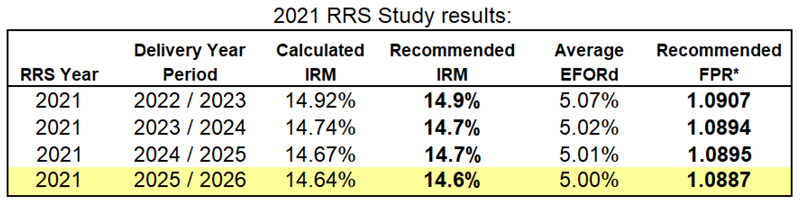
PJM is recommending an installed reserve margin (IRM) of 14.6%, slightly up from 14.4% required in 2020.

During the Aug. 31 Planning Committee meeting, Patricio Rocha Garrido of PJM’s resource adequacy department reviewed the 2021 reserve requirement study (RRS) results, which determine the RTO’s IRM and forecast pool requirement (FPR) for 2022/23 through 2024/25 and establish the initial IRM and FPR for 2025/26. The results are based on the 2021 capacity model, load model and capacity benefit of ties (CBOT).

2021-RRS-Study-Results-(PJM)-Content.jpg
PJM’s 2021 reserve requirement study (RRS) results versus its 2020 RRS results | PJM

Rocha Garrido said the recommended FPR for 2021 slightly increased to 1.0887, from 1.0865 for 2020. He said the FPR is the most important parameter of the study because it is used in the reliability requirement calculation for Reliability Pricing Model (RPM) auctions.

The 2021 capacity model is driving the increase in both the FPR and the IRM, Rocha Garrido said, with the average effective equivalent demand forced outage rate (EEFORd) of 5.8%, compared to 5.78% in the 2020 RRS. Rocha Garrido said the higher average EEFORd was caused by the increase in the average unit size, going to 175 MW in the 2021 RRS compared to 159 MW in 2020.

“We’re spreading the risk across a smaller quantity of units, which in general tends to be bad for reliability,” Rocha Garrido said.

The CBOT — the help PJM can expect from imports during peak loads — is also estimated to increase pressure on the FPR and IRM. Rocha Garrido said imports from neighboring grid operators have decreased from 1.54% in 2020 to 1.47% in 2021.

Rocha Garrido said the 2021 load model is putting downward pressure on both the FPR and the IRM because PJM is “seeing a slight reduction in the standard deviation of the summer peak week” compared to 2020. The 2021 PJM Load Forecast Report, which was used in the study, was released by the RTO in January.

Rocha Garrido said the study results will also be used in the 2022/23, 2023/24 and 2024/25 Base Residual Auctions (BRAs). He said delays in the 2019 BRA for 2022/23 necessitated the use of data from the 2020 study.

The PJM and world load models used are based on the 2001-2013 period and were approved at the Aug. 10 PC meeting. (See Stakeholders Endorse but Question PJM’s Load Model.) The 2021 RRS assumptions endorsed at the June PC meeting were also used. (See “2021 RRS Assumptions Endorsed,” PJM PC/TEAC Briefs: June 8, 2021.)

The PC will vote on the study results at its next meeting, with final votes at the Markets and Reliability Committee and Members Committee meetings in November.

Paul Sotkiewicz of E-Cubed Policy Associates asked what was driving the average unit size increase.

Rocha Garrido said it mainly from the fact that PJM is not modeling effective load-carrying capability (ELCC) resources in the RRS anymore. He said units like landfills, dispatchable hydro, wind and solar have been left out.

Sotkiewicz said “we’re entering pretty uncharted territory,” as the previous RRS results included ELCC resources. He asked if those resources are being taken out of the capacity model and being treated as if they “have no contribution whatsoever.”

“I’m trying to figure out where the ELCC piece fits into this,” Sotkiewicz said.

Rocha Garrido said dealing with ELCC is a “tricky topic” because past modeling of unit size was “imperfect” when they were included. But he said having the model with or without ELCC resources should not impact the FPR.

Manual 14G Updates Endorsed

Stakeholders unanimously endorsed updates to Manual 14G regarding the behind-the-meter generation (BTMG) business rules on status changes.

Terri Esterly, senior lead engineer for PJM’s markets automation and quality assurance department, reviewed the revisions to Manual 14G: Generation Interconnection Requests. The revisions were first presented at the Aug. 10 PC meeting, and no language changes were made between the meetings. (See “Manual 14G First Read,” PJM PC/TEAC Briefs: Aug. 10, 2021.)

The manual updates resulted from work conducted at special sessions of the Market Implementation Committee, Esterly said, where stakeholders reviewed existing BTMG business rules and identified gaps in the rules. Related changes to Manual 14D were presented at the August Operating Committee meeting and are set to be voted on at the committee’s meeting Friday. (See “Manual 14D Updates,” PJM Operating Committee Briefs: Aug. 12, 2021.)

Esterly said the updates included language on megawatts changing from BTMG status, where they can net against the load, to the PJM market resource status. Esterly said the updates were designed to address conflicts with the RPM must-offer requirement and removal from generation capacity resource status business rules, as well as clarifying and “adequately” documenting all the processes related to status changes.

Most of the Manual 14G updates were in section 1.6.1, Esterly said, clarifying information required in an interconnection request to designate capability as a generation capacity or energy resource and to “ensure consistency” with the BTMG definition already in the tariff. The updated language includes a list of information required in a new services request for a BTMG unit, a definition of behind-the-meter load and a clarification on how to determine the maximum host/process loads.

The manual updates will now go to the Sept. 29 MRC meeting for a first read and endorsement in October.

Preliminary 2022 Capital Budget

Jim Snow of PJM reviewed the RTO’s preliminary 2022 capital budget, which is set at $43 million, an increase of $3 million compared to the 2021 budget. Snow said PJM is anticipating spending $45 million per year over the next five years in the capital investments.

Snow said the $3 million increase from the previous budget is primarily being driven by cybersecurity and data analytic costs.

The largest piece is $19 million for current applications and systems reliability, a $4 million increase over 2021. Snow said the money will be used for enhancing the abilities of applications PJM currently uses, including cybersecurity tools, dispatch tools and system planning.

Facilities and technology infrastructure is the second biggest piece of the budget at $11 million. Snow said the budgeted money includes the purchase of network, server and storage infrastructure equipment; upgrades to physical and virtual equipment to allow essential operations on-site and working from home because of the COVID-19 pandemic; and equipment upgrades for cybersecurity monitoring.

Application replacements are budgeted at $10 million and include the Next Generation Markets Systems (nGEM), a multiyear partnership between PJM, MISOISO-NE and General Electric to transform the market systems architecture, technology and products.

The Finance Committee will develop a recommendation letter at its Sept. 13 meeting to send to the PJM Board of Managers, and the board will consider the budget at its meeting on Sept. 22.

Transmission Expansion Advisory Committee

Generation Deactivation Notification

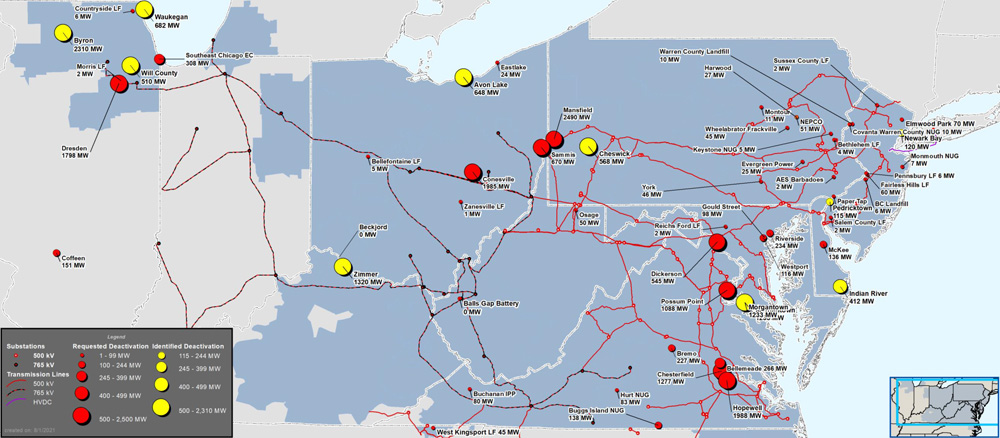
Phil Yum of PJM provided an update on 14 recent generation deactivation notifications totaling nearly 8,000 MW at the Aug. 31 Transmission Expansion Advisory Committee meeting.

Generation-outage-map-(PJM)-Content.jpg
Generation deactivation announcement 2018-2021 | PJM

Houston-based GenOn Holdings requested the April 1, 2022, deactivation of the 627-MW coal-fired Avon Lake 9 Generating Station and 21-MW oil-fired Avon Lake 10 unit, both located in Ohio’s American Transmission Systems Inc. (ATSI) transmission zone, and the 568-MW coal-fired Cheswick Generating Station in the Duquesne transmission zone in Pennsylvania. GenOn originally requested a deactivation date of Sept. 15 for the three units.

GenOn also requested the May 31, 2022, deactivation of 1,233 MW from the coal-fired Morgantown Generating Station 1 and 2, located in the PEPCO transmission zone in Maryland.

Exelon requested that its two Byron nuclear units, both in the ComEd transmission zone in Illinois, be deactivated Sept. 14 and 16. The company originally announced in 2019 its intention to retire the units. The Illinois legislature is still working on an energy bill that would potentially provide $700 million to bail out Exelon’s three nuclear plants in the state. (See Massive Ill. Energy Bill with Funding for Exelon’s Nukes Still Stuck.)

NRG Energy has requested that the coal-fired Waukegan Generating Station Units 7 and 8 and the 510-MW coal-fired Will County Generating Station Unit 4, all located in the ComEd zone, be deactivated on May 31, 2022.

Yum said PJM completed reliability analyses for these requests and determined the units can retire as scheduled.

NRG also requested a May 31, 2022, deactivation of its coal-fired 412-MW Indian River 4 Generating Station, but the reliability analysis identified the need to keep the plant operating. Yum said PJM identified seven different thermal violations, estimated to cost $117.4 million. PJM and NRG are still working on solutions to allow for deactivation.

PJM also received generation deactivation notices for three additional units for May 31, 2022, including Talen Energy’s 115-MW gas- and oil-fired Pedricktown Power Plant in the Atlantic City Electric transmission zone and the 120-MW Newark Bay Power Plant in the Public Service Enterprise Group transmission zone, as well as Vistra’s 1,320-MW coal-fired William H. Zimmer Power Plant in the Duke Ohio/Kentucky transmission zone. Yum said a reliability analyses were completed for each unit, and they can retire as scheduled.

A total of 7,918 MW of generation is set to be deactivated between the 14 units.

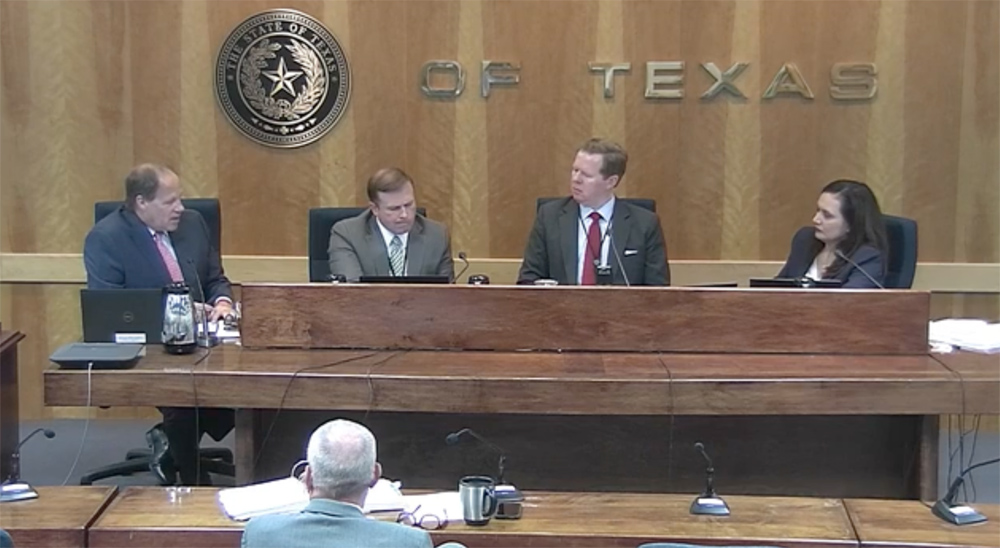
Texas PUC Considers Adding Grid Interconnections

The times, they may be a-changing in Texas, where the Public Utility Commission is considering expanding DC ties with neighboring grid operators following February’s devasting winter storm.

Texas regulators have long jealously protected the ERCOT grid’s electrons from mingling with those of its neighbors. The result is a grid isolated from the Eastern and Western Interconnections and exempt from FERC jurisdiction.

“Obviously, protecting our ERCOT market from FERC jurisdiction has been of upmost importance for the commission, historically,” Commissioner Lori Cobos said during the Thursday open meeting.

The Texas grid has two DC ties with SPP and a third with Mexico, but they are limited to a combined 1.1 GW of capacity and are primarily used for commercial purposes. ERCOT uses the same ties to exchange power with its neighbors during emergency conditions.

But there may be another option: Pattern Energy’s Southern Cross Transmission merchant project, a bi-directional HVDC transmission line that will asynchronously connect ERCOT with systems in the SERC Reliability region. The 400-mile, double-circuit 345-kV line will be capable of carrying 2 GW of power between Texas and SERC, enough to have possibly made a difference during the February storm.

Mark-Bruce.jpg
Mark Bruce, Cratylus Advisors | © RTO Insider LLC

“Winter Storm Uri, opened our eyes to the challenges that come from our isolation,” said Cratylus Advisors principal Mark Bruce, who represents Pattern before ERCOT and the PUC and calls Southern Cross “a gift to the state of Texas.”

“The Southern Cross project will be funded entirely by private capital and those costs will be recovered exclusively from the wholesale power traders who use the facility,” Bruce told RTO Insider. “Absolutely no costs of the project will be included in Texas transmission rates.”

The project has FERC approval and a waiver from the commission’s jurisdiction. It also has a certificate of convenience and necessity, granted by the PUC in 2017 to Garland Power & Light, which owns the project’s western endpoint.

The developers are working with ERCOT to respond to 14 PUC directives to determine whether DC ties should be economically dispatched or subject to a congestion-management plan (46304). Half of the directives have been completed, Bruce said. (See “Members Debate Southern Cross’ Bid to be Merchant DC Tie Operator,” ERCOT Technical Advisory Committee Briefs: Feb. 22, 2018.)

Commissioner Jimmy Glotfelty, who was among those behind Clean Line Energy Partners and its plan to ship renewable energy over HVDC lines to urban centers, spoke up for the Southern Cross project.

“I’m a fan of DC ties,” he said. “If we want to continue to be the best place to do business, we’re going to have to have that type of a system that is technologically advanced and reliable and economic. If DC lines are going to be part of it, and I think they should, let them be part of it.”

“Pattern is pleased that this commission recognizes the value of reliability benefits and the economic benefits that come from this kind of interconnection,” Bruce said. “… We are excited that the commission wants to wrap this up and we are certainly willing to do our part to make it happen.”

Texas-PUC-2021-09-02-(Texas-Admin-Monitor)-Content.jpg
The Texas PUC discusses interconnections with neighboring RTOs and speeding up ERCOT’s transmission planning process during its Sept. 2 open meeting. | Texas Admin Monitor

Doug Lewin, an Austin-based energy consultant, told RTO Insider he was “intrigued” by the commissioners “seemingly universal feeling … that connecting to the Eastern and Western Interconnects is a good idea.”

He said he agreed with other experts that ERCOT doesn’t have to give up independence from FERC jurisdiction to interconnect with the other grids. He said the commission might grant a waiver “given the magnitude of the problems facing Texas last February and potentially facing us in the future.”

Cobos has been leading an effort to investigate expanding current ties and adding other interconnections that don’t incur FERC jurisdiction. She told her fellow commissioners that ERCOT has also studied a potential tie with MISO. Unsurprisingly to those involved in SPP’s and MISO’s effort to agree on interregional transmission projects, Cobos said the study turned up cost allocation and modeling “differences” between ERCOT and MISO.

Commissioner Will McAdams cited Uri in urging deeper ties with the Texas grid’s neighbors.

“We need a way to build around this in case the one-in-200-year events happens … where we can draw resources in and work through a partnership with those [RTOs],” he said.

“We can’t look at these weather events as static, one time,” Glotfelty said. “They are going to happen again and again.”

The commissioners, who all joined the PUC since April, have begun to flex their regulatory muscle. In a memo, Cobos reminded the commission that they have the authority under the state’s Public Utility Regulatory Act to order ERCOT to build transmission that ensures the safety and reliability of the grid.

They discussed the need for a transmission solution to congestion issues in the Rio Grande Valley. Cobos said a 345-kV line in the Valley is “double-circuit capable,” but only one circuit is being used. She suggested ERCOT study adding another line and building a new 345-kV line running east to west near the border with Mexico.

“We can have ERCOT and the [transmission service providers] study those transmission solutions that are near term, low-hanging fruit, and see if it’s a good idea to move forward with the transmission buildout,” Cobos said. “We can get additional information from ERCOT, and we can order them to build it.”

ERCOT’s interim CEO, Brad Jones, released a roadmap to grid reliability in July that included new transmission capacity to address the Valley’s limitations. The grid operator’s Regional Planning Group could take up the issue during its next meeting on Sept. 15. (See ERCOT Issues ‘Roadmap to Grid Reliability’.)

Cobos included in her memo an eight-point list of actions that could be taken to speed up ERCOT’s planning process.

“If we want to use our authority, we can’t let them get bogged down in [a] multi-stakeholder process at ERCOT,” Glotfelty said. “It takes too long. Everyone has to have their say. It’s a big market. We’ve got to hold their feet to the fire to get these things done.”

PUC Chair Peter Lake asked Cobos to develop a process for completing the potential Rio Grande Valley projects “sooner, rather than later.”

 “Let’s see what additional analysis is needed and the commission’s authority to order the construction of these lines,” he added. “We got very clear and robust direction from the legislature to solve these problems.”

Lewin said the PUC’s newly emboldened outlook is “long overdue.” He said recent chairs have been hesitant to use their authority and “did a lot of arguing for their own limitations.”

“This commission is operating in a very different context, with, as Chair Lake says, ‘a bias toward action,’” Lewin said. “Texas needs new transmission, and I’m glad the commission is moving aggressively.”

National Grid Lowers Planned Geothermal District Project Costs

National Grid (NYSE: NGG) has agreed to cut the monthly cost of its geothermal heat pump demonstration project by over half from its original proposal for low-income participants and stretch the project payment out over a longer period.

Under the new plan, low-income customers who participate will be charged $45/month over a five-year period, according to a brief the company submitted to the Massachusetts Department of Public Utilities (DPU) late last month. The charges for residential and business customers will be $60 and $90/month, respectively.

National Grid’s original proposal had low-income participants paying $112.50/month over a two-year period. Residents would have paid $150/month and businesses $225/month.

“This is a big win,” Zeyneb Magavi, co-executive director of the nonprofit Home Energy Efficiency Team (HEET), told NetZero Insider.

HEET became an intervenor in the DPU hearings for National Grid’s geothermal demonstration program in May to help both the agency and the utility design and implement regulations that would work for the cutting-edge technology.

National Grid and Eversource Energy, another utility in the state with a proposed ground source heat pump demonstration project, are “really leading the way in the country” for cutting emissions out of home heating and cooling, Magavi said, which is “mind-blowing” because they both own natural gas companies.

Magavi developed and refined the concept of ground source heat pump systems that could be installed in the rights-of-way owned by gas utilities, a concept referred to as GeoMicroDistricts.

In the organization’s testimony and comments, HEET provided technical recommendations for the project structure and design, and will be operating as an independent third party to collect standardized data across different geothermal demonstration projects to determine which aspects of the different designs have been the most effective.

A key component of National Grid’s project is its proposal to target leak-prone and aging natural gas infrastructure in a dense city environment for its demonstration.

National Grid agreed to work with HEET on organizing public meetings to hear from engineers, low-income tenants, property owners, policy makers and other stakeholders on how to identify which natural gas pipes should be targeted first. The meetings are also an opportunity for utilities to educate customers and make them more comfortable in the decarbonization transition.

Eversource is behind schedule on its own geothermal demonstration project because of the number of interested parties, municipalities, community leaders and businesses wanting to participate in the utility’s discussions on how to decarbonize home heating and cooling, Magavi said.

The DPU opened a docket earlier this year to investigate how to decarbonize the gas sector (Docket 20-80). Geothermal heat pump districts emerged as a way forward for the industry to potentially use existing natural gas pipes and rights-of-way to transport water to control the temperature of homes.

The systems could allow gas utilities to convert customer heating systems at a scale and pace needed to match the state’s climate mandates while offering their workforce training and employment to operate and maintain the networks.

“People want to do the right thing,” Magavi said, “they just need to be given an option they can take.”

National Grid is awaiting final approval from the DPU on its project, but Stephen Bryant, former president of Columbia Gas in Massachusetts, said in his testimony on behalf of HEET there is no time to waste when it comes to decarbonization.

The Massachusetts climate law “demands a significant transition from natural gas to alternative sources of thermal energy, and geothermal district systems are an opportunity for doing so in a way that supports the public interest,” Bryant said.

He called for additional data on the viability and best options for geothermal district energy systems so that DPU and gas distribution companies can allocate resources that advance public health, safety and environmental mandates.

NEPOOL Stakeholders Discuss Transition Mechanisms for MOPR

As stakeholders and ISO-NE work to eliminate the minimum offer price rule (MOPR) from the Forward Capacity Market (FCM), the NEPOOL Markets Committee discussed multiple proposals centered on potential transitional mechanisms at a meeting last week.

The meeting was a product of four stakeholders — FirstLight Power, Calpine, Vistra (NYSE:VST) and Energy Market Advisors — who agreed to delay their presentations from the Aug. 10-12 MC meeting so that Jeffrey McDonald, the RTO’s vice president of market monitoring, could provide his opinions on the removal of the MOPR.

FirstLight

Changes to the MOPR, along with improved retirement signals and rules, would make reliability aligned with state policy goals, according to a presentation by FirstLight’s Tom Kaslow that highlighted a revised capacity performance payments (CPP) proposal.

Market changes are needed to value the differences in energy call options each capacity seller must provide under its capacity supply obligation (CSO). That is because the value cannot, by definition, be realized through spot energy and operating reserve prices, Kaslow said. The revised CPP design defines a common strike price for all capacity resources enforced in the highest 1% of real-time LMP hours.

Capacity resources with higher strike prices would be required to buy the gap between their strike and the common strike price, with those proceeds used to compensate the resources that made the common strike value possible. Thus, the revised CPP design would complement, not replace, effective load-carrying capability (ELCC).

Calpine

ISO-NE should revise the rules for CSOs to reflect the system’s needs better, regardless of what happens with the MOPR, Calpine’s Brett Kruse said in his presentation. That would be accomplished by reducing capacity resources’ combined notification, start-up and minimum run and down times to 24 hours from 72 hours.

PJM had similar cycling parameters until it changed expectations for its Capacity Performance product. Kruse noted that Calpine is not proposing PJM’s parameter values, only using them to demonstrate what is possible. In addition, parameter changes typically do not require significant capital outlays, just changes in operating practices.

The resource dispatch cycle, Kruse added, would now efficiently mimic ISO-NE’s dispatch cycle, making everything line up within 24 hours. The change should also fit with an upcoming capacity accreditation initiative that would allow even more fine-tuning.

Vistra

Vistra’s Andrew Weinstein floated altering Competitive Auctions with Sponsored Policy Resources (CASPR) for a three-year transition period instead of outright eliminating the MOPR, arguing that doing the latter would not fly with FERC.

The company’s proposal would reinstitute the renewable technology resource (RTR) exemption and allow bilateral transactions.

“A CASPR transition that substantially accommodates state-subsidized resources while preserving investor confidence and avoiding cost shifts could be appealing to all sides of NEPOOL, as well as both Republicans and Democrats at FERC, as a solid path forward towards a permanent solution,” Vistra said.

Calpine has already indicated its support for this proposal, and Weinstein said he anticipates it will become a co-sponsor as the process moves forward.

Energy Market Advisors

Brian Forshaw of Energy Market Advisors said that the rationale for a transition mechanism is “becoming increasingly obvious,” as eliminating the MOPR for Forward Capacity Auction 17 makes it difficult to identify solutions that will not distort long-term price signals or could be implemented in that time frame.

According to Forshaw, the goal should be to allow relaxation or elimination of the MOPR while assuring that FCA clearing prices don’t collapse below the level of recent capacity auctions.

The most straightforward approach would be suspending the MOPR tariff provisions starting with FCA 17 and implementing a temporary price floor, effective with the suspension of the MOPR. If a more durable solution is not in place after two years, he recommended implementing a net cost of new entry (CONE) adder as proposed by Potomac Economics, the RTO’s External Market Monitor, that reflects permanent MOPR elimination and the effects of significant market enhancements.

Forshaw said he would also be willing to consider the Vistra proposal. Still, he would want to explore the potential impact on balancing resources and may need a fallback option at the end of the transition period if a more durable solution is not ready.

Feedback from ISO-NE

ISO-NE offered its feedback on the stakeholders’ proposals, though none amounted to tantamount support.

On FirstLight’s CPP proposal, the RTO outright said it does not support it. CPP create incentives for efficient resources to enter the market under both long and short capacity conditions in a capacity market. Still, the FCA price loses its entry and exit signals. There is also a disincentive to follow the RTO’s dispatch in forecasted critical times, impacting real-time price formation.

ISO-NE also does not support the reduction of cycle-time provisions of the FCM rules, as Calpine proposed. Calpine would limit participation in the FCA based on a single, predetermined operating characteristic. According to the RTO, the ability of a resource to contribute toward meeting the loss-of-load criteria is dependent on many factors, not just cycle-time limits such as single-source contingencies and fuel arrangements, among others.

The RTO’s initial observations of Vistra’s proposal were that such transition mechanisms generally require detailed rules across multiple periods, presenting challenges on an expedited timeline. However, the RTO added that implementation concerns also exist as the conceptual approach would impact many systems.

It had similar concerns with the transition mechanism proposed by Energy Market Advisors, which floated a balancing resource concept. ISO-NE said that such a concept is not feasible for an FCA 17 filing, as many complex rules would need to be defined around the settlement and qualification of those resources. The RTO cannot address complex design elements before the first quarter of 2022 filing with FERC.

ISO-NE did, however, appreciate the resource accreditation aspects of the proposal and said it shares the goal of accurately accounting for contributions toward resource adequacy.