Hurricane Ida Bears Down on MISO South

Entergy is issuing warnings of prolonged power outages as Hurricane Ida walloped coastal Louisiana Sunday afternoon.

The storm made landfall near Port Fourchon, La., on the 16th anniversary of Hurricane Katrina’s land debut.

As the outer bands began pounding Louisiana, Entergy New Orleans warned that residents in the hardest-hit areas could lose power for the better part of a month.

“Based on historical restoration times, customers in the direct path of a storm as intense as Ida may experience outages for more than three weeks. Customers in the hardest-hit areas should plan for the possibility of experiencing extended power outages,” the utility tweeted Aug. 29.

Within the first 30 minutes of the 1 p.m. ET landfall, more than 100,000 ratepayers in Louisiana lost power, according to www.poweroutage.us. The number steadily increased to 300,000 by 3 p.m.

MISO declared conservative operations for its Louisiana balancing authorities two days before landfall and through midnight on Aug. 31. The RTO said the storm had the potential to damage transmission and generation.

MISO Senior Director of Reliability Coordination Jessica Lucas said MISO evaluated Entergy’s damage predictions ahead of the storm.

Entergy said it activated its mutual aid assistance plan and secured “crews from at least 22 states and D.C.” to aid in the restoration process. The company also said it secured the use of drones, helicopters, marsh buggies and high-water vehicles.

Entergy also said it’s been storm-hardening its system in recent years, raising flood-vulnerable substations, replacing transmission near the cost with steel structures “and installing ‘isolation” devices on lines to reduce outages.”

Hurricane Ida tied last year’s Hurricane Laura and the 1856 Last Island Hurricane as the strongest to hit Louisiana. Ida minted Louisiana as the first state to experience hurricanes with 150 mph-plus winds in two consecutive years.

“Over the past year, we’ve reviewed lessons learned from the historic 2020 hurricane season with our members to prepare and respond to the impacts of tropical storms and hurricanes,” MISO South Executive Director Daryl Brown said in a press release. “Keeping the grid safe and reliable is critical to our industry and the customers we serve.”

The new storm comes as MISO is still resettling about one-eighth of the pricing impacts associated with Hurricane Laura, which caused about $90 million in congestion costs. (See MISO Keeps Advisories in Effect a Week After Laura.)

Hurricane Ida Thrashes Louisiana; Storm Darkens New Orleans

Hurricane Ida wiped out all power sources in the Big Easy in a matter of hours on Sunday, according to Entergy.

The painfully slow-moving storm trounced both New Orleans and Baton Rouge and caused more than a million concurrent outages in Louisiana.

By midnight Monday, Ida darkened all of Orleans Parish, including New Orleans.

The storm blew a nearby transmission tower into the Mississippi River. Soon after, all eight transmission lines feeding the city went offline, causing a load imbalance that forced Entergy’s generation offline.

At 9:30 p.m. Entergy New Orleans tweeted it was making “every effort to learn more and rectify.” The utility said it provided back-up generation to the New Orleans Sewerage and Water Board.

Entergy characterized the transmission damage as “catastrophic.” It confirmed that the only power to be had in the city Sunday night was being supplied by temporary generators, a fact that Homeland Security also reported.

“We are currently working to assess damage and identify a path forward to restore power, to those who can take it, in the area,” Entergy NOLA said in a short update Sunday night.

Late Sunday, Louisiana Gov. John Bel Edwards announced that President Biden approved his request for a Presidential Major Disaster Declaration in every parish in the state.

The storm made landfall near Port Fourchon, La., on the 16th anniversary of Hurricane Katrina’s land debut.

As the outer bands began pounding Louisiana, Entergy New Orleans warned that residents in the hardest-hit areas could lose power for the better part of a month.

“Based on historical restoration times, customers in the direct path of a storm as intense as Ida may experience outages for more than three weeks. Customers in the hardest-hit areas should plan for the possibility of experiencing extended power outages,” the utility tweeted Aug. 29.

Within the first 30 minutes of the 1 p.m. ET landfall, more than 100,000 ratepayers in Louisiana lost power, according to www.poweroutage.us. The number steadily increased to 300,000 by 3 p.m.

MISO declared conservative operations for its Louisiana balancing authorities two days before landfall and through midnight on Aug. 31. The RTO said the storm had the potential to damage transmission and generation.

MISO Senior Director of Reliability Coordination Jessica Lucas said MISO evaluated Entergy’s damage predictions ahead of the storm.

Entergy said it activated its mutual aid assistance plan and secured “crews from at least 22 states and D.C.” to aid in the restoration process. The company also said it secured the use of drones, helicopters, marsh buggies and high-water vehicles.

Entergy also said it’s been storm-hardening its system in recent years, raising flood-vulnerable substations, replacing transmission near the coast with steel structures “and installing ‘isolation’
devices on lines to reduce outages.”

Hurricane Ida tied last year’s Hurricane Laura and the 1856 Last Island Hurricane as the strongest to hit Louisiana. Ida minted Louisiana as the first state to experience hurricanes with 150-mph-plus winds in two consecutive years.

“Over the past year, we’ve reviewed lessons learned from the historic 2020 hurricane season with our members to prepare and respond to the impacts of tropical storms and hurricanes,” MISO South Executive Director Daryl Brown said in a press release. “Keeping the grid safe and reliable is critical to our industry and the customers we serve.”

The new storm comes as MISO is still resettling about one-eighth of the pricing impacts associated with Hurricane Laura, which caused about $90 million in congestion costs. (See MISO Keeps Advisories in Effect a Week After Laura.)

MISO: Lessons Remain From February’s Winter Crisis

At a webinar on cold weather preparedness hosted by SERC Reliability and ReliabilityFirst on Tuesday, Trevor Hines, MISO’s manager of reliability coordination for its South region, emphasized that while the RTO has been diligent about learning from February’s cold-weather event and subsequent mass outages, there is still much work to be done implementing its lessons.

“You’ll hear a theme here, as far as things that we need to make sure we’re incorporating into our planning process, [that] being these unprecedented or extreme events,” Hines said, adding that MISO staff have described the events of February as a “once in a career event” for which no training had ever prepared them.

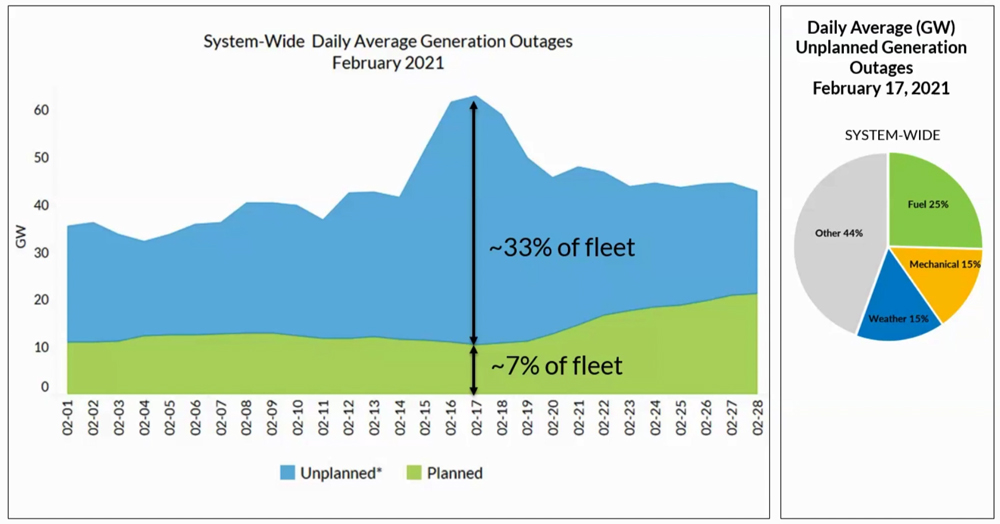
The exceptional circumstances went beyond the weather; MISO’s report on the February events identified a number of unusual occurrences. For example, the normal west-to-east flow of energy across the MISO footprint reversed during the winter crisis, as the cold weather moving across the U.S. led to increased demand for energy in the Midwest while temperatures remained higher in the East.

This only proved temporary, as the cold weather continued to spread east as the week went on and eastern generating resources became more thinly spread. MISO began to experience “operational challenges,” leading the RTO to exercise its emergency procedures, including load shed.

https://rtowww.com/wp-content/uploads/2023/06/140620231686784916.jpeg
MISO’s systemwide daily average generation outages for February 2021, with a chart showing the causes of unplanned outages on Feb. 17 | MISO

“As we all know, this is not an easy decision to make for a system operator. … They are very aware of what the impact is of having to do this in the middle of a cold-weather event,” Hines said. “The processes did work; we did not have any uncontrolled loss of load due to impacts [to] the transmission system. But we did have to make some hard decisions [to] keep the system reliable.”

One reason the system operators had to make relatively quick decisions was that their training had never addressed handling east-to-west energy flows; Hines said this was because “current emergency load-shed plans are focused primarily on summer needs.”

Another lesson from the cold snap is the need for “a unified communication or story to tell” when a mass event is affecting multiple areas at once.

“We are all on the same page trying to ensure the reliability of the bulk electric system during events like this; we should all be able to have a similar story as to what the impacts are and why we experienced those impacts,” Hines said.

While MISO’s report discussed the role of a common communication strategy in avoiding “negative press, concern from legislators and regulators, and ultimately customer frustration,” Hines noted a further benefit to having designated communication staff: the ability to keep critical personnel focused on their jobs.

“We have system operators … who were pulled into a lot of conversations, whether that be with the press [or] upper management, asking questions about what’s going on … and at times that would take away the subject matter experts from their duties of focusing on the reliability of the bulk electric system,” Hines said.

Cold Snap Takes Stage at MRO

With winter inching closer, the Midwest Reliability Organization’s annual reliability conference on Tuesday also focused on February’s big chill.

Oklahoma Gas and Electric Director of System Operations Dallas Rowley joked that the emphasis on the mid-February load shedding remains a “cold topic,” rather than a hot one.

“Firefighters have to prepare for heat. For system operations, it’s been a little hot,” SPP Director System Operations C.J. Brown said, adding that the RTO is readying plans for the 2021 winter. “The fact is extreme weather is here to stay.”

Brown said the February event’s duration is what set it apart from other challenging operations. “In my 20 years, I’ve seen some rough days; I’ve seen some rough weekends. I’ve never seen a situation where we couldn’t get our [balancing authority] healthy for so long. We were on the edge of seats for the better part of a week.”

He said the cold snap will irrevocably change planning forecasts and resource adequacy prep work. The success story coming out of the event, Brown said, is MISO and SPP’s coordination on imports and transmission capacity as the cold and ice persisted.

Foundation for Resilient Societies founder Thomas Popik, whose consumer advocate nonprofit focuses on reliability, said ERCOT’s major blackouts in mid-February have knock-on effects for MRO.

Popik said wind generation, at 120,000 GWh in 2019, makes up more than a quarter of MRO’s nameplate capacity and is second only to coal’s nearly 35% share of capacity. He said MRO and ERCOT share a similar fleet makeup.

“All resources can underperform in tandem,” he said, adding that it was “unfortunate” that political leanings led some to blame the ERCOT load shed on renewable resources. He said aging coal plants can be quick to trip offline in underfrequency conditions brought on by extreme weather.

“If you already have 30 years of life in turbine blades, do you want to risk vibrations? It might be prudent to take a forced outage for the day,” he said.

But Popik said ERCOT’s single greatest failure during the event was not having a more detailed load-shed plan that prioritized critical infrastructure like hospitals and the electric compressors that pressurize natural gas supply.

“You have to have really good plans for what the prioritization is,” he advised.

Popik also cautioned that NERC’s N-1 contingency definition assumes failures are random and aren’t correlated, as they tend to be in extreme weather events.

Popik said though ERCOT operators received flak for ordering load shed, he considers them “heroes.” He said their targeted load shedding averted underfrequency load shedding and total system collapse. With several black start units on forced outage at the time, “it could have been days, weeks, months before a full restoration in ERCOT,” he said.

“It’s unfortunate the heat the operators took,” Brown agreed. “Even in SPP, we had [members] of the public calling in to the control room. Somehow, they got the number. They thought it would be helpful. It was not helpful. … We need to do a better job of educating what it takes to manage the grid.”

MISO Executive Director of Systems Operations Renuka Chatterjee told the MRO Board of Directors that summer peak planning is no longer an acceptable standard.

“Professionally, I don’t have an opinion on climate change. But there are more extreme weather events within a year,” she said.

Chatterjee said that rather than one single strategy, MISO will need new flexibility products, commitments made days in advance and digitized load that can be calibrated up or down depending on system needs.

“We can say [in the] future, but I think the future is upon us,” she said. “This is, I think, the energy industry’s moment. … In many ways, we’re electrifying the same grid with different fuel. We’re learning to operate with more wind, more solar.”

Chatterjee recommended audience members read “The Last Days of Night,” Graham Moore’s historical thriller about the current wars during the 1890s.

“It’s interesting for me to compare the people and attitudes of those times with the current effort to re-electrify America with new fuels,” she said.

Chatterjee said MISO’s growing workforce is emblematic of the transformation. She said she remembered a time when one pizza order could cover the RTO’s staff at the turn of the millennium. Now, the RTO’s employees number more than 1,000.

Stakeholders Differ on OSW Leases in New York Bight

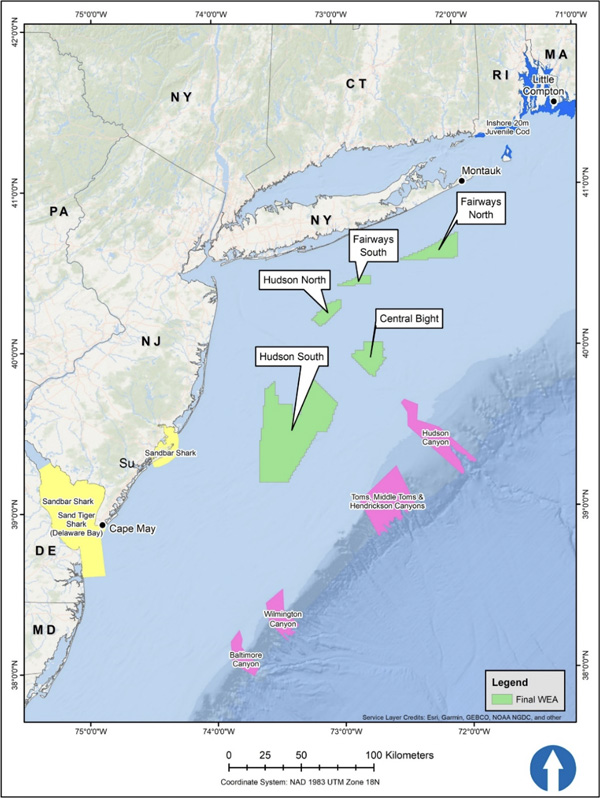
Advocacy organizations and some coastal residents asked the U.S. Bureau of Ocean Energy Management to pause before selling new offshore wind leases in the New York Bight, the ocean area between Long Island and Cape May, N.J., while others urged the agency to move forward without delay.

BOEM held two public hearings Aug. 25 and 26 before the comment submission deadline of Sept. 9, hearing the various opinions as well as requests to extend the 30-day public comment period on a draft environmental assessment (EA) of new offshore wind leases in the bight (BOEM-2021-0054). (See BOEM Preps New Wind Leases off NYC.)

“We are requesting an extension to the comment period and an additional public hearing due to the scope and magnitude of the proposal,” said Cindy Zipf, executive director of Clean Ocean Action, a coalition of groups that work on the waters between Cape May and Montauk, N.Y. “Wouldn’t it be best to learn from some of the experience from New Jersey’s 425,000 acres than to rush ahead with 800,000 acres? This is especially true since we have so little understanding of the development, construction and experience with that, and so little science to avoid, reduce or fix any harm done.”

BOEM should not reduce the size of the lease areas, nor delay the pre-construction process, unless a substantial negative environmental impact is identified, said Caroline Hahn of the New York League of Conservation Voters.

“These areas have already gone through a significant review process to avoid user conflicts, and these areas are crucial to achieve our renewable energy goals,” Hahn said.

Recreational anglers support the development of offshore wind both because they see firsthand how climate change is impacting fisheries, and also because the turbine foundations act as artificial reefs that attract many species of fish, said Paul Eidman of Anglers for Offshore Wind Power. “I would ask BOEM to move forward with this process because as a recreational fishing angler and a recreational fishing guide … I am excited about all the opportunities that offshore wind has to offer us.”

When people see only little bits and pieces of a huge industrialization effort, they cannot see what is really going on or going to happen, said Delaware resident Amy Kyle, a recently retired environmental health scientist from the faculty of the University of California, Berkeley.

Habitat-areas-(BOEM)-Content.jpg
Habitat areas of particular concern in the vicinity of the New York Bight Wind Energy Areas | BOEM

Ørsted US Offshore Wind’s 1,100-MW Ocean Wind I and 1,148-MW Ocean Wind II projects “got to be four times taller, and recently has gotten four times bigger, all after the initial assessments were done,” Kyle said.

“I cannot see any venue where anybody is seriously looking at the combined impact of all of these activities on the system as a whole, and also the regional-scale resources, which for us include marine mammals and also birds,” Kyle said. “I don’t see where we are looking at the puzzle as a whole … [which] is a tremendous scientific deficit here [that] should not be allowed to just go on.”

It is “impossible to comprehend” that BOEM would entertain subjecting an additional 800,000 acres of ocean waters marine habitat and bird migration flyway for a test case, Jersey Shore resident Lynn Schambach said.

“Many marines scientists agree that little is known about the harm from this industrialization of the ocean, especially at the magnitude, scale and speed of development currently proposed,” Schambach said.

What’s the rush? asked Paul Kanitra, mayor of Point Pleasant Beach, N.J.

“You’ve been relying on stealth and speed to get this done, and that’s scary. Government is trying to disguise huge greedy corporations who answer only to stakeholders as some sort of cute homespun green initiative,” Kanitra said.

Corporations “could not care less” about what impact they leave, and the wind farms will be irreversible, he said. The turbine blades aren’t recyclable and are the size of 18-wheelers. The salt air destroys the structures within only 20 years and then more money needs to be spent to hopefully cart them away or leave them resting on the horizon, he said.

For those who say just pause and delay, the U.S. has been doing so for decades, said Adrienne Esposito, executive director of Citizens Campaign for the Environment, a New York organization with 140,000 members.

“Most marine scientists are not fretting about the little-understood impacts of offshore wind, but rather are intensely concerned about the impacts of climate change,” Esposito said. “Marine scientists agree that the changing currents, acidification of our oceans and sea level rise are all impacting marine species, particularly benthic-dwelling organisms.”

California PUC, Judge Pressure PG&E to Clear High-Risk Lines

The California Public Utilities Commission and a federal judge are pushing aggressively for Pacific Gas and Electric to clear trees from high-risk power lines during an already disastrous fire season.

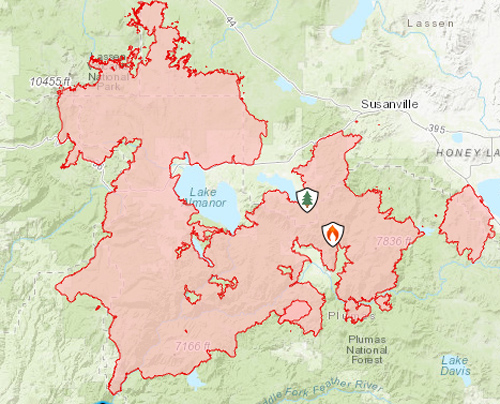
A tree falling on a PG&E distribution line is suspected of starting the Dixie Fire, now the second largest wildfire in state history, in the northern Sierra Nevada foothills on July 13. By Thursday, the fire had burned more than 747,000 acres and destroyed nearly 1,300 structures; it was 45% contained. (See Dixie Fire Explodes, Burns Historic Town.)

CPUC President Marybel Batjer wrote to PG&E CEO Patricia Poppe on Aug. 18 telling her the Dixie Fire had exacerbated concerns about the utility’s vegetation management and inspection practices.

“CPUC staff have recently initiated an investigation on the responsibility of PG&E infrastructure causing the Dixie Fire,” in coordination with the California Department of Forestry and Fire Protection and law enforcement agencies, Batjer wrote.

Batjer also said she had directed CPUC staff to “conduct a fact-finding review regarding a pattern of self-reported missed inspections and other self-reported safety incidents to determine whether a recommendation to advance [PG&E] further within the [CPUC’s] enhanced oversight and enforcement process is warranted.”

Dixie-Fire-map-(US-Forest-Service)-Content.jpg
The Dixie Fire had burned more than 747,000 acres by Thursday. | U.S. Forest Service

As part of PG&E’s bankruptcy reorganization last year, the utility agreed to subject itself to a six-step process that could eventually end with its license being revoked and a state takeover. The CPUC put PG&E into the first step of that process on April 15 for its failure to prioritize tree cutting on its highest-risk power lines. (See CPUC Applies Stricter Oversight to PG&E.)

Step one of the process requires enhanced reporting by PG&E. Step two would involve greater CPUC oversight of PG&E’s management and operations. The second step can be triggered by an “electric incident … that results in the destruction of 1,000 or more dwellings or commercial structures and appears to have resulted from PG&E’s failure to follow commission rules or orders or prudent management practices.”

“We’ve never had a process like this for any other utility, and I don’t know of any other PUC in the country that has a process like this,” Commissioner Clifford Rechtschaffen said in April. “It’s a process that’s warranted given PG&E’s conduct.”

The CPUC decided earlier this month to appoint an independent safety monitor for five years to keep watch over PG&E’s risk-reduction efforts, including its wildfire mitigation plans. (See CPUC Orders Independent Safety Monitor for PG&E.) The utility owns 106,681 circuit miles of distribution lines and 18,466 circuit miles of transmission lines. More than half of its 70,000-square-mile service territory is in high fire risk areas.

“The [independent safety monitor] shall serve as the commission’s consultant, dispensing reports, materials, advice, opinions and recommendations to the commission” under CPUC direction, the order said.

The CPUC has been after PG&E to improve its corporate safety culture since 2015, when it opened an investigation into the utility’s safety practices following the 2010 San Bruno gas pipeline explosion, which killed eight people and leveled part of a suburban San Francisco neighborhood.

Jurors convicted PG&E of six felonies related to the disaster in 2016. The company remains on probation, supervised by federal Judge William Alsup, who has struggled to change the utility’s safety practices, especially its vegetation management.

He expressed his anger at PG&E after a leaning gray pine tree fell on one of the utility’s power lines in Shasta County, igniting the fatal Zogg Fire in September 2020. (See PG&E Equipment Started Zogg Fire, Investigation Finds.)

“I think it was reckless, maybe criminally reckless, for PG&E to have left … that gray pine looming,” Alsup said at a hearing in February.

The judge recently ordered PG&E to explain its role in starting the Dixie Fire and to produce the lineman who discovered the fire for questioning at a Sept. 13 hearing.

Houston METRO to Electrify Bus Fleet by 2030

The Houston METRO Board of Directors on Thursday voted to replace the agency’s fleet of 1,300 buses with electric buses by 2030 as part of its first Sustainability Vision Statement.

The transit authority had already voted to purchase 20 full-size battery electric buses and 10 battery-powered para transit vans and had applied for federal grants. The vote also commits the board to explore the use of fuel-cell electric buses, which convert hydrogen to electricity, replacing batteries.

With the vote, METRO joins other municipal and state systems that have committed to replacing their diesel and natural gas fleets with electric buses by 2040. They include New Jersey Transit, which has committed to replacing its 2,200 buses, the California Transit Association (12,000 buses) and New York MTA (5,800 buses).

The move toward electric buses includes a commitment to improve equity and accessibility with initial electric bus routes planned for portions of the city most impacted by carbon dioxide emissions.

The Houston fleet is the largest in Texas, according to the Environmental Defense Fund, which notes that about half of the metro area’s emissions can be attributed to the transportation sector.

EDF says that metropolitan transit systems can save money by moving away from diesel to electric buses, noting that the total cost of owning and operating an electric bus is 12% lower over a typical 12-year lifetime.

“This commitment is a historic win for Houston’s health and climate. Houstonians deserve a modern, clean transit fleet that cuts pollution and saves money, and with an all-electric fleet Houston METRO can deliver,” Colin Leyden, EDF director of state regulatory and legislative affairs, said in a statement. ” [Houston] Mayor [Sylvester] Turner and the METRO board are to be commended for driving this progress and delivering meaningful climate action for the Houston region.”

Michigan PSC Issues Emergency Order Following Devastating Storms

During a month of historic storms that times left nearly a million Michigan residents without electricity, and with the prospect that climate change will make such storms common, the state’s Public Service Commission issued an emergency order Wednesday requiring investor-owned utilities to report on response following the storms, efforts to minimize downed power lines and other damage, and proposals to improve the grid’s reliability including running lines underground (U-21122).

The PSC said that despite progress utilities have made in mitigating damage from heavy storms, “the realities of a changing climate make it likely that Michigan will experience storms that are more extreme, and will experience them more frequently, than it has in the past.”

The order calls for the utilities to undertake a number of steps, including:

    • reporting on how efforts to control vegetation have improved grid reliability;
    • ranking the 10% worst performing lines circuits in 2021;
    • planning how to address customer outage credits, making those credits automatic, and expanding outage credit amounts and automatic eligibility; and
    • summarizing their power restoration efforts, as well customer communications efforts, and how to improve both.

Michigan has been slammed by a series of dramatic storms this summer, with heavy rains and high winds. The worst occurred Aug. 10-11, leaving nearly 1 million customers of most utilities in the state — especially Consumers Energy (NYSE:CMS) and DTE Energy (NYSE:DTE) — without power. Emergency crews had to come in from other states to assist in reconnecting customers. DTE alone saw more than 3,100 downed power lines as a result of that storm, and there have been other heavy if not ferocious storms this month.

In fact, the Aug. 10-11 storm was among the two heaviest DTE has experienced in its century-long history, the other being in the summer of 2017.

PSC Chair Dan Scripps said that this year alone showed that with climate change, more severe weather will happen more frequently.

“For a long time we have used historical data” to assess how to prepare for storms, Scripps said. “I’m not sure that’s appropriate anymore.” Utilities and policymakers have look at how to prepare for and respond to “a future that may look materially different than what we have seen in the past.”

The order recognizes more will be expected from the grid as greater electrification will be needed to cut greenhouse gas emissions at the same that more severe weather becomes the norm, Scripps said.

It also calls on the utilities to provide a breakdown on costs to bury distribution lines across the state in order to minimize power interruptions.

Commissioner Tremaine Phillips said undergrounding lines is a “holy grail” of electric utility controversy. But it is time, he said, for a more “earnest look” at finding a place “between business as usual and undergrounding the system.”

The PSC also scheduled an Oct. 22 technical conference on emergency preparedness, distribution reliability and storm response.

Amy Bandyk with the Citizens Utility Board of Michigan praised the PSC’s move, saying it had “done the right thing for Michigan ratepayers by taking swift action to approve an order on new rules to protect consumers and improve the oversight of electric utilities following the devastating outages that have been the latest reminder of Michigan utilities’ poor electric reliability record.”

The Michigan PSC has jurisdiction over DTE, Consumers, Indiana Michigan Power, Alpena Power, Northern States Power, Upper Michigan Energy Resources Corp. and Upper Peninsula Power Co. All must file reports in the docket no later than Sept. 24.

The inquest and technical conference is in response to an Aug. 20 letter Gov. Gretchen Whitmer sent to the PSC. In it, she “strongly encouraged” the PSC to preclude recovery of outage bill credits in any upcoming rate cases.

Michigan AG also Piqued

Meanwhile, Michigan Attorney General Dana Nessel is collecting public input focused on Consumers and DTE, and asking residents and business owners to submit their outage experiences via an online form.

Nessel said she wants to “learn more about the impact the latest outages had on Michigan residents.”

In a press release, she said the utilities “need to work hard to restore trust with their customers.” She suggested the two re-establish consumer confidence by voluntarily issuing automatic outage credits in lieu of their current application processes and launching a fund to “assist customers displaced because of these increasingly frequent and powerful storms.”

“We know that climate change is having a significant real impact, and a business-as-usual approach is no longer sufficient. That is why it’s imperative that our utility companies adapt to the changing climate and needs of their thousands of customers. Consumers Energy and DTE must do better than this,” Nessel said in a press release.

DTE has announced it will issue credits up to $100 for affected ratepayers; Consumers pledged automatic credits up to $25. Following the storm, Consumers set up mobile water and ice distribution — sometimes bringing pizzas ― for residents without power.

Nessel cited the Citizens Utility Board’s 2020 performance report, which found Michigan utilities classed in the bottom quartile for reliability performance when compared to other utilities in the country.

DTE CEO Jerry Norcia issued an open letter following the storms, apologizing to customers. He said the utility experienced six major storms in a span of eight weeks, and reiterated that August contained the second-most powerful storm on record in the utility’s 135-year history.

“Regrettably … close to 25% of you lost power. We know that is not acceptable,” Norcia wrote. “We can and must do better for you.”

Norcia said customers experienced inaccurate restoration estimates and updates during the ordeal. He said DTE will make stepped-up efforts in tree trimming and continue infrastructure upgrades aimed at reliability.

Consumers touted its $5.4 billion grid-hardening plan already in the works and increased forestry management.

“As an energy provider, we know keeping the lights on for our customers is job 1. To work to prevent outages, we’ve already more than doubled our investment in grid-hardening reliability and increased our forestry investment by more than 60% since 2018,” Consumers spokesperson Katie Carey said in an emailed statement. “We will continue to work with the Michigan Public Service Commission on improving reliability, in an affordable way, when historic weather events hit our state.”

Electric Truck Efficiency Depends on the Driver

The Biden administration’s emphasis on electric trucks to decarbonize U.S. transportation will require a technological revolution, but early adopters of the vehicles say the commercial success of mass electrification will come down to something in addition to technology: the driver.

The importance of training electric vehicle drivers accustomed to diesel systems was a focus of the tenth and last webinar hosted Tuesday by the North American Council for Freight Efficiency and the Rocky Mountain Institute.

Two companies that have been converting smaller conventional delivery trucks to battery electric drive trains found that they had to run classes for drivers accustomed to driving traditional trucks.

“It’s a new technology.  There is no dumb question. There is no simple question. Every question is really important,” said Julie Johnson, head of enterprise business development for Lightning eMotors, based in Loveland, Colo. The company has been converting conventionally powered light trucks to high-tech electric for more than a decade, and Johnson has heard all of the questions.

Driver training is imperative, she said, producing a graphic that compared the mileage attainable by two similar electric box trucks over different routes driven at different times of the same day when outside temperatures were in the upper 30s F.

One driver’s electric consumption was measured at 1.20 miles/kWh, or 0.83 kWh/mile, on a 61.7-mile route.  A second driver traveling over a 56.9-mile route scored 1.04 miles/kWh, or 0.96 kWh/mile.

Further analysis showed significant differences in the amount of power used by each vehicle’s HVAC system as well as the amount of time the trucks were energized but not moving. Predictably, the driver who kept moving scored a higher mileage.

“I think what’s really great to see is there is the correlation between the idle [time] and the utilization, compared to the efficiency of that day’s routes between those two vehicles,” Johnson said. However, she added, making every driver comfortable with the new electric drive system was the overall goal of the tracking and analysis.

“There is a lot that has to be taken into consideration,” she stressed. “When we first launched these trucks, it was in the dead of winter, and at one point I heard, ‘Well, maybe we should just have the drivers turn their heaters off. I immediately said, ‘We definitely don’t want to do that. That is not really an option.’“

Johnson on many occasions spent time with drivers in the electrified trucks on a typical delivery day.  ”What I’ve seen is that drivers get into the trucks [after driving] them day in and day out, and really the transition and the comfort level and the trust of the technology and adapting to it happens very quickly, but it’s different for each individual driver.”

Simple Mechanics, Complex Design

Jim Castelaz, founder and chief technology officer of California-based Motiv Power Systems, said getting the drivers and support staff familiar and comfortable with the new electric systems — including the advanced electronics — is critical.

“Electric vehicles rely heavily on software that’s built into the vehicle and the embedded computers and electronics that are built into the vehicle. This means the vehicle is mechanically very simple, but the complexity is in the software and control, and this drives a paradigm shift as far as how the vehicles are used and upgraded and how drivers are trained,” Castelaz said.

“To point out one major advantage of having the complexity in software is that oftentimes vehicles can be upgraded and performance increased with only a software change, which Motiv can do remotely to vehicles over the air, and securely,” he said.

Recalling the conversion of a small fleet in Sacramento, Castelaz said his company provided driver training for all the drivers of the vehicles and others who might be responsible for plugging them in or supporting them in other ways.

“What we found is that this [training] is enormously important for getting drivers and other staff comfortable with the idea that they’re now using electric vehicles because it really is a paradigm shift in how they think about the vehicles. The vehicles will look almost identical. And in many ways, they’re very similar,” he said.

“Oftentimes I think drivers and other staff don’t realize that initially, and they tend to have some hesitancy about this new technology and concern that maybe instead of helping them get their job done better, it might slow them down or get in the way of their job. So, we want to be there to educate them and show them that electric trucks are actually going to help them get their job done more efficiently,” he said.

The point is to get drivers comfortable with the technology, he added, and “to understand that the vehicle works a lot more like their cell phone: every night you could plug it in, and maybe you don’t use your cell phone battery all the way to where it’s completely drained before you plug it in. You just plug it in every night because you’re not using it and it’s good time to charge.”

The real point of the training is to help the drivers “think of the vehicle like that rather than [with an] internal combustion engine mindset. We fill up the tank, and we empty the tank, and we fill up the tank.”

Even turning on an EV is a slightly different experience, he said, because it does its own self-evaluation and will alert the driver immediately of problems or needed upgrades like a cell phone or computer does.

Thoughtful Driving

But the driving experience is where the major difference in experience occurs, Castelaz said. Acceleration is smooth and immediate. But the gear selection familiar to any truck driver “is not really a selection of gears because there’s no transmission on [electric] motor vehicles; it’s just adjustment of the amount of regenerative braking,” he said.

Electronically controlled regenerative braking means that if the truck is not accelerating, a kind of braking begins to occur that results in electric production by generators using the kinetic energy of the wheels.  That technology also saves wear on the truck’s braking system, he said, while adding electrons to the truck’s battery.

“What we find is that with proper training and the initial experience, where we’re holding their hands and walking them through getting oriented and acquainted with the vehicle, that very shortly thereafter any skepticism is gone, and typically it’s actually difficult to get drivers out of electric vehicles once they try them because the driving experience is just so far superior to an internal combustion vehicle,” Castelaz said.

PepsiCo/Frito-Lay Fleet Manager Ken Marko said his company has been running alternative fuel trucks and cars for several years, including compressed natural gas-fueled tractor-trailer rigs operating on renewable natural gas (typically from landfills or aerobic digesters), propane and electricity.

“Range anxiety was one of the things that we had to deal with, and we had to help drivers understand what the capabilities of the vehicles were and how to manage their routes and make sure that they were going to be able to return home each day,” he said.

“We tried to empower our drivers and help them understand some of the new terms that they were going to have to deal with, like kilowatt and kilowatt hours per mile, efficiency and how it’s measured, and overall range capability … to give them the ability to manage that as well.”

But drivers have also had to learn that mileage obtainable in an EV may vary, Marko said.

“There are a lot of different factors that play into the overall range capability, [including] temperature and terrain. We talked to our drivers about it to help them understand that it’s not just a one size fits all,” he said.

While a vehicle might have a 100-mile range, the temperature on a given day or particular route characteristics could affect its overall efficiency range capability, Marko said.

“Part of it was just helping [drivers] understand how they can contribute to the overall efficiency as well, just by the way they drive these vehicles. It’s not just a jump into the vehicle, push the throttle down and go.”

FERC Sanctions Exelon’s Plan to Split Utility, Generation Businesses

FERC on Tuesday approved Exelon’s (NASDAQ:EXC) proposal to split its regulated transmission and distribution business and merchant power generation into two separate publicly traded companies, determining that the transaction is “consistent with the public interest” (EC21-57).

Exelon Utilities would comprise six regulated electric and natural gas utilities in five states and D.C. The spinoff, Exelon Generation, would supply energy via its nearly 31,000 MW of capacity from nuclear, wind, solar, natural gas and hydro assets.

Consumer advocates from several PJM states — Delaware, Maryland, New Jersey and Pennsylvania, and D.C. — argued that the split will result in “significant reordering of market participants” and concentrate horizontal market power in the RTO, leading to “potential economic withholding.” Exelon Generation would be the largest generation owner in PJM.

FERC said there would not be an adverse effect on horizontal competition, however, because Exelon will not become “newly affiliated with any jurisdictional generation assets, and market concentration will not increase.”

The advocates also raised vertical market power concerns that they said require further investigation. They argued that Exelon’s application does not provide enough information to ensure that control of generation and transmission facilities will be disassociated.

The commission countered that even if Exelon’s generation and transmission facilities were not wholly disassociated, there would be no adverse effect on vertical competition because common ownership and control of those facilities would remain the same after the final split of the companies.

FERC also determined that there will not be a negative effect on rates. Accordingly, wholesale energy sales will continue at market-based rates, and Mystic Units 8 and 9 will make sales at cost-based rates through May 2024 and not pass any transaction-related costs through those rates without first obtaining the commission’s approval.

The consumer advocates also claimed that Exelon’s application lacks the necessary detail to determine whether the company “will have an undue influence” in PJM stakeholder proceedings. Exelon holds one vote in the sector-weighted voting process in PJM’s stakeholder committees. The advocates said that if Exelon is divided into two separate entities, each will vote in the stakeholder process, likely in different sectors.

The commission disagreed with those arguments and said that the new companies would be independent, “with separate and independent financial interests that will no longer be in complete alignment.” They would also have separate management teams and boards of directors. FERC said this negates “doubling” of certain stakeholder voting rights.

Exelon hopes to complete the transition, which will require additional approvals by the Nuclear Regulatory Commission and the New York Public Service Commission, by the first quarter of 2022.

New Jersey Ups Pension Investments in Climate Funds

Riding a growing wave of interest in green investments, New Jersey is putting up to $200 million in state pension money into a climate-themed private equity fund, upping the ante on previous climate-themed investment.

The investment in the Rise Climate fund managed by TPG Capital Partners will focus on “opportunities in climate change and carbon reduction” in five key areas: clean energy, enabling solutions, decarbonized transport, greening industrials, and agriculture and natural solutions, according to a memo from the state’s Division of Investment.

The State Investment Council reviewed the division’s proposal on the fund at its July meeting. “There were no objections raised by the [council], and the Division of Investment is proceeding with these investments,” said Jennifer Sciortino, spokesperson for the New Jersey Treasury Department.

Part of the department, the Division of Investment is the nation’s 20th largest pension fund manager, handling seven state pension funds, including those for police and firefighters, the judiciary and state employees. The total value of the funds is $92.67 billion, according to the division’s website.

Rise Climate investment will be the pension funds’ second climate-themed investment. Last year, the state invested up to $100 million in the Stonepeak Global Renewables Fund, which is dedicated to “executing renewable energy investments.” In addition to New Jersey’s investment, the fund has attracted $2.75 billion from more than 40 global investors. According to a recent press release, the fund’s portfolio includes $800 million in utility-scale and commercial solar and wind.

The division’s proposal for investing in TPG Capital was based, in part, on “favorable macro trends in climate investing.”

“Corporate net-zero pledges, government commitments and support, climate consumerism, investor engagement, and major advances in climate-related technology are driving new opportunities for climate-themed private equity investment,” the July 9 memorandum said. “Currently there are limited pools of private capital focused on climate-related investing.”

The investment would allow the state to achieve “first mover advantage” through a “sector-based climate strategy” of investment, the memorandum said.

Fossil Fuel Divestment

DivestNJ Coalition, an independent advocacy group created to end fossil fuel investment by the state pension funds, welcomed the TPG Rise Climate proposal and the state’s “attention to carbon free investments.” But Tina Weishaus, the organization’s co-chair, added that green investments are just “one side of the equation.”

“If you do not also reduce or eliminate by divesting your fossil fuel investments,” she said, “you are not addressing the climate risks that fossil fuel investments create for your entire portfolio, the global economy and, not to overstate it, humanity.”

New Jersey’s climate-themed investments reflect the growing interest among much larger pension funds in backing such investments and leveraging their funds to pressure companies to take steps toward reaching net zero emissions.

New York State Comptroller Thomas P. DiNapoli announced in December that the $226 billion New York State Common Retirement Fund would “transition its portfolio to net zero greenhouse gas emissions by 2040.” The initiative will involve a four-year review of the fund’s investments in energy sector companies that will assess “transition readiness and climate-related investment risk,” according to a release announcing the move.

The retirement fund will by 2025 determine “which companies are suitable to remain in the Fund’s portfolio,” the release said. “Divestment is a last resort, but it is an investment tool we can apply to companies that consistently put our investment’s long-term value at risk,” DiNapoli said.

That will include the fund dropping many of its fossil fuel stocks in the next five years, according to the New York Times. The fund is also an investor in the Stonepeak Global Renewables Fund.

DiNapoli said that “the fund will continue to increase its engagement efforts with companies across industries to encourage them to reach net zero carbon emissions more quickly and will continue to vote against board directors at portfolio companies that fail to take steps to mitigate climate risks.”

The California State Teachers’ Retirement System, with a value of $311 billion, initiated a “low-carbon transition work plan” in 2019, and in April invested $1 billion in a BlackRock Transition Readiness Exchange-Traded Fund (ETF). The fund invests in companies “that BlackRock believes are better positioned to benefit from the transition to a low-carbon economy,” according to a press release. The investments focus on five sectors: fossil fuels, clean technology, energy management, waste management, and water management.

Confronting Global Change

Like state pension funds, large asset managers such as BlackRock have come under increasing pressure to transition their portfolios in the face of catastrophic climate change. In his annual message to clients in January, BlackRock CEO Larry Fink explained his company’s investment philosophy by saying he believed that the pandemic triggered “such a stark reminder of our fragility” that it has driven people to “confront the global threat of climate change more forcefully.”

He cited figures showing that from January to November 2020 “investors in mutual funds and ETFs invested $288 billion globally in sustainable assets, a 96% increase over the whole of 2019.”

“I believe that this is the beginning of a long but rapidly accelerating transition — one that will unfold over many years and reshape asset prices of every type,” he wrote. “We know that climate risk is investment risk. But we also believe the climate transition presents a historic investment opportunity.”

The shift among pension funds toward embracing climate change mitigation is a strategy also backed by corporate America. Among the companies making pledges to reach net zero at a future date, PSEG, New Jersey’s largest electric utility, announced in June that it is accelerating its greenhouse gas reduction efforts to reach net-zero emissions by 2030, 20 years earlier than its previous target. (See: PSEG Speeds up Plan to Cut Emissions.)