‘Carbon-better’ is OK for Vt. Heating Sector, Climate Council Member Says

In the search for the right policies to decarbonize Vermont’s thermal sector, resilience and reliability should not be set aside, Vermont Climate Council member Jared Duval said Thursday.

Given the available technologies right now, heating for Vermonters cannot only be about carbon-neutrality if it’s to be equitable, he said. Clean heating options must focus on being “carbon-better or greenhouse-gas-better than the fossil alternatives.”

Duval, who also is executive director of the Energy Action Network, spoke during a Department of Public Service (DPS) meeting on thermal sector considerations for the state’s comprehensive energy plan update due in January. The plan needs to align with Vermont’s first climate action plan, which is due from the council in December.

“We want to be promoting and creating space for backup and supplemental heating systems rather than talking about one-size-fits-all or one technology as the primary solution,” he said.

With many homes in Vermont unable to effectively and reliably depend on heat pumps alone, he added, the state needs flexibility in fuel options for supplemental heating systems.

Fuel Options

Reaching the state’s climate goals for buildings will require partnerships that drive innovation in clean heating, Dylan Giambatista, who works on public affairs for Vermont Gas Systems (VGS), said during the meeting.

VGS, which is the only natural gas distributor in Vermont, plans to increase its renewable natural gas (RNG) supply 20% by 2030, but Giambatista said the company also wants to build out a “clean heat portfolio.”

Thermal sector policies and regulations, he added, should be inclusive in terms of energy sources and opportunities, such as green hydrogen and district energy.

Biodiesel also could be a viable option for heating in the state, based on the activities of other Northeast states, Michael Trunzo, director of government affairs at Shenker Russo & Clark, said during the meeting.

Oil heat marketers in Massachusetts, for example, are delivering close to 50% biodiesel blends to some of their customers, he said, speaking as a representative of the National Biodiesel Board. Connecticut and Rhode Island have codified their biodiesel mandates, he said, and a bill passed by New York legislators for a 20% biodiesel mandate is awaiting the governor’s signature.

As of 2018, fuel oil accounted for 29% of Vermont’s heating energy sources, while RNG and biodiesel accounted for 0.7%, according to the Energy Action Network’s Annual Progress Report for Vermont, 2020-2021.

With 1.8 billion gallons of biodiesel moving into the Northeast largely from the Midwest, and little regional production, according to Trunzo, Vermont would benefit from considering a regional approach to biodiesel supply. Biodiesel has a future, he said, adding that it could help fuel suppliers comply with a clean heat standard (CHS), if the state were to adopt one.

The Vermont Climate Council’s Cross-sector Mitigation Subcommittee included a CHS in its initial action plan recommendations to the full council last month. As proposed, the standard would cap emissions and require fossil fuel heating providers to purchase clean heat credits for their emissions. But they also earn credit for emissions reductions achieved by helping their customers convert to clean technologies.

That’s an approach that Matt Cota, executive director of the Vermont Fuel Dealers Association, said makes a lot of sense for dealers. In Vermont, he said, fuel dealers do more than just deliver fossil fuel. They deliver biofuel and are “in the home, doing a multitude of services,” such as installing heat pumps.

Next Steps

DPS will hold another public meeting for the comprehensive energy plan update next week to discuss the transportation sector in collaboration with Climate Council members. A draft of the update will be released for public comment in October.
Equity, Lowering GHGs Could Become Goals of Mass. Efficiency Plan

The Massachusetts Department of Energy Resources (DOER) is considering a new plan for incentivizing energy efficiency that designates equity and greenhouse gas reduction as goals with minimum thresholds under state programs.

Current goals outlined under state programs identify cost efficiency, passive demand and active demand management as DOER’s main priorities. State program administrators earn more financial benefits from DOER the closer they are to achieving these goals.

DOER presented a new proposal to the Energy Efficiency Advisory Council (EEAC) on Wednesday that ties quantifiable equity goals and GHG emission reductions to state energy efficiency program funding.

The department revised the model to align with the GHG emission reduction goal that Energy and Environmental Affairs Secretary Kathleen Theoharides set in July as required by the state’s new climate law. That law also makes communities overburdened by disproportionately high rates of pollution a priority for clean energy programs. 

“The current mechanism is based on one pool of benefits at the [strategy] level, and there’s no differentiation [of benefits] within that pool” to achieve the desired outcomes of state energy efficiency program, said Jeff Schlegel, an energy policy consultant advising the EEAC, at the meeting on Wednesday.

A single benefits pool, Schlegel said, “addresses one goal — get more benefits — but it does not adequately focus on two of the priority goals for 2022 to 2024,” equity and reducing emissions. Revising the performance incentive mechanism would allow DOER and state programs to directly incentivize equitable investment levels in underserved communities.

Equity benefits would be the benefits achieved in the environmental justice communities as defined by state law, including benefits from electrification or weatherization projects.

Heat pumps, deep energy retrofits with an electrification aspect and all-electric new construction projects would qualify for the climate benefits.

“We’ve selected these efforts because they are the area that we feel needs the most work” and would help the state reach its new legally mandated climate goals, Schlegel said.

A third component in the new model would accommodate remaining portfolio benefits, or benefits achieved that are not in the climate law’s electrification benefits, Schlegel said.

Whichever way a benefit is achieved, it would count in one of these buckets; there wouldn’t be any overlap,” he added.

The minimum threshold to receive performance incentive dollars would apply to each category individually, to ensure state program administrators are achieving all three goals.

Schlegel also suggested that the DOER remove the “value” component from the performance incentive model.

In some cases, measures to address electrification inequity come at a higher cost per unit benefit.

“We don’t want to have a performance incentive out there that discourages that investment,” Schlegel said.

DOER staff plan on filling in more details of the revised incentive model for state programs before bringing it to the EEAC for a vote.

Schwarzenegger Pumps California Offshore Wind

Former California Gov. Arnold Schwarzenegger took to Zoom on Wednesday to extoll the virtues of offshore wind, basing his arguments on new findings by researchers at his public policy think tank in Los Angeles.

“This wind energy that we’re talking about here will be another powerful weapon in our fight to terminate pollution once and for all,” Schwarzenegger said before turning over the virtual lectern to researchers from the Schwarzenegger Institute for State and Global Policy at the University of Southern California.

Those researchers, USC professors Adam Rose and Dan Wei, examined the state’s “core study scenario” of establishing 10 GW of offshore wind by 2040 to help meet the state’s 100% clean energy mandate.

In their study, they determined that installing 10 GW of floating turbines and building the infrastructure to support the effort would create up to 65,000 jobs during construction and 4,500 jobs in operation and maintenance for the lifetime of the floating wind farms.

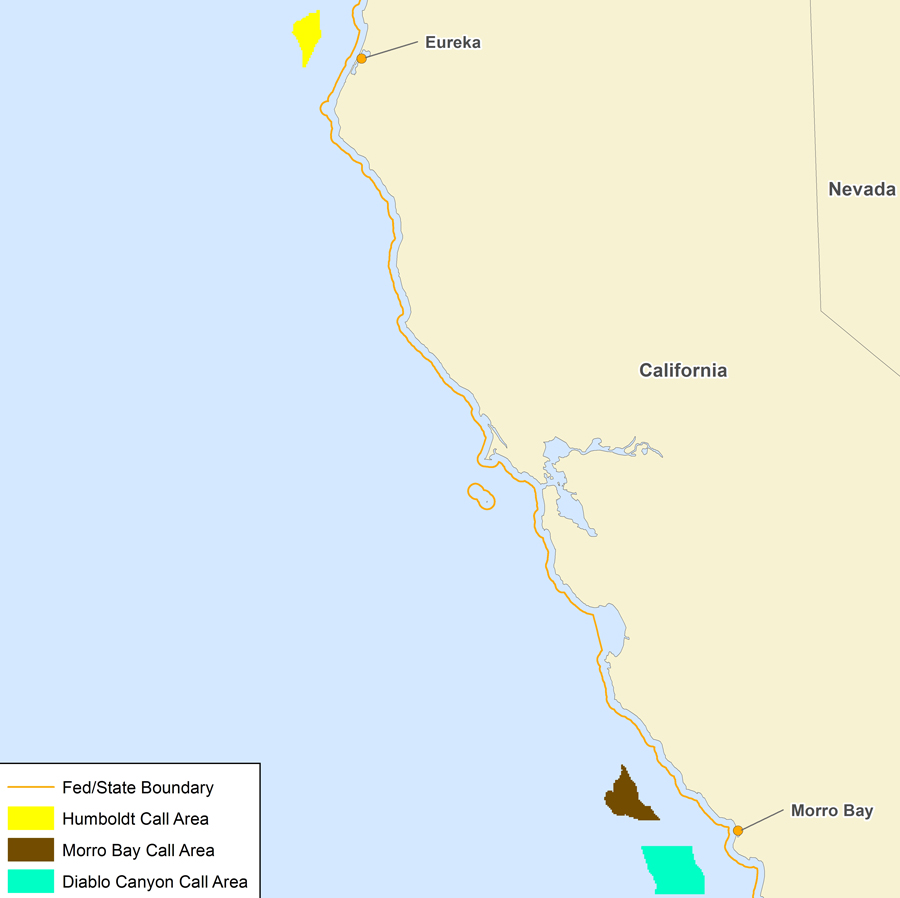
CA-Call-Areas-10-16-2018-BOEM-Content.jpg
The Morro Bay area could support 3 GW of offshore wind, and the Humboldt Call Area off Northern California is big enough for an additional 1.6 GW, according to the U.S. Bureau of Ocean Energy Management. | BOEM

Offshore wind turbines replacing fossil fuel generation would reduce CO2 emissions by 4.73 million metric tons by 2040 — equal to taking a million cars off the road — and result in $1 billion in savings and benefits annually, the researchers concluded.

“In effect, what we performed was a benefit-cost analysis of the inclusion of offshore wind in the energy mix for the next couple of decades,” Rose said. “This consists of direct benefits in terms of lowering electricity prices and several co-benefits.”

Many residents would consider the first two co-benefits, improved electricity reliability and reduction in greenhouse gases, “just as important as lowering electricity prices, and so we’ve made them the primary area … in our analysis,” he said.

Offshore wind could take at least a decade to become a reality in California, though the process has taken on new momentum as the state faces ongoing capacity problems.

In May, the Biden administration announced it would offer leases for California’s first offshore wind areas, a 399-square-mile block off Morro Bay in Central California that could support 3 GW of OSW and the Humboldt Call Area off the coast of Northern California, which could add an additional 1.6 GW. (See BOEM to Offer Leases for Calif. Offshore Wind.)

Each area would require major port upgrades and undersea transmission cables to connect the turbines to CAISO’s onshore grid, perhaps the biggest impediment to more rapid development. (Port System Big Challenge for Calif. Offshore Wind.)

Schwarzenegger as Cheerleader

The cigar-smoking, Humvee-driving, Republican former governor has defied stereotypes by championing environmental causes and working with liberal Democrats for decades. Among other actions during his administration, he promoted the “hydrogen highway” for fuel-cell vehicles and laid out a goal of creating 1 million solar rooftops across the state.

Schwarzenegger said he spent Wednesday morning pumping iron at Gold’s Gym in L.A. with U.S. Environmental Protection Agency Administrator Michael Regan, and he noted that former movie actor and California governor Ronald Reagan had signed the bill in 1967 that created the state Air Resources Board.

“And this was actually the year before I even moved to the United States, and since then, of course, it built with Jerry Brown and all the other governors, [including my administration]” Schwarzenegger said.

The former governor said California has become the world’s environmental leader because it established legislative requirements and stuck to them. Senate Bill 32 by his Democratic ally, former Sen. Fran Pavley, who emceed Wednesday’s Zoom session, required the state to reduce its greenhouse gas emissions by 40% below 1990 levels by 2030. SB 100, by Sen. Kevin de León, a fellow at the Schwarzenegger Institute, requires the state to supply retail customers with 100% clean energy by 2045.

Schwarzenegger compared the state’s clean energy agenda to his time as a body builder.

“This is no different than when I was in bodybuilding,” he said. “I could say at the age of 15, ‘I want to be the bodybuilding champion of the world,’ but I had to have a plan … [of] exactly how much weight to lift every day, how many reps I’d have to do, how many sets … what kind of exercises to do [and] what kind of a diet to have.

“There was a plan and that’s why, by the age of 20, I became the youngest world champion in bodybuilding ever,” Schwarzenegger said.

California needs to stick to a similar regimen of greenhouse gas reductions, he said.

‘Really Ramped Up’

Energy Commission Chair David Hochschild spoke at Wednesday’s event, praising Schwarzenegger for his environmental leadership.

“In our country, we have a surplus of carbon and a shortage of courage, particularly political courage to take on climate solutions,” Hochschild said. “You’ve shown incredible vision and passion and commitment.”

“I’m mindful of the fact that, when the million solar roofs goal was set some years ago during the Schwarzenegger administration, a lot of people dismissed it as mythology, and today we’re at 1.3 million solar roofs and we’re adding 400 solar roofs a day,” he said.

Tesla and other carmakers are producing 1,000 electric vehicles per day in California, and EVs have become a major state export, Hochschild said.

“It speaks to California’s role as an incubator of new technologies,” he said.

Offshore wind is further along on the East Coast and in Europe, but California has an opportunity to catch and surpass those early adopters, the CEC chair contended.

Assembly Bill 525, now under consideration in the state Senate, would require the CEC to develop a strategic plan for offshore wind by the end of 2022. (See Developer: 10 GW of Offshore Wind Insufficient for California.)

“We’ve got a long way to go, but once we turn our focus to this, I believe we can scale up and get a very sizable deployment of this technology off the West Coast,” he said. “That will help position it to grow even faster around the world and get that innovation engine really ramped up.”

NY Generators Seek State Incentives for New Clean Energy Resources

The Independent Power Producers of New York (IPPNY) on Wednesday petitioned the New York Public Service Commission to set up a market-based program — and provide incentives for — the resources for meeting the state’s goal of net-zero electricity by 2040 (15-E-0302).

“If New York state executes properly, our grid can handle the transition to 70% renewables by 2030. But how we reach zero emissions by 2040 while maintaining reliability is a massive question mark. There is no single technology that is the answer, and we need all solutions on the table,” IPPNY President and CEO Gavin Donohue told RTO Insider.

The New York State AFL-CIO and the NYS Building & Construction Trades Council joined IPPNY in filing the petition. They urged the commission “to initiate a proceeding or establish a new tier under its Clean Energy Standard to determine by July 1, 2022, after appropriate notice and comment, the zero-emissions energy systems that are likely to be technically capable by 2030 of providing the operating flexibility and dispatchability required.”

‘Silence’

The commission’s November 2020 order modifying its CES established policies and mandates to achieve the 70-by-30 target under the state’s Climate Leadership and Community Protection Act (CLCPA), but it was silent on how the state should achieve the 2040 zero-emission target or did not designate the types of resources that could be used to meet it, the organizations said.

The PSC’s “silence on these matters creates uncertainty in the electricity market and investment community,” potentially delaying development of resources that make up for the deficiencies of intermittent solar and wind resources, they said.

“The PSC can send the needed investment signal to foster the development of the zero-emission, dispatchable resources we need to keep the lights on. This is a great opportunity to build out New York’s green economy, create important 21st-century jobs and foster new economic development,” Donohue said.

The organizations cited several recent studies and reports to make its case, including NYISO’s Climate Change Impact Phase II report, which assessed climate change impacts on power system reliability in New York, and the state’s own June 2020 study on deep decarbonization.

They also drew attention to the policy recommendations from the New York Climate Action Council’s Power Generation Advisory Panel. The recommendations, which Donohue helped formulate as a council member, urged optimizing deployment and operation of resources through storage, managed load and clean dispatchable generation. (See NY Enviros Push Officials on Climate Policy for Power Industry.)

The organizations argued that the CLCPA gives the commission legislative authority to establish the incentives they seek. They also said that the PSC also should include quality-based contracting and labor provisions within the incentives, especially in light of the complexity and time sensitivity of affected projects and to achieve the just transition envisioned by the state in terms of prevailing wage and project labor agreements.

Feds Invoke First-ever Colorado River Water Restrictions

The U.S. Bureau of Reclamation has for the first time declared a water shortage for Lake Mead in response to a historic drought impacting the entire Colorado River Basin.

The agency’s latest 24-month study for the Colorado River Basin, released Monday, projects that Lake Mead’s water level will dip to 1,065.85 feet as of Jan. 1, 2022, about 9 feet below the 1,075-foot level needed to trigger a shortage determination.

Lake Mead is a reservoir formed by the Hoover Dam on the Nevada-Arizona border. Under the Level 1 shortage declared for the lake, water supply to Arizona will be reduced by 512,000 acre-feet, or about 18% of the state’s annual allotment.

Nevada will see a reduction of 21,000 acre-feet, or about 7% of the state’s yearly apportionment, while Mexico’s water reduction will be 80,000 acre-feet, about 5% of the country’s annual allotment. The reductions are determined through a set of water agreements.

“Like much of the West, and across our connected basins, the Colorado River is facing unprecedented and accelerating challenges,” Tanya Trujillo, assistant secretary for water and science, said Monday in a news release.

The water-shortage declaration will impact operations during water year 2022, which runs from Oct. 1, 2021, through Sept. 30, 2022.

Flows from Lake Powell, a reservoir at the Utah-Arizona border, will also be reduced during water year 2022, the bureau said.

The bureau’s new 24-month study projects Lake Powell’s elevation to be 3,535.40 feet on Jan. 1, 2022, about 165 feet below full and about 45 feet above minimum power pool. Based on this projection, Lake Powell will operate in the mid-elevation release tier in water year 2022.

Historic Drought Conditions

The Upper Basin of the Colorado River, which lies in the Rocky Mountains and provides most of the river’s flow, experienced an exceptionally dry spring this year, the bureau said. Runoff into Lake Powell from April to July was just 26% of average.

The Colorado River system’s total storage is at 40% of capacity, down from 49% at this time last year.

The drought is affecting much of the Western U.S. Earlier this month, the California Department of Water Resources announced it was shutting down the Hyatt Power Plant at Lake Oroville for the first time due to falling lake levels.

“California and much of the western part of the United States are experiencing the impacts of accelerated climate change, including record-low reservoir levels due to dramatically reduced runoff this spring,” DWR Director Karla Nemeth said in a statement.

Arizona Impacts

Water reductions from Lake Mead to Arizona will be borne mainly by users of the Central Arizona Project (CAP), a 336-mile-long system that delivers Colorado River water to Maricopa, Pinal and Pima counties, where more than 80% of the state’s population lives.

For now, the Lake Mead reductions mean less water for central Arizona agriculture operations, CAP said.

But if the water shortage reaches levels 2 or 3, reductions would impact CAP water supply to some central Arizona cities and tribes, CAP said in a fact sheet.

“Given the recent intensification of the drought, it is likely there will be deeper levels of shortage in the next few years,” CAP said.

For the current water year, the Colorado River is operating at “tier zero,” which has required Arizona to contribute 192,000 acre-feet of the state’s annual 2.8-million-acre-foot allotment to Lake Mead. The contribution is coming entirely from CAP, according to a joint statement from CAP and the Arizona Department of Water Resources (ADWR).

The statement, issued in April, anticipated the Bureau of Reclamation would issue a tier-one shortage declaration for water year 2022.

The state has been managing the water cutbacks through a drought contingency implementation plan.

“In the plan, some [users] are committing to leaving extra water in Lake Mead to reduce future risks, while others are sharing water with the most severely impacted of the state’s water users, central Arizona agriculture,” the statement said.

“The result is the Arizona water community is prepared, even in the midst of a decades-long drought,” CAP and ADWR said.

NERC: Extreme Weather, Resource Changes Cause Mounting Concern

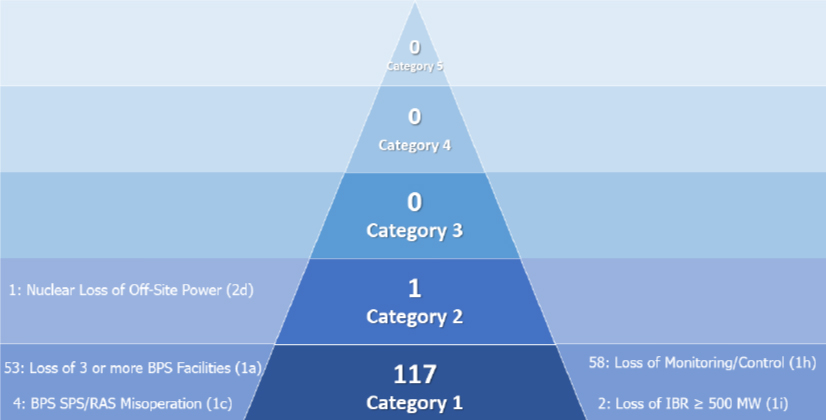
The bulk power system recorded more than 22 hours of operator-initiated firm load shed in 2020, its highest level in five years and a reflection of the “unprecedented conditions” including extreme weather and cybersecurity that challenged grid operators, according to NERC’s 2021 State of Reliability Report, released on Tuesday.

In a media call announcing the report, John Moura — NERC’s director of reliability assessment and performance analysis — emphasized that “as unprecedented as it was, the BPS … remained reliable.” He pointed to the continuing decline in overall BPS events: As in 2019, there were no category 3, 4 or 5 events — unintended loss of load or generation of 2,000 MW or more — and only 118 qualified events overall, compared with 151 in 2019 and 180 the prior year. (See Resource Shifts Driving Grid Planning Changes.)

“The system didn’t experience any cascading instability or any widespread uncontrolled separation. That’s a good thing,” Moura said. “And key indicators show that fundamental day-to-day reliability operations are improving. We’re seeing better misoperation performance, better human performance; transmission [outage] severity [has] decreased, and we’re restoring systems faster.”

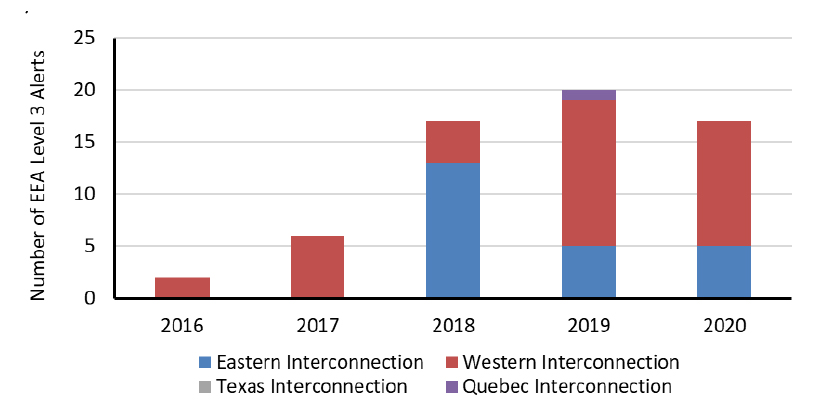
The number of level 3 energy emergency alerts (EEA3) also dropped to 17 from last year’s 20, breaking a four-year rising trend. Once again the Western Interconnection accounted for the greatest number of EEA3 events with 12, while the Eastern Interconnection reported five events, the same as last year. No EEA3s were reported for the Texas Interconnection — the same as last year — and for the Québec Interconnection, which reported one event in 2020.

Level-3-Alerts-Chart-(NERC)-Content.jp
Number of EEA Level 3 alerts by interconnection | NERC

However, while the amount of EEA3s dropped in 2020, they covered significantly more time than the previous year’s total: 54 hours in 2020 compared to 28 in 2019. Moreover, the largest load loss associated with an EEA3 in 2020 was 1,087 MW, compared to 150 MW in 2019, a measure surpassed by three more EEA3s in 2020.

Severe Weather Spurs Load Shedding

The report’s authors attributed the greatest fraction of the load loss in 2020 to just two extreme weather events, both in August: the arrival of Hurricane Laura in Louisiana, and the “intense and prolonged” heat wave across the Western Interconnection. NERC calculated that without these crises, the amount of time without operator-initiated firm load shed would have been closer to 99.95% of the year, the third-highest of the last five years after 2017 (100%) and 2019 (99.99%).

On Tuesday’s call Moura warned that the increase in load shedding will likely be even worse in next year’s report because of the impact of February’s winter storms that left thousands without power for days in Texas. (See ERCOT: Grid was ‘Seconds and Minutes’ from Total Collapse.) A number of causes have been associated with the grid’s failure in Texas, including an overall lack of preparedness for such extreme cold conditions and lower-than-expected performance across the generating fleet, including both renewable and conventional facilities.

“This is one of the metrics that, to me, matters the most, because at the end of the day, it’s really indicating that the system ran out of options: The operators had no more resources; the transmission system was unable to import anymore,” Moura said. “So I think it is indicative of some of the trends, both in how we’ve changed our resource mix very rapidly, but also how extreme weather is increasingly impacting the system.”

Because of the ongoing joint inquiry between FERC, NERC and the regional entities into February’s storms — a first draft of which is expected to be finished by Labor Day — NERC did not assess the event’s impact on BPS operations in this year’s report. (See NERC Provides Cold Weather, Cyber Updates.) However, authors said next year’s State of Reliability Report will include “an in-depth evaluation” of the storm’s effects.

In addition, this year’s Long-Term Reliability Assessment, expected in December, will “assess any longer-term reliability issues” raised by February’s crisis.

Praise for Industry Information Sharing

Cybersecurity continues to be a major concern in this year’s report. Although “there was no loss of load … from reportable cybersecurity incidents in 2020,” NERC noted that the number of cybersecurity incidents shared with the Electricity Information Sharing and Analysis Center (E-ISAC) nearly doubled, from 1,341 in 2019 to 2,624 in 2020.

A cybersecurity incident is defined as “an event that may negatively impact an organization and was noteworthy enough to report to the E-ISAC even if there were no outages or reliability impacts.” All categories of cyber incident saw an increase last year except for denial of service, which stayed the same at 17; malware, which dropped from 145 to 142; and miscellaneous, which fell from 25 to 13.

Events-of-Category-(NERC)-Content.jpg
2020 qualified events by category | NERC

By contrast, multiple categories more than doubled, including ransomware (from 27 to 73), suspicious activity (453 to 956) and supply chain (39 to 85). Supply chain threats became a particular focus of concern in the last weeks of the year as news broke of the compromise of SolarWinds’ Orion network management software, which may have impacted nearly 18,000 SolarWinds customers and has since been attributed by law enforcement organizations to Russia’s Foreign Intelligence Service. (See FERC, E-ISAC Report Details Reach of SolarWinds Compromise.)

While the increase in reported incidents is a reminder of the rapidly evolving cybersecurity landscape, NERC also considers it a positive sign in the sense that the industry seems to be more comfortable sharing information with the E-ISAC.

“As the threat has grown, so too has the voluntary reporting of incidents to the E-ISAC, resulting in greater industry awareness,” the report says.

Pandemic Response Proves Successful

The industry response to the COVID-19 pandemic is another bright spot in the report, which notes that despite the sudden onset of the virus that required hasty adaptations on the part of many utilities, “there is no evidence” that it weakened reliability. Aside from “a limited number of equipment supply-related disruptions” that led to isolated generation outages and derates — none of which resulted in loss of load — there appears to have been no impact on the ability of utilities to continue serving customers.

“Regular industry-wide tabletop planning exercises anticipated the impacts of pandemic-like events years ago. They led directly to the development of and regular training for the emergency operating procedures that would be required,” NERC said. “The success of these efforts can be seen in the numbers. By the many measures reported in this report, there were no reductions in the overall reliability performance of the BPS that can be uniquely attributed to the pandemic. Instead, the overall reliability performance of the BPS was largely consistent with that in prior years.”

NJ Backs EV Incentive Program for Local Government

The New Jersey Board of Public Utilities (BPU) on Wednesday approved a $7 million program to encourage public agencies to purchase electric vehicles by offering incentives of up to $4,000 per vehicle.

The program, an expansion of a 2019 pilot, enables local and state government entities to apply for up to 10 of the $4,000 grants, depending on the size of the government agency and whether it is statewide or local. Some agencies will also be able to apply for up to four grants of $1,500 for the purchase of Level 2 EV charging stations.

BPU President Joseph L. Fiordaliso welcomed the board’s unanimous approval of the measure, saying the program to get more EV vehicles in government reflects the seriousness with which New Jersey takes the need to combat climate change.

“One of the obligations of government is to set an example and set a direction,” he said. “I believe this is the right direction and right example to set.”

Fiordaliso had opened the meeting with a strong reference to the recent report from the United Nations’ Intergovernmental Panel on Climate Change, which “certainly pinpointed the dire need for humans throughout the world to take this seriously,” he said. “It takes, everyone to be a part of that solution … and [the United Nations is] not talking about the end of the century; they’re talking more about the end of this decade, which makes it even more concerning.” (See Too Late to Stop Climate Change, UN Report Says.)

Cutting Transportation Emissions

With transportation making up more than 40% of the carbon emissions in New Jersey, Gov. Phil Murphy has set a goal of putting 330,000 EVs on the road by 2025, as part of his effort to have the state run 100% on clean energy by 2050.

The 2019 pilot program, with $210,000 in funds, allowed local and state government entities to apply for up to two $4,000 grants for the purchase of battery electric vehicles and one $1,500 grant toward the purchase of a Level-2 EV charging station. Fourteen municipalities, two counties and the New Jersey Department of Environmental Protection applied for grants under the program and were all funded, said Peter Peretzman, spokesperson for the BPU. Grants totaling $122,500 were awarded, and 28 EVs and two Level-2 charging stations were purchased, he said.  

The new program rules significantly increase the number of grants that agencies of different sizes can receive. Agencies eligible for the grants include schools, municipal commissions, state agencies or boards, state commissions, state universities, community colleges and county authorities, the BPU said.

Under the new rules:

  • local governments, schools and other entities serving a population of more than 20,000 can receive grants for up to five EVs and two Level-2 charging stations;
  • local governments, schools and entities serving a population of more than 50,000 can receive grants for up to seven vehicles and four Level-2 charging stations; and
  • state, county and local governments and entities serving a population of more than 100,000 are eligible to receive grants for up to 10 vehicles.

Point-of-sale Incentives

New Jersey’s Electric Vehicle Act of 2020 requires that 25% of state-owned, non-emergency light duty vehicles must be electric by 2025, moving to 100% by Dec. 31, 2035.

The BPU last month launched the second year of a program that provides private buyers with a point-of-sale incentive of up to $5,000 for electric vehicles costing less than $45,000. Smaller incentives are available for more expensive vehicles and plug-in hybrids. (See NJ EV Incentives Target Cheaper Vehicles, Middle-income Buyers.)

The state also is trying to encourage EV use by deploying more charging stations on highways and local roads to reduce consumer “range anxiety” over whether they will be able to find a charger when their batteries run low. Murphy signed two bills in July designed to make it easier to set up electric vehicle charging stations by loosening permitting requirements in certain circumstances.

NERC Issues Cold Weather Alert

NERC on Wednesday issued a Level 2 alert, its third of the year, with a series of recommendations and questions “intended to evaluate the bulk electric system’s winter readiness.”

The content of the alert is public, unlike previous alerts this year on securing critical defense facilities and responding to the cyberattack on Microsoft Exchange Server, believed to be the work of a China-sponsored hacking group. (See FERC, E-ISAC Report Details Reach of SolarWinds Compromise.) Responses — but no other actions — are required from balancing authorities, generator owners, reliability coordinators and transmission operators by Sept. 17.

In the alert, NERC cited the January 2018 cold weather event and this February’s winter storms as the justification for quizzing registered entities on their winter preparedness. The former event saw MISO and SPP seek voluntary load reductions and nearly forced load shedding in MISO South. (See FERC, NERC to Probe January Outages in MISO South.) February’s storms left thousands without power for days in Texas as multiple generating resources failed across the state. (See ERCOT: Grid was ‘Seconds and Minutes’ from Total Collapse.)

The events in Texas catalyzed the accelerated passage of NERC’s new cold weather standard at the organization’s Board of Trustees meeting in June. (See NERC Board OKs Cold Weather Standards.) At that meeting Howard Gugel, NERC’s vice president of engineering and standards, said that an alert was likely to come soon, along with other short-term measures aimed at ensuring reliability in the next two winters because the standard would not take effect for 18 months after FERC approval.

“The recent extreme cold weather events across large portions of North America have highlighted the need to assess current operating practices and identify some recommended improvements so that system operations personnel are better prepared to address these challenges,” NERC said. “This Level 2 alert serves to help registered entities better prepare for the upcoming winter months.”

Recommendations for Planning, Preparation

NERC’s first recommendation urges RCs, BAs and TOPs to prepare seasonal operating plans, or update existing plans, at least two months before the upcoming winter season. Plans should include:

  • energy constraints for the upcoming season;
  • identification of resource startup time and variability concerns;
  • import capability of the system and resource availability constraints on external systems during extreme winter weather events;
  • load forecasting practices that account for extreme events;
  • plans to utilize extra transmission capacity by calculating transmission limits based on real-time system conditions;
  • plans to weatherize substations and equipment;
  • plans to seek temporary relief from local, state and federal environmental guidelines;
  • protocols for communication with government, media and the public; and
  • plans for communicating with natural gas providers, assessing natural gas availability, and coordinating gas and electric interactions during emergencies.

GOs are recommended to review these plans to ensure their assumptions about generator availability, fuel supplies, and other related matters are correct; to take action to facilitate readiness as needed based on weather forecasts and energy analyses; and to stay in contact with fuel suppliers to manage resources efficiently. Those with wind and solar resources are advised to communicate with RCs, BAs and TOPs about those units’ cold weather capabilities.

Another recommendation for GOs is to communicate forecast and actual unit derates during extreme cold weather events, considering unavailability caused by weather, fuel constraints, derates for alternate fuels and concerns about delayed start or increased outage based on unit ratings and historical performance. RCs, Bas and TOPs should incorporate the GOs’ derate information into their generation capacity and energy analyses and operating plans.

NERC also recommends that RCs, BAs and TOPs ensure their manual and automatic load shedding plans “review critical interdependent sub-sector electrical loads … to avoid being included as part of automatic … or manual load shedding,” and that this review be factored into seasonal preparation plans. Entities should confirm and test their manual load shedding process periodically and track demand response capability and verify that critical interdependent subsector loads are excluded.

Finally, the alert advises GOs to conduct dual fuel assessments “to ensure resources can switch to the alternate fuel,” monitor how much alternate fuel is on site, assess generating unit weatherization plans, and inspect and maintain their weatherization measures ahead of the winter season, as well as before and during extreme cold conditions.

Entities Must Assess Readiness

Also in the alert are questions for each recipient type. For RCs, NERC asks whether the organization has developed — or intends to develop — operating plans that are “closer to real-time (2-3 days ahead),” along with the content of those plans.

NERC asked the same question of BAs and TOPs, along with whether their organizations have “analyzed electric import capability for widespread, extreme, multi-day weather events.” BAs are also asked whether their organizations conduct seasonal energy and capacity assessments for normal and extreme cold scenarios at least two months before the winter season.

Additional questions for TOPs include whether they conduct transmission system seasonal assessments such as “weatherization of substations and equipment, maintenance and testing of voltage reduction equipment, assessment of transmission and generation outages, and transfer capabilities during outages that could limit transfer capability and/or resource availability.”

The questions for GOs are the lengthiest, covering communications with fossil fuel and natural gas suppliers on fuel supply and pipeline stability; weatherization and availability of fossil fuel-, solar- and wind-powered generating units; and processes for obtaining emissions waivers if needed to operate.

Entities are required to acknowledge receipt of the alert by midnight EDT, Aug. 23; responses to NERC’s questions must be submitted by midnight EDT, Sept. 17.

Roadmap Initiative Set to Hone Maine’s OSW Goal

Maine’s long-standing offshore wind goal will get a facelift as part of the state’s offshore wind roadmap initiative now underway.

A goal to build 5 GW of wind generation in federal and Maine coastal waters by 2030 is set out in state statute, but Celina Cunningham, deputy director of the Governor’s Energy Office, says it would be difficult to meet.

The new roadmap provides an opportunity “to really look at what is realistic given our beneficial electrification and load growth … and build on that all the way to 2050 and look at what the options are in terms of offshore wind for Maine,” she said on Wednesday during an Energy Strategy and Markets working group meeting for the initiative.

As the working group considers the overall offshore wind production potential for the next 30 years in the Gulf of Maine, it also will look at other states’ existing goals and how Maine could support them, Cunningham said.

The working group is one of four that will provide recommendations to an advisory committee responsible for compiling the final roadmap. The other working groups will cover manufacturing, supply chain, ports and harbors; wildlife and habitat; and fisheries.

Initial working group recommendations are due by the end of this year, and the advisory committee plans to release the final roadmap in December 2022.

Former Maine Gov. John Baldacci signed a law in 2010 implementing the recommendations of the Governor’s Ocean Energy Task Force, which included the current 5-GW goal. But the state’s offshore industry has yet to takeoff, and a lot has changed for Maine and the industry over the last decade.

Maine Gov. Janet Mills signed a bill in July that prohibits, with certain exceptions, new offshore wind projects in state waters to preserve areas used for fishing and recreation. She also signed a law that directs regulators to enter a long-term contract for a 144-MW floating offshore wind research array, planned for development off Maine’s southern coast. The project builds on the 11-MW Aqua Ventus floating wind pilot project, which is under contract and will help the state understand how floating technologies can support deep-water development.

The working group will look closely at global trends in floating wind technology and try to identify areas where Maine could lead in that market, Cunningham said.

In addition, she said, the group will identify opportunities to advance innovations for colocation technologies, such as hydrogen, and strategies for making Maine “a hub for floating offshore wind.”

The group’s work will include studying transmission and socioeconomic issues as well as regional collaboration.

“We will look at transmission design options, whether it be coordinated transmission … or the potential for onshore interconnection points, and what is necessary … to get the energy either to the region or to Maine,” she said.

Any recommendations for transmission in the roadmap will take into consideration impacts to marine and fishing industries.

In its review of socioeconomic issues, such as tourism and recreation, the group will collaborate with the supply chain working group to better understand workforce development opportunities.

“I think there’s growing interest in having a more holistic perspective from a socioeconomic standpoint,” Cunningham said.

As all the working groups develop their recommendations, they will work with what David Plumb, senior mediator at the Consensus Building Institute, calls “an equity lens.”

The advisory committee, Plumb said during the meeting, will provide the working groups with core guiding principles relating to understanding impacts to marginalized communities, distribution of benefits and burdens, and public engagement.

The Maine Climate Council’s Equity Subcommittee is working on equity considerations already for the state’s energy transition, and the roadmap process will “build off that thinking,” he said.

Meet the Electric Cooperative Pushing Massachusetts Solar Capacity Forward

The driving force behind much of the renewable energy growth on Cape Cod and the surrounding area is the Cape and Vineyard Electric Cooperative (CVEC), according to a new report from the nonprofit Environment Massachusetts.

The nonprofit cooperative saved its 25 municipal members roughly $16.9 million in energy costs by June 2020 by developing large-scale power generation and storage facilities, primarily through solar and battery storage.

“We implement the clean energy goals of our member and participant communities,” allowing the cooperative to “bundle projects,” said Maria Marasco, executive director of CVEC, at a webinar hosted by Environment Massachusetts on Tuesday.

Instead of each municipality navigating how to incorporate solar power on its own, the cooperative brings solar project expertise and a regional perspective to its members’ projects.

“We share legal fees, we share request for proposal costs, we share administrative costs and we share the collective experience of what to do,” Marasco said.

Environment Massachusetts highlighted CVEC in its report as an example that could “inspire bolder action at the statehouse,” Ben Hellerstein, the nonprofit’s executive director, said during the webinar.

The cooperative has built 28 MW of solar and battery capacity, and new projects currently under development will bring the total to 54.8 MW, including solar canopies over parking lots, roof-mounted panels on public buildings and ground-mounted arrays. Another 4.4 MW are going out to bid this month.

A rooftop solar installation at Monomoy High School in Harwich, Mass., has already generated 187 MWh of electricity as of Aug. 12.

CVEC also received a $1.4 million grant from the state’s Community Clean Energy Resiliency Initiative to install a 250-kW battery at Dennis-Yarmouth Regional High School in Yarmouth, Mass., which is the region’s emergency shelter.

“Not only do we develop those projects on behalf of the communities, but we also purchase renewable energy and allocate that to towns seeking additional net-metering credits,” Marasco said.

How It Works

Founded in 2007, CVEC received state authority to enter into agreements with towns, school districts and other government entities to develop facilities “without burdening municipal debt capacity, as developers pay project capital costs,” according to the report released Tuesday.

The host of a project purchases power from the cooperative through an intergovernmental agreement. CVEC charges a “small administrative adder that could range anywhere from a penny to three quarters of a penny,” Marasco said.

The host also enters into a lease with the developer, but CVEC relieves the member municipality from the project management and administrative costs.

“So they get the benefits of the reduced energy costs and get CVEC’s expertise in order to make sure those projects work for the benefit of the community,” Marasco said.