MISO Targets March Approval for Long-term Tx Projects

MISO acknowledged this week that a December approval of its first long-range transmission projects is out of reach and must wait until early spring.

The grid operator originally planned to submit the first collection of long-range projects with the 2021 MISO Transmission Expansion Plan (MTEP 21) in December. Staff planners had warned in recent weeks that meeting the pre-Christmas approval was increasingly unrealistic.

Now, MISO is targeting board approval of the long-range projects in March.

“We recognize that to have it before the board for approval by December is increasingly unlikely,” Aubrey Johnson, executive director of system planning, told stakeholders during a Planning Advisory Committee teleconference Wednesday.

MISO will still consider any long-range projects approved in March as part of MTEP 21.

“I want to put that out there to allay any concerns with stakeholders about an aggressive timetable,” Johnson said.

“We’re making progress,” Senior Manager of Transmission Planning Coordination Jarred Miland assured stakeholders. He said staff will soon unveil some potential long-range transmission solutions.

Stakeholders voiced concern that MISO was postponing the projects’ approval and still categorizing them under MTEP 21.

“There nothing that says every single project has to go through the board of directors in December,” Miland said. “It’s just that’s the way we’ve done it. We can do this as an addendum.”

Jeff Webb, the RTO’s senior director of transmission planning, agreed that “there’s nothing keeping” MISO from bringing some project recommendations to the board on a deferred basis.

“We have had occasions for this in the past. We don’t see any concern in the tariff about staff completing an analysis and submitting a project when they finish,” Webb said. “Now, the board is not too keen on the board approving projects in many months, so we keep it on an annual routine.”

WEC Energy Group’s Chris Plante said it was unclear how the MTEP’s bottom-up planning approach will mesh with the long-range plan’s top-down planning. MISO typically studies MTEP project needs after transmission owners propose them. In the long-range plan, staff will study and prescribe system needs.

MISO said it already has been fielding project ideas from stakeholders to resolve known issues, although the RTO hasn’t formally opened a proposal window.

Staff have stressed that the long-range plan is contemplating regional transmission solutions, not seeking to make interconnections easier for new generation. MISO planners have repeatedly said their concerns lie in the transmission system’s reliability over the next two decades.

“Our focus is to make sure we have a reliable system to serve a future load with reliability targets,” Senior Economic Planning Engineer Ranjit Amgai said during a July 30 workshop teleconference.

MTEP 21

MISO will recommend 367 new projects, valued at $3.4 billion under MTEP 21, for board approval in December. This year’s package is lower than MTEP 20’s final $4.05 billion spend on 493 projects.

This year’s MTEP contains 49 generator interconnection projects at $319 million, 61 baseline reliability projects at $462 million, and 257 “other” projects at $2.65 billion. The “other” category is reserved for projects that address load growth, reliability needs, and age and condition-related fixes.

MTEP 21’s most expensive project is the $196-million rebuild of the Golden Meadow to Barataria 115 kV line near New Orleans. The line will be rebuilt to a 230-kV rating after 2020’s Hurricane Zeta damaged it.

The Planning Advisory Committee will vote on whether to recommend the MTEP report during its September meeting. Regardless of the voting outcome, MTEP 21 will advance to the board’s System Planning Committee for final consideration.

MISO is currently managing 2,282 active MTEP transmission projects representing $12.45 billion, dating back to the 2008 MTEP cycle. The grid operator expects most of those projects to come online over the next three years.

Transmission owners this week also asked for a simplified database to report the status of approved MTEP projects.

Speaking during Tuesday’s Planning Subcommittee, ITC Transmission’s Cynthia Crane encouraged MISO to “create a new platform with input from all stakeholders, not just the transmission owners.”

She said MISO currently maintains too many status options to choose from, causing TOs to use different terms to describe identical project stages. She said that under the current process, TOs unnecessarily describe their projects multiple times.

Crane asked for a more standard set of status categories and clearer MISO expectations for when cost updates are required.

Staff is also considering whether it should create separate forms and processes that allow retiring generators to convert to synchronous condensers under MISO’s non-transmission alternatives consideration.

“It’s probably a very limited application,” MISO’s Jeanna Furnish said.
La. and Miss. Join MISO, TOs in Opposing Cost Sharing at 100 kV

Louisiana and Mississippi regulators have joined FERC, MISO and the RTO’s transmission owners in asking an appellate court to reject LS Power’s campaign for regional cost sharing of transmission projects as low as 100 kV.

MISO last year overhauled its cost allocation procedures, lowering the voltage threshold for market efficiency projects that are regionally cost shared from 345 kV to 230 kV, adding two new benefit metrics and eliminating a 20% footprint-wide postage stamp allocation. (See MISO Cost Allocation Plan Wins OK on 3rd Round.)

FERC rejected LS Power’s rehearing requests and complaint that a further reduction to 100 kV was necessary, concluding that the 230-kV threshold would spur more economic projects and sufficiently expand the number eligible for competition. (See FERC Spurns LS Power’s Voltage Threshold Argument.) LS Power soon took its argument to the D.C. Circuit Court of Appeals, asking it to overturn FERC’s ruling (20-1465).

The Louisiana and Mississippi public service commissions filed a joint brief Aug. 9 in opposition to LS Power’s petition, the same day as a joint brief by MISO and its TOs. FERC defended its ruling in a brief July 26.

“The 230-kV threshold enjoyed broad stakeholder support after a long, comprehensive stakeholder process, represented a compromise supported by a majority of [MISO] stakeholders and was supported by substantial evidence. The courts and FERC have acknowledged the importance of the stakeholder process; unanimity is not required,” the Louisiana and Mississippi PSCs said.

The two said LS Power was attempting to preempt “years of extensive negotiations” between MISO, stakeholders, regulators, load-serving entities, generation owners and independent transmission owners.

“LS Power participated extensively but was simply dissatisfied with the results… FERC looks for general support for the broad outline of a cost allocation proposal, not at individual preferences within the stakeholder process,” the PSCs said. “Unilateral, non-vetted changes to the [MISO] tariff filing would have disrupted the compromise reached among a majority of stakeholders.”

MISO and its TOs agreed with FERC that LS Power lacked standing to challenge the ruling and insisted the commission had properly followed precedent in approving MISO’s proposal.

“Petitioners do not dispute that the 230-kV threshold is an improvement over the then-effective 345-kV threshold, but blame FERC for taking a `half-measure’ by not mandating a lower threshold,” they said. “Having found evidence to support the 230-kV threshold (as part of a package of improvements) as just and reasonable, FERC correctly rejected petitioners’ alternative voltage threshold. … Whether there is evidence to support a finding that a lower threshold may also be just and reasonable is irrelevant.” Louisiana and Mississippi regulators said MISO’s cost allocation plan followed Order 1000’s directive that costs assigned are roughly commensurate with benefits received.

In MISO, projects between 100 kV and 230 kV that don’t fit into any other of MISO’s project category are classified as economic “other” projects and cost allocated only to the transmission pricing zone in which they are located.

LS Power argued that FERC’s refusal to order a lower threshold ran counter to 2018’s Old Dominion Electric Cooperative v. FERC (17-1040), in which the D.C. Circuit ruled FERC erred when it prohibited cost sharing for a class of high-voltage projects that demonstrated significant regional benefits.

But the state commissions said that LS Power failed to show that projects between 100 kV and 230 kV consistently produce broad, regional benefits. They also said LS Power was misguided in its decision to invoke Northern Indiana Public Service Co.’s 2013 complaint over the PJM-MISO seam, which resulted in FERC eliminating a cost minimum and lowering the voltage threshold for MISO-PJM interregional projects to 100 kV. The states said the 100-kV threshold ordered in that case was not meant to apply to all circumstances.

“The [NIPSCO] orders dealt with circumstances and long-standing issues specific to the [MISO]-PJM seam and interregional projects…. Those orders offer no precedent here,” they said.

Shorter Interconnection Queue Coming, MISO Says

MISO will submit proposal to FERC in the fourth-quarter to slim its generator interconnection queue timeline from about 505 days to a single year.

The RTO wants the timeline of an interconnection customer entering a generation project into the definitive planning phase (DPP) to signing an interconnection agreement to be about a year. It said it will achieve the reduction by cutting the days allotted for generator interconnection agreement (GIA) negotiations and study, performing some study aspects simultaneously. (See “Queue Timeline Cutbacks Still in the Works,” MISO Winds down MTEP 20 Planning, Focuses on 2021.)

At a Planning Advisory Committee meeting Wednesday, interconnection study engineer Miles Larson said MISO will cut about 40 days from the current 140-day first DPP but add about 25 days to the second, 80-day DPP. Larson explained that the second DPP could use the extra days because it contains more intense study, including a stability analysis and short-circuit analysis.

For the current, 135-day third DPP, an interconnection customer will be met with a fork in the road. They will have a choice to either:

  • spend about 60 days in the stage if it doesn’t need to know the results of its network upgrade facilities study before proceeding to GIA negotiations; or
  • devote about 150 days to the phase if it needs a network upgrade facilities study report before proceeding to the GIA. This route would result in an approximate 463-day total queue timeline.

GIA negotiations themselves will be slimmed from about 150 days to about 108.

Larson said if MISO can usher generators through interconnection studies closer to a single calendar year, it will rely on better planning assumptions, as the Transmission Expansion Plan also functions on a yearly basis. He said the RTO’s goal is to “provide more information to stakeholders earlier in the process to give everyone more time to review models, plan for mitigations and review results.”

Stakeholders have been pessimistic that MISO can achieve its single-year goal because it’s dogged by notoriously time-consuming affected-system analyses with its neighbors.

“MISO continues to have discussions with [affected-system] teams on expectations and potential process improvements and alignments efforts,” Larson said. “We’re optimistic that many of these developments … will allow us to meet overall deadlines of the study schedule.”

He said if the changes don’t meaningfully shorten time spent in the queue, MISO will “entertain larger process changes,” including reworking local planning criteria studies and hiring consultants “where and when needed.”

“We’re going to continue to look at process improvements. We don’t have concrete examples today,” Larson said. He added that if delays persist, MISO will bring additional proposals to the stakeholder-led Interconnection Process Working Group.

“Compared to what we see in other parts of the country, MISO is really a leader in its willingness to make improvements to its interconnection queue,” Clean Grid Alliance’s Natalie McIntire said.

NYISO Unveils Draft BSM Study

NYISO on Monday unveiled a draft study plan on ways to model 10-year capacity supply and demand curves and identify the resulting market outcomes in order to advance the ISO’s effort to revise its buyer-side mitigation (BSM) rules.

The ISO on Aug. 9 presented a proposal to exempt most new solar, wind, storage and demand response installed capacity (ICAP) resources from BSM evaluation. (See NYISO Proposes Sweeping BSM Exemptions.)

“We need to look at the proposed changes as an input and say ultimately, ‘How is that going to affect the competitiveness of the capacity market at a high level, and will there still be signals for efficient development of resources that are needed to maintain reliability?’” Paul Hibbard of Analysis Group, which developed the plan, told the ICAP Working Group Monday.

New York’s Climate Leadership and Community Protection Act (CLCPA) requires the state to procure large amounts of renewable energy resources to get to zero-emission electricity by 2040. The ISO aims to integrate the new resources into its capacity market while maintaining reliability and reasonable rates for all resources.

Limited Aims

The ISO wants to maintain the current mitigation regime, including the competitive entry exemption, the self-supply exemption and the supply-side mitigation construct, which with modifications can protect the market against the exercise of buyer-side market power.

Hibbard tried to dissuade stakeholders from looking for long-term conclusions in the current BSM study, which will rely on Analysis Group’s 2020 white paper on demand curve reset values, publicly available NYISO data and The Brattle Group’s Grid in Transition study from last year.

It would be a “fool’s errand” to try to imagine the shape of wholesale markets 15 years from now, Hibbard said, so the study will attempt to identify the potential impacts of BSM market rule changes that happen now and determine how to manage the capacity market in a sustainable way over the next decade.

That approach allows planners to anticipate which existing and emerging resources will be important to both fulfilling CLCPA requirements and maintaining reliability, he said.

NYISO staff will return to the ICAP Working Group Aug. 30 to discuss with stakeholders the related PJM minimum offer price rule (MOPR) filing, which proposed tariff changes to comply with FERC’s controversial 2019 order requiring expansion of the MOPR to new state-subsidized resources. Stakeholders said some of the arguments supporting the PJM filing sound as if mitigation of public policy resources is making the capacity market unsustainable over the long term regardless of what happens with capacity accreditation. They said that while BSM may not strongly affect prices, it still can cause customers to buy more capacity than they need, which indirectly affects prices.

Analysis Group will present its BSM study findings to NYISO stakeholders on Sept. 9 and issue a final report soon thereafter.

Accreditation Matters

NYISO also presented a straw proposal for capacity accreditation that features six elements on modeling, criteria, frequency, resources, locations and marginality — that is, whether resources should be valued at their marginal or average incremental reliability value.

NYISO believes that establishing the six elements in the broader BSM proposal will be important to demonstrating how reforming BSM will continue to result in just and reasonable ICAP market outcomes, said Zach Smith, the ISO’s manager of capacity market design.

The ISO thinks that a suitable capacity accreditation framework is important to justifying large changes to buyer-side mitigation and MOPR rules by “helping us demonstrate that the capacity market will remain a competitive marketplace and support the necessary resource mix required to help keep the lights on in New York,” said Michael DeSocio, NYISO director of market design.

NYISO may need to further evaluate an internal “laundry list” of items, Smith said. After the BSM proposal has been approved by stakeholders, the ISO will focus on developing further implementation details for completing a capacity accreditation study.

Determining the final values will take a while, because “to run these studies is not trivial,” DeSocio said. “What we’re focused on right here, and as part of the BSM work, is to get agreement on the framework.”

The ISO’s Market Monitor, Potomac Economics, presented a conceptual framework and design principles for capacity accreditation, noting that “current rules are inadequate for compensating new resource types and several old types in accordance with their actual reliability value.”

At the Aug. 30 ICAP meeting, consultancy E3 will provide examples and technical information on capacity accreditation. The ISO will review tariff changes related to both BSM and capacity accreditation at the Sept. 9 meeting.

Vermont Museum Goes 100% Renewable with Bee-friendly Solar

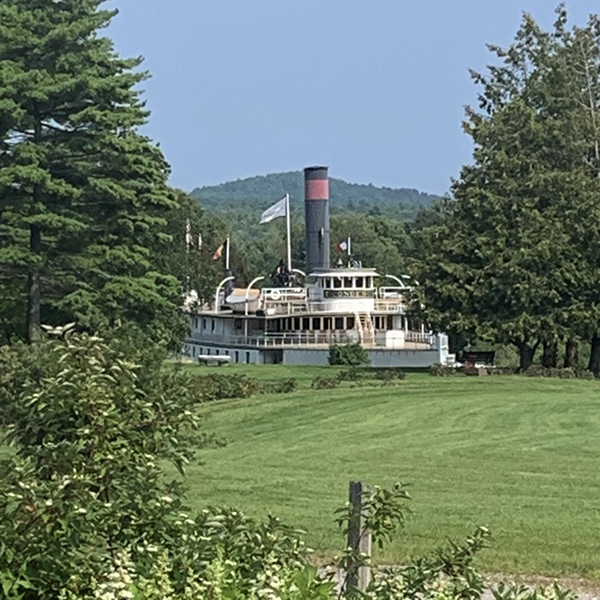
The single smokestack of the iconic coal-fired steamboat Ticonderoga in Vermont welcomes visitors at the Shelburne Museum and recalls life a century ago of paddle boats and marine industry on Lake Champlain.

But visitors will also soon be greeted by signage that tells another story at the museum — one of a new era of solar and sustainability for the property’s unique, curated buildings and collections.

A National Historic Landmark, the Ticonderoga operated on Lake Champlain from 1906 to 1953 before its relocation in 1955 to land on the Shelburne Museum property by Electra Webb, the museum’s founder.

The smokestack of the iconic coal-fired steamboat Ticonderoga in Vermont welcomes visitors to the Shelburne Museum. | © RTO Insider LLC

Webb moved historic buildings to the Shelburne property and housed art collections in them, creating a legacy that now features everything from American folk art to contemporary art. Preserving the museum’s varied collections in buildings that include a 19th century jail and a LEED-certified art center creates an interesting challenge, according to the museum’s director, Thomas Denenberg.

“The Shelburne Museum comprises 39 buildings on 42 acres, so we are fairly energy-intensive,” Denenberg told NetZero Insider. “In a series of buildings, we keep a particular climate to preserve the objects, which can be a French impressionist painting, or it can be a decoy from the 19th century.”

That means facilities within many of the museum spaces boil water to create humidity, keeping a specific climate set point of 70 degrees Fahrenheit and about 50% humidity, he said.

Today, however, most of the museum’s electricity needs are met with a new 500-kW solar array located adjacent to the main campus. And by the end of the year, the museum will commission another 150-kW array, allowing the property to run entirely on renewable energy and provide excess power to the town of Shelburne.

“The solar project is part of a longstanding and concerted effort to be better stewards of the environment while engendering sustainability for the organization, both financial and environmental,” Denenberg said.

Burlington, Vt.-based Encore Renewable Energy built the first array, which is sited away from public view. The company already is working on site development for the second array in an area that will have a little more visibility.

Denenberg says that the smaller array’s location offers a learning opportunity for visitors. Signs on the property will explain the museum’s sustainability mission and the reasoning behind the solar installation. In addition, Denenberg hopes to build a web-based dashboard to demonstrate how much energy the solar panels are generating.

In keeping with its sustainability goals, the museum also partnered with Bee the Change in Weybridge, Vt., to plant pollinator-friendly ground cover on the project site. The field under the new array is now in its first full bloom, offering a critical habitat for bees, butterflies and other creatures that support food security. The second array will feature similar ground cover next summer.

Before the museum embarked on a solar journey, it converted its lighting to LEDs, which had a “knock-on effect” on efficiency, Denenberg said.

“About 10 years ago, we had a moment of inflection where all of a sudden multiple manufacturers were producing bulbs in different temperatures, so it became palatable for museums to use LED lighting in galleries, not just in secondary navigation spaces,” Denenberg said.

Replacing incandescent lights reduced the ambient heat from the facilities’ lighting, which in turn lowered HVAC system usage throughout the museum’s buildings.

To continue a mission of sustainability, Denenberg said he can see the museum converting its medium-duty vehicle fleet to electric when the economics are right. It already has an electric shuttle and small electric carts for staff to move around the museum grounds.

And longer term, he said, the museum could consolidate some of its operations buildings, which were built in the late 1800s.

“That’s easily modeled as a net-zero building,” he said, adding that the timeline for that project would be 10 years out.

SEEM Members Push for FERC’s Decision on Market Proposal

In their response to FERC’s latest request for information, members of the planned Southeast Energy Exchange Market (SEEM) on Wednesday urged the commission to approve their proposed expansion of bilateral trading in 11 Southeastern states by next month and allow it to take effect in October (ER21-1111, et al.).

SEEM is intended to reduce trading friction by introducing automation, eliminating transmission rate pancaking, and allowing 15-minute energy transactions. Proponents, who comprise more than a dozen utilities and cooperatives in the Southeast, also claim the market would promote the integration of renewable generation resources like wind and solar.

The new filing — by a group of utilities including Alabama Power, Dominion Energy South Carolina, Louisville Gas & Electric, Georgia Power, Mississippi Power and several Duke Energy entities — answers a deficiency letter filed by the commission on Aug. 6. (See SEEM Critics Repeat Call for Technical Conference.) FERC’s letter asked:

  • for assurance that members will not have access to competitors’ transmission function or commercially sensitive information through reports or information provided by the administrator or auditor;
  • whether the availability of redacted documents posted to a dedicated confidential portion of SEEM’s website would vary depending on the identity of the participant accessing the documents, in order to avoid divulging commercially sensitive information to competitors; and
  • whether the administrator will be independent of members and their affiliates.

Members Highlight Previous Changes

In response to the first point, proponents observed that section 3.5 of the SEEM agreement “prohibits members … from providing marketing function employees with non-public transmission function information or non-public market information” received through SEEM. In addition, they reminded the commission that they had agreed to further safeguards on sensitive information in their response to the previous deficiency letter issued in May. (See SEEM Members Offer Rule Changes.)

The initial change establishes a two-step process for market auditor and SEEM administrator postings. First, any participant-specific information and critical energy infrastructure information must be redacted prior to posting a report; second, the utilities agreed to expand the restrictions on sharing non-public transmission function information and non-public market information.

SEEM members also agreed in the first deficiency response to alter the participant agreement, creating a binding contractual commitment to:

  • apply information-sharing restrictions to all participants, including both jurisdictional and non-jurisdictional members and
  • bind all participants, including members, to honor the determinations of the market auditor and SEEM administrator as to information that cannot be shared with marketing function employees.

These rules are “designed to create uniformity in the application of the information-sharing restrictions,” respondents said. They applied this argument to the second question as well, saying that any decision about “what information needs to be protected from marketing function employees” — including the availability of documents with redacted information on the SEEM website — will rest with the SEEM administrator and market auditor. Participants will be contractually obligated not to share such information with unauthorized individuals.

In response to the third question, SEEM members clarified that the administrator “will not be a member, participant, agent, or the market auditor, nor an affiliate of those entities.”

Quick Decision Requested After ‘Narrow’ Inquiry

Noting the “limited nature” of the commission’s request compared to the previous deficiency letter, which ran to 14 pages with 12 detailed questions, the respondents suggested FERC shorten the standard comment period to 10 days in addition to accelerating the approval and effective date for the SEEM member agreement.

“The requested expedited action is necessary if the [SEEM] members are to stay on track to bring the benefits of [SEEM] to customers during the first half of 2022,” the filing said. “Further delay of commission action may push the implementation … into the third quarter of 2022, which would delay the cost savings benefits for customers.”

Neither FERC’s deficiency letter nor the SEEM members’ response directly mentioned the July 29 filing by several environmental groups that have criticized the proposed market on several previous occasions. However, Wednesday’s filing said that to facilitate FERC’s consideration of their response, SEEM proponents “will not answer any protests again rehashing issues outside the scope of the proceeding, or previously addressed.”

New Jersey Shoots for Key East Coast Wind Role

With three offshore wind projects in development, New Jersey is hoping its early-mover status will allow it to create a robust supply chain infrastructure that will produce jobs serving projects along the East Coast.

Project orders approved by the New Jersey Board of Public Utilities (NJBPU) on June 30 spell out the state’s ambitions. The agreement for the 1,510 MW Atlantic Shores project, for example, includes a commitment to construct 89 of the project’s 111 monopile towers at a soon-to-be-built factory in the Port of Paulsboro in South Jersey. The project developer also agreed to marshal the project from the New Jersey Wind Port (NJWP), which the state is building on the Delaware River in Lower Alloways Creek, and to build a manufacturing facility to build nacelles with manufacturer MHI Vestas.

The agreement for the 1,148 MW Ocean Wind 2 project commits developer Ørsted to use the Paulsboro monopile factory, which German manufacturer EEW Group is building. In addition, the developer pledged to use the NJWP and to establish a nacelle assembly facility at the port with General Electric (NYSE:GE), which the board order calls a “defining feature” of the proposal.

Together, the two projects and Ørsted’s 1,100-MW Ocean Wind 1 would produce almost half of the 7,500 MW that the state plans to approve over six solicitations by 2035. And board approvals for the projects make clear that the state’s goal for the projects is far wider than just generating electricity. (See NJ Awards Two Offshore Wind Projects.)

“The specific economic benefits associated with the awarded projects will further position New Jersey as a supply chain hub for all projects along the East Coast,” the Atlantic Shores board order says. Creating the hub now will “allow New Jersey to guard against supply chain elements being established in other states before New Jersey gains this foothold.”

Competition is ramping up fast, however. The developer of a wind project off the coast of Maryland, US Wind, on Aug. 3 announced plans to develop 90 acres of waterfront in Baltimore County into an “offshore wind deployment hub” including a monopile factory. Gov. Larry Hogan called the project a “once-in-a-generation opportunity for the state of Maryland to expand and diversify our economy.”

Competing Demands

New Jersey Gov. Phil Murphy sees offshore wind generating 23% of the state’s energy by 2050. The approval of the Atlantic Shores and Ocean Wind 2 projects, the state’s second solicitation, followed the BPU’s 2019 approval of the 1,100 MW Ocean Wind 1 project, also developed by Ørsted, which included an agreement between the developer and EEW that helped bring the monopile factory to Paulsboro. (See Orsted Wins Record Offshore Wind Bid in NJ.)

The state’s rosy predictions for clean energy in the future have their skeptics, however. The Garden State Initiative (GSI), a business-backed think tank fighting for lower taxes, released a report on Aug. 4 that called for a delay in the major elements of the state’s Energy Master Plan — of which wind is among the most important — until an analysis of how much they will cost taxpayers is completed in 2022.

“We cannot accept incomplete plans with aggressive policy objectives that inadequately consider the economic impact on households, especially on our middle class, lower-income and retired residents,” the report said.

The state expects to begin a third solicitation process next year, and the final three solicitations every two years afterwards.

The board orders approving the two recent projects demonstrate the state’s effort to balance the cost to ratepayers and mitigate the impact on fishermen and tourism, while maximizing the economic benefits to the state.

The nacelles manufacturing supported by the Atlantic Shores facility will bring “$16.5-$24 million of in-state investment for buildings and tooling, and create 50-70 direct jobs,” according to the BPU agreement for Atlantic Shores, a joint venture between EDF Renewables North America and Shell New Energies US. The facility will produce 146 jobs and “a $20 million direct and $44.8 million total impact on New Jersey’s gross domestic product,” according to the agreement.

To address environmental concerns, the two developers both include mitigation strategies in their plans. Atlantic Shores is committing to spend $30 million for environmental studies, including surveys on fish habitats and the project’s impact on marine mammals and sea turtles. The developer also is in negotiations with five commercial-surf clam companies to work together to mitigate the project’s impact on that industry.

Ørsted says it will leverage the environmental insights gained in its first project to adopt a series of measures that will minimize the environmental impact of the second project, including a “fisheries protection plan.”

Seeking Competition

One issue raised by New Jersey’s Division on Rate Counsel, which provided input on the decision, was that if the state picked Ørsted again, it would “result in market concentration in the New Jersey OSW market that could have potentially negative impacts on future OSW solicitations,” and could harm the longer-term effort to build a robust supply chain for the sector, according to the board order for Atlantic Shores.

The BPU said that the “diversity” resulting from two developers would “create robust competition, which will drive down the cost of future solicitations.” Ørsted’s bid also had significant benefits, with a lower OSW Renewable Energy Certificate (OREC) price than Atlantic Shores and the developer’s commitment to bring to the state a factory built with GE.

“Together, the two projects will amplify the potential economic benefits from offshore wind initiatives,” said Jim Ferris, bureau chief for new technology, clean energy division and head of wind for BPU.

“These facilities intend to supply not only New Jersey projects, but projects all along the East Coast, because there are not going to be these types of facilities in every state,” he said. “That was one of the reasons why we emphasized economic benefits in these first two solicitations, so that we can get them established here early.”

OREC Logic

The solicitation required developers to submit the minimum value for an OREC, which represents the all-in price that will enable the developer to finance and operate the project. The value of the OREC, which is the amount paid by ratepayers for each MWh of electricity produced for 20 years, is among the criteria the BPU uses to judge the bid.

Although nothing will be paid until the project is in operation, the OREC value shows prospective financiers the potential future revenue flow from the project. Once the project starts producing electricity, the developer sells the power and delivers the proceeds to ratepayers, who pay the OREC value for each MWh of power generated.

The OREC bids by the two projects in the second latest solicitation were quite similar: $84.03/MWh for Ocean Wind 2 and $86.62/MWh for Atlantic shores. Both were significantly lower than the $98.10/MWh that the winning bid in the first round, Ocean Wind 1, submitted. However, BPU officials say that the decline was due, in part, to an increase in the federal investment tax credit, which enables developers to use a greater portion of offshore wind projects as a tax deduction.

The BPU orders also generate another metric to compare projects: the amount each project, through the payment for ORECs, would increase the average monthly bill for ratepayers.

By that test, Ocean Wind 2 would increase the average monthly residential tax bill by $1.28, significantly lower than the $1.46 increase in Ocean Wind 1. Atlantic Shores would increase the average monthly residential bill $2.21. Ferris said the Atlantic Shores larger bill impact is due in part to the fact that the project is larger than the others awarded. But the net OREC prices also include other factors such as materials costs, economic benefits included, construction methods and costs, environmental and fisheries protection methods, and estimated energy and capacity revenue.  

Ferris said that after each solicitation, the BPU assesses the impact of the last solicitation and the strategy for the next one, making modifications to the approach to maximize value for the state. The agency’s approach in the first two solicitations emphasized economic benefits, in addition to other important attributes. “Prior to solicitation three, which is scheduled for next year, we will do that same reflection,” he said.

Consumer-driven Class I REC Sales Important for Mass.

With the rush to green the grid and reduce emissions in Massachusetts, Yaima Braga with Green Energy Consumers Alliance (GECA) says it is important for individuals and communities to purchase renewable energy generated locally.

“It does matter the type and location of renewable energy credits (REC) that you buy,” Braga, who is renewable energy procurement director, said during a GECA webinar on Tuesday.

Renewable energy generated in Massachusetts can be purchased through the state’s Class I RECs, but some competitive suppliers in the state offer green electricity options from other parts of the country.

New England isn’t known for being uniquely windy, and it is not as sunny as the southwestern portion of the country, Braga said. Building renewable energy projects in the northeast is also costlier, so developers can’t make their money back just by selling electrons.

However, developers can make a profit from their projects by selling RECs, which motivates new developers to come to New England to build projects.

“Spending should really translate into new projects that displace fossil fuels and not subsidize projects that would have made money with or without your help,” Braga said.

Both individual consumers and communities can drive local REC purchasing.

The nonprofit GECA wants to see towns that buy electricity in bulk for its residents and businesses to establish contracts with suppliers for more than just a few years.

“The more demand that we can create for renewables ahead of what is actually being required by law, the faster we can push those resources and technologies,” Braga said.

Green community choice aggregation includes more Class I REC content than required by Massachusetts law, and it gives developers the confidence and financial backing to build renewable energy projects.

In the years following the U.S. withdrawal from the Paris Agreement, renewable energy purchases made by local governments were over three times those made in 2017, according to the World Resources Institute.

The Local Government Renewables Action Tracker, developed by the American Cities Climate Challenge, shows that by last year, 90% of the renewable energy capacity purchased by cities was through off-site power purchase agreements (PPA) from utility-scale projects.

GECA also helps residents of Massachusetts and Rhode Island purchase Class I RECs to match home energy usage with wind energy to support the industry in the northeast.

“Wind in New England needs a little bit more help,” Braga said. “A lot of states have invested a lot in their solar projects, and they have extra incentives, but wind really doesn’t have the support that it needs.”

Investing locally will help states reach their emission reduction goals faster without relying on policy to require offsite PPAs, she added.

GlobalFoundries’ Bid for Vt. Utility Status Could Trip up 100% Renewable Proposal

Semiconductor manufacturer GlobalFoundries’ plan to become a self-managed utility in Vermont has raised concerns about the future of a proposed 100% renewable energy standard (RES) for the state.

During a public comment session on Tuesday, Ed McNamara, director of the Regulated Utility Planning Division at the Vermont Department of Public Service (DPS), avoided answering questions about how the company’s plan might affect the RES straw proposal.

The manufacturer, which has a facility in Essex, Vt., is responsible for about 8% of the state’s electricity load. It claims that global semiconductor market conditions are such that if the company does not reduce its energy costs, it will need to move out of the state.

GlobalFoundries’ petition for utility status is a hiccup in an already tricky situation that has the DPS updating the state’s comprehensive energy plan and trying to align it with the pending state climate action plan. Drafts of both plans are due this fall.

In July, the Vermont Climate Council’s Cross-sector Mitigation Subcommittee recommended that the full council increase the state’s existing RES in the final climate action plan from 75% by 2032 to 100%, with no proposed target year. The subcommittee’s members, which include McNamara and Green Mountain Power’s (GMP) chief legal officer, Liz Miller, cooperated with DPS staff on a public meeting Tuesday to gather input on the potential design of a 100% RES.

But the officials from both camps were unable to answer questions from attendees on how GlobalFoundries’ plan would fit into the new RES. That’s because McNamara and another representative of GMP are witnesses in the case for GlobalFoundries’ petition filed in March with the Vermont Public Utility Commission (PUC) (21-1107-PET).

In its petition, GlobalFoundries asked for approval to purchase its electricity through the ISO-NE market instead of being a GMP customer.

Central to stakeholder concerns about the petition is the company’s request for exemption from compliance with Vermont’s existing RES because it would not distribute or sell electricity. Vermont’s RES requires its electric utilities to procure a percentage of their retail sales from renewables.

If the PUC exempts GlobalFoundries from RES compliance, the power it procures through ISO-NE “potentially could be from the general mix, which as we know, contains lots of fossil fuel in the form of natural gas,” Chase Whiting, litigator for the Conservation Law Foundation (CLF), said during the public meeting.

Given that DPS and GMP generally support the petition, Whiting said, and they are considering a possibility in which 8% of the state’s electricity load is not subject to a 100% RES, those positions “seem a little bit in conflict with one another.”

GMP’s support, according to Miller, is based on GlobalFoundries’ commitment in its petition to meeting the state’s greenhouse gas (GHG) reduction goals.

But a commitment isn’t enough, said Ben Walsh, climate and energy program manager at the Vermont Public Interest Research Group.

“They should bind themselves to the same requirements that every other electricity user in the state has and be part of the renewable energy standard going forward,” he said.

If the company continues to seek an RES waiver, he added, the DPS and the council should not be leading the conversation on how to design a new standard.

McNamara acknowledged that there are outstanding issues related to GlobalFoundries’ petition and the RES proposal, but he said he had concerns about CLF questioning him outside of the litigation.

Impact on Vermont

Altering GlobalFoundries’ position as an energy customer of GMP would not be without significant consequences for the state, according to witness testimony.

If the PUC approves the petition and waives RES compliance, Vermont’s GHG emissions “likely would increase,” Asa Hopkins, vice president at Synapse Energy Economics, said in testimony on behalf of CLF.

The company would not be obligated to purchase renewable energy in the market, and “purchasing and retiring RECs beyond what is strictly required would be contrary to GlobalFoundries’ focus on the lowest-cost power supply,” Hopkins said.

State emissions would increase by 88,000 metric tons in 2027, rising to almost 100,000 metric tons in 2032 and each year after, he said, adding that the social cost of those emissions would be $10 million in 2032 and each year after. Furthermore, the company’s emissions increase would equate to 2.3% of Vermont’s total emissions in 2030.

“To meet the [GHG emission-reduction] requirements of the 2020 Global Warming Solutions Act, Vermonters would have to take substantial additional other actions in order to compensate for GlobalFoundries’ lower contributions,” Hopkins said.

If the petition is denied and the company moves out of Vermont, the economic consequences would be “unprecedented,” Arthur Woolf, of Arthur Woolf Economic Consulting, said in testimony on behalf of GlobalFoundries.

With 2,200 in-state employees, GlobalFoundries is the largest for-profit employer in Vermont, and it pays $2.6 million in property taxes in Chittenden County. In addition, GlobalFoundries exports $1.3 billion in products from its Vermont facility, an economic activity that Wolf said brings additional value through “intellectual property, education and workforce development potential.”

Washington Pumped Hydro Project Faces Permitting, Obstacles

Washington’s first pumped storage generator is expected to go online between 2028 and 2030, if it can obtain the needed state and federal approvals.

The project is designed to generate 1,200 MW, which is the roughly the same amount of electricity produced by a full-size nuclear power reactor.

While the pumped storage concept has been around for decades, it is just emerging in the Pacific Northwest. “It’s a tried-and-true technique and has been around for a hundred years,” Erik Steimle, Rye Development’s vice president of project development, told NetZero Insider.

The privately owned $2 billion project would be located at the top and bottom of the cliffs of the Columbia River Gorge in sparsely inhabited Klickitat County, Wash., near the John Day Dam.

The developer, Rye Development of Boston, plans to build two lined 600-acre reservoirs separated by 2,100 feet in elevation. One reservoir will be on the river shore and the other at the top of the cliff. Underground pipes will connect the two reservoirs with a subterranean generating station along the channel.  Water will flow from the upper reservoir to the lower one to power the generator, and then will be pumped back up to the upper reservoir in a closed-loop system.

The project will use water purchased from Klickitat County Public Utility District, which owns a 15,591 acre-foot/year water right gifted by the former Columbia Gorge Aluminum smelter.

Rye Development has 22 projects east of the Mississippi River that involve converting non-powered dams into hydroelectric dams. West of the Mississippi, it is also developing a similar 400 MW pumped storage project at Swan Lake in southern Oregon. The two Northwest projects together will be capable of storing 12 hours of energy, giving them flexibility in providing electricity to the region’s power grid.

The $800 million Swan Lake project is scheduled to go online in 2026.

Klickitat County’s government has been pursuing renewable energy projects for a couple decades. At least two solar farms are in the works and eight wind turbine projects have been or are being built. “This is a vision of the community of Goldendale [the county seat],” Steimle said.

The Klickitat project is in the permitting stage. It is halfway through a State Environmental Policy Act review and is advancing toward a FERC permit. In June, the Washington Department of Ecology rejected Rye’s application for a 401 Water Quality permit, due to insufficient information, but is allowing Rye to resubmit the application.

Steimle said Rye expected the rejection for insufficient information and plans to resubmit the application.

The project faces a pair of local obstacles.

One is the former aluminum smelter at the lower reservoir site that various corporations operated from 1969 to 2003. Smelter operations contaminated the soil and groundwater at the site with fluoride, polycyclic aromatic hydrocarbons, cyanide and polychlorinated biphenyls. Rye’s development plans would deal with that pollution.

Also, the Yakama Indian Nation opposes the project because the land includes a longhouse, an ancient village site and sacred sites. Columbia Riverkeeper, Washington Chapter of the Sierra Club, American Rivers and Washington Environmental Council are supporting the Yakamas’ stance.

Rye is in talks to resolve the Yakamas’ concerns. “We understand the importance of finding ways of working with tribes collaboratively,” Steimle said.

Steimle does not expect the permitting issues to be resolved until late 2022 or early 2023. That would likely be followed by 18 to 24 months of engineering and other pre-construction work. Construction is expected to take four years.