Senate Democrats OK $3.5T Spending Package After Bipartisan Accord on Infrastructure

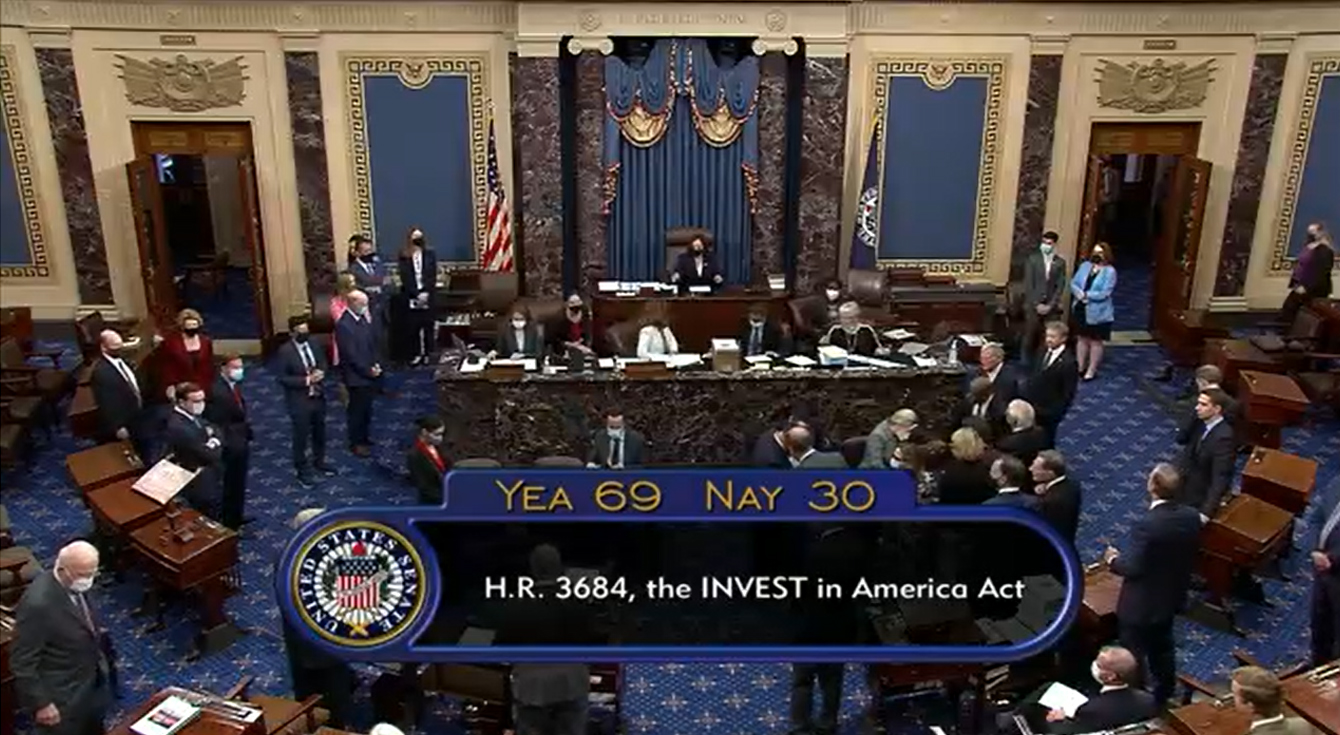
The Senate voted 69-30 on Tuesday to approve a $1.2 trillion infrastructure bill in a rare display of bipartisanship that dissolved quickly as Democrats then moved to approve a $3.5 trillion spending package by themselves.

Nineteen Republicans joined with all 50 members of the Democratic caucus in support of the infrastructure bill, which includes billions for grid improvements, alternative vehicles, existing nuclear plants and mining communities, in addition to widely supported spending on roads, bridges and ports.

The 2,702-page Bipartisan Infrastructure Investment and Jobs Act adds new spending of about $550 billion over fiscal years 2022-2026. (See Bipartisan Infrastructure Bill Offers Funding for Grid, EVs.)

Then early Wednesday, the Senate voted 50-49 to approve $3.5 trillion in climate and social welfare spending via the budget reconciliation process, which is not subject to the filibuster. House Speaker Nancy Pelosi (D-Calif.) had said she would not bring the bipartisan bill to a vote until the Senate approved the Democrats’ spending bill.
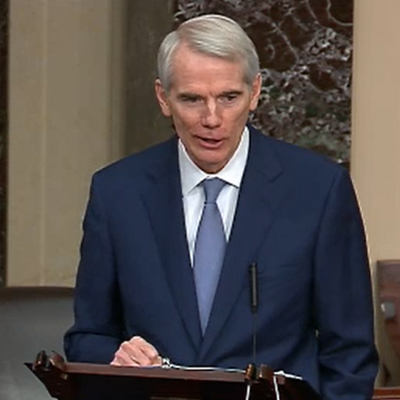
Sen-Rob-Portman-(US-Senate).jpg
Sen. Rob Portman (R-Ohio) | U.S. Senate

Before the vote on the bipartisan bill, senators were effusive in their praise of their staffs and their fellow senators across the aisle. Sen. Rob Portman (R-Ohio) thanked Sen. Kyrsten Sinema (D-Ariz.), with whom he began meeting more than four months ago to “lay the foundation for our path forward.”

“I commend her for her leadership, for her courage and for her ability to keep us on track during some tough times during this process,” Portman said.

He said almost three-quarters of the pages in the bill were from legislation previously passed in the Senate or its committees, calling it “a tribute to the quiet bipartisanship that goes on at the committee level.”

He also noted that more than 100 industry associations, unions and trade groups endorsed the legislation, including the Chamber of Commerce, the Business Roundtable and the National Association of Manufacturers from business, and the AFL-CIO and the Teamsters from labor.

Sen. Shelley Moore Capito (R-W.Va.), the ranking member of the Environment and Public Works Committee, thanked committee Chair Tom Carper (D-Del.), who she said steered committee approval of two infrastructure packages that formed “the foundation” of the bill. “He has been great in managing this bill on the floor but also [keeping] the guardrails on what we established to make sure that … the bipartisan group was following along with what the committee had unanimously passed.”

Majority Leader Chuck Schumer (D-N.Y.) also thanked the Republicans who signed on to what he called “the most robust injection of funds into infrastructure in decades.”

Then he quickly turned to the Democrats’ spending bill.

“The bipartisan infrastructure bill is a very significant bill, but our country has other very significant, very important challenges.” Schumer said. “So to my colleagues concerned that this does not do enough on climate, for families and for making corporations and the rich pay their fair share, we are moving on to a second track which will make generational transformation in these areas.”

Reaction

The Business Council for Sustainable Energy praised the passage of the bipartisan bill while also calling for approval of the Democrats’ budget measure, saying “policymakers should keep the findings of this week’s [U.N.] report top of mind.” (See Too Late to Stop Climate Change, UN Report Says.)

The American Council on Renewable Energy released a letter signed by 186 House Democrats endorsing long-term extensions and expansions to the production tax credit; an investment tax credit (ITC) to help meet President Biden’s target of a carbon-free power sector by 2035; modernization of tax incentives for commercial and residential energy efficiency and residential electrification; incentives for clean transportation and alternative fuel infrastructure; and a direct pay option to aid financing of energy projects whose sponsors can’t take advantage of tax credits.

On Wednesday, ACORE also released a letter from it and more than four dozen utilities, renewable energy companies, transmission developers, environmental organizations, and business and labor groups urging Congress to include an ITC for “regionally significant” transmission in the budget bill. The groups said the bipartisan bill “no longer addresses the interregional, interstate highway-type lines for which the current U.S. regulatory structure has no functioning means of cost recovery.”
69-30-Vote-(US-Senate)-Content.jpg
| U.S. Senate

“Even if the Federal Energy Regulatory Commission decides to act on its own authority in this area, that process has historically been time-consuming, characterized by significant uncertainty and subject to lengthy judicial review,” they continued. “A federal transmission ITC would give private capital the certainty it needs now to invest in the national, high-priority lines that will serve as the backbone for America’s clean energy grid.”

Edison Electric Institute President Tom Kuhn called the bill’s $7.5 billion for electric vehicle charging infrastructure and $7.5 billion for low- to zero-emissions buses and ferries “a good down payment on the electric vehicle charging infrastructure and low/no-emission buses that we need to accelerate the electrification of the transportation sector.”

The Bipartisan Policy Center (BPC) praised the bill for appropriating funding for demonstration projects authorized under the Energy Act of 2020, including energy storage, carbon capture, direct air capture, renewable energy and advanced nuclear reactors. The BPC also highlighted funding to aid the offshore wind industry and the Department of Transportation’s Port Infrastructure Development Program and Marine Highways Program.

The Carbon Capture Coalition joined the BPC in endorsing provisions to build out CO2 pipeline infrastructure through the SCALE Act and funding of carbon capture, utilization and storage.

The National Rural Electric Cooperative Association praised the bill’s support for public-private partnerships to improve physical and cybersecurity but called for additional assistance for rural communities.

“As policymakers plan for a future that depends on electricity as the primary energy source for much of the economy, more work will be needed to build on this infrastructure down payment,” NRECA CEO Jim Matheson said. “Electric co-ops will continue pushing for the financial flexibility to refinance existing government loans at today’s low interest rates and eligibility for direct pay tax credits to boost electric co-op investments in renewables and other innovative energy technologies.”

The Alliance to Save Energy highlighted $65 billion for grid modernization and $3.5 billion for the Weatherization Assistance Program.

Reconciliation Package

Schumer called for action on the reconciliation bill immediately after the vote on the bipartisan bill was tallied. His motion to begin debate was approved 50-49.

Sen-Bernie-Sanders-(C-Span)-Content.jpg
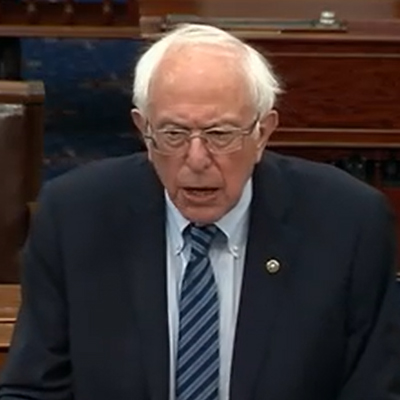
Sen. Bernie Sanders (I-Vt.) | C-Span

The debate over the bill began with Sen. Bernie Sanders (I-Vt.), chair of the Budget Committee, laying out his case for the additional spending.

“At a time when California is on fire, when Oregon is on fire, when Greece is burning and when countries throughout the world are experiencing unprecedented drought which will clearly impact food production, this legislation begins the process of combatting climate change so that our kids and grandchildren can live in a country and a planet which is healthy and habitable,” Sanders said. “It would be immoral and an absolute dereliction of our responsibilities as elected officials to do anything less. We cannot ignore climate change any longer. Now is the time for our great country to lead the world out of this existential crisis.”

Sen. Lindsey Graham (R-S.C.), the ranking member on the committee, responded by calling the bill a socialist Trojan horse that would result in increased gasoline and home heating costs and a flood of illegal immigrants.

“If you implement the provisions of this budget resolution regarding climate change, you’re declaring war on the internal combustion engine; you are going to shut down coal-fired plants,” he said. “I believe in climate change, and I’d like to have a rational approach to solving the problem, but this is not rational. … So yes sir, we’re going to have one hell of a fight.”

The reconciliation bill lays out a framework for the federal budget. Its details will not be determined until Congress enacts additional legislation to flesh out the outline. The House is expected to begin work on the legislation when it returns from its recess on Aug. 23.

It is expected to include $300 billion in clean energy spending, including additional funding for EVs in support of Biden’s Aug. 5 executive order calling for 50% of cars sold in 2030 to be electric or hybrid. (See Biden Executive Order Sets 50% EV Goal by 2030.)

ClearView Energy Partners told its clients Friday the reconciliation legislation could provide more than $100 billion for EV manufacturing and purchase incentives plus another $100 billion for solar, wind and advanced manufacturing.

A White House fact sheet issued Friday highlighted the administration’s “Build Back Better” priorities beyond the bipartisan deal, calling for extending and expanding clean energy and EV tax credits.

It also listed creation of an energy efficiency and clean electricity standard and a Civilian Climate Corps to work on conserving public lands and waters and improving community resilience.

Votes on Amendments

Members then worked into Wednesday morning with voting on amendments to the reconciliation, beginning with a 99-0 vote in favor of one by Sen. John Barrasso (R-Wyo.) that would prohibit “legislation or regulations to implement the Green New Deal.”

Sanders said he could support it because “it has nothing to do with the Green New Deal.”

“Despite what Sen. Barrasso says, the Green New Deal would not shift jobs overseas. In fact, it will create millions of good-paying jobs in the United States of America. It will not raise electricity prices. It will not make the U.S. dependent on dirty sources of energy from other countries.”

Many other votes were along party lines, with Democrats backing one by Sen. Carper to create a reserve fund “relating to addressing the crisis of climate change” and rejecting Republican amendments to block stepped up tax enforcement and cancel the Biden administration’s ban on new oil and gas leases on federal land.

In all, the Senate considered 41 amendments on issues including abortion, immigration, police hiring and taxes before approving the reconciliation about 4 a.m. with no Republican support. One Republican, Sen. Mike Rounds (S.D.), did not vote.

Energy amendments approved included a fund for “preventing electricity blackouts and improving electricity reliability” (52-47) and a means test to prevent high-income individuals from getting subsidies for luxury EVs (51-48).

Also approved were amendments:

  • prohibiting federal funding for renewable energy projects using materials, technology and critical minerals from China (90-9);
  • barring the Council on Environmental Quality and EPA from promulgating rules or guidance banning hydraulic fracturing (57-42);
  • preventing the Department of Agriculture from making fossil fuel generation ineligible for financing (53-46); and
  • prohibiting or limiting the issuance of “costly” Clean Air Act permit requirements on farmers and ranchers or the imposition of new federal methane regulations on livestock (66-33).

Following the votes, Schumer said the Democrats’ budget “will bring a generational transformation for how our economy works for average Americans.”

Progressives are likely to face opposition on some spending from Sens. Sinema and Joe Manchin (D-W.Va.), the latter the chair of the Energy and Natural Resources Committee, who have both expressed opposition to the $3.5 trillion price tag. With Republicans united in opposition, Democrats can’t afford to lose a single vote on the final spending package.
Senate OKs Bipartisan Infrastructure Deal

The Senate voted 69-30 Tuesday to approve a $1.2 trillion infrastructure bill in a rare display of bipartisanship that dissolved quickly as action began on a larger spending package that Democrats hope to pass by themselves.

Nineteen Republicans joined with all 50 members of the Democratic caucus in support of a bill that includes billions for grid improvements, alternative vehicles, existing nuclear plants and mining communities, in addition to widely supported spending on roads, bridges and ports.

The 2,702-page Bipartisan Infrastructure Investment and Jobs Act adds new spending of about $550 billion over fiscal years 2022-26. (See Bipartisan Infrastructure Bill Offers Funding for Grid, EVs.)

However, House Speaker Nancy Pelosi (D-Calif.) has said she will not bring the bill to a vote until Senate Democrats also approve $3.5 trillion in climate and social welfare spending via the budget reconciliation process, which is not subject to the filibuster.

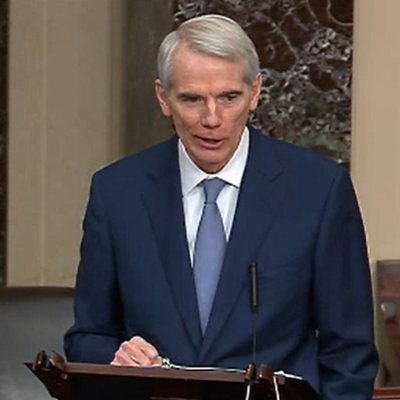
Sen-Rob-Portman-(US-Senate).jpg
Sen. Rob Portman (R-Ohio) | U.S. Senate

Before the vote on the bipartisan bill, senators were effusive in their praise of their staffs and their fellow senators across the aisle. Sen. Rob Portman (R-Ohio) thanked Sen. Kyrsten Sinema (D-Ariz.), with whom he began meeting more than four months ago to “lay the foundation for our path forward.”

“I commend her for her leadership, for her courage and for her ability to keep us on track during some tough times during this process,” Portman said.

He said almost three-quarters of the pages in the bill were from legislation previously passed in the Senate or its committees, calling it “a tribute to the quiet bipartisanship that goes on at the committee level.”

He also noted that more than 100 industry associations, unions and trade groups endorsed the legislation, including the Chamber of Commerce, the Business Roundtable and the National Association of Manufacturers from business and the AFL-CIO and the Teamsters from labor.

Sen. Shelley Moore Capito (R.-W.Va.), the ranking member of the Environment and Public Works Committee, thanked committee Chair Tom Carper (D-Del.), who she said steered committee approval of two infrastructure packages that formed “the foundation” of the bill. “He has been great in managing this bill on the floor but also [keeping] the guardrails on what we established to make sure that the group, the bipartisan group was following along with what the committee had unanimously passed.”

Majority Leader Chuck Schumer (D-N.Y.) Schumer also thanked the Republicans who signed on to what he called “the most robust injection of funds into infrastructure in decades.”

69-30-Vote-(US-Senate)-Content.jpg
69-30 Vote | U.S. Senate

Then he quickly turned to the Democrats’ spending bill.

“The bipartisan infrastructure bill is a very significant bill, but our country has other very significant, very important challenges.” Schumer said. “So to my colleagues concerned that this does not do enough on climate, for families and for making corporations and the rich pay their fair share, we are moving on to a second track which will make generational transformation in these areas.”

Reaction

The Business Council for Sustainable Energy praised the passage of the bipartisan bill while also calling for approval of the Democrats’ budget measure, saying “policymakers should keep the findings of this week’s [United Nations] report top of mind.” (See Too Late to Stop Climate Change, UN Report Says.)

The American Council on Renewable Energy released a letter signed by 186 House Democrats endorsing long-term extensions and expansions to the production tax credit; an investment tax credit to help meet President Biden’s target of a carbon-free power sector by 2035; modernization of tax incentives for commercial and residential energy efficiency and residential electrification; incentives for clean transportation and alternative fuel infrastructure; and a direct pay option to aid financing of energy projects whose sponsors can’t take advantage of tax credits.

Edison Electric Institute President Tom Kuhn called the bill’s $7.5 billion for electric vehicle charging infrastructure and $7.5 billion for low- to zero-emissions buses and ferries “a good down payment on the electric vehicle charging infrastructure and low/no-emission buses that we need to accelerate the electrification of the transportation sector.”

The Bipartisan Policy Center (BPC) praised the bill for appropriating funding for demonstration projects authorized under the Energy Act of 2020, including energy storage, carbon capture, direct air capture, renewable energy and advanced nuclear reactors. The BPC also highlighted funding to aid the offshore wind industry, the Department of Transportation’s Port Infrastructure Development Program and DOT’s Marine Highways Program.

The Carbon Capture Coalition joined BPC in endorsing provisions to build out CO2 pipeline infrastructure through the SCALE Act and funding of carbon capture utilization and storage.

The National Rural Electric Cooperative Association praised the bill’s support for public-private partnerships to improve physical and cybersecurity but called for additional assistance for rural communities.

“As policymakers plan for a future that depends on electricity as the primary energy source for much of the economy, more work will be needed to build on this infrastructure down payment,” NRECA CEO Jim Matheson said. “Electric co-ops will continue pushing for the financial flexibility to refinance existing government loans at today’s low interest rates and eligibility for direct pay tax credits to boost electric co-op investments in renewables and other innovative energy technologies.”

The Alliance to Save Energy highlighted $65 billion for grid modernization and $3.5 billion for the Weatherization Assistance Program.

Reconciliation Package

Schumer called for action on the reconciliation bill immediately after the vote on the bipartisan bill was tallied. Schumer’s motion to begin debate was approved 50-49.

Sen-Bernie-Sanders-(C-Span)-Content.jpg
Sen Bernie Sanders (I-Vt.) | C-Span

The debate over the reconciliation package began with Vermont Sen. Bernie Sanders (I), chair of the Budget Committee, laying out his case for the additional spending.

“At a time when California is on fire, when Oregon is on fire, when Greece is burning, and when countries throughout the world are experiencing unprecedented drought which will clearly impact food production, this legislation begins the process of combatting climate change so that our kids and grandchildren can live in a country and a planet which is healthy and habitable,” Sanders said. “It would be immoral and an absolute dereliction of our responsibilities as elected officials to do anything less. We cannot ignore climate change any longer. Now is the time for our great country to lead the world out of this existential crisis.”

Sen. Lindsey Graham (R-SC), the ranking member on the committee, responded by calling the bill a socialist Trojan horse that would result in increased gasoline and home heating costs and a flood of illegal immigrants.

“If you implement the provisions of this budget resolution regarding climate change, you’re declaring war on the internal combustion engine, you are going to shut down coal-fired plants,” he said. “I believe in climate change, and I’d like to have a rational approach to solving the problem, but this is not rational. … So yessir, we’re going to have one hell of a fight.”

The reconciliation package is expected to include $300 billion in clean energy spending, including additional funding for EVs in support of President Biden’s Aug. 5 executive order calling for 50% of cars sold in 2030 be electric or hybrid. (See Biden Executive Order Sets 50% EV Goal by 2030.)

ClearView Energy Partners told its clients Friday the reconciliation legislation could provide more than $100 billion for EV manufacturing and purchase incentives plus another $100 billion for solar, wind and advanced manufacturing.

A White House fact sheet issued Friday highlighted the administration’s “Build Back Better” priorities beyond the bipartisan deal, calling for extending and expanding clean energy and EV tax credits

It also listed creation of an energy efficiency and clean electricity standard and a Civilian Climate Corps to work on conserving public lands and waters and improving community resilience.

Votes on Amendments

Members then worked into Tuesday evening with voting on amendments to the reconciliation, beginning with a 99-0 vote in favor of one by Sen. John Barrasso (R-WY) that would prohibit “legislation or regulations to implement the Green New Deal.”

Sanders said he could support it because “it has nothing to do with the Green New Deal.”

“Despite what Sen. Barrasso says, the Green New Deal would not shift jobs overseas. In fact, it will create millions of good-paying jobs in the United States of America. It will not raise electricity prices. It will not make the U.S. dependent on dirty sources of energy from other countries.”

Other votes were along party lines, with Democrats backing one by Carper to create a reserve fund “relating to addressing the crisis of climate change” and rejecting Republican amendments to block stepped up tax enforcement and cancel the Biden administration’s ban on new oil and gas leases on federal land.

Too Late to Stop Climate Change, UN Report Says

Raging forest fires, rising sea levels and scorching high temperature records are here to stay, the U.N.’s Intergovernmental Panel on Climate Change concluded Monday in a report based on an analysis of more than 14,000 scientific climate studies.

The report stressed that climate change is not a distant problem but one that is already here — and getting worse much faster than expected.

The findings are stark:

  • Since 1850, industrialization has pushed up global average temperatures by 1.1 degrees Celsius (2 degrees Fahrenheit), leading to the major droughts, heat waves and super storms that have become common around the world.
  • Carbon dioxide and other greenhouse gas increases are now on course to push global average temperature changes well beyond 1.5 C, which previous studies warned could lead to unstoppable climate disruptions. An increase of just 2 C would severely disrupt agriculture dependent on stable weather patterns.
  • Carbon emissions must be sharply reduced as quickly as possible, along with cumulative emissions through direct air capture, in order to reach a net-zero position by 2050.
  • Sea level rise, already underway, cannot be reversed and could continue for hundreds or thousands of years as polar ice caps and glaciers melt. Coastal cities can expect sea levels to rise through the 21st century. Frequent and severe flooding can be expected.

“This report is a reality check,” IPCC Working Group I Co-Chair Valérie Masson-Delmotte said in a statement released before the group held a press conference. “We now have a much clearer picture of the past, present and future climate, which is essential for understanding where we are headed, what can be done and how we can prepare.”

But the kind of concerted and cooperative global effort to reduce carbon emissions to the degree the report recommends will take unprecedented international cooperation, such that has never occurred except perhaps during war.

Predictions of climate change have been issued regularly for several years by the U.N. and by various U.S. federal agencies. But scientists said this year’s study is more exact because of improvements in measurements. It is the sixth from the IPCC and one of several to be released before the 26th U.N. Climate Change Conference of the Parties (COP26) in Glasgow in November.

The U.S. Department of Agriculture has noted for several years, including in a 2018 report, that average temperatures were increasing and advised farmers to be prepared. But the report did not imagine the kind of disasters this latest U.N. report envisions.

The study comes just days after the Biden administration, in an effort to move the nation away from the internal combustion engine, unveiled a goal of 50% of new cars sold by 2030 being electric, an effort that will require the creation of an entire new industry and supply chain in the U.S. to compete with China. (See Biden Executive Order Sets 50% EV Goal by 2030.) Massive federal financial assistance is anticipated to jumpstart that transition, including the construction of charging stations.

The administration earlier this year set another goal of 30 GW of Atlantic offshore wind power by 2030 — a target that will also require the creation of a new U.S. supply chain, as well as billions of dollars in federal loans and incentives. (See US Adds Offshore Wind Area off New York.)

The rising sea levels and more severe storms predicted by the U.N. report could add billions to OSW developers’ budgets as they try to modernize ports and harbors.

New Jersey Bets $750K on Cleantech Startups

New Jersey has awarded $750,000 in seed money to 10 companies working on clean-technology innovation and is planning a second round of awards in the late fall for as much as $2 million to help early-stage companies looking to tackle climate change with new technology.

The products funded by the New Jersey Commission on Science, Innovation and Technology (CSIT), picked from 24 applicants, include smart glass that can improve a building’s energy efficiency; an electromagnetic process that converts carbon dioxide to plastic precursors; and a process to recycle old lithium batteries into new batteries.

All of the grant recipients, announced Aug. 5, are developing or testing “clean technologies intended to recapture or avoid emissions of greenhouse gases” and pollutants, according to the CSIT. The commission’s criteria for picking recipients included how innovative the company’s idea is and whether other companies are doing the same thing; what is the proposed market strategy to bring the product to fruition; its potential for creating jobs; and the expected impact in reducing greenhouse gases, Executive Director Judith Sheft said in an interview.

Seeing the “robust set of applicants” that stepped up in the first round, the CSIT Board on Friday voted to immediately create a second round of awards in the Clean Tech Seed Grant Program, she said.

“We envision having probably about $2 million that we’ll be able to give out as cleantech seed grants,” she said. “We’re trying to target those early companies who are really just getting started.”

Nurturing Nascent Innovation

The program is gearing up to help create a groundswell in cleantech development as the state seeks to reach Gov. Phil Murphy’s goal of generating 100% clean energy by 2050. The grant funds are provided by the Clean Energy Program run by the New Jersey Board of Public Utilities (BPU), and close attention is paid in the selection process to supporting innovations that originated in state universities, Sheft said.

The grants are among several efforts by New Jersey to nurture startups and bolster the state’s reputation as a technology center. The CSIT also has a voucher program in which early-stage companies can apply for multiple vouchers totaling up to $15,000 a year to defray the cost of research and development. And the New Jersey Economic Development Authority in April launched a partnership with business incubator Cleantech Open Northeast as part of its NJ Accelerate, a startup support program. (See NJ Partners With Clean Tech Accelerator.)

The CSIT grants will help ensure that “New Jersey entrepreneurs have every available resource to fuel the growth of their companies,” state Sen. Robert Singer said in a statement announcing the awards.

“By connecting these 10 startups with access to precious seed capital, we are helping them work toward commercialization and reach a point where they can attract outside investors and begin to compete in the global economy,” Singer said.

Recycling Batteries

Princeton NuEnergy, a Bordentown-based company that grew out of technology developed at Princeton University, said that although the company’s $75,000 CSIT grant is relatively small, it will help in a number of areas. The two-year-old company has created a new process to recycle materials from lithium batteries and reconstitute them into new batteries that are cheaper, use less energy and produce less carbon dioxide than previously available systems, the company said.

CEO-Chao-Yan-and-CTO-Xiaofang-Yang-(Princeton-NuEnergy)-Content.jpg
Chao Yan, CEO of Princeton NuEnergy, and Xiaofang Yang, the company’s chief technology officer, stand in a laboratory where the company is creating a new process to recycle materials from lithium batteries and reconstitute it into new batteries. | Princeton NuEnergy

The funding likely will help support Princeton NuEnergy’s R&D, help the company do market research to better understand the market and help improve its production process, CTO Xiaofang Yang said in an interview. The company this month also was awarded $1.15 million from a U.S. Department of Energy program that supports small business innovation and research, and has received about $700,000 from angel investors, the company said.

That funding will go toward launching a pilot production line of its battery recycling process in Dallas for which it has signed agreements with two collaborators: Wistron GreenTech and eTak Worldwide, Yang said.

“So basically, the company right now is in a transition from the lab-scale to industrial production-scale,” CEO Chao Yan said.

Taking Carbon from the Air

Anders B. Laursen, CEO of Cranford-based RenewCO2, also said his company’s $75,000 award will allow it to advance and “accelerate our R&D work to the next stage of development.” The company is developing a process, which originated in research at Rutgers University, that removes carbon dioxide from the air and uses it in the production of industrial chemicals.

“Electrochemical processes are like batteries: You can connect them in series to drive a proportionally increased amount of production,” Laursen said in an email. “This grant will allow us to take five such ‘batteries’ and connect them together in a so-called electrolyzer stack.”

The demonstration will be the “first of its kind for direct CO2 to ethylene glycol” and will serve as the next step toward the company mounting its pilot production unit, he said.

Other grant recipients include:

      • Andluca Technologies, a Princeton-based company that spun out of Princeton University, received $74,969. The company is developing UV-solar-powered smart glass that can control the entry of light and infrared heat into a building and improve energy efficiency.
      • WeSolar CSP, located in Princeton, received $75,000. The company designs and builds scalable and modular concentrated solar power plants for energy and heating solutions for government, utilities, corporations, industry, communities and microgrids.
      • Somerset-based NextGen Battery Technologies received $74,939. The company is developing a high-voltage, non-flammable solid-state electrolyte for lithium batteries.
      • Farm to Flame Energy, of Kearny, received $74,995. The company provides scalable, end-to-end electricity generation systems using biomass for communities in underdeveloped countries.

NERC Report Identifies Shoreline Equipment Issues

In a pair of Lessons Learned documents published Friday, NERC highlighted an unexpected vulnerability in bulk power system equipment located near shorelines that, coupled with a series of “relay misoperations,” led to a temporary loss of load.

Both reports arose from the same incident, though details about the event — including the location, date, utilities and regional entities involved — were omitted, as is common in NERC’s Lessons Learned reports, which are intended not to shame individual companies but to “provide industry with … information that assists [it] with maintaining the reliability of the bulk power system.”

Storm Leads to Salty Conditions

The incident began with a tropical storm, detailed in the first report. While the storm itself did not directly cause the load loss, it did create the conditions for the problems that developed several days later.

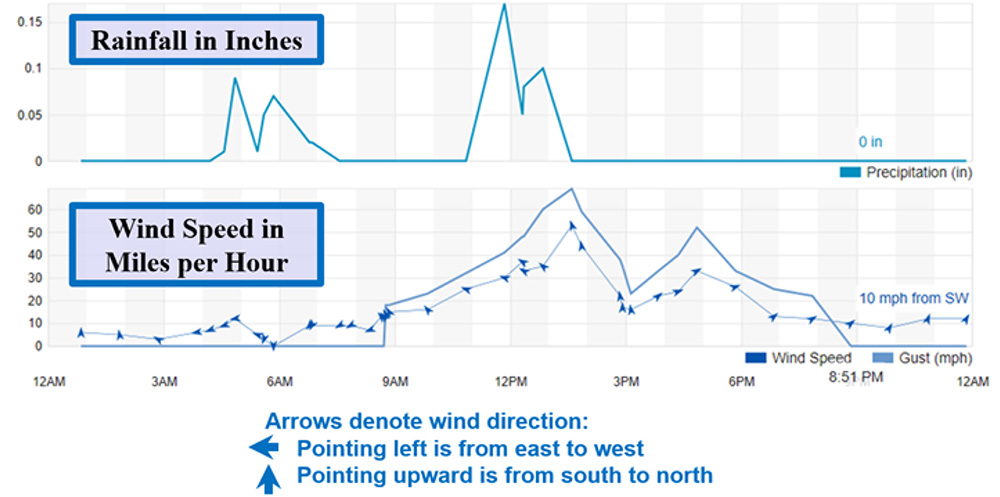
During the storm, the substation experienced high winds (more than 50 mph) and moderate rainfall, about half an inch over several hours, according to a nearby weather station. While the winds dropped off when the rainfall stopped around 1:30 p.m. local time, the wind began to pick up again around 3 p.m. — this time without any rain.

The wind also changed direction, blowing across a saltwater channel and toward the substation. The water in the channel was “churning” and higher than normal for that time of day because of the storm surge. As a result, the wind carried salt spray from the channel to the substation and deposited it on the surfaces of the equipment inside. Because there was no rain to wash it off, a thin, dry film of salt remained on the equipment, including four 345-kV insulator columns.

Rainfall-windspeed-and-wind-direction-(NERC)-Content.jpg
Rainfall, wind speed and wind direction during the tropical storm preceding the incident | NERC

Because of the lack of rain and low humidity, the salt deposits did not cause any issues the day of the storm. However, they did set the stage for the early morning hours three days later, when a light rain began to fall on the substation. During the initial minutes of rainfall, as the insulators became wet — referred to in the report as the “critical wetting period” — elevated leakage currents began to flow along their surfaces. This led to a temperature rise that began to burn off the salt film, causing uneven voltage gradients that resulted in dry band arcing.

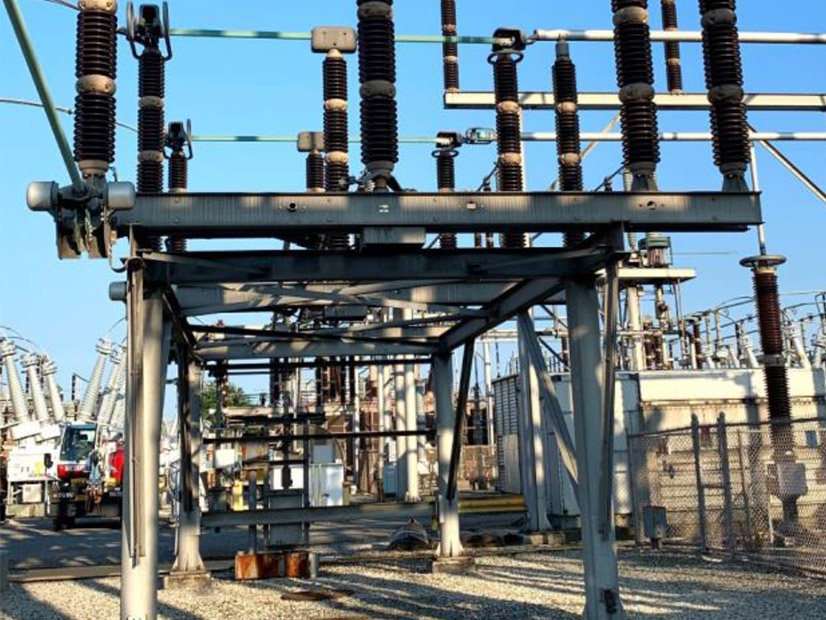
Dry band arcing is not uncommon, but the double-stack construction of the insulator columns meant that several insulators were in close proximity to each other. This created conditions where dry band arcing on one column “had the opportunity to cross over and meet up with the dry band arcing on the adjacent column.” Within 23 seconds, all four insulator columns flashed over, resulting in single-line-to-ground faults.

Double-stack-vertical-column-(NERC)-Alt-FI.jpg
A double-stack vertical column with 345-kV horizontal swing-arm disconnect switches, one of the columns that flashed over in the incident | NERC

The faults were cleared quickly, and as the rain continued, the salt washed away, removing the cause of the arcing and allowing normal service to resume. Ordinarily there would not have been any major issues. However, as the second report explains, misoperation of protective relays on other transmission facilities because of the faults caused non-faulted lines connected to the substation to trip, leading to a loss of load that lasted more than 30 minutes.

NERC identified four misoperations in the report:

  • A breaker failure relaying scheme incorrectly registered a breaker as closed, and it tripped the adjacent bus section and connected transmission line.
  • A backup relaying scheme protecting a phase angle regulator (PAR) did not have a proper polarizing source.
  • Saturation of an auxiliary current transformer caused inaccurate input to a line differential relaying circuit, resulting in tripping of the associated transmission line.
  • Over-reaching of certain ground distance elements occurred in the stepped distance relaying scheme that serves as backup to the line current differential relaying for two terminals remote from the fault location.

The substation’s operator has addressed each of these issues since the incident. First, the unusual breaker failure scheme, which used current sensing to determine if the breaker has opened in conjunction with a separate timer, will no longer be used; instead, the two functions will be integrated into the same relay. In addition, the PAR protection scheme has been updated to use the proper polarizing source.

The auxiliary transformer that tripped its line has been disconnected, and the system has been modified to “eliminate the need for [it] altogether.” Finally, the ground distance elements that over-reached were put on standby so that they will be armed only when the communications used by the line current differential relaying are unavailable.

Weather, Maintenance Issues Identified

The first report acknowledges the unusual circumstances behind the initial fault — a combination of strong winds, no rain and high seas that led to quick salt deposit — and notes that such phenomena may occur along any salt water coasts worldwide, including inland salt lakes.

“While regular cleaning and maintaining anticontamination coatings may remove and slow contaminant accumulation, awareness of conditions that cause rapid conductive contaminant deposition or remote leakage current monitoring and alarming are important tools for prompting actions that can prevent faults like these,” the report says.

Contributing issues for the relay misoperations include “interconnecting old and new protective relays”; for example, the breaker failure relaying scheme combined a legacy timer with a separate, recently installed current-sensing element, two functions that are normally combined into the same relay. This kind of combination has the potential to “introduce unforeseen problems,” in this case by replacing a normal relay’s internal electronic logic with a mechanical component that could and did fail.

Other vulnerabilities demonstrated by the incident include the possibility of current-sensing elements becoming confused by fluctuated loading levels, as well as excess complexity from adding unnecessary detection and control elements that can lead to misoperation and mechanical damage. Also, the “failure to recognize” the issues presented by lack of polarizing source on the PAR “highlights the need for thorough oversight, peer reviews and simulation testing of protection schemes during the design and commissioning stages of new or upgraded protective relaying installations.”

NECA Panel Discusses Highs and Lows of Offer Review Trigger Price Work

In early June, FERC approved parts of ISO-NE and NEPOOL’s “jump ball” filing on offer review trigger price (ORTP) values for the 2025/26 capacity commitment period (ER21-1637). In addition, the commission accepted NEPOOL’s proposed ORTP value for battery storage and proposed federal tax credits adjustments for solar resources for Forward Capacity Auctions 17 and 18.

FERC also accepted the RTO’s proposed ORTP value for offshore wind and the establishment of ORTPs for hybrid and co-located resources, rejecting NEPOOL’s proposed revisions in each case.

Chair Richard Glick dissented in part on the order, writing that FERC should have adopted NEPOOL’s ORTP estimates for OSW, “which better reflect market activity as opposed to bureaucratic cost estimates that bear little relation to reality.” He argued that NEPOOL’s use of publicly available data from four recent power purchase agreements for large regional OSW projects gives its plan “a clear and strong connection to the actual resources being developed in New England.” (See FERC Accepts, Rejects Parts of ISO-NE, NEPOOL ORTP Filing.)

Abigail Krich, president and founder of Boreas Renewables, provided extensive feedback during the NEPOOL stakeholder process, including a review of the publicly available data, which became part of a series of stakeholder amendments such as the assumed capital costs for OSW projects.

“ISO-NE assumes that an 800-MW OSW project in New England with a 2025 commercial operation date would optimistically have a capital cost of $5,350/kW,” Krich said during a Northeast Energy and Commerce Association webinar on ORTPs last week. “From the extensive research and analysis we did with the help of Daymark Energy Advisors, this seemed to be entirely outside the bounds of industry expectations for a project of this particular size, time and location.”

Krich’s research and analysis produced an ORTP calculation that assumes a capital cost of $3,326/kW, which she believes “falls squarely within the range of industry expectations.” She added that this one assumption makes the difference between OSW having a default offer floor price equal to the auction starting price versus having the flexibility to offer it any price a project wishes in the auction.

“Now, unfortunately, in my opinion, the commission accepted [ISO-NE’s] assumption, which leaves us where we are today with no ORTP for offshore wind,” Krich said.

Krich is encouraged that for the first time, there is an ORTP value for solar and battery storage resources that are of increasing significance “as their economics rapidly improve.” She added that onshore wind once again has an ORTP of $0, which recognizes it as among the most cost-effective renewable resource options in New England.

Ben Griffiths, energy analyst for the Massachusetts Attorney General’s Office, said that Krich and others did “great” work on the renewable generation side of the equation, so he focused on battery storage.

“Storage is one of those technologies that we think is super important for the state and keeps showing up in various roadmaps for how we’re going to reach our 2050 targets,” Griffiths said. “It’s also … hard to think about in large part because it has these unique characteristics … and we don’t have a great track record of being able to say exactly what we think it will do in the markets going forward just because the installed base is so small.”

After reviewing the RTO’s battery storage approach, Griffiths said that the conclusion was that it was too rigid and too simple, leading to suppressed revenue estimates and unreasonably high ORTP values.

“We thought we could advance the conversation a little bit by trying to come up with a new set of models that could more accurately reflect how storage operators might try to use a battery,” Griffiths said.

That modeling came up with an ORTP value for battery storage of $2.601/kW-month. Griffiths found that “amazing,” as it represented a 70% reduction from the initial value proposed early in the stakeholder process.

“It certainly appears that storage is going to be able to participate at almost any price it wishes, as opposed to being sort of severely constrained due to these unrealistic cost estimates,” Griffiths said.

Krich added that it is “entirely plausible” that several large batteries clear the next FCA.

“I think we’ll see more batteries clear because of the ORTP, but clearly batteries were already able to clear in the auction even before having this ORTP,” Krich said. “Although this certainly lowers the hurdle for them to be able to do that.”

Except for OSW, Griffiths said that technologies like solar, storage and onshore wind “have come into their own” and are not only viable through subsidy.

“Having ORTPs like this means that we can let a large number of renewables enter capacity markets through the front door, and we don’t have to worry about things like the [Competitive Auctions with Sponsored Policy Resources] substitution auction that is a piece of market design that has not lived up to the expectations we had for it. So, I think this is, at minimum, a good opportunity to sort of remove barriers to entry and ideally should help facilitate cost-effective, new generation entering the market.”

Nevada Poised for Lithium Mining Growth

Nevada has only one operating lithium mine even though the state is believed to be rich in lithium resources.

But as demand grows for lithium, which is a key component in electric vehicle batteries, interest in mining the resource in Nevada is surging.

“The global lithium market is expanding rapidly due to an increase in the use of lithium-ion batteries for electric vehicle and energy storage applications,” Ioneer, a company that has proposed a lithium mine near Tonopah, said on its website.

Ioneer also noted that Nevada is home to Tesla Motors’ Gigafactory 1, which began operating in 2016 and is “by far the largest planned lithium-ion battery manufacturing facility in North America.”

Meanwhile, Nevada’s existing lithium mine, Silver Peak, is planning an expansion. Albemarle, which owns the facility, announced in January that it will invest $30 million to $50 million to double the current production at the site by 2025.

“As global demand for electric vehicles (EV) grows, North American automotive manufacturers are seeking to regionalize their supply chain for greater security and sustainability,” the company said in a news release.

Another proposed project in Nevada is the Thacker Pass lithium mine, which received federal approval in January but is now bogged down in court challenges.

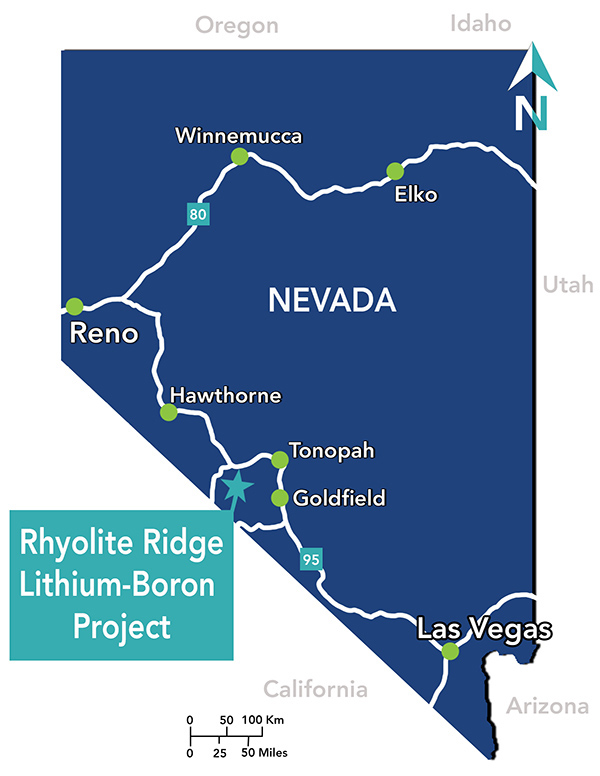
In addition, at least three projects have been proposed around Tonopah, which is about halfway between Reno and Las Vegas. Those include Ioneer’s Rhyolite Ridge lithium mine, Schlumberger Technology’s Clayton Valley lithium project, and American Lithium’s Tonopah Lithium Claims project.

Silver Peak Expansion

Nevada’s existing lithium mine, Silver Peak, is about 30 miles southwest of Tonopah in the Clayton Valley.

The facility has been operating since the 1960s, when it was owned by the Foote Mineral Co.

After multiple changes in ownership, Albemarle, based in Charlotte, N.C., acquired the Silver Peak operations in 2015.

Silver Peak produces lithium from brine extracted from the Clayton Valley basin. Facilities at Silver Peak include extraction wells, evaporation and concentration ponds, a lithium carbonate plant, a lithium anhydrous plant, a lithium hydroxide plant and a liming plant.

In addition to the expansion of existing operations that Albemarle announced in January, the company said it plans to begin exploring clay resources in the region and evaluating technology for producing lithium from clay.

In another announcement, Albemarle said in June that it had opened a Battery Materials Innovation Center in North Carolina. The center will support the company’s lithium hydroxide, lithium carbonate and advanced energy storage materials platforms.

Rhyolite Ridge

Another lithium mining project in Nevada has been proposed by Ioneer, an Australian company. Ioneer’s Rhyolite Ridge lithium-boron project would be built about 15 miles west of Albemarle’s Silver Peak lithium mine.

Rhyolite-Ridge-project-Map-(Ioneer)-Content.jpg
Ioneer’s Rhyolite Ridge project would be located about midway between Reno and Las Vegas, just west of Nevada’s only existing lithium mining site. | Ioneer

According to a Nevada Division of Environmental Protection (NDEP) fact sheet on the proposal, the project would include an open-pit lithium and boron mine, a storage facility for removed surface material, a processing plant, a spent-ore storage facility and a sulfuric acid plant. The proposed project would have a life of 12 years, including construction, operation, reclamation and closure.

NDEP has issued air quality and water-pollution control permits for Rhyolite Ridge. In an update last month, Ioneer said the project still needs approval from the Department of Interior for its operation plan.

After receiving all needed approvals, Ioneer expects construction to begin in the second half of 2022 and its first product shipment to occur in the second half of 2024.

The company announced in June an agreement with Korean cathode manufacturer EcoPro, which will buy up to 34% of Ioneer’s annual lithium carbonate output for the first three years of production.

The company said it is in discussion with other potential customers for its products. It also expects to announce a “significant funding agreement” in the third quarter of this year.

Clayton Valley Lithium Pilot

NDEP last month approved a reclamation permit for Schlumberger’s Clayton Valley lithium pilot plant project. According to an NDEP fact sheet, the project is a lithium brine extraction and chemical processing facility about three miles southeast of the town of Silver Peak.

Schlumberger plans to test a lithium recovery process that doesn’t require conventional evaporation ponds and hasn’t been used yet for commercial scale recovery of lithium from brine.

The new process has the potential to use less water and produce a finished lithium product faster than conventional brine extraction methods, Schlumberger said in a news release.

The Houston-based company has also applied to the state for a water pollution control permit for its Clayton Valley project. Comments on the proposal will be accepted through Aug. 22, according to an NDEP notice.

Tonopah Lithium Claims Project

In another proposed project in the Tonopah area, American Lithium has submitted an exploration plan of operations to the Bureau of Land Management (BLM) for the company’s Tonopah Lithium Claims project. The claystones project is about six miles northwest of Tonopah.

The Canadian company said in June that it was expecting approval of the plan within three months. The approval would allow the next phase of development, which includes up to 95 new drill sites to further characterize the lithium resource, up to five large test pits to provide samples for metallurgical testing, and biological and cultural surveys that can be used for future permitting work.

American Lithium is also exploring different methods of lithium extraction. Last week, the company announced that a hydrochloric acid leaching process produces an initial 95.1% lithium extraction. That compares to 92% extraction with sulfuric acid leaching and 82% extraction with salt roasting followed by water leaching.

Thacker Pass Lithium Project

In contrast to lithium-mining projects in the Tonopah area, the Thacker Pass project is in Humboldt County, Nev., about 25 miles from the Oregon border.

The proposed Thacker Pass lithium project would involve open-pit mining. Ore crushing, acid leaching and other processing methods would be used to produce lithium carbonate, according to NDEP.

NDEP is reviewing air pollution control, water pollution control and mine reclamation permits for the project. Proposed decisions on the permits may be issued as soon as this month, which would be followed by a 30-day public comment period.

Lithium Americas, whose subsidiary Lithium Nevada owns the project, describes Thacker Pass as one of the most advanced lithium projects under development in the U.S. The BLM approved the project in a record of decision dated Jan. 15.

But in February, four environmental groups — the Western Watersheds Project, Great Basin Resource Watch, Basin and Range Watch and Wildlands Defense — sued BLM in federal court over the approval. Among the groups’ allegations is that BLM failed to adequately analyze the projects’ direct, indirect and cumulative impacts.

The plaintiffs sought a preliminary injunction to prevent Lithium Nevada from digging at the site to conduct historical and cultural surveys. The groups are concerned that the surveys would remove sagebrush that serves as a habitat for sage grouse.

Chief Judge Miranda Du of the U.S. District Court for Nevada denied the motion for preliminary injunction on July 23, saying the plaintiffs “have not presented any specific, non-speculative evidence that they will be irreparably harmed in the absence of an injunction pending a ruling on the merits.”

In another twist in the case, Du on July 28 ruled that the Reno-Sparks Indian Colony and the People of Red Mountain may join the lawsuit. The groups fear the project would harm cultural resources.

Lithium Americas said it is expecting a final ruling in the case by January.

“Construction remains on target to begin in early 2022, following the receipt of remaining state permits and water right transfers, and resolution of the appeal,” the company said last week in reporting its second-quarter financial results.

COVID Resurgence Scrambles RTOs’ Return

NYISO, ISO-NE and SPP are delaying plans for returning to their offices because of the new surge in COVID-19 cases.

NYISO

NYISO had planned to allow staff to return to work at the ISO building on Sept. 7, with stakeholder meetings to resume in person two weeks later, CEO Rich Dewey told the Management Committee on July 28. However, the situation was fluid, he said, and the ISO announced Monday it is delaying the return of staff until October.

“With the uptick in COVID-19 infections and the rise of the Delta variant, the NYISO is delaying our planned back-to-work date until at least Monday, Oct. 4,” NYISO spokesman Zach Hutchins told RTO Insider. “In-person stakeholder meetings, which we were hoping to hold again beginning September 20th, have also been delayed until at least October. We will continue to monitor the situation and provide updates as necessary.”

The Albany Times-Union reported Monday that the Delta variant contributed to the highest single-day new case rates in months for both Albany County and across the Hudson River in Rensselaer County, home to the ISO’s headquarters building.

In July, the ISO surveyed market participants about the return to in-person meetings and found stakeholders evenly split between those who wanted to restart in-person meetings immediately and more cautious respondents who would choose to wait longer. Market participants will continue to have the option to join the meetings remotely once in-person meetings resume.

The Independent Power Producers of New York announced in July that it was changing its annual fall conference in Saratoga to a one-day, virtual event on Sept. 15, but the golf tournament will proceed as scheduled.

ISO-NE

ISO-NE said concerns with the Delta variant extended the timeline of its return to the office until October. Spokesman Matt Kakley added that many employees have continued to work in ISO-NE’s Massachusetts and Connecticut offices since the beginning of the pandemic.

“We continue to rely on guidance from state and federal health officials, with a focus on the health and safety of our employees and stakeholders,” Kakley said. “No matter where our employees are physically working, ISO-NE will continue our important work of ensuring the region has reliable electricity.”

RTO-ISO-return-dates-(RTOs-and-Centers-for-Disease-Control-and-Prevention)-Content.jpg
The counties headquartering MISO, NYISO and PJM all have vaccination rates above the national average of 50.1%, while only 42.5% of the population is fully vaccinated in Pulaski County, Ark., which includes CAISO, ISO-NE, SPP and MISO offices in Little Rock. The Centers for Disease Control and Prevention had no data for Travis County, Texas, where ERCOT is headquartered. |  RTOs and Centers for Disease Control and Prevention

As for its public meetings, Kakley said the Consumer Liaison Group meeting on Sept. 9 will be virtual, as will the Sept. 22 Planning Advisory Committee meeting. “I do not believe any decisions have been made beyond that,” Kakley said.

NEPOOL Participants Committee Chair David Cavanaugh told RTO Insider that stakeholders are “still targeting” a return to in-person opportunities beginning with a Participants Committee meeting on Oct. 7.

“We would intend to follow and adhere to the latest CDC [Center for Disease Control and Prevention] guidelines — as well as any additional state or local requirements that may be in place,” Cavanaugh said. “However, before NEPOOL’s return to in-person meeting plans are solidified, and any associated protocols or policies are finalized, it is important that we gather additional information and feedback from our regional stakeholders.“

Cavanaugh said NEPOOL would soon send out a questionnaire to its membership that will help “to formulate a plan that works for all of us,” in addition to working closely with ISO-NE and New England state officials.

“Of course, no matter the final plans, we will continue to provide full opportunities for remote/virtual participation for all NEPOOL meetings moving forward,” Cavanaugh said.

SPP

SPP had intended to resume in-person meetings in July and August, but postponed those plans amid a troubling spike of COVID-19 in its home state of Arkansas. (See SPP Postpones July, August In-person Meetings.)

During last month’s virtual governance meetings, CEO Barbara Sugg apologized for the cancellations and said, “This is not what I wanted. I miss seeing your faces in person, shaking hands and not pretending life is normal.”

The RTO is tentatively set to resume in-person meetings in time for October’s governance meetings, but Sugg cautioned stakeholders against making travel plans for the time being.

“Hopefully, we’ll be able to put this pandemic in the rear-view mirror soon enough,” Sugg said.

The grid operator is working on a hybrid approach for employees’ return to the office, with staff expected to maintain a 50-50 balance between at-home and in-office work. The plans are being made at the departmental level, with staff allowed to determine the appropriate mix.

PJM

PJM and MISO have both ruled out in-person stakeholder meetings in 2021.

PJM continues to stand behind its goal to resume in-person stakeholder meetings beginning in January, said spokeswoman Susan Buehler. She said the RTO is following guidance from the Montgomery County Office of Public Health in alignment with the CDC’s four levels of COVID-19 community transmission. Buehler said PJM will continue to have discussions and updates with stakeholders as the January return date gets closer.

About 100 PJM employees have volunteered to come back to the Valley Forge campus as part of a pilot program to test onsite COVID protocols and collaboration tools. The return pilot program was introduced to stakeholders at the July Operating Committee meeting. (See “COVID-19 Update,” PJM Operating Committee Briefs: July 15, 2021.)

“The pilot program has had great feedback and reviews, and we are continuing that until September when we will phase more employees back to campus, if it is safe to do so,” Buehler said.

MISO

MISO plans to reopen its offices to visitors beginning Sept. 1, although stakeholder meetings will remain virtual for the remainder of 2021.

Employees of the grid operator are also returning to the office Sept. 1 with the option for some remote days in a work week.

Earlier this month, MISO Senior Director of Operations Planning J.T. Smith said MISO is reviewing its masking guidance after the CDC recommended a return to indoor masking even for vaccinated individuals in areas where community transmission is high. He said MISO offices in the Little Rock, Ark.-area are within a COVID hotspot.

Despite the Delta variant driving high caseloads once again, Smith said MISO remains committed to its Sept. 1 target. He pointed out that vaccines are widely available in all parts of the country.

ERCOT

ERCOT is planning to use an in-person/virtual approach when it resumes in-person stakeholder meetings in September, “highly encouraging” only voting members to physically show up.

Everyone attending ERCOT meetings in person will be required to wear a mask.

Staff told the Technical Advisory Committee on July 28 that they are reviewing meeting procedures to see if any modifications need to be made and promised to change their approach, if necessary. Market notices will be issued with further details.

ERCOT recently changed its policy to allow staff to work primarily from home, in the office or a combination of the two.

Travis County, home to Austin and ERCOT, last week raised the area’s risk-based guidance to Stage 5, its highest level. Texas is second only to Florida in new COVID-19 infections, and its rolling seven-day average of new COVID-19 cases last week soared by 92% from the week before.

CAISO

CAISO hopes to begin a return to normal in October.

“We are monitoring the situation and are hopeful we will be able to begin allowing some level of in-person meetings at our facility beginning in October,” said CAISO spokeswoman Vonette Fontaine. “We’re currently targeting October for employees to start phasing in returning to the office in limited numbers at first.”

$25K Clean Tech Accelerator Winner Advances Thermal Energy Storage

A Nova Scotia company with a novel electric thermal storage (ETS) product recently won $25,000 and earned a pilot project in Vermont through the DeltaClimeVT Energy 2021 business accelerator.

Neothermal Energy Storage took the first-place prize based on rankings by members of the accelerator cohort over a three-month program.

“It felt amazing, and we were genuinely shocked because the other companies in the program are really high caliber,” Neothermal co-founder Jill Johnson told NetZero Insider.

The goal of the program, according to DeltaClimeVT, was to reduce energy use and greenhouse gas emissions in residential and small commercial and industrial buildings, while increasing adoption of distributed energy resources (DER). Two other cohort members also earned pilot projects in Vermont. (See Vt. Climate Tech Accelerator Drives 2 New Utility Pilots.)

Neothermal-ETS-system-(Neothermal-Energy-Storage)-Content.jpg
A rendering representing one module of the next iteration of the Neothermal electric thermal storage system, four of which would be required to cover the majority of a typical home’s heating load. | Neothermal Energy Storage

The DeltaClimeVT experience, Johnson said, was much different from other accelerators in which the company has participated.

“This was probably the best accelerator that we’ve done because it had much more concentration on hardware, technology and climate technology companies,” Johnson said.

Vermont Sustainable Jobs Fund administers the accelerator program with support from a group of Vermont utilities to help bring clean tech innovation to the state.

The ability to speak with utility representatives was a significant benefit of the program, Neothermal CEO and co-founder Louis Desgrosseilliers, told NetZero Insider.

“Part of the program guaranteed that we would sit down with people either in the C-suite level or director level within these organizations that we want to connect with,” he said.

Neothermal’s ETS system came from Desgrosseilliers’ doctoral work at Dalhousie University in Halifax, Nova Scotia. The system uses sodium acetate trihydrate to store heat from off-peak electricity, offering a pathway for buildings to transition to electric heat from oil-fired boilers and furnaces.

“Where other thermal storage that’s used today is either to heat up water or to heat up bricks, both of those methods are simply making things hot,” Desgrosseilliers told NetZero Insider. “Our system uses a combination of that and a chemical change that allows us to do things with more energy storage density and at lower temperatures than will be required with other materials.”

A typical home would require four ETS units, which are installed adjacent to, and integrate with, an existing boiler or furnace and reduce fuel consumption by up to 90%, according to Johnson. An add-on option also allows the ETS to supply heat to an electric hot water system. At full capacity, the ETS would provide between six and 12 hours of heat to a home.

Neothermal also is laying the foundation for DER aggregation so groups of web-enabled ETS systems in the future could respond to signals from the grid.

The systems, for example, could take up excess renewable energy on demand that might otherwise be curtailed, Desgrosseilliers said.

Pilot Project

The municipal electric utility in Burlington, Vt., awarded Neothermal a pilot project that Johnson says works with the city’s goal to have net-zero emissions by 2030.

Neothermal pitched a pilot simulation of the ETS system to help the utility address its goals around building electrification, she said. The company will then move to a physical pilot in 2022 or 2023 with the assistance of Vermont’s only natural gas distribution company.

“Vermont Gas showed a lot of enthusiasm for our technology early on in the program,” Johnson said. “We’re going to be working with Burlington Electric as well as Vermont Gas on not only off-peak electricity, but having renewable natural gas provide the backup power to the system.”

When the ETS system is depleted, she said, the home would use renewable natural gas to “top up” any heat that is needed.

The companies are still working out the details for how to proceed with the pilot.

ERO Entities Remain Cautious on Return to Office

NERC and the regional entitles are largely continuing the conservative return-to-office plans that they previously announced, though several told ERO Insider they were reassessing their policies because of the recent surge in COVID-19 cases fueled by the more infectious delta variant.

Among the ERO Enterprise, NERC has been the most cautious about resuming in-person work and meetings, and that stance is continuing. The organization’s offices in Atlanta and D.C. are still closed and will reopen for a limited number of staff after Labor Day “on a voluntary basis only,” spokesperson Kimberly Mielcarek said on Friday.

Currently there are no plans for resuming face-to-face meetings and events, though NERC’s Board of Trustees is considering holding its November meeting in person in some form. (See “Future Meetings,” NERC Board of Trustees/MRC Briefs: May 13, 2021.) Earlier this year CEO Jim Robb proposed a hybrid format in which board members would meet in person in Atlanta and other attendees would attend remotely. (See NERC Considering Long-term Virtual Board Meeting Format.)

Less than one-quarter of the population of Fulton County, home to NERC headquarters in Atlanta, are fully vaccinated, according to the Centers for Disease Control and Prevention. Nationally, 50.1% of the population is fully inoculated.

SERC’s most recent Board of Directors meeting in June was held under a similar hybrid arrangement, with CEO Jason Blake joined in the RE’s Charlotte, N.C. office by officers and board members from the Charlotte area. All other attendees participated remotely.

SERC staff have been required to come to the office at least three days a week since July 12, and this policy was still in effect as of Monday. However, Holly Hawkins — SERC’s vice president, general counsel and corporate secretary — told ERO Insider that the organization “continues to actively monitor” the spread of the delta variant and “will modify return-to-office plans as needed based on local conditions and guidance from federal, state and local authorities.”

ReliabilityFirst is also in the middle of a phased reopening that began in early July. Spokesperson Megan Baucco said staff are working at the office, but in a limited capacity and with guidelines for social distancing in place. The RE recently updated its policy to require all employees to wear masks regardless of vaccination status. Management has not yet reached a decision on when in-person meetings will resume.

The Midwest Reliability Organization, which has been allowing staff to return to the office voluntarily since May, said its plans for reopening the office and resuming face-to-face meetings “are currently under review.” While no policy changes in response to the recent surge have been announced, MRO’s Communications Director Jessie Mitchell told ERO Insider on Friday that such an announcement could come “as early as next week.”

Matt Barbour, manager of communications and training for the Texas Reliability Entity, said that physical attendance is voluntary for employees of the RE, with masks, social distancing and other safety protocols recommended when working in the office. In-person workshops, board meetings and any other events “involving external parties” are on hold “for at least the rest of the year.”

WECC is also maintaining a voluntary return to office posture for its staff, and all stakeholder meetings through November “will remain virtual.” The Northeast Power Coordinating Council said that while “the office is open for those that wish to return,” no staff members are required to come in at this time; the question of whether to resume in-person stakeholder meetings is currently under review as well.

Both WECC and NPCC said that all business travel has been ended for the near future. In WECC’s case, the travel moratorium is scheduled to expire at the end of the year; NPCC said it will last “until further notice.” The REs said travel will be allowed in cases of strong business need, with management approval.