New Jobs Study will Support Equitable Transition for NY

A working group of the New York Climate Action Council is gearing up to deliver a jobs report to guide the council in ensuring an equitable energy transition for the state’s workforce.

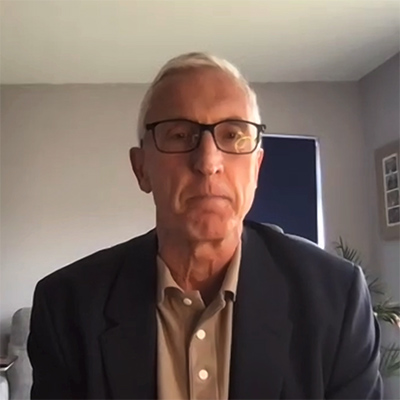
“The purpose of the job study is to forecast the clean energy job growth tied to the state’s clean energy policy and decarbonization goals,” Doreen Harris, president and CEO of the New York State Energy Research and Development Authority (NYSERDA), said Thursday during the council’s Just Transition Working Group meeting.

A modeling framework for the study is in place now, and analyses will be ongoing through early fall, she said. The study is the “major deliverable” for the working group, she added, and the analysis that is underway will culminate in a final report by Dec. 30.

Progress on the study will coincide with the full council’s ongoing analyses of recommendations from seven advisory panels for achieving the goals of the Climate Leadership and Community Protection Act. The council expects to release a draft plan for the state’s climate goals next year.

Study Parameters

Three major objectives define how the jobs study will progress, according to Josh Williams, president of BW Research.

The study will provide a platform for analyzing the overall employment impacts of moving from the status quo to a low- or no-carbon economy, he said. It will show trends in employment, he added, not only by industry and occupations, but by “digging deeper” to look at geography and job quality. In addition, the study will identify the workforce implications of preparing people for jobs in a clean economy.

Sectoral analyses for the report will cover electricity, fuels, buildings and transportation, and those sectors will break down into 35 subsectors, Williams said.

The report team completed work on the basic study model in the spring and now is testing the model against preliminary details coming from analysis of the advisory groups’ recommendations. When those analyses are complete, the team will use them to finish the model outputs and examine the workforce implications.

In studying those workforce implications, the team will examine the impact of decarbonization on the employment economy and the fiscal landscape for 10 regional economic development areas, according to Williams. The team also will identify “how occupation pathways will change in the demand for skills, certificates, education, experience and other kinds of workforce requirements,” he said.

Up Next

Moving into the fall, the Just Transition Working Group will finalize the jobs report along with its overall workforce recommendations for the full council.

In preparing its recommendations, the group will consider several legislative changes that came from the state budget finalized in the spring, Harris said. Among those are prevailing wage requirements for renewable energy projects above 5 MW that receive renewable energy certificates.

“This now puts into law the requirements that NYSERDA had previously adopted into its large-scale renewable contracts, as a matter of policy,” Harris said. In addition, the legislation specified that prevailing wage does not apply to projects with a labor agreement in place.

Additional provisions mandate the sourcing of some iron and steel for renewable energy systems from the U.S. and allow project competitive bids to favor in-state businesses. Each provision, Harris said, is at a different stage of implementation within the responsible agencies.

Energy Storage Leads Conversation During NECEC’s Annual Legislative Roundup

Several state legislatures in the Northeast focused on energy storage during their recently concluded legislative sessions. Connecticut became the eighth state to codify storage mandates and programs, joining Massachusetts and New York.

The New England Clean Energy Council’s annual legislative roundup on Wednesday also touched on the potential for legislation to enable the Transportation and Climate Initiative Program (TCI-P) to come up during special sessions in Connecticut and Rhode Island this fall.

Connecticut

Legislation signed by Gov. Ned Lamont in June set a statewide deployment goal of 1 GW of energy storage by 2030, with interim targets of 300 MW by 2024 and 650 MW by 2027. In addition, Connecticut regulators last month finalized rules for a statewide incentive program to support the deployment of 580 MW of installed electric storage capacity by 2030.

The average upfront residential incentives will start about $250/kWh, with a maximum incentive of $7,500 per project. Commercial and industrial ratepayers will also be eligible for upfront incentives, including up to 50% of the project cost. Residential, commercial and industrial eligibility for performance incentive payments will be based on the average power a storage project contributes to the grid during critical periods. More incentives will be available for low-income ratepayers and underserved communities, in addition to small businesses and those who historically experience frequent and prolonged storm-related outages.

TCI-P legislation, which advanced out of committee this spring but never made it to the floor of the General Assembly for a vote, could be on the agenda during a fall special session, according to Mike Martone of Focus Government Affairs. He said that the special session would look to appropriate about $300 million in federal funding that could be used to implement TCI-P, which was pushed hard by environmental advocates, plus Lamont and many members of the legislature and his administration. In addition, the decoupling of the Public Utilities Regulatory Authority from the Department of Energy and Environmental Protection, which passed on the consent calendar of the Senate but never came up for a vote, could also be part of a special session, Martone added.

Massachusetts

Massachusetts Gov. Charlie Baker signed a wide-ranging climate bill into law in March after months of back and forth between him and the legislature, including a veto. The final version of the bill had more than 40 amendments from the governor.

The law requires Massachusetts to meet an interim emission-reduction target by 2025, along with new interim goals every five years to hit net-zero emissions by 2050, and to set emissions limits for specific industries, including natural gas. The law also directs the Department of Public Utilities to consider climate change as a factor in its deliberations; writes environmental justice into state law; and raises offshore wind authorization to 5,600 MW.

Massachusetts, which passed an energy storage law in 2018 that targets 1 GW by December 2025, could be looking at increased capacity for large-scale storage procurement in the future, NECEC Government Relations Executive Dan Bosley said.

Maine

A bill to ask Maine voters via referendum to create a consumer-owned nonprofit to replace the state’s investor-owned utilities, Central Maine Power and Versant Power, did not come up for a full vote in what was a quiet session.

Next year, Democratic Gov. Janet Mills is up for re-election, and previous Republican Gov. Paul LePage announced that he would seek a return to the office.

“Gov. LePage is known as an opponent to clean energy adoption goals,” said Marty Grohman, E2Tech executive director. “There’s a view that there’s a window here for clean energy policy.”

Rhode Island

One of the first bills Gov. Daniel McKee signed after Gina Raimondo resigned to become U.S. secretary of commerce was the 2021 Act on Climate, which set the framework for future decisions on climate and energy-related issues, NECEC Policy Associate Sean Burke said. It requires mandated emissions reductions, including net-zero emissions by 2050. It also requires environmental justice considerations in planning or for future climate decisions.

TCI-P, which Raimondo was a signatory to, could come back around this fall. A bill passed the Senate, and Burke is “hopeful” it will pass the House of Representatives.

Vermont

There is a lot of “forward thinking and planning” in Vermont, Bosley said, including the passage of a bill that clarifies the application guidelines for energy storage facilities. Anything more than 1 MW must go through a complete application process for a certificate of public good.

In addition, the Public Utility Commission must update interconnection rules by March 2022 to incorporate energy storage facilities larger than 1 MW and simplify procedures for facilities between 100 kW and 1 MW.

Electric Customers Key to Decarbonizing the Grid

Reducing power plant carbon emissions may ultimately be in the hands of electric utility customers with the technology to automatically reduce their usage not only during peak demand but continuously.

Some utilities, relying on time-of-day rates or discounts to fixed tariffs, already signal customers through mobile phone texts to reduce power consumption during certain hours or as overall demand rises.

But much more can be accomplished, according to an analysis under way at the Lawrence Berkeley National Laboratory’s Electricity Markets and Policy Department. What it will require is for local utility grids to become truly interactive with their customer loads using “technologies that are promoting demand flexibility and enabling a comprehensive transformation to a modern grid,” said Kate Strickland, research manager of utility and regulatory strategy for the Smart Electric Power Alliance.

Strickland on July 28 moderated a webinar, “Crowd Sourcing Carbon Reduction with Demand Flexibility,” which introduced some of Berkeley’s analysis of projected future demand for the U.S. Department of Energy using grid-interactive technologies (GITs). The webinar also included some examples of programs and technologies already employed.

Natalie Mims Frick, an energy efficiency program manager at the lab, said the deployment of GITs, enabling customer systems to interact with a utility, could cut the nation’s utility carbon emissions by 6% by 2030, according to the lab’s analysis of 2013 data.

“The study [was] funded by the Department of Energy’s Building Technology Office,” she said, in its effort to develop “a national roadmap for grid-interactive efficient buildings.”

“The primary driver of the emissions reductions is the decrease in fossil fuel-based electricity generation, due to lower overall electricity demand, [as well as] changes in timing of electricity consumption through demand-flexibility measures and technologies that can shift usage to hours with lower emissions rates,” she said.

In other words, the sophisticated technology that DOE wants utilities to deploy would lead to the “crowd sourcing” of emission reductions. And it would occur seamlessly, without the need for a customer to continually have to worry about it.

One utility that already works with customers to reduce demand, more on an hourly basis, is Holy Cross Energy, a cooperative serving rural communities in central and western Colorado.

Lisa Reed, power supply supervisor at Holy Cross, said “demand flexibility will absolutely be key to our successful journey to 100%” carbon-free power.

“We are already seeing evidence of this in our peak-time payback program, where our members can opt in to receive emails or text messages from us, asking them to voluntarily reduce their consumption,” she said. The company targets a two- to four-hour period during which it expects demand to significantly increase and then contacts subscribers in the program.

“For every kilowatt-hour they reduce during that period, they get paid a substantial incentive: 50 cents or $1,” depending on the overall peak that occurs. “And with our individual members doing this, we can also save our membership as a whole, upwards of $15/kW in avoided demand charges on our wholesale electric bill,” she said.

One of the utility’s largest customers, the Eagle River Water & Sanitation District, participates “by simply changing the timing of their water treatment and pumping runs,” Reed said.

For those customers who have the ability to store energy on-site, the co-op has contracts to buy power from them if it is needed.

“Another approach that we have is our distribution flexibility bill credit, a tariff-based program that we created [in which] we basically buy a capacity call option from our own cooperative members. We pay them a set monthly bill credit in exchange for having the option to manage their flexible resource,” Reed said.

Tyler Rogers, senior director of sales at EnergyHub, a Reno, Nev.-based company that helps utilities with distributed generation technology, said harnessing “flexible load,” as Holy Cross does, will grow in importance.

“I think EnergyHub, based on a study we’ve seen … feels like there’s about 400 GW of flexible load [in the U.S.] that will be out there for the grab in 2025,” he said. “That’s sizable, and I think this is all coming from the penetration and adoption of technologies like” smart thermostats, electric vehicles, residential storage, grid-interactive water heaters and rooftop solar. “Today, there are about 17 million smart thermostats in the U.S., about 2 million EVs and about 3 million homes that have rooftop solar. … So in terms of crowdsourcing, the opportunity varies depending on the penetration of these different technologies, but I think we can all agree that they’re only going to grow.”

The question across the industry, he said, is “how do we aggregate and build these resources in a way that makes customers happy but also delivers the benefits, the massive grid benefits that [Berkeley’s Frick] summarized. How do we decarbonize?”

Customer Experience

Also crucial, Strickland said, are the best practices that could be used to access that potential power while giving customers “a successful experience.”

“Customer experience is a critical component of fully leveraging demand-flexibility programs and resources both today and into the future as we look to scale,” she said.

Reed said Holy Cross has a lot of “early adopters.”

“We have a lot of members who are fully engaged, but they are not the majority,” she said. “The consumer whom we want to participate is this ‘set it and forget it’ type. They want to set up the system once we get them to enroll in the programs, and then they go on with their lives. We need to make this consumer’s experience as painless [and] as simple as possible, perhaps even a one-click simple, like ordering something online from Amazon,” she said.

Adding that a utility marketplace needs to be more than a store, she said, “Consumers want an experience. They want to trust us as a resource, and they want an easy way to enroll in the program and get the product needed to make that participation simple.”

Rogers agreed with Reed, to a point.

“We’re trying to solve a problem by not building stuff,” he said. “I fundamentally believe that it’s cheaper to go ask a customer who has a thermostat or a battery to let us tap into it for grid benefits than building out a grid solution to that problem. I think that’s fundamental to this discussion. So if you if you believe that, then yes, you have to do this in a way in which customers are happy. And that makes it harder.

“If you have a marketplace, allow a customer to pre-enroll a device that they’re buying into your utility program at the point of purchase. Make it super easy. Find a way to stack benefits, energy efficiency and demand response incentives to get to a low cost. A low-cost device for customer is extremely important.

“We believe it’s best to not tie the ongoing incentive to individual customer performance,” he added. ”A lot of data has shown that if you’re tied to performance, it gets complex for the customer to follow, and they oftentimes will leave a program.”

To that, Frick added: “I think in the research from our roadmap, we found that [as] customer and market value propositions, consumer acceptance are still challenges to deployment.”

DOI Nominee Fields Tough GOP Questions at Senate Hearing

Cynthia Weiner Stachelberg spent a good part of her confirmation hearing before the Senate Energy and Natural Resources Committee on Tuesday reminding Republican senators that as an assistant secretary at the Department of the Interior, she would not be directly involved in issues such as tree spiking or gun control.

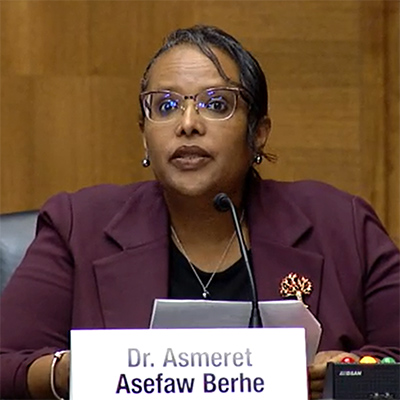
Nominated as assistant secretary for policy, management and budget, Stachelberg was one of three nominees at the hearing, but she took most of the heat in an otherwise civil and issue-focused session. The other two nominees were Geraldine Richmond, for under secretary of science at the Department of Energy, and Asmeret Berhe, for director of the DOE Office of Science.

John-Barrasso-(Senate-Committee-on-Energy-and-Natural-Resources)-Content.jpg
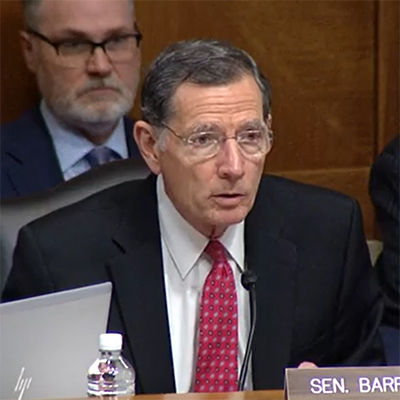
Sen. John Barrasso (R-Wyo.) | Senate ENR Committee

In his opening statement, Sen. John Barrasso (R-Wyo.), the committee’s ranking member, voiced opposition to Stachelberg’s nomination based on her lack of experience with Interior’s core areas of land and resource management. She is currently executive vice president for external affairs at the Center for American Progress, where she has worked on a range of issues, including gun control. She previously worked with the Human Rights Campaign on gay and lesbian issues.

However, Barrasso used most of his five minutes to rehash his opposition to the nomination of Tracy Stone-Manning to head the Bureau of Land Management.

Without naming Stone-Manning directly, he grilled Stachelberg on her position on tree spiking and involvement with groups that might support it. Opposition against Stone-Manning based on her involvement with a tree-spiking incident in 1989 resulted in a deadlocked committee vote on her nomination. (See Senate Committee Deadlocks on Biden Pick to Head BLM.)

In response, Stachelberg repeatedly refocused her answers on her own nomination. “Senator, I really wish to address questions that have to do with my portfolio and the challenging job I have been nominated for,” she said. “And if I am confirmed, I will be happy to work with you and others on the committee to address those issues.”

Sen. Mike Lee (R-Utah) also pushed Stachelberg on her views on gun control, bringing up a recent tweet in support of banning assault weapons and high-capacity magazines. She again parried by saying the gun control issues she worked on at the Center for American Progress were not immediately relevant to “the position I’ve been nominated for now.”

Stachelberg got an easier ride from Sen. Joe Manchin (D-W.Va.), chairman of the committee, who noted the wide portfolio of issues she might face as assistant secretary and asked about her priorities.

Staffing up the department would come first, Stachelberg said, to rebuild after staff losses during the Trump administration, followed by working on wildfire and drought issues, especially in the West.

Richmond and Berhe

Even Barrasso could find little to fault in Richmond’s qualifications. A professor of chemistry at the University of Oregon for 26 years, she has been published widely, received DOE funding for research projects, visited the National Laboratories and served on several agency advisory boards. In her opening statement, Richmond said her top priorities at DOE would be providing a seamless process from basic research and development to demonstration and deployment at scale, buttressed by cross-agency and cross-industry collaboration.

Calling on DOE to be model for diversity, Richmond said, “We are stronger, smarter and simply better when we all seize possibilities together, and there is no better place on this planet for scientific discovery and innovation than a country built on the premise of joining forces.”

Responding to questions from Democratic senators, Richmond also stressed the need for the U.S. to increase funding and focus on R&D to keep pace with global competitors, including China.

“We are the envy of the world when it comes to fundamental science and discovery science,” Richmond said. “We have the potential of falling behind if we don’t continue to increase our investment in basic science. That’s where we will continue to win if we continue to provide support for them. … We cannot lose this race, so the funding is critical.”

Citing a 2018 report, Richmond said China’s ramping of support for energy R&D “is frightening; especially when we think of ourselves as being a leader in the science and engineering enterprise, looking at the funding China is pumping into their technology and research, it’s incredible. … We can spend our time looking over our shoulder, worrying about China. Instead, we need to look forward and say, ‘Let’s be as innovative as we possibly can and get our scientists on board to make the kind of changes we need in order to stay ahead.’”

She even earned high marks on a question on biofuels from Sen. Roger Marshall (R-Kan.), recalling her own childhood on a farm in Kansas where her father shoveled coal into the furnace every morning to heat the house.

“We can make much more progress in the bioenergy sphere, but again, we’ve just got to make sure we’re doing the best research that we can,” Richmond said. “That and any other of the fossil fuels. We cannot give up on any of these fuels at all.”

Rerouting Waste

Asmeret-Asefaw-Berhe-(Senate-Committee-on-Energy-and-Natural-Resources)-Content.jpg
Asmeret Berhe | Senate ENR Committee

Berhe also started out the hearing with criticism from Barrasso, who argued her 12 years as a professor of soil biogeochemistry at the University of California, Merced, did not include the broad scientific expertise or administrative experience needed to run the Office of Science.

But Berhe defended her specialty as one that requires “advanced experimental observational and computational tools and interdisciplinary perspectives.”

“I approach my nomination to serve as the director of the Office of Science with the expertise of an Earth system scientist that works across and synthesizes knowledge from multiple scientific areas and teams,” she said. “The integrative systems perspective that I would bring, if confirmed, is uniquely suited for this role, especially for the current time when we need to urgently address multiple issues.”

A question from Marshall also allowed Berhe to talk about new areas of research in carbon sequestration in soil, citing an “incredible opportunity” to use carbon that is currently in animal and human waste streams. “There are a number of options, in particular ones that allow us to use waste and reroute waste and use it as a resource, options that allow us to store carbon in deep soils,” she said.

DC Circuit Sends LNG Approvals Back to FERC

The D.C. Circuit Court of Appeals on Tuesday found fault with reviews by FERC on climate and environmental justice issues for planned LNG projects in Texas, remanding the orders back to the commission for further consideration (20-1045).

The approvals include two different projects in the Brownsville area: the 750-acre Rio Grande LNG, which was proposed by Houston-based NextDecade, and the independently owned 635-acre Texas LNG. A petition against a third LNG project in the Browsville area, Annova LNG, was dismissed as moot as the project was discontinued in May.

“The commission’s National Environmental Policy Act (NEPA) analyses of the projects’ impacts on climate change and environmental justice communities were deficient under the Administrative Procedure Act (APA),” the court said in its ruling. “The commission’s determinations of public interest and convenience under the Natural Gas Act (NGA) were therefore deficient to the extent that they relied on its NEPA analyses of the projects’ impacts on climate change and environmental justice communities.”

FERC originally approved the projects in 2019, and rehearing requests were denied in early 2020. Petitioners in the case included the group Vecinos Para el Bienestar de la Comunidad Costera, the Sierra Club and the city of Port Isabel.

While the court remanded the orders back to FERC, it did not vacate the authorizations. The project developers argued that vacating the authorizations “would imperil intervenors’ ability to obtain funding necessary to complete the projects in a timely fashion.”

“We find it reasonably likely that on remand, the commission can redress its failure of explanation with regard to its analyses of the projects’ impacts on climate change and environmental justice communities, and its determinations of public interest and convenience under Sections 3 and 7 of the NGA, while reaching the same result,” the court said in its ruling.

“As I said in my dissents when FERC approved these projects nearly two years ago, neither the Natural Gas Act nor the National Environmental Policy Act permit FERC to assume away the impacts of building and operating any natural gas facilities,” FERC Chairman Richard Glick said in a statement. “This decision clearly demonstrates that the commission has the authority and obligation to meaningfully analyze and consider the impacts from GHG emissions and impacts to environmental justice communities. Moreover, failure to do so puts the commission’s decisions — and the investments made in reliance on those decisions — in legal peril.”

Directives to the Commission

The court agreed with the petitioners’ arguments that FERC failed to sufficiently address the impact of greenhouse gas emissions by the projects because it didn’t review the social cost of carbon or a similar accepted scientific methodology to evaluate their contribution to climate change.

FERC originally explained in its orders that it was “unable to determine the significance of the project’s contribution to climate change” and that “there is no universally accepted methodology to attribute discrete, quantifiable, physical effects on the environment to [the] project’s incremental contribution to” GHG emissions.

The petitioners argued that FERC was “required to do more,” saying federal regulation 40 C.F.R. Section 1502.21(c) requires the commission’s evaluation of environmental impacts to be “based upon theoretical approaches or research methods generally accepted in the scientific community.”

“On remand, the commission must explain whether 40 C.F.R. Section 1502.21(c) calls for it to apply the social cost of carbon protocol or some other analytical framework as ‘generally accepted in the scientific community’ within the meaning of the regulation, and if not, why not,” the court said.

The court also found FERC’s environmental justice analysis for the LNG projects to be flawed, siding with the petitioners that the commission’s decision to analyze the projects’ impact only in census blocks within 2 miles of them was “arbitrary.” The court said FERC determined in the orders that the environmental impacts of the LNG projects would extend beyond 2 miles, citing that air quality impacts could occur within a 31-mile radius.

The ruling said FERC must explain why it chose a 2-mile radius to determine environmental justice impacts or select a different radius.

“The commission has offered no explanation as to why, in light of that finding, it chose to delineate the area potentially affected by the projects to include only those census blocks within 2 miles of the project sites for the purposes of its environmental justice analyses,” the court said.

The court did not set a date for when the review of the orders must be completed.

NY Siting Board Waives Local Laws for 100-MW Solar Project

New York state regulators voted Wednesday to waive a local zoning law, clearing the way for construction of the 100-MW Flint Mine Solar project in the Town of Coxsackie.

The decision is among the last that will come out of the state’s 2011 Article 10 facility siting review process.

Traditionally, the Board of Electric Generation Siting and the Environment “has been reluctant” to waive local laws in their decisions, Michael Gerrard, director of the Sabin Center for Climate Change Law, told NetZero Insider.

New York adopted regulations earlier this year that streamline project permitting under the newly formed Office of Renewable Energy Siting. Although applicants could opt-in to the new process, some cases still are moving through the Article 10 permitting process under the siting board.

“Unquestionably, one of the reasons that the legislature adopted the recent statute was because the old Article 10 process wasn’t working,” Gerrard said. “The siting board was rarely, if ever, overriding local zoning, but here they did. And we now have a new process that I think may yield similar results when warranted.”

The board issued an order granting Flint Mine a certificate of environmental compatibility and public need to construct the project on 1,700 acres in the towns of Coxsackie and Athens, granting the developer’s request to waive a law in Coxsackie that prohibits utility-scale solar in any area not zoned as commercial or industrial. The portion of the Flint Mine project in Coxsackie is sited entirely within a residential and agricultural zone.

“Flint Mine has demonstrated that when considered in the context of the requirements of a project developer to find suitable space and to be able to secure rights to use that land, requiring compliance with this local zoning law would prohibit the construction of the project, making application of the law’s restrictions unreasonably burdensome,” Dakin Lecakes, chief administrative law judge of the New York State Department of Public Service, said during the board’s meeting Wednesday.

The board also waived compliance with laws in Athens governing parking lot and access road grade requirements and construction on lands with steep slopes.

“If enforced, those local laws would impose unwarranted burdens on Flint Mine without any corresponding environmental benefits,” Lecakes said.

New York is one of the few states that has a statutory procedure to override local zoning, Gerrard said.

There are many local zoning constraints for renewables across the U.S., he said, adding that “this issue of local opposition has become a major impediment to the massive build out we need of wind and solar.”

Landowners’ Plight

The waiver for the Coxsackie zoning law is the culmination of a multi-year effort by local landowners to find a viable economic outlet for their properties.

A group of landowners in the town decided to sell their properties to project developer Hudson Energy for what would form the foundation of the Flint Mine project, according to the Sabin Center. The town of Coxsackie subsequently passed the zoning law prohibiting large-scale solar in residential and agricultural zones.

The landowners created the Friends of Flint Mine group and began to look for a way to move the project forward.

In 2019, the group, with the support of Gerrard through the Renewable Energy Legal Defense Initiative, sued the town. A New York court dismissed the lawsuit later that year, finding that the zoning law was a valid exercise of local police power.

The following year, the group got together with the project developer and petitioned the town for a special-use permit to build the project. The petitioners told the town that the quality of the project lands, while zoned as agricultural, could no longer sustain farming practices due to poor soil and drainage. They further explained that much of the adjacent lands that also are zoned as residential and agricultural are used for other purposes, such as “correctional institutions and other governmental purposes.”

Town officials did not approve the permit and continued to oppose the project during the siting board’s proceedings.

The town ultimately signed a settlement agreement in the case, but it included a resolution passed May 11 stating its opposition and calling the project “inconsistent with … the rural and historic character of the town.”

The developer will purchase about 90% of the land needed for the project directly from current landowners, resulting in a $15 million infusion to the local economy, according to a statement from the siting board.

Michigan PSC Filing New Distributed Generation Rule

LANSING, Mich. — The Michigan Public Service Commission is seeking to revamp its interconnection process to create more certainty for generation developers and a fast-track for small projects.

In the request for rulemaking filed with the state Office of Administrative Hearings and Rules, the commission said its current interconnection and net metering rules, issued in 2009, are “outdated and need to be replaced.” It cited the increase in solar, wind and energy storage, 2016 legislation limiting net metering and its 2015 order calling for an update of its rules under the Public Utility Regulatory Policies Act (Case U-17973).

It also said the new rules would reflect updated interconnection standards from the Institute for Electrical and Electronic Engineers and FERC’s 2018 Order 841, which required RTOs to allow energy storage resources full access to their markets. (See FERC Rules to Boost Storage Role in Markets.)

The proposed rule would not resolve disputes over compensation for distributed generation and has no bearing on legislation now sitting in the state House Energy Committee to reverse the 2016 legislation that allows utilities to limit their net-metered generation to 1% of their average in-state peak load for the preceding five calendar years (H.B. 4236). The cap limits generators of up to 20 kW to 0.5%, with 0.25% for generators of 20 to 150 kW and 0.25% for methane digesters of up to 150 kW.

But it would be a good starting point toward resolving those other issues, PSC Chair Dan Scripps said in an interview with NetZero Insider. “It’s one piece of the puzzle. We wanted to make sure we had the interconnection procedures right … as we continue to work through the compensation and cap issues, both in our orders and … in the legislature.”

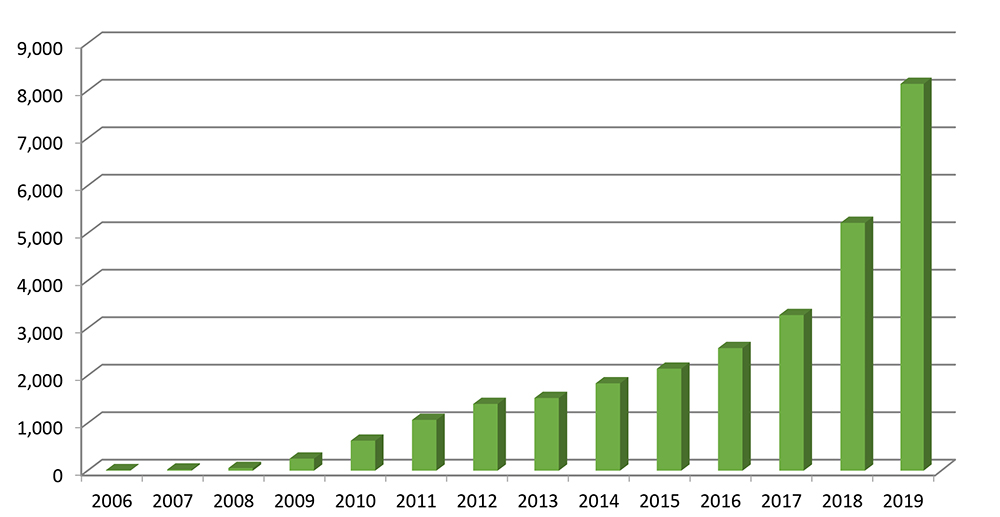
The biggest drivers for the new rule are the “vastly increased” volume and growing complexity of interconnections, particularly large solar projects, said Julie Baldwin, manager of the PSC’s Renewable Energy Section.

“For the larger projects I’m hoping that [the process] will be sped up,” she said in an interview. “I think what we’re going for more is predictability. We want a developer when they file an application that’s complete … to know how long it’s going to take so they can plan. Because under the old rules the utility could do a study … but then the developer could take six months [to] decide if they wanted to go forward. So you had projects behind [them] kind of waiting to see [what the developer in front would decide]. It really just gummed up the process.”

Under the new rule, applicants have deadlines of 10 to 60 business days to inform the utility of their decisions on whether to proceed from various mileposts or withdraw their application.

Baldwin said the PSC hopes the increased technical capabilities of inverter-based resources, as captured in IEEE’s new standard (1547-2018), will make it easier to integrate distributed energy resources into the grid.

Distributed-generation-program-customers-by-year-(Michigan-PSC)-Content.jpg
Distributed generation program customers by year | Michigan PSC

The 53-page draft rule was crafted in consultation with a workgroup of consumers, utility officials and others formed in response to a 2018 PSC order (U-20344). A public hearing on the draft will be held Oct. 20, with comments due Nov. 1. The final rule must be approved by the PSC; Scripps said he hopes the rule will win approval by May 2022.

Amy Bandyk, executive director of the Citizens Utility Board of Michigan, said the rule would “significantly” modernize the interconnection process. “It has some improvements for behind-the-meter generation, but [it] mostly clears up procedures for utility-scale solar systems that are connected directly to the distribution grid. It has compromises amongst interest groups but should somewhat reduce delays, costs and contention. As we increasingly deploy solar generation to meet future electricity needs, this will be important.”

“We spend a lot of time talking about who’s driving this process, and I don’t think it’s us,” Scripps said. “Folks are interested in more distributed generation because it’s cheaper; because there are climate concerns; because the technology’s improved. But I also think we have a responsibility not to be overrun by those changes. So that’s … what’s really informing a lot of this. We don’t see rule updates driving the changes taking place, but we also need to be ready for those changes.”

What’s in the Rule?

Under the rule, DG projects would proceed under one of several tracks, primarily based on their size:

Simplified Track: Level 1 (20 kW or less, with equipment certified under IEEE standards) and Level 2 (a certified project between 20 and 150 kW) projects would be processed using the simplified track, give the utility 10 business days to perform its initial review screens and notify the applicant if any interconnection facilities, distribution upgrades, further study or modifications are needed.

Non-export Track: Applications for DERs that will not inject energy into an electric utility’s distribution system could be evaluated under the non-export track, with the utility required to provide the applicant results within 20 business days.

Fast Track: Level 3 (an uncertified project of 150 kW or less or a certified project between 150 and 550 kW) and Level 4 (between 550 kW and 1 MW) projects not proposing to connect with the utility’s high-voltage distribution system would be eligible for the fast track, which would require the utility to complete its initial review within 20 business days. The utility could not require a supplemental review or a system impact study if the DER passes the initial review screens, which evaluate the size of the DER relative to the distribution circuit. Interconnections to a radial circuit, for example, would be limited to 15% of the line section’s annual peak load. Supplemental reviews include screens for minimum load, voltage and power quality and safety and reliability.

Study Track: Interconnection applications not eligible for the simplified, non-export or fast track would be subject to the study track, which also could apply to applicants who failed review screens under the other processes. Level 5 (more than 1 MW) applications would be required to use the study track. This process involves individual studies, in which interconnection applications are processed in the order in which they were put into the study track, or batch studies, in which all applications have equal priority. The process includes a system impact study, which provides a nonbinding list of facilities required to accommodate the application and nonbinding estimates of their costs. It is followed by a facilities study, which provides a “detailed and itemized” estimate of the cost of the required equipment, engineering, procurement and construction work, and an estimated timeline for the completion of construction.

SPP to Operate NWPP’s Resource Adequacy Program

SPP continues to spread its footprint with an announcement Tuesday that it will operate Northwest Power Pool’s resource adequacy (RA) program in the Western Interconnection.

The RTO will work with NWPP and its RA participants to help develop, implement and operate the program. As a program operator, SPP will perform forward-showing and operations program functions, modeling and system analytics, real-time operations, continual technical improvement and IT systems work.

SPP is already providing reliability coordination services for entities n the West and is scheduled to go live with its Western Energy Imbalance Service market in 2024.

RA has become a hot topic in the West after last summer’s extended heat wave forced CAISO to initiate California’s first rolling blackouts in two decades. Several neighboring balancing authorities came close to taking the same action.

SPP CEO Barbara Sugg said the grid operator “appreciates” RA’s importance in the Western Interconnection and pointed to the RTO’s success in managing a multistate region.

“We look forward to the value we’ll bring Northwest Power Pool members through strong customer involvement and experience improving reliability across multiple states with diverse generating resources,” Sugg said.

“We believe SPP’s track record of successfully administering a multistate RA program will help us operate the program in a manner that benefits all participants as well as the region,” NWPP President Frank Afranji said.

Aided by former SPP COO Carl Monroe, NWPP wrapped up the RA program’s design phase in January and plans to unveil a “nonbinding” version in the third quarter of this year. The full binding program is scheduled to be rolled out in 2024. (See NWPP RA Program Taking Shape for Q3 Launch.)

Portland, Ore.-based NWPP dates back to 1941, as does SPP. It is a voluntary organization with 42 members, composed primarily of major generating utilities serving the Northwestern U.S., British Columbia and Alberta. Smaller, principally non-generating regional utilities participate indirectly through the member system with which they are interconnected.

Entergy Takes Q2 Loss with Indian Point Sale

Entergy (NYSE:ETR) took a $340 million hit to its earnings during the second quarter when it closed its sale of the Indian Point Energy Center to nuclear contractor Holtec International, the company told financial analysts Wednesday.

The impairment, $268 million when adjusted for tax effects, resulted in a second-quarter loss of $6 million (‑$0.03/share), as compared to a year ago when earnings came in at $361 million ($1.79/share). The New Orleans-based company missed the Zacks Investment Research consensus estimate of $1.41/share in adjusted earnings, coming 7 cents short.

The company said in its earnings release that the nuclear decommissioning trust funds’ performance was below expectations and revenues lower because of the Indian Point 2 and 3 shutdowns. Entergy has been working on an exit from its merchant Entergy Wholesale Commodities business for several years now. (See Entergy Celebrates Sale of Final EWC Nuke.)

CEO Leo Denault said the company’s recently announced plan to build the hydrogen-enabled Orange County Advanced Power Station in Southeast Texas was a “significant milestone in our strategy to provide clean energy that also supports reliability.”

The 1,215-MW combined cycle power facility plays into the state government’s desire to reward dual-fuel or dispatchable plants when the ERCOT market is redesigned in the next few years. Entergy expects the plant to be online by the summer of 2026; the regulatory process begins in the third quarter.

Noting hydrogen burns cleaner than gas, Denault said, “That optionality [of hydrogen and gas] provides environmental benefits, but also resiliency, and that’s something we see as we deal with weather events.”

The company said it has filed regulatory applications to recover about $550 million for storm-restoration costs in Louisiana (U-35991) and Texas (51997). About $55 million of that is for costs stemming from the Midwestern storm in February; the company has already filed a securitization request in Texas for debt incurred during the event.

Entergy’s share price closed at $103.71 following the market’s close, down 29 cents from the previous close, but up $1.02 from the day’s opening price.

USEA: Utilities Face Long Road on Resilience

The winter storms of February, and resulting mass outages across Texas and the Midwest, gave electric industry stakeholders a new appreciation for the importance of resilience measures, panelists told a virtual press briefing hosted by the United States Energy Association on Friday.

Paula-Gold-Williams-(United-States-Energy-Association)-Content.jpg
Paula Gold-Williams, CEO of CPS Energy | United States Energy Association

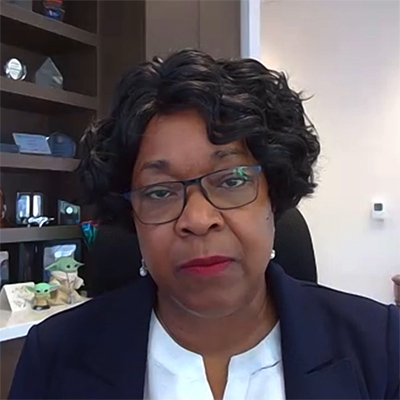
“Over and over again [in the past] resilience was never ranked. It was always about affordability and reliability. Customers felt like resilience was the thing that utilities had to do, but [it] would never really affect them as much,” said Paula Gold-Williams, CEO of San Antonio’s CPS Energy. “I think what happened with this winter storm … was that [the] resilience aspect of the system … really has [been] elevated. … I think we saw that you can’t just fight this journey through the thicket with ideology.”

But to fully take advantage of the renewed momentum behind resilience, panelists said the conversation must go beyond the weather-focused actions championed in the wake of February’s storms. Cybersecurity also featured prominently during the briefing, reflecting concern about the recent high-profile events such as last year’s SolarWinds hack and the ransomware attack in May that shut down the fuel supplies delivered to the U.S. East Coast by Colonial Pipeline.

Cost Concerns Could Derail Investments

These examples of cyber vulnerabilities have also led to calls for action, but panelists on Friday’s webinar expressed skepticism that ratepayers and regulators fully understand the expense of needed investments. Richard Mroz, a former president of the New Jersey Board of Public Utilities and currently managing director at Resolute Strategies Group, highlighted the importance of stakeholder consensus for making progress on issues such as finance that could easily become contentious.

Richard-Mroz-(United-States-Energy-Association)-Content.jpg
Richard Mroz, Resolute Strategies | United States Energy Association

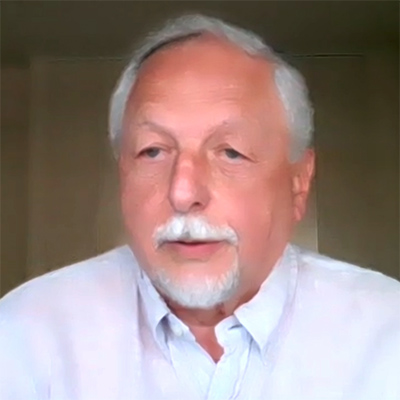
“As Paula mentioned, we’re now talking about something much more than the traditional perspectives on reliability, and that means it’s going to cost more,” said Mroz. “And we need to embrace that. … I think it’s important for us as thought leaders in the industry [and] regulators, first to define the setting in which [we’re] referring to resilience. The second, I think, is for decision makers, regulators, policymakers and the industry to come together … [and] determine what is the consequence we’re trying to avoid by these resilience measures.”

Regulators who understand the complexity and cost of needed resilience improvements must also be prepared to lend appropriate support to utilities that don’t always have the freedom to try unproved strategies. Joseph Fiksel, professor emeritus of integrated systems engineering at Ohio State University, reminded listeners that the electric industry operates at “tremendous sunk cost and tremendous inertia” and “cannot afford to take a lot of risks” that could put performance in danger for no return.

Participants Praise Biden’s Cyber Initiatives 

The struggle for cyber preparedness has attracted support from prominent members of the government in recent months, including President Biden. Biden has taken a number of actions aimed at fighting back against malicious actors, most recently with the announcement last week of a voluntary initiative to strengthen the defenses of priority infrastructure operators. (See Biden Launches ICS Cybersecurity Initiative.)

Joseph-Fiksel-(United-States-Energy-Association)-Content.jpg
Joseph Fiksel, Ohio State University | United States Energy Association

Asked about the significance of Biden’s actions, Gold-Williams praised the president for attempting to bring clarity to the sometimes murky waters of cybersecurity. However, she also expressed concern that voluntary measures would not be enough to bring the necessary concerted actions.

“The president making a statement that highlights the importance of [cybersecurity] matters. I don’t, however, think that it’s all just about voluntary [actions],” Gold-Williams said.

“There are tons of people who want to do everything they can — it’s not a matter of not wanting to do [it], or volunteering. It is very complex and every day it becomes more and more expensive to try to figure out how to defend yourself from bad actors, who could be anything from a nation-state [to] just someone who’s out there for kicks and thrills.”

Mark-McGranaghan-(United-States-Energy-Association)-Content.jpg
Mark McGranaghan, EPRI | United States Energy Association

Panelists also stressed that realism is as important as enthusiasm in taking on the immense task ahead. The industry cannot afford to expend its energy in a frenzied burst, only to lose heart as the challenges seem to remain just as staggering as before, they said. In addition, regulators, policymakers and utilities must remember to address all facets of the issue rather than focusing on the source of the most recent negative headlines or public concerns.

“There’s no question that resiliency is a multi-dimensional problem, and we have to address infrastructure and hardening along with response and recovery,” said Mark McGranaghan, vice president of power delivery and utilization at the Electric Power Research Institute (EPRI). “Addressing one doesn’t preclude investments in the other, because there are always going to be events … [and] the criticality of those events is only increasing as we electrify more critical infrastructure.”