New Jersey BPU Accepts Continued PJM Capacity Market Participation — for Now

The New Jersey Board of Public Utilities voted unanimously on Wednesday to accept the final version of a staff report recommending the state continue in PJM’s capacity market — for now — instead of adopting a “New Jersey-centric” model under the fixed resource requirement (FRR) alternative.

Joseph DeLosa, chief of the BPU’s Bureau of Federal and Regional Policy and one of the authors of “Alternative Resource Adequacy Structures for New Jersey,” told the board the report provides a “detailed roadmap” for PJM to better incorporate clean energy considerations and engage with state, regional and federal policymakers “to make it happen.”

DeLosa said that PJM incorporating New Jersey’s clean energy goals is the most efficient way to provide “reliable, affordable and carbon-free electricity.” While existing regional wholesale market structures have fulfilled their design objectives to maintain reliability at competitive prices, he said, they also have lagged in addressing the state’s clean energy policies.

PJM’s proposal to replace the minimum offer price rule (MOPR) makes it “premature” for New Jersey to consider leaving the RTO, according to DeLosa. (See PJM Board Approves MOPR Rollback.)

DeLosa said an integrated clean capacity market (ICCM) design would allow states to directly leverage the competitive efficiencies of the RTO for the achievement of their clean energy goals. For example, a PJM-wide implementation of an ICCM could save New Jersey ratepayers alone approximately $220 million annually and increase renewable energy from 50% to 59% of customer demand and clean energy, including nuclear, from 84% to 92% by 2030.

The report also recommends a pause on the adoption of a go-it-alone approach in which New Jersey would seek to achieve its clean energy objectives, outside of PJM’s capacity market.

PJM’s proposal may offer one avenue for New Jersey to express its desires for a new market design. However, PJM may not achieve a “satisfactory resource adequacy” market in a time frame conducive to New Jersey’s clean energy goals. Therefore, DeLosa said the state must continue to examine using an FRR structure to implement a New Jersey or multistate ICCM. However, staff recommended tabling it for consideration until May 2022.

“Our staff is cognizant that the realities of climate change do not allow for never-ending stakeholder discussion at PJM,” DeLosa said. The proposal’s outcome at FERC is also critical to determining whether New Jersey should pursue FRR-based resource adequacy solutions.

BPU President Joseph Fiordaliso said the MOPR’s “dire” impacts on future capacity costs “hopefully are not going to come to fruition.”

“With the movements by PJM and with the receptiveness we believe at this point from FERC, our hope is that MOPR is going to see its final days,” Fiordaliso said.

He added that while the report recommends a pause on any decision to leave the PJM capacity market, “MOPR repealed by itself” is not sufficient enough.

“During the next 12 months, we will work with PJM and the [Biden] administration on market design changes aimed squarely at maintaining reliability and reducing the cost of clean energy,” Fiordaliso said. “Additionally, we will continue to work with our fellow state commissions and utilities to develop a robust backup plan to ensure New Jersey remains the leader in clean energy.”

Rule to Establish New Solar Incentive Program Approved

The BPU on Wednesday also approved a rule establishing the successor solar incentive program (SuSI) that creates a framework for new long-term incentives in the future.

SuSI succeeds the Solar Renewable Energy Certificate (SREC) registration program, sunset in April 2020 after more than 15 years of measurable success. It allowed New Jersey to become one of the leading solar energy producers in the country despite its relatively small land size and available space.

The rule comes on the heels of Gov. Phil Murphy signing a bill last week aimed at boosting the state’s grid-scale solar capacity to help meet a deployment goal of 17 GW by 2035. (See NJ Grid-scale Solar Bill Signed by Murphy.) The bill outlines two different incentive structures for projects larger and smaller than 5 MW.

The BPU will hold a special meeting on July 28 on implementing SuSI.

Agreement Lowering PSE&G Tx Rates Signed

Finally, the BPU signed a settlement agreement with Public Service Electric and Gas to lower the company’s return on equity for existing transmission services to 9.9% from 11.18%, saving New Jersey ratepayers approximately $140 million in the first year.

Commissioners did not discuss the settlement agreement during the open meeting, which started with an executive session that included a “Matter of the Approval of Settlement Agreement.” They later unanimously approved the settlement agreement when the open meeting resumed without discussion. The BPU sent out a press release hours after the meeting’s conclusion to announce it.

As part of the settlement agreement, PSE&G would file to lower the rates it charges for transmission while the BPU would agree not to request further reductions for three years. The board anticipates that the utility will file with FERC this week.

California Transit Agency Testing Nat Gas-to-Hydrogen Converter

A new technology to convert natural gas into hydrogen for bus fuel is starting a three-year test run in Thousand Palms, Calif., to see how it works in the real world.

The concept behind the technology is to hook up to a nearby natural gas pipeline and use a hydrogen generator to extract hydrogen gas from the methane in the natural gas.

The generator looks like a thin disk filled with spiraling microchannels up to two feet in diameter.

The technology sends methane and steam through spiral microchannels — no more than a few millimeters thick —which quickly and evenly expose the gaseous mixture to immense heat that drives chemical reactions and liberates the hydrogen from the natural gas and water.

The Pacific Northwest National Laboratory in Richland, Wash., developed the science, while the engineering and generators come from STARS Technology Corp., a start-up company also in Richland.

PNNL-(PNNL)-Alt-FI.jpg
PNNL’s spiral microchannel reactor is designed to efficiently produce hydrogen from natural gas. | PNNL

STARS is leasing two such generators to Los Angeles-based gas distributor Southern California Gas Company. SoCalGas plans to use the two generators to provide fuel for 17 hydrogen fuel cell buses for the SunLine Transit Agency in Thousand Palms.

“We have a strong commitment to move the company to net-zero greenhouse gas emissions,” Neil Navin, SoCalGas vice president of clean energy innovations told NetZero Insider. The company wants to replace 20% of its traditional natural gas supply with renewable natural gas by 2030 and reach net-zero emissions by 2045.

SoCalGas likes the fact that the hydrogen generators can be connected to any nearby natural gas line, he said. This eliminates the need to haul hydrogen in tanker trucks to refueling points.

PNNL believes the new technology supports a California plan to allocate $20 million annually to build at least 100 hydrogen fuel stations in the state.

SunLine bought its first hydrogen fuel cell bus in 2000 and recently finished constructing a 900 kg/day hydrogen electrolyzer also to be used for its buses, the agency said in an April press release.

MRO: Summer Reliability Threats High

The Midwest Reliability Organization said Tuesday that extremely hot temperatures driving up demand will continue to be a concern for its planning coordinators through September.

Scorching days over large swaths of the country will threaten reliability through the end of summer, MRO officials said during the organization’s 2021 Regional Summer Assessment webinar.

MRO said MISO, SPP and Saskatchewan Power Corp. remain vulnerable to emergency declarations and could operate below their reserve requirement over the next two and a half months. Only Manitoba Hydro was assessed to be in good shape for summer operations.

“MISO’s reserve margin in particular is very tight, just 4% above the reserve margin requirement,” Salva Andiappan, MRO’s principal engineer of reliability assessments, said. The RTO entered the summer with a 22% reserve margin, compared to its 18.3% requirement.

Andiappan said an extreme summer peak paired with generation outages could have MISO exhausting its capacity resources and requiring energy transfers from neighbors.

The grid operator has already had one maximum generation emergency this summer, when forced generation outages and persistent heat forced a brief emergency declaration and the use of load-modifying resources. (See “MISO Defends June Emergency Declaration,” MISO Market Subcommittee Briefs: July 8, 2021.)

MRO estimated that an extremely low generation scenario could leave MISO with just 116 GW in available resources to handle extreme load of almost 124 GW. In SPP, an extremely low generation scenario of 50.4 GW paired with extreme demand of nearly 56 GW could leave it deficient.

Saskatchewan Power, on the other hand, could scrape by with about 200 MW of surplus generation — still below its reserve requirement — if it faced a low-generation, high-peak load day. Manitoba Hydro’s would still be within its 12% reserve margin requirement even faced with extremely low generation availability and an extreme peak load.

Under normal peak demand conditions, Andiappan said all four planning coordinators could have sufficient resources.

“Conventional generation resource performance and availability is key to meeting projected summer demand,” he said.

MISO Ponders Study Process for DER Aggregations

MISO huddled this week with stakeholders on how to handle interconnection studies for distributed energy resources that enter its market once it is in compliance with FERC Order 2222.

Kristin Swenson, the RTO’s DER program director, said during a Tuesday conference call that the grid operator envisions its interconnection studies for DER aggregations will probably “look a lot like affected system studies.” Those studies assess neighboring interconnecting generation’s impacts on the MISO system.

“We’re not anticipating creating a new process for that,” Swenson said of DER aggregation study.

She told the Interconnection Process Working Group that MISO needs to settle on the timing and frequency of studies; a megawatt threshold that triggers an affected systems study for DER aggregations; and coordinating study assumptions and results with distribution companies and transmission owners.

Swenson said the tariff currently doesn’t outline any procedures for distribution-level studies and that MISO “doesn’t have the data on the distribution system.”

The RTO says it is “not in the best position to dictate all aspects of the DER studies to be performed, though coordination on affected system studies is routine.”

The grid operator said it prefers that DER aggregations move to MISO transmission owners for a second impact analysis once the aggregations are screened and studied by distribution companies. After the TOs’ study, the RTO said it will perform quarterly affected system studies on aggregations.

“We don’t want the DER to go directly to MISO … It’s our perspective that this has to pass through a transmission owner,” she said, adding that staff may have to pursue changes to its transmission owners’ agreement to outline the study hierarchy.

Order 2222 stipulates that DER aggregations use the interconnection queues of their state or other retail rate authority. Once approved at the state level, aggregators then register for market access. Aggregations will not enter the MISO interconnection queue.

Clean Grid Alliance’s Rhonda Peters asked for more details behind the affected system process MISO plans for DER aggregations.

Swenson said that while the grid operator hasn’t settled yet on specific study methods, they would likely be part of business practice manuals drafted before an Order 2222 compliance filing with FERC next April.

“I would ask that this be done sooner than later … It’s so critically important,” Peters said. “How this is done is going to determine how things are cost allocated. Honestly, I think this is the most important task.”

“There’s no clarity in how this process works,” Entergy’s Yarrow Etheredge agreed. “It’s something we need to know now, regardless of Order 2222.”

Swenson said staff has considered a 5-MW threshold for aggregations before triggering affected system studies.

“As we’ve discussed internally, we’re struggling to come up with one number that would always apply because it’s such a diverse system out there,” she said.

Etheredge asked that MISO establish a process for determining the impacts on nearby substations. Swenson responded that staff would need to turn to distribution companies for much of that data.

“Understanding what the cumulative effect on the substation is going to be critically important to reliability,” Swenson said.

She also said MISO prefers to not directly bill and process invoices for affected system studies with individual DERs, as some stakeholders have suggested.

“MISO will have no contractual relationship with individual DERs,” Swenson said. “The DER is not connecting to a system controlled by MISO, and our tariff does not include language for study of distribution-connected assets in any event.”

Swenson also said distribution, TO and MISO-originated studies are going to be complicated because aggregations can be “fluid, and assets must be editable within an aggregation.”

The grid operator is accepting stakeholder opinions on its affected system study approach to DERs through Aug. 3. It hopes to determine study procedures by the end of the year as part of Order 2222 compliance.  

“The idea is to have all the major ideas knitted together by the end of the year and start tying it up early next year,” Swenson said of the FERC filing.

Mills Tells Maine Legislature to Slow Down on Plan to Replace IOUs

Maine Gov. Janet Mills has vetoed a bill that aims to replace the state’s investor-owned utilities with a consumer-owned nonprofit, saying in a message Tuesday that the bill is “arguably one of the most consequential ever to be considered by the Legislature.”

The bill, an Act to Create the Pine Tree Power Authority (LD 1708), would create a consumer-owned utility and authorize it to acquire the assets of Central Maine Power (CMP) and Versant Power via eminent domain.

Mills called the performance of the utilities “abysmal” and agreed that “it may well be that the time has come for the people of the state of Maine to retake control … of our electric transmission and distribution services.”

But she said the bill was “hastily” drafted and did not have “robust public participation.”

Mills’ signature on the bill would have triggered a public vote on the plan in November, but she said she wants the Legislature to give the plan a “full airing.”

She also said she is open to alternative proposals and options for strengthening the Public Utilities Commission’s authority and its ability to assess penalties on the utilities. Regulators, she noted, already have the authority to hold a hearing to determine whether a public utility is unfit to provide reliable and affordable service in the state.

“An evidence-based proceeding such as this might be more appropriate for such a profoundly important change, particularly as compared to the rushed political process that characterized the enactment of” the bill, she said.

Rep. Seth Berry (D), who sponsored the bill, expressed disappointment in the veto.

“After winning bipartisan majority support in the committee, House and Senate, we had hoped the governor too would trust Maine voters to weigh in this fall,” he said in a statement. “Over three years of diligent work, a diverse group of legislators, utility experts, economists [and] conservationists, among many others, crafted this policy to meet the complex and urgent needs of our energy future.”

Maine’s legislature will have an opportunity to override the veto when it reconvenes temporarily on Monday. If an override is unsuccessful, the nonprofit coalition Our Power plans to gather the signatures needed to put a referendum question on the ballot in November.

“With three-quarters of Mainers supporting our proposal and volunteers contacting us daily, we are confident we can collect signatures and succeed at the ballot box,” Stephanie Clifford, campaign manager for Our Power, said in a statement.

CMP Report

The plan to create Pine Tree is the result of concerns that CMP and Versant, which are foreign-owned IOUs, have not met customer needs in terms of reliability, rates and customer service.

CMP is the larger of the two utilities, serving about 600,000 customers in Maine. It is owned by Spain-based Iberdrola via Avangrid (NYSE: AGR). Versant, which is a subsidiary of Calgary, Canada-based ENMAX, only serves 160,000 customers.

Mills’ veto came one day after the PUC released a third-party management report of CMP that stemmed from an investigation into the company’s rates (2018-00194).

“The commission ordered this audit to address concerns about whether there are fundamental problems with the company’s management structure that have led to the erosion of service quality experienced by customers,” Chairman Philip Bartlett said in a notice for the report.

While the report found that Avangrid cares about improving its services and is not “fundamentally or irredeemably flawed,” it has faced challenges that relate to the 2015 merger of Iberdrola USA and UIL Holdings, which formed Avangrid.

By 2019, those challenges caused a lack of public confidence in the utility, the report said, but recent changes in CMP management have improved customer service performance.

“This independent report recognizes that CMP is on the right path to overcome the organizational challenges that impacted our service to customers in the past,” CMP Executive Chairman David Flanagan said in a statement. “We have made steady improvements in our service and reliability, and we are entirely committed to ensuring our customers’ expectations are met, and even exceeded, and that power is delivered affordably, safely and reliably while we invest in the grid to accommodate new renewable energy sources.”

Bartlett said the PUC will take comments on the report through the end of July and determine appropriate next steps, which could include a formal proceeding.

Southeast Utilities Urge FERC Action on SEEM

The sponsors of the Southeast Energy Exchange Market (SEEM) urged FERC on Wednesday to approve their proposed expansion of bilateral trading and reject calls for a technical conference to consider broader market changes.

The sponsors made their arguments in response to comments filed in June by clean energy advocates, who said the proposal to automate bilateral trading in 11 Southeastern states would offer a fraction of the benefits of an organized market and undermine decarbonization efforts (ER21-1111, et al.). (See Clean Energy Groups Pan Southeast Utilities’ SEEM Proposal.)

The sponsors, led by Southern Co. (NYSE:SO), Duke Energy (NYSE:DUK) and the Tennessee Valley Authority, have asked FERC to act by Aug. 6 on their proposal, which they said would use free transmission capacity to eliminate transmission rate pancaking and allow 15-minute energy transactions.

They said the critics’ comments on the sponsors’ response to a FERC deficiency letter “largely say nothing new regarding the Southeast EEM proposal, and most seek merely to delay the proposal’s implementation or supplant it entirely with a full-fledged regional transmission organization or energy imbalance market.”

Due Process not at Issue

The sponsors rejected critics’ allegation that the SEEM agreement’s proposed process for addressing complaints would not protect participants’ “due process” concerns, saying it “is not meant to create an extrajudicial tribunal of some sort” but would be a way to consider potential changes to market rules.

“The Southeast EEM is not a government entity,” they said. “Due process, if desired, may be obtained in the usual ways: through the commission or the courts.”

However, the sponsors provided clarifications to allay concerns that SEEM might not act promptly on complaints and prevent parties from filing a complaint with FERC under Federal Power Act Section 206. They pledged to respond to most complaints within 60 days and post the responses publicly on the SEEM website. The response would state whether SEEM will investigate the complaint or not or if it needs more time to make a decision.

They also agreed to provide “pro-competitive” market information to the public if the commission orders it. But they said they “are deeply concerned about the public release of information meant to allow the commission to monitor for exercise of market power or market manipulation. Even with masked identities it is not clear that identities could not be guessed, especially given that this is a bilateral market, and it is not clear that a time lag would provide significant additional protection.”

They also provided assurance that the proposed market auditor would be an independent third party and not a SEEM member or an affiliate of one, as defined under the commission’s Standards of Conduct regulations.

Incentives to Cut Costs

The sponsors rejected allegations that their proposal is intended to prevent competitors from selling power in the region.

“The blanket and unfounded allegations that the Southeast EEM member utilities do not have incentives to lower costs ignores the foundational principles that enabled this diverse group of utilities to come together in the first place,” they said. “To put it simply, the Southeast EEM proposal would not have even been developed if the Southeast EEM members were not incentivized to lower costs for customers, nor would it have been designed as it has if the objective was to foreclose competition. … Furthermore, these so-called ‘monopolies’ are comprised of thousands of men and women who dedicate themselves to lowering the cost of electricity to their customers while maintaining unparalleled levels of reliability.”

They defended their position that the commission use both the public interest standard and the just-and-reasonable standard in reviewing the proposal, saying the SEEM agreement contains elements of both contract rates and tariff rates. They said the commission has taken such an approach in the past, citing the ISO-NE Transmission Operating Agreement.

‘No’ to RTO

SEEM members contend FERC must either approve or reject their proposal as filed and not consider intervenors’ suggestion that it hold a technical conference or joint hearing with states under FPA Section 209. “Replacing the current bilateral market in the Southeast with a RTO is not the subject of this Section 205 application,” they wrote.

“There can be no legitimate argument that the record somehow remains insufficient for the commission to act on the Southeast EEM proposal. Moreover, a Section 209 proceeding is not appropriate here because no state commission has protested the Southeast EEM filings,” they said. “Implementation of the instant proposal in no way will impede or restrict a broad market restructuring if the appropriate federal and state policymakers elect to go in that direction. Consequently, there is no reason to delay the gains proposed here while such extraneous issues and broader suggestions are considered.”

PA Backs Final Rule for RGGI Entrance

Pennsylvania’s effort to join the Regional Greenhouse Gas Initiative (RGGI) took a big step forward Tuesday when the state Environmental Quality Board (EQB) backed the final rules for the state’s participation in the initiative, saying it will eliminate between 97 million and 227 million tons of carbon pollution over 10 years.

The board voted 15-4 after a two-hour meeting at which officials from the state’s Department of Environmental Protection (DEP) outlined the final rules amid several unsuccessful efforts by Republican lawmakers to put the initiative’s advance on hold pending further review. After more than 18 months of public hearings to craft and evaluate the rules, the 92-page package will now undergo review by the Independent Regulatory Review Commission (IRRC) and the state attorney general and, if approved, go to final publication. The DEP expects the state to join RGGI in 2022.

As laid out in the DEP’s presentation, RGGI participation will reduce the CO2 emissions from Pennsylvania’s second largest source of emissions, fossil-fuel electricity generation. It will trigger benefits, including the improvement of air quality, a reduction in the threat to residents’ health and the generation of up to $188 million in revenue that will be used for energy efficiency measures, especially in environmental justice areas.

Released in 2018, Pennsylvania’s climate action plan aims to reduce greenhouse gas emissions by 26% over 2005 levels by 2025, and 80% by 2050. According to the DEP, the state generated 241.12 million metric tons of CO2 in 2018, more than countries such as Greece, Sweden and Singapore.

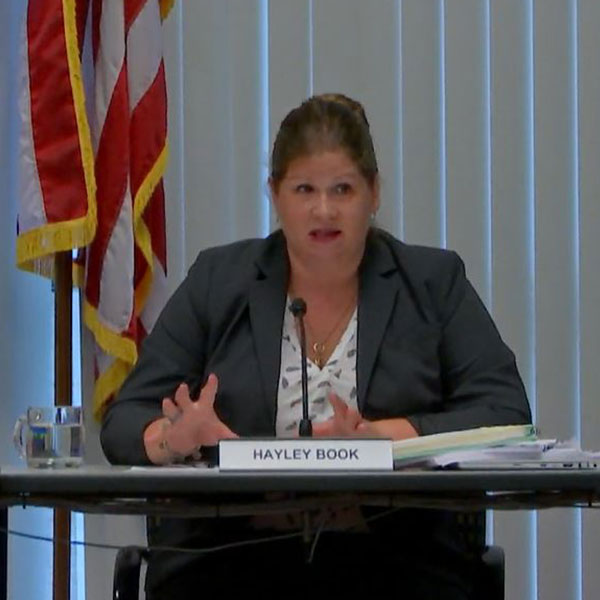
Hayley-Book-PA-RGGI-FI.jpg
Hayley Book, Senior Advisor to Pennsylvania DEP | PA RGGI

“This is extremely important in achieving the Commonwealth greenhouse gas reduction goals,” said Hayley L. Book, senior advisor on energy and climate to the secretary of the DEP, presenting details of the rules. “This is really the cornerstone of the Commonwealth climate change program at this juncture.”

She said that although the initiative will not “solve global climate change … it’s certainly going to aid this Commonwealth in addressing our share of the impact.”

But Sen. Gene Yaw (R) called the rules “a superficial stab at addressing climate change” that “does not address the big picture.”

“RGGI really targets a very, very small part of the energy production [sector], and that happens to be some coal-fired power plants,” he said, adding that he believes RGGI will shut down the production of energy in Pennsylvania, which will instead be produced elsewhere.

“We drive the jobs out of the state, and they either go to another state or they go to a foreign country,” he said.

But Rob Altenburg, senior director for energy and climate at PennFuture, a statewide advocacy group, called the vote “a significant milestone after years of climate inaction in Harrisburg,” the state capital.

“Today’s vote will be applauded by a majority of Pennsylvanians who demand immediate action on climate change,” he said.

Cap and Trade

If Pennsylvania’s rules are enacted, the state will join an initiative of 10 New England and Mid-Atlantic states to reduce GHG emissions from the power sector. The states ― Connecticut, Delaware, Maine, Maryland, Massachusetts, New Hampshire, New Jersey, New York, Rhode Island and Vermont ― have agreed to cap, or put a limit on, their carbon dioxide emissions from in-state electric power plants.

North Carolina also approved rules for joining RGGI on Tuesday. (See NC Panel Oks RGGI Rulemaking.)

HealthBenefits-Chart-PA-RGGI-Alt-FI.jpg
Health Benefit Chart | PA RGGI

Under RGGI, power plants that continue to emit CO2 must buy “allowances” equal to the amount of their emissions ― one allowance for each ton of CO2 emissions. The allowances can be purchased and traded on a market. Funds reaped from a quarterly auction of allowances are divided among the states for reinvestment in efficiency and other GHG reduction programs that further reduce power sector emissions.  

The rulemaking approved Tuesday does not spell out in detail how the state would distribute auction revenues, saying only that they will be used to eliminate air pollution. The DEP told the meeting that the RGGI auctions should yield between $131 million and $187 million for Pennsylvania, depending on the price of the allowances and how many are bought and sold. The DEP said the money will be spent on energy efficiency and renewable energy development, but the details will be determined after public input by a separate board.

Dueling Perspectives

Gov. Tom Wolf (D) has been battling with the Republican majority legislature since he signed an executive order in 2019 directing the DEP to draft the rulemaking for joining the compact. In September, the General Assembly passed a bill barring the state from joining RGGI or taking any action to control CO2 emissions without legislative approval, but Wolf vetoed it.

RGGI opponents contend the Pennsylvania Air Pollution Control Act requires the DEP to submit regional air pollution programs to the legislature and that the RGGI rule constitutes a “tax,” which requires legislation. The Wolf administration counters that because auction proceeds would be used for initiatives to reduce CO2 emissions, they would be considered administrative costs of implementing the state’s air pollution control program.

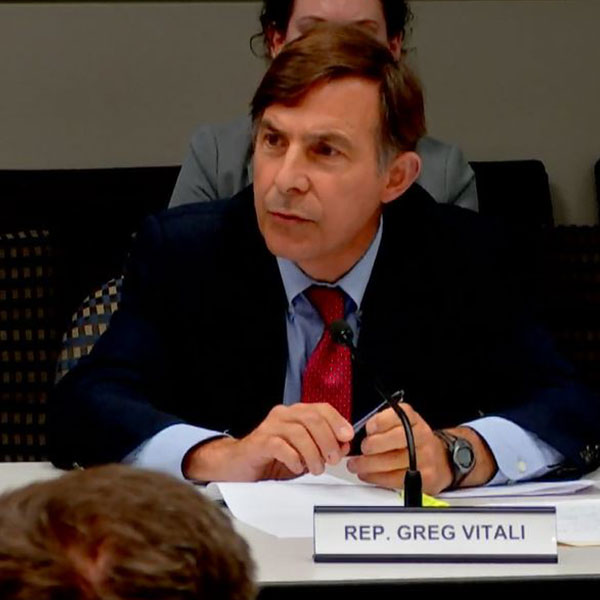
Greg-Vitali-PA-RGGI-FI.jpg
Rep. Greg Vitali | PA RGGI

The DEP said at a May meeting of the Small Business Compliance Advisory Committee that it had received about 14,000 comments on the rules, from groups including legislators, labor unions, consumer groups and faith-based groups. The DEP said Tuesday that it had taken testimony from 449 people in 10 hearings. (See: Pa. Releases Rulemaking to Join RGGI.)

The most common comments in opposition to the rules were about the adverse impact on fossil-fuel communities and small businesses, the expected increase in electricity costs and potential statewide economic harm. A substantial portion of the comments also argued that RGGI rules amounted to a tax, not a fee.

The most common arguments in favor of the rules stressed the success of cap-and-trade initiatives and the health and economic benefits of regulation, the DEP said.

Rep. Greg Vitali (D), pledging to vote for the rules, called them a “small step …. but a good small step.” He said the concerns about job loss were “unsubstantiated” and the state had to act quickly.

“We are moving towards a slow-motion catastrophe,” Vitali said. “Anyone who pays attention to what scientists tell us knows this is a crucial problem, and it needs to be dealt with yesterday. Pennsylvania is an enormous greenhouse gas producer, and we have to do something.”

NC Panel OKs RGGI Rulemaking

The North Carolina Environmental Management Commission voted 9-3-1 Tuesday to open a rulemaking to set a declining cap on power plant carbon emissions and join the Regional Greenhouse Gas Initiative (RGGI).

The commission acted on a petition for rulemaking filed by the Southern Environmental Law Center on behalf of Clean Air Carolina and the North Carolina Coastal Federation. The commission’s Air Quality Committee approved the petition in June. (See North Carolina Panel Calls for Joining RGGI.)

The petition proposes to reduce power plant emissions by 70% below 2005 levels by 2030, in line with the goal set by the Department of Environmental Quality’s 2019 Clean Energy Plan. The vote starts a regulatory process that the DEQ is expected to take about a year to complete, including a public comment period. At the end of the process, the commission will vote on whether to adopt the rule.

If approved, the state would join other RGGI states in auctioning off emission credits, with revenue from the sales used to fund energy efficiency, renewable energy and utility bill assistance programs.

Before the vote, opponents of the rulemaking, including Commissioner Charlie Carter, challenged the commission’s legal authority and argued it would increase consumers’ costs. Environmental group Friends of the Earth also opposed the petition, saying it didn’t address minority communities near pollution sources.

The petitioners said joining RGGI addressed “the immediate need to take bold, effective and efficient action to confront the climate crisis that threatens our state.”

ClearView Energy Partners said Gov. Roy Cooper (D) is believed to support the rulemaking and noted that his appointees to the commission voted in support. Clearview said Republican legislators may attempt to block the move, but that they lack the votes to overcome a veto without Democratic defections.

The Natural Resources Defense Council applauded the commission’s action. “More than a decade after several other Eastern states launched RGGI to tackle climate pollution, it is clear that it has been a highly effective and important policy,” NRDC said.

Also Tuesday, the House Energy and Public Utilities Committee approved a Republican-backed bill that would force the retirements of several Duke Energy (NYSE:DUK) coal-fired generators (H.B. 951). The bill could get a vote by the full House this week. Although the bill would mandate 5,000 MW of solar, opponents say it doesn’t go far enough to decarbonize the state’s power sector. (See NC Republicans Roll out Bill to Close Coal Plants, Add Renewables.)

Senate Confirms Easterly as CISA Chief

The Senate unanimously confirmed former Morgan Stanley executive Jen Easterly as director of the Cybersecurity and Infrastructure Security Agency (CISA) Monday.

Easterly will replace acting director Brandon Wales, who took over at CISA last November when President Donald Trump fired founding director Chris Krebs for refusing to back unfounded claims of election fraud.

Easterly, formerly head of firm resilience and the Fusion Resilience Center for Morgan Stanley, served as the cyber policy lead for President Biden’s transition team. She also served as the deputy for counterterrorism at the National Security Agency and as the senior director for counterterrorism on the White House National Security Council under former President Obama, and as the executive assistant to National Security Advisor Condoleezza Rice in the George W. Bush administration.

“I am incredibly honored and humbled to join the team at CISA,” she said in a statement after the vote. “I have admired the agency from afar as the organization has grown over the past several years, and seen firsthand how its guidance, insight and resources can benefit public and private sector partners as part of our collective defense to build a more resilient nation.

She promised “to continue evolving the strategy, workforce and culture of CISA to be the world’s premier cyber and infrastructure defense agency and achieve our vision of secure and resilient infrastructure for the American people.”

Easterly’s nomination was brought to a vote after Sen. Rick Scott (R-Fla.) lifted a hold he had placed until either Biden or Vice President Harris visited the U.S.-Mexico border. Harris visited the border in late June.

Easterly is a graduate of the United States Military Academy at West Point, and holds a master’s degree in philosophy, politics and economics from the University of Oxford, where she studied as a Rhodes Scholar. She retired from the U.S. Army after more than 20 years in intelligence and cyber operations, including stints in Haiti, the Balkans, Iraq and Afghanistan. Her biography credits her with “standing up the Army’s first cyber battalion” and participating in the design and creation of United States Cyber Command.

“If the past year has taught us anything, it is the obligation we have as leaders to anticipate the unimaginable,” Easterly said during her confirmation hearing before the Senate Homeland Security and Governmental Affairs Committee in June.

She described CISA, formed in 2018, as a “quarterback … leading asset response for cyber incidents” under the direction of the National Cyber Director Chris Inglis, the “coach … overseeing the implementation of cyber strategy and policy.” Inglis was confirmed last month. (See Inglis, Easterly Define Roles in Confirmation Hearing.)

Secretary of Homeland Security Alejandro N. Mayorkas congratulated Easterly in a statement, praising her as a “brilliant cybersecurity expert and a proven leader with a career spanning military service, civil service and the private sector.”

Mayorkas also thanked Wales for serving as acting director. “Brandon’s steadfast, superb leadership has been invaluable, especially as CISA continues to respond to rising cybersecurity incidents impacting businesses, government, communities and critical infrastructure across our nation,” he said.

Edison Electric Institute President Tom Kuhn said Easterly’s cyber and national security experience “make her eminently qualified to serve in this role.

“Protecting America’s critical energy infrastructure from cyber and physical threats is a shared responsibility between the electric power industry and our government partners. We look forward to working with Director Easterly and the CISA team, and with leaders from across the Biden administration, as we all prioritize the industry-government coordination and information sharing that are so important to ensuring that we continue to enhance the resilience and security of the North American energy grid.”

New Jersey Supreme Court Declines Nuclear Subsidy Appeal

New Jersey’s Supreme Court on Friday declined to certify an appeal filed by the state Division of Rate Counsel in opposition to the $300 million in subsidies awarded by the New Jersey Board of Public Utilities (BPU) in 2019 to keep the state’s three nuclear plants operating.

The court opted not to re-evaluate a March 9 ruling by the Appellate Division that dismissed a suit filed by the Rate Counsel to stop the subsidy for the plants, owned by Public Service Enterprise Group. The court’s action effectively leaves the award in place. (See NJ Rate Counsel Turns to State Supreme Court over Nuke Subsidies.)

Rate Counsel Director Stefanie Brand said she was “surprised that the court did not recognize the public interest implicated by this case.” She said that “billions of ratepayer dollars will now go to the shareholders of the unregulated PSEG generating company and will be used to subsidize these plants that serve not only New Jersey but neighboring states as well.”

“We think ratepayers certainly deserved their day in court, but all too often the decision gets made based on a legislative process where their concerns are just not heard as clearly as those who can afford more powerful lobbying,” Brand said.

PSEG released a statement saying it was “pleased” with the Supreme Court’s decision.

“In New Jersey, nuclear provides more than 90% of the state’s carbon-free energy, and we believe that policies supporting nuclear energy are in the best interest of our state and its people, especially as we witness the toll of climate change around the country,” the company said.

The BPU in March 2019 awarded $300 million/year for three years in zero-emissions credits (ZECs) to Hope Creek, which is owned and operated by PSEG, and Salem Units 1 and 2, which PSEG operates and co-owns with Exelon.

The ZEC program provides subsidies to nuclear power plants at risk of closure so that they can remain open to generate carbon-free power and help the state meet its goal of reducing greenhouse gas emissions by 80% by 2050. Gov. Phil Murphy has said he wants to the boost the share of energy generated by carbon-free resources to 50% by the end of the decade.

The BPU in April awarded the three plants a second set of ZECs worth $300 million after PSEG argued that even with the subsidies, the companies would not generate enough revenue to cover the “risks inherent in the plants’ operation.” Without a subsidy of the proposed amount, PSEG would “take steps to close the plants,” the company said at the time.

The Rate Counsel suit against the first ZECs argued that the awards were arbitrary and capricious and that none of the plants needed them to remain financially viable. It also filed a lawsuit in May to overturn the second award, arguing in part that the state law gave the BPU more flexibility to award smaller subsidies than the maximum amount awarded in the second round.