Report: Dominion Must Ramp up Energy Efficiency Under VCEA

Dominion Energy did not dispute a recent report prepared for a coalition of environmental groups that says the company will have to act quickly to ramp up its energy efficiency programs to comply with the Virginia Clean Economy Act (VCEA), but it did say the report’s comparisons to what is being achieved in other states need context.

“Comparisons to other states and utilities are extremely valuable data points. However, they must be unpacked and be accounted for in our commitment to deliver value-added programs for the commonwealth,” Dominion spokesperson Peggy Fox told NetZero Insider.

Prepared by the Vermont-based Energy Futures Group, Pathways for Energy Efficiency in Virginia says that Dominion can meet the VCEA’s 2022-2025 savings requirements by “implementing the kinds of energy efficiency programs that commonly provide the majority of energy savings for leading electric utilities.” But, the report says, “savings must be increased rapidly for the utility to achieve the savings requirement in 2023-2025.”

The report was commissioned by the National Housing Trust, the Nature Conservancy, the Virginia chapter of the Advanced Energy Economy and the American Council for an Energy Efficient Economy, which has the report posted on its website.

The VCEA, which Gov. Ralph Northam (D) signed into law in 2020, requires the state’s investor-owned utilities, including Dominion, to achieve set levels of energy efficiency savings starting next year. The utility will have to achieve total annual energy efficiency savings in 2022 equal to at least 1.25% of its 2019 annual jurisdictional retail electric sales, a rate that will increase by another 1.25% in each of the following three years.

Starting in 2026, the law says, the Virginia State Corporation Commission (SCC) is to set new energy efficiency savings targets. It also mandates that 15% of a utility’s energy efficiency expenses must be allocated to programs that benefit low-to-moderate-income (LMI) communities, the elderly, disabled and veterans.

While Dominion can meet the VCEA’s 1.25% saving target for 2022 with its existing, approved energy efficiency programs, the report finds it will not be able to achieve the law’s targets for 2023-2025, and looks at a range of scenarios under which those energy savings might be met. For example, a “high residential” scenario would emphasize programs that provide significant savings for families and households, such as HVAC programs, whole house retrofits and appliances and lighting. For “enhanced LMI,” energy efficiency kits might be distributed through food banks or other community organizations.

The other two scenarios in the report include one that focuses on efficiency programs for small business and a “balanced lower-cost” portfolio approach that combines cost-efficient residential programs with “high yield” commercial programs.

Comparing results of these scenarios with programs at 12 other large investor-owned utilities, the report finds:

  • Dominion will need “significant increases in customer participation and a four-to-five-fold increase in incremental annual savings” to reach the 5% target in 2025.
  • The utility is already falling behind on energy efficiency investments in LMI communities. The report notes, “In our analysis, the company has proposed approximately $355 million in total portfolio spending from 2020-2025, and just under $39 million, or 11%, for total LMI programs in the same period,” much less than the 15% that is mandated.
  • Savings from programs geared toward meeting the 2022-2025 energy efficiency requirements “are likely to persist through the decade,” the report says. It calls on the SCC to set post-2025 targets well above 5%.

‘Piecemeal’ Programs

According to Fox, the utility currently has 27 active efficiency programs for residential, business and low-income customers, and 11 waiting for SCC approval.

But the utility was criticized for “slow-walking” its energy efficiency programs by advocacy groups speaking out at a public hearing before the SCC in June. At that time, Dominion had already admitted it would not meet the VCEA’s 2025 target. (See Dominion Criticized for ‘Slow Walking’ Demand Side Management.)

At the hearing, Nate Benforado, senior attorney with the Southern Environmental Law Center, said that “we still have serious concerns” that Dominion has not met its responsibilities. “The company has continued to proceed in a piecemeal fashion,” he said.

“We would like to see programs and budgets, and for the company to explain how they will meet these responsibilities,” Benforado said. The idea is not to push the company into developing a rigid plan, he added; instead, the plan should be flexible depending on future developments.

Also speaking at the hearing, Jim Grevatt, one of the co-authors of the Pathways study, said, “We’re really looking at probably the last opportunity the company has to change course to have a fair chance at meeting the requirements to comply with the savings targets established by the law.”

“The key here is that Dominion has many good options for meeting its energy savings targets under the law while helping all of its customers reduce their bills,” Mary Shoemaker, a senior research analyst at ACEEE and an adviser on the report, told NetZero Insider. ”They’d all be reasonable choices. The company can use tried-and-true energy efficiency programs developed in partnership with its stakeholder group to save costs for everyone from low-income households to industrial facilities and other businesses.”

Vermont Climate Tech Accelerator Drives 2 New Utility Pilots

Two members of climate tech accelerator DeltaClimeVT’s latest cohort have scored pilot projects with utilities in Vermont.

Pittsburgh-based Grid Fruit will use what it says is untapped data to help small grocery and general stores in Vermont reduce peak load.

Green Mountain Power (GMP) picked Grid Fruit for the pilot, which will see the young company partner with previous DeltaClimeVT graduate Dynamic Organics of Putney, Vt., said Geoff Robertson, director of business assistance for Vermont Sustainable Jobs Fund (VSJF).

Dynamic is already working with GMP on a flexible load management program, Robertson said during a For ClimateTech webinar Tuesday. Together, the companies will deploy Grid Fruit’s AI software to small stores “to help them with time-of-use rates and shaving the peak effectively,” he said.

Bridgewater, Mass.-based wind turbine manufacturer Advanced Renewable Concept Industries also won a pilot project with Burlington Electric Department in Vermont to demonstrate its vertical axis turbine design. The municipal utility plans to deploy one of the turbines, which Robertson says are expensive, on a building roof to understand the benefits of the design.

“Burlington doesn’t have that much space for big solar arrays, so the electric department was looking to augment the solar they already have,” he said.

The two pilots are perfect examples of the outcomes DeltaClimeVT expects from its accelerator program, according to Robertson.

“We look for the utilities to find enough value in these companies that they can help the utilities and Vermont reach their climate goals,” he said.

Seven companies won a place in the business accelerator’s Energy 2021 cohort in May with technologies that address the energy transition. DeltaClimeVT has completed five rounds so far and is planning to launch its sixth in December.

The accelerator, which is administered by VSJF and sponsored by a group of Vermont utilities and energy companies, targets companies that already have traction in terms of financing and customer base, Robertson said. They also focus on hardware and software solutions in the energy space that can help the utilities solve problems in their markets.

Program participants work through a curriculum provided by ecosVC and have access to corporate mentors. In addition, investor mentors work with the companies at the end of the program to help them understand what investors are looking for and create useful pitches.

“The holy grail at the end of the program is for the companies to get a pilot,” Robertson said.

Scale For ClimateTech

New York-based climate tech accelerator For ClimateTech launched its Scale program for hardware manufacturing on Tuesday, said Shelby Thompson, senior program manager.

SecondMuse administers the program with support from the New York State Energy Research and Development Authority to help startups and innovators that can move the needle on New York’s aggressive emission-reduction targets.

The program goal is to reduce the risk and costs associated with bringing hardware technologies to market through access to resources, funding opportunities and mentors, Thompson said. Participants also have access to a network that will connect them with local manufacturers to establish production. They also learn how to measure the emissions-reduction potential of their technologies.

“The urgency for us is to find those things that are going to make the biggest impact relative to greenhouse gas emissions,” said Mike Riedlinger, managing director of Scale For ClimateTech.

Applications for the new program round are due Sept. 13, and the program administrator will select participants in October.

Scale For ClimateTech’s sister program, Venture For ClimateTech, selected its first cohort this year. Participants receive access to resources to help launch a company based on climate solutions. The first round will end this fall, Thompson said, with a new round of recruiting to begin early in 2022.

Ohio Governor Signs Bill to Block Renewables

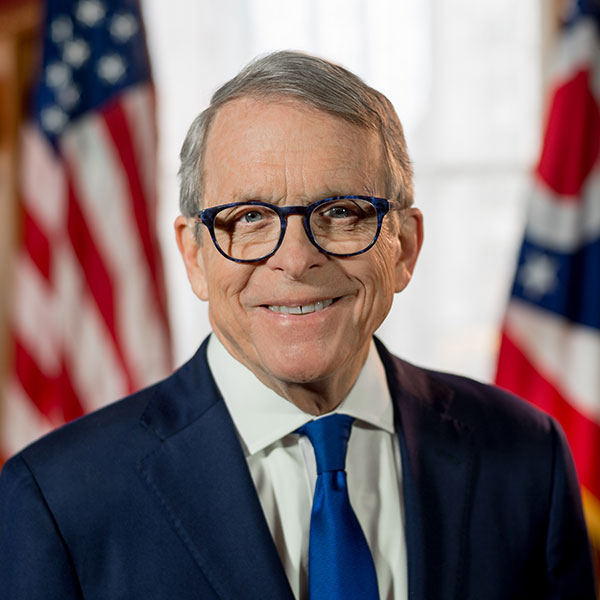
Ohio Gov. Mike DeWine signed legislation Monday empowering county governments to review and approve or deny all proposed utility-scale wind and solar projects before developers can apply to the Power Siting Board (OPSB), a state agency that has had sole authority over the development of power plants, power lines and gas lines for half a century.

SB 52, as approved by both the Ohio House of Representatives and Senate on the last day of the legislature’s spring session, allows county commissions to reject proposed projects after a public hearing and a 90-day review.

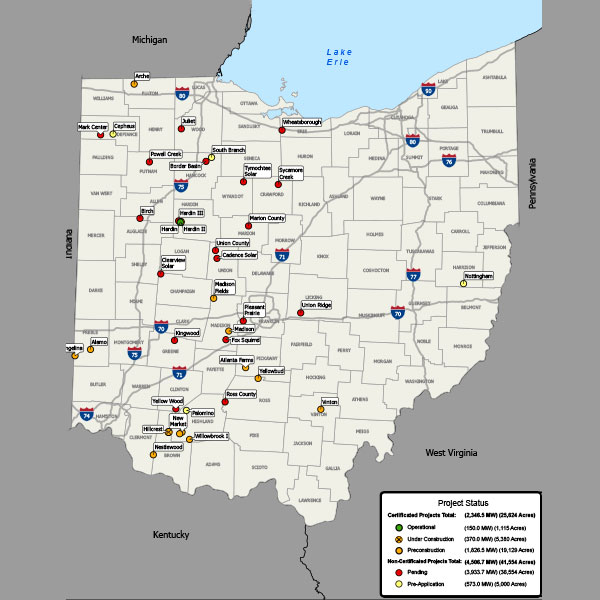
The law becomes effective in October and has no impact on projects the OPSB approves before then. About 4,500  MW of solar projects pending before the board are grandfathered under the legislation, as well as several thousand megawatts of projects pending before PJM.

Mike-DeWine-(VIVMCCLAINPHOTO.COM)-FI.jpg
Ohio Gov. Mike DeWine | The State of Ohio

The law also empowers county commissions to declare parts of or all unincorporated land in a county as an “exclusion zone” indefinitely blocking any large wind or solar projects — subject to the right for a petition by those opposed to the ruling to place it on the ballot at the next regularly scheduled election.

The new law does not give counties authority over the development of conventional power plants, transmission lines or gas lines. Those remain under the sole authority of the OPSB.

The legislation also requires the seven-member OPSB to seat a county commissioner and a township trustee as voting members when it considers a proposed utility-scale wind or solar project.

Initial versions of bills introduced in February in both chambers would have given authority to township trustees to decide utility-scale wind and solar projects. The legislation was amended after intense negotiations with solar developers that went on for weeks.

Hundreds of rural residents crowded into utility committee hearings over several months testifying both for and against the legislation, including the last amended version produced just hours before the final floor votes. Voting was along partisan lines, with a few Republicans lawmakers joining Democrats to oppose the measure.

Many farmers opposed the legislation because wind and solar leases provide a long-term, steady income stream to augment crop income. The issue for them came down to property rights.

Ohio-Map-Ohio-Power-Siting-Board-FI.jpg
Ohio Power Siting Case Status | Ohio Power Siting Board


A coalition of eight farming organizations, including the Ohio Farm Bureau, sent a letter to DeWine on July 2 asking him to veto the bill.

“We write to you today asking you to veto SB 52, a bill that takes away landowners’ rights without their consent or notification. We understand and appreciate the complex nature of this topic and the difficult position many of our rural communities face due to wind and solar development. A government taking of property rights, however, is not the answer,” the letter said. “This is an unprecedented shift in the state’s land-use policy. It can have chilling ramifications for agriculture in the future. Therefore, we respectfully ask you to veto the legislation.”

The Ohio Farm Bureau on July 7 posted a link to a staff blog and transcript discussing the implications of the legislation.

News of the governor having signed the bill first appeared in releases issued by lawmakers on Monday. The governor’s office posted a two-sentence notice on its website after hours on Monday without mentioning the name of the bill in the title of the release.

SPP Postpones July, August In-person Meetings

SPP has postponed all in-person stakeholder meetings until further notice, the RTO said Tuesday, as its home state of Arkansas wrestles with a troubling uptick in COVID-19 cases.

The virus’s faster-spreading delta variant has hit the state hard. According to data reported by The New York Times, as of Tuesday, Arkansas has the highest number of new cases per 100,000 residents at 27, averaging 807 new cases a day. (Florida has the highest total daily average, at 3,392.)

Arkansas also has one of the lowest vaccine rates in the country, about 35%, leading Gov. Asa Hutchinson to declare on national television Sunday — when the state’s seven-day case average was at 697 — that his administration is “working hard” to overcome vaccine hesitancy. According to the Times, only Alabama and Mississippi have lower vaccination rates, both about 33%.

“Arkansas has been making national headlines for all the wrong reasons,” CEO Barbara Sugg said in a message to stakeholders.

The RTO said in May it would allow in-person meetings at its Little Rock headquarters in August and an in-person option for this month’s Board of Directors, Members Committee and Regional State Committee meetings. Those meetings will return to the virtual format SPP has been using since March 2020.

“The health and wellbeing of all of you, as well as our employees, are of utmost importance to us,” Sugg said. “We appreciate and value the importance of being able to meet face to face and will resume meeting in person when it is safe to do so.”

Sugg closed her message with a personal appeal: “Please get vaccinated if you’ve not already done so!”

Is Decarbonization an ‘Existential’ Challenge for RTOs?

Vince Duane spent almost 17 years as general counsel at PJM, the nation’s biggest RTO. But he now says the RTOs’ market model — based on single-price clearing auctions and locational marginal prices — no longer works in a world of renewable resources with little or no operating costs that don’t respond to price signals.

In a new paper Duane and former FERC Commissioner Tony Clark, a senior adviser for law firm Wilkinson Barker Knauer, challenge what they call the “the prevailing orthodoxy … that the road to the decarbonized, advanced technology grid of the future goes through a Regional Transmission Organization.” Duane, ousted from PJM in the wake of the GreenHat Energy default, is now principal of a consulting firm, Copper Monarch.

“The cracks in the foundations of RTOs are not just cosmetic,” they write, saying “regulators and the RTOs themselves need to reassess wholesale markets from the ground up as the electricity delivery system transitions to a grid much different from the one of the past.”

The authors explicitly challenge nine former FERC commissioners who wrote a joint letter last month urging the commission to expand organized markets to the West and Southeast to aid decarbonization efforts and save ratepayers money. “Organized markets are more essential than ever as our nation decarbonizes the power sector,” they wrote. “As the pace of decarbonizing the grid accelerates, we are convinced that the time for organized market expansion is now.” (See Ex-FERC Officials Urge Commission to Expand Organized Markets.)

Clark and Duane don’t dispute “the rationale behind the original RTO paradigm, and its historic benefits.” They also agree that the grid will continue to see increases in renewable energy and that the footprints of the largest RTOs and ISOs are helpful to maximizing the value of such assets.

But they say they disagree with “unbridled RTO boosterism” because the markets’ model is “misaligned with public policies that seek to advance grid decarbonization.”

They cite “lethargic interconnection queues offering little cost predictability [and] capacity markets that frustrate a state’s policy preference to increase renewable resource penetration.”

RTO markets are constrained, they say, by their inability to tolerate shortages, demand’s limited responsiveness to price signals, structural market power and the “non-linear economics and idiosyncratic behavior” of generators with different operating characteristics and performance parameters.

Single-clearing price auctions assume that electricity is a commodity, with one kilowatt hour fungible to the next, they note. But that assumption no longer holds, they contend, with renewables’ insignificant operating costs and intermittence.

They are also critical of RTO price formation, saying it “combines abstract art with impenetrable science.”

Both inflexible baseload nuclear plants and wind and solar plants act as price takers.

Other inflexible plants, such as those with minimum commitment blocks, are ineligible to set clearing prices.

“Taking this liquidity off the table means that LMP outcomes are not as competitive as many might assume,” leaving fossil units, usually natural gas, to set clearing prices, they write. Ironically, they say, “in order for a renewable resource to obtain positive revenue from selling its energy in an RTO market, it must rely on a carbon-emitting fossil resource to set a positive LMP.”

Yet RTOs depend on price signals to ensure sufficient supply to maintain reliability. “Having a supply stack that effectively thumbs its nose at price” undermines that construct, they say. “Non-dispatchable intermittent resources will inject energy when it’s sunny or windy without regard to the RTO’s price signal.

“What happens when price is no longer an effective tool for fulfilling the tasks that RTOs were created to complete?” they ask. “If an increasing portion of the grid is characterized by socialized fixed charges and generation that neither sets prices nor responds to price signals, the impact will be profound.”

They acknowledge that “breakthroughs in storage technology, or a very different paradigm for participation of demand … might save the RTO’s single-clearing price auctions.” But they are dubious, contending that “direct retail ‘price responsive demand’ has, by and large, never lived up to its promise.”

And while they cite the “pragmatic appeal” of having RTOs centrally plan transmission for areas best suited for wind or solar generation, they say it “upends a lot of the design purpose of LMP.”

“Does this mean RTOs can’t serve as a vehicle to advance decarbonization? No. But we are inclined to think RTO wholesale electricity markets, which are a defining feature, will have to be re-thought from the ground up,” they write. “This isn’t going to come easily or quickly — particularly considering structural and governance features of the RTO,” a subject they promise to explore in a future paper.

“Given these existential challenges to the RTO model,” they write, “policy makers should be cautioned against embracing RTOs as the only way to achieve future energy goals, especially in the absence of an identifiable fix to their structural weaknesses.”

Q&A

Clark and Duane answered questions about their paper in a July 12 interview with RTO Insider Editor Rich Heidorn Jr. Here are some of the highlights, edited for clarity and brevity.

RTO Insider: You explicitly challenge nine former FERC commissioners who wrote a joint letter last month urging the commission to expand organized markets to the West and Southeast to aid decarbonization efforts and save ratepayers money. The former officials wrote that “more than 80% of renewable generation has been deployed in the organized market regions, and emissions are falling faster in such regions.” That seems like a counterfactual to your thesis. Why are they wrong?

Tony Clark: Well, I think they’re wrong for a number of reasons. … Simply expanding a model, which is really struggling under the weight of the grid transition as it’s happening right now, would seem to be problematic. But secondly, I don’t know that I would necessarily agree with the underlying assumption that it’s RTOs that had been responsible for [the growth of renewables]. I think state public policies are a big part of it. Some of the mega trends that are in the industry are part of it. But if you look outside of the organized markets, you see a lot of retention of things like nuclear power … which is very difficult to do in some of the more restructured regions.

… I’m certainly not anti-RTO at all. I mean, I had authorized some of my utilities to join them when I was on the [North Dakota Public Service] commission. But I think there’s also an understanding that they arise out of particularly historical context, and there are reasons that certain areas of the country for reasons of geography and market construct and resources that they had available, haven’t joined to this point. And it would seem to me to be a mistake to simply mandate that that model be spread everywhere. And in fact, that will probably just become a flashpoint in the FERC-state relationship, if it were to happen.

RTO Insider: Some might say that you guys are carrying water for the monopoly utilities, such as those that are supporting the Southeast Energy Exchange Market. So I have to ask you this: Was this funded in part or in total by any of WBK’s, or Copper Monarch’s clients? And if so, who?

Tony Clark: In terms of clients, we, of course, don’t disclose our client list. I would say in terms of why we write things like this, we hope it’s provocative; we hope that it starts a discussion — a needed discussion — and hope it’s taken in that vein.

Vince Duane: These are very much thoughts that I have had for quite a few years. And I think any of my … former colleagues at PJM, at the executive level would say, “Yeah, that sounds a lot like what Vince has been talking about for quite a while now.” I have spent 17 years of my life working with the organized markets. And I think there’s a particular genius associated with locational marginal pricing. And what troubles me most is that we seem to have forgotten just how central price is to the RTO functions, not just the market and economics, but even controlling day-to-day security. … And it has distressed me for quite some time seeing us chip away at that. … We just have to ask ourselves a very honest question, which is: Are we going to continue to adhere to this form of competitive model? And if so, can we realistically expect it to survive in light of the policy directions we’re taking? And it’s not just about pursuing renewable resources, it’s about the way we’re pursuing them, which is to support and subsidize. If we were having a discussion about carbon pricing at a federal level and the RTO model, I think you’d get a very different answer, at least from me.

RTO Insider: I was just about to ask you about that. Your paper is about 7,000 words long … yet, there’s not even a single mention of carbon pricing, which some say would address the RTO-climate disconnect. Why did you not address that?

Vince Duane: It was perhaps a bit of a myopic focus, on my part, anyway, on the direction that policy has been heading, both at the state and at the federal level, and at the regulatory level with the commission in Washington over the last several years. And while there has been talk about carbon pricing — and I think there’s a widespread view as to the logic of it — there’s also, I think, a widespread perception that for political practical reasons, what have you, it’s just not as an attainable objective in the short- to medium-term. But you know, you’re correct … I would say, we would be having a very different discussion about ISO/RTO markets and the overall model, if we were talking about carbon pricing.

Tony Clark: It does strike me that if carbon pricing is to be the policy and incorporated into the RTOs … you would need to then strip away some of the other sort of out-of-market constructs and subsidies and things like that. I personally don’t know that just layering a price on carbon, on top of a quote-unquote “market” that is riven with a lot of other distortions really accomplishes what you hope it would do. It would just add a price on a really complicated market that doesn’t need any more complexity and may not fix the underlying problem.

Vince Duane: I would just prefer to see the ISOs carry a much more straightforward message than, frankly, I believe they have, which is a message that says we need to be talking about carbon pricing … because our efforts to accommodate the supportive mechanisms and subsidy mechanisms that create non-bypassable charges and distort price have fundamental and unsustainable implications to what we think you all liked about ISOs, which was the ability to run a central, non-discriminatory open dispatch and harness competitive forces and put risk on those that are best able to manage. That’s the kind of thing that’s in the balance. And it distresses me that ISOs have become, I think, so wary of expressing that kind of opinion that you don’t hear it. So I’ve kind of enjoyed the opportunity, post-PJM in my career, to be able to say some of these things, because … at the end of the day, we want to see a debate on these issues, because we think they’re being swept under the rug.

Slimmed-down DOE Budget Wins House Subcommittee Vote

The U.S. Department of Energy had its 2022 budget request trimmed down by $1.1 billion during Monday’s markup session at the House Appropriations Committee’s Energy and Water Development Subcommittee.

DOE’s original 2022 budget request was for $46.2 billion, but the bill approved by a subcommittee voice vote would give the department $45.1 billion, still a $3.2 billion increase over its 2021 budget, said Rep. Marcy Kaptur (D-Ohio), subcommittee chair. The bill next goes to the full committee.

“After this past year, where the stable and affordable delivery of fossil fuels to consumers has repeatedly been disrupted, the need to diversify our energy sources has never been more urgent,” Kaptur said in her opening statement. “This legislation takes concrete steps to develop and deploy the infrastructure necessary to ensure a cleaner, greener, affordable and more reliable energy future from all sources, as well as [to] push harder to develop new sources, right here in the U.S.A., for energy independence.”

As outlined in a summary released by the subcommittee, specific line items included in the bill are:

  • $600 million for Advanced Research Projects Agency-Energy;
  • $375 million for weatherization programs, to support energy-efficient upgrades to 50,000 low-income households;
  • $820 million for the Office of Fossil Fuels and Carbon Management to advance “carbon reduction and mitigation in sectors and applications that are difficult to decarbonize … while assisting in facilitating the transition toward a net-zero-carbon economy and rebuilding a U.S. critical minerals supply chain”;
  • $1.68 billion to develop next-generation nuclear energy and “further improve the safety and economic viability of our current reactor fleet”; and
  • $177 million for cybersecurity, energy security and emergency response.

With the current drought and water shortages in the Western U.S. very much in mind, Kaptur also said the bill would provide $8.6 billion to the Army Corps of Engineers and $1.9 billion to the Bureau of Reclamation for water infrastructure projects.

Rep. Mike Simpson (R-Idaho), subcommittee ranking member, recognized that Kaptur had worked to incorporate concerns from both sides of the aisle, such as ongoing funding for pilot projects for advanced nuclear reactors and the high-assay, low-enriched uranium they need. But, he said, the bill’s “good items are within an overall framework that House Republicans cannot support.”

“Like the president’s budget request, the majority’s energy and water bill overfunds certain nondefense programs and shortchanges our national security needs. An increase of less than 1% for the weapons activities does not even keep up with inflation,” Simpson said.

He also argued that the bill’s funding priorities would “focus on reducing U.S. [carbon] emissions in a way that almost certainly would result in an increase in global emissions and therefore not reduce the impact of climate change.”

DOE Justifies Full Budget 

Monday’s vote comes after Energy Secretary Jennifer Granholm pitched the department’s budget to four different congressional committees — including the Energy and Water Development Subcommittee. (See Granholm Lays Out DOE’s $46.2 Billion Budget.)

At that hearing on May 6, the Biden administration had not yet released its fully detailed 2022 budget request, and the “skinny” budget overview available left plenty of gaps for Granholm to fill on a range of issues, including funding for nuclear projects and cybersecurity.

Responding to a question from Simpson on cybersecurity, Granholm said, “It’s definitely a focus of ours.” DOE is taking steps to “refocus the [Office of Cybersecurity, Energy Security and Emergency Response] on being a service to the grid operators, providing them with the tools and the intelligence and cyber response capabilities they need.”

With the 2022 budget still far from its final form, the department on Monday released its 2022 Budget Justification report, a multivolume document of more than 3,000 pages, arguing for full funding. The release announcement focused on the $4.7 billion request for the Office of Energy Efficiency and Renewable Energy, whittled to $3.8 billion in the House subcommittee bill.

For example, the report’s pitch for $386.6 million in funding for the Solar Energy Technologies Office predicts that decarbonizing the grid by 2035 “may require solar to supply 30 to 50% of U.S. electricity” and details an extensive list of priorities.

Funding a “complete roadmap of solar energy implementation,” the report says, will include “advanced R&D; validation of solar technologies to invigorate American technological leadership; supporting industry’s development of a robust American solar manufacturing and supply chain, including demonstration and deployment of photovoltaics; ensuring there is a trained American workforce employed in the industry, creating and sustaining good-paying jobs; contributing to the decarbonization of the energy and industrial sectors; supporting community resilience; and working to ensure the benefits of the transition to clean energy are shared with those most affected by environmental justice inequities.”

New Jersey Cuts Permitting Obstacles for EV Charging Stations

New Jersey Gov. Phil Murphy on Friday signed two bills designed to make it easier to set up electric vehicle charging stations in the state, thus removing what is seen as a key obstacle to more drivers getting behind the wheel of an electric vehicle (EV): range anxiety.

He also signed two bills aimed at increasing the number of solar projects across the state as part of New Jersey’s plan to install 32 GW of solar by 2050.

“By signing these bills today, we are marking another milestone on our path to 100 percent clean energy by 2050 and fueling our clean innovation economy,” Murphy said in a statement released about the signing.

Murphy-Phil-2019-04-09-RTO-Insider-FI.jpg
New Jersey Gov. Phil Murphy | © RTO Insider LLC

Bill S3223 makes the installation of electric vehicle supply equipment or a make-ready parking space ― one in which the wiring is installed now for later deployment of a charging point ― a permitted use under municipal zoning laws, regardless of the stated zoning at the location. The law removes the necessity of seeking a municipal zoning variance if the existing zoning does not permit a charging station, a time-consuming process with an uncertain outcome.

The law also allows a charging site or make-ready parking space to be built at gas stations, retail establishments or any other existing buildings without requiring a municipal land use review. The developers of multi-use buildings will also have to ensure their site plans contain details for putting EV charging stations in 15% of a project’s off-street parking spaces.

Legislators are hoping that the requirements in the bill, and the changes outlined in the second bill, A1653, will boost the number of charging sites across the state, thus easing consumer concerns about EV range — the distance an EV can travel on a single charge — and whether they will be able to find a charging point if needed.

Overcoming that fear is critical for New Jersey to reach its ambitious goal of putting 330,000 new EVs on state roads by 2025. The state had about 41,000 EVs on the roads as of December 2020, according to figures from the New Jersey Board of Public Utilities (BPU).

Requiring Charging Station Plans

The second bill, A1653, requires that any redevelopment plan approved by a municipality must include EV charging infrastructure as part of the planning, development, redevelopment, or rehabilitation of the area. The legislation also adds the construction of EV charging stations to the list of projects for which a local municipality can establish an Economic Redevelopment and Growth Grant program to provide developers with incentives to make improvements to the area. Prior to the law’s enactment, such incentives could only be provided to “infrastructure improvements in the public right-of-way” and “publicly owned facilities.”

Shawn M. LaTourette, New Jersey Department of Environmental Protection commissioner, said in the bill signing release that the two EV-charging bills would “make it easier for New Jersey’s municipalities to create electric vehicle charging infrastructure in their communities.”

The legislation drew the support of ChargeEVC, a nonprofit advocacy group that represents car manufacturers, technology companies, utilities, consumer advocates and others. The Sierra Club’s New Jersey chapter said it generally supported S3223.

“This law is a step in the right direction when it comes to reducing GHGs [greenhouse gases] and protecting our air. As New Jersey works to put EVs on the road, it’s critical that we have the infrastructure to do so,” Taylor McFarland, acting director of the New Jersey chapter, said. But the Sierra Club did not back A1653, saying that the bill’s focus on promoting “zero-emission vehicle fueling and charging infrastructure in redevelopment projects” also encouraged the development of zero-emissions vehicles powered by hydrogen fuel cells.

McFarland raised concerns that most hydrogen production now uses natural gas as feedstock. “New Jersey needs to focus on building its EV infrastructure so that we can fully utilize EV technology and the clean and green benefits that come with it.”

Murphy’s signing of the two bills came three days after the New Jersey Board of Public Utilities launched the second year of its incentive program to encourage drivers to buy EVs, offering point-of-sale subsidies of up to $5,000 for EVs and smaller subsidies for plug-in electric vehicles. (See:  NJ EV Incentives Target Cheaper Vehicles, Middle-income Buyers.)

The BPU in March launched a proposal to draft new rules to encourage developers to build chargers around the state, including in lower-income and minority areas that might see fewer chargers installed without government help. Issues under discussion include who should build the chargers, how accessible they should be to the public and when the electric distributions companies (EDCs) should be allowed to develop locations to ensure even distribution of chargers across the state. (See: NJ Looks to Boost EV Charger Numbers.)

The state wants at least 400 DC fast chargers at 200 or more locations by December 2025 and at least 1,000 Level 2 chargers — those with a 240-V electricity source — by the same date.

Promoting Large Scale Solar

Murphy’s 32 GW target would allow solar to provide just over a third of New Jersey’s power as part of the 2050 net-zero target. One of the bills he signed, A4554, will create a new incentive program and competitive bidding process for projects of more than 5 MW, to stimulate solar investment in the state and open the door to larger-scale projects.

The legislation will create a new program of solar renewable energy certificates, SREC-II, to be reimbursed by the BPU for each megawatt-hour of energy produced, with a goal of deploying 3,750 MW of new power generation by 2026. (See: NJ Grid-scale Solar Bill Signed by Murphy)

The bill also sets down rules for what land can be used for larger solar projects, a section shaped, in part, by concerns among farmers and environmentalists that New Jersey’s agriculture industry would suffer if developers were able to buy or lease unlimited tracts of farmland. (See: NJ Solar Push Squeezes Farms).

The second bill, A5434, will create a pilot to develop “dual-use” projects in which solar facilities are sited on land that “continues to be actively devoted to agricultural or horticultural use.” The concept, which is being tested in several states, is touted by solar developers as an example of how they and farmers can work together to benefit both industries.

Electric Ferry’s Success Hinges on Storage Pilot in Maine

High demand charges for a planned electric ferry service in Maine have forced the project owner to consider a pilot energy storage project.

Some stakeholders, however, are not comfortable with the proposed ownership model of the pilot project.

“The statutory basis being argued in support of this project is a very creative interpretation of the law,” Susan Chamberlain, senior counsel for the Maine Office of the Public Advocate, said during a technical conference for the project application last week. “There really isn’t a sound statutory basis for granting this project.”

Nonprofit Casco Bay Lines and Central Maine Power (CMP) filed a joint proposal with the Maine Public Utilities Commission in May seeking approval for the utility to install and own a 1.3 MWh behind-the-meter battery at Casco’s ferry terminal in Portland, Maine (Case 2021-00102).

The fast-charging, hybrid-electric ferry would be among the first in service in the U.S., according to the application. While the ferry can run on diesel, Casco wants to run it only on electricity to maximize emission reductions.

An all-electric service model would incur “significant electricity demand charges since electric charging is needed for 10 minutes every hour during docking periods for up to 17 daily trips during the summer months,” the application said.

Building the pilot energy storage project would allow Casco to charge from the battery during peak electricity demand periods and save $170,000/year in peak costs.

In addition, CMP would study the storage model to inform future electric public transit projects.

CMP is seeking to design, permit, construct, test and maintain the system, and Casco would operate it. The utility said it may be able to obtain a U.S. Department of Energy grant for the pilot, but it also would recover up to half of the $1 million project cost through customer rates.

Casco Bay and CMP say the pilot is consistent with the state’s smart grid statute, which provides a cost recovery mechanism for utilities that invest in battery storage and smart grid infrastructure.

“We read the smart grid statute as authorizing the commission to approve, upon petition, projects that advance smart grid technologies and infrastructure that are cost-effective and prudently incurred,” Timothy Connolly, counsel at CMP parent company Avangrid (NYSE:AGR), said during the conference.

The Conservation Law Foundation opposes the project with CMP as the owner or with costs recovered through ratepayers, Emily Green, senior attorney at CLF Maine, said during the conference. But Green also urged regulators to “take a flexible approach to reviewing pilot proposals.”

“We don’t think pilot proposals should be held to the same criteria or standards for non-pilot utility investments, since they’re designed to advance future efforts, not necessarily to be an end in and of themselves,” she said.

CMP would support the project if another entity owned it and allowed the utility to gather data from it, Connolly said. Casco, which has been transporting people from Portland to the Bay’s islands for 150 years, would not be able to finance the storage project by itself, he added.

The nonprofit agreed in March to use a hybrid-propulsion solution from ABB for its new 156-foot vessel, which is partially funded by federal and state grants. ABB also supplied the propulsion systems for two all-electric tour boats placed into service at Niagara Falls State Park in New York last fall.

Panel Ponders Obstacles, Solutions to Residential Energy Affordability

Despite programs and resources that address high residential energy costs in Connecticut, there remain obstacles to accessible solutions.

Connecticut pays the highest total energy costs in the country, according to a recent survey by WalletHub. Energy affordability is an issue that affects the state’s disadvantaged communities disproportionately.

There are, however, several paths to mitigating the problem, Brenda Watson, executive director of the nonprofit Operation Fuel, said during a Connecticut Green Bank webinar on energy affordability last week. The “top-down structure” of energy policy and regulation shaped by state regulators and investor-owned utilities is a model that leaves some people “at the bottom of that pyramid” in terms of energy affordability and equitable infrastructure, Watson said.

“We deserve a voice in some decision-making,” she said.

Infrastructure is “unbalanced and inequitable,” Watson said, adding that “hopefully that doesn’t happen in the future.” Nevertheless, she said that an equity-focused modernization of the grid has been “an eye-opening, learning experience” for her.

“But it also provides a bit of hope that we have regulators in place who want to solve for this issue as we consider what an equitable modern grid looks like: the ability to minimize blackouts, having positive health impacts on reducing energy burden, reducing air pollution and redlined communities and expanding access to clean energy,” Watson said. “That’s just — in my opinion — very basic. We can’t talk about energy affordability without a thorough examination of how we got here in the first place and what can be done in the short and long term.”

From a regulatory perspective, there is “always room for improvement,” according to Stephanie Keohane, head of the Clean and Affordable Energy Unit at the Connecticut Public Utilities Regulatory Authority (PURA).

Regulators have made advancing the “energy affordability dialogue” in Connecticut’s disadvantaged communities a critical part of PURA’s Equitable Modern Grid framework.

In Hartford, Conn., the average energy burden is 6.3% of gross household income, nearly double the statewide number of 3.7%, according to Alycia Jenkins, a campaign organizer for the Connecticut chapter of Sierra Club. Jenkins works on the Ready for 100 initiative, which seeks affordable, community-based, 100% clean and renewable sources of energy with a focus on racial, economic and environmental justice.

More than 50% of Hartford’s population lives in high energy burden census tracts, and 21 of 22 of those tracts are majority Black and Hispanic.  

Gov. Ned Lamont recently signed a bill into law that pushes the Department of Energy and Environmental Protection to establish a retrofit program for affordable and low-income housing. The law paves the way for energy efficiency options like the installation of rooftop solar and weatherization upgrades, while targeting health hazards such as asbestos, lead, radon, gas leaks and mold.

Jenkins said that when landlords upgrade multifamily homes or apartment buildings, the focus has to be equity and environmental justice instead of gentrification. Energy efficiency should not price people out of the city, Jenkins added.

Watson said “socially conscious” landlords have complained that programs past, present and future need to streamline their enrollment processes, which can be arduous and turn potential benefits into additional burdens.

“That has turned some landlords off from the process altogether,” she said.

Counterflow: New Ball and Chain for Renewable Energy

steve-huntoon-content
Steve Huntoon | Steve Huntoon

More than 20 years ago it was agreed in PJM, and approved by FERC, that new generators would pay the full capital cost of transmission system upgrades (network upgrades) needed for interconnection.[1] That was, and remains, one of the cornerstones of PJM. It’s a basic “but for” test that ensures, as FERC observed more than 20 years ago, that the most economic generation is interconnected.[2]

The New Ball and Chain

The PJM transmission owners have now proposed to FERC to eliminate that and replace it with a TO option to rate base the cost of such upgrades and charge every generator a monthly formula rate for 20 years (ER21-2282). Generation interconnection customers would face the double whammy of putting up security for the full capital cost of network upgrades, while also paying the monthly formula rate for 20 years.[3]

The analogy to utility service for retail customers would be customers having to put up security equal to pro rata shares of total utility rate base, while also paying the utility monthly bill with an embedded return on rate base for the next 20 years.

Needless to say, the PJM TOs’ proposal would compound the costs and risks of interconnection, with adverse consequences for new wind and solar projects.

PJM Tariff Violations

The PJM TO proposal violates the PJM tariff. Since at least 2007, the PJM tariff has stated: “No Network Upgrade … shall be a Customer-Funded Upgrade if and to the extent that the costs thereof are included in the rate base of a public utility on which a regulated return is earned.”[4]

Because the PJM TO proposal would rate base network upgrades, such upgrades could no longer be Customer-Funded Upgrades for which a generator could have “cost responsibility.”[5] Thus, PJM and the PJM TOs could not impose cost responsibility upon generator customers — violating the fundamental principle of “but for” cost responsibility. And begging the question, if generators do not pay for network upgrades, who does?

Moreover, in one fell swoop the PJM TOs would strip generators of the financial rights (Incremental Auction Revenue Rights, Incremental Available Transfer Capability Revenue Rights and Incremental Capacity Transfer Rights) that they are entitled to from network upgrades they pay for. The PJM tariff does not allow generators to receive financial rights for rate-based network upgrades.[6] Taking away those rights would violate the PJM tariff, and the many FERC orders accepting and approving these rights over the last 20 years.[7]

The Commission has succinctly summarized both rules: “PJM’s tariff provides that a customer cannot fund upgrades and cannot receive financial rights for projects that are included in a utility’s cost-of-service.”[8]

Nowhere do the PJM TOs explain how they can unilaterally eviscerate these PJM tariff provisions approved by the Commission.

Perverse Incentive Created

The PJM TO proposal would create a perverse incentive for TOs to inflate the scope and costs of network upgrades in order to inflate rate base. Generation interconnection customers would be in weak position to defend against inflated scope and costs because of the TO near monopoly on critical system information and because the consequence of resisting inflated scope and costs would be project delay or failure.

A Windfall for Existing TO Affiliated Generation

Raising interconnection costs and risks, and piling on the perverse incentive to inflate scope and costs, discourages new entry and thus provides a windfall for existing TO-affiliated generation. It would be highly inequitable to reverse a 20-year cornerstone of PJM to provide a windfall for TO-affiliated generation. This is independent of whether TOs also would discriminate in favor of their new affiliated generation.

PJM TOs’ Nonexistent Risks

The PJM TOs’ arguments for their proposal are insubstantial in theory and unsubstantiated in reality.

The gist of their case for changing the paradigm of the last 20+ years is that they face “untenable financial pressure” from increased risks because of an increase in network upgrades because of increased generation interconnections, principally renewable energy generation (page 8). Surely such an existential threat would be disclosed to shareholders in SEC filings. Nope. Not there.[9]

And, in fact, new network upgrades paid for by interconnection customers decrease, rather than increase, virtually all of the risks listed by the PJM TOs. Let’s take “operational and safety risks” where the PJM TOs cite “transformer fires at substations” (page 14). In this case the relevant network upgrade would be replacing an older, smaller transformer with a new, larger transformer which would of course reduce fire risk.

The PJM TOs do not identify a single event associated with network upgrades, among the many thousands of them over the last 20 years, that caused a loss to TO shareholders.

And as for transmission risks generally, the PJM TOs provide no examples of actual loss to shareholders and a paucity of events that somehow could have produced such a loss. The totality of their specific events are:[10]

  • Dump truck drove through 230-kV tower.
  • Fighter jet pilot ejector seat nicked 230-kV line.
  • NERC imposed $2.5 million in penalties in 2020 (across the entire country).
  • A switching station was built on contaminated land.[11]
  • Hurricane Isaias caused an outage to 50,000 customers lasting five hours.
  • A tornado might have caused 3,798 customers to lose power (but didn’t).

In other words, risk is basically nil.

PJM TOs Ignore Insurance

Under the interconnection service agreements in the PJM tariff, PJM TOs are required to carry commercial general liability insurance of not less than $1 million per occurrence and excess/umbrella insurance on top of that of not less than $20 million per occurrence.[12] The PJM TOs don’t mention insurance, much less explain why insurance wouldn’t cover any risks.

PJM TOs’ Business Model

The PJM TOs claim that owning and operating facilities that are not rate based adversely affects the TOs’ “business model” (pages 14-15). This “business model” was agreed to by the PJM TOs more than 20 years ago. After 20 years investors know — or should be presumed to know — what they are and are not investing in.

A review of the largest TOs’ presentations to shareholders this year reveals rosy claims of continued growth in rate base and similar metrics.[13] Here is Exelon (NASDAQ:EXC) telling shareholders of its “Strong Growth Trajectory” for the utility business, and projecting future utility rate base to increase 7.6% per year, along with a 6-8% increase per year in earnings per share.[14]

Wrong Denominator for Alleged Risks

The PJM TOs say that if the historical percentage of network upgrades actually built is applied to projects in the PJM queue, and added to past network upgrades, that the total dollars would be about 4% of PJM TOs’ current combined net transmission plant (page 18). They call this a “material and significant portion of transmission assets.” Assuming, for the sake of argument, that past network upgrades should be counted, and that there are actual risks to shareholders associated with network upgrades, the PJM TOs have used the wrong denominator. The significance of any risk to shareholders is relative to total utility rate base, not just transmission.

With few exceptions, shareholders do not invest in transmission by itself. The Exelon slide shows that Exelon reports total rate base to shareholders. Taking Commonwealth Edison, the largest Exelon utility subsidiary as an example, its transmission plant is only 19.2% of its total utility plant — the lion’s share is distribution plant.[15] Using Commonwealth Edison as a go-by, the PJM TOs’ 4% of transmission is less than 1% of total utility plant (19.2% of 4%). Tiny.

Assuming TO Risks to be Alleviated by this Filing, TO Rates of Return Should Be Commensurately Reduced 

Assuming for the sake of argument that there is some material risk associated with network upgrades, there should be a commensurate and concurrent reduction in the TOs’ authorized rate of return if FERC were to relieve TOs of that risk.

In Conclusion

Renewable energy has enough challenges without adding this one.


[1] PJM Interconnection, L.L.C., 87 FERC ¶ 61,299, at page 17 (1999) (“…generators will be required to pay the full cost of grid expansion…”).

[2] Id. (“… this type of proposal forces the developer to consider the economic consequences of its siting decisions when evaluating its project options, and should lead to more efficient siting decisions.”).

[3] Transmittal Letter, page 27, and section 4 of the proposed Network Upgrade Funding Agreement.

[4] Tariff definition of “Customer-Funded Upgrade, then section 1.7A.01, filed December 18, 2006, in PJM Interconnection, L.L.C., Docket No. ER07-344-000, accepted by Letter Order issued February 8, 2007.

[5] Id. (“Customer-Funded Upgrade” shall mean any Network Upgrade … for which cost responsibility (i) is imposed on an interconnection customer…”)

[6] Tariff sections 231.6, 233.6, and 234.6.

[7] Starting with the PJM filing in PJM Interconnection, L.L.C., Docket No. ER00-941-000 (December 29, 1999), accepted by letter order dated March 30, 2000. A recent FERC order involving a generator’s incremental capacity transfer rights is Radford’s Run Wind Farm, LLC. v. PJM Interconnection, L.L.C., 171 ¶ FERC 61,025 (2020). 

[8] PJM Interconnection, L.L.C., 153 FERC ¶ 61,286 at P 25 (2015).

[9] Exelon, which provides the affidavit for the PJM TO filing, says nothing in its most recent SEC form 10-K filing about supposed increased risks from increased network upgrades. https://investors.exeloncorp.com/static-files/ab8f2e58-fb68-4f1c-9197-bdca30371726 (pages 30-46).

[10] Affidavit of David W. Weaver, P.E., pages 10, 14, and 20.

[11] This is not identified as a material risk in the most recent SEC form 10-K of Public Service Electric and Gas Company (NYSE:PEG), https://www.ezodproxy.com/pseg/2021/10k/images/PSEG-10K2020.pdf, pages 136-142.

[12] Attachment O, Interconnection Service Agreement, Appendix 2, sections 13.1 and 13.2; Attachment P, Interconnection Construction Service Agreement, Appendix 2, sections 11.1 and 11.2.

[13] E.g., Dominion Energy (NYSE:D) forecasts 13% compound annual rate base growth over next five years for Dominion Energy Virginia. https://s2.q4cdn.com/510812146/files/doc_financials/2020/q4/2021-02-12-DE-IR-4Q-2020-earnings-call-slides-vTC1.pdf, slide 18. AEP (NASDAQ:AEP) forecasts 7.4% compound annual rate base growth over next five years for its utilities. https://www.aep.com/Assets/docs/investors/eventspresentationsandwebcasts/JPMConferencePresentation06-22-21.pdf, slide 21.

[15] Commonwealth Edison Company, FERC Form 1 for 2020, page 207, lines 58 and 100.