Technical, Cost Challenges Noted on the Path to ‘Hydrogen Economy’

Making the dream of a hydrogen economy reality will require additional technical advances to overcome resource constraints and reduce costs, speakers told the Smart Electric Power Alliance (SEPA) and Electric Power Research Institute (EPRI) H2Power conference last week.

Jigar Shah, director of the Department of Energy’s Loan Programs Office, said cost reductions won’t come until efforts move beyond research and development to deployment.
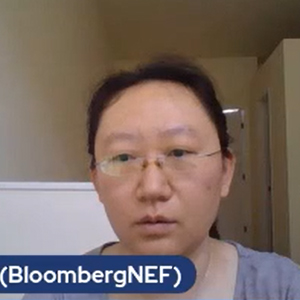
Xiaoting-Wang-(SEPA-EPRI)-Content.jpg
Xiaoting Wang, BloombergNEF | SEPA/EPRI

“R&D is essential, and we continue to do more of it at the Department of Energy,” he “But you cannot continue to keep doing R&D and expecting the very first deployment to be cheap. And so the first deployments have to happen. And then the second deployment … and every cumulative doubling, gets you this cost reduction curve.”

Xiaoting Wang, an analyst for BloombergNEF, is also impatient for demonstration-scale projects. “Although the technology now still has a lot of space to improve, we think now it is a time to get subsidies from the government … to trigger some demo projects or large-scale [projects], because that will give the first challenge for equipment manufacturers to use automatic manufacturing. Why? Because if the order is very tiny, it does not justify using automatic manufacture, [and it] will not say trigger the first round of cost reduction.”

Getting to Economies of Scale

Katherine Ayers, vice president of research and development for Nel Hydrogen U.S. (OTCMKTS:NLLSY), said achieving economies of scale for electrolysis doesn’t require gigawatt-scale projects.

“Most of these multi-megawatt scale electrolyzers have thousands of cells in them. And so you can get to pretty good numbers from a manufacturing standpoint,” she said.

“I do think that it’s important to … gain experience from some demonstrations to help grease the skids on that. But I think that there’s so many opportunities for electrolysis to serve some of these markets that one of them is going to happen, and it’s going to help the whole space.”

Water, Catalyst Constraints

Some skeptics have questioned the water demands of hydrogen production. Others note that it requires precious metals such as platinum as a catalyst.

Ayers said precious metals “are certainly an area of concern. But we also see many pathways to reduce those [through] manufacturing advancements” to reduce catalyst costs.

The cost of water is less of a concern, she said. “It’s certainly something that has to be considered when you’re implementing a unit because these require high-purity water. But typically, the cost of the water purification — even if you have to desalinate — it is not a huge portion of the cost.

“We have electrolysis units in places like Saudi Arabia, where water is certainly scarce,” she continued. “And if you look at electrolysis, even though it’s using water as the feed source versus some other energy technologies, it’s actually not that high in its usage.”

DOE’s Shah agreed that water use should not be a hindrance to hydrogen’s growth.

“One of the largest users of water in the West is cooling towers for thermal power plants. So they’re already using a lot of water at coal power plants. The total amount of water they’re talking about using here is substantially less than the evaporation losses that are already occurring within the existing coal footprint.”

Transporting Electrons vs. Hydrogen
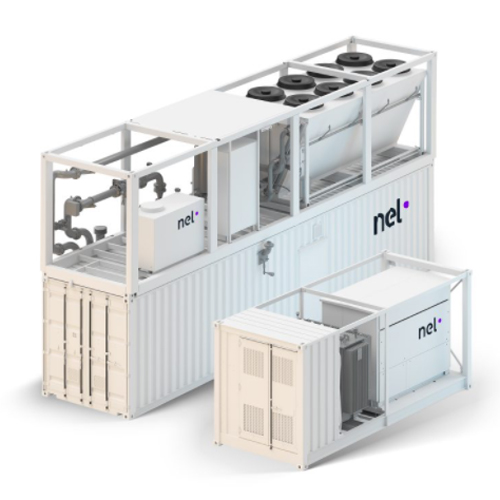
Containerized-PEM-Electrolyzer-(Nel-Hydrogen)-Content.jpg
Containerized PEM electrolyzer | Nel Hydrogen

Another question is how to integrate hydrogen production in the electricity supply chain. Nel Hydrogen’s Ayers acknowledged challenges with transporting and storing hydrogen.

Nel announced last month it had received an order for its containerized 2-MW polymer electrolyte membrane (PEM) electrolyzer that will be part of the green hydrogen infrastructure for a fleet of 46 Hyundai trucks in Switzerland.

“Electricity is not that easy to transport either,” she said. “We just had visitors the other day that were looking at our megawatt system and seeing the giant copper cables that have to go to the system in order to power it and the little, tiny hydrogen hose that comes off of it with the megawatt worth of hydrogen. So, you really have to look at how those two things play against each other and not discount the cost of transporting electrons either.”

International Efforts

Cutting the cost of producing hydrogen will not depend solely on U.S. efforts. Ayers said several countries have already committed to gigawatts of hydrogen projects over the next decade.

“There’s huge amounts of activity going on in Europe, largely actually spurred by the pandemic and a desire to use hydrogen as a way to help stimulate the economy as they come out of that. I think that’s really going to help drive these supply chain” improvements, she said.

“Hydrogen from electrolysis is really at a tipping point. And what that means is that competition is also increasing rapidly. So we’re seeing a lot of other companies catching up to what we’re doing here in the U.S., particularly in the PEM area, where I think there’s a lot of technology development happening. One of the things that we’re concerned about is making sure that the U.S. remains competitive in these markets — not just for the electrolysis piece, but also for this … installation experience that’s already going on in places like Europe and China. We’re going to have to learn ourselves as well.” 
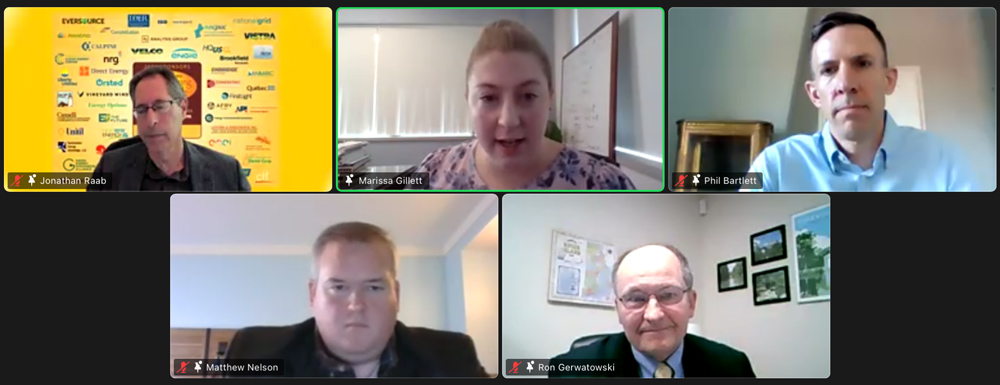
Overheard at 170th NE Electricity Restructuring Roundtable

More than 425 people registered for Raab Associates’ 170th New England Electricity Restructuring Roundtable last week to hear a panel discussion about the role of utility regulation in decarbonizing the region, in addition to a keynote speech from Acting Assistant Secretary of Energy Kelly Speakes-Backman.

Here is some of what we heard during the virtual event hosted by Boston law firm Foley Hoag.

Advanced Metering Emerges as Priority

Massachusetts has been working on adopting advanced metering infrastructure (AMI) for almost a decade, but new improvements in metering technology have created consumer friendly features that increase access through devices such as smartphones.

The state’s Department of Public Utilities (DPU) is looking into opportunities for a “more traditional investment” in AMI to support grid modernization, instead of a program that serves as a pilot, Chairman Matthew Nelson said.

Utilities in Massachusetts are required to file their grid modernization plans to DPU on July 1, and Nelson said they must “take advantage of advancements in metering technology.”

AMI is an integrated system of smart meters, communication networks and data management systems that allows utilities to measure electricity use automatically and remotely, connect or disconnect service, monitor voltage and communicate with customers. The technology allows utilities to offer new time-based rates that encourage customers to reduce peak demand and manage energy consumption and costs.

National Grid, one of the utilities in Massachusetts, had previously submitted a plan for AMI in Rhode Island but subsequently sold its business there to PPL Corp. in Pennsylvania.

Central Maine Power has already implemented an early AMI system. The Maine Public Utilities Commission is assessing any changes that are needed to the system, Chair Phil Bartlett said.

“As people invest in EVs, this is the optimal time to implement time-use rates,” he said.

170th-NE-Electricity-Restructuring-Roundtable--(Raab-Associates)-Content.jpg
Jonathan Raab, Raab Associates; Marissa Gillett, Connecticut PURA; Phil Bartlett, Maine PUC; Matthew Nelson, Massachusetts DPU; Ron Gerwatowski, Rhode Island PUC | Raab Associates

Maine is working on developing time-use rates, Bartlett said, but the commission doesn’t want to impose them on the public until it has more information about how the system in southern Maine is going.

The DPU in Massachusetts is also being cautious in rolling out time-use rates for residents, despite its success with time-use rates on the retail supplier side, Nelson said. The agency would deploy AMI to all customers, including municipal aggregators.

“To replicate that on the residential side has to be done very carefully,” Nelson said. “We don’t want to artificially raise rates if we aren’t seeing a reduction in peak demand.”

A report on AMI from the Department of Energy in 2016 found that over a three-year period, 19 AMI projects saved $316 million in operations and management costs, or $16.6 million per project. The AMI technology also saved an estimated 15,160 tons of carbon dioxide emissions.

But Marissa Gillett, chair of Connecticut’s Public Utilities Regulatory Authority, said her agency is also taking a cautious approach.

“Any time we ask customers to change their behavior, we need to have a grasp on what they need to change and how,” Gillett said at the panel. “But [time-use rates] are not off the table in Connecticut.”

Northeast Expected ‘Epicenter’ of OSW Development

Speakes-Backman said that President Biden’s clean-energy goals put the United States on an “irreversible path” to achieving a decarbonized power sector by 2035 and net-zero emissions economywide no later than 2050.

“This is the most ambitious climate strategy our nation has ever had, and we have no time to waste to get it into play,” said Speakes-Backman, who works in the Office of Energy Efficiency and Renewable Energy.

She said her office’s FY2022 budget request of $4.73 billion focuses on energy efficiency, sustainable transportation and renewable power, notably offshore wind.

Kelly-Speakes-Backman-(Raab-Associates)-Content.jpg
Kelly Speakes-Backman, Department of Energy | Raab Associates

“The fastest and most cost-effective way we know to decarbonize the economy is to first prioritize the transition to a carbon-free power sector,” Speakes-Backman said. “We need to integrate more renewable energy generation onto the grid while still ensuring that it’s reliable and secure.”

The Biden administration has a stated goal to build 30 GW of OSW by 2030. Speakes-Backman said projects like the recently approved Vineyard Wind I have the Northeast poised to be “the epicenter of near-term OSW development in the U.S.”

Connecticut, Massachusetts and Rhode Island have procured OSW to support their decarbonization targets. Speakes-Backman said that the Gulf of Maine could be used to support the deployment of next-generation floating wind technologies.

“The waters are too deep for traditional fixed-bottom foundations to be economical, so we’re leading efforts to design, test and demonstrate floating foundations to harness OSW in these deep-water areas, which account for about 60% of our OSW resources across the country,” she said.

Floating OSW technology, she added, is “nascent,” and there are many “opportunities to improve.”

From a research and development perspective, Speakes-Backman said her office has been working with the University of Maine on a proposed OSW demonstration project using semi-submersible concrete floating foundations developed by the university. There is also a new partnership with Atkins Global to demonstrate floating OSW technology previously used by offshore oil and gas, with a plan for installation at one of the Mayflower Winds lease areas south of Martha’s Vineyard and Nantucket. Additionally, there is support for several projects at the National Offshore Wind Research and Development Consortium, a public-private endeavor to address technological barriers and lower OSW costs and risks.

When asked how to mitigate the potential costs to ratepayers for major investments in transmission to meet OSW goals in New England, which could hamper electrification efforts, Speakes-Backman said that any work done now would drive down future costs.

“First, let’s examine the supposition that renewable power is so much more expensive than other traditional resources, as I think the costs are coming down quickly,” Speakes-Backman said. “The work that we’re doing is really to bring those costs down even further. Also, the investment that the federal government is doing to help states, or that we are looking to do in FY22, will help to suppress the costs.”

Utilities Mull Opportunities in Hydrogen

Hydrogen offers big opportunities for utilities, but it will require a cultural change for them to take advantage, says Nick Irvin, Southern Co.’s (NYSE:SO) director of research and development for strategy, advanced nuclear, and crosscutting technology.

“We are an industry that likes our stable, risk-adjusted returns,” he told the Smart Electric Power Alliance (SEPA) and Electric Power Research Institute (EPRI) H2Power conference last week.

Irvin said he’s looking at how hydrogen infrastructure can serve multiple functions and classes of customers.

“Once I’ve made the molecule, I can divert it … either into transportation fuel, back into grid support services, or for use on-site for backup generation or for resiliency. That stacked value chain, where everyone is sharing in both the investment and the value proposition … is the Venn diagram that says hey, we as a utility, should be able to move into that space,” he said. “If we can get the prices right and the economics right in deployment, I think is a great tool for us to move out into this lower carbon future.”

In the near term, Irvin said it will be difficult to make hydrogen cheap enough to compete with natural gas at bulk scale. “So what we’re trying to do is look for opportunities for hydrogen to play in markets where it can be competitive in the near term … and look at those systems as opportunities to learn the lessons you need to know — as pilots for how you scale to things like gas turbine operations.”

Katherine Ayers, vice president of research and development for Nel Hydrogen U.S., said hydrogen is still in the demonstration phase for utilities. “What we’re seeing is utilities starting to do projects at the megawatt scale, but they’re first of a kind. … A lot of them are subsidized by different governments.”

Daryl Wilson, executive director of the Hydrogen Council, said his group is tracking more than 300 megawatt-scale projects around the world. “80% of those are in Asia, China, and Australia,” he said. “And in those areas, absolutely, the utility sector is very involved. So companies like Uniper (OTCMKTS:UNPRF) … and RWE (FRA:RWE) in Germany — so many players now looking to hydrogen from the utility sector in Europe.”

Does Efficiency Matter?

Irvin said the use of zero marginal cost renewable energy sources to produce hydrogen is counterintuitive to his training as an engineer, where he was schooled to focus on efficiency.

“I think you have to ask yourself the question of: How much does efficiency matter in that future? … How do you optimize the capital deployment?” he asked. “I think customer choice and backward compatibility to enable the customer to be as … useful and flexible and independent and autonomous as they want to be in everything that they do on a daily basis has really got to be the ultimate goal.”

Ayers said hydrogen’s value in transportation is less about efficiency than about how well it meets customers’ needs.

“Where [hydrogen fuel cells were initially] more passenger vehicle focused, there’s been a realization that heavy-duty vehicles are maybe in an easier, earlier business case and an area where the battery doesn’t compete quite as well. So from that perspective, they’re looking at durability.

“It’s how far can your [vehicle] go?” she added. “Efficiency is not the only variable to look at.”

Distributed Hydrogen Production

John Lochner, vice president of innovation for the New York State Energy Research and Development Authority (NYSERDA), said hydrogen could continue utilities’ current business model as a “plug and play” opportunity while also serving as an “enabler” of distributed micro grids.

“We continue to plan and assess and fund … research and development and demonstrations,” he said. “What might be the opportunity to deploy hydrogen in the current infrastructure? What might it look like to have a distributed hydrogen infrastructure without the pipes? What are the costs? What are the timelines? How does it help us meet our decarbonization goals? I’m not sure we have good answers yet.”

Members-of-the-Hydrogen-Council-(Hydrogen-Council)-Content.jpg
Members of the Hydrogen Council | Hydrogen Council


Local hydrogen production could produce economic development benefits, he said.

“I consider hydrogen as having the potential to be a Swiss Army knife with decarbonization. It could be used in transport heavy industry [and] HVAC for large buildings, particularly down here in New York City. We have lots of [large] buildings … where electrification is more costly and more complicated. … There are many possibilities that are enabled by a lot of the research being done by the Department of Energy (DOE) and by NYSERDA.”

DOE Looking for Inefficiencies in Electric Market

Jigar Shah, director of DOE’s Loan Programs Office, also sees decentralized production of hydrogen in the future.

He said DOE is seeking ways to use hydrogen to address inefficiencies in the electricity market, such as renewable energy curtailments and negative power prices.

He said electrolyzers will initially be large facilities because of the need to incorporate liquefaction to move hydrogen around the country.

“But I think over time as the costs come down, you’ll start to see a very decentralized hydrogen production grid with electrolyzer technologies, and a lot of the electrolyzers will act as reverse peaker plants. Today, peaker plants with natural gas are turned on when electricity prices go above [about] four cents a kilowatt hour [$40/MWh]. In the future, these  hydrogen electrolyzers will be turned on every time electricity prices fall below $15 a megawatt hour — 1.5 cents a kilowatt hour. They can use up all the extra electricity capacity in the grid, and thereby dramatically reducing the cost of transmission and distribution.”

Hydrogen also could change the siting of energy-intensive industrial plants, he said. “Part of the reason why we make aluminum in the places that we make it is because that’s where the cheap hydropower is. When you think about where cheap wind and solar exists today, that is where we’re going to be making chemicals in the future.”

Nevada PUC Calls for Organized Market in West

In a report on last summer’s energy emergencies, the Public Utilities Commission of Nevada (PUCN) said the state was too reliant on imports and CAISO and called for an organized market in the West.

“The West as a region and Nevada as a state need a larger, regional market that integrates multiple utilities, allowing renewable generating resources to balance across large geographic areas,” said the report, released June 15. “A predictable, reliable Western transmission system is critical to ensuring electric reliability in the region.”

The report on Nevada’s supply problems was yet another signal that Western entities may need to form or join one or more RTOs this decade.

Nevada and Colorado lawmakers passed bills in the past month requiring transmission owners to join an RTO by 2030. (See Xcel Delays Joining EIM to Examine Options.) Nevada Gov. Steve Sisolak, who signed his state’s measure, plans to convene a Regional Transmission Coordination Task Force to provide advice on joining an RTO. (See related story, Many Next Steps to Follow Passage of Nevada Energy Bill.)

The PUCN’s report appeared to lend support to the effort. It detailed the results of an investigation begun last August, days after Nevada experienced energy emergencies during a severe Western heat wave.

In neighboring California, CAISO called for load shedding Aug. 14-15, prompting rotating outages. (See CAISO Issues Final Report on August Blackouts.)

Nevada’s crisis arrived three days later, on Aug. 18, when NV Energy and other load-serving entities faced emergencies because of “insufficient generation and transmission capacity to meet peak demand,” the PUCN wrote.

NV Energy’s reliability coordinator, CAISO-led RC West, declared a level 3 emergency on the afternoon of Aug. 18 as Las Vegas hit a record-high temperature of 114 degrees Fahrenheit. The utility bought energy to compensate, but much of it was not delivered, the report said.

“For a 10-hour period on Aug. 18, 2020, NV Energy procured 19,760 MWh of energy through bilateral contracts with third-party entities,” the PUCN said. “However, during this period, only approximately 13,639 MWh of energy were delivered to NV Energy.

“For the [6 p.m.] hour … NV Energy’s most critical period … [the utility] procured over 2,000 MWh of wholesale market energy through bilateral agreements to be delivered but only received approximately 864 MWh of energy, resulting in 1,243 MWh (59%) of undelivered energy,” it said.

NV Energy avoided rolling blackouts that day only because of conservation efforts and by accessing operating reserves through an agreement with the Northwest Power Pool, the report said.

Investigation and Findings

The PUCN opened its investigation of the events Aug. 26, resulting in last week’s report. It identified issues that contributed to the emergencies, including the state’s over-reliance on increasingly constrained imports.

“Over the prior five years, Nevada’s resource planning process has focused on cost-saving opportunities for ratepayers by finding prudent NV Energy’s actions to fulfill an increasing amount of its supply needs in the Western market,” it said. “At the same time, a number of areas of [WECC] faced growing resource constraint. As retirements of large generating stations continue and are replaced by generating resources with dissimilar generating characteristics, some regions in the WECC are growing more dependent on seasonal or intraday imports.”

In March, WECC’s assessment of Western resource adequacy found Nevada was among the regions in which imports are essential to ensure reliability during summer peaks. The PUCN took note of that and called for planning upgrades. (See RA at Risk in NWPP-Central, WECC Finds.)

“Today, Nevada often exports solar generation and relies on imports from neighboring states like California, Arizona and Oregon to meet peak demand, particularly during the evening when solar generation is unavailable,” the report said. Resource planning “must become more granular and move beyond the borders of Nevada and lengthen its focus to assess regional market risks.”

CAISO in Crosshairs

The report also critiqued Nevada’s dependence on CAISO, a possible contender to lead a Western RTO.

“CAISO is not a Western regional planning entity; it was structured to meet California’s electricity needs,” it said. “However, because the CAISO is the only liquid market in the West, all trades between balancing authorities or utilities are either bilateral transactions or traded volumes in the CAISO markets.”

Under the system, Nevada utilities contract for “firm” imports, but a “downstream buyer has no way of distinguishing between a … contract backed by a portfolio of physical generation owned by the seller and a ‘firm’ contract backed by day-ahead purchases in the CAISO markets.”

As in August, the result can be imports that do not materialize, the report said.

NV Energy proposed a short-term fix in procurement changes that “recognize the risk of Nevada’s reliance on market resources that are sourced from or wheeled through the CAISO and, therefore, propose procurement of energy at higher targets for reliability purposes,” the report said.

It noted that “NV Energy has issued requests for proposals for non-CAISO-sourced energy, but because the CAISO is the largest and only liquid market in the western United States, NV Energy currently relies on the CAISO wholesale energy market for a portion of its resource adequacy to provide reliable electric service to Nevadans.”

Members Explore MISO’s Role in Environmental Justice

In a MISO first, members and leadership probed what environmental justice means in its 15-state footprint and what role the RTO can play in ensuring more equitable grid impacts.

Speaking at the Advisory Committee’s meeting Wednesday, Indiana Utility Regulatory Commissioner Sarah Freeman said multiple sectors are beginning to grapple with how to make sure no community bears a disproportionate share of the harmful effects of energy and industrial production.

EDF Renewables’ Adam Sokolski, representing the Independent Power Producers sector, said it’s long overdue for energy companies to build infrastructure with environmental justice in mind.

But it’s still unclear what MISO’s role could be in supporting environmental justice, Board of Directors Chair Phyllis Currie said. “We are not on the front line of interacting with the end-use customers.”

Multiple stakeholders said MISO could open more avenues of participation and outreach.

“It’s not possible to have a full conversation on this topic without involving the communities that are involved,” Union of Concerned Scientists’ James Gignac pointed out.

Gignac’s colleague Sam Gomberg said at last month’s committee meeting that a discussion on environmental justice would ring hollow unless MISO members and the board either speak with impacted members of an environmentally disadvantaged community before a discussion, or invite them to a meeting.

Director H.B. “Trip” Doggett asked how MISO members would engage with the public.

Gignac asked that MISO create an environmental justice and equity initiative and bring impacted communities into stakeholder discussions.

Transmission-Dependent Utilities sector representative Kevin Van Oirschot, of Consumers Energy, also suggested MISO could do more to include underserved populations in its stakeholder process.

Public Consumer Advocates sector representative Christina Baker said MISO’s current policy of having two public consumer advocates on the AC is a good start. She suggested that the RTO select a board member with a background in public advocacy.

The Natural Resources Defense Council’s Elizabeth Toba Pearlman said MISO could ask itself if its stakeholder community is representative of the general public. “Even if MISO isn’t tasked with the engagement of the end-use customer, I think there’s value to [it] reaching out.”

Director Barbara Krumsiek noted PricewaterhouseCoopers’ recently announced hiring spree, where it will add 100,000 employees over the next five years to focus on inequality, climate change, pandemic fallout and technological disruption.

Other stakeholders said grid planning is often too siloed a process to maintain cohesive environmental justice goals across utilities, generation developers, transmission owners and state regulators. Some said environmental justice is largely a matter for state and local governments and the regulators who make transmission and generation siting decisions.

Freeman said MISO could keep tabs on members’ environmental justice efforts and note regions that might be lacking.

Manitoba Hydro’s Audrey Penner noted that in her province, it’s law that her company consult with First Nations tribes before embarking on a project. She said Manitoba Hydro considers how to undo or mitigate past harms in project planning.

Sokolski said stateside, a bright spot is MISO’s transitional period of “retire and rebuild” — which is giving members opportunities to replace polluting, conventional generation with cleaner generation — contemplates impacts to marginalized communities.

Mass. Efficiency Program Draft Plan Should Be Scrapped, Senator Says

State agencies in Massachusetts were not prepared for the passage of a new comprehensive climate law this year or the immediate implications it would have for regulations, state Sen. Michael Barrett said last week

The Energy Efficiency Advisory Council (EEAC) will be the first state entity required to carry out the law, which goes into effect June 25, Barrett said at the final public comment session on the council’s three-year plan for energy efficiency programs. The council is working to complete the program plan update now, but Barrett says it’s not aligning with the state’s new climate objectives.

State programs will need to pivot to limit fossil fuel heating system initiatives, increase electrification through heat pump incentives and expand access to clean heating options for low- and moderate-income renters and homeowners in environmental justice communities.

EEAC’s draft plan for energy efficiency programs does not eliminate incentives for natural gas entirely. The plan eliminates incentives for alternative heating systems “given the small incremental savings available” for ratepayers, according to the draft.

“Not enough hold is being taken on the new standard,” Barrett said. It was clear when Gov. Charlie Baker signed the landmark climate law in March that the efficiency program calculations were going to have to be different for benefits and greenhouse gas emissions, he added.

The climate law intends to prohibit replacing old oil heating systems with new oil heating systems, but the EEAC’s plan only eliminates incentives for residential oil-fired boilers.

Barrett suggested the EEAC start over on its current 200-page draft plan to avoid contradictions down the line.

Mark Dyer of 350 Massachusetts, a volunteer-led climate action organization, also recommended in the public comment session that the three-year draft plan be withdrawn. With the state looking at a ramp up of building retrofits to 100,000 per year for 10 years, the current plan will be “hopelessly slow” in achieving the state’s goals, Dyer said.

Program administrators wrote in the current draft plan that the “most successful heat pump installations take place in buildings that are already weatherized.” The plan calls for bolstering efforts to improve building envelopes as a critical component of a larger electrification strategy that ensures buildings are ready to accommodate heat pumps when residents install new equipment.

Until heat pumps are more affordable, program administrators will focus on weatherization in the 2022-24 term.

But incrementally fixing things is insufficient to cut emissions from one of the largest polluting sectors in the state, Dyer said.

The “cost-benefit this plan hinges on becomes obsolete” under the state’s climate law, he added.

If incentives for all equipment that use fossil fuels are rolled back, it would create cost barriers for efficient oil and gas options, David Davis, CEO of Massachusetts-based heating manufacturer HTP, said. The company builds high-efficiency boilers and low-emission gas equipment that follows strict emissions standards, according to Davis. Without incentives, customers would be more likely to install lower grade oil-fired boilers than retrofit their heating system at a high cost, he added.

The EEAC will discuss the draft plan and allow further public comment at its next monthly meeting on June 23.

Mass. Officials Hear Call for Gas Utility Rate Reform

Massachusetts agencies need to root out utility pilot projects that depend on natural gas to avoid a costly net-zero transition for ratepayers, Natalie Karas, senior director and lead counsel for the Environmental Defense Fund, said on Thursday.

Projects that blend hydrogen with natural gas or claim to service renewable natural gas are going to force ratepayers to cover the cost of pipelines that will have a short usage life under Massachusetts’ new climate law, Karas said.

It is up to the Department of Public Utilities (DPU) to factor out pilot programs that go against the state’s climate goals, she said during a Massachusetts Attorney General’s office-led think tank on ratemaking for gas utilities.

The state needs to update forecasts and supply plans to build in GHG reductions, according to Karas, who advocates before FERC on ways to harmonize the wholesale natural gas and electricity markets.

DPU opened an investigation last year into the role of local gas distribution companies under decarbonization plans, acknowledging a need to modernize the electric grid. But moving forward, new ratemaking plans that support electrification are needed in the state, said senior adviser in energy strategy for the Analysis Group Susan Tierney at the think tank.

Energy policies in Massachusetts, including the state’s landmark climate law, which goes into effect June 25, prioritize electrification over other forms of decarbonization that the state’s two main utilities, Eversource Energy and National Grid, are pursuing.

Enbridge, the international pipeline company that owns the controversial natural gas compressor station in Weymouth, Mass., is looking into renewable natural gas from captured methane emissions.

Net metering and other specialized rate designs can make it “harder to price things properly,” Tierney said.

But the categories for determining utility rates for different customers are too simplistic, according to Mark LeBel, an associate focused on rate design and regulatory reform with the Regulatory Assistance Project.

“People should be paying the costs they are causing,” and energy prices should reflect that, LeBel said. If customers choose to continue using oil or natural gas for cooking or heating their homes, they will have to pay a higher price.

The long-term effects of ratemaking decisions now demonstrate the need for a clear plan from DPU on how its regulations will change to reflect the state’s climate law.

“If this transition happens in an unplanned, haphazard way, there will be real consequences,” said Sherri Billimoria, a manager for RMI’s Carbon-Free Buildings program. Low-income communities will face higher, unjust rates as they unwillingly become responsible for keeping gas companies afloat.

If it is left up to utilities, there is a chance there will be too much reliance on natural gas going forward, Billimoria said.

Klamath Hydro License Transfer Approved

Concluding a process that began more than 15 years ago, FERC last week approved transfer of the license for the 169-MW Klamath Hydroelectric Project from PacifiCorp to a group of parties that will decommission the series of eight dams that straddle the border between California and Oregon (P-2082-062).

The parties assuming the license include the states of California and Oregon and the Klamath River Renewal Corp. (KRRC), comprised of the Yurok and Karuk tribes and area farmers, ranchers, fisherman and environmental groups. All were party to the 2010 Klamath Hydroelectric Settlement Agreement (KHSA), which imposed a set of interim environmental measures and funding obligations on PacifiCorp ahead of the targeted 2020 decommissioning date of the project.

PacifiCorp decided to remove the four of the dams in 2004 following a long-running dispute over water rights and the health of salmon runs in the Klamath Basin. Before the project’s license was set to expire in 2006, the utility filed a proposal with FERC to relicense the three upper dams while decommissioning four lower dams considered too costly to modernize.

Since then, the project has operated under a series of annual interim licenses while approval of the broader license sat in limbo, largely due to PacifiCorp’s own efforts.

In 2016, a subset of the KHSA parties signed an amended agreement that would transfer the licenses for the four dams to the newly formed KRRC. Two years later, FERC approved PacifiCorp’s request to split the lower dams into a separate license, but it declined to rule on transferring the license until the KRRC could prove that it was capable of managing decommissioning.

“Transferring a project to a newly formed entity for the sole purpose of decommissioning and dam removal raises unique public interest concerns, specifically whether the transferee will have the legal, technical and financial capacity to safely remove project facilities and adequately restore project lands,” FERC said in the ruling.

FERC overcame those concerns in last week’s ruling because, under the new license agreement, KRRC’s decommissioning efforts would now be backed by California and Oregon.

“The applicants explain that under their current proposal, if transfer and surrender are both approved, decommissioning efforts would not rest solely with the Renewal Corporation. The States, as co-licensees, would provide additional experience related to large public infrastructure projects, including experience overseeing dam removal and operating projects subject to the Commission’s jurisdiction,” the commission wrote.

The commission also pointed out that PacifiCorp and the states had agreed to establish a $45 million contingency fund to cover cost overruns for a decommissioning process estimated to cost about $450 million.

The commissioners dismissed an argument by the County of Siskiyou, Calif., that the KRRC is a “shell corporation” only set up to shield PacifiCorp and the states of California and Oregon from liability associated with dam removal. The county also contended that that PacifiCorp should be required to remain on as a co-licensee due to its “knowledge, competence, and safety track record.”

FERC clarified that as co-licensee, the states will not be shielded from liability.

“With the States as co-licensees, we do not believe the public interest requires that PacifiCorp remain a co -licensee. Nor do we find that the Renewal Corporation is merely a ‘shell corporation.’  The Renewal Corporation is a California non-profit corporation in good standing, its articles of incorporation explicitly provide for implementation of the Amended Settlement Agreement, and its bylaws describe the day-to-day management responsibilities of the Renewal Corporation as licensee,” FERC wrote.

The commission also rejected the contention of some commenters who questioned whether the states are qualified to be co-licensees and have the experience or expertise to perform decommissioning. These commenters pointed to the February 2017 failure of the main spillway of the Oroville Dam, operated by the California Department of Water Resources, saying it was the result of “gross mismanagement” and that reconstruction suffered large cost overruns. (See Report: Regulatory Failure Caused Oroville Incident.)

“Actions by one California agency have no bearing on the issues here, in a case involving the states of California and Oregon, the Renewal Corporation, and a number of other parties,” FERC said. “In any case, following the Oroville dam incident, California DWR worked closely with commission staff, complied with commission directives, and bore the extensive costs associated with the required remediation.”

“The commenters do not demonstrate that the states lack the legal, technical, or financial resources to serve as co-licensees here,” the commission said.

FERC Accepts Documents in MISO TOs’ Self-fund Selection

MISO has successfully filed its first revised interconnection agreements since FERC reinstated transmission owners’ rights to self-fund network upgrades.

The commission on Thursday accepted amended documents stemming from the development of wind farms and natural gas generation — and rejected another that didn’t fall within the effective period.

FERC in late 2019 decided that generator interconnection agreements struck between June 24, 2015, and Aug. 31, 2018, should be revised to allow TOs the option to have first crack at initial funding of network upgrades, rather than interconnection customers. Since then, some MISO wind developers have been refusing to sign facilities service agreements between themselves, TOs and the RTO in protest. (See More Unexecuted FSAs in MISO Self-funding Squabble.)

MISO is refiling various past agreements for TOs that want the chance to finance network upgrades themselves.

The commission accepted new facilities service and multiparty facilities construction agreements among MISO, interconnection customer Northern States Power, and TOs Otter Tail Power and Montana-Dakota Utilities (ER20-2322). The retooled agreement is associated with the Dakota Range I and II wind farms and the $9 million in network upgrades needed to connect it.

However, FERC said language stipulating the TOs return collected invoices to Northern States is unjust and ordered MISO to correct it. The commission said Otter Tail’s amended facilities construction agreement explicitly states that it will refund invoices collected for the upgrades, while MDU’s separate agreement is missing the same refund promise.

FERC also accepted a refile of a circa-2017 agreement between Northern States as both interconnection customer and TO for the conversion of its Black Dog Generating Station from coal- to gas-fired (ER20-2364). Because the July 7, 2020, effective date is about a week later than MISO originally requested, the commission directed the RTO to recalculate the net book value of the about $400,000 in network upgrades in order to refund Northern States’ development arm.

Finally, FERC shut down an attempted refile between interconnection customer Great River Energy and Otter Tail over a $2.3 million upgrade in North Dakota necessary for a 50-MW wind farm and subsequent expansion by another 49 MW (ER20-2352).

FERC said Otter Tail was attempting to take over upgrade financing when the projects’ agreements predated the June 24, 2015, through Aug. 31, 2018, time frame. It blocked the amended agreements.

“The commission has previously found that the terms of a tariff that should apply are the terms in the tariff that are effective and on file on the date that the interconnection agreement is executed or initially filed unexecuted with the commission. As a result of this finding, the commission has declined to modify network upgrade funding terms from interconnection agreements that predate revisions to the relevant tariff provisions,” FERC said.

After some digging, the commission found mention of the first 50-MW development in 2008’s Electric Quarterly Reports. FERC also said it found a 2011 amended interconnection to upsize the project in its own archives. The last amended agreement commission staff found on the project was filed unexecuted May 18, 2015.

FERC Offers Guidance on Exceeding Western Price Caps

FERC on Thursday issued guidance to Western electricity sellers on how and when to seek exceptions for sales that exceed the region’s $1,000/MWh soft offer and price caps.

The commission was responding to concerns arising from last summer’s heat wave, when prices reached above the WECC-area soft caps that FERC adopted nearly two decades ago in response to the runaway wholesale prices of the Western energy crisis of 2000-2001.

“To address the effects of the Western energy crisis, the commission identified a number of structural reforms and market rule changes that were necessary for a robust, stable, and competitive bulk power market in California and the West,” the commission wrote in Thursday’s order (ER21-40, et al.).

Beginning in November 2000, the commission implemented “several coordinated price mitigation efforts, including offer/price cap measures in CAISO and the Western spot markets,” it explained.

“In doing so, the commission cited the interdependence among prices in CAISO’s organized spot markets and the prices in the bilateral spot markets in California and the rest of the West, emphasizing, for example, that price mitigation in the two markets should eliminate incentives for ‘megawatt laundering,’ where a supplier schedules supply out of CAISO and then reimports that power to avoid a mitigated price,” the commission wrote.

In July 2002, after CAISO proposed a comprehensive market redesign, the commission set a $250/MWh offer cap for the CAISO market and a $250/MWh soft price cap for Western spot market sales. The commission at the time said that, along with other mitigation measures, the soft caps represented a “careful balance” of the need to incentivize the market entry of new resources while protecting the markets from potential abuse.

In a later order, FERC clarified that the cap was a soft cap and that offers and prices exceeding the cap would be subject to justification and refund.

“In establishing the cap, as well as in the three previous instances when sellers have filed justifications, the commission has declined to define the justification required or predetermine the specific types of documentation a seller might provide, explaining that the commission cannot anticipate all the possible reasons a seller may exceed the offer cap,” FERC wrote Thursday.

FERC increased the cap to $1,000/MWh in April 2011, reaffirming its thinking around the interdependency between the CAISO and Western bilateral markets. In complying with FERC Order 831, CAISO this past March raised its hard offer cap to $2,000/MWh under scarcity conditions, but it still requires cost-based incremental offers above $1,000/MWh to be verified in order to set the marginal clearing price or be eligible for recovery. The WECC-area soft price cap remains in place.

Summer Prices Heat Up

The impetus behind Thursday’s order was the extended heat wave in the West last August, when tight supplies prompted rolling blackouts in CAISO and energy emergency alerts in 11 other balancing authority areas, including six BAAs that issued Stage 3 alerts. (See CAISO Says Constrained Tx Contributed to Blackouts.) During the event, Western prices repeatedly jumped above the $1,000/MWh soft cap, later requiring sellers to file with FERC to justify the cost of their sales. The commission said the transactions generally fell into four categories:

      • physical forwards, in which physical power changes hands at a fixed price;
      • physical index transactions, in which power changes hands at a price that floats around an index;
      • financial transactions that are used as a hedge and in which no physical power is delivered; and
      • sleeve transactions, where one party acts as an intermediary to facilitate a sale between two counterparties.

FERC said that the sellers’ justification filings for exceeding the cap “typically include a report containing descriptions of the weather event and of sales made (sometimes including a narrative of how the sale was arranged (e.g., via phone call) to illustrate agreement between both parties), and tables enumerating the individual sales, counterparties, energy quantity and price. Filing parties also indicate whether they bought energy or acted as net buyers.”

The commission said that some sellers requested a waiver of the requirement to provide cost data. Tucson Electric Power justified its request by saying its “generation costs were not the determining factor in the wholesale prices at issue and would not inform the commission’s consideration of these issues.”

“In justifying sales above the WECC soft price cap for the first three types of transactions, filing parties primarily rely upon two arguments: that sales reflected the prevailing market conditions, and that the sales are protected under the Mobile-Sierra doctrine,” the commission said.

Frameworks

Given last summer’s developments and the potential for a repeat weather-driven price spikes this summer, FERC said “we find that it is appropriate to provide additional information on approaches a seller could take to justify sales in excess of the WECC soft price cap.” Its guidance is based on — but “not limited to” — three frameworks:

  • a production cost-based framework in which a seller demonstrates that sales exceeding the cap can be justified by evidence of costs associated with the production of electricity. The seller would show that its actual short-run marginal cost of production exceeded the cap through documentation of fuel and operation and maintenance costs.
  • an index-based framework in which a seller relies on a price index to justify exceeding the cap. A seller need not have based its sale on an index to use this framework, but it must reference an index at a specific trading hub, explain the relevance of that hub to the transaction and show that the hub met the conditions for adequate liquidity according to FERC’s standards. “To rely on a specific hub, it will be necessary for sellers, in their justification filings, to demonstrate their ability to transact near those hubs during the time periods in which the prices of those published indices were above $1,000/MWh,” the commission said.
  • an opportunity cost framework in which a seller justifies a price based a demonstration of opportunity costs, which the commission said it has “long recognized” as a “legitimate component” of reasonable rates. FERC has generally recognized opportunity costs that are either “locational” (the opportunity to sell into other markets) or intertemporal (demonstrating limits on starts, operating hours and energy over a specific time frame). “Invoking the opportunity cost framework requires evidence of alternative sales options, including details on the timing, location, quantity and likely price of the alternative sale,” the commission wrote. It would also require evidence that the seller could actually deliver the energy at the time and place specified.

For sleeve transactions, in which the nominal fee that a third party typically collects to facilitate the trade causes the final price to exceed the cap, FERC said a justification filing should include an explanation of the transaction, as well as supporting documentation of the purchase, nominal fee and subsequent sale. Filings for sleeve transactions in which the underlying price exceeds the cap must rely on one of frameworks provided by FERC.

Thursday’s order also clarified that sellers in financial transactions are not required to submit justification filings because those transactions, which do not involve delivery of physical electricity, are not subject to the WECC soft cap.

The commissions also provided any parties with pending justification filings an additional 30 days to amend their filings in response to the new guidance.