Ontario Integrated Energy Plan Boosts Gas, Nukes

Ontario is putting its chips on nuclear power and natural gas to meet its growing energy demand while directing IESO to incorporate gas distributors and the province’s economic development goals in its system planning. 

The province’s first-ever integrated energy plan, Energy for Generations, released June 12, seeks to ensure sufficient capacity for a forecast 75% increase in electric demand over the next 25 years. 

Authorized by the 2024 Affordable Energy Act, the plan seeks to integrate planning for electricity, natural gas, hydrogen and emerging fuels along with energy efficiency, demand-side management and distributed energy resources. The five-year planning cycle will provide the “long-term certainty [needed] to make smart investment decisions,” according to the plan, which was authored by the province’s Ministry of Energy and Mines. 

“As the world searches for affordable, secure, reliable and clean energy, Ontario is doing big things,” Minister Stephen Lecce wrote in the foreword to the plan. “We are leading the largest expansion of nuclear energy on the continent, building the largest battery storage fleet in the country, adding thousands of kilometers of new electricity transmission and modernizing our grid to meet the needs of tomorrow.” 

Changing Planning

The ministry declared an end to the “siloed approach” to planning, saying, “For too long, decisions about electricity, natural gas and other fuels have been made separately, without a unified view of how they work together to power the province’s economy and communities.” 

Such coordination will avoid situations where non-pipe alternatives such as electric heat pumps “are advanced without accounting for their impact on local electricity demand and grid capacity,” the plan says. (See related story, Ontario Energy Plan Gives IESO Long ‘To Do’ List.) 

IESO will be required to identify transmission projects that would be needed under high-growth forecasts to conduct at least annual meetings of Technical Working Groups in each planning region, “in consultation with [local distribution companies], [transmission companies], municipalities and major customers, to ensure more frequent sharing of demand forecasts, system needs and planned infrastructure investments.” 

Long Bridge for Natural Gas

While the plan endorses an “all of the above” approach to fuel diversity, it places a heavy emphasis on retaining and expanding nuclear power and natural gas. 

Natural gas makes up 36% of Ontario’s end-use energy consumption and is the home heating fuel for about 75% of residential customers. While climate activists are calling for replacing gas with renewable generation and home electrification, the Ontario government said it supports “the rational expansion of the natural gas network” to serve homeowners in rural and northern areas who do not have access. 
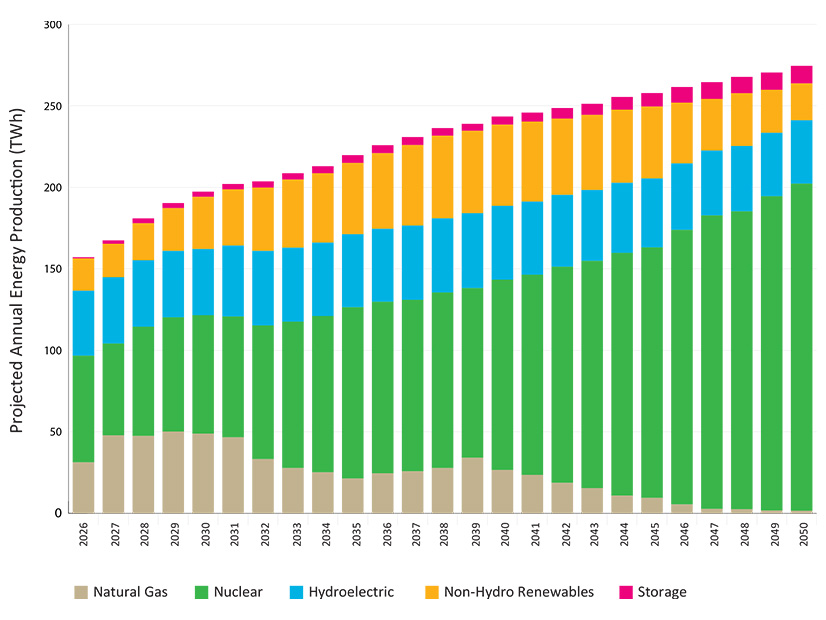
Ontario sees natural gas’s role in electric generation shrinking to almost zero by 2050. | Ontario Ministry of Energy & Mines

Chapter 5 of the plan is the ministry’s Natural Gas Policy Statement, which concludes there are few alternatives to gas for Ontario’s industrial and agricultural sectors and warns “a premature phaseout of natural gas-fired electricity generation is not feasible and would hurt electricity consumers and the economy.” 

Although it provides only about 16% of the province’s power, natural gas represents 28% of its generation capacity, giving it a critical role in meeting system peaks.

The ministry says gas-fired generation will increase through the 2020s and 2030s because of rising demand and planned nuclear refurbishments. “This will result in a short-term increase in electricity system emissions. However, as new non-emitting supply, particularly new and refurbished nuclear generation comes online, emissions from electricity generation are expected to decline significantly,” the plan says. 

The province directed the Ontario Energy Board (OEB) to provide a report on expanding its mandate over natural gas and electricity to include alternate energy sources, hydrogen pipelines, carbon dioxide pipelines and district energy systems.  

It directed OEB to improve the alignment between gas and electricity policies, citing limits on the grid’s ability to serve customers switching from gas to electric heat. It also ordered OEB to develop a new gas connection policy to support faster home building. “OEB will take steps to encourage — and, where appropriate, require — regulated natural gas distributors and LDCs to participate in regional and bulk electricity planning processes,” it says. 

The province said it supports a new east-west energy corridor to expand access to Western Canadian natural gas and crude oil and reduce reliance on U.S. imports, which account for two-thirds of Ontario’s gas consumption. 

Big Bets on New Nukes

Ontario also is making big bets on nuclear power, which generates more than half of the province’s electricity. In a high electrification scenario, IESO says, the province could need up to 17,800 MW of new nuclear generation in addition to its current 12,000 MW. 

On May 8, Ontario authorized Ontario Power Generation (OPG) to begin construction on the first of four small modular reactors at the Darlington nuclear site. The initial unit, targeted for commercial operation in 2030, would be the first grid-scale SMR in the Group of Seven countries, of which Canada is a member. OPG says building all four SMRs, a total of 1,200 MW, will cost $20.9 billion. The additional SMRs could come online between 2033 and 2035. (See Ontario Greenlights OPG to Build Small Modular Reactor.) 

Site preparation work is complete for the first of four small modular reactors at Ontario Power Generation’s Darlington site. | Ontario Power Generation

The government also is supporting the expansion of the Bruce Nuclear Generating Station, referred to as Bruce C, which could add up to 4,800 MW. 

The plan enrolls IESO in a New Nuclear Technology Panel with OPG and Bruce Power “to ensure prospective sites for new nuclear generation are considered in electricity system and transmission planning studies.” 

Hydropower

The plan calls for expanding and refurbishing the province’s hydropower resources, which provide about 24% of Ontario’s electricity, behind only nuclear. 

OPG, which is investing $4.7 billion to refurbish and expand its 66 hydroelectric generating stations, has identified up to 4,000 MW of potential new hydropower in northern Ontario. The government is supporting early-stage development for two new sites in the Moose River Basin: Nine Mile Rapids and Grand Rapids. 

The plan orders IESO to launch a program to re-contract 26 hydroelectric facilities larger than 10 MW, a total of more than 1,000 MW. The ISO already is working to recontract about 80 small hydroelectric facilities, totaling more than 200 MW. 

Other Provisions

The plan also outlines roles for:  

    • hydrogen, which could constitute 12 to 18% of energy use in the country by 2050 under “supportive policy measures or key input cost reductions.” 
    • energy efficiency, which is earmarked for $10.9 billion in spending over 12 years, “nearly three times [the] historical annual investment.”  
    • pumped storage: The government is supporting predevelopment work for the proposed Ontario Pumped Storage Project, which would provide up to 1,000 MW. OEB is directed to consider changing its rate regulation to support such “long-life” electricity projects. 
    • storage: The province will add nearly 3,000 MW of energy storage to supplement intermittent renewable generation. 
    • interconnections: The government is using authority under the 2024 Affordable Energy Act to reduce the capital costs for residential developers and industrial customers connecting to distribution and transmission infrastructure. “These changes will help unlock new developments by reducing investment risk for ‘first mover’ customers, while ensuring fairness is maintained for ratepayers,” the plan says. Draft regulations will be posted for public comment in summer 2025. 
    • distribution systems: The plan defines grid modernization, directing Ontario’s 59 LDCs to make upgrades that allow them to respond more quickly to outages, improve efficiency, and support two-way power flows and real-time system monitoring to accommodate DERs. 
    • National Energy Corridors for clean energy, transmission and pipelines: “This includes exploring opportunities to build the critical infrastructure needed to move energy and resources east-west across Canada and north to tidewater, including through new transmission lines, pipelines, rail networks and a potential deep-sea port on James Bay.” 

Transmission

The plan outlines additions to Ontario’s 18,600 miles of high-voltage transmission, calling for expanding its north-south “electricity backbone” to reduce constraints preventing generation sites in the north from delivering to loads in the south. In total, IESO has about 1,500 kilometers of new transmission lines “under development or planned,” according to IESO CEO Leslie Gallinger.

The plan supports the 500-kV Barrie-to-Sudbury single-circuit line, due in service in 2032. “Because of the critical system value to this strengthened corridor, the IESO has also recommended initiating early development work on a second 500-kV line,” the plan says. 

IESO also has recommended reconductoring the 230-kV Orangeville-to-Barrie line.

The two projects are “critical enablers” for future generation projects such as the proposed Nine Mile Rapids and Grand Rapids hydropower stations, the plan says.

IESO also has identified two major projects in the Greater Toronto Area (GTA): reconductoring the 115-kV Manby-Riverside line, due to be in service in 2026; and a new double-circuit 500-kV line from Bowmanville Switching Station to an existing 500-kV station in the GTA. The line, expected in service in the early 2030s, would connect OPG’s SMR units 2, 3 and 4 at Darlington to the grid and send additional electricity to the GTA.

The ministry ordered IESO to recommend by August an option for additional transmission into Downtown Toronto to support growth and electrification. “Once IESO makes a recommendation, the government intends to act quickly to kickstart development, so it can be delivered in the early-to-mid 2030s,” the ministry said.

The government has authorized Hydro One to make advance purchases of up to five 750-MVA, 500/230-kV autotransformers to be deployed in the GTA and in southwest and northern Ontario. 

Streamlining Regulation

The ministry called for streamlining provincial approval processes for “priority energy projects that are essential to supporting housing, job creation and long-term economic security.” 

The province is creating a “One Team” initiative to accelerate approvals of “strategically important” energy projects, starting with projects in IESO’s Long Term 2 procurement. (See related story, IESO Purchasing 3,000 MW of Energy and Capacity.) 

In 2022, the government exempted transmission lines wholly funded by commercial, industrial or generator customers from requiring Leave to Construct approval from the OEB. In 2024, the government moved all transmission projects into Ontario’s Class Environmental Assessment process, which is expected to reduce development timelines for large projects by up to two years. 

The government ordered IESO and OEB to review their approval, connection, procurement and regulatory processes and report back on ways they can reduce duplication, shorten timelines and improve efficiency. 

“Complex permitting and regulatory processes across multiple ministries and levels of government can create barriers, delays and added costs for projects that are critical to the province’s growth and competitiveness,” it said. 
Inland Wind, Merchant Projects, WestTEC to Guide CAISO Interregional Planning

RENO, Nev. — Out-of-state wind integration, merchant transmission development and the WestTEC planning effort are all factors influencing CAISO’s interregional transmission planning.

Neil Millar, CAISO’s vice president of infrastructure and operations planning, gave a briefing on the ISO’s West-wide transmission activities during the June 18 meeting of the Western Energy Markets Governing Body.

As a starting point for interregional transmission planning, CAISO uses its regional transmission planning process, Millar said. The CAISO Board of Governors on May 22 approved the 2024/25 transmission plan, which includes 31 projects valued at a total of $4.8 billion. (See CAISO Approves $4.8B Transmission Plan to Support 76 GW of New Capacity.)

CAISO’s previous three transmission plans included $5.8 billion in projects on average, which largely were policy-driven projects to support access to resource basins, Millar said. But projects in the 2024/25 plan are focused mainly on reliability in the face of surging load growth.

Millar said last year’s transmission plan was based on load growth of about 1% per year, while the load growth in this year’s plan was about 1.6%. CAISO now is looking at a load growth rate of about 2.5% for next year’s plan.

“The increased rate of load growth reflected in the most recent load forecast associated with building and other electrification, data center growth and transportation electrification results in significant reliability-driven needs in this year’s transmission plan,” the 2024/25 plan stated.

Out-of-state Wind

Accessing out-of-state wind continues to be a focus for the ISO. Millar said CAISO’s base case scenarios call for seeking more than 5,500 MW of Wyoming and Idaho wind resources and more than 3,600 MW of New Mexico wind.

He said CAISO is working with its neighbors to explore potential coordination on specific projects or to leverage merchant projects that might be moving forward.

And supporting the Western Transmission Expansion Coalition (WestTEC) effort is a priority for CAISO, according to Millar.

The WestTEC effort, jointly facilitated by the Western Power Pool and WECC, will address long-term interregional transmission needs across the Western Interconnection. The goal is to produce transmission portfolios for 10- and 20-year planning horizons.

WestTEC expects to release its initial 10-year horizon report in August, according to a June 12 presentation to the group’s Regional Engagement Committee. The group projects that the 20-year horizon report and the final 10-year report will be completed by September 2026. (See WestTEC Tx Study on Track Despite Delays.)

For Millar, the key advantage of WestTEC is that it will create an “actionable” plan. He said it’s one of the first studies based on extensive input from load-serving entities about their resource plans, particularly in its 10-year horizon.

CAISO will use the information to help identify opportunities it will emphasize, either by itself or in collaboration with other entities.

“At this point, I’m not in a position to tell you which projects we’re throwing our weight behind, because we are looking to see what falls out from the WestTEC effort first before we move to that next stage,” Millar said.

Pennsylvania Brings Seasonal Capacity Issue Charge to PJM

The PJM Markets and Reliability Committee discussed a problem statement and issue charge brought by Pennsylvania Gov. Josh Shapiro (D) to open a discussion on establishing a sub-annual capacity market design.

Presenting the proposal to the committee on June 18, Deputy Secretary of Policy Jacob Finkel said the issue charge calls for a senior task force to be established to work toward a seasonal design with the aim of PJM filing a proposal at FERC in the first quarter of 2026. That timeline targets implementation in the 2029/30 Base Residual Auction (BRA), which Finkel said is a tight timeline but an important goal for fixing an annual capacity market design that overcharges ratepayers and blunts market signals.

Christian McDewell, of the Pennsylvania Public Utilities Commission, said the commonwealth supported a seasonal design during the 2023 Critical Issue Fast Path (CIFP) process focused on long-term resource adequacy. He recognized, though, that more work was needed to arrive at a workable proposal. (See PJM Stakeholders Vote Against All CIFP Proposals.)

“I think that it’s a good thing to look at this. We’ve been moving in fits and starts … toward what looks like a sub-annual market,” he said.

Several stakeholders expressed skepticism that such a major market overhaul can be completed in six months.

Paul Sotkiewicz, president of E-Cubed Policy Associates, said past CIFP processes and the implementation of effective load-carrying capability for resource accreditation have shown what happens when stakeholder deliberations are accelerated. While developing a seasonal market design is a great idea, he said it likely would take at least two years to get right.

PJM Vice President of Market Design and Economics Adam Keech said February is the latest PJM could make a filing with the expectation that FERC could issue a favorable order in time for the 2029/30 BRA pre-auction. That assumes there are no deficiency notices. There also would be a non-trivial amount of time needed for software development and testing to effectively split the capacity market in half.

Asked if the implementation could be done in a phased approach, Keech said that would need to be done logically to not have a “Frankenstein” transition period.

Middle River Power’s Sophia Dossin said MISO moved recently to a four-season auction after a considerably longer stakeholder process and still had a rocky implementation. She questioned whether the governor’s office is open to making sure the timeline does not supersede the quality of the product.

Finkel responded that the commonwealth sees implementation in the 2029/30 auction as an important goal but does not want to put the timeline over all else. Getting started is what’s most important, he added.

He said a seasonal market was discussed in 2006 and 2018, as well as during the 2023 CIFP process, making it frustrating that it’s viewed as something that will take an extended period of time.

NRDC Senior Advocate Tom Rutigliano said the energy landscape is changing rapidly, but PJM has difficulty adjusting its capacity market on an agile timeline. It takes time for processes to work their way through the stakeholder process, the commission and then be implemented in a forward auction. If PJM does not become more responsive, he said, it will continue to operate between crises.

Susan Bruce, representing the PJM Industrial Customer Coalition, said consumers are concerned about many of the same issues as the commonwealth. Implementing a seasonal market could affect other market components in ways that are difficult to predict at the onset, she said. She compared the capacity market to a tapestry in which pulling on one thread affects the larger design.

While there have been a lot of studies on how a sub-annual market could function in PJM, Bruce said much of that work was done at a time when PJM had excess capacity.

“What does a seasonal construct look like in a world where we are tight all four seasons?” she asked.

Vitol’s Jason Barker said he’s worried about the implications of a problem statement that includes value statements about the potential cost impact of shifting to a seasonal auction when it is not known how such a change would affect pricing.

Finkel said the commonwealth is less concerned about the dollar amount than it is about ensuring the market accurately reflects what is happening in the real world.

Representing the PJM Public Power Coalition, Customized Energy Solutions’ Carl Johnson said PJM presented a capacity market design road map in July 2024 showing concurrent work on a more granular market and possible rethinking of the forward auction. He said it would make sense for the two issues to be discussed together to arrive at a holistic solution.

Finkel responded that both are important issues, but the Reliability Pricing Model is not as effective as it could be with an annual design, which is a discrete topic he said other RTOs have managed to address.

Exelon’s Alex Stern lauded the governor’s office for bringing the proposal, saying everyone benefits when the member states are involved in the stakeholder process. Throughout his time participating in PJM, he said this is the first time he can recall a state bringing its own issue charge and being involved in this manner. While it may not be possible to arrive at a proposal in time for the 2029/30 auction, he said it’s worthwhile to try.

“Even if it’s not all four seasons … a seasonal market design, in my mind, can better reflect the actual seasonal variations in supply,” Stern said.

Rory Sweeney, of the Northern Virginia Electric Cooperative, questioned whether the governor’s office would be satisfied if the stakeholder process resulted in support for the status quo. Finkel responded that it’s important to let that process play out and see where the membership lands. The outcome could be viewed differently if there is broad support across all sectors or a divided stakeholder body.

Ontario Energy Plan Gives IESO Long ‘To Do’ List

Ontario’s first-ever integrated energy plan includes a long “to do” list for grid operator IESO. 

Unlike single-state ISOs in the U.S., which maintain some independence from their state governments and are regulated by FERC, IESO is a wholly government creation, answering to Ontario through the Ministry of Energy and Mines and the Ontario Energy Board (OEB).

The difference is stark. In support of its 152-page energy plan, the ministry on June 12 also issued a prescriptive 12-page directive spelling out in detail how the ISO is to carry out its policy, with sections on planning, district energy systems, distributed energy resources, transmission, low-carbon hydrogen strategy, hydro and nuclear generation, and export opportunities.

It listed 11 “report-backs” e.g., a Dec. 31 deadline for a report on “opportunities to streamline energy related lESO-Ied procurement processes.”

Although the ministry’s plan says IESO will continue to lead the development of electricity demand forecasts, it said it must work with the OEB to develop “a formal process to engage natural gas distributors in regional electricity planning activities.” (See related story, Ontario Integrated Energy Plan Boosts Gas, Nukes.) 

“IESO, electricity utilities and natural gas distributors — under the direction of the OEB — will be required to develop coordinated, best-practice scenario modeling to assess future energy needs across fuels as appropriate,” the ministry said. “This will improve systemwide consistency on planning assumptions and investment priorities.” 

The plan directs IESO to ensure its planning supports “long-lead” energy projects such as long-duration storage and new nuclear and hydro projects. 

It also requires IESO to expand the mandate of its Strategic Advisory Committee to “reflect the province’s broader economic and community priorities” and to increase the panel’s membership to include real estate developers, transit agencies and manufacturers. The ministry said technical standards and safety organizations in the province, such as the Electrical Safety Authority and the Technical Standards and Safety Authority, also will participate in SAC meetings. (See What to Know About IESO.) 

In a statement at the plan’s release, IESO said it “appreciates the opportunity to be tasked with leading a number of key components that will help meet the province’s growing needs.”

In a June 23 speech to the Ontario Energy Network, IESO CEO Lesley Gallinger said the grid operator was responding to the plan by “moving faster to build bigger, leveraging the ‘no regrets’ actions already in motion to make smart investments in new infrastructure.”

The ISO also is “implementing a customer-oriented and affordability-minded approach to drive down costs and make it easier for businesses to connect to the grid,” she added. “One of the changes I am most excited about is the ‘concierge-style’ approach we are implementing to ensure customers understand where and how to connect, while streamlining and simplifying our processes so that we can guide customers from start to finish.”

Ontario says it hopes to expand its electricity exports to the U.S. “once Canadian-American relations normalize.” | Ontario Ministry of Energy & Mines

Economic Development

Economic development is a recurrent theme in the plan, which calls for making the province “a global clean energy superpower” that exports electricity, nuclear technology, medical isotopes and engineering expertise. 

The ministry has proposed legislation requiring IESO and the OEB to “embed economic growth as a priority.” 

“Integrated planning will be supported by independent, external advice on how best to align energy decisions with broader government priorities — such as housing, economic development and competitiveness,” it said. 

The government also ordered IESO to create a Major Project Identification Committee for each planning region as “an early warning system … [to] ensure that major housing, industrial and infrastructure projects that could impact electricity demand are identified early and fully accounted for in high-growth demand forecasts.” 

The committee will include the ministries of energy, economic development and housing, in addition to local and regional economic development agencies and municipalities and Indigenous communities. 

“Municipal governments — who plan for land use, housing and economic development — must be better connected to the province’s electricity and fuels planning processes,” the plan says. 

The government also directs OEB, IESO and other stakeholders to identify improvements to regional and bulk planning processes to “better match the pace of load growth.” 

Export Potential

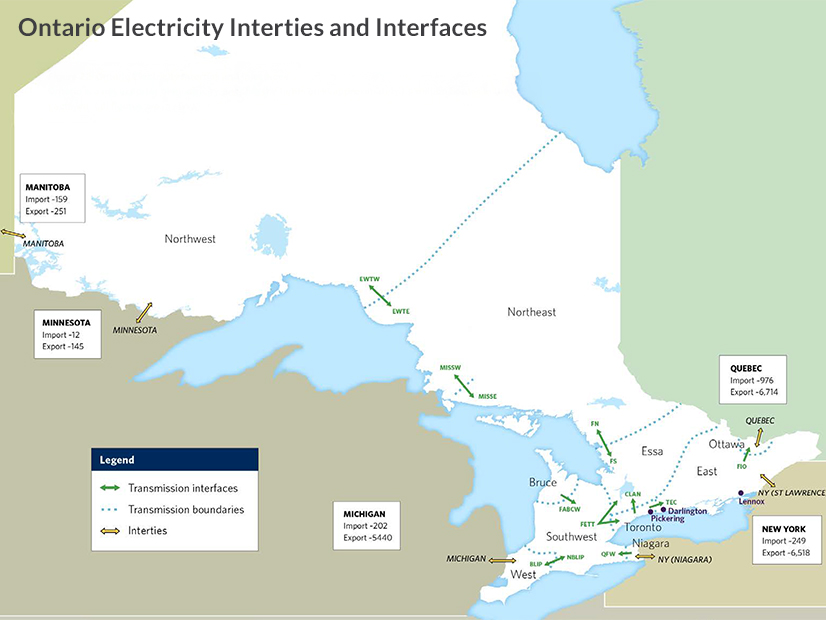
Between 2021 and 2023, Ontario exported more than 40 TWh of electricity to the U.S., about 9% of Ontario’s total annual generation. In addition to displacing higher-emitting generation in the U.S., the exports have generated $400 million to $700 million annually. 

Noting that both NYISO and MISO have warned of growing capacity deficits as fossil fuel plants are shuttered, the plan calls for increasing those exports “once Canadian-American relations normalize.” To that end, Ontario and IESO are evaluating transmission upgrades to move power from generators to existing and potential new interties.  

Costs

The plan makes frequent reference to the government’s efforts to control electric costs, which it says are at or below the rates in the U.S. Great Lakes states. (See related story, IESO Purchasing 3,000 MW of Energy and Capacity.) 

On April 1, the Canadian government eliminated the previous government’s consumer carbon tax on natural gas and gasoline, which is expected to save Ontario households more than $700 annually. 

“Ontario’s plan to meet growing energy demand while reducing emissions does not and will not include a carbon tax,” the plan says. 

IESO Purchasing 3,000 MW of Energy and Capacity

Continuing Ontario’s efforts to replace costly contracts signed under the previous government, IESO announced it has signed contracts with 27 natural gas and wind generators.

In its second medium-term procurement (MT2), the ISO agreed to purchase 2,006 MW of natural gas-fired capacity ranging from $450 to $795/MW-business day beginning in May 2026 and 2029. The weighted average price was $598/MW-business day.

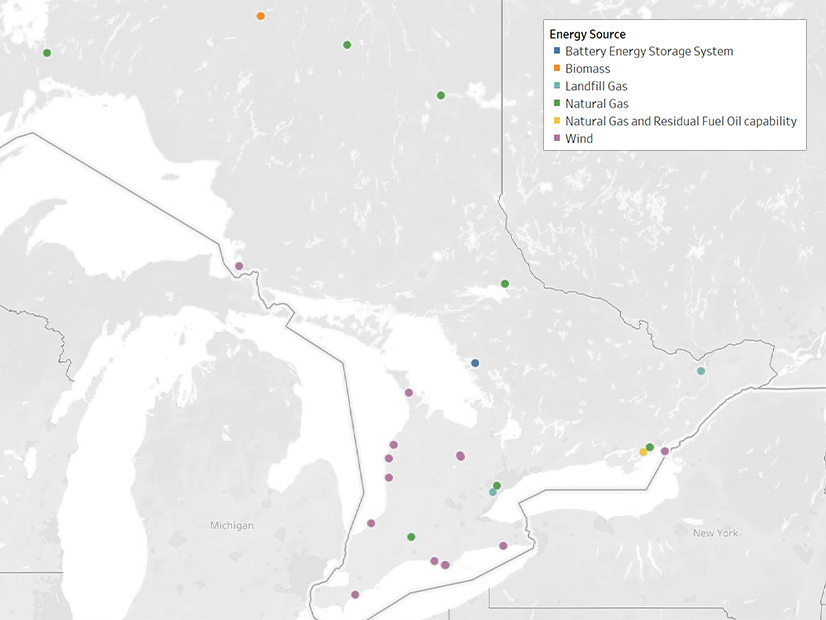
It also agreed to buy 963 MW from 16 wind generators at prices ranging from $60/MWh to nearly $125/MWh, plus 24 MW of biomass ($204.94/MWh) and 7.82 MW of landfill gas at two sites for $110/MWh and $150/MWh. The weighted average price for all renewables was $79.55/MWh.

IESO said the energy projects were priced 21% below their previous contracts. Although capacity costs were higher than in the ISO’s first medium-term procurement (MT1), the Ontario Ministry of Energy and Mines said the costs were 65% below the costs of building new gas-fired generation.

“This success stands in sharp contrast to the fixed, above-market contracts signed by the previous government, which locked Ontario into long-term costs well above market prices,” the ministry said in its integrated energy plan, released in June. (See Ontario Integrated Energy Plan Boosts Gas, Nukes.)

The Progressive Conservative Party has ruled Ontario since ousting the Liberal Party government in 2018. Between 2004 and 2016, the Liberal government signed more than 33,000 contracts, some at up to 10 times market rates and for as long as 20 years, according to the ministry. It criticized what it called “an ideologically driven energy agenda that prioritized over-market, expensive, intermittent generation at a time when it wasn’t needed.”

MT2 RFP results | IESO

MT2 sought to procure existing energy and capacity resources that are uncontracted or coming to the end of their contracts in the next four years. The winners received five-year contracts beginning on May 1 of either 2026, 2027, 2028 or 2029.

“Medium-term [requests for proposals] provide resources greater certainty through longer forward periods and flexible five-year commitments, as compared to the annual capacity auction, while ensuring the IESO is not locked into commitments that are no longer reflective of changing needs,” the ISO said.

Eligibility

Biofuel, electric storage and gas facilities were eligible for capacity contracts; biofuel, solar and wind generators were invited to seek energy contracts.

Dispatchable loads and demand response resources were excluded and instead invited to enter IESO’s annual capacity auction. The ISO will outline potential changes to the capacity auction, including a revised tie-break methodology, on June 26.

The ISO said MT2 gave generation owners not ready to invest in repowering their facilities for the Long-Term 2 (LT2) Energy solicitation more time to prepare proposals for the future LT3 RFP with a contract in place.

1st Procurement

In MT1 in 2022, IESO agreed to acquire 757 MW of nameplate capacity wind and natural gas (309 MW summer UCAP) at prices ranging from $265 to $470/MW-business day (UCAP).

One of the successful bidders in MT1, Atlantic Power’s Nipigon Generating Station, also won a contract in MT2, seeing its price rise from $250 to $449.98, an 80% increase.

IESO spokesman Andrew Dow said he could not say why Atlantic Power bid so much higher in MT2 than in MT1. But he said the ISO’s “general expectation” is that owners of older generators structure their bids “to make sure that they are recovering enough to help [fund] whatever investments or upgrades are needed to keep their facility running for longer.”

The 40-MW Nipigon plant has been operating for 33 years.

The ISO said future medium-term RFPs will reflect system needs and “will likely see increased resource eligibility and competition, including the possible inclusion of new-build resources.”

Future Procurements

Ontario already has contracted for more than 3,300 MW of new capacity, including battery storage, natural gas and biogas, through the Expedited Long-Term (ELT) and LT1 procurements.

The ministry said LT2 will be the largest electricity procurement in the province’s history with a shopping list for up to 14 TWh/year of new energy, equivalent to about 6,000 MW of capacity. The solicitation will be open to energy storage, wind, solar, biomass, biogas, natural gas and energy from waste.

LT2 also will seek 1,600 MW of new capacity resources. Projects will be phased in through four annual intake windows, with in-service dates expected by 2034.

The Ontario Ministry of Agriculture, Food and Agribusiness (OMAFA) and the Ministry of Natural Resources (MNR) will conduct a joint webinar on the LT2 procurement on June 25. MNR will discuss requirements for renewable energy on Crown land. OMAFA will discuss rules for energy projects in prime agricultural areas. The deadline for the first solicitation is Oct. 16.

The province has directed IESO to report back on options for a separate procurement stream for “strategic long-lead projects” such as new hydroelectric generation and long-duration energy storage.

“This stream would help ensure Ontario can continue to plan and diversify its supply mix with assets that support long-term reliability and system flexibility,” the ministry said.

ISO-NE CEO Gordon van Welie Announces Retirement

ISO-NE CEO Gordon van Welie has announced plans to step down at the end of 2025. He will be replaced by longtime ISO-NE COO Vamsi Chadalavada.  

“I have been fortunate to spend 25 wonderful years at the ISO,” van Welie said in a statement. “I’m extremely proud of what we’ve accomplished, from a startup organization to a sophisticated company with world-class people, systems and processes that is well positioned to help the region navigate an increasingly complex energy environment.” 

Van Welie is by far the longest-serving CEO of any RTO or ISO, having led ISO-NE for most of its history. He has overseen ISO-NE’s transition to becoming an RTO, the launch of its capacity market, the shift in the region’s generation mix from coal and oil toward natural gas, and multiple overhauls of its wholesale electricity markets.  

More recently, ISO-NE has embarked on a series of major changes to its capacity market and is running the first-ever longer-term transmission planning (LTTP) procurement, intended to reduce transmission constraints between northern Maine and southern New England. (See ISO-NE Discusses Details of New Prompt Capacity Market and ISO-NE Releases Longer-term Transmission Planning RFP.) 

In the retirement announcement, van Welie said the region’s supply and demand outlook should remain “relatively stable through the next several years.” The ongoing overhaul of the capacity market and anticipated longer-term changes in the region’s resource mix and load profile make this “an appropriate time to step aside and allow new leadership to steer the path forward.” 

Cheryl LaFleur, chair of the ISO-NE Board of Directors, applauded van Welie on his time with the RTO and said he has “led the ISO through significant transformation, building a strong team of professionals who keep the lights on and run the markets for our region.” 

Vamsi Chadalavada | ISO-NE

“I know Gordon will be missed greatly at the ISO and across the New England region,” LaFleur added.  

“Gordon van Welie is an institution,” said Dan Dolan, president of the New England Power Generators Association. “Gordon has been a thoughtful, innovative and tireless leader for the region. His candor and willingness to engage in difficult, but necessary, conversations is a testament to his commitment to doing what is right for New England.” 

Chadalavada, who is slated to take over for van Welie at the beginning of 2026, has worked for ISO-NE since 2004 and has served as COO since 2008. As the RTO’s second in command, he oversees the operation of the power system and market operations, along with system planning. Like van Welie, Chadalavada worked as a vice president for Siemens Power Transmission and Distribution before joining ISO-NE. 

“We are very fortunate to have someone with Vamsi’s leadership, experience and qualifications ready to take on the role,” LaFleur said. “His appointment demonstrates our strong confidence in his ability to lead the organization through the grid transition ahead.” 

Reacting to the news, ISO-NE stakeholders commended van Welie on his tenure and retirement and emphasized the major role he has played in ISO-NE’s evolution. Industry members also praised the selection of Chadalavada as the next CEO, saying he’s well prepared to take the reins. 

“NEPOOL would like to congratulate Gordon on the announcement of his upcoming retirement,” NEPOOL Chair Sarah Bresolin said. “During his tenure, NEPOOL has benefited from his intellect and dedicated service. Gordon leaves the region in a strong position.” Bresolin applauded Chadalavada’s appointment, which she said leaves the region “in very good hands.”  

Alex Lawton of Advanced Energy United said Chadalavada “is the right person for the job, and we are confident he will work diligently and collaboratively with stakeholders and the New England states to navigate the evolution of our grid.” 

Joe LaRusso of the Acadia Center said van Welie’s retirement comes at a “pivotal moment” for ISO-NE, with power demand likely to grow after a long period of stability, intermittent renewables set to come online, and increasing conflicts between state and federal energy policy.  

“I expect the transition from Gordon to his successor Vamsi Chadalavada to be a smooth one,” LaRusso said, adding that Chadalavada “is well aware of all of the challenges facing the ISO and will certainly see current initiatives such as capacity market and reliability reforms, and Longer-Term Transmission Planning and FERC Order 1920 compliance through to completion. The ISO won’t deviate much, if at all, from its current path, and Gordon’s stamp will inevitably remain imprinted on ISO New England for some years to come.” 

NWPCC Appoints Former BPA Official as New Executive Director

The Northwest Power and Conservation Council has hired Peter Cogswell, the former director of intergovernmental affairs at the Bonneville Power Administration, as its next executive director.

Cogswell will assume the position on July 7, succeeding Bill Edmonds, who stepped down as executive director in April after serving for five years with the council, according to a June 23 news release.

Council Chair Mike Milburn said in a statement that Cogswell “is an experienced leader with an impressive energy policy background who is deeply connected to the region.”

“We’re confident that Peter will be able to hit the ground running at this critical time as we ramp up our work on the next Columbia River Basin Fish and Wildlife Program and Ninth Northwest Regional Power Plan,” Milburn added.

The council is required under the Northwest Power Act “to develop a plan to ensure an adequate, efficient, economical and reliable power supply for the region.” NWPCC publishes a plan every five years, with the next plan slated for release in 2026, according to the council’s website.

Cogswell will oversee the development of the plan amid an expected sharp increase in energy demand and shifting energy priorities under President Donald Trump. (See NWPCC’s Initial Demand Forecast Sees Sharp Growth for Northwest and NWPCC Considers Trump, Data Centers in Regional Power Plan.)

For example, the council’s initial 20-year forecast found that electric vehicles and data centers could bring annual energy demand in the Pacific Northwest to 31,000 and 44,000 aMW by 2046 — up from an average of approximately 22,000 aMW during the past several years.

The council also is considering updating models used in the 2021 power plan after Trump rescinded several clean energy initiatives implemented under former President Joe Biden.

Cogswell brings decades of experience from the energy industry to the council.

According to his LinkedIn profile, Cogswell joined BPA in October 2007 and served as council liaison and the agency’s director of intergovernmental affairs until January 2022. During his time with BPA, Cogswell helped develop two of the council’s power plans.

After leaving BPA, Cogswell assumed the role of director of government and external affairs at renewable energy developer Simply Blue.

The release also notes that Cogswell worked at PacifiCorp and as deputy chief of staff and policy advisor to former Oregon Gov. Ted Kulongoski. While in the governor’s office, Cogswell “led efforts to adopt several early clean energy policies, including Oregon’s first renewable energy standard,” according to the release.

“I am very fortunate to have engaged extensively with the council over the course of my career,” Cogswell said in a statement. “I am excited about the opportunity to build on that experience by working with members, staff and a broad group of partners, including tribes, states, utilities and advocates, to ensure the council continues its important work in the region.”

The NWPCC is an interstate group with representatives from Idaho, Montana, Oregon and Washington, and works with regional partners, including the Bonneville Power Administration, the U.S. Army Corps of Engineers and the Bureau of Reclamation, as well as with FERC, to implement its plans and programs.

FERC Approves Changes to PJM Capacity Deficiency Rate

FERC has approved a PJM proposal to revise the penalty rate for resources that are unable to meet their capacity obligation due to a decrease to their accreditation after it receives a commitment in a capacity auction (ER25-2002). (See PJM Stakeholders Endorse Proposals to Rework ELCC Accreditation.) 

The change reduces the penalty rate to match the resource’s clearing price, rather than the full deficiency rate taking the greater of 120% of the clearing price or $20/MW-day. The issue was brought before stakeholders after shifts in the expected generation mix and performance data led parameters for the 2025/26 third Incremental Auction (IA) to shift toward higher winter risk. (See “Revised Incremental Auction Parameters Endorsed,” PJM MRC/MC Briefs: Jan. 23, 2025.) 

The higher deficiency rate would remain in effect for resources that cannot meet their obligation due to reductions in installed capacity (ICAP) or testing failures. 

PJM argued the approach would continue to incentivize the owners of resources with diminished accreditation to procure replacement capacity to cover their shortfall without being punitive. It also would avoid requiring consumers to pay for capacity that is not expected to be provided. 

Even without the deficiency penalty, PJM argued that market sellers still would have an incentive to procure replacement capacity at a cost equal to the clearing price plus expected capacity performance penalties for not meeting their obligation during any capacity deployments. 

“Because the capacity market clearing price is a reasonable proxy for the replacement cost of capacity, and a seller’s expected net non-performance charges will be strictly greater than zero, due to the risk of non-performance, if they fail to purchase replacement capacity, we find that a rational seller would prefer to purchase replacement capacity under PJM’s proposal,” the commission wrote in its June 17 order. 

Another package rejected by the Markets and Reliability Committee (MRC) would have frozen resources’ effective load carrying capability (ELCC) ratings and accredited unforced capacity (AUCAP) at the values used in the base residual auction (BRA), which several stakeholders argued would have put the full brunt on consumers when generators could mitigate the issue by maintaining high performance. 

Compared to the prior equivalent forced outage rate demand (EFORd) accreditation paradigm, which considered only generator performance, PJM said the shift to ELCC has widened the factors that can affect a unit’s rating to include factors beyond the owner’s control, particularly how the load forecast affects seasonal risk. It argued this creates an unhedgeable risk for market sellers that could be mitigated by creating an exception to the deficiency rate. 

The commission wrote the filing balanced the benefits of updating ELCC ratings with the latest information between IAs without penalizing resource owners for changes in accreditation that may be driven by factors beyond their control. 

“While shifts in capacity accreditation under EFORd were related to an individual unit’s performance, shifts in capacity accreditation under ELCC are driven by more complex, system-wide factors that ‘are not solely a function of such resource’s performance, and may not entirely be within the control of the capacity market seller,’” the commission wrote, citing PJM’s filing. “Moreover, prior to PJM’s transition to the ELCC methodology, sellers could elect to offer less capacity in the BRA than their full (unforced capacity) to mitigate against potential reductions in a resource’s UCAP, whereas under the ELCC methodology, a resource must offer the entirety of its accredited UCAP, which reduces a resource’s ability to mitigate against a potential shortfall due to a reduction in accredited UCAP value.” 

Christie Dissents

Dissenting on the June 17 order, Chair Mark Christie wrote that PJM’s proposal leaves little incentive for market sellers to procure replacement capacity and is emblematic of a capacity market design that is under constant repair while failing to deliver reliability at least cost. He cited a protest from the Independent Market Monitor (IMM) finding that the cost to purchase replacement capacity in the 2026/27 and following delivery years would be between $63,875/MW-year and $118,625/MW-year, while PJM analysis found that annual capacity performance penalties would be below $24,156/MW-year in 99% of the scenarios considered. 

“What’s left is a ‘penalty’ with no teeth. Without an incentive for generators to honor their capacity commitments, generators have less incentive to make the system reliable, and consumers are left with increased reliability risk in the event of an emergency,” he said. 

Christie wrote that the proposal constitutes a shifting of risk from resource owners to consumers, a dynamic he argued has presented itself repeatedly in deregulated markets. 

“This proposal is only the latest example of the endless Rube Goldberg tinkering with the minute details of the capacity market construct. This time, PJM seeks to ‘mitigate’ potential ELCC variability. Such tinkering has gone on for years and never reaches a point of stability — every ‘fix’ makes the market construct more incomprehensible (and as I have said many times, it’s an administrative construct, not a market),” he wrote. “The Federal Power Act (FPA) is, at its core, a consumer protection statute, and the principal role of this commission is to ensure consumers have reliable and affordable power. Today’s order serves neither of those purposes. On the contrary, I agree with the market monitor, that the revisions approved in today’s order — contrary to the FPA and this commission’s principal role — inappropriately impose reliability risk on consumers.” 

PJM stakeholders have formed a senior task force to evaluate several components of ELCC, with a proposal aimed at adding transparency to the process endorsed in May. The task force has shifted its focus on how the winter-skewed risk modeling behind ELCC interacts with the summer-focused capacity emergency transfer limit (CETL). (See “Stakeholders Endorse Proposal to Add Transparency to ELCC,” PJM MRC Briefs: May 21, 2025.) 

IMM Argues Proposal Undermines Reliability

The Monitor argued the proposal would reduce the incentive for market sellers to cover deficiencies resulting from accreditation changes and undermine the purpose of ELCC accreditation, which is to determine the expected reliability contribution for each resource. If resource owners do not procure replacement capacity, the Monitor said system reliability could be implicated. 

The Monitor also argued the elimination of the penalty payments would outweigh the benefit load may realize from not paying for capacity PJM determines is unlikely to be dependable. 

FERC Accepts Revisions to SPP’s WEIS Market

FERC accepted SPP’s tariff revisions for its Western Energy Imbalance Service (WEIS) market that allow the grid operator to begin a market hold for reliability-based concerns when requested by a balancing authority (ER25-1137).

In its June 20 order, the commission found the proposed tariff revisions to be just and reasonable and accepted them effective April 5, 2025. It said the changes will help facilitate the WEIS market’s operation by specifying that SPP will suspend the calculation of dispatch instructions for certain resources and treat them as self-dispatched if a participating BA asks for a market hold.

FERC said the changes allow the WEIS market’s relevant entities — the participating BAs, the SPP West Reliability Coordinator and SPP as the market operator — “to coordinate and timely respond to reliability-based events while avoiding significant disruptions to the operation of the WEIS market and providing clarity regarding settlements for the time period of those events.”

It noted that “importantly,” the BAs and SPP West RC “retain their NERC-mandated reliability responsibilities in the WEIS market.”

SPP’s Market Monitoring Unit protested the tariff revisions, saying they were not clarifying in nature. The MMU said a market hold initiated by a BA for reliability-based concerns instead is a new condition that would suspend the market dispatch.

The Monitor said that while a BA should be able to initiate the hold, a lack of detail in two key areas rendered the proposed revisions unjust and unreasonable. It argued they have neither clear guidelines for the types of reliability concerns that would trigger a market hold nor an explanation of the actions that should be taken leading up to and after the market hold. It also asserted the proposals lack transparent communication to market participants.

FERC disagreed, finding that a “reliability-based concern” is appropriate because the BAs are the entities ultimately responsible for initiating market holds in their respective areas. It noted that SPP said a market operator does not have authority to dictate what BAs can and cannot do for reliability reasons, pointing to a list of examples of reliability-based concerns that could warrant a market hold.

“These examples illustrate that there are myriad operational issues that could pose a risk to reliability,” the commission said. “We recognize a balancing authority’s responsibility to maintain reliability in the face of a wide range of potential operational issues and the necessary flexibility required to adequately do so.”

The commissioners also were “unpersuaded” by the MMU’s contention that the revisions are unjust and unreasonable because they fail to set forth an expectation that the BAs will exhaust alternative solutions before implementing a market hold. FERC found that the tariff doesn’t need to “set forth such an expectation in order to be just and reasonable because the tariff does not govern balancing authorities’ responsibilities to ensure reliability.” Those responsibilities are governed by the applicable reliability standards, it said.

SPP has administered the WEIS market on a contract basis since February 2021, balancing generation and load for 12 participants, primarily in the Rocky Mountain region. The RTO has said the market participants eventually will transition to either its Western RTO expansion or its Markets+ program. (See SPP to Phase Out WEIS as New Market Offerings Expand.)

Calpine Sees Support for TCC Auction Proposal from NYISO Stakeholders

Calpine came to the NYISO Installed Capacity Working Group on June 17 with its proposal to create on- and off-peak transmission congestion contract auctions. 

The company unveiled its proposal in May to the Budget and Priorities Working Group. (See Calpine Proposes Time-varying TCCs at NYISO.) 

TCCs allow generators to hedge the congestion component of their output. Jung Suh, manager of ISO analytics for Calpine, said this was important for intermittent resources because of their varying load profiles. Calpine’s proposal would reduce the cost of congestion by better aligning it with load and generation behavior and improve the modeling of the system, he argued. 

“We just need more granularity in the marketplace,” Suh said. “Granularity is transparency, and transparency for the market is a good thing.” 

Tony Abate of the New York Power Authority asked Suh to clarify how the proposal would improve modeling of the system. Suh replied that TCCs themselves improve modeling the system as a side benefit as they naturally model congestion. But keeping TCCs to 24-hour blocks forces the model to consider only daylong averages, which does not reflect load. 

NYISO is the only grid operator not to offer time-granulated financial transmission rights, and one stakeholder wondered why that was. Suh said he wasn’t sure: Calpine made the same proposal five years ago and stakeholders supported it, but there may have been other, more pressing matters for NYISO that may have overshadowed the project, like integrating the Champlain Hudson Power Express line. 

Greg Williams, manager of TCC market operations for NYISO, said that to his recollection, market participants had not ranked the project highly enough five years ago to move forward. 

“This one has been on the list for prioritization since 2000, and it just hasn’t garnered enough support,” Williams said. 

Doreen Saia of Greenberg Traurig asked whether there were any provisions in the ISO’s governing documents that might come into play if trying to change the structure of the TCC market. 

Williams said there was some language that covers the concept of TCCs but that if anything were to go forward, more tariff revisions probably would be needed. He also said there wasn’t a credit policy that covers TCCs that has the ability to deal with on- and off-peak products. This would require “substantial revision.” It’s not impossible, Williams explained, but it would require more work. 

“The reality here is that there would be a great deal of additional effort that would be necessary — better policy, software systems and so on — to mode this forward,” Williams said.

Another stakeholder said they were worried that NYISO was falling behind the other ISOs in terms of their practices, lending support for updating the TCC market. 

Abate also pointed out that the Market Monitoring Unit already identified issues with the TCC market in the context of the ongoing dynamic reserves project. 

“My concern is that … I don’t think we can look at this in a vacuum without thinking about the impacts of the changes, the monumental changes, we’re already making with dynamic reserves,” he said.  

Another stakeholder responded to Abate saying they were thinking the same thing, but that is why they supported prioritizing the project. The TCC market would be affected by other changes and needed an update to reflect how intermittent resources and batteries impact the grid.