Vineyard Wind created a partnership with the City of Salem, Massachusetts, on Sept. 30, stating it would turn an area of Salem Harbor into the state’s second offshore wind port, if the developer wins a new procurement bid from the state.
The agreement is part of Vineyard Wind’s 800-MW and 1,200-MW Commonwealth Wind proposals, submitted under Massachusetts’ 83C iii competitive solicitation that opened in May.
Florida-based Crowley Maritime, through its New Energy subsidiary Crowley Wind Services, would purchase a 42-acre area surrounding Salem Harbor and serve as the long-term port operator.
“We see a tremendous opportunity in this new industry being based out of Salem,” Mayor Kim Driscoll told NetZero Insider. The turbines will be installed off Martha’s Vineyard, but “the vast majority of the activity is on the site shoreside,” she said.
Vineyard Wind will use the port at Salem Harbor for turbine assembly and staging, as well as for the storage of blades, nacelles and tower sections before offshore installation.
Salem Harbor is also a popular recreation site, and Driscoll said the city will work to fit reactional activities with the new offshore wind port expansion.
“We still want it to bring people to Winter Island Park, another popular recreation site,” which sits on a plot of land that juts out into the harbor, she said.
Crowley Maritime will offer OSW workforce training on how to install turbines, rendered here, to environmental justice communities surrounding Salem. | Crowley MaritimeSalem Harbor is adjacent to historic districts and neighborhoods in the downtown area of the city, so it will be important to work with residents and businesses to limit the impact of the construction and operations at the new port, Driscoll said.
Historic Salem’s preservation committee will be involved in the public review process and is “willing to meet with any developer to ensure historic resources are part of the consideration,” said Emily Udy, preservation manager at Historic Salem.
“Addressing questions of how new uses [of the harbor] impact the existing character are an important part of our mission to ensure that the historic resources of Salem are preserved for future generations and that new development complements the historic character of the city,” Udy said.
Salem Harbor is not a new industrial site. The city recently replaced its coal-fired power plant with a gas-fired plant at the Salem Harbor Power Station, a project worth $1 billion in investment and construction that came online in 2018. The city government learned a lot from that project in terms of how to keep the community appraised of activities and involved in the process, Driscoll said.
“Constant communication is really necessary,” she said.
“There will be traffic from construction, but there won’t be coal ash on trucks traveling through the area,” Driscoll said. “A dozen years ago, the waterfront was so different.”
Vineyard Wind predicts the project will create about 400 full-time equivalent job years (FTE) during construction at the port and another 500 FTEs over the first five years of operation. Construction and staging the wind projects, along with day-to-day port operations, will create an additional 900 FTEs.
“As OSW continues to expand, new purpose-built ports will be key to the success of this industry,” Lars Pedersen, CEO of Vineyard Wind, said in a statement. “With a new OSW port in Salem, the commonwealth can ensure that it is ready to face the demands of a rapidly growing industry.”
The first OSW port in Massachusetts will be built in New Bedford.
Massachusetts expects to announce the winners of OSW bids on Dec. 17, with the execution of long-term contracts planned for March 2022.
The Hawaii State Energy Office (HSEO) is partnering with the state’s Department of Health (HDOH) to give away $2.1 million in rebates to incentivize diesel vehicle owners to switch to electric equivalents.
The Diesel Replacement Rebate (DRR) program will offer a 45% rebate to both public and private organizations that replace medium- and heavy-duty vehicles with an electric equivalent.
“Ground transportation represents about one quarter of Hawaii’s oil consumption and energy sector greenhouse gas emissions,” HSEO Chief Energy Officer Scott Glenn said. The DRR will “support job creation and reduce exposure to pollution for people who rely on mass transit.”
Qualified vehicles would include buses for transit, schools, and shuttles, as well as medium- and heavy-duty trucks. These would be type A, B, C and D school buses; class 5+ medium- and heavy-duty buses; and class 5, 6, 7 and 8 medium- and heavy-duty trucks.
Applicants must have owned and operated the vehicle in Hawaii for at least two years prior to applying, the vehicle must be fully operational, and it must have an estimated remaining life of at least three years.
Eligible replacement vehicles must be fully electric and zero-emission, resemble the replaced vehicle “in form and function,” be the most recent model available, be of a similar weight and horsepower class, and cannot be a retrofitted vehicle.
The DRR program guide also emphasizes that the replacement vehicle must operate in Hawaii for at least five years upon deployment.
DRR applicants can also apply for a charging station to go with the new vehicle, which would be included in the 45% rebate total. The rebate will only go toward the charging station itself; equipment and services such as batteries, solar panels, additional wiring and maintenance are not included.
HSEO is also running the Hawaii Energy charger rebate, which can be combined with the DRR. The DRR program guide notes that the charger rebate “will be netted from the project cost and the Diesel Replacement Rebate will be applied to the remaining cost.”
The DRR allows the salvaging and selling of parts from the diesel vehicles, yet the program guide notes that “the income may be used to meet the cost-sharing or matching requirement of the award. Therefore, the rebate amount will remain the same.”
Applicants must match at least 55% of the cost and cannot use federal funding for cost matching. Applicants also cannot request more than $1.2 million.
“Reducing harmful emissions from diesel engines is important to protect human health and our island environment,” Kathleen Ho, HDOH deputy director for environmental health, said in a statement. “We are excited to partner with the Hawaii State Energy Office to reduce air pollution and improve air quality for the people of Hawaii.”
Applications for the DRR will open on Oct. 29, but the HSEO recommends prospective applicants attend a webinar on Oct. 21 for detailed information.
The North Carolina Utilities Commission’s two-day technical conference on Duke Energy’s integrated resource plan (IRP), held Thursday and Friday, produced a flurry of industry jargon, the meaning of which varied depending on who was using it.
Duke’s “sequential peaker method” for determining when to retire specific coal plants in its 10,000 MW fleet was pitted against an “endogenous selection” approach recommended by clean energy advocates but labelled by Duke as being “single-source.”
Led by the Southern Alliance for Clean Energy (SACE) and the Carolinas Clean Energy Business Association (CCEBA), the advocates also pushed back on Duke’s plan to replace its coal-fired generation with significant new natural gas plants, calling instead for “all-source” procurements that could produce a portfolio of cheaper, cleaner alternatives. Duke argued that it already used competitive, “multisource procurements” based on the distinct system needs behind any one request for proposals (RFP) for new generation.
At the core of this war of words is Duke’s plan, as outlined in its September 2020 IRP, to keep 3,050 MW of its current coal fleet online at least through 2035 and add 9,600 MW of natural gas-fired generation. The technical conference was focused on the methodologies behind those figures and how they might be changed going forward.
Speaking for SACE, Rachel Wilson, principal associate for industry consultant Synapse Energy Economics, laid out the case for endogenous selection, in which the ordering and timing of coal retirements are determined by an advanced analytic platform, specifically the EnCompass modeling software.
“The first step in Duke’s methodology was to establish an order for unit retirements — rather than attempting to answer that key question … do the coal plants economically serve customer requirements — and then ranking them according to their value,” Wilson said. “Duke simply ordered the units according to capacity, with the smallest retiring first. So, the company’s economic analysis totally ignored the actual economics of these coal units.”
With endogenous selection, “the model’s decision is based on a calculation of unit profitability,” she said.
“For a unit that exists in an RTO like PJM, this is just the summation of its energy capacity and ancillary revenues minus its costs,” she said. “For Duke, which is operating in a vertically integrated area, this means a unit’s retirement is based on the cost of providing the next megawatt, whether that could be from an existing resource on the system, or it could be the cost to bring a new unit online.”
Duke executives at the technical conference defended the utility’s decarbonization strategy as balancing incremental emissions reductions with the need to maintain affordability and reliability. Downplaying energy storage as a not-yet-mature technology, they argued that Duke’s reliance on natural gas has allowed it to begin retiring coal while adding significant amounts of intermittent renewables, mostly solar. Since 2005, the utility has cut its carbon emissions per megawatt-hour of power generation from 1,025 pounds to 600 pounds today, according to figures in its IRP; it expects further reductions to 350 lbs/MWh by 2035.
Mike Quinto, lead engineer on Duke Energy Carolinas’ resource planning and analytics team, similarly defended Duke’s “sequential peaker” methodology for determining coal plant retirements as encompassing both capacity expansion and production cost modeling that provides a more granular and transparent analysis than endogenous selection.
Using the sequential peaker approach, Duke first set the order of plant closures — which essentially came out from smallest to largest — and then used production cost computer modeling to determine the most economical date for retiring each facility, Quinto said. This approach “acknowledges that the retirement of one unit impacts the operations of the remaining units in the fleet,” he said. “So, as we retire one unit, it may require the rest of the fleet to respond in a different way.
Endogenous selection looks at plants independently, he said, which “would inaccurately represent the incremental costs that each unit has to the system, and further blur the lines of the true value to the system.”
“It removes chronology … how the system operates from one hour to the next or one week from the next, which is important for how renewables and how batteries operate and how the system responds to these,” Quinto said. “We lose some of that detail with these models. And finally, we lose the ability to dynamically forecast the costs of the existing units when determining that appropriate retirement date.”
South Carolina Plan Revised
Duke’s IRP is essentially a consolidated plan covering both Duke Energy Carolinas, which serves portions of both North and South Carolina, and Duke Energy Progress, North Carolina’s largest utility. When first released, Duke framed it as an advance in its planning process, noting it had developed six different scenarios for coal retirements and emissions reductions. Advocates in both states, however, quickly criticized the plan’s recommended base case, which kept more than 3,000 MW of coal online through 2035, along with the 9,600 MW of new natural gas.
The South Carolina Public Service Commission sent Duke back to the drawing board in June, with specific instructions on recalculating certain elements of the plan. For example, Duke’s modified South Carolina IRP, submitted in August, included additional scenarios that incorporated solar projects with single-axis tracking, which increases project output.
Duke’s new preferred plan retires all coal by 2035, also adding in 600 MW of onshore wind and 1,250 MW from energy efficiency and demand response initiatives, neither of which had been included in the original plan. Company executives at the NCUC technical conference also reported the utility would be using EnCompass as its modeling platform for its 2022 IRP, along with improved stakeholder engagement.
The NCUC has already held a number of public hearings on the original plan and collected thousands of pages of arguments from both sides, said Commissioner Dan Clodfelter, who chaired the Thursday and Friday sessions. But under state law, the commission can make comments on the plan but cannot order revisions, which to a certain extent refocused the debate more on Duke’s upcoming 2022 IRP, rather than further changes to the 2020 plan. (See Outspoken Public Pushes for Duke to Lead on Climate.)
Representing CCEBA, Steve Levitas, senior vice president at Pine Gate Renewables, a North Carolina developer, specifically called for any new all-source procurement to be implemented with Duke’s next IRP, rather than delay any upcoming renewable procurements.
“Absent new legislative direction, the commission should require immediate large-scale procurement in renewable energy,” he said.
The Colorado Experience
John Wilson, director of research at Resource Insight, Inc., criticized Duke’s approach to procurement as “single-source,” waiting until a coal plant is uneconomic to issue an RFP to replace it. With a technology neutral, all-source procurement, “you can provide the economic basis for scheduling those retirements much more effectively,” he said.
He pointed to Colorado’s experience with all-source procurements, which in 2016 allowed Xcel Colorado to retire two coal plants and replace them via an RFP that produced 417 bids. The resulting portfolio included wind, solar, storage and existing natural gas. Prices ranged from just over $0.01/kWh for wind, $0.023/kWh for solar and $0.03/kWh for storage, according to a presentation Xcel made earlier this year to the Michigan Public Service Commission.
Jeremy Fisher of Synapse discussed another 2018 all-source procurement by Northern Indiana Public Service Company (NIPSCO), which found that replacing existing coal plants with renewables provided more value and lower costs for the utility’s customers. To accurately compare costs, the RFP was done in advance of setting the order and timing of plant retirements, Fisher said.
“The first question they asked is, what’s the fundamental value of each of these [coal] units in 2023 and then, is there a better combination of retirements that happen in 2023 or 2028, and [offer] various opportunities to avoid impending capital requirements that would come through environmental obligations,” he said.
As a result, the utility targeted 2023 for retiring most of its coal fleet, keeping one plant online until 2028 and later moving up the retirement of two plants to 2021, Fisher said.
Commissioner Clodfelter also pressed the Duke executives on the issue. “As I hear it, you are defining need in a more discreet, ‘componentized’ way and looking at procurements relative to components or elements in that need,” he said. “And what I hear the other party’s advocating for is that we should define what they call total system need, and then you should seek procurement of a portfolio of resources that in the aggregate will satisfy that total system need.”
Asked about a 2018 RFP to replace peaking capacity, Jim Northrup, Duke’s director of economic analysis, said the 33 bids included natural gas, both combustion turbines and combined cycle, and hydropower. At the same time, under a state-mandated competitive procurement program for renewable energy, the utility has offered contracts for hundreds of megawatts of new solar in recent years, some of them to third-party developers.
Glen Snider, Duke’s head of long-term planning, said that fossil fuel retirements, new procurement and planning must take into account the evolution of technology and the grid.
“The system didn’t evolve overnight, and it’s not going to retire all of it overnight,” Snider said. “So, when you think about room for hydrogen or offshore wind, we really need to think beyond just retiring coal assets. By the time I get to the 2030s. I’m going to have a bunch of natural gas generators that went in in the late ‘90s and early 2000s that will be 35 years old. They are going to be approaching the end of their useful lives, and that will create additional need and room for new technologies to fill a future need that we’re really not talking about today.”
Texas regulators last week ignored political pressure in approving a pair of ERCOT requests for debt-obligation orders that will allow the grid operator to securitize $2.9 billion in market debt as a result of high charges incurred during the February winter storm.
The Public Utility Commission on Thursday tweaked and accepted a settlement reached between 46 parties and participants over ERCOT’s proposal for a $2.1 billion market uplift to cover short pays to the market, despite letters sent to each commissioner by Lt. Gov. Dan Patrick (R) in opposition to the agreement (52322).
Patrick said he supported the prioritization and securitization of retail electric providers (REPs) unaffiliated with generation companies. “However,” he said, “any portion of the proposed settlement agreement that does not calculate cost exposure on a net basis … is unacceptable.”
The state’s second most powerful politician said that the intent of legislation authorizing the securitization process (House Bill 4492) was to “calculate cost exposure on a net basis” by taking into account the profits of affiliated generators — such as Luminant and NRG Energy, affiliated with REPs TXU Energy and Reliant, respectively.
“The Texas Senate would not have passed a bill that gave money to companies that profited during the winter storm,” said Patrick, who as lieutenant governor is president of the Senate.
Commissioner Will McAdams, leading the PUC’s open meeting after Chairman Peter Lake recused himself, responded to the letter before the commission took up the docket. He said it was “well taken” and its assertion of legal intent “is always valuable to agencies” as they try to “execute the intent of the legislature and the letter of law.”
“With the submission of the unopposed settlement, we have a path forward and the mechanics of accomplishing securitization in an order,” McAdams said. “This is a complicated proceeding, with many intervenors. If we breach the unopposed settlement agreement, there’s a very good chance we would prevent staff from being able to move forward in a timely way to [meet] the deadline for issuing the order.”
The PUC faces a statutory deadline of Oct. 14 for issuing orders in the two proceedings. ERCOT’s other debt-obligation requests involves financing $800 million owed to the market by cooperatives and municipalities (52321). (See Texas PUC Hearings Begin on $2.9B ERCOT Securitization.)
“This settlement is that tool to provide badly needed liquidity into a market that has been significantly disrupted by” the storm, McAdams said. “Many actors are limping along, waiting on state-backed relief. If we restart this process, I fear that it may result in bankruptcies on the part of our most at-risk market participants.”
Patrick responded by issuing a statement after the meeting, calling the PUC’s decision “bad public policy and a bad decision for Texas taxpayers.” He also took shots at the commissioners, who replaced those seated during the winter storm, and HB4492’s author, Rep. Chris Paddie (R).
“After the winter storm, I called for the resignation of members of the PUC. They all resigned,” Patrick said. “I can assure you that the new commissioners’ Senate confirmation hearings would not have gone as smoothly if senators knew they intended to disregard the will of the Senate.”
He said Paddie, who recently said he was stepping down after eight years in the legislature, has been “disingenuous” during the legislative process and that he may be “seeking a highly compensated position in the same electric industry that stands to benefit from his position of no netting and no transparency.”
House Speaker Dade Phelan stood up for Paddie, chair of the powerful House State Affairs Committee, posting on Twitter that he was grateful for his “steady leadership, his character and his integrity.” Saying that implementing legislation related to ERCOT’s market “merits a deliberative, factual hearing,” Phelan said he has asked Paddie to convene a hearing to gather a progress report on the grid.”
“Shot … chaser,” tweeted energy consultant Doug Lewin, contrasting the Patrick and Phelan statements.
Lewin added that the political tit-for-tat is a fight about “who gets how much” of the $2.1 billion bailout, which is likely to be ultimately paid by ratepayers. “This is not a fight about how to give assistance to ratepayers or prevent another outage.”
State Senate Grills Gas Regulator
Texas senators took out their ire on the Texas Railroad Commission (RRC), which regulates the state’s oil and gas industry, when it became apparent that legislation they wrote earlier this year included a loophole that allows natural gas companies to opt out of weatherization requirements if they don’t voluntarily declare themselves to be “critical infrastructure.”
The opt-out fee is only $150. Should the facilities declare themselves “critical infrastructure,” they would be forced to spend significantly more money on weatherizing their facilities.
A timetable that requires a committee to map the state’s critical energy infrastructure by next September, and then gives the RRC 180 days to issue its weatherization rules, also raised the legislators’ hackles.
“Our weatherization rule will not be adopted for this winter because we have to put the map together,” RRC Executive Director Wei Wang said during the Senate Business and Commerce Committee’s Sept. 28 hearing on the energy industry’s winter preparations.
Texas RRC Executive Director Wei Wang (2nd from left) explains the commission’s weatherization plans during a Senate hearing. Also seated: Texas Energy Reliability Council Chair W. Nim Kidd, Interim ERCOT CEO Brad Jones, and PUC Chair Peter Lake. | Texas Senate
“Wait a minute … you haven’t done it yet?” Sen. Robert Nichols (R) asked.
Wang responded that the commission is just following Senate Bill 3’s language. The comprehensive bill was the legislature’s primary response to February’s devastating winter storm. (See Abbott Signs Texas Grid Legislation into Law.)
“Your rulemaking proposal sucks, and we need a different direction,” Sen. John Whitmire (D) told Wang.
“Appreciate your guidance on that particular issue, and if we need to change the language, we will,” Wang replied.
The committee directed Wang to ask the RRC’s legal counsel as to whether lawmakers can revise the legislation during the current special session that ends Oct. 19.
“This gives the Texas Railroad Commission a great opportunity to prove up its worth,” Sen. Donna Campbell (R) said. “If you don’t, it can just be moved the PUC. It’s going to be looked at. You better prove up your worth.”
The FERC–NERC joint inquiry into February’s generation outages in Texas and the Midwest during the storm have fingered the lack of gas infrastructure weatherization as the primary culprit. Other reports and studies have come to the same conclusion. (See FERC, NERC Share Findings on February Winter Storm.)
After nearly two hours of debate at Wednesday’s Markets and Reliability Committee meeting, PJM stakeholders endorsed tariff revisions on rules related to initial margining and closed out the work of the Financial Risk Mitigation Senior Task Force (FRMSTF).
The joint proposal by Duke Energy (NYSE:DUK) and Perast Capital Management won endorsement with a sector-weighted vote of 3.42 (68.4%), passing the 3.33 threshold for adoption. The proposal was initially endorsed at the Aug. 4 FRMSTF meeting with 69% support and was presented for a first read at the August MRC. (See “Initial Margining Solution,” PJM MRC Briefs: Aug. 25, 2021.)
Duke’s Matthew Holstein said that before GreenHat, FTR collateral was based upon the difference in bid/purchase price and the FTR’s historical performance, allowing GreenHat to select “free” paths whose cost was less than historical congestion
Holstein said the Duke/Perast proposal would make collateral requirements based upon volatility, which more closely relates to actual risk. It would also institute a minimum credit requirement, which would prevent a portfolio the size of GreenHat from ever existing again without a posting of collateral.
The proposal’s initial margining based on historical simulations methodology (IM-H) includes a 95% confidence interval, which represents the range of values likely to include a population value. PJM conducted analyses at confidence levels of 99%, 97% and 95% when evaluating the IM-H calculation.
Perast’s James Ramsey said they suggested 95% because the failure rate was reduced to 1.21% from the status quo of 8%. Ramsey said the 97% interval proposed in PJM’s proposal would cost an extra $140 million to achieve a failure rate improvement of 0.3%.
The PJM proposal only received 37% stakeholder support at the August FRMSTF meeting.
“You can summarize the two packages as the quality insurance plan versus the Rolls Royce insurance plan,” Ramsey said. “We believe the 95 is a vast improvement over where we are today and is the right cost-benefit.”
Tariff Language Debate
Several stakeholders, however, were concerned with the tariff language changes implementing the proposal and managed to get PJM to include a key calculation in them.
Troiano said that after the first read at the August MRC and reviewing stakeholder feedback, the RTO realized there was an “opportunity for confusion” in the previous redlines of the tariff language and some “unintended consequences.” PJM started over and redid the redline language, making sure it was “more concise” and “simpler” and contained fewer changes, she said.
Adrien Ford of Old Dominion Electric Cooperative noted that one section of the tariff revisions “seems to be missing” the exact weighting parameters that determine how the initial margin values for FTR obligations would be calculated, as detailed in the proposal.
“We’re totally willing to provide transparency to members, but there are other elements of the modeling assumption and simulations we believe must be held confidential,” Bloczynski said.
Ford said she “maintains the assertion” that the tariff language didn’t reflect the package before the committee and requested the parameters be included.
“We need integrity in this process, and that includes documenting the will of the committee,” Ford said.
David Anders, PJM’s director of stakeholder affairs, said he believed that “integrity’s maintained” in the redline language. Anders said there are portions of proposals for almost all issues that get documented in the governing document language like the tariff and the Operating Agreement, while other portions are contained in the implementing documents.
Ford said she “wasn’t satisfied” with that response and that she felt like she was “being discounted.” She said the main differences between PJM’s proposal and Duke/Perast’s was the confidence interval and the weighting. While Duke/Perast’s 95% confidence interval is reflected in the redlines, the weighting was left out. “The lack of documenting that here when it’s a key differential in the packages is a concern for me.”
“PJM is choosing which revisions it wants to include, which makes it convenient for PJM,” Hicks said. “While I understand why you want to do that, I can’t fathom this being acceptable.”
Bloczynski reiterated that PJM didn’t believe the weighting figures needed to be documented in the tariff and that it could be documented in the attachment. “I believe that most members trust us to run the market, make decisions and independently monitor risk management efficiently and effectively,” she said.
“To suggest that we can keep these numbers out when it is part of the filed rate is a dangerous precedent to set and runs contrary to everything regarding transparency, reflecting the will of the stakeholders and FERC precedent,” Sotkiewicz said.
PJM General Counsel Chris O’Hara said the RTO had “concerns” about the Duke/Perast proposal but was “trying to respect the stakeholders” by putting the endorsed proposal forward and including the weighting in the supplement document, where there could be an “easier path” toward changing the values if stakeholders decide they need to be changed in the future.
Sotkiewicz said by not adding the weighting, PJM was “setting this up for a really bad battle at FERC” over something that could be resolved by adding the numbers to the redlines.
Greg Poulos, executive director of the Consumer Advocates of the PJM States, said his group continued to support PJM’s proposal, citing findings in an independent consultant’s 2019 report of the GreenHat default. Poulos said the endorsed proposal “looks so much like deja vu” to actions taken by stakeholders after the $52 million credit default by Tower Research Capital’s Power Edge hedge fund in 2007. (See PJM Credit Adder Fails upon Heightened Review.)
Poulos said the report talks about how PJM brought recommendations to stakeholders after the 2007 default, but the membership decided to go in a different direction with reforms. The report said in italics that “PJM should be more assertive in pushing for action needed regarding any critical changes to credit policies, emergency discretion and the like.”
“I think PJM needs to take a stronger position even if certain stakeholders have a stronger voice and go a different way with this,” Poulos said.
A hydrogen-fueled passenger ferry is awaiting U.S. Coast Guard approval before going through test runs in the bay off Bellingham, Wash.
Bellingham-based All American Marine has installed two hydrogen-fueled motors on the 80-passenger Sea Change for Calif.-based Switch Maritime, which plans to use the ferry in San Francisco Bay.
All American Marine President Ron Wille is not aware of any other hydrogen-fueled ferries operating in the U.S., although he said some are working in Scandinavia and Asia.
Wille told NetZero Insider that he does not know how fast the Coast Guard will do its work but said the follow-up test will take three to four weeks after getting a federal green light.
The 73-foot-long Sea Change has 10 hydrogen storage tanks storing 246 kilograms of compressed hydrogen, which are used to generate electricity to be stored in batteries to propel the ferry. That provides enough power to run the Sea Change for 300 nautical miles at a speed of 16 knots. The vessel can reach a speed of 21 knots.
Switch Marine believes it can use denser forms of hydrogen, including liquids, to achieve higher speeds and longer ranges in the future.
Willie said All American Marine has received several inquiries for potential construction of more hydrogen-fueled vessels, but no new contracts have been nailed down so far. He did not know the total price of constructing the Sea Change, saying Switch Marine bought many of the parts and built the hull in California. “It is more expensive than a diesel-powered ferry,” he said.
All American Marine has already built two hybrid ferries that use diesel fuel and electric batteries.
One vessel is the Enhydra, with a 128-foot boat that carries up to 600 people on harbor tours of San Francisco. The other is a 70-foot, 150-passenger ferry operated by Kitsap Transit on the western shore of Washington’s Puget Sound. The ferry connects the city of Bremerton with a pair of towns across the many inlets in the area.
A superblock of commercial and residential buildings in New York City helped engineers demonstrate the benefit of combining an electric chiller and thermal networks for decarbonization, according to Jared Rodriguez, principal of Emergent Urban Concepts.
LeFrak City, a 4,605-apartment development with four commercial properties, was a prime location for testing electrification and thermal energy networks, Rodriguez said during a webinar on Thursday.
The superblock also has complete control over its infrastructure and the land underneath it, making the buildings a good case study before New York City’s Local Law 97 deadlines, he said.
The webinar, hosted by the Northeast Sustainable Energy Association as part of its BuildingEnergy NYC Conference, explored the implications of Local Law 97.
Under the law, buildings over 25,000 square feet, with some exceptions, must meet new energy efficiency and greenhouse gas emissions limits by 2024, with stricter limits coming into effect in 2030.
The law also covers two or more buildings on the same tax lot that together exceed 50,000 square feet, and two or more buildings owned by any condo association that are governed by the same board of managers that together exceed 50,000 square feet.
The goal of the law is to reduce emissions of the city’s largest buildings 40% by 2030 and 80% by 2050.
Thermal Networks
“We are losing a lot of heat through common practices,” such as venting heat out the top of a building, Rodriguez said
Large buildings can layer in new technology, such as air- or ground-source heat pumps when renewing equipment or improving current infrastructure to capture those heat sources, he said. Eventually, buildings like the ones at LeFrak City can achieve ambient temperature distribution.
Thermal flows into and out of a building site can grow and link up over time from a district level to a regional level and even use steam in the ground, Rodriguez said.
When flooding from Hurrican Ida damaged boilers in LeFrak City’s cellars, workers created an ad hoc thermal system that connected functioning boiler rooms with non-functioning boiler rooms to keep service going for residents.
Rodriguez and James Henshaw, a senior energy engineer with Bright Power, analyzed different permanent solutions for LeFrak City, including a variable refrigerant flow heat pump and a combination system of geothermal and supplemental heating and cooling.
Their analysis found that using both an electric chiller and thermal storage system reduced carbon emissions from 3,420 tons of carbon dioxide equivalent (CO2e) annually to 2,058 tons of CO2e. The combined technologies put the lifecycle cost at $25 million, which is lower than the $30 million lifecycle cost of the current energy system.
Weatherization efforts and energy efficiency policies will effectively mitigate an increase in home cooling demand in New York City, according to a new report due for release this month.
Community solar projects are also effective in absorbing excess load hitting the grid as equity cooling programs are outfitting more low-income apartments with air conditioners, the report from consulting firm Guidehouse found.
New York’s Home Energy Assistance Program (HEAP), which helps low-income residents pay the cost of heating their homes, will open a cooling assistance benefit in May 2022. Single residents with a maximum gross monthly income of $2,729, or families on a similar scale outlined in the requirements, can receive a free air conditioner if, because of medical conditions, they could benefit from cool air.
The combination of rising summer temperatures and the “heat island” effect in the city can create unbearable temperatures in apartments without air conditioning, especially those without any airflow, said Dan Rieber, weatherization director of the Northern Manhattan Improvement Corporation (NMIC), during a webinar hosted by the Northeast Sustainable Energy Association on Thursday.
The nonprofit serves as a provider and installer of air conditioning units for programs like the one HEAP is opening under the New York Office of Temporary and Disability Assistance.
Landlords in New York City are required to provide heat and hot water as part of the rental price, but not cooling services. One apartment where NMIC installed an air conditioner was about 89 degrees when the workers arrived, Rieber said.
The city also created a program to provide 74,000 air conditioners to people over 60 during the COVID-19 pandemic.
Cooling Demand
Rising summer temperatures will increase electricity consumption for air conditioning by 17% per household in New York City by 2050, Jim Young, an associate director at Guidehouse, said during the webinar.
However, with advanced building technologies and energy efficiency policies, the cooling load placed on the grid will be 14% less per home in 2050 than what it is now, Young said.
“Direct building measures such as higher efficiency AC, strengthening building envelopes and using cool roof technology have the most significant impact on reducing load,” he said.
Extending cooling access to vulnerable populations would cost between $170 million and $260 million over the next 30 years, Young said, but the benefit of avoiding heat-related medical issues will save the city at least $173 million.
Even with an increase in population and extending cooling to the current remaining non-air-conditioned housing stock in New York City, the residential cooling impact on the grid is relatively minor with a load increase of between 1% and 2%, according to the report.
While networked heat pumps would help mitigate increased strain on the grid and provide a zero-emission solution, air or ground source heat pumps should only be pursued “where they make sense,” Young said. Low-income residents should not have a longer wait time because of cost or construction barriers to get the help they need, he said.
Activists and consumer advocates in New York want to see less industry influence on the state’s clean energy policy recommendations and a greater focus on environmental justice.
The New York State Climate Action Council’s Waste Advisory Panel “was tilted to industry and appeared to be less focused on slashing global warming emissions than on advancing industry interests,” Eddie Bautista, executive director of the New York City Environmental Justice Alliance, said Friday.
“While the Department of Environmental Conservation staff was helpful and discouraging the most audacious industry proposals, they decided to submit a long list of possible initiatives … rather than identify the top five priorities that would provide the biggest climate benefits,” Bautista said.
The Council on Friday heard feedback from the Climate Justice Working Group (CJWG) on policy recommendations from the Waste Advisory Panel, the Energy-Intensive and Trade-Exposed Industries Advisory Panel, and the Just Transition Working Group.
The 22-member Council is working to complete a scoping plan by year-end to help reach the environmental goals laid out in the state’s Climate Leadership and Community Protection Act (CLCPA).
Ending the disposal of food scraps and yard waste at landfills and incinerators is probably the single most important action the state could take to cut emissions from the waste sector, Bautista said. (See Public Wants Tweaks in NY Food Waste Handling Rules.)
Prohibiting landfill disposal is the first step since landfills are the third-largest source of methane emissions in the nation according to the EPA, and the associated heavy truck traffic also harms public health, he said.
“And sending organics to incinerators leads to additional air contaminants and is inconsistent with the state’s environmental justice goals,” Bautista said.
“I don’t think all industry is bad; I think we work hard to clean the environment and that waste-to-energy facilities provide a useful tool to reduce organic pollution,” said Gavin Donohue, CEO of the Independent Power Producers of New York. “I do appreciate what [Bautista] wants here, I just have some issues with some of the facts, that’s all.”
Bautista said that in terms of waste-to energy, he didn’t think incineration was considered a renewable energy resource, but Donohue said that it is covered under the CLCPA, though not under Public Service Commission regulations or the state’s Clean Energy Standard.
Demand-side Changes
The Council also received a brief review of the Sixth Assessment Report of the United Nations Intergovernmental Panel on Climate Change from Amanda Stevens, senior project manager at the New York State Energy Research and Development Authority. (See Too Late to Stop Climate Change, UN Report Says.)
“The global occurrence of extreme weather events is unprecedented and such events will continue to increase in severity and frequency,” Stevens said. “In particular, emissions of greenhouse gases are not slowing down, and the global rate of emissions was higher in the past decade than at any other time.”
Though the Energy-Intensive and Trade-Exposed Industries Advisory Panel’s recommendations make little mention of specific technologies or energy sources, the CJWG wanted to see more attention given to methods that would allow the energy sector to continue to pollute, such as carbon capture and storage (CCS) and low-carbon fuels, said Abigail McHugh-Grifa, executive director of the Climate Solutions Accelerator of the Genesee-Finger Lakes Region.
The panel’s priorities may require reevaluation in terms of what should be promoted as industry solutions under the CLCPA, McHugh-Grifa said.
“We recommend strongly emphasizing demand-side changes such as process efficiency, materials recycling, materials substitution, waste reduction and improved product longevity,” McHugh-Grifa said. “Fossil fuel combustion for industrial heat should be greatly reduced, replacing it with electric heat whenever feasible.”
For industrial processes in which electricity is not viable, such as cement production, green hydrogen is a potential alternative, she said.
“However nearly all hydrogen commercially available today is produced from fossil fuels, and so-called blue hydrogen produced from fossil fuels but using CCS to reduce emissions could actually result in net increases in greenhouse gas emissions compared to burning gas or coal,” McHugh-Grifa said. “And I’ll just note that the Climate Action Council’s very own Bob Howarth has done some excellent research in this area. (See NY Study Highlights Rising Methane Emissions.)
Bob Howarth, Cornell University professor of ecology and environmental biology, pointed out that Sweden now has an operating plant that uses mostly renewable electricity to make steel.
“All of the heating is coming from electricity. They’re using a tiny bit of hydrogen just as a chemical reactant in it, but they’re using about 2% of the amount of hydrogen that they would have been using for the heating,” Howarth said. “So, the technologies are changing rapidly, and I would encourage us to pay attention to that changing world in which we live and begin to do everything we can to make sure we minimize the use of all hydrogen.”
This latest IPCC report placed a heavy emphasis on methane, which supports the CLCPA accounting approach. The IPCC report says that, to date, methane accounts for 0.5 degrees Celsius of all global warming, compared with 0.75-degree attributable to CO2, Howarth said.
“At a minimum, hydrogen proposals should be subject to review and possible denials under Section 7 of the CLCPA prohibiting state actions that impose disproportionate pollution burdens on environmental justice communities,” McHugh-Grifa said.
Elizabeth Yeampierre, executive director of UPROSE, Brooklyn’s oldest Latino community-based organization, pointed to the “precautionary principle,” which says that when scientific evidence on potentially harmful actions by industry or government is uncertain, public health decisions must be made in favor of prevention.
“So, the goal and the idea that the scientists and the environmental justice movement had is that from soup to nuts, from beginning to end, the process has to be one that builds, that enhances, that honors health, particularly of communities that have a legacy of toxic exposure,” Yeampierre said.
By prioritizing the precautionary principle, racial justice and equity, the state will be able to come up with transformative recommendations, “not just for New York, but literally for the rest of the world,” Yeampierre said.
The CAC aims to issue a draft scoping plan by year-end and hold public meetings throughout 2022 before releasing a final clean energy plan in 2023.
PJM stakeholders last week approved revisions to the Energy Price Formation Senior Task Force (EPFSTF) charter while questioning changes requested by Exelon.
In a sector-weighted vote of 2.88 (57.6%) at the Markets and Reliability Committee meeting Wednesday, members approved the charter revisions resulting from an issue charge endorsed at the June MRC meeting. The previous issue charge was aimed at examining PJM’s operating reserve demand curve (ORDC) and transmission constraint penalty factors and the possible creation of a “circuit breaker” to control energy prices in an emergency. (See PJM Reserve Price Formation Issue Charge Approved.)
Susan Kenney, PJM markets automation manager, reviewed the revisions to the EPFSTF charter, saying those in the original version were “strictly a copy-paste” from the June issue charge as well as closing out the prior work efforts of the EPFSTF.
The first key work activity in the revisions featured education on the current and pending market rules for use of the ORDC and transmission constraint penalty factors in LMPs, including the input assumptions for the curve.
The second key work activity from the issue charge featured exploring potential circuit breakers or other stop-loss approaches that could limit extreme pricing when the cost “likely far exceeds the value of any contribution to preserving grid reliability.”
Language in the expected duration of work section calls for an effort to “expedite voting” on the first two key work activities before the downward sloping ORDC takes effect in PJM on May 1, 2022. FERC approved the new curve in May 2020, allowing PJM’s LMPs to reach or exceed $12,050/MWh in cases of extreme reserve shortages. (See FERC Approves PJM Reserve Market Overhaul.)
The third key work activity features exploring potential enhancements to PJM’s ORDC rules to address the impact of recent changes in the RTO’s dispatch protocols on forecast uncertainty and to examine and address the additional market and credit risks of the ORDC changes related to the recent pricing events in ERCOT, SPP and MISO from the polar vortex in February.
A second version of the charter introduced by Exelon included additional clarification to some of the out-of-scope items in the second key work activity, stating, “Changes to PJM’s ORDC, reserve product structure and penalty factors outside of use in the circuit breaker are out of scope.”
Stakeholders were unable to reach a consensus at the EPFSTF meeting Aug. 26 over Exelon’s suggested revisions, and members chose to endorse the original revised charter without them, supporting it 60%.
Sharon Midgley of Exelon said the company’s proposal “provides important clarifications” to the second key work activity in order to “focus and expedite” the group’s work on the circuit breaker.
Paul Sotkiewicz of E-Cubed Policy Associates said he was supportive of the Exelon alternative because it would allow stakeholders to concentrate on the circuit breaker and not on other issues.
Adrien Ford of Old Dominion Electric Cooperative said she was concerned Exelon’s proposal could limit the scope of the work of the task force. Ford said the additional language in the second key work activity “presupposes things that are out of scope.”
“We would not want to see any changes that would limit the scope of the work effort,” Ford said.
Steve Lieberman, assistant vice president of transmission and PJM affairs for American Municipal Power (AMP), said that the Exelon changes appeared to be “an end-around of getting something that people didn’t get when we voted on the issue charge.”
Natural Gas and Electric Markets Issue Charge Approved
Members will begin examining the alignment of natural gas and electric markets this month through a new senior task force assigned to the MRC after an issue charge presented by Dominion Energy was approved with a sector-weighted vote of 4.26 (85.2%).
Jim Davis, regulatory and market policy strategic adviser for Dominion, reviewed the problem statement and issue charge at last week’s meeting. Davis first presented them at the August MRC meeting. (See “Natural Gas and Electric Markets Issue Charge,” PJM MRC Briefs: Aug. 25, 2021.)
Davis said one major change was made to the issue charge since August: removing an item that called for avoiding discussions on gas market reforms that can only be resolved by FERC or the North American Energy Standards Board (NAESB). He said Dominion decided to eliminate the item after stakeholders questioned the language.
“We think there’s some compelling arguments to have discussions on items that can be reformed [in] the gas markets,” Davis said.
The key work activity in the issue charge includes providing education on topics like the history of pipeline and electricity coordination, pipeline tariffs, products, procurement, the impact of intermittent generation on the system, and imbalance charges and penalty structure.
Davis said education is “going to be critical” for the coordination effort to be successful.
Susan Bruce, counsel to the PJM Industrial Customer Coalition (ICC), said the work to be conducted is an “important conversation” that “links to so many other big-picture issues that we are tackling.” Education will be a key piece, she said, but some of the issues involved won’t be able to be solved through the stakeholder process because of FERC’s and NAESB’s jurisdictions.
Bruce also said the ICC has “reservations” about PJM load “bearing the burden” of some of the lack of flexibility that may exist on the gas side. “This conversation in some respects becomes an economic flexibility conversation.”
Independent Market Monitor Joe Bowring said he appreciated Dominion’s changes to the issue charge on the jurisdiction item and requested that discussions also include an examination of the reasons for pipeline inflexibility. Bowring said stakeholders should also consider recommendations to make to FERC regarding “gas pipeline business models and practices.”
Greg Poulos, executive director of the Consumer Advocates of the PJM States (CAPS), said coordination between energy generation and natural gas is “not an easy effort” to tackle and has been a concern across the country for years.
Poulos said the scope of the issue charge was a concern for the advocates because it could include areas in which PJM has no decision-making ability but could later incur costs depending on what path stakeholders decide to follow. “We don’t want to see those kinds of costs included in the PJM wholesale cost,” he said.
Poulos requested a motion to defer a vote on the issue charge until more discussions could be conducted to work on the scope, but that failed with a sector-weighted vote of 2.5 (50%), falling short of reaching the required 3.33 (66.6%) threshold.
Market Suspension Vote Delayed
The MRC delayed a vote to endorse a proposed solution and Operating Agreement revisions to address rules related to market suspension after representatives from Calpine and Vistra made a motion to defer until further discussions take place at the Market Implementation Committee.
Stefan Starkov, senior engineer for PJM’s day-ahead market operations department, reviewed the proposal and revisions. The proposed rules were first endorsed at the June MIC meeting. (See “Proposed Rules for Market Suspension Endorsed,” PJM MIC Briefs: June 9, 2021.)
Starkov said PJM wanted to “address a gap” in the tariff language regarding market suspensions, specifically how to settle the real-time market if prices couldn’t be determined for a certain period. Starkov said the revisions were designed to provide clear business rules to account for a market suspension where the RTO cannot clear or produce market results.
Some of the proposed OA revisions include updating language on day-ahead market suspension by removing existing language on settlements of day-ahead and financial transmission right target allocations at real-time quantities and prices in the event PJM cannot clear day-ahead prices; and adding language on notifying participants of a market suspension.
Another section clarifies the real-time market suspension definition as the “inability to produce economic zonal dispatch solutions for at least seven five-minute intervals.”
Starkov said the new section, Declaration of Market Suspension, outlines the scenarios for determining real-time market prices. Starkov said that if the market suspension is less than or equal to six hours, then the real-time prices associated with the market suspension would be the average of the real-time prices for all intervals of the proceeding and subsequent hours.
If the suspension is greater than six consecutive hours and day-ahead prices are available, Starkov said, then the real-time prices would be the day-ahead prices for each corresponding hour. If there are no clear day-ahead prices, then the real-time prices would be set to $0/MWh.
Calpine and Vistra said they were concerned that the rules were inadequate.
Calpine’s David “Scarp” Scarpignato said they may not adequately address longer‐term market suspension scenarios, including those lasting a week, a month or longer. The concern stems from the concept of compensating generators for an extended period of time “based only on their cost‐based offers, which are based solely on short‐run marginal costs,” he said.
Scarp said longer‐term compensation at only cost‐based offers “diverges from market dynamics and expectations.” He said Calpine and Vistra are proposing to add another time‐segmented solution that would kick in if a market suspension were to last for one week and that the compensation should include an adder above the short‐run marginal cost represented by cost‐based offers.
“All these market suspensions are highly unlikely, but if they do occur, it is important to get things right,” Scarp said.
Scarp made a motion to defer the vote on the tariff and OA revisions until the MIC considers and votes upon supplemental procedures that would govern in the event of a longer-term market suspension, which could then be added to the existing proposal. He said the longer-term scenario wouldn’t change the original proposal but would simply be added to it for a future vote at the MRC.
Stakeholders approved the deferral with a sector-weighted vote of 4.05 (81%). The longer-term scenario will now go to the MIC for further discussions.
Resource Adequacy Charter
David Anders, director of stakeholder affairs for PJM, reviewed a proposed charter during a first read to create a new senior task force addressing resource adequacy topics.
Anders cited a letter issued by the Board of Managers on April 6 that urged stakeholders to address a series of topics related to the capacity market after the completion of the Critical Issue Fast Path (CIFP) process addressing the minimum offer price rule.
The letter cited several topics to be discussed, including:
evaluating all aspects surrounding the appropriate level of capacity procurement;
examining the need to strengthen the qualification and performance requirements on capacity resources;
considering clean capacity/energy auctions as an option to allow for procurement of clean resources; and
evaluating the need for PJM’s procurement of additional reliability-based services, with a particular focus on reliability needs in the face of the changing resource portfolio and increased penetration of intermittent resource technologies.
Anders said PJM is proposing the creation of the Resource Adequacy Senior Task Force (RASTF) to discuss the topics listed in the board letter and to recommend possible changes to the capacity market. Anders said the new senior task force would report to the MRC and be the “central clearinghouse” for consideration of all the capacity-related issues.
To ensure proper coordination, Anders said, the charter includes reporting protocol for work on the capacity market performed at other PJM groups like the Quadrennial Review currently being discussed at special sessions at the MIC, load forecasting at the Load Analysis Subcommittee, and reliability products and services at the Operating Committee.
Individual issue charges discussed at the RASTF would ultimately be developed and approved by the MRC to address the specific capacity market work streams, Anders said, including the timing of the work.
Anders said PJM is still working on the final language contained in the RASTF charter and is looking for more comments on the existing language from stakeholders. The committee will vote on the charter at the Oct. 20 MRC meeting.
Energy Efficiency Add-back
Jeff Bastian, senior consultant with PJM’s market operations, provided a first read of the joint Monitor/PJM proposal addressing the calculation of the energy efficiency (EE) add-back mechanism. Members had unanimously endorsed an issue charge presented by the Monitor at the August MIC meeting. (See “Energy Efficiency Add-back Issue Charge Endorsed,” PJM MIC Briefs: Aug. 11, 2021.)
Bastian said the EE add-back mechanism is applied to capacity auctions to prevent the “adverse reliability impact” associated with double-counting EE as a capacity resource and as a reduction in the forecasted peak load. The problem is the current method of determining the add-back megawatt quantity applied to a Base Residual Auction does not require it to match the megawatt quantity of EE resources that clear in that auction. Bastian said the add-back quantity in a BRA will normally exceed the cleared quantity, resulting in an artificial increase in the clearing price.
The proposed solution calls for rewriting the manual language to permit PJM to calculate the EE add-back in the capacity market clearing so that the total EE add-back megawatts offset the total cleared EE megawatts in the BRA.
Bastian said the work timeline is anticipated to take two months to ensure that the modified EE add-back method is implemented with the next BRA for the 2023/24 delivery year. PJM is currently asking FERC for a delay of the BRA, pushing the date from Dec. 1 to Jan. 25. (See PJM Proposing 2-Month Capacity Auction Delay.)
The Monitor initially requested that the “quick-fix” process be used to complete work for the upcoming BRA, but some stakeholders requested an additional month of discussion to explore options. The issue charge was amended to use the “CBIR Lite” (Consensus Based Issue Resolution) process and take two months instead of one to complete it.
“We thought that waiting another month to get MRC endorsement would be cutting the timing awfully close,” Bastian said.
Erik Heinle of the D.C. Office of the People’s Counsel said his office views EE as an “important tool to get to [D.C.’s] decarbonization goals” and would like a better understanding from PJM and the Monitor on the approach being proposed and the impacts.
“While we obviously want accuracy in the process, I want to make sure we’re not devaluing that resource in a way that will be detrimental to our ratepayers,” Heinle said.
PJM will seek endorsement of the proposal at the Oct. 20 meeting.
Consent Agenda
Stakeholders unanimously endorsed revisions to the Regional Transmission and Energy Scheduling Practices document presented on the MRC consent agenda. The document was endorsed at the Sept. 9 MIC meeting and contains updates related to NAESB’s Wholesale Electric Quadrant v3.2 Business Practice Standards that take effect Oct. 27. (See “Energy Scheduling Practices Revisions Endorsed,” PJM MIC Briefs: Sept. 9, 2021.)
Members Committee
PJM Administrative Rates
The Members Committee endorsed the proposed solution and tariff revisions related to PJM administrative rates despite some members questioning the RTO’s funding methodology.
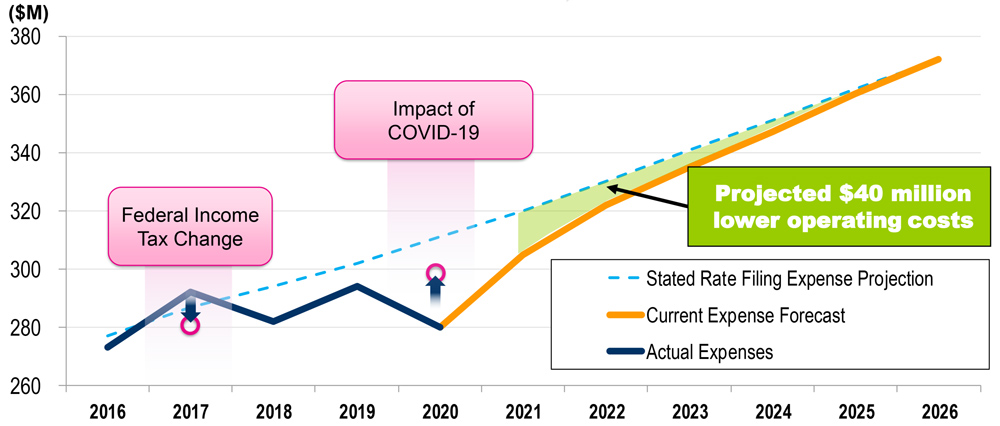
PJM’s proposal called for changing its administrative cost recovery from the current practice of initial charges at stated rate levels with a varying quarterly refund to the new practice of monthly rates based on that month’s costs and that month’s billing determinations. The proposal was endorsed with a sector-weighted vote of 3.84 (76.8%).
Jim Snow of PJM reviewed the proposal and tariff revisions that have been worked on by stakeholders and the RTO for more than a year. Snow said the proposal was developed in conjunction with the Finance Committee and is “specific only” to PJM’s cost recovery from the membership listed in schedule 9 of the tariff and received unanimous support from the Finance Committee in July.
Snow said the administrative rate review was initiated to examine “rate equity” across the PJM membership to avoid cross subsidization among the different customer classes. Snow said the review also was conducted for “overall revenue adequacy” of PJM.
The proposal “adjusts with changes in usage patterns” of the services that PJM provides and the costs of providing the services, Snow said, and is designed to avoid over- and under-collection of funds to finance the RTO.
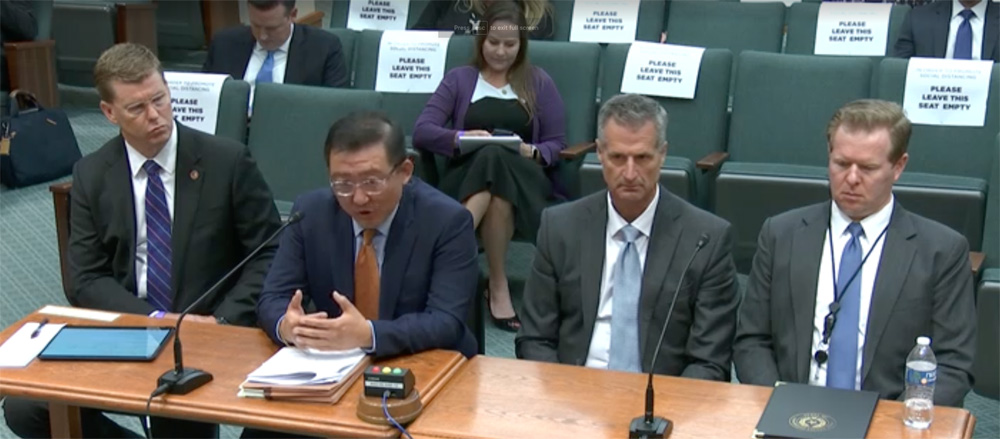
Jason Barker of Exelon said his company prefers having the “rate predictability” in the existing system, and introducing uncertainty in the rates presents risk to load-serving entities and its customers. Barker said it seemed like PJM changed its objectives this year, prioritizing revenue adequacy and rate equity over the previous objective of maintaining low-rate volatility and multiyear rate certainty.
“We have concerns that the transition to a formula rate will introduce new risks and costs to load and load-serving entities as a consequence,” Barker said.PJM operating expense comparison with the stated rate filing projections versus the current forecast | PJM
The ICC’s Bruce said she was in the “uncomfortable position” of not being able to support the proposal, echoing Barker’s concerns regarding changes to the formula rate. Bruce said on the equity issue, there’s going to be a “real cost consequence” to members with the changing of the billing for cost-of-service issues related to PJM settlement.
“Customers do value having an expressed rate to help in having a discipline on costs at a utility,” Bruce said.
PJM filed the new administrative rates with FERC on Friday, requesting the commission act by Dec. 1 and to have the tariff revisions take effect Jan. 1 (ER22-26).
Nominating Committee Elections
Members unanimously elected the sector representative nominees for the 2021-2022 Nominating Committee.
The committee reports to the MC and is responsible for identifying candidates to serve on the board. It includes one representative from each of the five stakeholder sectors.
This year’s nominees included: Brian Vayda, executive director of the New Jersey Public Power Authority (Electric Distributors); Delaware Deputy Public Advocate Ruth Ann Price (End-Use Customers); John Brodbeck, senior manager of transmission at EDP Renewables North America (Generation Owners); Bruce Bleiweis, of DC Energy (Other Suppliers); and Dominion’s Davis (Transmission Owners).
Transparency Forum
CAPS’ Poulos reviewed a proposed charter for the creation of a new transparency forum, which he said is designed to address issues that currently take place “in the back of the room” among PJM and its stakeholders.
Poulos said the current Stakeholder Process Forum has provided members with an “excellent opportunity” to discuss concerns and suggest improvements to the stakeholder process. The Transparency Process Forum would provide members a new venue with a similar opportunity to address matters “outside of the scope of the Stakeholder Process Forum yet equally important,” he said.
Some of the examples of discussion items sited by Poulos included establishing a formal way to request information and data from PJM and to keep track of responses. He said he would also like to see discussion around creating guidelines and expectations allowing stakeholders to provide input to PJM prior to the RTO making filings at FERC or state commissions.
Poulos said PJM has made great strides in providing more transparency in recent years, but he said CAPS traditionally has more need for information because the group actively participates in less activities in the RTO like markets and delivery of services.
Gary Greiner, director of market policy for Public Service Enterprise Group, asked how the forum would work when typical discussions in the stakeholder process already include questions around transparency. Greiner said that if an issue about transparency comes up during the stakeholder process in a committee, the issue is usually discussed as part of the process.
Poulos said the forum would look at transparency issues that have a “lingering impact” and not ones that come up during the normal stakeholder process.
Barker said that Exelon was “a bit puzzled” over what the purpose of the forum would be and asked for more examples of issues that could be discussed that warrant additional transparency. He said the MC has traditionally been the place to express concerns among stakeholders regarding PJM operations and other deliberations, as it has authority over all the other committees.
Poulos said he will provide more examples of transparency issues at the October MC meeting.
Manual 34 Revisions
Michele Greening, senior lead stakeholder affairs consultant for PJM, reviewed proposed revisions to Manual 34: PJM Stakeholder Process to address the inclusion of forums as stakeholder bodies. The proposed revisions were sponsored by PJM and discussed at the Stakeholder Process Forum, but the RTO is looking for a member to officially sponsor the revisions because the manual changes are supposed to come from the stakeholder body.
Greening said several new forums, such as the Emerging Technology Forum that was established in June 2020, have been created, but Manual 34 doesn’t currently define forum as an official type of stakeholder group. Greening said PJM wants to define what a forum is and “add some parameters” around their establishment and implementation within the stakeholder process.
The RTO is defining forums as a stakeholder body in Manual 34 to provide consistency with other defined stakeholder groups, Greening said, and to provide clarity to the purpose and role of a forum in the stakeholder process.
A forum is being defined as a “stakeholder body formed to address specific topics and scope as outlined in its Markets and Reliability Committee approved charter. Forums are non-decisional stakeholder groups.”
Members will vote on the revisions at the October MC meeting.
Consent Agenda
The committee unanimously endorsed several revisions as part of the consent agenda. They included:
revisions from the Governing Document Enhancement and Clarification Subcommittee (GDECS) addressing administrative changes and clarifications in the tariff and OA. PJM said the revisions were found to be “simple and noncontroversial enough” that they were reviewed one time at the GDECS, receiving unanimous stakeholder support. (See “Consent Agenda Manual Endorsements,” PJM MRC/MC Briefs: July 28, 2021.)
revisions to address making cure periods uniform across the tariff and OA. PJM said appropriate cure periods defined in section 15.1.5 of the OA were originally updated in that document, but not in section 7.3 of the tariff, which involves provisions limited to transmission service customers. (See “‘Know Your Customer’ Tariff Changes,” PJM MRC Briefs: Aug. 25, 2021.)
revisions to address making the definitions of working credit limits uniform across the tariff. The revisions eliminate duplicative definitions of “working capital limit” and leave it only in the definitions section of the tariff.

 Crowley Maritime will offer OSW workforce training on how to install turbines, rendered here, to environmental justice communities surrounding Salem. | Crowley MaritimeSalem Harbor is adjacent to historic districts and neighborhoods in the downtown area of the city, so it will be important to work with residents and businesses to limit the impact of the construction and operations at the new port, Driscoll said.