MISO, TOs: More Time Needed for ROE Refunds

MISO and its transmission owners last Wednesday requested an additional nine months to refund transmission customers after FERC changed the TOs’ return on equity last year.

MISO and the TOs said they need until June 30, 2022, to crunch refund amounts. They said the existing Sept. 23 refund deadline was unattainable (EL14-12-004).

FERC last year enacted a 10.02% ROE for transmission rates effective Sept. 28, 2016, superseding the 9.88% and 10.32% ROEs approved in 2019 and 2016, respectively. Those figures were intended at different times to replace the 12.38% ROE established in 2002, which FERC deemed excessive years ago.

The ROE saga roiled for years while FERC tried to align a prescribed “zone of reasonableness” that better reflected the financial data investors use when deciding to back transmission projects.

FERC ultimately said the 10.02% ROE should be considered effective Sept. 28, 2016. In all, MISO TOs must refund customers for the November 2013-February 2015 and Sept. 28, 2016-Dec. 23, 2020 periods. (See FERC Ups MISO TO ROE, Reverses Stance on Models.)

MISO said it was requesting the extension with the “experience of many additional months of work on the resettlement process” under its belt.

“The majority of the refunds are expected to be complete before the end of 2021. MISO and its transmission owners have completed refunds for years 2013 through 2016 and currently are focused on refunds for the years 2017 and 2018, which are the years that involve the majority of the refund dollars,” the RTO explained to the commission.

The grid operator said it has completed all resettlements for TOs who use a historical test year methodology to calculate their transmission rates.

However, MISO said the remaining one-third of transmission owners use more complex forward-looking transmission rates with a true-up mechanism. It said the refund process is two-fold for TOs with forward-looking transmission rates because ROE revisions must be made through both the forward rate and the true-up.

The RTO also said it had already worked through some refunds under the 9.88% ROE before FERC declared the 10.02% figure effective last May. MISO said it then had to resettle and shave some refunds.

ERCOT Stakeholders Sign Off on More Ancillary Services

ERCOT stakeholders on Wednesday approved a binding document revision that codifies the grid operator’s plans to deploy more operating reserves — and do so earlier — in anticipation of tight conditions this summer.

Jeff Billo, ERCOT director of forecasting and ancillary services, told the Technical Advisory Committee during a special webinar that the grid operator’s near-term strategy is to increase responsive reserve service procurement from 2.3 GW to 2.8 GW during peak load hours on all days and to increase non-spinning reserve service so that at least 6.5 GW of ancillary services are maintained for all hours of all days.

ERCOT will add 1 GW of non-spin for days when a higher potential of weather-forecast uncertainty could result in a higher net load (load minus wind and solar generation). The changes are effective July 12.

“Going forward, ERCOT is going to operate the grid with a greater margin between emergency conditions and normal conditions,” Billo said. “This will cover for the days when we are losing a significant amount of generation due to forced outages.”

The grid operator was forced to call for week-long conservation measures on June 14 when it lost more than 12 GW of capacity to mostly mechanical failures. It ended last week with nearly 10 GW of capacity still offline. (See Generation Outages Force ERCOT Conservation Alert.)

Billo said the forced outages have had a significant impact on ERCOT’s operating reserve margin.

“That change is a big reason we’re increasing the amount of ancillary services going forward,” he said. “You’re getting that physical responsive capacity on the system. We felt that was an important part of the strategy going forward.”

Jeff-Billo.jpg
Jeff Billo, ERCOT | © RTO Insider LLC

As Billo explained to TAC the week before, ERCOT staff is formalizing its forecasting processes, which rely on a staff meteorologist and various vendors. Operating days will be classified as having high, medium or low potential for forecast variabilities, findings that will feed into procuring additional AS.

“Meteorologists are not perfect. It’s a science and an art, and sometimes they miss,” Billo said.

Staff also considered relying on the reliability unit commitment process before deciding to increase AS deployment.

Stakeholders expressed some concern over potential price suppression but passed the other binding document revision request (OBDRR031) by a 25-2 margin, with two abstentions. Retailers Just Energy and Demand Control 2 opposed the motion.

“We rely on the volatility of prices in the current summer to reflect risk in forward summers,” said Luminant’s Ian Haley, who abstained from the vote, during TAC’s discussion. “If this change goes through and there is unbelievable price suppression for the entire summer, that has implications for forward prices.”

Eric Goff, representing the residential consumer segment, urged caution before voting for the measure.

“The consumer segment feels that while ERCOT has pretty clearly said it wants to be conservative in general, it’s reacting to recent events,” he said. “We can tell this has not been a clearly deliberative process. … We prefer this whole issue be revisited when the summer concludes in October.”

TAC directed its Wholesale Market and Reliability and Operations subcommittees to analyze the summer outcomes and provide recommendations during the committee’s October meeting. The WMS will also review the market effects of ERCOT’s more conservative procurement and deployment objectives, while ROS will review the volumetric impacts and the inclusion of constrained capacity in the grid operator’s calculation of physical responsive capability, TAC Chair Clif Lange said.

Billo promised the committee that the grid operator would update the market on its AS procurement by the 20th of each month. The 2022 cycle for updating ERCOT’s AS methodology begins in the fall.

ERCOT issued a market notice Thursday with the details.

In-person Meetings Return in September

ERCOT will resume in-person meetings on Sept. 1, beginning with the WMS meeting, staff told the committee.

The grid operator is considering a hybrid model to accommodate those not ready to return for face-to-face meetings and will share more details during the July TAC webinar.

Energy Consultant Nominated for Open PJM Board Seat

The PJM Nominating Committee has selected a West Coast-based energy consultant to fill the open position on the RTO’s Board of Managers.

David Mills, the owner and principal consultant of Eaglecap Energy Consulting in Seattle, has been nominated to fill the seat held by Neil Smith, former CEO of generation developer InterGen. Smith announced his resignation from the board in April because he accepted an executive position with a company that “would have presented a conflict of interest” with PJM. (See Neil Smith Resigns from PJM Board.)

PJM CEO Manu Asthana announced Mills’ nomination in a letter to stakeholders last month.

Mills is a former senior vice president of policy and energy supply with Puget Sound Energy, where he worked for more than 18 years and also served as chief strategy officer.

In his letter, Asthana said Mills has a “demonstrated track record of strategic leadership” in the power and natural gas industries. Mills previously worked for the Bonneville Power Administration (BPA) and also served as a rescue swimmer and helicopter aircrewman aboard the USS Enterprise in the U.S. Navy.

“The Nominating Committee is confident that David will make significant contributions as a PJM board member,” Asthana said. “David has a great background that is very commercial and very steeped in strategy as well.”

Stakeholders will vote on Mills’ nomination during a special Members Committee meeting July 14.

The Nominating Committee, composed of five sector representatives and three board members, has been especially busy this year.

Asthana-Manu-2020-02-20-RTO-Insider-FI-1.jpg
Manu Asthana, PJM | © RTO Insider LLC

In April, the committee nominated Paula Conboy, former chair of the Australian Energy Regulator, and Jeanine Johnson, vice president of product security at Netgear, to replace board Chair Ake Almgren and board member John Foster. Stakeholders elected the new members at the Meeting of Members in May. (See PJM Stakeholders Elect New Board Members.)

After Smith announced his resignation in April, the committee resumed its search, assisted by the executive and board search firm Korn Ferry International, to identify a candidate to fill the vacancy.

Asthana acknowledged the committee’s work in the search process, saying it performed well after being called upon to nominate three different board members in less than a year.

“They have put in countless hours,” Asthana said. “They have been incredibly thoughtful and conscientious, and I have been really impressed watching them work.”

Proposed NatGas Plants ‘Appear’ Contrary to NY Law, Regulator Says

New York’s environmental regulatory authority is seeking input on permits for two natural gas-fired power station proposals that it says “appear” inconsistent with the state’s climate law.

The New York Department of Environmental Conservation (DEC) released draft permits for the 536 MW Danskammer Energy Center and 437 MW Astoria replacement project and requested public comment by Aug. 29.

“The climate crisis is one of New York’s top priorities,” Commissioner Basil Seggos said on Twitter Wednesday, adding that while there is no final determination on the permits, “DEC found that the current applications haven’t justified the projects or shown compliance with New York’s climate law.”

Opponents of both projects say the facilities are unnecessary and do not align with New York’s emissions requirements.

In March, Rep. Alexandria Ocasio-Cortez joined eight other Democratic U.S. representatives for New York asking Gov. Andrew Cuomo and DEC to consider green infrastructure as an alternative to the Astoria project.

“Moving forward with the implementation of new natural gas-fired power creates nuisances and real health hazards, which the community has vocally opposed,” the legislators said in a letter. “Frontline and diverse communities, like the ones we represent, stand to be disproportionately exposed.”

The Astoria facility is located adjacent to an area of the Bronx that is colloquially known as “Asthma Alley.”

In notices for both projects’ draft permits, DEC said that there are potential substantial GHG emissions associated with the proposed facilities.

“Based on the information currently available, it appears that the proposed [projects] would be inconsistent with or would interfere with the attainment of the statewide GHG emission limits established in the [Climate Leadership and Community Protection Act],” DEC said.

If a proposed project is inconsistent with the law, DEC must justify the project and identify alternatives or GHG mitigation measures.

DEC said it cannot satisfy either requirement without further input.

“We understand [DEC] has not made a final determination related to the [Astoria] project’s consistency with the [CLCPA]; however, as outlined in the project’s draft environmental impact statement, the project is estimated to reduce statewide greenhouse gas emissions by more than five million tons through the year 2035,” David Schrader, senior manager for communications east at NRG Energy, said in an email to NetZero Insider. “In addition, as a long duration backup/standby unit, the project facilitates the reliable interconnection of large amounts of intermittent renewable energy as required by the CLCPA.”

Danskammer Energy believes its upgrade project is “fully consistent with the CLCPA,” according to Michelle Hook, vice president of public affairs.

“Our repowering would replace a 70-year-old power plant with a highly efficient unit that will result in a reduction in statewide greenhouse gas emissions,” she in an email to NetZero Insider. “The new unit would displace not only our own existing power plant, but also other regional electric generation units that emit significantly more greenhouse gases.”

Proposals

As proposed, the Danskammer Energy Center project would replace gas-fired/oil-fired generators at the existing Danskammer station in Newburgh, N.Y., with a gas-fired/ultra-low sulfur diesel (ULSD)-fired combined cycle generator.

“The events of the last few days, during which New York City residents received emergency alerts to reduce power usage, illustrate the continued need for new, reliable power to support and back up our growing renewable grid,” Hook said. “Danskammer believes the issuance of our draft permit recognizes the need for New York to work together with power generators towards achieving its climate goals.”

Hook said the company looks forward to working with NYSDEC on appropriate mitigation measures to move the project forward.

NRG’s proposed Astoria station upgrade in Queens would replace natural-gas and oil-fired combustion turbines with one natural gas-fired/ULSD-fired simple-cycle generator.

In 2010, NRG proposed replacing the existing units with a 1,040-MW facility but modified the proposal last year to 437 MW.

The company is “pleased” with DEC’s decision to issue the draft permits and deem the project application complete, Schrader said.

“This is an important step in securing an affordable and reliable future electric system for New York City,” he said. “As the last few days demonstrated, the need for reliable power is as great as ever and will continue for years to come.” Modernizing the generating station, he added, “ensures that schools, hospitals and homes are powered more efficiently and with dramatically lower emissions.”

NRG expects to begin construction as soon as the permits are finalized, Schrader said, adding that the project will bring more than 500 new jobs to Queens.

“We remain grateful for the ongoing support of our neighbors, labor and trade unions, business leaders and community groups,” he said.

NRG, he added, is looking forward to receiving public input on the project and “working with DEC to ensure the project is consistent with New York State’s aggressive climate goals.”

DEC plans to hold a public hearing for the draft permits in the “near future.”

CAISO Issues Urgent Call for More Summer Capacity

Citing record-breaking heat waves and worsening drought, CAISO on Thursday said it would exercise its rarely used power to call for additional capacity this summer to avert shortfalls and rolling blackouts.

“Summer has barely begun, and we have already had repeated extreme heat events creating dangerous conditions and shattering records across the country,” the ISO, California Public Utilities Commission (CPUC) and California Energy Commission (CEC) said in a joint statement.

CAISO had issued a resource deficiency warning in June after two generators tripped offline in a brutal heat wave, and the Pacific Northwest experienced extraordinary heat earlier this week. Portland, Ore., hit an all-time high of 116 degrees Fahrenheit, while Seattle reached 108 F.

“As a result of these unprecedented climate change-driven heat events, which are occurring throughout the West in combination with drought conditions that reduce hydroelectric capacity, California is using all available tools to increase electricity reliability this summer,” it said. “As part of this effort, the ISO has decided to exercise its authority to procure additional capacity again this year.”

“The ISO’s action is supported by a request by the CPUC and CEC and is taken out of an abundance of caution to ensure electric reliability and preserve the public health and safety of all Californians.”

The last time CAISO used its capacity procurement mechanism was during last summer’s severe Western heat waves, which caused the ISO to order load shedding with rotating outages in August and to declare energy emergencies in September.

Since then, the ISO and CPUC have taken steps to prepare for this summer. The CPUC ordered the state’s three large investor-owned utilities to procure thousands of megawatts of additional capacity, while the ISO instituted market rule changes meant to reduce transmission constraints and other problems that contributed to the August blackouts. (See CPUC, CAISO Take Major Steps for Summer Reliability.)

A huge increase in battery storage was expected to help cope with evening peak demand during heat waves, but some of the expected resources have failed to materialize, CPUC President Marybel Batjer and CEC Chair David Hochschild said in a letter to CAISO CEO Elliot Mainzer that requested additional procurement.

The state’s summer resource adequacy program “had relied on incremental resources coming online for the summer months,” it said. “The CPUC recently received notice that several will be delayed by one to several months, and in some cases will push online dates past the summer window.”

Last summer’s shortfalls occurred during the evening net peak, after solar power ramps down but air-conditioning demand remains high. CAISO and the CPUC hoped hundreds of megawatts of new lithium-ion batteries to store solar and wind power would cover that evening peak, but it may not be enough, Thursday’s action acknowledged.

During a recent CPUC meeting, Batjer said that batteries being shipped from overseas were delayed in transit.

In an email Thursday, CPUC spokesperson Terrie Prosper said that 3,160 MW of new resources, mostly batteries or solar paired with batteries, were anticipated to be online by August 1st. Currently, at least 2,705 MW will be online, and that number will likely increase, she said.

“According to project developers, some of these delays have been COVID-related (e.g., workforce slowdowns), while some have been due to supply-chain issues, including shipping incidents overseas,” Prosper wrote.

Hydropower, one of the state’s main summer resources, is quickly dissipating after an extremely dry winter with early snowmelt. Lake Oroville and Lake Shasta, major hydroelectric generating reservoirs in Northern California, are at 32% and 38% of capacity, respectively, the California Department of Water Resources reported Wednesday. Such low levels could lead to a halt in generation.

The drought has reduced hydropower capacity by 1,000 MW, the CPUC and CEC said.

In addition, demand response programs ordered by the CPUC have not been as effective as anticipated, the letter said.

“The aforementioned events have resulted in a material difference from what the CPUC assumed for the resource adequacy program in establishing requirements for summer 2021 and caused a material change in system conditions,” Batjer and Hochschild wrote. “While the CPUC, CEC and CAISO are collectively working on a number of strategies to address reliability concerns under extreme conditions, these changed circumstances require every tool that is available to the state to be deployed to ensure reliability this summer.

“Accordingly, the CPUC and CEC jointly request the CAISO to use its tariff-based authority to procure additional resources. We specifically ask that the CAISO procure capacity pursuant to its tariff authority for July and August 2021. We also request the CAISO to consider procurement for the September 2021 resource adequacy compliance month if conditions do not improve.”

CAISO’s tariff defines an event triggering use of its capacity procurement mechanism (CPM) as a “substantial event, or a combination of events, that is determined by the ISO to either result in a material difference from what was assumed in the resource adequacy program for purposes of determining the resource adequacy capacity requirements, or produce a material change in system conditions or in CAISO Controlled Grid operations, that causes, or threatens to cause, a failure to meet reliability criteria,” the ISO said in a message Thursday.

CPM Details

CAISO issued a market notice Thursday asking scheduling coordinators with non-resource adequacy capacity willing and able to receive a CPM designation to submit a Customer Inquiry, Dispute and Information (CIDI) ticket as soon as possible — and preferably by July 7.

The ISO is targeting capacity that is at least available during the net-peak hours of 4 p.m. to 9 p.m. Imports must be deliverable to the ISO at a delivery intertie and supported by firm transmission rights — or a reasonable equivalent — to the intertie.

“In addition to submitting a CIDI ticket, parties with capacity available to meet this significant event should also submit offers to the intra-monthly [competitive solicitation procurement] for August, September, and October,” the notice said.

Interested suppliers are asked to submit their tickets with the subject line “Summer 2021 CPM Significant Event” and include the following details:

  • resource IDs;
  • volume of megawatts available for the CPM;
  • dates the capacity is available to serve as CPM capacity;
  • whether the supplier is likely to accept a 60-day designation extension if it were offered;
  • whether the supplier intends to seek compensation above the soft offer cap through a cost showing approved by FERC.

CAISO has scheduled a stakeholder call for Friday at 10 a.m. to discuss the CPM action.

Hydrogen May Hold Key Role in Deep Decarbonization, EPRI Panel Says

The net-zero energy system of the future may rely on many integrated, hybridized resources to reach even the hardest-to-decarbonize sectors, and hydrogen is a rising star in that scenario.

It could help grow long-duration energy storage needed for a renewables-heavy grid, or it can be a lifeline for nuclear power or natural gas.

“If we want to reduce emissions at an affordable cost, while also maintaining grid reliability and resilience, we need to use all the resources that we have, which means coordinating the use of nuclear, renewables and fossils with carbon capture to meet growing energy demands,” Shannon Bragg-Sitton, Integrated Energy Systems lead at the Idaho National Laboratory, said on Wednesday.

At the National Lab, nuclear power is seen as a decarbonization enabler, even though it is struggling in today’s market.

“Nuclear energy currently provides more than half of our non-emitting electricity, but unfortunately, it’s being pushed out of the market in many regions due to a glut of renewable energy … and historically low-cost natural gas,” Bragg-Sitton said at the Electric Power Research Institute’s Electrification 2021 forum.

But an energy market that has a demand for hydrogen could give the existing U.S. nuclear fleet more to do.

“The primary output from a nuclear plant is heat, and we believe that we should be leveraging that heat more effectively,” Bragg-Sitton said. “Rather than reducing reactor power when we have low net electricity demand, we can redirect that heat and electricity to energy storage for later use.”

To that end, she said, the U.S. Department of Energy is supporting demonstration projects that will produce hydrogen on site at nuclear facilities starting this year.

Mitsubishi Power Americas is betting on hydrogen being a go-to long-duration energy storage option for accommodating high amounts of planned renewable generation.

“You can envision a world where we’re probably going to have curtailment of renewable generation on some days, and we might run short to meet peak demand on others,” Todd Brezler, vice president of marketing at Mitsubishi Power Americas, said. “We think long-duration storage — typically in the form of green hydrogen — is a good solution in terms of having technologies available that we really know how to use.”

The company also is looking at blue hydrogen produced with natural gas and is investing heavily in geologic storage for green hydrogen through its proposed Advanced Clean Energy Storage project in Utah and other potential hydrogen hubs around the U.S.

Hydrogen also could have a role to play in putting existing infrastructure to work in a post-natural gas world, according to Mike Rutowski, senior vice president of research and technology development at Gas Technology Institute (GTI).

The institute has a vision for a “carbon-managed future” that integrates the electric and natural gas systems and leverages hydrogen, carbon-neutral fuels or biofuels to repurpose the existing gas infrastructure.

In that vision, the existing gas system is a long-duration energy storage asset that can be decarbonized, Rutowski said. Hydrogen is produced with clean electricity and stored in the existing gas system to be accessed when needed to make energy.

“To do that, we need continued R&D planning and investment decisions and to think about the whole energy system and the broad menu of technology pathways that we can use to meet all of the energy uses economy wide in a decarbonized way,” he said.

Incentivizing Hydrogen

Building out a hydrogen market to reach net-zero by 2050 is going to take incentives and market signals akin to what made renewables competitive today.

Production tax credits and renewable portfolio standards, for example, would go a long way to make hydrogen stand up against low-cost natural gas, according to Rutowski.

Green hydrogen currently costs about $6/kilogram, which is about $45/MMBtu, he said. If the cost drops to an anticipated $1/kilogram with technological advancements, it is still going to be $7/MMBTU. That will not compete against abundant gas at $2/MMBtu.

“That is still a significant cost gap that’s going to require the combination of incentives, market demand and investor pressure as well as companies taking the first move to build the infrastructure and be the first movers,” he said.

It is also important to put a social value on green hydrogen and support first movers in the market, Bragg-Sitton said. Public-private investments are an important way to help scale up technologies and hit a $1/kilogram price within the decade.

Government also can provide an incentive for end use in manufacturing to build demand.

“[We can] incentivize production to grow the market for that clean hydrogen so that we can introduce clean technologies all the way down the line, from the generation of energy to utilization and moving that energy downstream to the product level,” Bragg-Sitton said.

Energy market signals are another measure that will encourage development of long-duration energy storage with green hydrogen, according to Brezler. Mitsubishi, he said, is encouraged that some markets, such as California, are beginning to look at how to compare the per-kilogram cost of hydrogen to other energy storage fuels. (See Panel Examines Future for Green Hydrogen in West.)

The U.S. Department of Energy’s Loan Programs Office offers an important mechanism for the hydrogen market to grow, Brezler added. The LPO invited Mitsubishi in May to apply for up to $595 million to develop the proposed Advanced Clean Energy Storage project.

“Those types of loans help you get over that chicken-and-egg problem, where you’re able to start investing in the infrastructure and get going on green hydrogen,” he said.

Ohio Lawmakers Slow Utility-scale Wind and Solar

Wind and solar developers that want to build utility-scale projects in rural Ohio must first check in with local county commissioners, rather than the state agency that has overseen utility power plant and pipeline projects since 1972, under legislation approved Tuesday during the last minutes of the state’s spring legislative session.

S.B. 52 — introduced in February and amended and revised four times following hundreds of hours of testimony from farmers both for and against, as well as business and manufacturing organizations and growth associations — would create a local voice at the beginning of any future large wind and solar project in the state.

The bill passed the Ohio House of Representatives 52-44, with about 10 Republicans joining all Democrats in opposition. The Ohio Senate approved the newest version of the bill earlier in the day by a vote of 51-12, with four Republicans joining eight Democrats in opposition.

Under the legislation, which Gov. Mike DeWine (R) is expected to sign with an effective date in October, wind and solar developers must contact the boards of county commissioners in counties where the project would be located at least 90 days before filing an application with the Ohio Power Siting Board (OPSB).

The OPSB is an agency created 49 years ago within the Public Utilities Commission to regulate the siting of power plants, transmission lines and pipelines, none of which will be subject to the new hyper local regulation.

Under S.B. 52, the three-member boards would have 90 days either to approve, deny or modify the footprint of a wind or solar farm during a public meeting. That commission decision would be subject to a ballot referendum if at least 8% of those who voted in the most recent election petition the county’s board of elections.

If accepted by the county, project developers would then have up to 300 days to apply to the OPSB, which would begin another round of hearings, including local hearings and adjudicatory hearings in Columbus, which often include negotiations between developers, opponents and the OPSB staff. Applications before the OPSB are usually about 1,500 pages.

The new law would also give county commissioners the right to create “exclusion zones” within unincorporated portions of their county, permanently blocking any wind or solar development, subject again to a referendum vote.

The legislation would also require the OPSB to accept two “ad hoc” voting members when it votes on a wind or solar project. The two would be a county commission and a township trustee from the area impacted by a wind or solar farm. The OPSB includes seven voting members and four nonvoting legislators.

The bill also “grandfathers” a significant number of solar and wind projects already well along in the permitting process before the OPSB.

As originally proposed, the legislation would have required developers to seek permission in each township affected by a proposed development, a provision that prompted some developers testifying before Senate and House utility committee hearings to say they would simply leave Ohio if that became law.

Hundreds of rural residents opposed to an “invasion” of wind and solar projects appeared at Senate and later House committee hearings or sent written testimony in favor of the legislation.

A significant number of their neighbors also turned out to talk about property rights: that is, their right to lease portions of their property for wind or solar projects to create a steady revenue stream buttressing their not-so-steady farming revenue.

Several solar developers meanwhile created an ad hoc group, the Utility Scale Solar Energy Coalition of Ohio (USSEC), initially to oppose S.B. 52, which had quickly reached the Senate and was approved, while the companion legislation, H.B. 118, remained stuck in committee. The two bills were merged in a new version of S.B. 52, which was sent to the House floor this week after five days of hearings and negotiations with committee members who opposed the bill.

Solar developers took on the legislation early, creating an ad hoc group of project developers who testified against the legislation and met with lawmakers in recent weeks in an effort to blunt some the bill’s original provisions.

Following the passage of the legislation, USSEC Executive Director Jason Rafeld was cautiously optimistic about future development under the new law.

“Although the members [of USSEC] remain concerned that S.B. 52 contains numerous vehicles [that] would allow local governments to stop solar development without the benefit of accurate information, we appreciate the willingness of the legislature to engage in discussions and listen to the concerns of the solar development community,” he said in a brief statement Tuesday during an interview. “As a result of countless meetings with the sponsors and legislators, many solar projects will continue, thereby protecting the investment made by companies seeking to build solar energy projects in our state.”

Legislators’ Positions

The debates that began during the first committee hearings continued to the very end, especially on the House floor as one representative, William Seitz (R), tried without success to insert language in the bill allowing township trustees to add their township to “exclusion zones” created by county commissions. The measure, a repeat of what Seitz tried in committee, was soundly defeated.

Before the vote in the House, Rep. Craig Riedel (R), a co-sponsor of the legislation from northwest Ohio where there has been significant wind farm development, said renewable development had become a “quality-of-life issue” for many of his constituents.

“This legislation addresses the pressing issues of what will be done once a project is proposed and how local involvement can be installed in the Ohio Power Siting Board process.

“My constituents, and those throughout the state, are asking for a voice. … The beauty of this legislation is that it gives local control to elected county commissioners for them to decide what is best for their community,” he said.

Opposition among Democrats, most of whom represent suburban and metropolitan areas, never waned during the months of committee hearings. Before the House vote, Rep. Kent Smith (D) said the bill was simply unfair to renewable developers.

“I cannot support substitute Senate Bill 52 because it creates a legislative double standard, as it unfairly singles out wind and solar energy and imposes on only them additional regulatory processes, from which other forms of energy infrastructure are exempt,” he said.

“There is no reasonable justification for requiring that some energy technologies be subject to multiple overlapping forms of local and state control, while others are promoted and protected from local voices. A major concern with [the bill] is its impact on affordability and its subsequent harm that it’ll do to utility prices by erecting barriers to and injecting uncertainty in solar and wind development. It will significantly curtail supply of the most affordably priced generation available and therefore drive up costs.”

One reason for the solid Republican support of the bill may have been the stance of Senate President Matt Huffman (R), who has questioned the value of wind and solar generation and has been strongly opposed to the OPSB process. He vowed to introduce local controls months ago after residents in his district organized resistance to a proposed solar project in his home county.

In a news conference before S.B. 52 had been voted out of committee, Huffman explained in answer to a reporter’s question that the issue over wind and solar projects was “essentially a zoning issue” and should therefore be subject to local control.

“Almost all zoning questions … are always subject to … the question: Why does the government get to tell you what to do on your property?” he said before posing the rhetorical, “Will local jurisdictions have the same kind of control [over a wind or solar project] they would have if you’re going in to build a McDonald’s, if you’re going in to build a manufacturing plant or put in a new landfill? Will [local zoning boards] have the same kind of participation as they do with these projects?”

Huffman also said big wind and solar projects don’t produce enough energy, considering the amount of land they require.

“These projects don’t produce very much energy, and the energy they do produce is very expensive, and most of the projects aren’t financially viable without tax credits; essentially the federal taxpayer is paying for the project to be financially successful. Some wind projects independently are successful and they are built on industrial property. That fits well into our typical zoning,” he said.

Reaction

Reaction to the passage of the legislation from environmental groups was immediate and negative.

“The legislature keeps throwing up roadblocks to renewables, whether it’s through unnecessary, bad policy or, as was the case with H.B. 6, outright corruption, said Neil Waggoner, senior Ohio representative for the Sierra Club’s Beyond Coal Campaign, in a reference to the state’s nuclear and coal power plant bailout legislation approved in June 2019. That legislation led to the indictment on federal racketeering charges of the former House speaker and four others, as well as the firing of top executives at FirstEnergy, which is negotiating a “deferred prosecution” agreement with federal prosecutors.

“The state hasn’t had a real, future-focused energy policy for years,” Waggoner added. “Instead, we’re getting these single issue, haphazard bills like S.B. 52 that are being driven by politics rather than informed debate. We need to be talking about a comprehensive energy policy that reduces carbon, reduces energy waste, saves people money and supports communities impacted by Ohio’s move beyond coal. This legislature just proves over and over that they are not interested in that conversation.”

Daniel Sawmiller, the Natural Resources Defense Council’s director of energy policy in Ohio, said Gov. DeWine should veto the bill. “Solar and wind projects are some of the cleanest, least expensive forms of generating electricity today, and the leases for these projects are one of the greatest investment opportunities for Ohio farmers in a generation. But S.B. 52 gives local officials the ability to ban Ohio farmers from participating, and they don’t even have to give the landowners notice they are taking away those property rights,” he said in a reference to the county’s new authority to created the exclusion zones. “This rushed bill simply goes too far.”

Trish Demeter, chief of staff for the Ohio Environmental Council Action Fund, also urged a gubernatorial veto.

“The process laid out in S.B. 52 singles out solar and wind as the only sources of energy generation subject to local processes and approvals, despite extensive opportunity for public comment and careful, required review by the Ohio Power Siting Board,” she said in a statement.

“This unequal treatment hobbles our state’s ability to harness all the benefits of clean energy. Ohioans overwhelmingly support the transition to a clean, renewable energy future. But today, Ohio lawmakers voted to stifle renewable energy development in the Buckeye State once again. Air pollution will continue to harm Ohio families. We will continue to miss out on new tax revenue for Ohio communities, and we will fail to grow renewable energy careers — among the fastest growing job markets nationally — here in Ohio.”


King, Mandia Warn of ‘Unlimited’ Cyber Dangers

With nation-state adversaries like China and Russia growing bolder and more experienced at electronic warfare, U.S. cybersecurity tactics need to evolve beyond the defensive, according to participants in a webinar on Tuesday.

Kevin-Mandia-(FireEye)-FI
FireEye CEO Kevin Mandia | FireEye

“We’re all playing goalie, in both the public and private sector, trying to keep the ball from going in the goal, and the [adversary’s] getting unlimited penalty shots,” said Kevin Mandia, CEO of cybersecurity firm FireEye, in the Securing Cyberspace webinar hosted by The Washington Post.

The recent ransomware attacks on Colonial Pipeline and JBS USA were a major focus of discussion. Both have been connected to Russia by law enforcement. In the case of Colonial, malware implanted by the DarkSide criminal gang caused the company to shut down the network that delivers nearly 45% of the U.S. East Coast’s supply of fuel products in May. (See Glick Calls for Pipeline Cyber Standards After Colonial Attack.)

As for JBS USA — the U.S. division of the world’s largest meat company JBS, based in Brazil — the FBI confirmed the company was attacked earlier in June by a group using the REvil ransomware. While the Bureau’s original statement did not mention a nation-state affiliation for the hackers, the White House has since acknowledged that the malware “came from Russia.”

King Repeats Calls for Cyber Deterrent 

The ransomware attacks have spurred calls for a re-examination of U.S. critical infrastructure and its vulnerabilities to cyber intrusions. After the Colonial hack, experts suggested to ERO Insider that non-state actors should be considered a threat to national security on par with foreign militaries, and that this stance should be communicated to nation-states that seem to tolerate their presence, if not actively encouraging their activities. (See Experts Call for Cyber Shift in Response to Colonial Hack.)

President Biden seems to have a similar viewpoint. After his meeting with Russian President Vladimir Putin earlier this month, the White House reported that Biden had “laid down some clear markers” with his counterpart on “the capacities that we have should they choose not to take action against criminals who are attacking our critical infrastructure from Russian soil.”

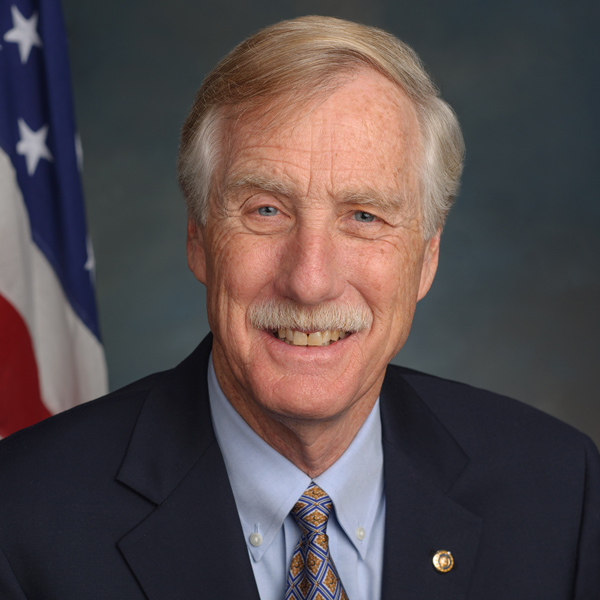
Senator-Angus-King-(US-Senate)-FI.jpg
Senator Angus King (I-Maine) | U.S. Senate

In Tuesday’s webinar, Sen. Angus King (I-Maine) called Biden’s stance “a very important step” for a country that has provided “no real serious response” to years of attacks. Going further, he repeated his previous calls for the U.S. to establish a more active cybersecurity strategy, including a strong deterrent capability that can give pause to potential state and non-state threats before their next attacks.

“They’ve got to feel that they’re at risk. I want somebody in the Kremlin … to say, ‘Gee, boss, I’m not sure we ought to do this because we’re liable to get whacked in some way by those Americans if we follow through,’” King said. “The best cyberattack is the one that doesn’t happen.”

Pressed on whether this means a like-for-like response — paying back a cyberattack with a cyberattack, for instance, or crippling a rival’s infrastructure in retaliation for a similar attack on the U.S. — King clarified that he’s “not prepared to say it should be cyber for cyber.” The goal should be to make clear that the private companies that stand to be harmed the most by attacks on critical infrastructure will not stand alone as before but have the full support of the government, extending to retaliation if necessary.

“We’re really dealing with a new kind of conflict here,” King said. “Traditionally, conflict has been army against army, battleship against battleship. Now we’re really talking about a case where 75-85% of the target space is in the private sector. So we have to figure out a new relationship.”

Pros and Cons of Ransom Payments

The speakers were more ambivalent on the controversial issue of whether ransomware targets should pay attackers in order to unlock their systems and prevent the potential release of confidential information. Both Colonial and JBS admitted they did pay the ransom demanded of them: cryptocurrency valued at $4.4 million and $11 million, respectively.

Colonial CEO Joseph Blount faced tough questions about his decision to pay during a Senate hearing earlier this month where he called the payment “one of the toughest decisions I have had to make in my life.” (See Colonial CEO Welcomes Federal Cyber Assistance.) JBS expressed similar sentiments in a press release regarding its own ransom payment.

King and Mandia avoided blanket condemnation of the companies’ decisions. King called it “a tough call” for companies to make, and Mandia said that banning all ransomware payments “is not fair, nor will it have the desired outcomes.” But both stressed that paying ransoms simply reinforces the idea among bad actors that ransomware works, and will lead to further proliferation of such attacks in the future.

“From my vantage point, there’s so [many] ransomware actors; they’re acting with impunity; they’re acting without risks or repercussions,” Mandia said. “And I just believe wherever money goes, crime follows. So if you can hack and make a lot of money off of it, especially anonymously in safe harbors that are 10,000 miles away from where the crimes are being committed, it’s not going to stop.”

King said that rather than banning the payment of ransoms, the government should focus on “being tough” with companies “about preventing it from happening in the first place.” He was critical of the Transportation Security Administration, which oversees the pipeline system, for failing to enforce strong cyber protections and pointed to FERC’s oversight of electric utilities as a superior regulatory model.

“FERC has a very robust, strong relationship with the utilities; utilities are far ahead of the pipeline companies, [and] pipeline companies are trying to act like they’re not involved in this,” King said. “They are; they’re critical infrastructure. In New England, 60% of our electricity comes from natural gas, and all of it comes through pipelines. If the pipelines go down, the grid goes off. So I think we need to step up dramatically the regulation of these utilities, and I consider the pipelines in that category.”

IRS Extends ITC, PTC Safe Harbor

An Internal Revenue Service notice issued Wednesday will extend the time that wind and solar developers have to complete their projects and still qualify for either the production tax credit or investment tax credit.

The notice (2021-41) extends the “safe harbor” period for both wind and solar projects to six years for projects that began construction between 2016 and 2019, and to five years for projects that began construction in 2020. For example, a solar project started in 2017 would be eligible for the ITC as long as it went online no later than 2023; one started in 2020 would have to go online by 2025.

To qualify for the credits, a developer must either start and continue work on a project in a specific year (the physical work test) or pay or incur 5% or more of the total cost of the project during that year (the safe harbor test) and then show continual construction or effort on the project.

The “continuity safe harbor” — the time between start and finish of a project — has been reset multiple times, with a previous COVID extension to five years in 2020.

With the new extension, “[t]he Treasury Department and the IRS recognize that regional, national, or global circumstances due to the COVID-19 pandemic have continued to cause delays in the development of certain facilities eligible for the PTC and the ITC. These extraordinary delays have adversely affected the ability of many taxpayers to place facilities in service in time to meet” the tax credit requirements, the notice said.

Developers and energy industry trade groups were quick to praise the extension and the regulatory certainty they said it would provide.

“As with all of American society, the solar industry faced unprecedented challenges during the COVID-19 pandemic,” said Dan Nelson, vice president of tax for California-based developer 8minute Solar Energy. “This additional time to complete projects ensures thousands of megawatts under development will continue and deliver on the jobs and economic value of these projects, while also moving us towards our national clean energy goals.”

Heather Zichal, CEO of the American Clean Power Association, said the safe harbor extension would “ensure additional wind and solar projects have the support they need to move from concepts on paper to steel in the ground. This tax guidance provides the regulatory certainty and predictability to ensure the clean energy projects across the country can be developed to reach the emissions targets we need to achieve.”

“The pandemic disrupted supply chains, shipping and construction operations, permitting processes and financing timelines,” said Abigail Ross Hopper, CEO of the Solar Energy Industries Association. “Without clarity on safe harbor rules from the IRS, some of these solar projects, and the local economic benefits they bring, would not have made it across the finish line.”

Executive Branch Leverage

The notice also offers developers more flexibility for demonstrating continuity of work on a project. Previously, if a project started physical construction, it had to show “continuity of work,” while a project using the 5% safe harbor had to show “continuity of effort,” such as signing contracts for equipment, pursuing permitting or beginning construction.

Now developers can show continuity by use either of two tests, continuity of work or effort, regardless of whether they started actual physical construction or used the 5% safe harbor.

The PTC was originally enacted in 1992, and the ITC, in 2006, to offset the high upfront costs of early wind and solar projects, respectively. The ITC has been particularly critical for the growth of the solar industry, driving tax equity financing for projects and growth rates over 50% per year, according to a SEIA fact sheet.

The ITC currently stands at 26% for residential and commercial solar projects and is scheduled to step down to 22% in 2023. The PTC is $18/MWh through the end of 2021, according to the Energy Information Administration,

Both credits have faced repeated phase-outs, with heavy industry lobbying winning last-minute saves in Congress. The omnibus bill passed in December 2020 extended the PTC one year and the ITC two years. President Biden’s American Jobs Plan proposes a 10-year extension and phase-down of an expanded, direct-pay ITC and PTC. The tax credits were not included in the bipartisan infrastructure package Biden announced on June 24.

Industry analyst ClearView Energy Partners  sees the safe harbor extension “as another example of how the executive branch can leverage its considerable vested regulatory powers to support a green transition even as lawmakers on Capitol Hill wrestle with committing President Joe Biden’s American Jobs Plan to legislative text.”

BOEM Advances Permitting for Connecticut’s Largest OSW Project

The Bureau of Ocean Energy Management issued a notice of intent to prepare an environmental impact statement (EIS) for the Vineyard Wind South project, which includes the 804-MW Park City Wind facility under development by Avangrid and Copenhagen Infrastructure Partners.

The NOI initiates a 30-day public comment period to define the scope of the EIS, the major permitting study required for project approval.

Park City Wind, selected through a competitive bid process in December 2019 by the Connecticut Department of Energy and Environmental Protection (DEEP), will be built in a federal lease area located approximately 60 miles east of the state and provide roughly 14% of its electricity supply.

“We are eager to participate in this important next step on the Park City Wind project, which is critical to the decarbonization of our regional electric grid and provides a positive boost to Connecticut’s clean energy economy,” DEEP Commissioner Katie Dykes said. “Vineyard Wind has committed to being an engaged partner with environmental and fisheries stakeholders, and we will continue to work with them and all stakeholders to ensure that this crucial project proceeds with appropriate mitigations considered.”

If approved by BOEM, Vineyard Wind would construct and operate a 2,000-2,300 MW wind farm off the coasts of Rhode Island and Massachusetts and develop it in phases. Park City Wind is the first phase and would contribute to Connecticut’s statutory mandate of 2,000 MW of OSW by 2030 through Vineyard Wind’s power purchase agreement with Connecticut’s Public Utilities Regulatory Authority.

Vineyard Wind is actively competing for PPAs for the second phase of Vineyard Wind South, which would provide 1,200 to 1,500 MW of OSW to the Northeast, according to the NOI.

During the 30-day public comment period, BOEM will hold three virtual public scoping meetings and accept comments to inform the preparation of the EIS. BOEM’s scoping process is intended to identify what should be considered in the EIS.

There will be multiple opportunities to help BOEM determine the essential resources and issues, reasonable alternatives, and potential mitigation measures to be analyzed in the EIS throughout the scoping process.

Charles Rothenberger, an attorney for Save the Sound, said the Biden Administration “has come out swinging” with its goal of 30 GW of OSW by 2030 and with progressive agency appointments like BOEM Director Amanda Lefton, which has made “clearing the backlog of these pending projects a priority.” Before working in state and federal government, Lefton was deputy policy director for The Nature Conservancy in New York.

“We recognize that offshore wind is a critical and fairly significant part of what the region needs to do to meet our clean energy goals to reduce our carbon emissions and to ensure that we’re powering the need to transition to electrification of our building and transportation sectors with clean power,” Rothenberger said.

He added that Save the Sound wants to ensure that projects like Park City Wind are “sited and operated in the most environmentally responsible manner possible.” Rothenberger said DEEP established a Commission on Environmental Standards that convened and released a report in 2019 on minimizing and mitigating impacts from the construction and operation of OSW facilities.

The commission has been on hiatus since the original procurement. However, Rothenberger wants to see it become more active as more projects are solicited and those projects are permitted and developed.

OSW technology is “advancing by leaps and bounds,” Rothenberger said. That helped Vineyard Wind I, which had significant permitting process delays during the Trump administration. Rothenberger said that delay worked to the project’s overall advantage.

“That additional time did allow them to take advantage of some new design features using larger turbine blade sizes, which allowed them to then shrink the number of turbine installations that would be needed and shrink the overall footprint of the project, which is certainly desirable,” Rothenberger said. “We’re certainly hoping moving forward that all of these permitting processes retain the flexibility to allow projects to take advantage of technological advances.”

Gravity-based foundations, as opposed to monopile or jacketed foundations used on the Block Island Wind Farm, are one of the potential technological advancements that could reduce the environmental impact of an OSW project, he said.