Last month’s cyberattack against Colonial Pipeline is a warning sign that “private industry alone can’t … solve the [cybersecurity] problem totally” by itself, company CEO Joseph Blount told lawmakers at a hearing of the U.S. Senate’s Homeland Security and Governmental Affairs Committee on Tuesday.
Blount was on the defensive for most of the hearing, as he parried members’ questions about the hack that led the company to shut down its entire network that carries almost half the supply of gasoline, diesel, and other fuel products to the U.S. East Coast. The FBI has linked the ransomware attack with DarkSide, a cybercrime group believed to be based in Eastern Europe that develops ransomware tools and provides them to affiliates to perform the actual hacking and deployment. (See Glick Calls for Pipeline Cyber Standards After Colonial Attack.)
Several members, including committee Chair Gary Peters (D-Mich.) and ranking member Rob Portman (R-Ohio), asked Blount about his decision to pay the 75 bitcoin (then about $4.4 million) ransom that the attackers demanded for the release of the data they had encrypted, which he confirmed in an interview with the Wall Street Journal last month. (See Colonial Hack Sparks Competing Recommendations at FERC.)
At least part of the ransom has since been recovered. The Justice Department confirmed Monday that the FBI had raided an online wallet belonging to DarkSide and seized more than 63 bitcoins with a current market value around $2.3 million.
Ransom Decision Tough but Necessary
In his written testimony Tuesday, Blount acknowledged the recovery of the funds and said that authorizing the payment was “one of the toughest decisions I have had to make in my life,” but said it was “the right thing to do for the country” in order to avert a prolonged shutdown.
Whether it was the right decision or not, paying off the attackers is contrary to the official recommendation of the FBI, as multiple lawmakers pointed out in their questioning. Portman noted that according to the timeline of the attack that Blount presented, Colonial had notified the FBI within hours of discovering the breach on May 7. Portman asked whether the FBI had made that recommendation clear to the company before it paid the ransom on May 8.
“I was not in that conversation; I can’t confirm or deny that,” Blount replied. “But I do agree that their position is they don’t encourage the payment of ransom. It is a company’s decision to make.” He confirmed that the company had verified with the Treasury Department’s Office of Foreign Assets Control that DarkSide was not on the list of sanctioned individuals or entities with which U.S. companies are forbidden from doing business.
Portman went on to ask about the effectiveness of the decryption tool that Colonial received in return for the ransom payment, observing that media reports claimed that the tool was so slow as to be unusable and that Colonial relied on its backups to restore the affected systems.
“So you paid the ransom, they gave you the decryption tool to be able to undo the harm that they did — that’s how it normally works — and yet the decryption tool was not effective. Is that correct?” Portman asked.
“The decryption tool is an option that’s made available to you. When you’re looking at bringing critical infrastructure back up as quickly as you possibly can, you want to make every option available to you that you can,” Blount said, adding that the tool “has worked.” However, when asked by Portman whether the reports were inaccurate, he qualified his statement by saying the tool worked “to some degree.” Later in the hearing he referred to the story obliquely with a mention of Colonial’s “really good backups.”
Colonial’s Federal Cooperation Questioned
The federal government’s response to the hack was another major topic of interest at Tuesday’s hearing, with Blount praising the Department of Energy for providing a “single point of contact” for the company so it would not have to juggle responses to multiple federal agencies during the crisis.
However, Blount returned to the defense when Peters asked about Colonial’s relationship with the Department of Homeland Security’s Cybersecurity and Infrastructure Security Agency (CISA). Testifying before the committee last month, CISA’s acting director Brandon Wales said that the company had not contacted his agency directly to inform it of the attack; instead, it called the FBI, which brought in CISA separately.
Questioned by Peters on this apparent oversight, Blount said he sees CISA as a “good organization” and that Colonial regularly communicates with the agency and participates in its events and exercises. He stressed that the company had not meant to leave CISA in the dark, but felt it unnecessary to reach out directly because the FBI — which, he noted, they had contacted “almost immediately” after discovering the attack — had already indicated it planned to bring in the agency in a later call.
Portman observed that at the time of the attack, informing CISA was voluntary; since then, he noted, the Transportation Security Administration (TSA) — which regulates pipelines — has issued a new security directive mandating that pipeline operators and owners report any potential cybersecurity incidents to CISA. Blount responded that the company is now “fully compliant” with the new regulation.
Senator Josh Hawley (R-Mo.) pressed Blount further on Colonial’s cooperation with the federal government, asking why the company had failed to take up the TSA’s offer of a comprehensive cybersecurity review of the pipeline three times before the attack, as reported in the Washington Post. Blount said that the company had tried to schedule the review but it had to be delayed due to the COVID-19 pandemic and Colonial’s recent office move.
“We have a good working relationship with TSA,” Blount said, adding that he was “a little surprised” by the report and that neither Colonial’s chief information officer nor “their contacts on TSA’s side” knew why their scheduling difficulty had been described as a refusal. He also suggested that the specific review TSA planned probably wouldn’t have detected the vulnerability that the hackers used anyway.
For the U.S. to zero out its carbon emissions by 2050, one in four cars on the road will have to be electric by 2030.
“The only question we have to really ask and answer is how easy or hard do we want to make this on ourselves,” said Britta Gross, managing director of the transportation practice at Rocky Mountain Institute.
Gross was speaking at one of Monday’s opening sessions at the Electric Power Research Institute’s (EPRI) four-day Frontiers of e-Mobility virtual forum, and she said, right now, the country is definitely doing that transition the hard way.
“It’s inefficient today. Infrastructure is not where it needs to be; costs aren’t down; interconnection times that utilities [take are] too long,” she said. “We’re drawing it out; we’re doing pilots and demonstrations — five vehicles here, 10 buses there — and everything leads to costs.”
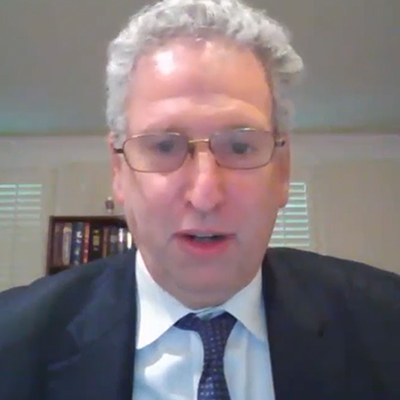
Michael Berube, DOE | EPRI
The need for speed, affordability, equity and market-based solutions to rapidly scale the electrification of transportation was the session’s core message, all of which calls for “a holistic approach,” said Michael Berube, deputy assistant secretary for sustainable transportation at the U.S. Department of Energy.
“We have to very much focus on, first and foremost, developing a transportation system that works for all Americans,” Berube said. “The transportation system, whether it be for individuals or businesses, has to get people where they need to go; has to be affordable; has to get the goods there on time.”
Both he and Gross said setting ambitious goals, with clear milestones, is what the U.S. market needs. At present, U.S. auto sales — light-, medium- and heavy-duty — total about 17 million a year, Gross said. New vehicles are now more durable, staying on the road for eight to 12 years, Gross said, citing figures from IHS Markit, and one-quarter of all vehicles now on U.S. roads are 16 years or older.
With that kind of sluggish turnover, “the pace that we’re on, the business-as-usual path, is not going to get us to 2030 [with] any kind of numbers,” she said. “There are sectors that can move today. Urban delivery vehicles [and] short-range vehicles are well within the capabilities of electric vehicle technology today. Both Uber and Lyft have announced electrification goals and commitments by 2030. How do we pull that schedule up sooner?”
Federal, state and municipal fleets should also be early movers to demonstrate scale and “clean up all the systemic challenges that are preventing scale today,” she said. “We can build a blueprint that everyone can use: states can use, utilities can use, cities can use and, of course, fleets across the country can use so that the rest of the market can react and accelerate their own timelines for 2030.
Preparing for Scale
Another reason for setting big goals is to provide certainty for the auto industry and, in turn, help build a domestic supply chain, the two panelists said.
“China and Europe have obviously moved out earlier and a little quicker and more aggressive than the United States” on transportation electrification, Berube said. “And that’s taking up some of the capital and some of the initial investment. There is a lot of opportunity for investments in the U.S. for the supply chain. The most efficient way to get that to happen is if people have a certainty that there is going to be that market there.”
Creating market certainty also means an equally rapid scale-up of charging infrastructure and, in particular, DC fast chargers, Gross said. RMI research suggests that “to support just 50 million EVs in 2030 is going to require at least 300,000 DC fast chargers. Until we really jump on a holistic, national confidence level in public charging, until there’s that confidence that that one big barrier is addressed, the automakers are going to struggle,” she said.
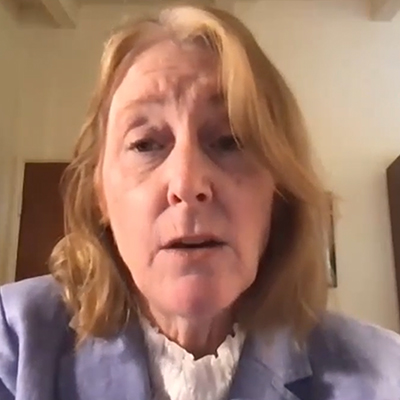
Britta Gross, RMI | EPRI
Getting enough chargers installed fast enough will also mean streamlining permitting to attack soft costs, as the solar industry has been doing for years, Gross said. She pointed to the recently released SolarApp, developed by the National Renewable Energy Laboratory, to allow fast, online permitting for residential solar installations. (See NREL Apps Accelerate Rooftop Approvals.)
“We’ve got to start preparing for scale. It can’t take 18 months to get a DC fast charging hub set up,” Gross said. “We need to come up with some policies, broadly across the U.S. regulatory landscape, that allow for utilities to come in and they’re just responsible for the make-ready [charger installation], and it gets done. There is no special approval you have to get.”
Future-proofing the Transition
Responding to a question about equity, Berube said, DOE is focusing on leveraging vehicle electrification to cut air pollution in low-income and disadvantaged communities. But cutting hard costs also remains a top priority, both he and Gross said, with a goal of getting to battery packs down to $70/kWh and eventually to new EVs with a 300-mile range in the $20,000 range that can then be channeled into the secondary-sales market.
“I firmly believe that people are going to realize how good a value the used EV is because of the lower maintenance and operating cost of it, and the used car market will take off, even quicker than the new car market,” Berube said “It’s just going to take the time of getting new cars to become used cars.”
“When there are products out there like used EVs for $10,000, $6,000, $14,000, I think that changes the game,” Gross agreed. Another high priority is updating the federal investment tax credit to remove the 200,000-vehicle limit on the number of ITC-eligible EVs any one automaker can sell, she said.
Berube also circled back on the importance of building a domestic supply chain for lowering EV costs and keeping them low. “If we don’t have a domestic supply chain, we’re subject to price swings that can be pretty dramatic and hurt the acceleration,” Berube said.
Maintaining momentum on vehicle electrification in a political landscape that can change every four years is still another reason for setting ambitious targets and establishing a firm foundation “to make the agreement on where we’re going clear,” he said. “That will give us the most durability.”
Corporate commitments on fleet electrification by large companies and automakers can also future-proof the transition to electric transportation, Gross said.
“It’s impossible for GM, FedEx, Uber and Lyft to walk back their commitments,” she said. “If we can use these next four years to pile on, then I think there is no walking back. I would just like to see what these commitments all add up to, what they should add up to, where should we all be in 2030 and actually 2025. Where do we need to be in four years?”
Seeking to “provide additional clarity and ensure a common approach to auditing compliance with the Critical Infrastructure Protection (CIP) reliability standards,” NERC on Friday introduced a guide to help integrate network monitoring solutions into the industrial control systems (ICS) and operational technology (OT) networks of electric utilities.
Part of DOE’s initiative includes a “voluntary industry effort to deploy technologies to increase visibility of threats in ICS and OT systems,” along with milestones for their introduction over the specified time frame. The new practice guide — unlike implementation guidance, which provides registered entities with ERO Enterprise-endorsed examples of how to comply with reliability standards — is intended to assist compliance monitoring and enforcement program (CMEP) staff of the ERO Enterprise with executing CMEP activities related to the deployment of this new technology.
Asset Protection Assessed by Function, Environment
The guide identifies two primary issues for CMEP staff to consider when assessing entities’ technology solutions in relation to the CIP standards:
Protection of the cyber asset — whether the deployment of a network monitoring sensor in an entity’s environment triggers the application of certain CIP requirements and, if so, whether the entity identified which requirements apply and how its device protection plan complies with them;
Protection of data being transmitted to a third party — whether the type of data being transmitted triggers the need to protect that data and associate cyber assets under the CIP standards and, if so, how the entity plans to protect and securely handle the data consistent with the standards.
For the first topic, protection of the asset, the CIP standards require entities to protect bulk electric system cyber systems and “certain associated cyber assets;” CMEP staff are advised to determine first whether the sensor in question qualifies as a BES cyber asset based on CIP-002-5.1a(BES cyber system categorization).
“Typically, based on the function it is performing, the sensor is unlikely to meet the definition of a BES cyber system,” the guide says. “However, CMEP staff should assess the registered entity’s CIP-002 categorization process to ensure that the sensor would not meet the definition of BES Cyber System.”
If the sensor does not qualify as a BES cyber system, it may still be subject to CIP requirements based on the environment in which it is deployed, the way it is used, and its functions. Devices that are used in high- or medium-impact environments may be categorized as protected cyber assets if they are connected using routable protocols within or on an electronic security perimeter, or as electronic access control or monitoring systems (EACMS) if they perform “certain electronic access and/or access monitoring activity.”
Entities may not be required to secure sensors that are deployed in an environment with only low-impact BES cyber systems even if they are “performing the functions of an EACMS or other … device subject to the CIP standards.” However, auditors must still assess whether those devices are subject to the requirements of CIP-003-8 (Cyber security — security management controls) concerning electronic access control.
Data Protection Includes Third Parties
Regarding the protection of data, the CIP standards require that entities control access to BES cyber system information (BCSI), defined as “information about the BES Cyber System that could be used to gain unauthorized access or pose a security threat to [it].” Examples of such data include security procedures, collections of network addresses, network topology of the system, or any information that is not publicly available and could be used to allow unauthorized access or distribution of sensitive data.
CMEP staff are advised to examine how the entity determines whether the data collected by its sensors contains BCSI and whether the information is transmitted to third parties. If BCSI is included in the data, auditors must assess whether the utility has a process in place to authorize access to the designated storage locations for BCSI; this must also be assessed for any third party that might come in contact with the information.
The guide also reminds CMEP auditors to “consider the specific facts and circumstances for each aspect” of a utility’s network monitoring technology deployment, conducting a thorough review of every system to ensure that no possible vulnerabilities are missed.
“The NERC reliability standards covered in this practice guide establish a set of controls for protecting network monitoring deployments and BCSI information,” the guide says. “CMEP staff must understand how each of the registered entity’s various CIP programs are applied such as policies, procedures, access controls, training and periodic reviews with the ultimate goal of preventing unauthorized access to these cyber assets as well as any associated BCSI.”
Unity was the theme at the opening session of the American Clean Power Association’s (ACP) Clean Power 2021 conference Monday, the first by the group since its launch in February, replacing the American Wind Energy Association (AWEA).
Gina McCarthy, who headed the Environmental Protection Agency during the Obama administration and now heads the White House Office of Domestic Climate Policy, said the Biden administration’s “early wins” with offshore wind were evidence of its coordination and cooperation to address climate change.
“Our climate policy office in the White House has been very focused — not just on a couple of agencies, but on the 31 agencies that have been tasked [to factor] in climate in everything that they do,” she said. “Every cabinet member knows that they’re responsible to work together to actually make these partnerships happen.”
On May 11, the Bureau of Ocean Energy Management (BOEM) gave final approval to Vineyard Wind, the nation’s first commercial-scale offshore wind project. Two weeks days later, BOEM announced it would offer leases for as much as 4.6 GW of offshore wind off the California coast, where the Pentagon conducts training exercises. (See BOEM to Offer Leases for Calif. Offshore Wind.)
“And that was all brought about because the Department of Defense was brought to the table and asked to open up opportunities in a way that their security interests would be protected but our ability for offshore off of the coast of California would be able to get started,” McCarthy said.
She also said interagency working groups are studying transmission issues “so that we can work together and identify where the opportunities are and where the [obstacles are].”
Tax credits to incentivize renewables are not enough, she said. “We have to know that we have a system in place that can quickly make the grid a system that works and accesses renewables everywhere” and that individual projects can get permitted.
“That’s going to take the kind of coordination that our policy office was created to do. And so far, so good. We have fabulous cabinet members; I’m not seeing tensions between them. They’re working hand in hand. They’re combining their resources to move projects forward.”
AWEA Successor Seeks Increased Clout by Merging Wind, Solar, Storage Advocacy
Pattern Energy CEO Mike Garland | American Clean Power Association
Mike Garland, CEO of renewable energy developer Pattern Energy, followed McCarthy by recounting how AWEA decided to rename itself and broaden its advocacy efforts to include solar and storage.
“About five years or so ago, a number of us in the renewable industry kept talking about how we were punching under our weight and that blended solar and storage had more in common on policies and regulations and other things that we should be working closer together on,” he said. “And … we were getting feedback from legislators as well as some decision-makers about how there was inconsistency; they were hearing different things from different parts of the industry, and that was sending mixed messages on how to present a policy program that would be more supportive of the renewable industry.”
Garland said he and other AWEA members took note that AWEA’s $22 million in revenue, combined with the Solar Energy Industries Association’s (SEIA) $16 million, were dwarfed by the American Petroleum Institute and Edison Electric Institute, which had revenues of more than $100 million each.
“We didn’t have the … resources to compete against fossil [energy] associations that were lobbying on their behalf,” he said. “We were much more disjointed. The fossil industry had like 25 organizations representing it, and renewables had 53 organizations, so it was really a disaggregated set of players. We also looked at the fact that wind and solar were most active in different states, and if we combined our effort, we’d double — or even more — the number of states that we’d have influence in.”
That led to AWEA and SEIA to pledge closer coordination on policy and, in February, AWEA’s transformation into ACP. Although the new organization includes solar industry players among its members, SEIA ultimately decided to remain independent.
Al Vickers, CEO of BP Wind Energy | American Clean Power Association
ACP set a goal of $60 million in revenues by the end of its first year, with eventual growth to at least $90 million, Garland said.
“I estimate about 75% of all new renewable [energy] is represented by ACP. So that’s a hell of a start,” he continued. “Seventy-five percent of the hardware going on the ground and over buildings and over parking lots and other things is being provided by people that are part of ACP.”
Al Vickers, CEO of BP Wind Energy, said ACP’s broader focus makes sense.
“I actually think it’s super important that we find our common ground and draw strength from our diversity rather than allowing the potential differences that we may have as different … sectors of the clean power industry be something that divides us. I think we should find the things that unite us,” he said.
The Connecticut General Assembly last week passed legislation that targets 1 GW of energy storage deployment by the end of 2030. If Gov. Ned Lamont signs the bill into law, which he is expected to do, Connecticut will become the eighth state to target or mandate energy storage.
Senate Bill 952, which cleared the Senate on May 20 and the House of Representatives on Thursday without opposition, would establish energy storage goals and program requirements in addition to procurement authority. It would also require that the Department of Energy and Environmental Protection (DEEP) report on “quantifiable progress” to the General Assembly’s Energy and Technology Committee each year, beginning in 2023.
The state would need 1 GW of storage by 2030, with interim targets of 300 MW by 2024 and 650 MW by 2027. In addition, the Public Utilities Regulatory Authority (PURA) would have to develop and implement program and funding mechanisms for storage connected to the state’s electric grid and report on the progress of its efforts to the Energy and Technology Committee. DEEP could also issue requests for proposals for transmission and distribution grid-connected energy storage, which would factor toward deployment targets.
Lawmakers amended the bill to allow DEEP to select storage projects paired with certain hydropower facilities with a nameplate capacity up to 100 MW. They also eliminated a provision requiring municipal utilities to report on the progression of their carbon reductions.
Any programs developed and implemented by PURA would need to include provisions for residential, commercial and industrial, and front-of-the-meter storage. PURA would also need to consult with state agencies and authorities on program design, including DEEP, Connecticut Green Bank, electric distribution companies and the Office of Consumer Counsel.
PURA’s programs would also need to meet several other goals and requirements:
positive net present value of deployments to ratepayers;
provide ancillary services;
resilience and peak demand reduction;
fostering the development of an energy storage industry; and
maximizing storage systems’ value of participation in ISO-NE’s capacity markets.
PURA must also consider non-wires alternatives to ease congestion or mitigate other issues on the grid that defer investment in potentially expensive power system upgrades.
RENEW Northeast Executive Director Francis Pullaro said during an interview after the Senate passed the bill that he was “a little bit concerned” that it does not increase the storage targets before the end of the decade. However, he strongly supported the bill, which legislators proposed during their 2020 session.
Pullaro said that when there is more energy storage powered by renewables in Connecticut, fewer “old, dirty peaking” fossil fuel units will be needed for grid reliability. Pullaro said ISO-NE’s capacity auctions keep the latter resources “afloat” despite auctions showing that battery energy storage is among the least-cost new resource technologies.
MISO said last week that a steep plunge in wind production in late April is a harbinger of the acute ramping needs to come.
The RTO said it experienced a sudden loss of 4 GW of wind generation during an evening peak April 21. Paired with peaking load between 7 and 8 p.m. EST, that led to about 6 GW in net system ramping needs. MISO was ultimately forced to deploy contingency reserves to improve frequency’s performance.
J.T. Smith, the grid operator’s senior director of operations planning, called the ramp situation “fairly excessive.”
“Personally, I believe it’s not the last time we’re going to see this, and I think it’s going to become more common,” Smith said at a Reliability Subcommittee meeting June 3.
Congcong Wang, with MISO’s day-ahead market and reliability commitment division, agreed that more wind and solar generation will make dramatic ramping needs commonplace.
“This is definitely the most extreme ramping event in the history of MISO … and it’s only the beginning,” Wang said. “It was a race against the clock, and our operators worked to make commitments. … It was a stressful evening in the control room.”
Wang said wind forecasts underestimated pressure changes and the dip in wind speed.
James Bostwick, a balancing authority operator, said the experience was “a very disturbing picture,” with operators managing a 100- to 150-MW drop of wind generation per minute.
The extreme ramp led to an 18-minute violation of NERC’s BA ace limit (BAAL). The agency requires BAs to report BAAL violations that last 30 minutes or longer.
Otherwise, April was a relatively calm month for MISO.
Systemwide demand averaged just 66 GW, with a 78.2-GW peak occurring on April 1.
“April was another calm month,” Smith said. “Thank goodness, as we were in the heat of outage season.”
Stakeholders Urge Return to In-person Meetings
Smith said that MISO is pursuing a “soft opening” for its office staff through the summer “so it’s not such an abrupt transition as when we were kicked out of our offices last spring.”
“MISO is on a path to back-to-normal, and it’s going to take place over the summer,” he said.
The RTO’s control room operators are no longer sequestered and have returned to MISO’s headquarters in Carmel, Ind., for all shifts.
However, Smith said MISO probably won’t hold on-site, in-person stakeholder meetings until next year.
Customized Energy Solutions’ Ted Kuhn asked that staff consider the return of in-person meetings sooner than early 2022.
“I would encourage MISO to rethink this. … There’s just frankly no reason for this to go until December,” he said, citing widespread vaccine availability and falling case numbers. Kuhn said if MISO didn’t start planning in-person meetings, stakeholders will likely begin gathering on their own.
“I personally find in-person meetings invaluable in terms of hallway meetings and being face-to-face with MISO staff,” Ameren’s Ray McCausland added.
The Honolulu City Council on Wednesday voted to adopt a new climate action plan (CAP) that details nine strategies for curbing greenhouse gas emissions from the city’s electricity, waste and ground transportation while boosting its renewable energy infrastructure through 2025.
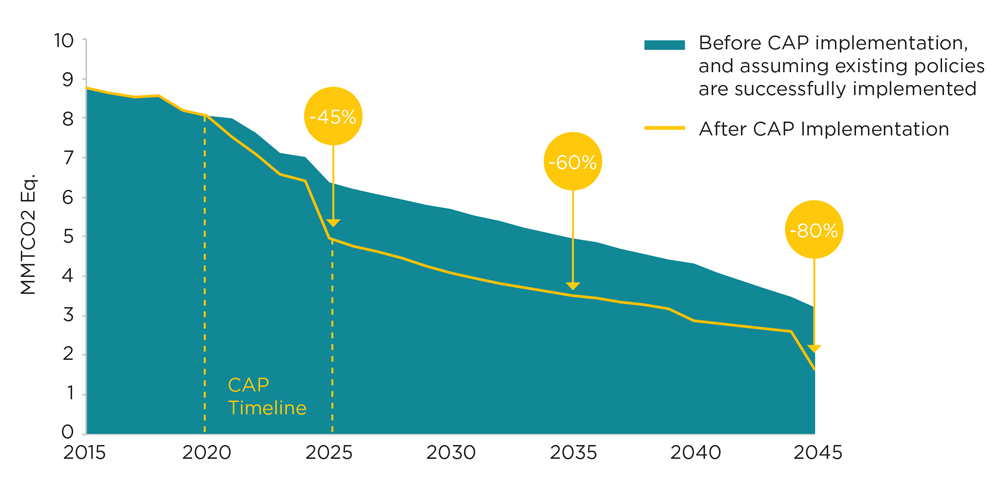
Called One Climate, One Oahu, the CAP aims to reduce the city’s GHGs by 16% compared with an estimated baseline without the plan, amounting to a 45% total reduction in 2025 relative to 2015.
Of the nine strategies, four are directed at ground transportation, which accounts for about 19% the state’s GHGs. Air transportation makes up 23%.
Strategy 1 encourages mixed land use to reduce vehicle miles traveled (VMT) by decreasing the distance between destinations. The report says that “land use change is perhaps the most impactful tool within the City’s jurisdiction to reduce GHG emissions,” in part because bringing everything closer together “increases access to and makes more feasible alternative modes of transportation like biking, walking and public transit, especially when accompanied by safe pedestrian and biking infrastructure.”
Strategy 2 dovetails with that concept by recommending the city implement multimodal transportation. The recommendations ask for development of a Transportation Demand Management program that will explore telework policies, subsidize multimodal transit and eliminate free long-term parking. Strategy 2 would also implement the 88-mile Oahu Bike Plan, launch an integrated transit fare card with fare-capped rates, identify business solutions to reduce VMT and launch a trip planning app.
Strategy 3 would disincentivize parking to encourage multimodal transit because “low parking prices and high parking availability are more likely to induce private automobile ownership and travel.” It recommends implementing dynamic parking rates, repurposing underutilized parking areas for multimodal infrastructure, and eliminating off-street parking requirements to allow developers to build homes without parking spaces.
Strategy 4 would electrify the city’s heavy-duty vehicle fleet. Noting that electric buses carry an upfront premium of $400,000 compared with diesel models (based on a recent solicitation), the plan recommends developing a longer-term strategy to purchase buses over time, reaching 100% electric by 2035. It also recommends expanding electric vehicle infrastructure to handle this change and providing car-sharing companies with fuel efficient vehicles and encouraging them to offer point-to-point travel to bridge the last leg of a trip if a customer rides the bus.
Honolulu’s climate action plan aims to help reduce the city’s GHG emissions by 45% from 2015 levels by 2025, an estimated 16% additional reduction from current expectations. | City of Honolulu
Strategies 5 through 7 look to increase energy efficiency in buildings. The CAP recommends updating building energy codes and performance standards, retrofitting older buildings to get them up to date, utilizing rooftops for renewable energy generation, streamlining the permitting process for solar PV, and launching the Solarize Oahu pilot, which would incentivize people in lower-income areas to purchase solar by offering bulk community pricing.
Strategies 8 and 9 recommend reducing waste by continuing to phase out single-use plastics, creating a volume-based pricing scheme for trash pickup, establishing a recycle and reuse program for buildings that are deconstructed, expanding edible food recovery, implementing methane collection systems at landfills and wastewater treatment facilities, exploring shipping materials out of state for recycling, and exploring composting possibilities with private parties.
The electricity, waste and ground transportation sectors account for 57% of Oahu’s GHG emissions, and the island’s emissions are about twice the global average. The CAP says that while the reductions from the strategies will help, they are “both aggressive yet insufficient.” It will “require the city, state and federal governments going many steps further than this CAP” for Oahu to reach carbon neutrality by 2045.
The CAP points out that a large portion of GHGs on Oahu come from petroleum refineries and air travel, which are under the larger purview of the state and federal government, respectively.
The plan was published by Honolulu’s Office of Climate Change, Sustainability and Resiliency in partnership with the University of Hawaii’s Economic Research Organization and Institute for Sustainability and Research.
Nine former FERC members urged the commission Wednesday to push for organized power markets in all regions of the country, including the West and Southeast.
A letter signed by nine past commissioners and chairs said FERC should employ its “broad authorities and tools available under the Federal Power Act” to create RTOs and ISOs in areas not currently supported by organized power markets, saying it would provide consumer benefits and help integration of renewable energy.
The bipartisan list of FERC officials spanning more than three decades of public service said consumers in regions not serviced by an RTO or ISO are missing out on benefits seen in regions with organized markets, and that markets are “more essential than ever” as the power sector continues to decarbonize.
“As the pace of decarbonizing the grid accelerates, we are convinced that the time for organized market expansion is now,” they said. “We recommend that FERC get ahead of the curve by getting the basic foundations in place everywhere. Promoting the expansion of organized wholesale markets now ensures that the grid is a powerful enabler of our clean electricity future.”
They said RTOs and ISOs have proven the ability to attract clean energy investment and are a critical component in implementing new technologies to reach a goal of “clean, reliable and affordable electricity for our entire nation.” Changing customer preferences, the “broad electrification” of the economy, reduced costs for clean energy technologies and “climate-related grid emergencies” are all driving issues for FERC to address.
FERC for two decades has pushed organized wholesale markets to “ensure a well functioning and dynamic grid,” the former commissioners said. Initiatives currently underway in the West and Southeast to develop wholesale markets should be encouraged. (See Study: Southeast RTO Would Cut Rates, Emissions.)
They cited several features they said allow organized wholesale markets to provide a “customer-centric transition” to a cleaner grid at the least cost, including larger footprints that can incorporate renewables, “level playing fields” for power providers and “non-discriminatory grid access.”
“To prepare the grid for a rapid evolution toward the low-carbon future, we urge you to finish the job of setting up organized wholesale power markets and ensure that they flourish in all regions of the country,” they said. “We know you have a full plate of electricity issues to address; it is our collective opinion that this one is foundational.”
Signees
The letter was signed by former Commissioners Nora Mead Brownell (2001-2006); James Hoecker (commissioner 1993-1997, chairman 1997-2001); William Massey (1993-2003); Elizabeth Anne Moler (commissioner 1988-1993, chair 1993-1997); John Norris (2010-2014); Robert Powelson (2017-2018); Branko Terzic (1990-1993); Jon Wellinghoff (commissioner 2006-2009, chairman 2009-2013); and Pat Wood III (2001-2005).
Hoecker said the first Bush administration toyed with developing legislation to create “regional transmission groups.” But the concept of RTOs and ISOs didn’t take form until FERC Order 888 in 1996, which required open-access transmission, and Order 2000, which formalized the grid operators’ structure in 1999.
Hoecker said he was unable to get enough votes on the commission to make organized power markets mandatory under Order 2000 when he was serving as chair, but he said the order laid the groundwork for future progress.
“It’s been a struggle to establish regional markets,” Hoecker said in an interview. “But I think the ones that did succeed have proven their value.”
Wellinghoff in an interview relayed the story of FERC’s initiative to force Entergy to join an RTO. Wellinghoff said several state commissioners approached FERC in 2009 expressing concern over Entergy’s practices of interconnecting competitive generators in its service territory.
The state commissioners believed Entergy customers were missing out on lower-cost power by not having the generators interconnected in a timely manner, Wellinghoff said, so FERC convened a hearing to address the issue. At the hearing, Wellinghoff offered to have FERC pay for a consulting study to investigate the benefits to consumers if Entergy were to join an RTO.
The study found Entergy consumers would save $700 million, Wellinghoff said, and each state commission voted to direct the company to join an RTO. Entergy ultimately would join MISO in 2014.
Wellinghoff cited a study included in the letter to the commission that touts similar benefits for an RTO in the Southeast, saying customers could save up to $19 billion a year with the creation of an organized power market.
“There’s way too much money on the table, and consumers are losing huge amounts of money,” Wellinghoff said. “The time is now for us to move into the future, reject the past and improve the efficiency of our grid by having independent operators everywhere.”
Southeast Energy Exchange Market
In February, more than a dozen utilities and cooperatives, including the Tennessee Valley Authority, Southern Co. (NYSE:SO) and Duke Energy (NYSE:DUK), proposed the Southeast Energy Exchange Market, which they said would reduce “friction” in bilateral trading by introducing automation, eliminating transmission rate pancaking and allowing 15-minute energy transactions.
The sponsors made it clear, however, that unlike an RTO, the utilities would not relinquish day-to-day control of their transmission. Critics said the proposal doesn’t go far enough to increase competition and asked FERC to require more transparency, broader governance and increased consumer protections. Several also requested a technical conference to consider more ambitious market development. (See Southeast Utilities Defend SEEM Proposal.)
In the West, the Energy Imbalance Market managed by CAISO has grown steadily, but it also lacks many of the features of an RTO.
Speakers during the second day of FERC’s two-day technical conference on climate change and electric reliability risks Wednesday emphasized the need for more transmission to facilitate interregional electricity trading and how to properly compensate demand-side resources.
Panelists also further discussed how FERC can incentivize changes that adapt for climate risks, this time in the RTO/ISO markets. The previous day’s session focused on changes to planning practices and reliability standards. (See related story, FERC Tackles Grid Planning for an Unpredictable Climate.)
Suggestions encompassed the entire electric industry, from fuels to the demand side.
Demand Response and DERs
FERC Chairman Richard Glick | FERC
FERC Chairman Richard Glick recalled that “in California last August during the extreme temperatures, demand response played a significant role in keeping the lights on.” He asked the first panel of the day for suggestions on how the commission or RTOs could improve the use of flexible demand in addition to the solicitation of voluntary load reductions.
“I don’t want to beat a dead horse, but most roads lead back to shortage pricing,” said David Patton, whose firm Potomac Economics serves as market monitor for ERCOT, ISO-NE, MISO and NYISO.
DR is “incredibly valuable,” and if most of the incentives for it can be embedded in energy prices rather than capacity prices, “we will be far ahead in terms of providing good incentives for flexible demand response. … I would say 90, 95% of the objective should be to get shortage pricing correct in all the RTOs,” Patton said.
Extreme weather events “are not events that it would make sense to plan for. … Many are so low probability that it would be enormously costly to have mandates to try to address them. But incentives provided by shortage pricing will provide correct incentives,” he said.
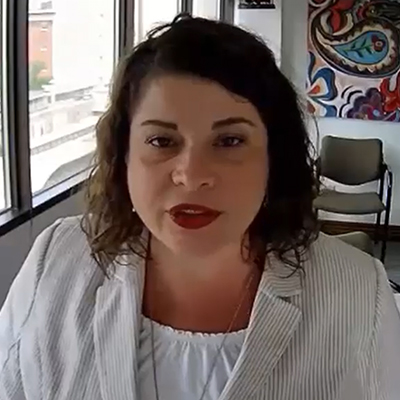
Anne Hoskins, Sunrun | FERC
Anne Hoskins, chief policy officer at Sunrun, said FERC should do more to make sure DR is compensated.
“My main message … today is: ‘Don’t forget the distributed resources.’ We have played a critical role in the past year in dealing where we have had very serious outages,” she said, referencing the California Public Service Commission’s request that Sunrun customers stop charging or share their power without compensation during wildfire season.
MISO Executive Director of Systems Operations Renuka Chatterjee said a last-resort public appeal for energy conservation is a wild card and could be better handled by price-sensitive DR.
“The last category of demand response tends to be this voluntary load reduction [from] public appeals … and that’s too late in the process,” she said. “Thirty minutes before load shed, we’re asking for public appeals, and we are relying on the public to reduce demand in a short time. Most of the public may not be paying attention to announcements, so … you can get a lot or you can get nothing.”
Gas-Electric Coordination
Amanda Frazier, Vistra | FERC
As the country decarbonizes, it will become more reliant, at least in the short to medium terms, on reliable gas supply for flexible generation to balance out renewables that are coming online, said Amanda Frazier, Vistra senior vice president of regulatory policy.
During the Texas crisis in February, some gas infrastructure was committed to provide DR through the wholesale market and “were incentivized, required really, to curtail their load in response to the call for conservation. It created this loop effect where they weren’t able to produce gas and put it onto the system,” Frazier said.
“So there should be some oversight from the RTOs and ISOs to make sure that we are not creating a situation where DR is cannibalizing a critical fuel supply or infrastructure needed to deliver power reliably.”
David Patton, Potomac Economics | FERC
Frazier said the introduction of carbon pricing in markets could address both climate change and reliability risks. She said carbon pricing used alongside fuel security incentives will attract the “right collection of resources both to address decarbonization goals along with reliability needs.”
Patton said that the gas procurement and trading that takes place is “OK to reasonably good” on non-stressed days, but it lacks the coordination needed when gas starts to become scarce and participants are trying to acquire it and allocate it.
Wesley Yeomans, NYISO | FERC
“It is the reason why you see dramatic spikes in gas prices and then, when the psychology changes and the concern over gas availability goes down, gas prices tend to drop like a stone,” Patton said. “So that signals that we could do a lot better coordinating gas and particularly pipeline capability, though it doesn’t require the same degree of coordination that the delivery of electricity does because the physical characteristics of delivering electricity are far more complicated and rigid than gas.”
“If we had unlimited pipeline capability, I believe we’d have no problem with extreme cold weather, but that’s not the case,” NYISO Vice President of Operations Wesley Yeomans said. “We have gone back to the electric utilities to make certain those large, important, interstate gas pipeline compressors are not on utility load-shed scripts or lists, so we are confident on that, but to be quite frank, [the ISO could] ask more questions [such as] for a comprehensive list of critical loads.”
Transmission
Chatterjee also said MISO could use more transmission to navigate punishing weather. MISO is currently pursuing its first long-term transmission plan in a decade. (See MISO Execs Defend Need for Long-range Tx.)
“As I reflect upon the February arctic event, it is not that we didn’t have enough generation; we couldn’t get it to where it needed to go. So we can think about having locally sufficient generation, but at the same time you need transmission,” she said.
Renuka Chatterjee, MISO | FERC
However, she said MISO’s middle-of-the-country geography afforded it a less painful experience than other markets — such as Texas’ — during February’s weather.
“The biggest lesson learned from the weather event is MISO is well situated right in the middle of the country along with neighbors that allowed us to import power,” Chatterjee said, adding that having a variety of strategies during extreme weather is key.
“People are installing batteries with their solar systems … [because] transmission systems haven’t been working,” Hoskins said. “When there have been the forced outages or the intentional outages by PG&E in particular … the incentive has been for customers to go out and invest in their own batteries.”
Need for Redundancy
Participants in the second panel focused on recovery and restoration after an extreme weather event, with a particular emphasis on black start units meant to help restore inoperative generating facilities.
But they also echoed the previous panel’s call for more transmission.
Questions about black start services were especially pertinent given the mass generation outages resulting from February’s winter storms that came close to causing a total collapse of the electric grid in Texas. (See ERCOT: Grid was ‘Seconds and Minutes’ from Total Collapse.) Several speakers referenced an article published in The Wall Street Journal the previous week that suggested 15 of Texas’ 28 black start units relied on a single fuel source, with no backup if the primary fails.
Charles Long, Entergy | FERC
Charles Long, vice president of transmission planning and strategy at Entergy, encouraged grid planners to work harder to ensure diverse fuel sources are available to emergency systems while also suggesting an even broader perspective.
“Fuel diversity is valuable in any kind of event — even if it’s not a single unit with dual fuel; dual fuel in an area that might be affected can be very valuable,” Long said. “You should really think about that in a system planning aspect. Maybe if you have a gas generator next to a nuclear generator, next to a solar generator, those type of things in geographic proximity can be just as valuable as dual fuel.”
Jodi Moskowitz, deputy general counsel and RTO strategy officer at PSEG, also acknowledged that black start capability with robust fuel sources is essential to riding out service outages. However, she emphasized that black start services place a significant financial burden on utilities and called for regulators to help entities make the needed investments with proper incentives.
“Compensation is an issue that we have been dealing with in PJM. … If there is an expectation that generators are going to offer black start service, there [needs to be] certainty about how they are going to get paid,” Moskowitz said. “The same way that we often hear transmission owners being very concerned about fluctuations in [return on equity] policy … and the need for regulatory certainty, the same applies for black start.”
Mike Bryson, PJM | FERC
While all participants recognized the importance of black start, Mike Bryson, PJM’s senior vice president of operations, reminded his fellow panelists that they are far from the only essential aspects of utilities’ reliability planning.
“From the best practice perspective, I will take one tie with outside systems over any black start units in my system,” Bryson said. “They are great, but … having an interconnected system with NYISO in New York and [others], that is what we will lean on in terms of trying to restore the system.”
“I could not emphasize more that nothing is better than a very strong, interconnected, reliable and resilient transmission system,” said Kevin Geraghty, senior vice president of electric operations for San Diego Gas & Electric. “Investing and reinvesting in that is incredibly important for us to the most reliable operators we can be.”
Kevin Geraghty, SDG&E | FERC
Geraghty also weighed in on FERC staff’s question on whether greater coordination between states and stakeholders that decide restoration priorities will establish more consistency in their decision-making. Given California’s wildfire risk, he said, SDG&E holds operational calls with California emergency agencies “every month, regardless of the threat.”
The utility also meets quarterly with 40 stakeholders in San Diego County to determine where it might improve the system’s resilience.
“I could not stress enough how critical it is to set up one of those advisory councils and just listen and make sure that we are in tune with the county,” Geraghty said. “You will know their priorities better, and that leads to great solutions.”
Brian Slocum, ITC | FERC
ITC Holdings’ Brian Slocum, vice president of operations, spoke from bitter experience when he referenced lessons learned from severe weather. Last August, a derecho storm complex that raced from Iowa to Indiana killed four people, flattened crops and caused an estimated $7.5 billion in damages, more than many hurricanes. At one point, much of Cedar Rapids, Iowa, was without power.
“I think what we learned is to do a better job upfront. … We should be able to know that at a distribution level, this transmission circuit is out of service,” Slocum said of the company’s eight-day restoration period. “We should be able to highlight that red light on our sheet of outages right away, without having to get that input or phone call from a city. As these loads change, we also need to make sure we’re updating our restoration priorities and we can save ourselves at least a little bit of trouble when we get punched by Mike Tyson.”
Coordinated Response
The conference’s final panel explored what role cross-jurisdictional coordination and cooperation plays in long-term planning, operations and recovery practices in addressing climate change and in the aftermath of extreme weather events.
GridWise Alliance CEO Karen Wayland said she has “long advocated” for a body, either formal or informal, that brings together state and federal regulators “to confront a whole suite of issues that are blurring the jurisdictional lines between the state and federal authorities.”
Michigan Public Service Commission Chair Dan Scripps added that the focus of any coordination or collaboration should be on “tangible opportunities,” such as forecasting and transmission. For example, he said, following the 2019 cold snap, Michigan Gov. Gretchen Whitmer asked the PSC to complete a statewide energy assessment. He knows other states are doing something similar after the deep freeze in February. He said this is “an opportunity to learn from those deep dives … and connect the dots between state-specific recommendations with something that addresses broader systemwide reliability.”
Carolyn Barbash, vice president of transmission and development policy for NV Energy, said even informal coordination and collaboration “can only help” in Western states like Nevada. She said it has been “relatively easy” to be on the same page as state regulators in Nevada regarding transmission investments. Still, planning for climate change will take regional coordination.
“Any help that we can get, helping coordinate and prioritizing with federal permitting agencies and across different states, would be helpful to increase the resiliency so that we can respond to climate change and natural disasters,” Barbash said.
The biennial gathering of Texas lawmakers in Austin concluded on Memorial Day with a few last-minute administrative duties, but not before the 87th Texas Legislature passed an omnibus bill and several other pieces of legislation addressing ERCOT’s disastrous performance during February’s winter storm.
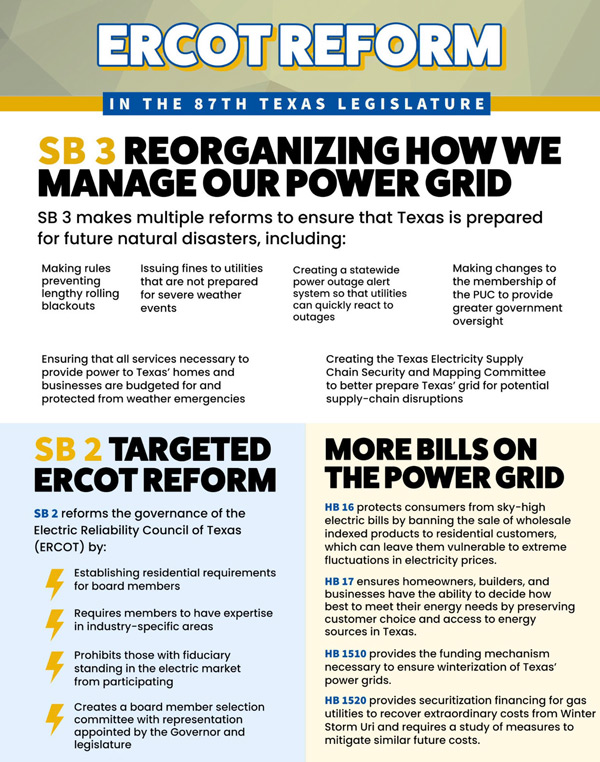
Senate Bill 3 captured most of the changes. Legislators approved, with little debate, a 56-page document designed to help the state prepare for, prevent and respond to weather emergencies and power outages and to increase administrative and civil penalties. The bill would require generators and transmission lines to be weatherized. However, only gas facilities that regulators consider “critical” by regulators would need to be weatherized, with penalties capped at $1 million per day per violation.
SB3 would also mandate that the critical gas facilities be mapped and registered with utility providers to prevent a repeat of the dayslong outages; create a new statewide emergency alert system; and bring together electric and natural gas regulators and market participants in a new energy subcommittee.
A separate bill, SB2, would shrink ERCOT’s Board of Directors from 16 seats to 11 and direct that most of the members be appointed by politicians. Previously, a search committee picked five independent directors (those seats have been eliminated) with market segment members electing their representatives. (See Texas Legislative Response to Winter Storm Leaves Some Doubting.)
Attorney Katie Coleman emerged shortly after the legislature adjourned sine die, having spent four months lobbying lawmakers on behalf of industrial customers. While reacquainting herself with family and friends, she said legislators focused on the right issues in addressing reliability.
“They got done everything that needed to get done. The question is whether we have an eventful summer or not, and there’s no real reason to think we will,” Coleman told RTO Insider, referring to ERCOT’s healthy 15.7% reserve margin and the market’s greater attention to resource adequacy.
“Our message was it’s harder to do the work to understand the root causes and address those,” she said. “There wasn’t some big silver bullet to all of this, which is often what people want in a legislative process. This was not a situation that lent itself to that. SB3 really targeted the right issues and will go a long way in making sure something like February doesn’t happen again.”
The bill would not fund weatherization or add energy efficiency standards for homes and other infrastructure, but it would remove requirements that renewable resources pay ERCOT for backup power when their units are offline.
“I’m hoping we can start moving to the implementation phase of this. It’s going to take some time, the ERCOT piece in particular,” Coleman said.
ERCOT would have until Sept. 1, when the legislation would become effective, to make any changes to its bylaws. Coleman’s attention is drawn more to SB3’s Section 18, which is directed at non-dispatchable generation and would mandate ERCOT establish requirements for ancillary or reliability services “appropriate” during extreme weather and low-supply conditions. It would also direct the Public Utility Commission to establish an emergency pricing program that takes effect when the high systemwide offer cap has been in effect for 12 hours in a 24-hour period.
Pat Wood, former FERC and PUC chair, praised Section 18’s language, which he called “very smart, very intelligent, very nuanced.”
“Section 18 tells the commission to go figure out how that’s going to work long term,” Wood said Friday as he drove home. “We have got to figure out how we keep dependable resources. Let’s not call them dispatchable resources, but dependable resources.”
Legislators also considered proposals by Berkshire Hathaway Energy and Starwood Energy Group Global to build natural gas-fired power plants that would sit on the sidelines of ERCOT’s energy-only market until needed. The proposals didn’t advance far; capacity market discussions never made the table. (See Berkshire Hathaway Offers Texas Emergency Power Supply.)
“What you really want here are capabilities that we know the regulators or the market model would support, because we just don’t have weather like [February] often enough and predictable enough to invest around,” Coleman said.
She also has her eyes on SB1281, which would reinstate a consumer-impact test of congestion costs and future load growth when ERCOT studies proposed transmission projects. The requirement disappeared from the criteria last decade when generators pushed back against a proposed economic project that would have brought low-cost generation into the Houston region, Coleman said.
“It gives ERCOT more flexibility to include the utilities’ load forecasts,” she said, noting staff currently use a banded approach.
The bill would also require ERCOT to assess the system’s reliability in extreme weather scenarios every two years.
Redefining ERCOT, PUC
During the session, lawmakers frequently said they were acting to “ensure this never happens again.” If so, SB2 left a few observers confused.
Gov. Greg Abbott’s list of bills changing ERCOT and the PUC | Gov. Greg Abbott via Twitter
“One way to ensure ‘this never happens again’ is to redefine the organizations involved,” the R Street Institute’s Beth Garza said in an emailed statement. “After ERCOT and the PUC were ‘decapitated’ in the aftermath of the storm, they certainly have redefined both organizations.”
Garza, who directed the grid operator’s Independent Market Monitor until 2020, was referring to the mass resignations at both ERCOT and the PUC. Politicians criticized both organizations’ leadership in the aftermath of the storm, with many pointing fingers at the grid operator’s five out-of-state independent directors.
“I don’t think it matters whether anyone thinks the changes are good or bad. The important thing is the change, and that everyone in a leadership role be a Texas resident,” Garza said.
Consultant Alison Silverstein, a former adviser to Wood at both FERC and the PUC, disagreed. She said it’s a “disservice” to “disqualify” out-of-staters from serving on the board.
“Although it is superficially attractive to have only Texas residents on the ERCOT board, the power industry here is a small community, and it’s unlikely that the pool of candidates can be dispassionate, expert and unbiased on all the issues involved in running the ERCOT grid,” Silverstein told RTO Insider.
She said using a “politically slanted” selection committee to pick the eight independent directors and the chair and vice chair— with the governor, lieutenant governor and the speaker of the House of Representatives each choosing a member — implies that new board members might have good connections and passed a political screen.
“We need board members with the best expertise, not board members with the best political answers,” Silverstein said. “A better board selection committee that seeks to raise all aspects of ERCOT’s performance should come from the full board itself, not from politicians.”
One of SB2’s requirements is that no more than two board members can be university professors. That has drawn snickers from some capitol insiders, who jokingly referred to the criteria as the Cramton Amendment in a dig at former Director Peter Cramton, professor emeritus of economics at the University of Maryland College Park. The academic was fluent in market design and frequently suggested taking ideas from other markets.
“An independent board that only has the interest of the grid and ERCOT as a whole is the right way to go,” Coleman said. “Compared to some other proposals, this was a much better approach.”
Legislators also sent several securitization measures to Gov. Greg Abbott for his signature. HB4492 would use $800 million from the state’s “rainy day” account to create a financing mechanism that funds unpaid balances in the ERCOT market. The market was still short almost $3 billion at the end of last week.
Two other bills, HB1520 and SB1580, would securitize natural gas utilities and cooperatives, respectively, for costs incurred during the winter storm. It remains to be seen whether that keeps Brazos Electric Power Cooperative, which owes the market almost $1.88 billion, out of bankruptcy.
Senate language to give ERCOT customers a one-time $350 credit on their bills failed to make any of the final bills.
Other industry legislation on its way to Abbott’s desk include:
SB2154, which would expand the PUC from three members to five and only require two commissioners to be “well informed and qualified in the field of public utilities and utility regulation.” The other three would need only five years of experience in business or government administration or as a practicing attorney, certified public accountant or professional engineer. Abbott is expected to move quickly to fill the bench so it can handle the work in front of it.
SB713, which was revised to include the PUC into the Sunset Advisory Commission’s current review cycle that determines which governmental agencies are still needed.
HB16, which would ban electric retailers from offering wholesale-indexed products, such as those that led to five-figure bills during the storm.