Politics vs. Programs: How the DOE Budget Stacks up

Sen. Jeanne Shaheen (D-N.H.) wants the Department of Energy to consider putting climate controls in all the rooms on Capitol Hill and explore the use of energy-saving performance contracts for federal buildings.

“It’s ridiculous that we can’t control the temperature in the rooms in this building,” Shaheen told Energy Secretary Jennifer Granholm during a Senate Appropriations Subcommittee on Energy and Water Development hearing Wednesday on DOE’s 2022 budget. “I would urge you to look at energy-savings performance contracts,” which Shaheen said cut heating bills and emissions for New Hampshire’s state buildings when she was governor.
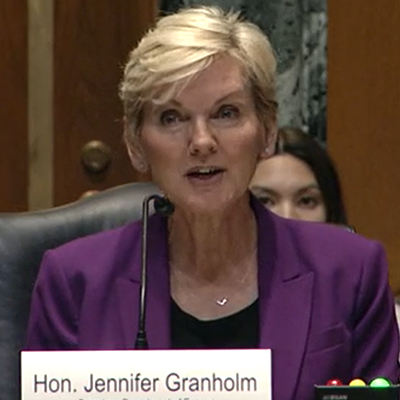
Jennifer-Granholm-(DOE)-Content.jpg
Energy Secretary Jennifer Granholm | DOE

But according to Joanne Lowry, strategic director of the department’s Federal Energy Management Program, performance-based contracting is a standard practice for its efforts to make federal government buildings more energy efficient. Under such contracts, building upgrades are paid for by actual energy savings.

Speaking during a Wednesday webinar on the 2022 budget for DOE’s Office of Energy Efficiency and Renewable Energy (EERE), Lowry said it provides a “significant bump-up” for program funding that will “continue to leverage that [performance-based] mechanism and explore other pathways to get money out.”

That bump-up is, in fact, a 10-fold increase from $40 million in 2021 to $438 million in 2022, according to figures presented during the webinar.

The two sessions — less than an hour apart — underlined the stark contrast between the politics of energy funding in Congress, and the actual programs that the budget makes possible and their potential impact.

Wednesday’s Capitol Hill hearing was Granholm’s fourth on the $46.2 billion budget request for 2022, and Republicans on the subcommittee continued to hammer away at President Biden’s infrastructure plan as an attack on the fossil fuel industry and jobs. Even if the U.S. can zero out its emissions, any impact on climate change would be nullified by countries such as China and India that continue to build coal plants, said Sen. John Kennedy (R-La.), the subcommittee’s ranking member.

“The administration’s hostility toward fossil fuels [is] more an emotional reaction than a rational reaction,” he said. “A lot of members of the administration … don’t see climate as a discrete scientific problem; they see it as a religion. They see it as a vehicle through which they can remake American society.”

Granholm stood her ground, noting that the budget and Biden’s American Jobs Plan both include funding for research, development and deployment of a range of clean technologies, from nuclear and green hydrogen to carbon capture and sequestration — all of which Kennedy and other Republicans said they favor.

“I want you to understand that we are there with you on that,” she told Kennedy.

As at a recent budget hearing before the Senate Energy and Natural Resources Committee, these low- or no-carbon technologies seemed to provide some common ground for Democrats and Republicans. (See Granholm Pitches DOE Budget to Senate Energy Committee.)

But some Democrats on the subcommittee also argued that specific line items should be increased. Pointing to the ongoing impacts of climate change in California, subcommittee Chair Dianne Feinstein (D-Calif.) wanted to raise the budget for DOE’s Office of Science to promote research on advanced computing, artificial intelligence and machine learning. Shaheen also pushed for more money for efficiency programs at the department’s Building Technologies Office, where, she said, “we know there are substantial energy savings being left on the table.”

Granholm used such comments to pitch the American Jobs Plan. For example, on building efficiency, she said passage of the fully funded plan “would allow us to push this much further, providing incentives to states to really up their game on building codes and allowing us to up our game on advising and giving technical assistance that is necessary to all these local units of government to do the same.”

Manufacturing

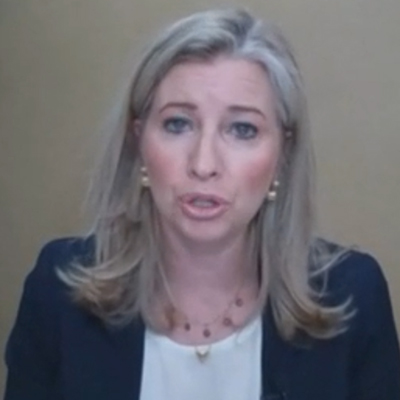
The EERE webinar offered a more granular look at the budget and the increased funding Granholm and Biden are seeking for specific programs that could, perhaps, also draw bipartisan support. The total EERE budget request of $4.7 billion is a 65% jump from 2021, in order to “focus on investments to drastically reduce emissions in the near term, while investing in research to ensure American leadership and competitiveness in advanced clean energy technologies,” said Anna Garcia, deputy assistant secretary for energy efficiency.

Going for fast emission reductions, the requested energy-efficiency funding is almost double from 2021 — from $1.1 billion to almost $2.2 billion — and accounts for close to half of the EERE budget, according to figures presented during the webinar.

Garcia broke down those figures further in her review of the department’s Weatherization Assistance Program (WAP), which provides funds to improve energy efficiency for low- and moderate-income households. In addition to a 27% increase in the funding for the program, Garcia said, this year’s budget includes a new line item: $21 million for a Weatherization Readiness Fund.

DOE-EERE-Panel-(DOE)-Content.jpg
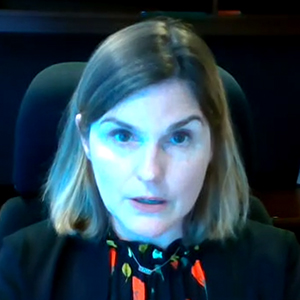
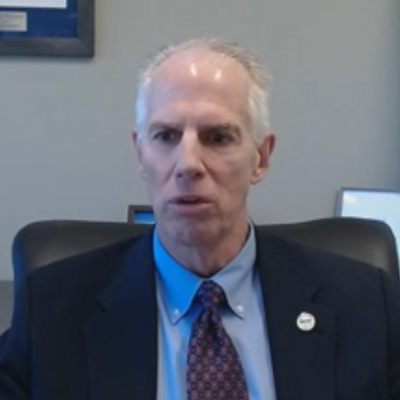
At Wednesday’s webinar on DOE’s budget for the EERE office (clockwise from upper left): Anna Garcia, deputy assistant secretary for energy efficiency; Dylan Jones, chief of staff for energy efficiency; Mike McKittrick, Advanced Manufacturing Office; Joanne Lowry, FEMP; and David Nemtzow, Building Technologies Office | DOE

“The purpose of this fund is to reduce deferrals of homes that can’t be weatherized due to structural, health and safety repairs that cannot be done under the current WAP rules,” she said. “We know that our WAP crews are generally some of the first people to enter these homes and notice these structural, health and safety repairs that may not be intrinsic to the installation of the conservation measures.”

The new fund would, she said, reduce the number of homes that are turned down for WAP improvements.

Mike McKittrick, acting director of the Advanced Manufacturing Office, said the requested 39% increase in his budget, from $396 million to $550 million, would focus on decarbonizing the industrial sector while at the same time “growing a strong, resilient U.S. manufacturing sector.”

Key strategies for industrial decarbonization include energy efficiency at the process level and across product life cycles, electrification and fuel switching — for example, from natural gas to hydrogen — and carbon capture, utilization and storage, he said. Demonstration projects to help decarbonize steel, chemicals and cement are also in the budget, along with building out domestic supply chains for sourcing and processing critical minerals needed for clean technologies, such as lithium for batteries.

A featured investment in the Advanced Manufacturing budget, he said, “is a new lab-industry consortium that will validate and de-risk technologies that are important for critical mineral supply chains and the industrial ecosystem.”

With continuing Republican opposition, how these line items will fare in Congress is uncertain. Kennedy was not overly concerned with the numbers in Biden’s budget. “Senators are like cats,” he said. “They do what they want. We’re in the process of putting together a budget, and I don’t think I’m going out on a limb by saying it will be different that the president’s submission.”
Panel: Storage Needs Experience in NY Power Markets

New York’s wholesale electricity markets are awash with opportunities for energy storage but lack experience in integrating the technology.

That was a key takeaway from a panel Tuesday that included officials from FERC, NYISO and an energy storage developer.

Jeff-Bishop-(NY-BEST)-Content.jpg
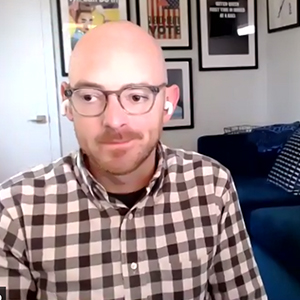
Key Capture Energy CEO Jeff Bishop | NY-BEST

From a public policy perspective, New York is doing everything all at once, Key Capture Energy CEO Jeff Bishop said at the 11th Annual Meeting of the New York Battery and Energy Storage Technology Consortium (NY-BEST).

New York’s Climate Leadership and Community Protection Act (CLCPA) requires the state to consume 70% renewable electricity by 2030 and switch to 100% zero-emission power by 2040. It also calls for the procurement of 6 GW of solar by 2025, 3 GW of storage by 2030, and 9 GW of offshore wind by 2035. The state is targeting shutdown of some of its most polluting fossil plants from an environmental justice perspective.

FERC three years ago issued Order 841, which directs grid operators to integrate energy storage into their wholesale markets, and NYISO outpaced most of its counterparts in anticipating last September’s Order 2222, which directs RTOs/ISOs to allow distributed energy resource aggregations to participate in their markets. (See NYISO Discusses FERC Order 2222 Compliance.)

Right Rules

“In order to fully realize what New York would like to achieve in the transportation and building sectors, we need to make sure that we have a reliable grid,” NYISO Executive Vice President Emilie Nelson said during the panel. “Many of the studies that have been done by NYISO and, quite frankly, by many others frame some of the challenges that we really need to meet successfully with respect to thinking about storage.”

Emilie-Nelson-(NY-BEST)-Content.jpg
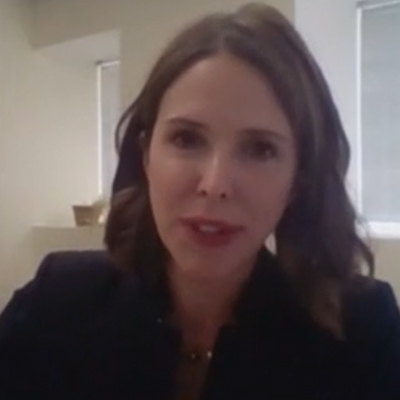
NYISO Executive Vice President Emilie Nelson | NY-BEST

“Really it’s just a fundamental question of are the rules in place right now in order to really spur development to be able to get the capacity needed for the next generation of ultimate electricity and power demands for the overall state,” Bishop said.

Key Capture Energy has operations both in New York and in Texas. “One of the key things that I look at in all of these markets as a reflection of Order 841 is that there is still an imbalance of information, where when we came in and put our first 20 MW project online in 2019, we had no idea what the frequency regulation market actually was in New York state,” Bishop said. “We were able to model it, and we sat down with very patient New York ISO staff just trying to figure out what is actually the frequency regulation market in New York because it was very opaque.”

Testing, Testing

Panel moderator Pete Fuller, of Autumn Lane Consulting, said he liked Bishop’s example of the frequency regulation market but said the lack of operational history and data on storage was a barrier to development.

“We can make our best guess of simulations … but the granularity, the real-time operations, the reactivity, the responsiveness of batteries — it’s a new ballgame and we don’t necessarily have all the tools,” Fuller said. “Are we at a point where we really just need some, for lack of a better term, guinea pigs — those early adopters and early movers to get on the system and build that history and that data?”

Pete-Fuller-(NY-BEST)-Content.jpg
Pete Fuller, Autumn Lane Consulting | NY-BEST

Nelson said the question is how to shift projects from being on paper to reality, which dovetailed with an audience question about how to help utilities and others charged with maintaining reliability of transmission and distribution grids to think about new techniques and opportunities made available by emerging technologies.

“I believe that really getting some experience with them will certainly help … and until we have some experience with these technologies it is a very educated guess on exactly what is going to need to come together,” Nelson said.

Bishop said that the ability for energy storage projects to get capacity payments would really provide “the data that we need to be able to build the following year a 200-MW size project closer to New York City… [and] ‘guinea pig’ is probably not quite the right word, especially for my investors, but you know clearly there has to be some data and right now there is clearly a lack.”

The state’s Public Service Commission has tried to push storage forward both from a wholesale market perspective and by getting utilities “comfortable” through a series of non-wires alternatives and utility procurement, he said.

Allison-Clements-(NY-BEST)-Content.jpg
FERC Commissioner Allison Clements | NY-BEST

FERC Commissioner Allison Clements said the commission has plenty of work to do on the issue of storage and hoped to get robust participation in a two-part technical conference in September on energy and ancillary services.

In its rulemaking, FERC must consider the interaction of the parties and the need to disrupt the status quo, she said. “So, when I look at 2222 implementation coming down the pike, I think some of the hardest part of it is that there is no regulation it falls between FERC’s regulation and the state’s regulation.”

New York has the benefit of having only two balancing authorities instead of multiple states around it, but Clements said she is focusing on standards and “other coordination and interoperability issues between states at distribution system operators and transmission system operators and finding opportunities to facilitate those interactions in a way that both bring down kind of the unknowns, the fear level, but also save costs relative to potential costs of implementation.”

Nelson said that NYISO has prioritized the idea of dual participation for storage in wholesale and retail markets. “We have always really highly valued operator situational awareness and visibility… [for] reliability needs on the grid, so we fairly quickly established rules to allow for dual participation. But part of that is having that awareness and that communication from a telemetry perspective that allows a good line of sight between the utilities and the NYISO.”

SOO Green Seeks Participation in PJM RTEP Process

Direct Connect Development Co. on Monday filed a complaint with FERC that PJM’s tariff and Operating Agreement are unjust and unreasonable because the RTO requires merchant transmission facilities to complete a “profoundly delayed generation interconnection process” for studies and integration into the grid (EL21-85).

The Minnesota-based company — which is seeking to construct the interregional SOO Green HVDC Link transmission line to connect wind generation in MISO with the PJM market, said the commission should require PJM to modify its tariff and OA to allow merchant transmission facilities to participate in the Regional Transmission Expansion Plan (RTEP) process with other transmission projects without having to first pass the generator interconnection process. It also requested that FERC use its authority to order PJM to adhere to project timelines for the rest of the interconnection process.

Under the current PJM tariff and OA, merchant transmission facilities are not permitted to participate in the RTEP process directly.

PJM stakeholders originally approved an issue charge in June 2020 to consider integrating HVDC converters as a new type of capacity resource in the RTO. (See HVDC Initiative Endorsed by PJM Stakeholders.) Work at the HVDC Senior Task Force failed to reach a consensus on the issue. (See “HVDC Senior Task Force Update,” PJM MRC/MC Briefs: March 29, 2021.)

“Allowing merchant transmission facilities to participate in the RTEP process will relieve the unjust and unreasonable impacts caused to such facilities, including SOO Green, by their inclusion in the PJM generation interconnection queue,” the company said in its filing. “Requiring PJM to allow merchant transmission projects to be assessed in the RTEP, including demonstrating whether such projects would provide reliability or public policy benefits, would enhance and facilitate efficient transmission development.”

Project Stalled

SOO Green would be a 350-mile, 2,100-MW, 525-kV underground transmission line designed to deliver renewable energy from upper MISO to Illinois and the PJM grid.

Direct Connect is planning to install the line primarily along existing rail rights of way from Mason City, Iowa, to Plano, Ill. The company says it would be the first major transmission project crossing the MISO-PJM seam.

The filing said the expected total investment for the project exceeds $2.5 billion and is anticipated to provide about $2 billion in consumer savings over 20 years by injecting more than 2,000 MW of renewable energy into the PJM market.

The company is working on the required permitting in Iowa, the company said, and it has already received authorization from the commission last July in its application for negotiated rate authority. (See FERC Oks Negotiated Rates for Merchant Tx Line.)

The company said the development stage for the project was expected to conclude by the end of 2021, with the line operational by late 2024. However, it said PJM interconnection study delays have pushed the commercial operation date to 2026, halting construction absent an interconnection agreement with the RTO.

Direct Connect argues that PJM should have completed a system impact study by August 2020, but the RTO has notified it that the study is now expected to be completed by Nov. 30, a 15-month delay.

“At the current rate of delay, the project can be entirely constructed and operational in far less time than it will take for PJM to complete its studies,” the company said.

It said that in 2020, PJM took an average of 821 days to process facilities studies, and only five projects received their results on time. The studies are supposed to be completed in six months.

Direct Connect said PJM’s current implementation of existing transmission planning and generation interconnection study rules “constrain the ability of innovative transmission projects” to pursue market-driven opportunities.

“The current rules, which include merchant transmission in the generation or new services queue, have become unjust and unreasonable, raising barriers to entry by merchant transmission developers like SOO Green into PJM’s market,” the company said in its filing. “In essence, the current rules have exacerbated the very problem which they were intended to solve.”

Project Procurement

Direct Connect said it has been forced to “make difficult choices daily” regarding the procurement of parts necessary to complete the project.

“SOO Green faces an impossible choice: enter into supply agreements early and risk substantial penalties, or wait until the interconnection process is complete and not have the equipment necessary to build the project,” the company said in its filing.

On Monday, it announced it selected the Italian company Prysmian Group as its preferred supplier of HVDC cable systems for the project. The $900 million contract is still subject to finalization.

“As can be seen recently in Texas and California, the U.S. must invest in its transmission infrastructure, and SOO Green’s underground rail co-location model is a game-changer that can be replicated nationwide to build a clean energy grid,” Direct Connect CEO Trey Ward said in a press release. “Our partnership with Prysmian provides us with best-in-class cable to build a highly reliable and climate-resilient transmission line to supply U.S. households and businesses with affordable renewable energy for decades to come and bring manufacturing back to the U.S.”

In a response to the filing, PJM spokeswoman Susan Buehler said the RTO is currently studying the SOO Green project as part of the interconnection process. Buehler said the merchant transmission project is “treated much the same” as other merchant transmission projects with PJM studying the impact to the existing bulk electrical system and identifying needed transmission upgrades to maintain reliability.

Buehler said PJM was “surprised” by SOO Green’s complaint and its suggestion that SOO Green is “changing its business strategy.”

“PJM and its stakeholders have been in outreach meetings with SOO Green regarding SOO Green’s desire to have its line treated like capacity in our market design, which SOO Green repeatedly represented was necessary for its proposed line to be successful,” Buehler said.

New Bill Would Tackle Transmission Cost Allocation

A bill introduced in Congress on Tuesday would ensure that no single power generation or energy storage project seeking to interconnect to the grid would be hit with the full or a disproportionate amount of the cost of any system upgrades required.

Kathy-Castor-(House-Select-Committee-on-the-Climate-Crisis)-Content.jpg
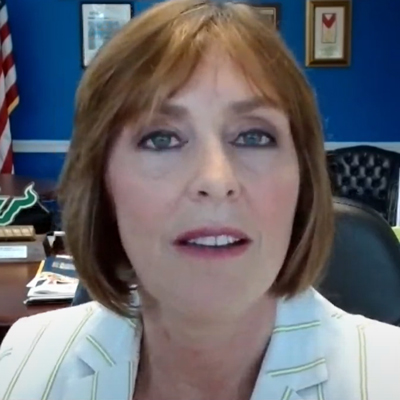
Rep. Kathy Castor (D-Fla.) | House Select Committee on the Climate Crisis

Introduced by Rep. Kathy Castor (D-Fla.), who chairs the House Select Committee on the Climate Crisis, the Efficient Grid Interconnection Act would require FERC to issue new or revised regulations that would forbid utilities from allocating “the costs of a network upgrade to the requesting interconnection customer.” Instead, the bill states, costs would have to be “reasonably” allocated to parties that use or take electricity from the transmission system or would “otherwise benefit from a network upgrade of the transmission facility or the transmission system.”

FERC would also have to issue new or revised regulations for RTOs and ISOs to consult with interconnection customers to see if specific “grid-enhancing technologies,” such as storage or advanced power flow controls, could be used to defer more expensive and time consuming system upgrades.

The need for reform of interconnection policies and procedures has been an ongoing focus for a range of industry stakeholders, made more urgent by power outages caused by the growing number of extreme weather events that will continue to strain transmission lines across the country.

According to a recent analysis from the Lawrence Berkeley National Laboratory, at the end of 2020, 755 GW of generation and 200 GW of energy storage were sitting in interconnection queues across the U.S. Renewable energy accounted for most of the queued generation — 680 GW — and the report says only 19% of the wind projects and 16% of the solar projects reach commercial operation.

Announcing the bill on Tuesday, Castor issued a statement framing the proposed legislation as a way to “save families money on their utility bills, create jobs in communities across America, reduce pollution and improve public health across the board. … By making our grid more efficient, we’ll also put money back in the pockets of working families, as we eliminate the barriers that stand between them and cheap, renewable energy.”

The bill is being co-sponsored by five other Democratic representatives: Rep. Julia Brownley (D-Calif.), Rep. Sean Casten (D-Ill.), Rep. Jared Huffman (D-Calif.), Rep. Scott Peters (D-Calif.) and Rep. Jan Schakowsky (D-Ill.).

A Crowded Highway

Under current policies, once a transmission or distribution line has reached capacity, the last project to interconnect, or the next one in the queue, may be saddled with the cost of system upgrades, in some cases costing millions of dollars and making the project economically unfeasible.

“Today’s grid interconnection policies are largely analogous to requiring the next car entering a crowded highway to pay the entire bill for a needed lane expansion,” said Gregory Wetstone, CEO of the American Council on Renewable Energy, one of several clean energy organizations supporting the bill. “It doesn’t make sense, and it has kept hundreds of thousands of megawatts of wind, solar and energy storage resources stuck in interconnection queues,” he said in a statement released Tuesday.

Kyle Davis, head of public policy and institutional affairs for renewable energy developer Enel North America, said the bill would provide an appropriate balance for cost allocation. It does not say that generators should pay nothing,” he said in another statement of support for the bill. “Instead, it directs FERC to figure out the right way to fairly split the costs between generators and transmission owners or load … based on level of impact the new generator imparts on the transmission system.” 

By deferring costly upgrades, grid-enhancing technologies could double the volume of renewables coming online by 2025, according to a recent study by the WATT Coalition. (See Report: US Needs Grid-enhancing Technologies Now.) The study focused on backed-up interconnection queues in Kansas and Oklahoma, reflecting the bipartisan scope of the problem.

Synchronized Planning Processes

Whether that appeal will translate to bipartisan support in Congress remains to be seen. Castor’s 13-page bill is modest and focused — trimming off a sliver of President Biden’s embattled $2 trillion infrastructure plan. On Thursday, the Senate Energy and Natural Resources Committee will be discussing a larger chunk — a 423-page draft of a bill called the Energy Infrastructure Act. The draft encompasses not only transmission infrastructure, but supply chains for clean technology, infrastructure for hydrogen and nuclear energy, and energy efficiency and building infrastructure.

Specific provisions on transmission would:

  • authorize the Department of Energy to fund a range of research and projects aimed at improving grid reliability and preventing “resilience events” such as power outages caused by wildfires;
  • require FERC to open a docket onthe effectiveness of existing planning processes for identifying interregional transmission projects that provide economic, reliability, operational, public policy and environmental benefits (including reductions in carbon emissions), taking into consideration the public interest, the integrity of markets and the protection of consumers;” and
  • promote streamlined permitting for projects with “interregional benefits” through the “synchronization of planning processes in neighboring regions, such as using a joint model on a consistent timeline with a single set of needs, input assumptions and benefit metrics.”

Michigan House Panel Clears EV Bills

A Michigan House committee on Tuesday reported to the full state House two bills creating a state registration and regulation system for electric vehicle charging stations but took no action on legislation allowing EV charging stations at state highway rest stops.

Reported from the House Energy Committee were HB 4801 and HB 4802. The bills were reported with bipartisan support, but most committee Democrats either voted against or did not vote.

HB 4801 requires the Michigan Department of Agriculture and Rural Development to set up a registration process for EV charging companies, allows those companies to charge consumers for their service and requires them to clearly display the cost on the charging unit. HB 4802 changes the state’s utility act, specifying an EV charging company is not a utility.

When the full House may act on the bills has not been announced. They would still have to be acted on by the state Senate before going to Gov. Gretchen Whitmer.

The committee is still expected to act on the other bills in the package — HB 4803, 4804 and 4805 — which would allow charging stations at state highway rest stops. Committee Chair Rep. Joe Bellino (R) sponsored HB 4803. (See Mich. Legislators Expect Quick Action on EV Charging Bills.)

Rep. Ranjeev Puri (D), who worked for Stellantis (formerly Fiat-Chrysler) before his election, said while expanding EVs in Michigan is a top priority for him, the bills reported Tuesday didn’t go far enough.  He voted against reporting HB 4802, though he did support reporting HB 4801.

“Michigan has a chance to be at the forefront on this issue, but we have to do it right,” he said.

NM Regulator Acknowledges Human-caused Climate Change

A New Mexico utility regulator has declared that climate change is caused by human activity, in a decision that some say may be the first of its kind by a state utility commission.

Hearing Examiner Ashley Schannauer with the New Mexico Public Regulation Commission (PRC) issued the decision on Monday, as part of the proceedings in Avangrid’s proposed $8.3 billion acquisition of PNM Resources.

With the decision, the PRC takes administrative notice in the proceeding that climate change is caused by human activity resulting in an accumulation of greenhouse gases in the atmosphere.

The combustion of fossil fuels — by power plants, vehicles and industry, as well as in buildings — is a predominant source of GHG emissions, the decision states, and the direct consequences of climate change include wildfires, droughts, floods, extreme weather events and rising sea levels.

Schannauer’s decision grants a motion filed this month in the Avangrid proceeding by New Mexico Attorney General Hector Balderas, Western Resource Advocates (WRA) and other organizations.

The motion asked the PRC to take administrative notice of climate change, its human causes and its severe consequences. By taking administrative notice, an administrative body finds that a scientific fact is so well-established that it is beyond debate and does not need proof, WRA said.

In granting the motion, Schannauer found that the motion was “reasonable and satisfies the standard for taking administrative notice under [New Mexico Administrative Code] for this proceeding.”

WRA said the action is either the first or among the first such action taken by a state utility commission. Some courts have taken judicial notice of climate change, the group said.

The motion was appropriate in the Avangrid case because of proposed agreements that address various aspects of climate change, according to Steve Michel, deputy director of WRA’s Clean Energy Program.

Michel said he wasn’t aware of anyone planning to argue against the existence of climate change during the proceeding. But it’s still possible such an argument could arise, he said.

“There’s always that concern,” Michel told NetZero Insider. “This puts the issue to rest.”

The hearing examiner’s decision could be appealed to the full commission, but an appeal is not expected, since no parties opposed the motion, Michel said.

Agreement Proposed

On June 3, a second amended stipulation was filed in the Avangrid proceeding. The stipulation reflects a negotiated settlement among Avangrid, PNM and several parties with a stated interest in the case, including WRA.

The parties state that the agreement “represents a fair, just, and reasonable resolution of the issues presented in this proceeding.”

Under terms of the proposed agreement regarding the Avangrid-PNM merger, the companies would commit to providing $73 million in rate benefits, which would include $15 million for low-income energy efficiency programs.

The companies agreed to form a carbon reduction task force to ensure that PNM will reach net zero emissions by 2040, and by 2035 if feasible.

The agreement includes incentive compensation for PNM executives based on the company’s progress in meeting its carbon reduction targets. PNM would triple its budget for a transportation electrification plan, under terms of the agreement, and name a chief environmental officer by Dec. 1, 2022.

The companies agreed to “use all reasonable efforts to find or participate in the development of a viable RTO that it can join by Jan. 1, 2030, or as soon thereafter as possible.”

In addition, PNM agreed to allow local governments to install wi-fi equipment on its streetlight poles to improve internet access for students and low-income residents.

One More Approval Needed

Avangrid has six of the seven government approvals it needs to complete its acquisition of PMN. The seventh and final approval must come from the PRC.

On May 26, Avangrid announced it had received approval from the Nuclear Regulatory Commission (NRC) for the acquisition.

In addition to the NRC approval, previous approvals for the deal this year include:

  • Hart-Scott-Rodino Antitrust Clearance (Jan. 20)
  • Committee on Foreign Investment (Feb. 1)
  • Federal Communications Commission (March 10)
  • Federal Energy Regulatory Commission (April 20)
  • Public Utility Commission of Texas (May 13)

Avangrid CEO Dennis Arriola said during an earnings call last month that he expects the company’s acquisition of PNM to close by the end of the year. (See Renewables Boost Avangrid Q1 Earnings.)

Avangrid, a subsidiary of Spanish energy giant Iberdrola, is based in Orange, Conn., and has two main lines of business. Avangrid Networks owns and operates eight electric and natural gas utilities, with more than 3.3 million customers in New York and New England.

Avangrid Renewables owns and operates a portfolio of renewable energy generation facilities across the U.S.

PNM Resources provides electricity to about 800,000 homes and businesses in New Mexico and Texas through its regulated utilities, Public Service Company of New Mexico (PNM) and Texas-New Mexico Power Co. (TNMP).

MISO Monitor Warns of Ramping Needs, Tx Congestion

MISO’s Independent Market Monitor this year has singled out transmission congestion, heightened ramping needs and undervalued capacity prices as areas of concerns in 2020 and into the future.

The topics are part of Monitor David Patton’s annual State of the Market report, delivered to the MISO Board of Directors’ Markets Committee during a special teleconference Wednesday.

The Monitor’s report drove home several previous warnings about MISO’s future and suggested four market changes, including:

  • creating a new uncertainty capacity product that can be deployed in the place of operators making out-of-market commitments;
  • better matching up the emergency procedures and pricing of transmission emergencies versus capacity emergencies;
  • disqualifying wind generation from providing ramping services; and
  • developing individual effective load-carrying capabilities (ELCCs) to be used in more specific capacity accreditations for distributed resources, load-modifying resources, solar generation and battery storage.

Ramping Needs

Patton said MISO’s current wind resources coupled with a coming surge in solar generation will intensify the RTO’s ramping needs. And, he said, when wind generation is used for ramping services, it usually exacerbates transmission constraints.

Wind generation served an average 18% of hourly load in 2020, up from under 12% in 2018, according to the Monitor.

Patton-David-2016-06-24-RTO-Insider-FI
MISO Monitor David Patton | © RTO Insider

“Wind fluctuations have grown as output has increased. On 27 days during September to December, wind varied by more than 10 GW,” Patton told the committee. “The volatility is becoming increasingly challenging to manage. … It puts a heavy burden on conventional resources to make up the slack. … We need a market that’s going to sustain our controllable resources. We cannot keep the lights on with storage and intermittent resources alone. You do need to supplement those with conventional resources,” he said, predicting that within 20 years, many natural gas plants will burn biofuels.

Patton also said renewables growth paired with transportation electrification stands to change load and congestion patterns. To manage the change, MISO needs better shortage pricing, more expensive capacity prices and a four-hour look-ahead dispatch tool, he said.

He pointed to a new recommendation that MISO develop a real-time capacity product to handle more real-time and day-ahead market uncertainties.

MISO currently makes several out-of-market commitments and “tacitly” relies on offline generators, which yields uplift payments, Patton said. “It’s an indicator that the markets don’t have enough generation … to fulfill commitments.”

Transmission Congestion

Transmission congestion rose 26% in 2020, costing about $1.2 billion, Patton reported. If MISO transmission owners had more dynamic line ratings, congestion could have been about 13% lower, he said.

“It’s becoming the dominant issue for MISO to manage,” Patton said. “We’ve never seen as much congestion coming out of the north, where the wind is located.”

To combat congestion, he said, MISO should develop a means to coordinate transmission and generation outages, lower the generation shift factor cutoff for transmission constraints and more readily define market-to-market constraints.

He also repeated his previous recommendation that MISO adopt ambient-adjusted transmission line ratings.

“Right now, there’s really half of one employee that does this today,” Patton said, suggesting that MISO create a dedicated three- to four-person team to work on the optimized use of transmission lines.

“The economic benefits would pay for themselves 10 times over,” he said.

MISO CEO John Bear said the Transmission Owners Agreement specifies that TOs establish their own line ratings, and that the RTO is limited in what it can dictate. He added that TOs take on risk determining the capabilities of their lines.

“There’s a lot of coordination and work to make this possible,” Bear said. “It’s not just as simple as us adding a few analysts and moving forward,” Bear said.

Capacity Pricing

Unsurprisingly, Patton again criticized MISO’s Planning Resource Auction for its mostly “inefficiently low prices,” something he routinely has called out in his reports. (See MISO Capacity Auction Values South Capacity at a Penny; Michigan Prices Soar in 8th MISO Capacity Auction.) He said the “flawed” vertical demand curve used in the auction continues to be the source of the problem.

“MISO’s markets are not providing net revenues sufficient for investment in new resources in any location,” Patton said.

In addition to his recommendation that MISO develop new ELCCs for different resources, Patton said the grid operator should switch to a capacity resource accreditation that is based on a unit’s availability during the tightest margin hours of the year.

MISO recently mellowed its proposal for a stricter capacity accreditation to include availability during non-risky hours in addition to risky hours as the basis for accreditation. Patton said MISO’s leniency in its accreditation proposal will render it ineffective against improving resource availability. (See MISO Softens Capacity Accreditation Proposal.)

Patton acknowledged that while such an accreditation might not be “popular” with market participants, it’s a better way to solve MISO’s emerging generator availability problems.

Otherwise, Patton said real-time prices averaged $24.50/MWh in 2020, an 8% year-over-year drop driven by 4% lower average load and 22% dip in natural gas prices.

“Our costs were lower in 2020 than they’ve ever been,” he said.

MISO also has a particularly active and healthy day-ahead market, Patton noted. “We have more virtual trading than virtually any other RTO.”

MISO Executive Director of Market Operations Shawn McFarlane said MISO has kicked of an internal review of the report and recommendations. He said it will release a final response to the recommendations in October.

Overheard at Hawaii Environmental Council Forum

Sam Lemmo, administrator of Hawaii’s Office of Conservation and Coastal Lands, takes a dire view of the impact of sea level rise on his state.

“It is going to become a ‘Planet of the Apes.’ Charlton Heston on the beach, pulling his hair out, screaming, ‘Why did we do this to ourselves?’ That’s the future I foresee,” Lemmo said during a forum for Hawaii’s Environmental Council last week. The council serves as a liaison between the director of the state’s Office of Environmental Quality Control and the public on issues related to ecology and the environment.

The June 16 forum brought together state experts to speak about the impact of climate change on Hawaii and the world at large. Following is more of what we heard at the event.

Dangers of Shoreline Erosion, SLR

Chip Fletcher, associate dean for academic affairs at the University of Hawaii’s School of Ocean and Earth Science and Technology, said the sea has risen eight inches since the 1800s and that continued sea level rise (SLR) is “unstoppable.” Fletcher quoted Michael Oppenheimer, a contributor to the International Panel on Climate Change, as saying, “There is no scenario that stops sea level rise in this century. We’ve got to deal with this indefinitely.”

Maui is in particular danger of shoreline erosion, said Tara Owens, coastal hazards specialist with the university’s Sea Grant College Program. While 70% of Hawaii’s shoreline is eroding over the long term, that number increases to 85% for Maui. Maui also has the highest amount of beach loss at 11%.

Explaining why Maui is losing beaches faster than other islands, Owens said “it has to do with island subsidence. The sea level is rising for all of us, but the Big Island and Maui also have this issue with island sinking, because of the Big Island’s constant growth and settlement on the flexible lithosphere.”

Ruby Pap, coastal land-use extension agent with the Sea Grant College Program, said that 8% of beaches on Kauai have been lost, mostly due to “armoring,” or building a seawall to protect assets on land. Pap noted that “it’s much easier to change new development than to move existing development out of harm’s way.” She said Kauai could suffer a financial loss of $124 million with a 3.2-foot SLR.

Zero Emissions May Not be Good Enough

Fletcher shared a June 1 article he wrote for The Hill entitled, “It’s not enough to cut emissions — we need economic development that does not destroy nature.” In the piece, and his presentation for the forum, he argued that nature’s systems for cooling and carbon sequestration are predicated on a balance that is being disrupted by climate change.

According to Fletcher, about 30% of carbon dioxide emissions are removed from the atmosphere via photosynthesis. This process, however, has a thermal maximum, after which carbon uptake sharply declines, and could decline by 50% by 2040. He said this effect has not been accounted for in most plans to reduce global warming and noted that, from 2010 to 2019, Brazil’s Amazon flipped from a carbon sink to a carbon emitter — producing 18.3 billion tons of CO2 but sequestering only 15.3 billion.

Fletcher said that although the Arctic is the “world’s refrigeration system,” it is warming at a speed “two to three times the global average” and that the glaciers of West Antarctica are in irreversible retreat. He also noted that as air temperatures increase, the ocean will absorb some of that heat and thermally expand, adding to SLR. He explained that the vertical transfer of temperature in the oceans can take “many centuries, in fact, over a thousand years” to fully equilibrate with the warmer air temperature.

Fletcher said that deforestation, which he claimed is largely the result of rich nations’ demands for goods (such as lumber, minerals, precious metals), along with the increased damage already being done by climate change, is exposing soil oxidation, which emits carbon. His article for The Hill said that “on average, 19% of the carbon in Earth’s biosphere is stored in plants, and 81% in soil.”

Commenting on the irreversibility issue, Lemmo said that “we can never stop [climate change] … All we can do is manage it better than we would have if we had done nothing. That’s my take on it, anyway.”

Moving Forward

Bethany Morrison, long-range planner for Hawaii County on the Big Island, said her county is working with Germany-based ICLE, which helps local governments worldwide create sustainable urban development, to help integrate both climate change adaptation and mitigation into the county’s urban planning.

Morrison said that because “we don’t have the resources to really address” specific places, Hawaii County’s climate plan would instead look for a more “regional approach” to use funds more efficiently and minimize the energy put into individual assets.

The county’s climate plan focuses on a “multi-hazard” approach, Morrison said. It requires all coastal development to incorporate measures to address SLR, regulates development in high-risk areas for erosion and updates high-risk hazard zones to be more accurate.

Morrison also explained that the county has a “research-based” project that would identify historic shoreline change and riparian bluff retreat rates and recommend mitigation strategies. She said because Hawaii Island has few sand beaches and a varying shoreline geology, quantification is harder, which is forcing officials to “think outside the box.”

Owens explained that the western Maui shoreline is particularly vulnerable to erosion and flooding due to the nature of ocean swells throughout the year, leading to the creation of the West Maui Wave Run-Up Forecast. The system uses community photos taken through a phone app to calculate what a given swell is doing in a specific location, which can be extrapolated to create a more accurate understanding of the entire swell. Owens called it “kind of like a six-day weather forecast for waves.”

In response to a public question about providing tax credits to homeowners near shorelines to elevate their homes, Lemmo said “It’s an interesting thing, giving tax credits. Please don’t take this the wrong way, but it’s like giving tax credits to people that buy EVs. Yeah, it’s a fantastic way to sell EVs, but in some ways it’s simply a benefit to the rich people; we all end up having to pay the bill on that.”

Lemmo said that people who own coastal property usually have resources. “Should we be using tax funds that could be used for mitigation measures by giving these people tax breaks? I don’t know. That’s a policy call at a very high level.”

“Elevation can work really well if it’s a flooding issue, but if it’s a coastal erosion issue and you’re losing land, then elevation may not be a good adaptation tool,” Owens said.

“Frankly, I don’t have a solution to this problem,” Fletcher said about erosion. “How are we going to get out of the way of rising sea level on those beaches that we want to be sure are here for our grandchildren?”

Fletcher noted that some in the environmental field refer to them as legacy beaches. “What is the legacy we are going to leave on our shoreline? Is it going to be a legacy of seawalls and beach loss, or is it going to be a legacy of preserved beaches? … How are we going to do that?”

Communities in Massachusetts Fight for Right to Be Green

Legislators in Massachusetts are trying to help some local governments qualify as green communities in the state.

The Green Communities Designation and Grant Program provides funding for towns in Massachusetts to implement energy efficiency and renewable energy incentives. Towns that are served by a municipal electric utility (light plant) are not automatically eligible for those grants, but a new bill before the Massachusetts legislature could change that.

Introduced earlier this year, H.3369 would open up technology assistance and emissions data tracking tools for the regions served by 50 municipal light plants. Grants could be used for air source heat pumps, ventilation upgrades, EV charging stations and other clean energy innovations.

The bill would make it easier for any town, no matter what its relationship is to a light plant or investor-owned utility, to opt into participation in the Green Communities program.

Without the 50 light plant service areas, the statewide program will be an “inconsistent patchwork of incentive programs,” said Barbara Salzman, a resident of Boxborough, Mass., which is served by a municipal light plant.

Of the 351 cities and towns in Massachusetts, 280 are involved in the program or have received grant funding for clean energy incentives.

Support from the state will help places like Boxborough carry out new state climate goals and their impending emission reduction targets, Salzman testified at a legislative hearing on the bill on Tuesday.

Many communities served by municipal light plants have “done the prerequisite steps,” but they are in “very stringent financial situations,” said Karen Herrick, a town selectman for Reading, Mass. The legislature should encourage laws that incentivize 100% adoption of new climate laws across the state and reduces emissions.

To qualify as a green community, towns must pass zoning in designated locations for renewable energy generating facilities; adopt an expedited application and permitting process for renewable energy facilities; reduce energy use by 20%; purchase fuel-efficient municipal vehicles; and adopt the state stretch code for buildings.

Funding for the state program comes from proceeds from carbon allowance auctions under the Regional Greenhouse Gas Initiative (RGGI).

Municipal light plants pay into RGGI, but state Sen. Michael Barrett (D) questioned why they should be eligible for Green Communities program funding at the hearing. They operate their own energy efficiency and rebate programs, and their customers are only eligible for those programs.

Communities not served by a local light plant have less control over where their energy is coming from and should be prioritized by state grant funding programs, Barrett said.

But municipal light plants own less infrastructure and have fewer resources than investor-owned utilities, state Rep. Joan Meschino (D) said at the legislative hearing.

“It’s not a free ride” for them to join the Green Communities program, she said. “Nothing could be further from the truth.”

For a community to participate, the municipal light plant would collect a per-kWh charge on behalf of the community for submission to the state’s Renewable Energy Trust Fund.

Senate Ag Subcommittee Hears Talk of Transmission

A 90-minute hearing Tuesday on renewable energy by the Senate Agriculture, Nutrition and Forestry Subcommittee on Rural Development and Energy focused mainly on ethanol blending, but senators also heard about the need for more electric transmission infrastructure in the Midwest.

Subcommittee leaders argued that future federal budgets ought to include dollars for new liquid fuels technologies and a possible mandate that future gasoline blends are 15% ethanol rather than the current 10%. But they also mentioned new incentives to pay for a massive buildout of wind and solar resources deep in America’s Farm Belt.

Katie-Sieben-(United-States-Senate-Committee-on-Agriculture,-Nutrition-and-Forestry)-Content.jpg
Minnesota PUC Chair Katie Sieben | U.S. Committee on Agriculture, Nutrition and Forestry

In a response to a question from Sen. Amy Klobuchar (D-Minn.) about the value of expanding renewable generation to rural communities as well as small farms, Katie Sieben, chair of the Minnesota Public Utilities Commission, said wind farms in their state have created rural wealth that farming alone had not.

“Renewable energy, especially wind projects, have created tremendous economic development opportunities for small communities. We are seeing the impacts of increased hiring of local workers, which leads to more careers in the renewable energy sector. We’re also seeing increased manufacturing domestically of wind turbines and solar panel components. Combined with the tax benefits that come from renewable energy projects, it really is a holistic, helpful way to improve rural economies across Minnesota,” she said.

“Though what we really need in Minnesota, especially, is more transmission,” she added. “As of January, there are 533 projects, renewable energy projects primarily, waiting to connect in the MISO queue [that] total over 15 GW.

“New transmission can maximize the value of low-cost renewable energy and create living-wage jobs that are essential to ensuring Americans have reliable power. Please include transmission investments in the American Jobs Plan or other relevant legislation.”

Bill-Cherrier-(United-States-Senate-Committee-on-Agriculture,-Nutrition-and-Forestry)-Content.jpg
Bill Cherrier, Central Iowa Power Cooperative | U.S. Committee on Agriculture, Nutrition and Forestry

Bill Cherrier, executive vice president and CEO of Central Iowa Power Cooperative, a nonprofit generation and transmission cooperative based in Des Moines, explained that federal tax credits are currently not available for electric cooperatives.

“It’s important for policymakers to note that the current federal tax credit structure prevents electric cooperatives from taking advantage of tax benefits to directly build and own wind and solar assets. The current program requires cooperatives to work with third-party providers on long-term contracts to bring this energy into the market. The current incentive structure impedes our ability to adopt renewables and new technologies in a more cost-effective way,” he told the lawmakers.

Still, biofuel remains a popular point of bipartisan agreement among rural lawmakers.

Emily-Skor-(United-States-Senate-Committee-on-Agriculture,-Nutrition-and-Forestry)-Content.jpg
Emily Skor, Growth Energy | U.S. Committee on Agriculture, Nutrition and Forestry

Included on the panel was Emily Skor, CEO of D.C.-based biofuels advocate Growth Energy, who used her testimony to unveil an economic analysis issued earlier this month demonstrating that boosting the E10 blending mandate to 15 would be a shot in the arm for the U.S. economy. Gasoline blenders have long resisted the switch to E15.

The study by Pennsylvania-based ABF Economics, Skor said, determined that a move to a national E15 standard would add $17.8 billion to U.S. GDP, support an additional 182,700 jobs, generate $10.5 billion in new household income and save consumers $12.2 billion annually in fuel costs.

“In fact, studies show there is no path to net-zero emissions by 2050 without biofuels,” she said. The Energy Information Administration “projects that gasoline- or flex fuel-powered vehicles will make up about 80% of new vehicle sales in 2050, meaning the vast majority of the cars on the road will continue to be powered by liquid fuels for decades to come.”