DC Circuit Slaps FERC on Pipeline GHG Analysis

The D.C. Circuit Court of Appeals ordered FERC Tuesday to vacate its decision permitting a 65-mile natural gas pipeline, saying the commission had failed to follow its own rules on evidence of a need for the facility (20-1016).

The court said FERC failed to balance the benefits and adverse impacts when it approved a certificate of public convenience and necessity for the Spire STL Pipeline on a 3-2 vote in August 2018 (CP17-40). It said the commission “made a superficial effort to remedy the obvious deficits of the certificate order” when it rejected rehearing requests in November 2019 — the same month the line went into commercial operation.

ClearView Energy Partners told clients that “closure of the asset may be more a question of when than if.”

Parent company Spire (NYSE:SR) did not respond to a request for comment. Shares in the company, which has gas utilities in Alabama, Mississippi and Missouri and storage operations on the Wyoming-Utah border, dropped by $3.49/share (-4.67%) after the ruling.

The ruling by Senior Circuit Judge Harry Edwards and Circuit Judges David Tatel and Patricia Millett was a victory for the Environmental Defense Fund (EDF), which filed the court challenge after failing to block the certificate in proceedings before FERC.

No Takers

Spire announced plans for the project in 2016 and held an “open season” in August of that year inviting gas shippers to sign preconstruction contracts. When it got no takers — the St. Louis area was already served by five existing pipelines —  it signed an agreement with one of its affiliates, Laclede Gas Co. (now called Spire Missouri) for 87.5% of the line’s capacity. At the time, Spire Missouri obtained most of its natural gas from pipelines owned by Enable Mississippi River Transmission (Enable MRT), a unit of Enable Midstream (NYSE: ENBL).

In its January 2017 application to FERC, Spire conceded that the line was not being built to serve new load, but said it would provide other benefits, such as enhancing reliability and supply security by providing access to new sources of gas in the Rocky Mountains and Appalachian Basin and avoiding the New Madrid Seismic Zone. It also said it would eliminate the use of propane “peak-shaving” during periods of high demand. Spire later acknowledged that it had used propane peaking on only three days between 2013 and 2018.

The certificate application was protested by several stakeholders, including the Missouri Public Service Commission and Enable MRT, which said the project “ha[d] been shielded from a truly competitive market.”

Enable MRT also cited comments by Spire Missouri and Spire STL’s corporate parent that construction of the pipeline would increase shareholder earnings. It said the economic risks of the pipeline would be shifted onto Spire Missouri’s “captive ratepayers [for natural gas] and the ratepayers of pipelines that would experience decontracting due to” the new pipeline.

EDF told FERC there was a growing trend for utility holding companies making transactions committing retail utilities to new long-term capacity with their pipeline developer affiliates.

“The essence of this financing structure is to take a cost pass-through for a retail gas or electric distribution utility — a contract for natural gas transportation services — and pay those transportation fees to an affiliated pipeline developer entitled to accrue return on its investment from that same revenue,” EDF said. “Thus ratepayer costs which may not be justified by ratepayer demand are being converted into shareholder return.”

EDF asked the commission to “apply heightened scrutiny” to the application because of the affiliate relationship, saying “there is a gap … between state and federal regulatory oversight of affiliate precedent agreements, such as the one Spire STL has submitted in this proceeding to demonstrate market need.”

Balancing Benefits and Adverse Impacts

Under the Natural Gas Act, FERC can only issue a certificate if it finds that the new pipeline “is or will be required by the present or future public convenience and necessity.”

Spire-STL-pipeline-map-(Spire)-Content.jpg
The Spire STL Pipeline spans 65 miles between Scott County, Ill., and St. Louis County, Mo. | Spire

If FERC concludes there is a need, it then determines whether there will be adverse impacts on “existing customers of the pipeline proposing the project, existing pipelines in the market and their captive customers, or landowners and communities affected by the route of the new pipeline,” according to the commission’s Certificate Policy Statement, issued in 1999 and clarified in 2000. If it finds adverse impacts, the commission must balance the public benefits —  such as meeting unserved demand, providing competitive alternatives or advancing clean air objectives — against the adverse effects.

The policy statement says FERC will “consider all relevant factors” to determine the need for a project and that the evidence “will usually include a market study. … Vague assertions of public benefits will not be sufficient.”

FERC’s decision acknowledged that the pipeline was not meant to serve new load and acknowledged the difference in the cost of gas delivered to Spire Missouri via the proposed pipeline versus current pipelines “was not materially significant.”

Nevertheless, the commission majority —  Republicans Kevin J. McIntyre, Neil Chatterjee and Robert F. Powelson — rejected calls for a market study.

Commissioners Cheryl LaFleur (D) and Richard Glick (D) dissented on the order. Glick, now FERC chairman, noted that “[t]here are several potential business reasons why [Spire STL]’s corporate parent might prefer to own a pipeline rather than simply take service on it, such as the prospect of earning a 14% return on equity rather than paying rates to [Enable] MRT or another pipeline company.”

Spire told FERC in 2019 that the pipeline, which runs between Scott County, Ill. and St. Louis County, Mo., cost about $287 million, an increase of $67 million (30%) from its original estimate.

FERC’s ‘Ostrich-like Approach’

The court concluded that FERC’s decision “principally focused on the precedent agreement between Spire STL and Spire Missouri in finding that there was market need for the project. And the commission stated that it would not `second guess’ Spire Missouri’s purported `business decision’ in entering into the precedent agreement with Spire STL, even though the shipper and the pipeline were affiliates. … We find that the commission ignored record evidence of self-dealing and failed to seriously and thoroughly conduct the interest-balancing required by its own Certificate Policy Statement.”

The court said FERC took an “ostrich-like approach” by failing to consider “plausible evidence of self-dealing.”

“The challenges raised by EDF and others were more than enough to require the commission to ‘look behind’ the precedent agreement in determining whether there was market need. If it was not necessary for the commission to do so under these circumstances, it is hard to imagine a set of facts for which it would ever be required.

“… Instead of evaluating the legitimate claims that had been raised, the commission simply stated that it had “no reason to second guess the business decision of” Spire Missouri.

The court said EDF had standing to challenge the certificate because at least four of the group’s members owned land transected by the pipeline and had property rights taken through eminent domain. Spire initiated eminent domain proceedings against more than 100 entities involving more than 200 acres of privately owned land, according to Glick.

However, the court said a woman who lived half a mile from the pipeline and was not subject to eminent domain, had no standing to challenge FERC’s environmental assessment, which found that construction and operation of the pipeline would have no significant environmental impact.

Remedy

The court said vacating the certificate order was an appropriate remedy because of the “identified deficiencies in the commission’s orders.”

The commission’s ability “to rehabilitate its rationale … is not at all clear to us at this juncture,” the court said. “Furthermore, remanding without vacatur under these circumstances would give the commission incentive to allow ‘build[ing] first and conduct[ing] comprehensive reviews later.’”

The court’s mandate, which makes the ruling binding, will be issued seven days after the D.C. Circuit addresses any petition for rehearing or en banc review.

ClearView Energy Partners said it didn’t expect FERC to appeal the ruling given its current composition. Chatterjee’s term expires at the end of June, and he is expected to be replaced by a Democrat, giving the Democrats a 3-2 edge under Glick.

“Spire could seek rehearing from the panel on this decision or the full D.C. Circuit (en banc), but absent FERC support we would give it scant odds of success. At this time, we think that an appeal to the U.S. Supreme Court would be unlikely to succeed should Spire STL pursue one,” Clearview added. “The D.C. Circuit may not necessarily continue to withhold the mandate pending Supreme Court review. In our view, closure of the asset may be more a question of when than if.”

Pamela Quinlan, Glick’s chief of staff, tweeted that the decision “is a very big deal” and why Glick is pursuing the Notice of Inquiry that will look at how FERC assesses need, among other issues (PL18-1). (See Glick Hits ‘Refresh’ at 1st FERC Open Meeting.)
Minn. Study Finds Leaks in Water Energy Efficiency

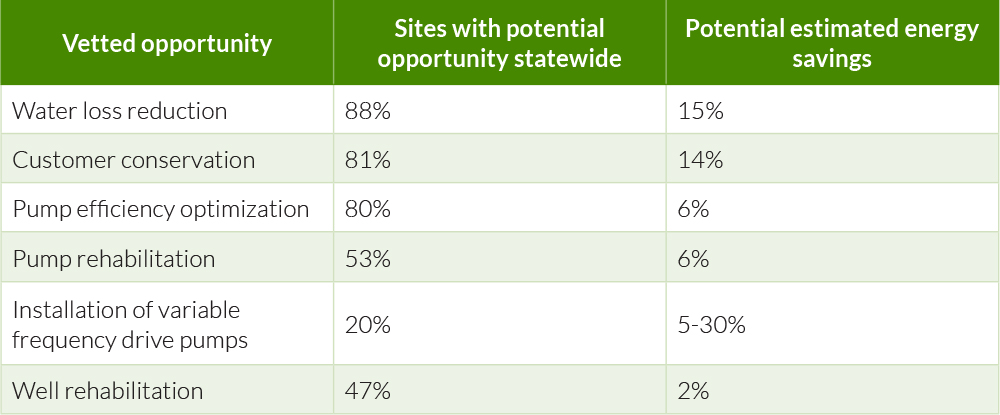
A study by the Minnesota Technical Assistance Program (MnTAP) found that energy conservation at the state’s water plants could save as much as 42 million kWh of energy per year, cutting consumption by 14%.

Wastewater plants and drinking water utilities are typically municipal government’s largest energy consumers, according to the U.S. EPA, often accounting for 30% to 40% of their total consumption. Overall, drinking water and wastewater systems account for approximately 2% of energy use in the U.S., adding more than 45 million tons of greenhouse gases annually.

Energy can represent as much as 40% of drinking water systems’ operating costs, according to the EPA. By incorporating energy efficiency practices into their water and wastewater plants, municipalities and utilities can save 15% to 30%; this level of savings would mean that payback periods for efficiency investments would be a few months to a few years, the EPA says.

MnTap-study-results-(University-of-Minnesota)-Content.jpg
MnTap study results | University of Minnesota

Distribution pumping accounts for almost two-thirds of a typical water utility’s energy consumption, with most of the remainder representing pumping of well or raw water, according to research by Lawrence Berkeley National Laboratory. Water treatment represents only 1% of energy use.

In a webinar earlier this month, Brent Vizanko, an MnTAP associate engineer, reported the findings of a two-year research project by MnTAP, part of the University of Minnesota’s School of Public Health.

The project used data from five municipal water treatment and supply facilities throughout the state. During the webinar Vizanko listed the top five energy conservation practices determined from the study:

  • Optimizing pump efficiency (25 million kWh).
  • Rehabilitating well and pump systems (9.3 million).
  • Reducing water leaks and losses (3.5 million).
  • Incentivizing customer conservation practices (2.7 million).
  • Optimizing volume and flow with variable frequency drive pumps, which control motor speed and torque (1.9 million).

An area with high potential is customer conservation, Vizanko said. Only 6% of plants in Minnesota have water conservation programs (for showers, faucets, toilets) or encourage use of high-efficiency appliances such as refrigerators, washing machines, heaters and tanks. Conservation by water customers can be promoted by offering rebates, he said.

Conservation partnerships between electric and water utilities could save 2.7 million kWh/year, said Vizanko. He outlined a plan in which water suppliers would receive rebates from electricity utilities for the cost of measurement equipment used to identify efficiency solutions such as optimizing pumps or reducing water losses. The electric utility would provide the rebate once savings are verified.

The study included surveys of a cross-section of the states water supply and treatment plants, interviews with a variety of industry stakeholders ranging from engineering firms to electric utilities, and detailed site assessments at a select number of water utilities.

Vizanko said the assessments of the five plants were originally planned as in-person visits during 2020, but due to the coronavirus, they were conducted remotely. Remote site visits involved data mining utility bills and other user-provided data sources to assess facility energy efficiency measures.

The project also revealed a potential obstacle in water energy conservation. While water loss averaged between 2.5% and 31% in state water utilities, 95% of those facilities do not have a plan to assess and address the issue.

Southern Faces NRC Inspection over Vogtle Repair Work

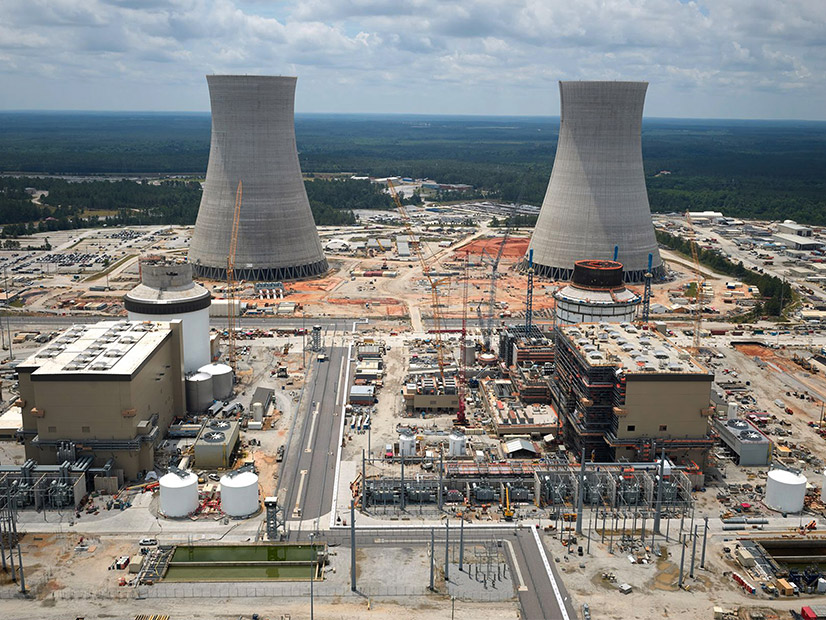
The Nuclear Regulatory Commission announced Monday that it will conduct a special inspection at the Vogtle 3 nuclear reactor, currently under construction in Waynesboro, Ga., to find out why the operator, Southern Nuclear, recently conducted remediation work on the reactor’s safety systems.

NRC’s investigation will focus on Vogtle 3’s electrical cable raceway system, mainly composed of conduits and cable trays for the cables that power safety-related equipment at the plant. The raceway system ensures that such equipment has redundant sources of power so that a single event cannot disable multiple safety systems.

Inspectors “will review Southern Nuclear’s actions following the discovery that led to construction remediation work,” according to the release. Topics of the investigation include Southern’s root cause investigation, corrective actions and quality assurance process, along with potential safety implications for Unit 4, under construction at the same location.

Southern has yet to respond to the NRC announcement. The company said as of April that construction on Unit 3 was “approximately 98% complete,” and all modules for Units 3 and 4 were in place. Earlier this month Southern announced that plant equipment at Unit 4 was switched from temporary construction power to permanent power.

Hot functional testing (HFT) on Unit 3 began in April as well. HFT is the last series of major tests ahead of initial fuel load and involves raising the temperature and pressure of plant systems to normal operating levels using heat generated by the unit’s reactor coolant pumps, followed by bringing the main turbine to normal operating speed. All of these steps are performed before any nuclear fuel is added to the reactor, so NRC emphasized that “there is no increased risk to the public as Southern Nuclear … performs remediation work.”

Schedule Slips, Cost Overruns Continue

Vogtle 3 and 4 are the only reactors under construction in the U.S. following the completion of the Tennessee Valley Authority’s Watts Bar 2 in 2016, and Southern is calling them “the first new nuclear units built in the United States in the last three decades” because Watts Bar 2 began construction in 1973. When the new units come online, Plant Vogtle will be the only four-unit nuclear facility in the U.S.; Units 1 and 2 have been in operation since 1987 and 1989, respectively.

Vogtle-Unit-3-and-4-(Georgia-Power)-Alt-FI.jpg
Left: Vogtle Unit 3. Right: Unit 4. | Georgia Power

The project has drawn attention from nuclear boosters for years. In March, Nuclear Energy Institute CEO Maria Korsnick praised management and staff at Southern for pressing on, “undeterred by a global pandemic [and] getting the job done.” (See Nuclear Key to Clean Energy Future, NEI Says.)

But the fact that the pandemic was a factor in construction at all highlights the multiple delays that have formed a major criticism of the project. When construction began in 2009, both units were expected to be operational by 2017; now Unit 3 is planned to come online in January 2022, and Unit 4 later in November. (See Counterflow: The Devil Went Down to Georgia.)

However, even these estimates could be unrealistic: The Georgia Public Service Commission said last month that it expects Unit 3’s commercial operation date to “be significantly later than the [Jan. 18, 2022] forecast by the company” because of the delay in starting HFT — which was supposed to begin in January — and uncertainty about when it will be completed.

In addition, Georgia PSC staff said Southern “has greatly underestimated the duration between completion of HFT and fuel load,” scheduling only 51 days for this despite the amount of work that must be completed in this time frame.

“The company’s inability to accurately forecast the start of major milestones has been well documented over the history of the project,” commission staff said, noting also that the company had “exceeded the approved cost” of $7.3 billion and predicting future cost rises — some of which may be borne by ratepayers — because of Southern’s history of failing to meet schedule and budget targets.

Regulating the New ‘Hydrogen Economy’

If a new “hydrogen economy” is the key to reaching net-zero emissions, what rules will apply and who will enforce them?

Sandra-Safro-(SEPA-EPRI)-Content.jpg
Sandra Safro, K&L Gates | SEPA/EPRI

Sandra Safro, coordinator of the oil, gas and resources practice group for K&L Gates, says there would be advantages to having FERC regulate pipelines carrying hydrogen, which are likely to be mixed with natural gas, at least initially.

The Natural Gas Act gives FERC jurisdiction over regulation of natural gas transportation in interstate pipelines — natural gas defined as “either natural gas unmixed, or any mixture of natural and artificial gas.”

“FERC has defined natural gas as that produced from a well, and artificial gas has been defined on a case-by-case basis generally referring to those that have been produced from non-oil sources, including coal or landfill gas,” Safro told the Smart Electric Power Alliance (SEPA) and Electric Power Research Institute (EPRI) H2Power conference last week. “This does create the potential that FERC could interpret artificial gas to include hydrogen and thus bring at least hydrogen blended with natural gas under its jurisdiction, which would help enable use of the existing interstate natural gas pipelines to transport hydrogen.”

If new interstate pipelines are needed for hydrogen, FERC’s authority over the siting and construction of interstate gas lines would preempt state authority.

But the commission lacks authority over interstate oil pipelines, meaning those pipeline developers must obtain certificates from each state they cross through. “So as we look at the development of a hydrogen economy … there are advantages to the approach of having FERC regulate the siting and construction,” she said.

Using Existing Gas Infrastructure

Kimberly Denbow, managing director of security and operations for the American Gas Association, said it makes sense to repurpose natural gas pipelines to carry hydrogen.

“Why not find solutions that team hydrogen and natural gas rather than entirely ditching one infrastructure to build another?” she asked. “I just don’t see how the destruction or decommissioning of an existing infrastructure that could be repurposed is of any benefit to any environmental goal.”

Denbow also said natural gas should remain in the energy mix to provide resilience to the system.

Researchers are exploring how different mixes of hydrogen and natural gas would impact pipeline safety. “Hydrogen is a different size molecule than … methane and so it’s going to have different impacts on different types of pipeline material,” she said.

Current research is looking at mixes of 10 to 20% hydrogen, Denbow added. “Based upon what I’ve been seeing so far, 100% hydrogen — I don’t know if that’s going to be possible.”

Winning Public Support

Safro said the fact that hydrogen is aiding in decarbonization doesn’t mean that building hydrogen pipelines will be immune from political opposition.

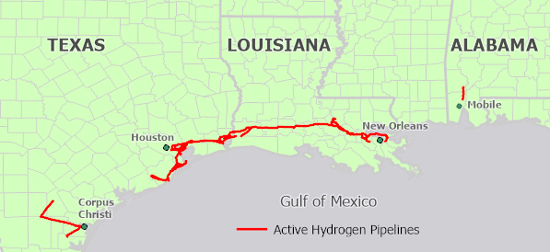
Hydrogen-pipelines-on-Gulf-Coast-(Congressional-Research-Service)-Content.jpg
Hydrogen pipelines on the Gulf Coast  | Congressional Research Service

“To some extent, those NIMBY [not in my backyard] issues are still going to be present,” she said. “But I think that there is a lot that the hydrogen industry can do to educate the public and educate stakeholders that can help with some of those ‘social license to operate‘ issues.”

John Lochner, vice president of innovation for the New York State Energy Research and Development Authority (NYSERDA), said an inclusive stakeholder process will be essential.

He noted that the state’s Climate Leadership and Community Protection Act (CLCPA) requires New York officials to consider disadvantaged communities and an “equitable transition” to decarbonization.

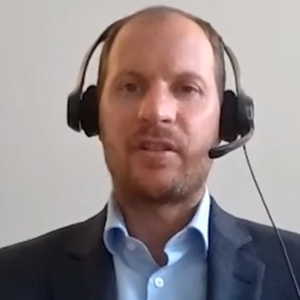
John-Lochner-(SEPA-EPRI)-Content.jpg
John Lochner, NYSERDA | SEPA/EPRI

“It’s really become important to … broaden our stakeholder outreach and ensure that we’re getting many voices to the table and thinking long and hard about a number of different pathways to success,” he said. “None of us sitting here today can be sure about what the right pathway is.”

Lochner said he was impressed by the work of University of Hawaii at Mānoa’s Laboratory for Advanced Visualization & Applications (LAVA), which created scenarios allowing stakeholder groups to see what it means to choose more solar or more wind on the islands “and what that meant for agricultural land use, and other tradeoffs. [It] really helped stakeholders understand — in a way that perhaps multi-100-page regulatory documents don’t — what it means to go one direction or another.”

Gas Quality Specifications

Safro said another question regulators will have to answer is regarding gas quality specifications.

“There are a few interstate gas pipelines in the U.S. that include hydrogen in their gas quality specs today, but none that would allow the quantities of hydrogen in the gas stream that would be necessary for a hydrogen economy at scale,” she said.

Updating gas quality specifications can be a lengthy and complicated process, as demonstrated in the early 2000s, when the U.S. was importing liquefied natural gas. “These were lengthy proceedings, and they included many, many stakeholders. But we did ultimately get there, and I am optimistic that we could get there for hydrogen too,” she said.

Demonstration projects will provide guidance on what kinds of regulations will be required and how agencies overseeing hydrogen should coordinate their efforts.

“We have to look at the regulations that we already have on the books, because there is hydrogen production in the U.S. today, just not at scale,” she said. “I think there probably has to be a fair amount of communication between FERC, the RTOs and ISOs, the [Department of Transportation’s] Pipeline and Hazardous Materials Safety Administration (PHMSA), and probably a number of other federal agencies whose jurisdiction is going to be implicated.”

FERC has no jurisdiction over pipeline safety or security, but its review of applications for construction and operation of interstate natural gas pipelines ensures that applicants certify that they will comply with Department of Transportation safety standards.

“PHMSA would have jurisdiction over the transportation of hydrogen by pipeline and perhaps hydrogen as a hazardous material, as well,” Safro said. “EPA and OSHA also have regulations that relate to hydrogen when it’s on site, particularly in a liquid form. I think a lot of the regulations that are on the books do a good job of addressing the issues. But I do think that there are areas where we may see regulations need to evolve to adapt to a hydrogen economy at scale.”

Study Shows RTO Could Save West $2B Yearly by 2030

The development of a single RTO covering the entire U.S. portion of the Western Interconnection could save the region $2 billion a year in energy costs by 2030, according to findings from a state-led study funded by the U.S. Department of Energy.

The study also found that a full Western RTO would be more effective at reducing renewable resource curtailments and CO2 emissions than under other configurations in which the region is broken up into two separate markets.

Initiated by Utah Gov. Spencer Cox’s Office of Energy Development in collaboration with state energy offices in Colorado, Idaho and Montana, the study is part of broader effort to analyze the impacts of different electricity market configurations on the West. States in the region have historically been reluctant to adopt a fully organized market but have largely embraced the half-measure of having their utilities join CAISO’s Western Energy Imbalance Market.

In November, the study group released findings that indicated that a single RTO could save the West $1.2 billion annually under a 2020 market scenario. (See Study: Western RTO Could Yield $1.2B in Yearly Savings.)

The more recent findings look ahead to examine the potential economic outcomes of various “market constructs” that could prevail in the West by 2030. To do that, the study overlays those constructs on four potential market footprints:

  • Status Quo, in which the only formal market in the West is an EIM that consists of all members that were participating in or had committed to join the market by late 2019. In this scenario, balancing authority area boundaries are retained and there is distributed control of the transmission system.
  • One Market, in which the entire U.S. portion of the Western Interconnection is participating in a single market (either an RTO or day-ahead market, depending on the scenario).
  • Two Market A, in which CAISO fails to expand its footprint while the rest of the U.S. portion of the Western Interconnection forms a separate market. In this scenario, California utilities that are not currently part of CAISO are assumed to be participating in a market with the ISO.
  • Two Market B, in which California and most of the U.S. portion of the Western Interconnection participate in one market, while the area covered by the Mountain West Transmission Group (MWTG) becomes its own market. (The MWTG halted its work on exploring the development of a market in 2018 when Xcel Energy pulled out of the effort.)

“None of the analysis is really dependent on what entity is operating one of these given markets,” Keegan Moyer, principal with study author Energy Strategies, said in presenting the findings during a webinar Thursday. “So, in terms of what the model sees and the cost estimating that we did for the administrative costs for these markets, it’s agnostic on who would actually be providing these market services.”

Bigger Footprint is Better

The study’s first scenario assumes that the EIM’s current real-time market (the Status Quo in the study) expands to include day-ahead trading. In that scenario, the region realizes an additional $47 million in annual adjusted production cost saving and $529 million in capacity savings, for a total gross yearly benefit of $576 million by 2030. While Washington ($163 million) and California ($143 million) claim the biggest shares, gross benefits are positive from every state. Inclusion of day-ahead trading in the EIM also reduces system emissions and renewable curtailments by 0.3% and 6%, respectively.

A second scenario compares day-ahead markets under the One Market and Two Market B footprints, finding that the annual benefits of the former configuration ($681 million) exceed those of the latter ($435 million) by $247 million. The study indicates that, because of increased load diversity, all Western states would see greater benefits from a day-ahead market construct that includes California than one that excludes the state. However, emissions and curtailments would be similar under both configurations, the study showed.

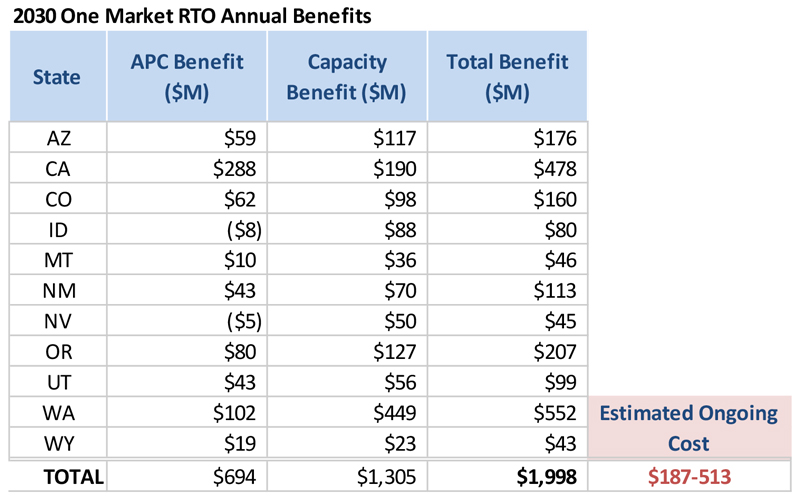
2030-One-Market-RTO-Annual-Benefits-(Utah-Office-of-Energy-Development)-Content.jpg
| Utah Office of Energy Development

In a third scenario, the study stacks a West-wide day-ahead market against a full Western RTO that consolidates the region’s existing 39 BAAs into one, centralizing transmission planning and cost allocation as well as market operations. The study finds that, with $2 billion in savings, an RTO would yield nearly triple the benefits of the day-ahead market, reducing production and capacity costs by an additional $599 million and $718 million, respectively. When measured against the Status Quo, an RTO would also reduce renewable curtailments by 43%, versus 9% for the West-wide day-ahead market, resulting in 2.3 million tons of additional CO2 emissions reductions.

Washington again takes the lion’s share of the annual benefits at $351 million, followed by California ($319 million), Oregon ($148 million) and Arizona ($136 million). All states see benefits, though, with the smallest shares going to the least populous states.

The study also finds that by 2030, capacity savings (because of load diversity) should account for 65% of the RTO’s gross benefits, increasing from a 35% share under 2020 conditions. In contrast, operational savings are expected to decrease as load is increasingly served by zero-marginal-cost resources that offset the fuel and operational expenses that constitute dispatch savings.

“The study, I think, supports the thesis that bigger markets generally perform better. We saw higher gross benefits when we had larger footprints and more comprehensive market services. Those tend to maximize benefits for the most Western states,” Moyer said.

Technical, Cost Challenges Noted on the Path to ‘Hydrogen Economy’

Making the dream of a hydrogen economy reality will require additional technical advances to overcome resource constraints and reduce costs, speakers told the Smart Electric Power Alliance (SEPA) and Electric Power Research Institute (EPRI) H2Power conference last week.

Jigar Shah, director of the Department of Energy’s Loan Programs Office, said cost reductions won’t come until efforts move beyond research and development to deployment.

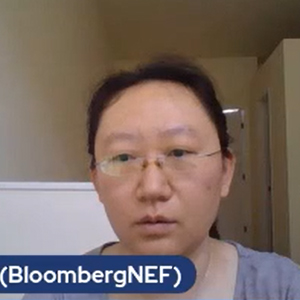
Xiaoting-Wang-(SEPA-EPRI)-Content.jpg
Xiaoting Wang, BloombergNEF | SEPA/EPRI

“R&D is essential, and we continue to do more of it at the Department of Energy,” he “But you cannot continue to keep doing R&D and expecting the very first deployment to be cheap. And so the first deployments have to happen. And then the second deployment … and every cumulative doubling, gets you this cost reduction curve.”

Xiaoting Wang, an analyst for BloombergNEF, is also impatient for demonstration-scale projects. “Although the technology now still has a lot of space to improve, we think now it is a time to get subsidies from the government … to trigger some demo projects or large-scale [projects], because that will give the first challenge for equipment manufacturers to use automatic manufacturing. Why? Because if the order is very tiny, it does not justify using automatic manufacture, [and it] will not say trigger the first round of cost reduction.”

Getting to Economies of Scale

Katherine Ayers, vice president of research and development for Nel Hydrogen U.S. (OTCMKTS:NLLSY), said achieving economies of scale for electrolysis doesn’t require gigawatt-scale projects.

“Most of these multi-megawatt scale electrolyzers have thousands of cells in them. And so you can get to pretty good numbers from a manufacturing standpoint,” she said.

“I do think that it’s important to … gain experience from some demonstrations to help grease the skids on that. But I think that there’s so many opportunities for electrolysis to serve some of these markets that one of them is going to happen, and it’s going to help the whole space.”

Water, Catalyst Constraints

Some skeptics have questioned the water demands of hydrogen production. Others note that it requires precious metals such as platinum as a catalyst.

Ayers said precious metals “are certainly an area of concern. But we also see many pathways to reduce those [through] manufacturing advancements” to reduce catalyst costs.

The cost of water is less of a concern, she said. “It’s certainly something that has to be considered when you’re implementing a unit because these require high-purity water. But typically, the cost of the water purification — even if you have to desalinate — it is not a huge portion of the cost.

“We have electrolysis units in places like Saudi Arabia, where water is certainly scarce,” she continued. “And if you look at electrolysis, even though it’s using water as the feed source versus some other energy technologies, it’s actually not that high in its usage.”

DOE’s Shah agreed that water use should not be a hindrance to hydrogen’s growth.

“One of the largest users of water in the West is cooling towers for thermal power plants. So they’re already using a lot of water at coal power plants. The total amount of water they’re talking about using here is substantially less than the evaporation losses that are already occurring within the existing coal footprint.”

Transporting Electrons vs. Hydrogen

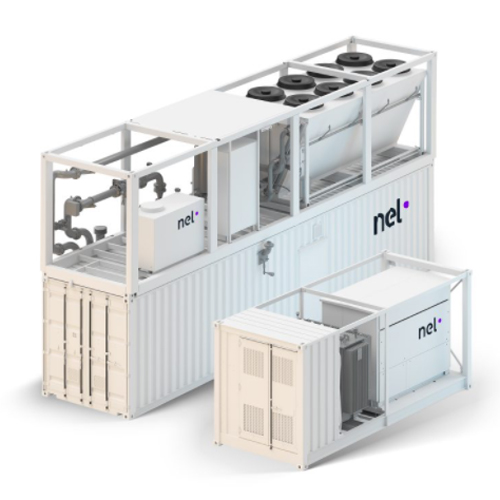
Containerized-PEM-Electrolyzer-(Nel-Hydrogen)-Content.jpg
Containerized PEM electrolyzer | Nel Hydrogen

Another question is how to integrate hydrogen production in the electricity supply chain. Nel Hydrogen’s Ayers acknowledged challenges with transporting and storing hydrogen.

Nel announced last month it had received an order for its containerized 2-MW polymer electrolyte membrane (PEM) electrolyzer that will be part of the green hydrogen infrastructure for a fleet of 46 Hyundai trucks in Switzerland.

“Electricity is not that easy to transport either,” she said. “We just had visitors the other day that were looking at our megawatt system and seeing the giant copper cables that have to go to the system in order to power it and the little, tiny hydrogen hose that comes off of it with the megawatt worth of hydrogen. So, you really have to look at how those two things play against each other and not discount the cost of transporting electrons either.”

International Efforts

Cutting the cost of producing hydrogen will not depend solely on U.S. efforts. Ayers said several countries have already committed to gigawatts of hydrogen projects over the next decade.

“There’s huge amounts of activity going on in Europe, largely actually spurred by the pandemic and a desire to use hydrogen as a way to help stimulate the economy as they come out of that. I think that’s really going to help drive these supply chain” improvements, she said.

“Hydrogen from electrolysis is really at a tipping point. And what that means is that competition is also increasing rapidly. So we’re seeing a lot of other companies catching up to what we’re doing here in the U.S., particularly in the PEM area, where I think there’s a lot of technology development happening. One of the things that we’re concerned about is making sure that the U.S. remains competitive in these markets — not just for the electrolysis piece, but also for this … installation experience that’s already going on in places like Europe and China. We’re going to have to learn ourselves as well.” 

Overheard at 170th NE Electricity Restructuring Roundtable

More than 425 people registered for Raab Associates’ 170th New England Electricity Restructuring Roundtable last week to hear a panel discussion about the role of utility regulation in decarbonizing the region, in addition to a keynote speech from Acting Assistant Secretary of Energy Kelly Speakes-Backman.

Here is some of what we heard during the virtual event hosted by Boston law firm Foley Hoag.

Advanced Metering Emerges as Priority

Massachusetts has been working on adopting advanced metering infrastructure (AMI) for almost a decade, but new improvements in metering technology have created consumer friendly features that increase access through devices such as smartphones.

The state’s Department of Public Utilities (DPU) is looking into opportunities for a “more traditional investment” in AMI to support grid modernization, instead of a program that serves as a pilot, Chairman Matthew Nelson said.

Utilities in Massachusetts are required to file their grid modernization plans to DPU on July 1, and Nelson said they must “take advantage of advancements in metering technology.”

AMI is an integrated system of smart meters, communication networks and data management systems that allows utilities to measure electricity use automatically and remotely, connect or disconnect service, monitor voltage and communicate with customers. The technology allows utilities to offer new time-based rates that encourage customers to reduce peak demand and manage energy consumption and costs.

National Grid, one of the utilities in Massachusetts, had previously submitted a plan for AMI in Rhode Island but subsequently sold its business there to PPL Corp. in Pennsylvania.

Central Maine Power has already implemented an early AMI system. The Maine Public Utilities Commission is assessing any changes that are needed to the system, Chair Phil Bartlett said.

“As people invest in EVs, this is the optimal time to implement time-use rates,” he said.

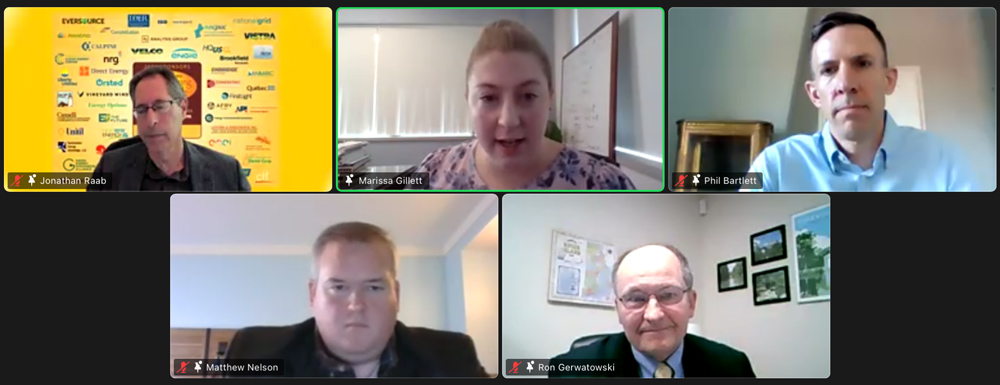
170th-NE-Electricity-Restructuring-Roundtable--(Raab-Associates)-Content.jpg
Jonathan Raab, Raab Associates; Marissa Gillett, Connecticut PURA; Phil Bartlett, Maine PUC; Matthew Nelson, Massachusetts DPU; Ron Gerwatowski, Rhode Island PUC | Raab Associates

Maine is working on developing time-use rates, Bartlett said, but the commission doesn’t want to impose them on the public until it has more information about how the system in southern Maine is going.

The DPU in Massachusetts is also being cautious in rolling out time-use rates for residents, despite its success with time-use rates on the retail supplier side, Nelson said. The agency would deploy AMI to all customers, including municipal aggregators.

“To replicate that on the residential side has to be done very carefully,” Nelson said. “We don’t want to artificially raise rates if we aren’t seeing a reduction in peak demand.”

A report on AMI from the Department of Energy in 2016 found that over a three-year period, 19 AMI projects saved $316 million in operations and management costs, or $16.6 million per project. The AMI technology also saved an estimated 15,160 tons of carbon dioxide emissions.

But Marissa Gillett, chair of Connecticut’s Public Utilities Regulatory Authority, said her agency is also taking a cautious approach.

“Any time we ask customers to change their behavior, we need to have a grasp on what they need to change and how,” Gillett said at the panel. “But [time-use rates] are not off the table in Connecticut.”

Northeast Expected ‘Epicenter’ of OSW Development

Speakes-Backman said that President Biden’s clean-energy goals put the United States on an “irreversible path” to achieving a decarbonized power sector by 2035 and net-zero emissions economywide no later than 2050.

“This is the most ambitious climate strategy our nation has ever had, and we have no time to waste to get it into play,” said Speakes-Backman, who works in the Office of Energy Efficiency and Renewable Energy.

She said her office’s FY2022 budget request of $4.73 billion focuses on energy efficiency, sustainable transportation and renewable power, notably offshore wind.

Kelly-Speakes-Backman-(Raab-Associates)-Content.jpg
Kelly Speakes-Backman, Department of Energy | Raab Associates

“The fastest and most cost-effective way we know to decarbonize the economy is to first prioritize the transition to a carbon-free power sector,” Speakes-Backman said. “We need to integrate more renewable energy generation onto the grid while still ensuring that it’s reliable and secure.”

The Biden administration has a stated goal to build 30 GW of OSW by 2030. Speakes-Backman said projects like the recently approved Vineyard Wind I have the Northeast poised to be “the epicenter of near-term OSW development in the U.S.”

Connecticut, Massachusetts and Rhode Island have procured OSW to support their decarbonization targets. Speakes-Backman said that the Gulf of Maine could be used to support the deployment of next-generation floating wind technologies.

“The waters are too deep for traditional fixed-bottom foundations to be economical, so we’re leading efforts to design, test and demonstrate floating foundations to harness OSW in these deep-water areas, which account for about 60% of our OSW resources across the country,” she said.

Floating OSW technology, she added, is “nascent,” and there are many “opportunities to improve.”

From a research and development perspective, Speakes-Backman said her office has been working with the University of Maine on a proposed OSW demonstration project using semi-submersible concrete floating foundations developed by the university. There is also a new partnership with Atkins Global to demonstrate floating OSW technology previously used by offshore oil and gas, with a plan for installation at one of the Mayflower Winds lease areas south of Martha’s Vineyard and Nantucket. Additionally, there is support for several projects at the National Offshore Wind Research and Development Consortium, a public-private endeavor to address technological barriers and lower OSW costs and risks.

When asked how to mitigate the potential costs to ratepayers for major investments in transmission to meet OSW goals in New England, which could hamper electrification efforts, Speakes-Backman said that any work done now would drive down future costs.

“First, let’s examine the supposition that renewable power is so much more expensive than other traditional resources, as I think the costs are coming down quickly,” Speakes-Backman said. “The work that we’re doing is really to bring those costs down even further. Also, the investment that the federal government is doing to help states, or that we are looking to do in FY22, will help to suppress the costs.”

Utilities Mull Opportunities in Hydrogen

Hydrogen offers big opportunities for utilities, but it will require a cultural change for them to take advantage, says Nick Irvin, Southern Co.’s (NYSE:SO) director of research and development for strategy, advanced nuclear, and crosscutting technology.

“We are an industry that likes our stable, risk-adjusted returns,” he told the Smart Electric Power Alliance (SEPA) and Electric Power Research Institute (EPRI) H2Power conference last week.

Irvin said he’s looking at how hydrogen infrastructure can serve multiple functions and classes of customers.

“Once I’ve made the molecule, I can divert it … either into transportation fuel, back into grid support services, or for use on-site for backup generation or for resiliency. That stacked value chain, where everyone is sharing in both the investment and the value proposition … is the Venn diagram that says hey, we as a utility, should be able to move into that space,” he said. “If we can get the prices right and the economics right in deployment, I think is a great tool for us to move out into this lower carbon future.”

In the near term, Irvin said it will be difficult to make hydrogen cheap enough to compete with natural gas at bulk scale. “So what we’re trying to do is look for opportunities for hydrogen to play in markets where it can be competitive in the near term … and look at those systems as opportunities to learn the lessons you need to know — as pilots for how you scale to things like gas turbine operations.”

Katherine Ayers, vice president of research and development for Nel Hydrogen U.S., said hydrogen is still in the demonstration phase for utilities. “What we’re seeing is utilities starting to do projects at the megawatt scale, but they’re first of a kind. … A lot of them are subsidized by different governments.”

Daryl Wilson, executive director of the Hydrogen Council, said his group is tracking more than 300 megawatt-scale projects around the world. “80% of those are in Asia, China, and Australia,” he said. “And in those areas, absolutely, the utility sector is very involved. So companies like Uniper (OTCMKTS:UNPRF) … and RWE (FRA:RWE) in Germany — so many players now looking to hydrogen from the utility sector in Europe.”

Does Efficiency Matter?

Irvin said the use of zero marginal cost renewable energy sources to produce hydrogen is counterintuitive to his training as an engineer, where he was schooled to focus on efficiency.

“I think you have to ask yourself the question of: How much does efficiency matter in that future? … How do you optimize the capital deployment?” he asked. “I think customer choice and backward compatibility to enable the customer to be as … useful and flexible and independent and autonomous as they want to be in everything that they do on a daily basis has really got to be the ultimate goal.”

Ayers said hydrogen’s value in transportation is less about efficiency than about how well it meets customers’ needs.

“Where [hydrogen fuel cells were initially] more passenger vehicle focused, there’s been a realization that heavy-duty vehicles are maybe in an easier, earlier business case and an area where the battery doesn’t compete quite as well. So from that perspective, they’re looking at durability.

“It’s how far can your [vehicle] go?” she added. “Efficiency is not the only variable to look at.”

Distributed Hydrogen Production

John Lochner, vice president of innovation for the New York State Energy Research and Development Authority (NYSERDA), said hydrogen could continue utilities’ current business model as a “plug and play” opportunity while also serving as an “enabler” of distributed micro grids.

“We continue to plan and assess and fund … research and development and demonstrations,” he said. “What might be the opportunity to deploy hydrogen in the current infrastructure? What might it look like to have a distributed hydrogen infrastructure without the pipes? What are the costs? What are the timelines? How does it help us meet our decarbonization goals? I’m not sure we have good answers yet.”

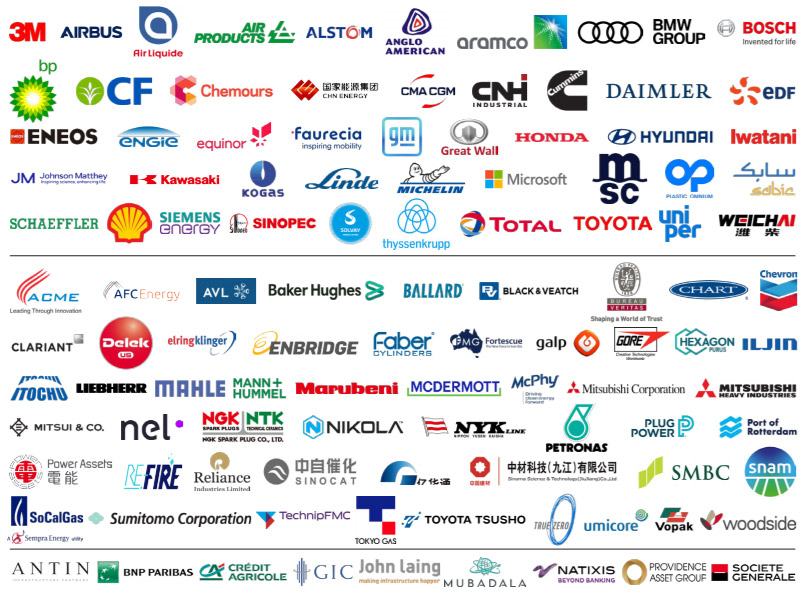
Members-of-the-Hydrogen-Council-(Hydrogen-Council)-Content.jpg
Members of the Hydrogen Council | Hydrogen Council


Local hydrogen production could produce economic development benefits, he said.

“I consider hydrogen as having the potential to be a Swiss Army knife with decarbonization. It could be used in transport heavy industry [and] HVAC for large buildings, particularly down here in New York City. We have lots of [large] buildings … where electrification is more costly and more complicated. … There are many possibilities that are enabled by a lot of the research being done by the Department of Energy (DOE) and by NYSERDA.”

DOE Looking for Inefficiencies in Electric Market

Jigar Shah, director of DOE’s Loan Programs Office, also sees decentralized production of hydrogen in the future.

He said DOE is seeking ways to use hydrogen to address inefficiencies in the electricity market, such as renewable energy curtailments and negative power prices.

He said electrolyzers will initially be large facilities because of the need to incorporate liquefaction to move hydrogen around the country.

“But I think over time as the costs come down, you’ll start to see a very decentralized hydrogen production grid with electrolyzer technologies, and a lot of the electrolyzers will act as reverse peaker plants. Today, peaker plants with natural gas are turned on when electricity prices go above [about] four cents a kilowatt hour [$40/MWh]. In the future, these  hydrogen electrolyzers will be turned on every time electricity prices fall below $15 a megawatt hour — 1.5 cents a kilowatt hour. They can use up all the extra electricity capacity in the grid, and thereby dramatically reducing the cost of transmission and distribution.”

Hydrogen also could change the siting of energy-intensive industrial plants, he said. “Part of the reason why we make aluminum in the places that we make it is because that’s where the cheap hydropower is. When you think about where cheap wind and solar exists today, that is where we’re going to be making chemicals in the future.”

Nevada PUC Calls for Organized Market in West

In a report on last summer’s energy emergencies, the Public Utilities Commission of Nevada (PUCN) said the state was too reliant on imports and CAISO and called for an organized market in the West.

“The West as a region and Nevada as a state need a larger, regional market that integrates multiple utilities, allowing renewable generating resources to balance across large geographic areas,” said the report, released June 15. “A predictable, reliable Western transmission system is critical to ensuring electric reliability in the region.”

The report on Nevada’s supply problems was yet another signal that Western entities may need to form or join one or more RTOs this decade.

Nevada and Colorado lawmakers passed bills in the past month requiring transmission owners to join an RTO by 2030. (See Xcel Delays Joining EIM to Examine Options.) Nevada Gov. Steve Sisolak, who signed his state’s measure, plans to convene a Regional Transmission Coordination Task Force to provide advice on joining an RTO. (See related story, Many Next Steps to Follow Passage of Nevada Energy Bill.)

The PUCN’s report appeared to lend support to the effort. It detailed the results of an investigation begun last August, days after Nevada experienced energy emergencies during a severe Western heat wave.

In neighboring California, CAISO called for load shedding Aug. 14-15, prompting rotating outages. (See CAISO Issues Final Report on August Blackouts.)

Nevada’s crisis arrived three days later, on Aug. 18, when NV Energy and other load-serving entities faced emergencies because of “insufficient generation and transmission capacity to meet peak demand,” the PUCN wrote.

NV Energy’s reliability coordinator, CAISO-led RC West, declared a level 3 emergency on the afternoon of Aug. 18 as Las Vegas hit a record-high temperature of 114 degrees Fahrenheit. The utility bought energy to compensate, but much of it was not delivered, the report said.

“For a 10-hour period on Aug. 18, 2020, NV Energy procured 19,760 MWh of energy through bilateral contracts with third-party entities,” the PUCN said. “However, during this period, only approximately 13,639 MWh of energy were delivered to NV Energy.

“For the [6 p.m.] hour … NV Energy’s most critical period … [the utility] procured over 2,000 MWh of wholesale market energy through bilateral agreements to be delivered but only received approximately 864 MWh of energy, resulting in 1,243 MWh (59%) of undelivered energy,” it said.

NV Energy avoided rolling blackouts that day only because of conservation efforts and by accessing operating reserves through an agreement with the Northwest Power Pool, the report said.

Investigation and Findings

The PUCN opened its investigation of the events Aug. 26, resulting in last week’s report. It identified issues that contributed to the emergencies, including the state’s over-reliance on increasingly constrained imports.

“Over the prior five years, Nevada’s resource planning process has focused on cost-saving opportunities for ratepayers by finding prudent NV Energy’s actions to fulfill an increasing amount of its supply needs in the Western market,” it said. “At the same time, a number of areas of [WECC] faced growing resource constraint. As retirements of large generating stations continue and are replaced by generating resources with dissimilar generating characteristics, some regions in the WECC are growing more dependent on seasonal or intraday imports.”

In March, WECC’s assessment of Western resource adequacy found Nevada was among the regions in which imports are essential to ensure reliability during summer peaks. The PUCN took note of that and called for planning upgrades. (See RA at Risk in NWPP-Central, WECC Finds.)

“Today, Nevada often exports solar generation and relies on imports from neighboring states like California, Arizona and Oregon to meet peak demand, particularly during the evening when solar generation is unavailable,” the report said. Resource planning “must become more granular and move beyond the borders of Nevada and lengthen its focus to assess regional market risks.”

CAISO in Crosshairs

The report also critiqued Nevada’s dependence on CAISO, a possible contender to lead a Western RTO.

“CAISO is not a Western regional planning entity; it was structured to meet California’s electricity needs,” it said. “However, because the CAISO is the only liquid market in the West, all trades between balancing authorities or utilities are either bilateral transactions or traded volumes in the CAISO markets.”

Under the system, Nevada utilities contract for “firm” imports, but a “downstream buyer has no way of distinguishing between a … contract backed by a portfolio of physical generation owned by the seller and a ‘firm’ contract backed by day-ahead purchases in the CAISO markets.”

As in August, the result can be imports that do not materialize, the report said.

NV Energy proposed a short-term fix in procurement changes that “recognize the risk of Nevada’s reliance on market resources that are sourced from or wheeled through the CAISO and, therefore, propose procurement of energy at higher targets for reliability purposes,” the report said.

It noted that “NV Energy has issued requests for proposals for non-CAISO-sourced energy, but because the CAISO is the largest and only liquid market in the western United States, NV Energy currently relies on the CAISO wholesale energy market for a portion of its resource adequacy to provide reliable electric service to Nevadans.”

Members Explore MISO’s Role in Environmental Justice

In a MISO first, members and leadership probed what environmental justice means in its 15-state footprint and what role the RTO can play in ensuring more equitable grid impacts.

Speaking at the Advisory Committee’s meeting Wednesday, Indiana Utility Regulatory Commissioner Sarah Freeman said multiple sectors are beginning to grapple with how to make sure no community bears a disproportionate share of the harmful effects of energy and industrial production.

EDF Renewables’ Adam Sokolski, representing the Independent Power Producers sector, said it’s long overdue for energy companies to build infrastructure with environmental justice in mind.

But it’s still unclear what MISO’s role could be in supporting environmental justice, Board of Directors Chair Phyllis Currie said. “We are not on the front line of interacting with the end-use customers.”

Multiple stakeholders said MISO could open more avenues of participation and outreach.

“It’s not possible to have a full conversation on this topic without involving the communities that are involved,” Union of Concerned Scientists’ James Gignac pointed out.

Gignac’s colleague Sam Gomberg said at last month’s committee meeting that a discussion on environmental justice would ring hollow unless MISO members and the board either speak with impacted members of an environmentally disadvantaged community before a discussion, or invite them to a meeting.

Director H.B. “Trip” Doggett asked how MISO members would engage with the public.

Gignac asked that MISO create an environmental justice and equity initiative and bring impacted communities into stakeholder discussions.

Transmission-Dependent Utilities sector representative Kevin Van Oirschot, of Consumers Energy, also suggested MISO could do more to include underserved populations in its stakeholder process.

Public Consumer Advocates sector representative Christina Baker said MISO’s current policy of having two public consumer advocates on the AC is a good start. She suggested that the RTO select a board member with a background in public advocacy.

The Natural Resources Defense Council’s Elizabeth Toba Pearlman said MISO could ask itself if its stakeholder community is representative of the general public. “Even if MISO isn’t tasked with the engagement of the end-use customer, I think there’s value to [it] reaching out.”

Director Barbara Krumsiek noted PricewaterhouseCoopers’ recently announced hiring spree, where it will add 100,000 employees over the next five years to focus on inequality, climate change, pandemic fallout and technological disruption.

Other stakeholders said grid planning is often too siloed a process to maintain cohesive environmental justice goals across utilities, generation developers, transmission owners and state regulators. Some said environmental justice is largely a matter for state and local governments and the regulators who make transmission and generation siting decisions.

Freeman said MISO could keep tabs on members’ environmental justice efforts and note regions that might be lacking.

Manitoba Hydro’s Audrey Penner noted that in her province, it’s law that her company consult with First Nations tribes before embarking on a project. She said Manitoba Hydro considers how to undo or mitigate past harms in project planning.

Sokolski said stateside, a bright spot is MISO’s transitional period of “retire and rebuild” — which is giving members opportunities to replace polluting, conventional generation with cleaner generation — contemplates impacts to marginalized communities.